North Carolina: Signals & vehicle controls
Headlights, turn signals, mirrors, lane changes, backing and the equipment your vehicle must have. Split into 5 shorter tests so you're not stuck in one long quiz.
Independent educational site · not affiliated with any government agency or DMV
Choose a part
Signals & vehicle controls — Part 1
Questions in this part include: “On a highway with multiple lanes, what should you check before changing lanes?”
StartSignals & vehicle controls — Part 2
Questions in this part include: “For how far in normal daylight must the brake and turn signal lights be visible?”
StartSignals & vehicle controls — Part 3
Questions in this part include: “How often must the air pressure of tires be checked?”
StartSignals & vehicle controls — Part 4
Questions in this part include: “What do a vehicle's emergency warning flashers do?”
StartSignals & vehicle controls — Part 5
Questions in this part include: “How do you signal a left turn with a hand signal?”
StartAll 86 Signals & vehicle controls questions with answers
Choose a part above to take a practice test, or study every question and answer here.
Show the questions and answersHide the questions
-
If you encounter a curve while traveling downhill, what should you shift to before moving downhill?
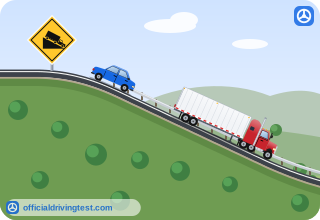
- A lower gear
- A higher gear
- Neutral
- Reverse
Show answer
Correct answer: A lower gear
For a downhill curve the manual says to shift to a lower gear before moving downhill.
Source: North Carolina Driver Handbook (Revised May 2025), page 54 · Open this page in the manual (Manual page 54)
-
On a highway with multiple lanes, what should you check before changing lanes?
- Only the lane you are moving into, not any other lane
- The lane you are changing to, as well as the lane beyond
- Only the lane behind you, using the rear-view mirror
- The lane you are leaving, as well as the lane behind it
Show answer
Correct answer: The lane you are changing to, as well as the lane beyond
You must check the lane you are changing to and the lane beyond, in case another vehicle plans to move into the same space.
Source: North Carolina Driver Handbook (Revised May 2025), page 54 · Open this page in the manual (Manual page 54)
-
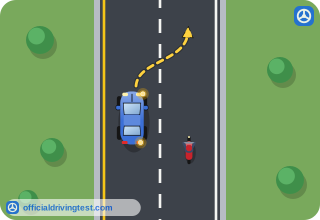
How do you make sure the blind spot is clear before changing lanes?
- Check only the side mirror
- Tap the horn twice
- Flash your brake lights
- Check over your shoulder
Show answer
Correct answer: Check over your shoulder
Changing lanes includes checking over your shoulder to be certain the blind spot is clear.
Source: North Carolina Driver Handbook (Revised May 2025), page 54 · Open this page in the manual (Manual page 54)
-
When should you signal your intended movement when changing lanes?
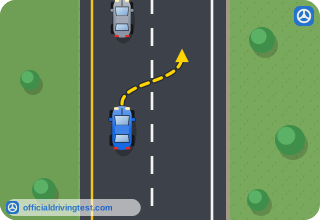
- In advance
- After you begin moving
- Only if another vehicle is near
- Only at night
Show answer
Correct answer: In advance
The manual says to signal your intended movement in advance before changing lanes.
Source: North Carolina Driver Handbook (Revised May 2025), page 54 · Open this page in the manual (Manual page 54)
-
Which mirrors should you check before changing lanes?
- Only the rear-view mirror
- Only the driver-side mirror
- The side and rear-view mirrors
- No mirrors, only over your shoulder
Show answer
Correct answer: The side and rear-view mirrors
The first rule for changing lanes is to check the side and rear-view mirrors.
Source: North Carolina Driver Handbook (Revised May 2025), page 54 · Open this page in the manual (Manual page 54)
-
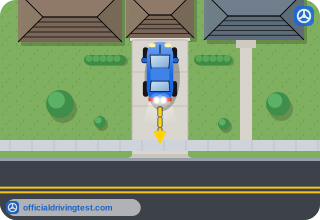
Before you enter your vehicle to back it up, what should you check behind it for?
- Oil leaks or fluid spills
- Small objects or children
- Loose gravel and potholes
- Low-hanging tree branches
Show answer
Correct answer: Small objects or children
The manual says to check behind the vehicle for small objects or children before entering, because they are hard to see from the driver's seat.
Source: North Carolina Driver Handbook (Revised May 2025), page 56 · Open this page in the manual (Manual page 56)
-
To maintain a full view of what is behind the vehicle when backing, how should you steer and look?
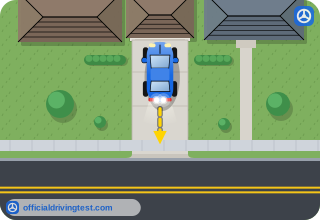
- Steer with your right hand and look over your left shoulder through the side window
- Steer with both hands and rely on the inside and outside mirrors alone
- Steer with your left hand and look only through the side window and mirrors
- Steer with your left hand and look over your right shoulder through the back window
Show answer
Correct answer: Steer with your left hand and look over your right shoulder through the back window
The manual says to steer with your left hand and look over your right shoulder through the back window, not depending on mirrors alone or the side window.
Source: North Carolina Driver Handbook (Revised May 2025), page 56 · Open this page in the manual (Manual page 56)
-
What is the maximum speed at which you should back your vehicle?
- 5 mph
- 15 mph
- 10 mph
- 25 mph
Show answer
Correct answer: 10 mph
The manual says to back very slowly, not more than 10 mph.
Source: North Carolina Driver Handbook (Revised May 2025), page 56 · Open this page in the manual (Manual page 56)
-
Why should you back very slowly?
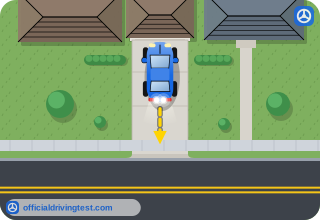
- Your vehicle is harder to control and to stop when it is backing
- Mirrors do not work properly when the vehicle is in reverse gear
- The brake lights do not work while you are backing up slowly
- Other drivers cannot see a vehicle that is backing up at all
Show answer
Correct answer: Your vehicle is harder to control and to stop when it is backing
A vehicle is harder to control and to stop when backing, so the manual says to back very slowly.
Source: North Carolina Driver Handbook (Revised May 2025), page 56 · Open this page in the manual (Manual page 56)
-
In city driving, what should you do about your intended movements?
- Communicate them to other drivers
- Make them without signaling in heavy traffic
- Avoid signaling because it distracts others
- Let others guess based on your speed
Show answer
Correct answer: Communicate them to other drivers
One of the city driving rules is to communicate your intended movements to other drivers.
Source: North Carolina Driver Handbook (Revised May 2025), page 63 · Open this page in the manual (Manual page 63)
-
According to the driving tips, when should you use your vehicle's headlights?
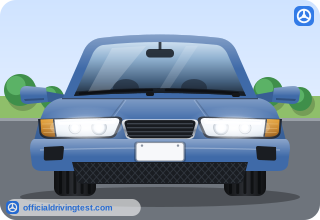
- Only when driving in a city
- Only when another vehicle is approaching
- Only when driving on an interstate
- When visibility becomes poor
Show answer
Correct answer: When visibility becomes poor
The manual tells drivers to use the vehicle's headlights when visibility becomes poor.
Source: North Carolina Driver Handbook (Revised May 2025), page 64 · Open this page in the manual (Manual page 64)
-
When you use high-beam headlights at night, what should you be able to see?
- A person who is 100 feet away
- A person who is 300 feet away
- A person who is 200 feet away
- A person who is 500 feet away
Show answer
Correct answer: A person who is 200 feet away
The manual says that with high beams you should be able to see a person 200 feet away.
Source: North Carolina Driver Handbook (Revised May 2025), page 65 · Open this page in the manual (Manual page 65)
-
When you use low-beam headlights, how far away should you be able to see someone?
- 25 feet
- 75 feet
- 150 feet
- 300 feet
Show answer
Correct answer: 75 feet
The manual says with low beams you should be able to see someone who is 75 feet away.
Source: North Carolina Driver Handbook (Revised May 2025), page 65 · Open this page in the manual (Manual page 65)
-
What can cause headlights to become out of adjustment?
- Driving on interstate highways
- Using low-beam headlights
- Washing the vehicle
- Vehicle vibration
Show answer
Correct answer: Vehicle vibration
The manual says vehicle vibration can cause the headlights to become out of adjustment.
Source: North Carolina Driver Handbook (Revised May 2025), page 65 · Open this page in the manual (Manual page 65)
-
What is the danger of headlights that are improperly adjusted?
- They can shine in the eyes of approaching drivers, bicyclists and pedestrians
- They can drain the vehicle's battery and shorten the life of the bulbs
- They can make the taillights harder for other drivers to see
- They can reduce the life of the tires and the shock absorbers
Show answer
Correct answer: They can shine in the eyes of approaching drivers, bicyclists and pedestrians
The manual says improperly adjusted headlights can shine in the eyes of approaching drivers, bicyclists and pedestrians.
Source: North Carolina Driver Handbook (Revised May 2025), page 65 · Open this page in the manual (Manual page 65)
-
What may overloading the rear of your vehicle do?
- Make the brake lights too dim for following drivers to see
- Make the tires wear out on the front edges of the tread
- Make the front tilt and cause glare for oncoming drivers
- Make the horn too quiet to be heard at a distance
Show answer
Correct answer: Make the front tilt and cause glare for oncoming drivers
The manual says overloading the rear may tilt the front of the vehicle and produce hazardous headlight glare for oncoming drivers.
Source: North Carolina Driver Handbook (Revised May 2025), page 65 · Open this page in the manual (Manual page 65)
-
What color must taillights be, and how far must they be visible?
- Red, visible for at least 100 feet
- Red, visible for at least 500 feet
- Amber, visible for at least 500 feet
- Amber, visible for at least 200 feet
Show answer
Correct answer: Red, visible for at least 500 feet
The manual says taillights must be red in color and visible for at least 500 feet.
Source: North Carolina Driver Handbook (Revised May 2025), page 65 · Open this page in the manual (Manual page 65)
-
The law requires a white light on the license plate. For what distance must it make the numbers visible?
- At least 25 feet
- At least 100 feet
- At least 200 feet
- At least 50 feet
Show answer
Correct answer: At least 50 feet
The manual says the white light must make the numbers visible for at least 50 feet.
Source: North Carolina Driver Handbook (Revised May 2025), page 65 · Open this page in the manual (Manual page 65)
-
What color must the lights be that engage when the brakes or turn signals are used on motor vehicles produced since 1955?
- Red or amber
- Red only
- White or amber
- Amber or blue
Show answer
Correct answer: Red or amber
The manual says vehicles produced since 1955 must have red or amber lights that engage when the brakes or turn signals are used.
Source: North Carolina Driver Handbook (Revised May 2025), page 66 · Open this page in the manual (Manual page 66)
-
For how far in normal daylight must the brake and turn signal lights be visible?
- At least 50 feet
- At least 200 feet
- At least 100 feet
- At least 500 feet
Show answer
Correct answer: At least 100 feet
The manual says these lights must be visible for at least 100 feet in normal daylight.
Source: North Carolina Driver Handbook (Revised May 2025), page 66 · Open this page in the manual (Manual page 66)
-
All motor vehicles produced since which year must have red or amber brake and turn signal lights?
- 1935
- 1955
- 1965
- 1975
Show answer
Correct answer: 1955
The manual says all motor vehicles produced since 1955 must have red or amber lights that engage with the brakes or turn signals.
Source: North Carolina Driver Handbook (Revised May 2025), page 66 · Open this page in the manual (Manual page 66)
-
Why is it important that a vehicle's lights have clean lenses and stay in proper working order?
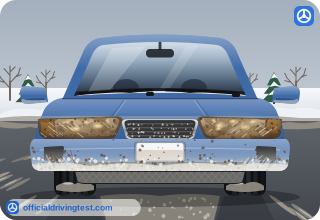
- Clean lenses make headlights use less fuel
- Lights are required to be washed every month
- Dirty lenses cause the horn to fail
- Hand signals are difficult to see at night
Show answer
Correct answer: Hand signals are difficult to see at night
The manual says hand signals are difficult to see at night, so a vehicle's lights must work and have clean lenses.
Source: North Carolina Driver Handbook (Revised May 2025), page 66 · Open this page in the manual (Manual page 66)
-
When should you check and adjust your mirrors?
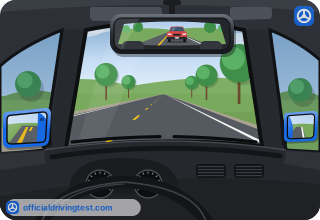
- Before you begin to drive
- After you have driven a few blocks
- Only when you change lanes
- Only at night
Show answer
Correct answer: Before you begin to drive
The manual says to check and adjust the mirrors before you begin to drive.
Source: North Carolina Driver Handbook (Revised May 2025), page 66 · Open this page in the manual (Manual page 66)
-
What should the rear-view mirror show?
- The scene to the left rear
- The blind spots on both sides
- What is directly behind you
- The rear corners of the vehicle
Show answer
Correct answer: What is directly behind you
The manual says the rear-view mirror should show what is directly behind you.
Source: North Carolina Driver Handbook (Revised May 2025), page 66 · Open this page in the manual (Manual page 66)
-
How should the side mirrors be adjusted?
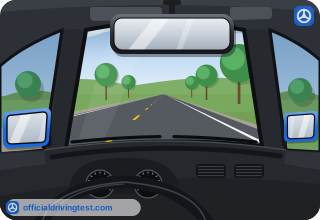
- To show mostly the side of your own vehicle, with the door handle in view
- To show the left and right rear scene, barely reflecting your vehicle's side
- To show only the lane directly behind you, the same as the rear-view mirror
- To point straight down at the pavement beside the vehicle
Show answer
Correct answer: To show the left and right rear scene, barely reflecting your vehicle's side
The manual says the side mirrors should show the scene to the left and right rear and barely reflect the side of the vehicle.
Source: North Carolina Driver Handbook (Revised May 2025), page 66 · Open this page in the manual (Manual page 66)
-
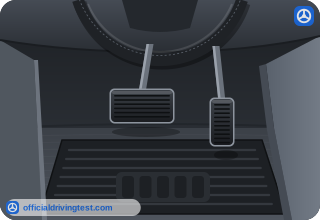
What must every motor vehicle on a public roadway be equipped with?
- A spare set of hand-operated brakes for emergencies only
- Brakes that operate only on the rear wheels of the vehicle
- Brakes that are used only when a passenger is aboard
- Brakes to adequately control, stop and hold the vehicle
Show answer
Correct answer: Brakes to adequately control, stop and hold the vehicle
The manual says every motor vehicle on a public roadway must have brakes to adequately control the movement of, stop and hold the vehicle.
Source: North Carolina Driver Handbook (Revised May 2025), page 66 · Open this page in the manual (Manual page 66)
-
How many separate means of applying the brakes should a vehicle's originally equipped brakes have?
- Two
- One
- Three
- Four
Show answer
Correct answer: Two
The manual says vehicles should have originally equipped brakes in good condition, having two separate means of applying the brakes.
Source: North Carolina Driver Handbook (Revised May 2025), page 66 · Open this page in the manual (Manual page 66)
-
When fully depressed, how far from the floor should the brake pedal be?
- At least one-half of its original distance from the floor
- No more than one-third of its original distance from the floor
- At least one-third of its original distance from the floor
- Touching the floor
Show answer
Correct answer: At least one-third of its original distance from the floor
The manual says the pedal should be at least one-third of its original distance from the floor when fully depressed, or the brakes must be checked.
Source: North Carolina Driver Handbook (Revised May 2025), page 66 · Open this page in the manual (Manual page 66)
-
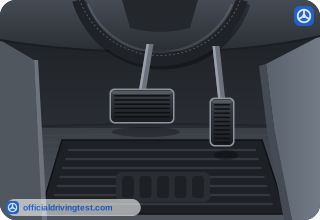
If the brake pedal gradually lowers under the pressure of your foot, what must be checked?
- The suspension system
- The hydraulic system
- The exhaust system
- The tire pressure
Show answer
Correct answer: The hydraulic system
The manual says a pedal that gradually lowers means the hydraulic system must be checked.
Source: North Carolina Driver Handbook (Revised May 2025), page 66 · Open this page in the manual (Manual page 66)
-
What should you do if your brakes squeak when you depress the brake pedal?
- Ignore it if the brakes still stop the vehicle
- Pump the brake pedal until it stops
- Wait until the pedal lowers to the floor
- Have them checked
Show answer
Correct answer: Have them checked
The manual says squeaking can indicate a problem and you should have the brakes checked.
Source: North Carolina Driver Handbook (Revised May 2025), page 66 · Open this page in the manual (Manual page 66)
-
What are three things that anti-lock brakes (ABS) can help improve?
- Stability, steerability and stopping capability
- Speed, acceleration and fuel economy
- Visibility, tire wear and horn volume
- Braking noise, tire grip and engine power
Show answer
Correct answer: Stability, steerability and stopping capability
The manual says ABS can help improve stability, steerability and stopping capability.
Source: North Carolina Driver Handbook (Revised May 2025), page 66 · Open this page in the manual (Manual page 66)
-
How should you brake in a vehicle equipped with ABS?
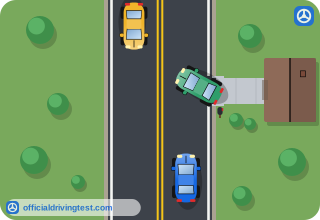
- Pump the brake pedal quickly and repeatedly
- Tap the brake pedal and release it several times
- Brake hard and keep firm, steady pressure on the pedal
- Press lightly and release the pressure as you slow
Show answer
Correct answer: Brake hard and keep firm, steady pressure on the pedal
The manual says to brake hard and keep firm and steady pressure; pumping or releasing the pressure reduces the effectiveness of ABS.
Source: North Carolina Driver Handbook (Revised May 2025), page 66 · Open this page in the manual (Manual page 66)
-
What does pumping the brake pedal do in a vehicle with ABS?
- It increases the stopping capability of the ABS
- It reduces the effectiveness of the ABS
- It turns off the anti-lock brakes for good
- It has no effect on the ABS
Show answer
Correct answer: It reduces the effectiveness of the ABS
The manual says pumping the brake pedal or releasing steady pressure will reduce the effectiveness of ABS.
Source: North Carolina Driver Handbook (Revised May 2025), page 66 · Open this page in the manual (Manual page 66)
-
What does the handbook say you should do to help prevent auto theft?
- Always leave the vehicle's windows fully open when parked
- Always park the vehicle facing the street when you leave it
- Leave the vehicle's lights on when it is parked at night
- Never leave the key in the ignition of an unattended vehicle
Show answer
Correct answer: Never leave the key in the ignition of an unattended vehicle
The manual says to never leave the key in the ignition switch of an unattended vehicle.
Source: North Carolina Driver Handbook (Revised May 2025), page 66 · Open this page in the manual (Manual page 66)
-
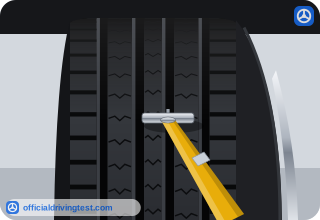
A tire is considered unsafe when it has less than what tread depth?
- 1/16 inch
- 1/32 inch
- 1/8 inch
- 1/4 inch
Show answer
Correct answer: 1/16 inch
The manual lists less than 1/16-inch tread depth among the conditions that make a tire unsafe.
Source: North Carolina Driver Handbook (Revised May 2025), page 66 · Open this page in the manual (Manual page 66)
-
Which condition makes a tire unsafe according to the handbook?
- It is a different brand from the other tires
- It has been repaired at a service station
- It is worn so that the tire cord is exposed
- It is cool to the touch
Show answer
Correct answer: It is worn so that the tire cord is exposed
The manual says tires are unsafe if cut, cracked or worn so as to expose the tire cord.
Source: North Carolina Driver Handbook (Revised May 2025), page 66 · Open this page in the manual (Manual page 66)
-
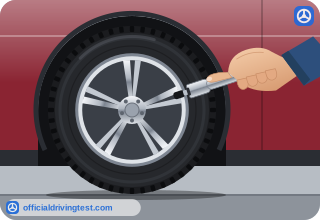
What is a result of driving on tires without enough air?
- They wear out more slowly and grip the road better
- They wear out more quickly and are more likely to blow out
- They wear heavily only on the middle of the tread
- They give better traction and fuel economy
Show answer
Correct answer: They wear out more quickly and are more likely to blow out
The manual says tires without enough air wear out more quickly and increase the likelihood of a blowout.
Source: North Carolina Driver Handbook (Revised May 2025), page 66 · Open this page in the manual (Manual page 66)
-
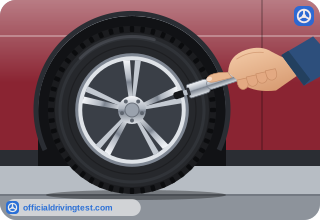
What effect do over-inflated tires have?
- They increase traction and wear on the tread edges only
- They increase the likelihood of tire cord damage only
- They shorten stopping distances on wet roads
- They reduce traction and wear heavily on the middle of the tread
Show answer
Correct answer: They reduce traction and wear heavily on the middle of the tread
The manual says over-inflated tires reduce traction and wear heavily on the middle of the tread.
Source: North Carolina Driver Handbook (Revised May 2025), page 66 · Open this page in the manual (Manual page 66)
-
What should you never do with tires, according to the handbook?
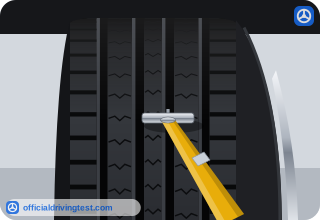
- Drive on smooth tires or tires with fabric showing
- Drive on tires that have been rotated more than once a year
- Drive on tires that were bought from a different store
- Drive on tires that are cool to the touch after a trip
Show answer
Correct answer: Drive on smooth tires or tires with fabric showing
The manual says never to drive on smooth tires or tires that have fabric showing.
Source: North Carolina Driver Handbook (Revised May 2025), page 66 · Open this page in the manual (Manual page 66)
-
How often must the air pressure of tires be checked?
- At least once each week
- At least once every three months
- At least once each month
- At least once each year
Show answer
Correct answer: At least once each month
The manual says tire air pressure must be checked at least once each month.
Source: North Carolina Driver Handbook (Revised May 2025), page 67 · Open this page in the manual (Manual page 67)
-
When is the best time to check tire air pressure?
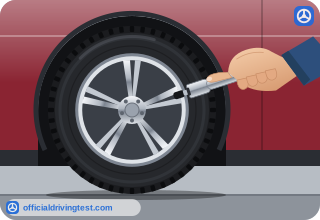
- Right after a long drive
- When the tires are cool
- When the tires are hot
- Only before a long trip
Show answer
Correct answer: When the tires are cool
The manual says the best time to check air pressure is when the tires are cool.
Source: North Carolina Driver Handbook (Revised May 2025), page 67 · Open this page in the manual (Manual page 67)
-
What tire air pressure should you follow?
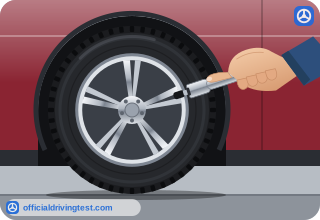
- The pressure printed on the tire cord
- The pressure that feels firm when pressed
- The pressure used by the service station
- The manufacturer's recommendation
Show answer
Correct answer: The manufacturer's recommendation
The manual says to follow the manufacturer's recommendation for the right amount of air.
Source: North Carolina Driver Handbook (Revised May 2025), page 67 · Open this page in the manual (Manual page 67)
-
Who may have emergency lights or sirens on their vehicles?
- Only law enforcement and emergency vehicles
- Any licensed vehicle that has a horn in good working order
- Any vehicle that is used for public service or hauling
- Tow trucks, delivery vehicles and vehicles owned by the state
Show answer
Correct answer: Only law enforcement and emergency vehicles
The manual says only law enforcement and emergency vehicles may have emergency lights or sirens.
Source: North Carolina Driver Handbook (Revised May 2025), page 67 · Open this page in the manual (Manual page 67)
-
How far away must a motor vehicle's horn be heard?
- At least 50 feet
- At least 100 feet
- At least 200 feet
- At least 500 feet
Show answer
Correct answer: At least 200 feet
The manual says the horn must be loud enough to be heard for at least 200 feet.
Source: North Carolina Driver Handbook (Revised May 2025), page 67 · Open this page in the manual (Manual page 67)
-
What should you do if your horn fails?
- Have it repaired at your next inspection
- Have it repaired immediately
- Use the emergency flashers as a horn
- Ignore it if you drive slowly
Show answer
Correct answer: Have it repaired immediately
The manual says if the horn fails, have it repaired immediately.
Source: North Carolina Driver Handbook (Revised May 2025), page 67 · Open this page in the manual (Manual page 67)
-
How must the horn be used?
- To greet other drivers and pedestrians as you pass them
- To tell other drivers to move out of your way at once
- To signal every time you pass another vehicle on the road
- As a reasonable warning device, not unreasonably
Show answer
Correct answer: As a reasonable warning device, not unreasonably
The manual says the horn must be used as a reasonable warning device and not used unnecessarily or unreasonably.
Source: North Carolina Driver Handbook (Revised May 2025), page 67 · Open this page in the manual (Manual page 67)
-
What does the vehicle's muffler do?
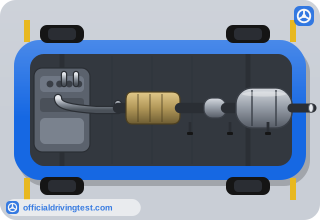
- It filters smoke and excessive noise
- It cools the engine
- It stores fuel vapors
- It warns other drivers of danger
Show answer
Correct answer: It filters smoke and excessive noise
The manual says the muffler filters smoke and excessive noise.
Source: North Carolina Driver Handbook (Revised May 2025), page 67 · Open this page in the manual (Manual page 67)
-
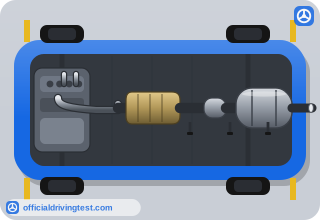
What danger can a leak in the exhaust system cause?
- The engine can overheat and stall on the roadway
- The brakes can lose hydraulic pressure without warning
- Poisonous carbon monoxide can enter the passenger compartment
- The headlights can become out of adjustment quickly
Show answer
Correct answer: Poisonous carbon monoxide can enter the passenger compartment
The manual says an exhaust leak can allow poisonous carbon monoxide gas into the passenger compartment.
Source: North Carolina Driver Handbook (Revised May 2025), page 67 · Open this page in the manual (Manual page 67)
-
How far does the handbook suggest you keep a window open while traveling, because of carbon monoxide?
- About six inches
- About one inch
- About half of the way
- About one foot
Show answer
Correct answer: About one inch
The manual suggests keeping a window open about one inch while traveling.
Source: North Carolina Driver Handbook (Revised May 2025), page 67 · Open this page in the manual (Manual page 67)
-
What can carbon monoxide poisoning cause, even in small amounts?
- You may see spots that block your view of the road ahead
- Your hands may shake so that you cannot steer the vehicle
- Your hearing may fail so that you cannot hear sirens
- You may become sleepy or unconscious and lose control
Show answer
Correct answer: You may become sleepy or unconscious and lose control
The manual says even small amounts can make you sleepy or unconscious and cause you to lose control of the vehicle.
Source: North Carolina Driver Handbook (Revised May 2025), page 67 · Open this page in the manual (Manual page 67)
-
Which sign may indicate a problem with the suspension system?
- It sways freely or bounces continuously
- It squeaks each time the brake pedal is pressed down
- It has a horn that sounds harsh or too loud to hear
- It has headlights that glare into other drivers' eyes
Show answer
Correct answer: It sways freely or bounces continuously
The manual says swaying freely, leaning heavily to one side in a turn or bouncing continuously may mean a suspension problem.
Source: North Carolina Driver Handbook (Revised May 2025), page 67 · Open this page in the manual (Manual page 67)
-
What can a faulty suspension system cause?
- The exhaust to leak into the passenger area
- The brake pedal to sink to the floor
- You can lose control of the vehicle
- The tires to become over-inflated
Show answer
Correct answer: You can lose control of the vehicle
The manual says a faulty suspension system can cause you to lose control of the vehicle.
Source: North Carolina Driver Handbook (Revised May 2025), page 67 · Open this page in the manual (Manual page 67)
-
What do a vehicle's emergency warning flashers do?
- Flash only the two rear lights
- Flash all four turn signal lights
- Flash the headlights and horn
- Flash the brake lights only
Show answer
Correct answer: Flash all four turn signal lights
The manual says the emergency warning device flashes all four turn signal lights.
Source: North Carolina Driver Handbook (Revised May 2025), page 67 · Open this page in the manual (Manual page 67)
-
For what may any vehicle use emergency flashers?
- To show that you are following the vehicle ahead too closely
- To ask other drivers to let you merge into their lane
- To show that you are about to turn right at an intersection
- To warn of a possible danger or that a vehicle is disabled
Show answer
Correct answer: To warn of a possible danger or that a vehicle is disabled
The manual says any vehicle can use the flashers to warn of a possible danger or that a vehicle is stopped or disabled.
Source: North Carolina Driver Handbook (Revised May 2025), page 67 · Open this page in the manual (Manual page 67)
-
What is the purpose of "driving green"?
- To decrease the amount of fuel you use with simple habits
- To reduce the vehicle's speed to below 40 mph on all roads
- To increase the speed of the vehicle in a safe manner
- To avoid the use of headlights and windshield wipers
Show answer
Correct answer: To decrease the amount of fuel you use with simple habits
The manual says driving green means adopting a few simple, inexpensive habits to decrease the fuel you use.
Source: North Carolina Driver Handbook (Revised May 2025), page 67 · Open this page in the manual (Manual page 67)
-
How much can every five miles over 60 mph cost you, according to the driving green tips?
- Up to an additional 10 cents a gallon
- Up to an additional 50 cents a gallon
- Up to an additional 30 cents a gallon
- Up to an additional one dollar a gallon
Show answer
Correct answer: Up to an additional 30 cents a gallon
The manual says every five miles over 60 mph can cost up to an additional 30 cents a gallon.
Source: North Carolina Driver Handbook (Revised May 2025), page 67 · Open this page in the manual (Manual page 67)
-
According to the driving green tips, what happens when you carry extra weight?
- Your vehicle uses less fuel
- Your vehicle must work harder
- Your tires wear on the edges only
- Your brakes stop the vehicle faster
Show answer
Correct answer: Your vehicle must work harder
The manual says that when you carry extra weight, your vehicle must work harder.
Source: North Carolina Driver Handbook (Revised May 2025), page 67 · Open this page in the manual (Manual page 67)
-
How often do the driving green tips say to check tire pressure?
- Once a week
- Once every six months
- Once a year
- Once a month
Show answer
Correct answer: Once a month
The manual says to check tire pressure once a month and keep tires properly inflated.
Source: North Carolina Driver Handbook (Revised May 2025), page 67 · Open this page in the manual (Manual page 67)
-
By how much can abrupt starts and hard stops increase fuel consumption?
- 40%
- 10%
- 20%
- 60%
Show answer
Correct answer: 40%
The manual says abrupt starts and hard stops can increase fuel consumption by 40%.
Source: North Carolina Driver Handbook (Revised May 2025), page 68 · Open this page in the manual (Manual page 68)
-
According to the driving green tips, when should you turn off the engine?
- If you are waiting for more than an hour or so
- Every time you stop at a traffic signal or stop sign
- If you are waiting for more than a couple of minutes
- If you are waiting for more than thirty seconds
Show answer
Correct answer: If you are waiting for more than a couple of minutes
The manual says to turn off the engine if you are waiting for more than a couple of minutes.
Source: North Carolina Driver Handbook (Revised May 2025), page 68 · Open this page in the manual (Manual page 68)
-
According to the driving green tips, when should you roll down the windows and when should you use the air conditioning?
- Windows down above 40 mph, air conditioning below 40 mph
- Windows down below 40 mph, air conditioning above 40 mph
- Windows down above 60 mph, air conditioning below 60 mph
- Air conditioning at all speeds, with the windows closed
Show answer
Correct answer: Windows down below 40 mph, air conditioning above 40 mph
The manual says to roll down windows at speeds less than 40 mph and use air conditioning at more than 40 mph.
Source: North Carolina Driver Handbook (Revised May 2025), page 68 · Open this page in the manual (Manual page 68)
-
How many gallons of fuel can you save by using cruise control for more than 10,000 miles a year?
- 10 gallons
- 30 gallons
- 100 gallons
- 60 gallons
Show answer
Correct answer: 60 gallons
The manual says using cruise control for more than 10,000 miles a year can save 60 gallons of fuel.
Source: North Carolina Driver Handbook (Revised May 2025), page 68 · Open this page in the manual (Manual page 68)
-
By how much can clogged air filters cut mileage?
- 10%
- 5%
- 25%
- 40%
Show answer
Correct answer: 10%
The manual says clogged air filters can cut mileage by 10%.
Source: North Carolina Driver Handbook (Revised May 2025), page 68 · Open this page in the manual (Manual page 68)
-
How much gas leakage can tightening your fuel cap prevent each year?
- Up to 5 gallons
- Up to 10 gallons
- Up to 30 gallons
- Up to 60 gallons
Show answer
Correct answer: Up to 30 gallons
The manual says tightening the fuel cap can prevent leakage of up to 30 gallons of gas a year.
Source: North Carolina Driver Handbook (Revised May 2025), page 68 · Open this page in the manual (Manual page 68)
-
What does communicating mean in defensive driving?
- Using the horn to warn all other drivers on the road
- Letting others know what you plan to do early enough
- Waving other drivers through an intersection ahead of you
- Speaking with your passengers about the route to take
Show answer
Correct answer: Letting others know what you plan to do early enough
The manual defines communicating as letting others know what you plan to do early enough to avoid a crash.
Source: North Carolina Driver Handbook (Revised May 2025), page 68 · Open this page in the manual (Manual page 68)
-
When should you signal your intention?
- Only when you see other vehicles on the road near you
- Only when you turn at an intersection with a traffic signal
- Only when you change lanes on an interstate highway
- Any time you plan to slow down, stop, turn or change lanes
Show answer
Correct answer: Any time you plan to slow down, stop, turn or change lanes
The manual says to signal any time you plan to slow down, stop, turn, change lanes or pull away from the curb.
Source: North Carolina Driver Handbook (Revised May 2025), page 68 · Open this page in the manual (Manual page 68)
-
Should you signal your movements when you do not see other vehicles on the road?
- Yes, be in the habit of always signaling
- No, signal only when others are near
- No, signal only at night
- Yes, but only for left turns
Show answer
Correct answer: Yes, be in the habit of always signaling
The manual says to be in the habit of signalling your movements even when you do not see others on the road.
Source: North Carolina Driver Handbook (Revised May 2025), page 68 · Open this page in the manual (Manual page 68)
-
What must you do before you signal a movement?
- Slow down and come to a complete stop
- Sound your horn to warn the other drivers
- See that the movement can be made safely
- Move into the center of the lane you are in
Show answer
Correct answer: See that the movement can be made safely
The manual says that before you signal, you must first see that your movement can be made safely.
Source: North Carolina Driver Handbook (Revised May 2025), page 68 · Open this page in the manual (Manual page 68)
-
From where are hand signals given?
- From the driver's window, using the right arm and hand
- From the driver's window, using the left arm and hand
- From the passenger window, using either arm
- From above the roof, using either hand
Show answer
Correct answer: From the driver's window, using the left arm and hand
The manual says hand signals are given from the driver's window using the left arm and hand.
Source: North Carolina Driver Handbook (Revised May 2025), page 69 · Open this page in the manual (Manual page 69)
-
How do you signal a left turn with a hand signal?
- Hold the arm straight out with the forearm and hand straight up
- Point the arm and hand down with the palm facing back
- Hold the arm out with the palm facing forward and fingers closed
- Hold the arm and hand straight out and point the first finger
Show answer
Correct answer: Hold the arm and hand straight out and point the first finger
The manual says to signal a left turn, hold the arm and hand straight out and point the first finger.
Source: North Carolina Driver Handbook (Revised May 2025), page 69 · Open this page in the manual (Manual page 69)
-
How do you signal a right turn with a hand signal?
- Hold the arm straight out with the forearm and hand straight up, palm forward
- Hold the arm and hand straight out and point the first finger
- Point the arm and hand down with the palm facing back
- Hold the arm straight out with the forearm pointing down, palm forward
Show answer
Correct answer: Hold the arm straight out with the forearm and hand straight up, palm forward
The manual says to signal a right turn, hold the arm straight out and the forearm and hand straight up, palm facing forward.
Source: North Carolina Driver Handbook (Revised May 2025), page 69 · Open this page in the manual (Manual page 69)
-
How do you signal stopping and slowing down with a hand signal?
- Hold the arm and hand straight out and point the first finger
- Hold the arm straight up with the palm facing forward
- Point the arm and hand down, palm facing back
- Hold the arm straight out and the forearm up, palm forward
Show answer
Correct answer: Point the arm and hand down, palm facing back
The manual says to signal stopping and slowing down, point the arm and hand down with the palm facing back.
Source: North Carolina Driver Handbook (Revised May 2025), page 69 · Open this page in the manual (Manual page 69)
-
Are flashing light signals for turns a legal substitute for hand signals?
- No, hand signals are required at all times
- Yes, they are legal substitutes
- No, they may be used only at night
- Yes, but only on interstate highways
Show answer
Correct answer: Yes, they are legal substitutes
The manual says flashing light signals for turns are legal substitutes for hand signals.
Source: North Carolina Driver Handbook (Revised May 2025), page 69 · Open this page in the manual (Manual page 69)
-
When are flashing turn signals hard to see?
- At night, when the lenses of the signals are brightly lit
- In heavy rain only, when the pavement is wet
- At noon, when the sun is directly overhead
- In late afternoon and early morning, when lenses reflect sunlight
Show answer
Correct answer: In late afternoon and early morning, when lenses reflect sunlight
The manual says in late afternoon and early morning the lenses may reflect sunlight, making it difficult to tell whether the signals are flashing.
Source: North Carolina Driver Handbook (Revised May 2025), page 69 · Open this page in the manual (Manual page 69)
-
At night, which is much easier to see, a flashing light signal or a hand signal?
- A flashing light signal
- A hand signal
- Both are equally easy to see
- Neither can be seen at night
Show answer
Correct answer: A flashing light signal
The manual says at night a flashing light signal is much easier to see than a hand signal and is sufficient.
Source: North Carolina Driver Handbook (Revised May 2025), page 69 · Open this page in the manual (Manual page 69)
-
How far before turning or stopping should you signal at least?
- The last 25 feet
- The last 50 feet
- The last 100 feet
- The last 75 feet
Show answer
Correct answer: The last 100 feet
The manual says to signal at least the last 100 feet before turning or stopping.
Source: North Carolina Driver Handbook (Revised May 2025), page 69 · Open this page in the manual (Manual page 69)
-
If the speed limit is 45 mph or more, how far before turning should you signal at least?
- The last 100 feet
- The last 200 feet
- The last 300 feet
- The last 500 feet
Show answer
Correct answer: The last 200 feet
The manual says if the speed limit is 45 mph or more, signal at least the last 200 feet before turning.
Source: North Carolina Driver Handbook (Revised May 2025), page 69 · Open this page in the manual (Manual page 69)
-
During what hours does the law require the use of headlights?
- From dusk to midnight
- From one hour before sunset to sunrise
- From sunrise to sunset
- From sunset to sunrise
Show answer
Correct answer: From sunset to sunrise
The manual says the law requires headlights from sunset to sunrise and when visibility is 400 feet or less.
Source: North Carolina Driver Handbook (Revised May 2025), page 71 · Open this page in the manual (Manual page 71)
-
At what visibility must headlights be used?
- When visibility is 400 feet or less
- When visibility is 100 feet or less
- When visibility is 200 feet or less
- When visibility is 1,000 feet or less
Show answer
Correct answer: When visibility is 400 feet or less
The manual says the law requires headlights when visibility is 400 feet or less.
Source: North Carolina Driver Handbook (Revised May 2025), page 71 · Open this page in the manual (Manual page 71)
-
Which headlights should you use when you drive at night in a city?
- High-beam headlights
- Parking lights only
- Low-beam headlights
- Fog lights only
Show answer
Correct answer: Low-beam headlights
The manual says to use low-beam headlights when you drive at night in a city.
Source: North Carolina Driver Handbook (Revised May 2025), page 71 · Open this page in the manual (Manual page 71)
-
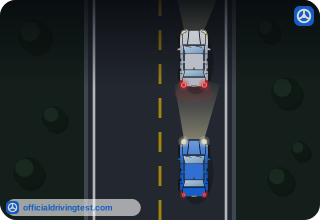
When driving at night on the open road, which headlights should you use?
- Low beams at all times, even on roads with no other traffic
- High beams, unless approaching or following another vehicle
- High beams at all times, even when following another vehicle
- Parking lights unless you are approaching another vehicle
Show answer
Correct answer: High beams, unless approaching or following another vehicle
The manual says on the open road use high-beam headlights unless you are approaching or following another vehicle.
Source: North Carolina Driver Handbook (Revised May 2025), page 71 · Open this page in the manual (Manual page 71)
-
When an approaching vehicle does not dim its headlights, what can you do to remind the driver?
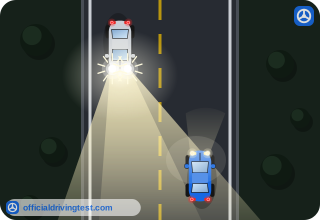
- Blink your high beams once
- Sound your horn
- Flash your high beams several times
- Turn on your emergency flashers
Show answer
Correct answer: Blink your high beams once
The manual says you can remind the driver by blinking your high beams once.
Source: North Carolina Driver Handbook (Revised May 2025), page 71 · Open this page in the manual (Manual page 71)
-
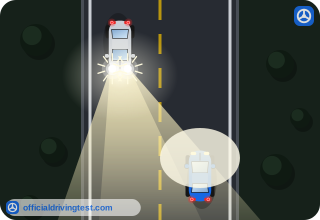
If the driver of an approaching vehicle still does not dim the lights, what should you do?
- Switch to high beams to match
- Turn off your lights
- Keep your lights on low beam
- Stop on the roadside
Show answer
Correct answer: Keep your lights on low beam
The manual says if the driver still does not dim the lights, keep your lights on low beam.
Source: North Carolina Driver Handbook (Revised May 2025), page 71 · Open this page in the manual (Manual page 71)
-
Why should you never leave your headlights on when you park at night?
- They can drain your battery
- They can make your vehicle harder to steal
- They can damage the taillights
- They can blind the drivers of oncoming vehicles
Show answer
Correct answer: They can blind the drivers of oncoming vehicles
The manual says never to leave your headlights on when you park at night because they can blind the drivers of oncoming vehicles.
Source: North Carolina Driver Handbook (Revised May 2025), page 71 · Open this page in the manual (Manual page 71)
-
When are North Carolina motorists required to use headlights because of the weather?
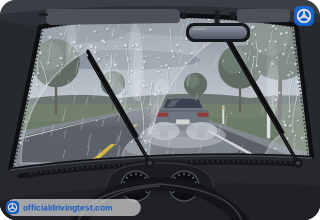
- Only when fog is so thick that the road ahead cannot be seen
- Only when the wipers are on and it is after sunset
- Whenever they are using windshield wipers due to inclement weather
- Only on roads where the speed limit is above 45 mph
Show answer
Correct answer: Whenever they are using windshield wipers due to inclement weather
The manual requires headlights whenever windshield wipers are in use because of inclement weather.
Source: North Carolina Driver Handbook (Revised May 2025), page 73 · Open this page in the manual (Manual page 73)
-
When starting to move on snowy or icy roads in a vehicle with a manual shift, what should you do?
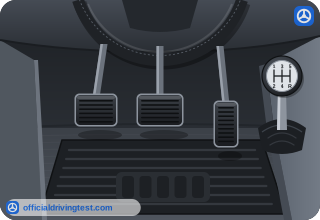
- Start in first gear and release the clutch quickly
- Start in second gear or higher and release the clutch slowly
- Start in reverse gear to gain traction
- Start in neutral and let the vehicle roll
Show answer
Correct answer: Start in second gear or higher and release the clutch slowly
For manual shifts on snow or ice, the manual says to start in second gear or higher and release the clutch slowly.
Source: North Carolina Driver Handbook (Revised May 2025), page 73 · Open this page in the manual (Manual page 73)