North Carolina: Signals & vehicle controls — Part 3 Practice Test
Questions in this part include: “How often must the air pressure of tires be checked?” · “How must the horn be used?”
Independent educational site · not affiliated with any government agency or DMV
Ready? Test yourself
- Instant feedback with an explanation
- Every answer cites its source in the manual
- Your best score is saved on this device
Questions are original and based on the official manual "North Carolina Driver Handbook" (Revised May 2025), North Carolina Division of Motor Vehicles (NCDMV).
All 17 questions in this practice test
Take the test above first, then use this list to study. Tap “Show answer” to see the correct answer and explanation.
Show the questions and answersHide the questions
-
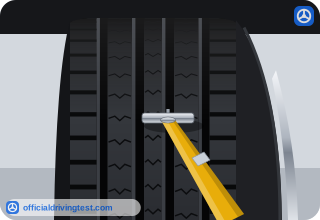
Which condition makes a tire unsafe according to the handbook?
- It is a different brand from the other tires
- It has been repaired at a service station
- It is worn so that the tire cord is exposed
- It is cool to the touch
Show answer
Correct answer: It is worn so that the tire cord is exposed
The manual says tires are unsafe if cut, cracked or worn so as to expose the tire cord.
Source: North Carolina Driver Handbook (Revised May 2025), page 66 · Open this page in the manual (Manual page 66)
-
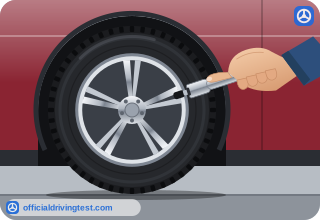
What is a result of driving on tires without enough air?
- They wear out more slowly and grip the road better
- They wear out more quickly and are more likely to blow out
- They wear heavily only on the middle of the tread
- They give better traction and fuel economy
Show answer
Correct answer: They wear out more quickly and are more likely to blow out
The manual says tires without enough air wear out more quickly and increase the likelihood of a blowout.
Source: North Carolina Driver Handbook (Revised May 2025), page 66 · Open this page in the manual (Manual page 66)
-
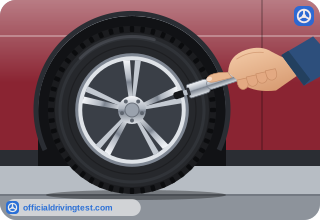
What effect do over-inflated tires have?
- They increase traction and wear on the tread edges only
- They increase the likelihood of tire cord damage only
- They shorten stopping distances on wet roads
- They reduce traction and wear heavily on the middle of the tread
Show answer
Correct answer: They reduce traction and wear heavily on the middle of the tread
The manual says over-inflated tires reduce traction and wear heavily on the middle of the tread.
Source: North Carolina Driver Handbook (Revised May 2025), page 66 · Open this page in the manual (Manual page 66)
-
What should you never do with tires, according to the handbook?
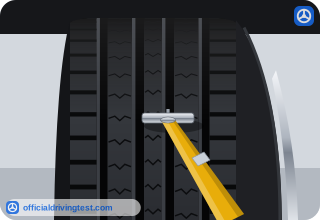
- Drive on smooth tires or tires with fabric showing
- Drive on tires that have been rotated more than once a year
- Drive on tires that were bought from a different store
- Drive on tires that are cool to the touch after a trip
Show answer
Correct answer: Drive on smooth tires or tires with fabric showing
The manual says never to drive on smooth tires or tires that have fabric showing.
Source: North Carolina Driver Handbook (Revised May 2025), page 66 · Open this page in the manual (Manual page 66)
-
How often must the air pressure of tires be checked?
- At least once each week
- At least once every three months
- At least once each month
- At least once each year
Show answer
Correct answer: At least once each month
The manual says tire air pressure must be checked at least once each month.
Source: North Carolina Driver Handbook (Revised May 2025), page 67 · Open this page in the manual (Manual page 67)
-
When is the best time to check tire air pressure?
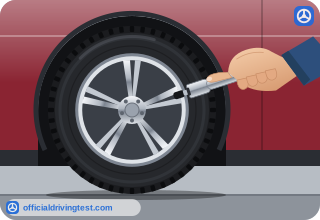
- Right after a long drive
- When the tires are cool
- When the tires are hot
- Only before a long trip
Show answer
Correct answer: When the tires are cool
The manual says the best time to check air pressure is when the tires are cool.
Source: North Carolina Driver Handbook (Revised May 2025), page 67 · Open this page in the manual (Manual page 67)
-
What tire air pressure should you follow?
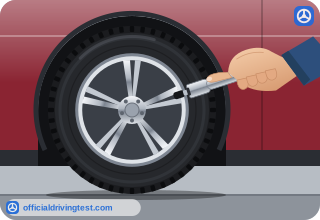
- The pressure printed on the tire cord
- The pressure that feels firm when pressed
- The pressure used by the service station
- The manufacturer's recommendation
Show answer
Correct answer: The manufacturer's recommendation
The manual says to follow the manufacturer's recommendation for the right amount of air.
Source: North Carolina Driver Handbook (Revised May 2025), page 67 · Open this page in the manual (Manual page 67)
-
Who may have emergency lights or sirens on their vehicles?
- Only law enforcement and emergency vehicles
- Any licensed vehicle that has a horn in good working order
- Any vehicle that is used for public service or hauling
- Tow trucks, delivery vehicles and vehicles owned by the state
Show answer
Correct answer: Only law enforcement and emergency vehicles
The manual says only law enforcement and emergency vehicles may have emergency lights or sirens.
Source: North Carolina Driver Handbook (Revised May 2025), page 67 · Open this page in the manual (Manual page 67)
-
How far away must a motor vehicle's horn be heard?
- At least 50 feet
- At least 100 feet
- At least 200 feet
- At least 500 feet
Show answer
Correct answer: At least 200 feet
The manual says the horn must be loud enough to be heard for at least 200 feet.
Source: North Carolina Driver Handbook (Revised May 2025), page 67 · Open this page in the manual (Manual page 67)
-
What should you do if your horn fails?
- Have it repaired at your next inspection
- Have it repaired immediately
- Use the emergency flashers as a horn
- Ignore it if you drive slowly
Show answer
Correct answer: Have it repaired immediately
The manual says if the horn fails, have it repaired immediately.
Source: North Carolina Driver Handbook (Revised May 2025), page 67 · Open this page in the manual (Manual page 67)
-
How must the horn be used?
- To greet other drivers and pedestrians as you pass them
- To tell other drivers to move out of your way at once
- To signal every time you pass another vehicle on the road
- As a reasonable warning device, not unreasonably
Show answer
Correct answer: As a reasonable warning device, not unreasonably
The manual says the horn must be used as a reasonable warning device and not used unnecessarily or unreasonably.
Source: North Carolina Driver Handbook (Revised May 2025), page 67 · Open this page in the manual (Manual page 67)
-
What does the vehicle's muffler do?
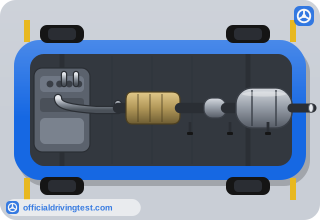
- It filters smoke and excessive noise
- It cools the engine
- It stores fuel vapors
- It warns other drivers of danger
Show answer
Correct answer: It filters smoke and excessive noise
The manual says the muffler filters smoke and excessive noise.
Source: North Carolina Driver Handbook (Revised May 2025), page 67 · Open this page in the manual (Manual page 67)
-
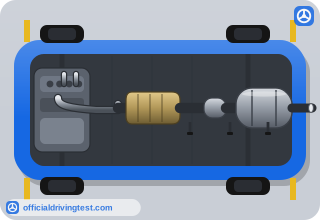
What danger can a leak in the exhaust system cause?
- The engine can overheat and stall on the roadway
- The brakes can lose hydraulic pressure without warning
- Poisonous carbon monoxide can enter the passenger compartment
- The headlights can become out of adjustment quickly
Show answer
Correct answer: Poisonous carbon monoxide can enter the passenger compartment
The manual says an exhaust leak can allow poisonous carbon monoxide gas into the passenger compartment.
Source: North Carolina Driver Handbook (Revised May 2025), page 67 · Open this page in the manual (Manual page 67)
-
How far does the handbook suggest you keep a window open while traveling, because of carbon monoxide?
- About six inches
- About one inch
- About half of the way
- About one foot
Show answer
Correct answer: About one inch
The manual suggests keeping a window open about one inch while traveling.
Source: North Carolina Driver Handbook (Revised May 2025), page 67 · Open this page in the manual (Manual page 67)
-
What can carbon monoxide poisoning cause, even in small amounts?
- You may see spots that block your view of the road ahead
- Your hands may shake so that you cannot steer the vehicle
- Your hearing may fail so that you cannot hear sirens
- You may become sleepy or unconscious and lose control
Show answer
Correct answer: You may become sleepy or unconscious and lose control
The manual says even small amounts can make you sleepy or unconscious and cause you to lose control of the vehicle.
Source: North Carolina Driver Handbook (Revised May 2025), page 67 · Open this page in the manual (Manual page 67)
-
Which sign may indicate a problem with the suspension system?
- It sways freely or bounces continuously
- It squeaks each time the brake pedal is pressed down
- It has a horn that sounds harsh or too loud to hear
- It has headlights that glare into other drivers' eyes
Show answer
Correct answer: It sways freely or bounces continuously
The manual says swaying freely, leaning heavily to one side in a turn or bouncing continuously may mean a suspension problem.
Source: North Carolina Driver Handbook (Revised May 2025), page 67 · Open this page in the manual (Manual page 67)
-
What can a faulty suspension system cause?
- The exhaust to leak into the passenger area
- The brake pedal to sink to the floor
- You can lose control of the vehicle
- The tires to become over-inflated
Show answer
Correct answer: You can lose control of the vehicle
The manual says a faulty suspension system can cause you to lose control of the vehicle.
Source: North Carolina Driver Handbook (Revised May 2025), page 67 · Open this page in the manual (Manual page 67)