New York: Signals & vehicle controls Practice Test
Signaling, horns, headlights, and what to do if your vehicle breaks down.
Independent educational site · not affiliated with any government agency or DMV
Ready? Test yourself
Answer to start, or tap Start below:
If you buy a vehicle from someone who is not a New York State dealer, which form should you request for extra time to get the required vehicle inspection after you register it?
- Instant feedback with an explanation
- Every answer cites its source in the manual
- Your best score is saved on this device
- Keyboard: press 1 to 4 to answer and Enter for the next question
Questions are original and based on the official manual "New York State Driver's Manual" (Form MV-21), New York State Department of Motor Vehicles (DMV).
All 30 questions in this practice test
Take the test above first, then use this list to study. Tap “Show answer” to see the correct answer and explanation.
Show the questions and answersHide the questions
-
If you buy a vehicle from someone who is not a New York State dealer, which form should you request for extra time to get the required vehicle inspection after you register it?
- Change of Address Form (MV-232)
- Schedule of Registration Fees (MV-204A)
- Statement of Transaction/Sale or Gift of Motor Vehicle (DTF-802)
- Ten-Day Time Extension for Motor Vehicle Inspection (VS-1077)
Show answer
Correct answer: Ten-Day Time Extension for Motor Vehicle Inspection (VS-1077)
If you purchase a vehicle from someone who is not a NYS dealer, you must have the vehicle inspected within 10 days after you register it. Make sure to request a 'Ten-Day Time Extension for Motor Vehicle Inspection' (VS-1077).
Source: New York State Driver's Manual (Form MV-21), page 27 · Open this page in the manual (Manual page 27)
-
Before selling a vehicle to a buyer, within how many days must a New York State dealer have had the vehicle inspected?
- 30 days
- 10 days
- 60 days
- 45 days
Show answer
Correct answer: 30 days
The dealer must have the vehicle inspected within 30 days before they sell it to you.
Source: New York State Driver's Manual (Form MV-21), page 24 · Open this page in the manual (Manual page 24)
-
Within how many days of the date of transfer or sale must most vehicles sold in New York State be inspected?
- 10 days
- 60 days
- 90 days
- 30 days
Show answer
Correct answer: 30 days
Most vehicles sold in New York State must be inspected within 30 days of the date of transfer or sale and must have a certificate of inspection before delivery.
Source: New York State Driver's Manual (Form MV-21), page 27 · Open this page in the manual (Manual page 27)
-
If a person moves to New York State, an inspection certificate issued before the move remains valid until it expires or how long from the date it was issued, whichever occurs first?
- One year
- Six months
- Two years
- 90 days
Show answer
Correct answer: One year
If a person moves to NYS, an inspection certificate that was issued before is valid until it expires or one year from the date it was issued, whichever occurs first.
Source: New York State Driver's Manual (Form MV-21), page 27 · Open this page in the manual (Manual page 27)
-
What colors are the signs at official state-licensed vehicle inspection stations?
- Red and white
- Yellow and black
- Blue and white
- Green and white
Show answer
Correct answer: Yellow and black
Inspection stations have yellow and black 'Official Motor Vehicle Inspection Station' signs.
Source: New York State Driver's Manual (Form MV-21), page 27 · Open this page in the manual (Manual page 27)
-
To qualify for a waiver after failing a high enhanced or OBD II emissions inspection, the attempted repair must cost at least how much?
- $100
- $250
- $450
- $1,000
Show answer
Correct answer: $450
An attempt must be made to repair the malfunction and the cost for repairs must be at least $450 to qualify for a waiver.
Source: New York State Driver's Manual (Form MV-21), page 28 · Open this page in the manual (Manual page 28)
-
Which gasoline-powered vehicles are subject to a safety inspection only, without an exhaust emissions inspection?
- Vehicles five to ten model years old, or used for business
- Vehicles registered in New York City only
- Vehicles bought from a private seller
- Vehicles under two or at least 26 model years old, or historic
Show answer
Correct answer: Vehicles under two or at least 26 model years old, or historic
Exceptions to the emissions inspection are gasoline-powered vehicles that are 26 or more model years old, or less than two model years old, or registered as historic. Those vehicles are subject to a safety inspection only.
Source: New York State Driver's Manual (Form MV-21), page 28 · Open this page in the manual (Manual page 28)
-
Diesel-powered vehicles that operate in New York State, even if registered elsewhere, are subject to random roadside safety tests by which agencies?
- The NYS Police and NYS Department of Transportation
- The NYS Department of Health only
- The U.S. Federal Highway Administration only
- Local county sheriffs only
Show answer
Correct answer: The NYS Police and NYS Department of Transportation
Diesel-powered vehicles that operate in NYS, even if registered elsewhere, are subject to random roadside safety tests by the NYS Police and the NYS Department of Transportation.
Source: New York State Driver's Manual (Form MV-21), page 28 · Open this page in the manual (Manual page 28)
-
Vehicles with a gross vehicle weight rating (GVWR) of more than how many pounds are subject to a diesel fuel emissions inspection?
- 5,000 pounds
- 8,500 pounds
- 12,000 pounds
- 18,000 pounds
Show answer
Correct answer: 8,500 pounds
Vehicles with a gross vehicle weight rating (GVWR) more than 8,500 pounds are subject to a Diesel fuel emissions inspection.
Source: New York State Driver's Manual (Form MV-21), page 28 · Open this page in the manual (Manual page 28)
-
By regulation, the DMV can receive a complaint about a repair shop only within what time or mileage limit of the vehicle repairs, whichever comes first?
- 30 days or 1,000 miles
- 60 days or 2,000 miles
- 90 days or 3,000 miles
- 180 days or 5,000 miles
Show answer
Correct answer: 90 days or 3,000 miles
By regulation, the DMV can receive a repair shop complaint only within 90 days or 3,000 miles (4,828 km) of the vehicle repairs, whichever comes first.
Source: New York State Driver's Manual (Form MV-21), page 28 · Open this page in the manual (Manual page 28)
-
How should you sit while driving, according to the manual?
- Slouched in the seat, using only one hand on the wheel
- Reclined far back with your knees against the wheel
- Comfortable but vertical, with both hands on the wheel
- Leaning forward with your chest against the wheel
Show answer
Correct answer: Comfortable but vertical, with both hands on the wheel
The manual says to sit in a comfortable but vertical position and keep both hands on the wheel; slouching or using only one hand makes the vehicle harder to control.
Source: New York State Driver's Manual (Form MV-21), page 45 · Open this page in the manual (Manual page 45)
-
According to the manual, how often must a vehicle be inspected to legally operate or park it on public highways?
- Once every two years
- At least once a year
- Only when it is first purchased
- Every six months
Show answer
Correct answer: At least once a year
The manual states no person shall operate or park a vehicle on public highways unless it has been inspected at least once a year.
Source: New York State Driver's Manual (Form MV-21), page 53 · Open this page in the manual (Manual page 53)
-
According to the manual, if your brakes pull to one side, what might be the cause?
- The tires are simply new
- They may be wet or need repair
- The tires are overinflated
- The horn is malfunctioning
Show answer
Correct answer: They may be wet or need repair
The manual states brakes that pull to one side may be wet or may need to be adjusted or repaired.
Source: New York State Driver's Manual (Form MV-21), page 53 · Open this page in the manual (Manual page 53)
-
According to the manual, a whining noise when making a sharp turn can indicate a problem with which vehicle system?
- The steering system
- The horn
- The rear window defogger
- The tires
Show answer
Correct answer: The steering system
The manual states that if your vehicle has power steering, a noise like a whine when you make a sharp turn can indicate a problem.
Source: New York State Driver's Manual (Form MV-21), page 53 · Open this page in the manual (Manual page 53)
-
According to the manual, what is the minimum legal tread depth for tires?
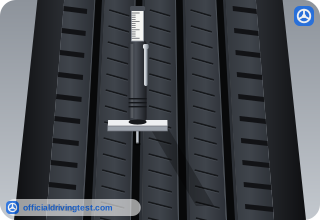
- 1/32 of an inch
- 2/32 of an inch
- 4/32 of an inch
- 8/32 of an inch
Show answer
Correct answer: 2/32 of an inch
The manual states that the law requires tires to have at least 2/32nds of an inch (.16 cm) of tread.
Source: New York State Driver's Manual (Form MV-21), page 53 · Open this page in the manual (Manual page 53)
-
According to the manual, what everyday item can you use to check your tire's tread depth?
- A penny
- A dime
- A quarter
- A dollar bill
Show answer
Correct answer: A penny
The manual describes using a penny with Abraham Lincoln's head placed into the tire groove to check tread depth.
Source: New York State Driver's Manual (Form MV-21), page 53 · Open this page in the manual (Manual page 53)
-
According to the manual, it is illegal to drive with tires that have:
- Tread worn down to 3/32nds of an inch
- Cuts down to the cords, bumps, or bulges
- Any dirt on the sidewalls
- Whitewall sidewalls
Show answer
Correct answer: Cuts down to the cords, bumps, or bulges
The manual states it is illegal to drive with tires that have cuts down to the cords, bumps or bulges.
Source: New York State Driver's Manual (Form MV-21), page 53 · Open this page in the manual (Manual page 53)
-
According to the manual, your vehicle's horn should be used:
- To express anger at other drivers
- To warn others of possible problems
- Only at night
- Never, since it is optional safety equipment
Show answer
Correct answer: To warn others of possible problems
The manual states the horn should be used properly, not to express anger at other drivers or pedestrians, as a means of warning others of possible problems.
Source: New York State Driver's Manual (Form MV-21), page 53 · Open this page in the manual (Manual page 53)
-
What does the abbreviation ADAS stand for in the New York State Driver's Manual?
- Automatic Driving Assistance Software
- Advanced Driver Assistance Systems
- Auxiliary Data and Alert System
- Advanced Diagnostic and Alert Sensors
Show answer
Correct answer: Advanced Driver Assistance Systems
The manual defines ADAS as Advanced Driver Assistance Systems.
Source: New York State Driver's Manual (Form MV-21), page 78 · Open this page in the manual (Manual page 78)
-
According to the manual, what are ADAS safety features designed to do?
- Allow the driver to stop paying attention to the road
- Replace the need for a driver's license
- Increase the vehicle's top speed
- Save lives and prevent injuries, if used properly
Show answer
Correct answer: Save lives and prevent injuries, if used properly
The manual states these features are designed to save lives and prevent injuries, if used properly.
Source: New York State Driver's Manual (Form MV-21), page 78 · Open this page in the manual (Manual page 78)
-
How can ADAS safety features respond to a potential danger, according to the manual?
- They can alert you or take control of braking or steering
- They can only display a warning light with no sound
- They can only automatically stop the vehicle completely
- They can only send a report to the DMV
Show answer
Correct answer: They can alert you or take control of braking or steering
The manual states safety features may provide alerts, such as sounds or vibration, or may take control of the vehicle, such as adjusting the braking or steering.
Source: New York State Driver's Manual (Form MV-21), page 78 · Open this page in the manual (Manual page 78)
-
Which of the following is listed in the manual as an example of an ADAS safety feature?
- Automatic toll payment
- Remote engine start
- Forward collision warning
- Satellite radio
Show answer
Correct answer: Forward collision warning
The manual's list of safety features includes forward collision warning, along with blind spot warning, back-up camera, automatic emergency braking, lane keeping assistance, and active parking assist.
Source: New York State Driver's Manual (Form MV-21), page 78 · Open this page in the manual (Manual page 78)
-
Which safety features are you NOT allowed to use when taking your driving test, according to the manual?
- Turn signals and headlights
- Parking assist and cruise control
- Seatbelts and mirrors
- The horn and windshield wipers
Show answer
Correct answer: Parking assist and cruise control
The manual states that when taking your driving test, you will not be allowed to use certain safety features, such as parking assist and cruise control.
Source: New York State Driver's Manual (Form MV-21), page 78 · Open this page in the manual (Manual page 78)
-
According to the manual, what is the proper role of ADAS safety features?
- To completely drive the vehicle for you
- To replace the need for mirrors and head checks
- To take over only during bad weather
- To assist you in the driving task, not to drive the vehicle for you
Show answer
Correct answer: To assist you in the driving task, not to drive the vehicle for you
The manual says safety features are meant to assist you in the driving task; they are not there to drive the vehicle, and you must remain engaged and focused.
Source: New York State Driver's Manual (Form MV-21), page 78 · Open this page in the manual (Manual page 78)
-
Who is responsible for the safe operation of a vehicle equipped with ADAS features, according to the manual?
- You, the driver, at all times
- The vehicle manufacturer
- The DMV
- No one, once the features are activated
Show answer
Correct answer: You, the driver, at all times
The manual states you are responsible for the safe operation of your vehicle at all times and should not rely on safety features alone.
Source: New York State Driver's Manual (Form MV-21), page 78 · Open this page in the manual (Manual page 78)
-
What does the manual recommend you read to learn how your vehicle's safety features operate?
- The registration card
- A newspaper review of the vehicle
- Your Vehicle Owner's Manual
- The insurance policy
Show answer
Correct answer: Your Vehicle Owner's Manual
The manual advises reading your Vehicle Owner's Manual to learn how your vehicle's safety features operate.
Source: New York State Driver's Manual (Form MV-21), page 78 · Open this page in the manual (Manual page 78)
-
In which conditions does the manual warn that ADAS safety features may not work properly?
- Only on highways
- Rain, snow, ice, fog, hills, and curves
- Only at night
- Only in heavy stop-and-go city traffic
Show answer
Correct answer: Rain, snow, ice, fog, hills, and curves
The manual warns that safety features may not work properly in certain conditions such as rain, snow, ice, fog, hills, and curves.
Source: New York State Driver's Manual (Form MV-21), page 78 · Open this page in the manual (Manual page 78)
-
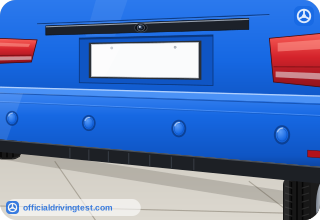
What does the manual advise about your vehicle's sensors?
- Cover them when not in use
- Replace them every year regardless of condition
- They require no maintenance
- Always keep vehicle sensors clean and damage free
Show answer
Correct answer: Always keep vehicle sensors clean and damage free
The manual advises always keeping vehicle sensors clean and damage free.
Source: New York State Driver's Manual (Form MV-21), page 78 · Open this page in the manual (Manual page 78)
-
According to the vehicle technologies chart in the manual, is adaptive cruise control permitted for use during the road test?
- No
- Yes, always
- Only for drivers over 21
- Only in highway zones
Show answer
Correct answer: No
The chart lists adaptive cruise control as not permitted for testing.
Source: New York State Driver's Manual (Form MV-21), page 79 · Open this page in the manual (Manual page 79)
-
According to the manual, who makes the final decision on scoring regarding whether an applicant relied on ADAS features during the road test?
- The vehicle manufacturer
- The applicant themselves
- The license examiner
- A random computer algorithm
Show answer
Correct answer: The license examiner
The manual states the license examiner will evaluate whether the applicant relied on ADAS features and that the examiner's scoring will be final.
Source: New York State Driver's Manual (Form MV-21), page 79 · Open this page in the manual (Manual page 79)