New Mexico: Speed and following distance — Part 4 Practice Test
Questions in this part include: “What do you do to use the “Four Second Sight Distance Rule”?” · “How should a motorcyclist's speed at night compare with the speed used during the day?”
Independent educational site · not affiliated with any government agency or DMV
Ready? Test yourself
- Instant feedback with an explanation
- Every answer cites its source in the manual
- Your best score is saved on this device
- Keyboard: press 1 to 4 to answer and Enter for the next question
Questions are original and based on the official manual "New Mexico Driver Manual" (Version 11.19.19), New Mexico Motor Vehicle Division (MVD).
All 18 questions in this practice test
Take the test above first, then use this list to study. Tap “Show answer” to see the correct answer and explanation.
Show the questions and answersHide the questions
-
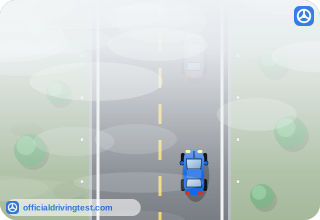
In very heavy rain, snow or thick fog, when you cannot see farther than about 200 feet, what is the fastest you can safely drive?
- 20 mph
- 40 mph
- 30 mph
- 45 mph
Show answer
Correct answer: 30 mph
The manual says that when you cannot see any farther than about 200 feet, you cannot safely drive faster than 30 mph.
Source: New Mexico Driver Manual (Version 11.19.19), page 23
-
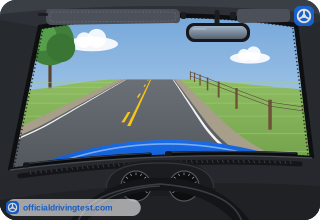
Whenever you come to a hill or curve where you cannot see over or around, what should you do?
- Keep your speed so traffic behind you does not bunch up
- Speed up to clear the hill or curve quickly
- Move to the center of the road for a better view
- Adjust your speed so you can stop if necessary
Show answer
Correct answer: Adjust your speed so you can stop if necessary
The manual says a vehicle may be stalled just over a hill or around a curve, so you should adjust your speed so you can stop if necessary.
Source: New Mexico Driver Manual (Version 11.19.19), page 23
-
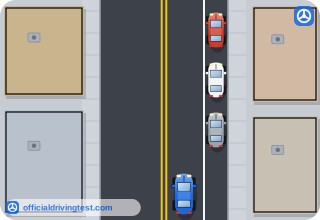
How much room should you give vehicles parked along the side of the road?
- Just enough to clear their mirrors
- Only enough to avoid touching them
- As much room as you can
- None, if no one is in them
Show answer
Correct answer: As much room as you can
The manual says parked vehicles may block your view and people may walk out from between them, so give them as much room as you can.
Source: New Mexico Driver Manual (Version 11.19.19), page 23
-
What do you do to use the “Four Second Sight Distance Rule”?
- Pick a stationary object far ahead and count four seconds
- Count the seconds between you and the moving vehicle ahead
- Count how long the vehicle behind you takes to reach a mark
- Count four seconds after you see the next road sign
Show answer
Correct answer: Pick a stationary object far ahead and count four seconds
The manual says to pick out a stationary object as far ahead as you can clearly see and start counting “one-one-thousand” up to “four-one-thousand.”
Source: New Mexico Driver Manual (Version 11.19.19), page 23
-
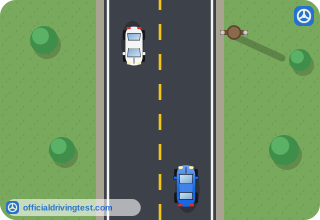
With the Four Second Sight Distance Rule, what does it mean if you reach the object before you finish counting?
- You are following the vehicle ahead too closely and must drop back at once
- You may speed up because the road ahead is clear
- You may pass the vehicle ahead because you have enough room
- You are going too fast for your sight distance and need to slow down
Show answer
Correct answer: You are going too fast for your sight distance and need to slow down
The manual says that reaching the object before finishing “four-one-thousand” means you are going too fast for your sight distance and must slow down.
Source: New Mexico Driver Manual (Version 11.19.19), page 23
-
When should you also use the “Four Second Sight Distance Rule”?
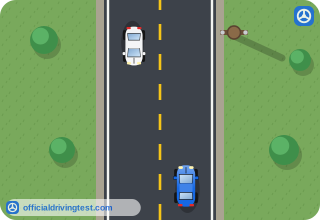
- Only in daylight on dry roads
- At night, to avoid overdriving your headlights
- Only when you are following another vehicle
- Only on roads with a speed limit above 50 mph
Show answer
Correct answer: At night, to avoid overdriving your headlights
The manual says to use the Four Second Sight Distance Rule at night too, to make sure you are not overdriving your headlights.
Source: New Mexico Driver Manual (Version 11.19.19), page 23
-
What causes rear-end crashes, according to the manual?
- Drivers speeding up when the vehicle ahead begins to slow down
- Following too closely to stop if the vehicle ahead stops
- Drivers changing lanes without checking mirrors
- Drivers braking too gently when the light turns red
Show answer
Correct answer: Following too closely to stop if the vehicle ahead stops
The manual says rear-end crashes are very common and are caused by drivers following too closely to stop before hitting the vehicle ahead when it suddenly stops.
Source: New Mexico Driver Manual (Version 11.19.19), page 23
-
What does the “three-second rule” help you tell?
- Whether you are driving too fast for your headlights
- How long to wait at a stop sign
- How far ahead to signal a turn
- Whether you are following too closely
Show answer
Correct answer: Whether you are following too closely
The manual calls the three-second rule an easy way to tell if you are following too closely.
Source: New Mexico Driver Manual (Version 11.19.19), page 23
-
At what speeds does the “three-second rule” work?
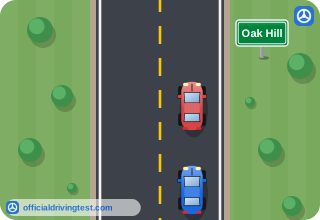
- At any speed
- Only above 40 mph
- Only below 35 mph
- Only on dry roads
Show answer
Correct answer: At any speed
The manual says the three-second rule works at any speed.
Source: New Mexico Driver Manual (Version 11.19.19), page 23
-
When using the three-second rule, how do you know you are following too closely?
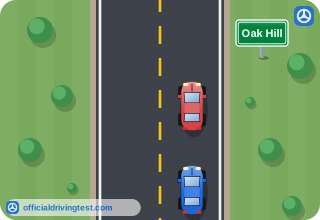
- You reach the mark after you finish counting
- The vehicle behind you passes the mark first
- You pass the mark before you finish counting
- You count to four before you reach the mark
Show answer
Correct answer: You pass the mark before you finish counting
The manual says you are following too closely if you pass the mark before you finish counting.
Source: New Mexico Driver Manual (Version 11.19.19), page 24
-
If the three-second rule shows you are following too closely, what should you do?
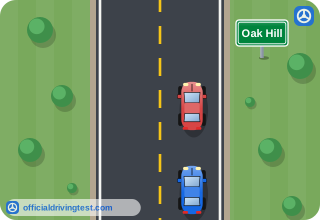
- Speed up and pass the vehicle ahead
- Stay where you are and watch the vehicle ahead
- Tap your brakes and flash your headlights
- Drop back and count again at another spot
Show answer
Correct answer: Drop back and count again at another spot
The manual says to drop back and count again at another spot, repeating until you are following no closer than three seconds.
Source: New Mexico Driver Manual (Version 11.19.19), page 24
-
In which situation may you need a four second following distance?
- When driving on a dry road with light traffic
- When you have a heavy load or are pulling a trailer
- When driving alone in daylight
- When driving at a steady speed on a clear day
Show answer
Correct answer: When you have a heavy load or are pulling a trailer
The manual lists a heavy load or pulling a trailer among the situations where you may need a four second following distance.
Source: New Mexico Driver Manual (Version 11.19.19), page 24
-
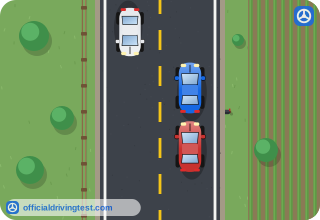
How can you help keep the driver behind you at a safe distance?
- Tap your brakes often so the driver stays alert
- Drive slightly faster than the traffic around you
- Keep a steady speed and signal before you slow or turn
- Move to the left lane whenever another driver follows you
Show answer
Correct answer: Keep a steady speed and signal before you slow or turn
The manual says you can help by keeping a steady speed and signaling in advance when you have to slow down or turn.
Source: New Mexico Driver Manual (Version 11.19.19), page 24
-
How should a motorcyclist's speed at night compare with the speed used during the day?
- The same as during the day, because the headlight shows the road
- Even slower than during the day, especially on unfamiliar roads
- Faster than during the day, to get through the dark sooner
- Slower only when the rider is following another vehicle
Show answer
Correct answer: Even slower than during the day, especially on unfamiliar roads
At night a rider should ride even slower than during the day, particularly on roads not known well, to improve the chance of avoiding a hazard.
Source: New Mexico Driver Manual (Version 11.19.19), page 38
-
What following distance should a motorcyclist open up at night?
- One second
- Five seconds
- Eight seconds
- Three seconds
Show answer
Correct answer: Three seconds
At night a motorcyclist should open up a three second following distance and allow more distance to pass and to be passed.
Source: New Mexico Driver Manual (Version 11.19.19), page 38
-
In a staggered formation, where does the second rider stay in relation to the leader?
- Two seconds behind, in the left side of the lane
- Three seconds behind, in the right side of the lane
- One second behind, in the left side of the lane
- One second behind, in the right side of the lane
Show answer
Correct answer: One second behind, in the right side of the lane
The leader rides in the left side of the lane, while the second rider stays one second behind in the right side of the lane.
Source: New Mexico Driver Manual (Version 11.19.19), page 38
-
In a staggered formation, where does the third rider ride?
- In the left position, two seconds behind the first rider
- In the right position, one second behind the second rider
- In the left position, one second behind the first rider
- In the right position, three seconds behind the first rider
Show answer
Correct answer: In the left position, two seconds behind the first rider
The third rider maintains the left position, two seconds behind the first rider.
Source: New Mexico Driver Manual (Version 11.19.19), page 38
-
In a staggered formation, how far behind the second rider does the fourth rider keep?
- One second
- Three seconds
- Two seconds
- Five seconds
Show answer
Correct answer: Two seconds
The fourth rider keeps a two second distance behind the second rider.
Source: New Mexico Driver Manual (Version 11.19.19), page 38