New Mexico: Speed and following distance — Part 3 Practice Test
Questions in this part include: “When is ice more slippery?” · “How much time does speeding save, according to the manual?”
Independent educational site · not affiliated with any government agency or DMV
Ready? Test yourself
- Instant feedback with an explanation
- Every answer cites its source in the manual
- Your best score is saved on this device
- Keyboard: press 1 to 4 to answer and Enter for the next question
Questions are original and based on the official manual "New Mexico Driver Manual" (Version 11.19.19), New Mexico Motor Vehicle Division (MVD).
All 18 questions in this practice test
Take the test above first, then use this list to study. Tap “Show answer” to see the correct answer and explanation.
Show the questions and answersHide the questions
-
When is ice more slippery?
- When the temperature is well below the freezing point
- When the sun is shining directly on it
- When it is covered with fresh snow
- When the temperature is around the freezing point
Show answer
Correct answer: When the temperature is around the freezing point
The manual says that around the freezing point ice can become wet, which makes it more slippery than at temperatures well below freezing.
Source: New Mexico Driver Manual (Version 11.19.19), page 20
-
Why can pavement be very slippery for the first few minutes when it starts to rain on a hot day?
- Hot pavement turns the rain into ice
- Heat brings the oil in the asphalt to the surface
- The rain washes sand onto the road
- Hot tires lose their grip on the wet, hot pavement
Show answer
Correct answer: Heat brings the oil in the asphalt to the surface
The manual says heat causes the oil in the asphalt to come to the surface, so the road is more slippery until the oil is washed off.
Source: New Mexico Driver Manual (Version 11.19.19), page 20
-
When the road is wet, up to about what speed do most tires have good traction?
- About 20 mph
- About 25 mph
- About 35 mph
- About 45 mph
Show answer
Correct answer: About 35 mph
The manual says that when it is raining or the road is wet, most tires have good traction up to about 35 mph.
Source: New Mexico Driver Manual (Version 11.19.19), page 20
-
What is it called when your tires start to ride up on the water, like water skis?
- Hydroplaning
- Skidding
- Overdriving
- Fishtailing
Show answer
Correct answer: Hydroplaning
The manual calls it hydroplaning when tires ride up on the water like water skis.
Source: New Mexico Driver Manual (Version 11.19.19), page 20
-
In a heavy rain, at about what speed can your tires lose all traction with the road?
- About 50 mph
- About 30 mph
- About 40 mph
- About 65 mph
Show answer
Correct answer: About 50 mph
The manual says that in a heavy rain your tires can lose all traction with the road at about 50 mph.
Source: New Mexico Driver Manual (Version 11.19.19), page 20
-
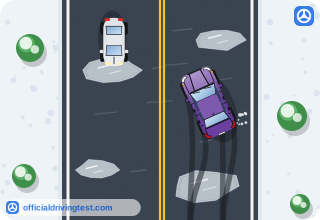
If your tires have lost traction, what should you do with the gas pedal?
- Press it harder
- Tap it again and again
- Ease your foot off it
- Hold it steady
Show answer
Correct answer: Ease your foot off it
The manual says that if it feels like your tires have lost traction, you should ease your foot off the gas pedal.
Source: New Mexico Driver Manual (Version 11.19.19), page 21
-
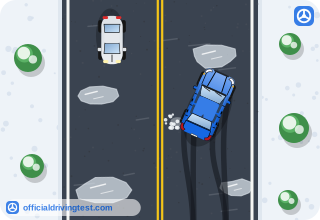
If your tires have lost traction, how should you handle the steering wheel?
- Turn it sharply in the direction you want to go
- Keep it straight, and if you must turn, do it slowly
- Turn it back and forth to regain grip
- Hold it loosely and let the vehicle straighten itself
Show answer
Correct answer: Keep it straight, and if you must turn, do it slowly
The manual says to keep the steering wheel straight and only turn in an emergency; turning quickly will cause the vehicle to skid.
Source: New Mexico Driver Manual (Version 11.19.19), page 21
-
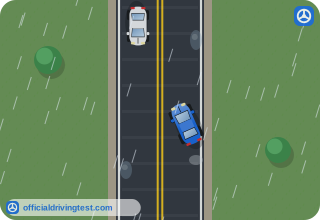
If your tires have lost traction, when should you try to stop or turn?
- As soon as you notice that the vehicle is skidding
- After you have sounded your horn and signaled
- Right after you have braked as hard as you can
- Not until your tires are gripping the road again
Show answer
Correct answer: Not until your tires are gripping the road again
The manual says not to try to stop or turn until your tires are gripping the road again.
Source: New Mexico Driver Manual (Version 11.19.19), page 21
-
How much time does speeding save, according to the manual?
- About fifteen minutes every hour
- About half an hour on a long trip
- Not more than a few minutes an hour
- Several hours on a long trip
Show answer
Correct answer: Not more than a few minutes an hour
The manual says that speeding does not save more than a few minutes an hour, and that going faster than traffic means passing others again and again.
Source: New Mexico Driver Manual (Version 11.19.19), page 21
-
What can going much slower than other vehicles do?
- Make vehicles bunch up behind you
- Help other traffic keep a steady pace
- Make passing safer for the vehicles behind you
- Give other drivers more room to merge
Show answer
Correct answer: Make vehicles bunch up behind you
The manual says going much slower than other vehicles can be just as bad as speeding, because it makes vehicles bunch up behind you and causes other traffic to pass you.
Source: New Mexico Driver Manual (Version 11.19.19), page 21
-
If vehicles are piled up behind you, what should you do?
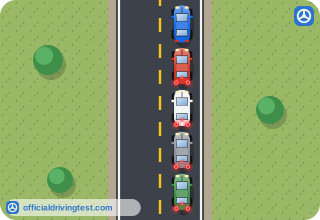
- Pull over when it is safe and let them pass
- Speed up until you can leave them behind
- Stay in your lane and slow down further
- Stop in the lane and wave them around you
Show answer
Correct answer: Pull over when it is safe and let them pass
The manual says to pull over when safe to do so and let them pass.
Source: New Mexico Driver Manual (Version 11.19.19), page 21
-
What should you do when you turn from a high speed, two-lane roadway with traffic following you?
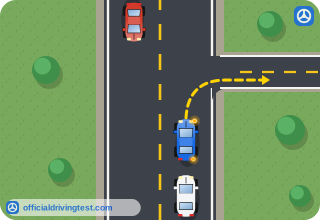
- Slow down gradually over a long distance before the turn
- Stop on the shoulder first and then make your turn
- Turn on your flashers and slow down to a crawl well ahead
- Tap your brakes and reduce your speed quickly but safely
Show answer
Correct answer: Tap your brakes and reduce your speed quickly but safely
The manual says to try not to slow down too early with traffic following you, and to tap your brakes and reduce your speed quickly but safely.
Source: New Mexico Driver Manual (Version 11.19.19), page 22
-
When should you watch for large trucks and small underpowered cars?
- On flat, straight highways in light traffic
- On steep grades or when they are entering traffic
- On straight roads at night when there are no hills
- On wet roads in the early morning only
Show answer
Correct answer: On steep grades or when they are entering traffic
The manual says these vehicles can lose speed on long or steep hills and take longer to get up to speed when they enter traffic.
Source: New Mexico Driver Manual (Version 11.19.19), page 22
-
Wherever people or traffic gather, what should you do?
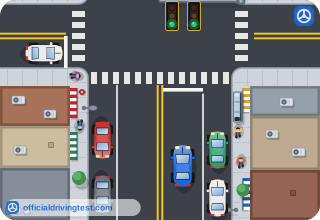
- Lower your speed to have time to react in a crowded space
- Keep your speed so you do not hold up the traffic behind you
- Move to the lane farthest from the curb
- Follow the vehicle ahead more closely
Show answer
Correct answer: Lower your speed to have time to react in a crowded space
The manual says that wherever people or traffic gather your room to maneuver is limited, so you need to lower your speed.
Source: New Mexico Driver Manual (Version 11.19.19), page 22
-
Why may you need to slow down at narrow bridges and tunnels?
- The pavement there is always icy
- Slow-moving vehicles always use them
- Vehicles approaching each other are closer together
- Crosswinds there always push vehicles off their course
Show answer
Correct answer: Vehicles approaching each other are closer together
The manual lists narrow bridges and tunnels as places to slow down because vehicles approaching each other are closer together.
Source: New Mexico Driver Manual (Version 11.19.19), page 22
-
Why may you need to slow down at toll plazas?
- Vehicles there always travel in a single lane
- Vehicles there are not allowed to use their brakes
- The lanes there are always much wider than normal
- Vehicles change lanes, stop and then speed up again
Show answer
Correct answer: Vehicles change lanes, stop and then speed up again
The manual says that at toll plazas vehicles are changing lanes and preparing to stop and then speeding up again, and the number of lanes could change.
Source: New Mexico Driver Manual (Version 11.19.19), page 22
-
With good tires and brakes and dry pavement, about how far can it take to react and stop at 30 mph?
- About 200 feet
- About 100 feet
- About 300 feet
- About 50 feet
Show answer
Correct answer: About 200 feet
The manual says that at 30 mph it can take about 200 feet to stop, which is almost half a city block.
Source: New Mexico Driver Manual (Version 11.19.19), page 22
-
At night, within what distance must you be able to stop?
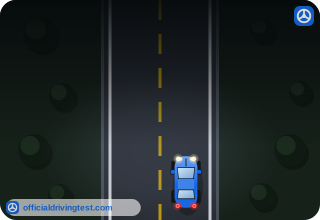
- The distance you can see ahead with your headlights
- The distance to the next intersection ahead of your car
- The distance to the vehicle ahead of you
- The distance to the next road sign you can read
Show answer
Correct answer: The distance you can see ahead with your headlights
The manual says you must be able to stop within the distance you can see ahead with your headlights.
Source: New Mexico Driver Manual (Version 11.19.19), page 22