New Jersey: Sharing the road
Bicycles, motorcycles, trucks, buses, school buses and other road users. Split into 5 shorter tests so you're not stuck in one long quiz.
Independent educational site · not affiliated with any government agency or DMV
Choose a part
Sharing the road — Part 1
Questions in this part include: “Besides the standard hand signals, how else may a bicyclist, skateboarder or inline skater signal a right turn?”
StartSharing the road — Part 2
Questions in this part include: “In New Jersey, which traffic laws govern motorcycles?”
StartSharing the road — Part 3
Questions in this part include: “What does the New Jersey Driver Manual say about passing a truck on the right?”
StartSharing the road — Part 4
Questions in this part include: “In New Jersey, what is the penalty for a driver who violates the Safe Passing Law and causes bodily injury?”
StartSharing the road — Part 5
Questions in this part include: “In New Jersey, which statement about a low-speed vehicle (LSV) is true?”
StartAll 86 Sharing the road questions with answers
Choose a part above to take a practice test, or study every question and answer here.
Show the questions and answersHide the questions
-
Besides the standard hand signals, how else may a bicyclist, skateboarder or inline skater signal a right turn?
- By extending the right hand and arm straight out
- By extending the left hand and arm straight downward
- By waving the right hand and arm above the head
- By extending the left hand and arm straight out
Show answer
Correct answer: By extending the right hand and arm straight out
Instead of raising the left hand and arm upward for a right turn, bicyclists, skateboarders and inline skaters may extend the right hand and arm straight out.
Source: New Jersey Driver Manual (2026), page 54 · Open this page in the manual (Manual page 54)
-
Before turning, which less visible vehicles does the New Jersey Driver Manual tell you to check for?
- Motorcycles, bicycles and mopeds
- Police cars and ambulances
- Tow trucks and snowplows
- Tractor-trailers and large city buses
Show answer
Correct answer: Motorcycles, bicycles and mopeds
Before turning, check for less visible vehicles, such as motorcycles, bicycles and mopeds.
Source: New Jersey Driver Manual (2026), page 56 · Open this page in the manual (Manual page 56)
-
When should you yield the right-of-way to a postal vehicle?
- When it re-enters the flow of traffic
- Only in residential districts
- Only when its hazard lights are off
- Never; it has no special right-of-way
Show answer
Correct answer: When it re-enters the flow of traffic
The basic right-of-way rules include yielding to postal vehicles when they re-enter the flow of traffic.
Source: New Jersey Driver Manual (2026), page 65 · Open this page in the manual (Manual page 65)
-
Why should you watch for bicycles and mopeds when turning right on red?
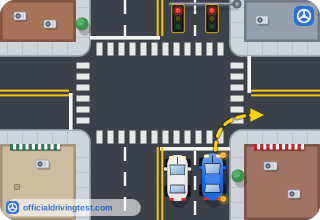
- They may have a green light and are hard to see
- They are not allowed to use intersections
- They must always stop for vehicles that are turning
- They always ride on the sidewalk instead
Show answer
Correct answer: They may have a green light and are hard to see
Difficult-to-see vehicles such as bicycles and mopeds may have a green light, so you must be aware of them.
Source: New Jersey Driver Manual (2026), page 72 · Open this page in the manual (Manual page 72)
-
On a two-lane road in New Jersey, how far away must you stop from a school bus with flashing red lights?
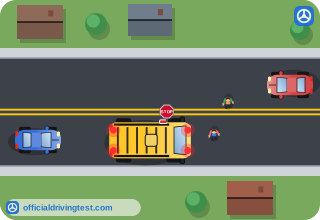
- At least 25 feet
- At least 50 feet
- At least 15 feet
- At least 10 feet
Show answer
Correct answer: At least 25 feet
State law requires a motorist to stop at least 25 feet away from a school bus with flashing red lights on a two-lane road.
Source: New Jersey Driver Manual (2026), page 77 · Open this page in the manual (Manual page 77)
-
Besides two-lane roads and multi-lane highways whose lanes are separated only by lines, where else does New Jersey's rule to stop 25 feet from a school bus with flashing red lights apply?
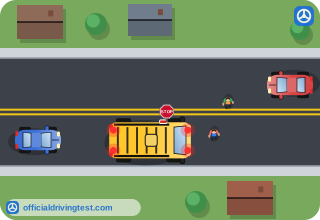
- On the far side of a safety island on a dual-lane highway
- On a privately maintained road
- Nowhere else; it covers only public roads
- On the far side of a raised median on a dual-lane highway
Show answer
Correct answer: On a privately maintained road
The 25-foot stopping rule applies on two-lane roads, multi-lane highways where lanes are only separated by lines, and privately maintained roads.
Source: New Jersey Driver Manual (2026), page 77 · Open this page in the manual (Manual page 77)
-
On a dual-lane highway in New Jersey, if you are on the other side of a safety island or raised median from a school bus with flashing red lights, what should you do?
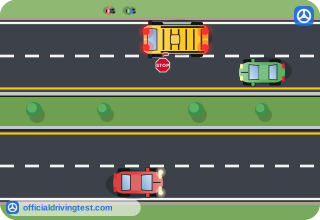
- Stop at least 25 feet away
- Slow to 25 mph
- Slow to 10 mph
- Keep going at the posted speed limit
Show answer
Correct answer: Slow to 10 mph
On a dual-lane highway, a motorist on the other side of a safety island or raised median should slow to 10 mph.
Source: New Jersey Driver Manual (2026), page 77 · Open this page in the manual (Manual page 77)
-
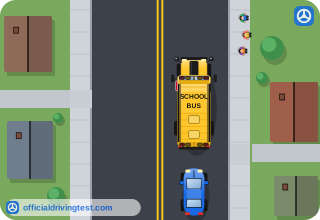
On a school bus, when do the yellow (or amber) flashing lights go on?
- After the bus has stopped
- When the bus is about to pull away
- When the bus door opens
- Before the bus stops
Show answer
Correct answer: Before the bus stops
The yellow (or amber) lights go on before the bus stops, and the red lights go on when the bus has stopped.
Source: New Jersey Driver Manual (2026), page 77 · Open this page in the manual (Manual page 77)
-
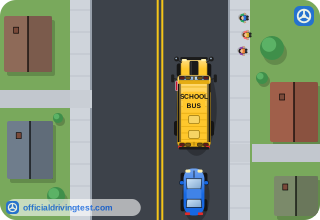
Why does the New Jersey Driver Manual say you should not depend on a school bus's warning lights when driving behind it?
- The lights are hard to see in daylight
- The lights could be malfunctioning
- The lights are used only for older students
- The lights are used only on rural roads
Show answer
Correct answer: The lights could be malfunctioning
A motorist driving behind a school bus should not depend on its warning lights, because they could be malfunctioning.
Source: New Jersey Driver Manual (2026), page 77 · Open this page in the manual (Manual page 77)
-
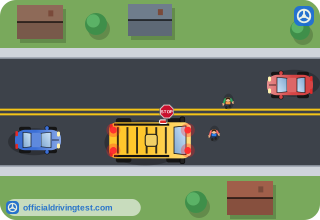
After stopping for a school bus in New Jersey, when may you proceed?
- As soon as all the children are on board, even with the red lights flashing
- After waiting 30 seconds, whether or not the lights are on
- After the bus signals are turned off, while still watching for children
- When the bus driver waves you on, even with red lights flashing
Show answer
Correct answer: After the bus signals are turned off, while still watching for children
A motorist should proceed only after the bus signals have been turned off, and even then must watch for children or persons with developmental disabilities.
Source: New Jersey Driver Manual (2026), page 77 · Open this page in the manual (Manual page 77)
-
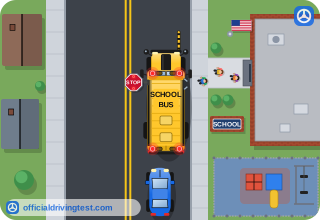
If a school bus has stopped directly in front of a school to pick up or let off children, how may New Jersey motorists pass it?
- From either direction at no more than 10 mph
- Only from the opposite direction, at 25 mph
- From either direction at no more than 25 mph
- Not at all until the bus moves away
Show answer
Correct answer: From either direction at no more than 10 mph
When a school bus is stopped directly in front of a school to pick up or let off children, a motorist may pass from either direction at no more than 10 mph.
Source: New Jersey Driver Manual (2026), page 77 · Open this page in the manual (Manual page 77)
-
In New Jersey, after stopping for an ice cream truck that is flashing red lights and showing a stop signal arm, how fast may you drive past it?
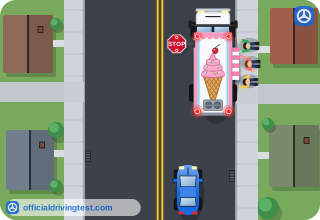
- No more than 15 mph
- No more than 10 mph
- No more than 5 mph
- No more than 25 mph
Show answer
Correct answer: No more than 15 mph
A motorist must stop and then drive past the frozen dessert truck at no more than 15 mph.
Source: New Jersey Driver Manual (2026), page 78 · Open this page in the manual (Manual page 78)
-
In New Jersey, when do you NOT need to stop for a frozen dessert truck that is flashing red lights and showing a stop signal arm?
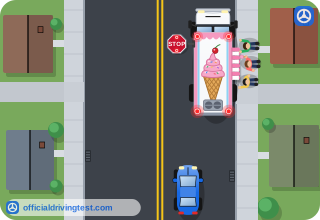
- When you cannot see any children anywhere near the truck or road
- On a dual highway, across a safety island or raised median
- When you are overtaking the truck from behind
- When the truck is parked on a residential street
Show answer
Correct answer: On a dual highway, across a safety island or raised median
A motorist need not stop on a dual highway if they are on the other side of a safety island or raised median from the truck.
Source: New Jersey Driver Manual (2026), page 78 · Open this page in the manual (Manual page 78)
-
New Jersey's rules for frozen dessert trucks with flashing red lights and a stop signal arm apply when you approach or overtake the truck from which direction?
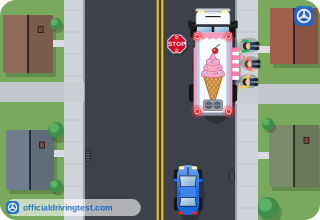
- Only from behind the truck
- Only on the side where its window is
- From either direction
- Only from the opposite direction
Show answer
Correct answer: From either direction
The rules apply when approaching or overtaking an ice cream or frozen dessert truck from either direction.
Source: New Jersey Driver Manual (2026), page 78 · Open this page in the manual (Manual page 78)
-
If you encounter an animal on the road in farm country or open land, you should:
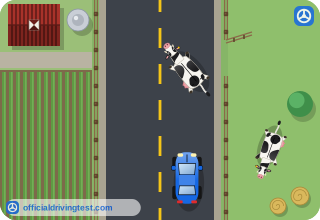
- Swerve into the opposite lane around it
- Sound your horn and keep going at speed
- Speed up to get past it before it moves
- Slow down until the animal has passed
Show answer
Correct answer: Slow down until the animal has passed
Animals make unexpected moves, so if you encounter one you should slow down until it has passed.
Source: New Jersey Driver Manual (2026), page 102 · Open this page in the manual (Manual page 102)
-
Under New Jersey's Safe Passing Law, what should you do when possible when passing a bicyclist or other vulnerable road user?
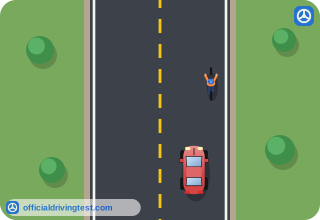
- Pass within two feet
- Speed up to pass quickly
- Honk before you pass
- Move over one lane
Show answer
Correct answer: Move over one lane
The Safe Passing Law requires due caution: move over one lane when possible, or allow at least four feet on a single-lane road.
Source: New Jersey Driver Manual (2026), page 146 · Open this page in the manual (Manual page 146)
-
Under New Jersey's Safe Passing Law, how much space must you allow when passing a vulnerable road user on a single-lane road?
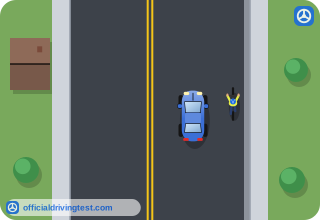
- At least 4 feet
- At least 6 feet
- At least 3 feet
- At least 2 feet
Show answer
Correct answer: At least 4 feet
On a single-lane road, drivers must allow at least four feet of space when passing a vulnerable road user.
Source: New Jersey Driver Manual (2026), page 146 · Open this page in the manual (Manual page 146)
-
Under New Jersey's Safe Passing Law, what must you do if it is not possible to give a bicyclist 4 feet of space?
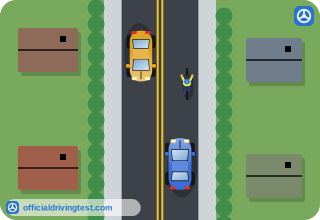
- Slow to 35 mph and pass
- Slow to 25 mph, ready to stop until it is safe
- Pass quickly at the posted speed limit to get by sooner
- Honk so the rider moves over
Show answer
Correct answer: Slow to 25 mph, ready to stop until it is safe
If four feet is not possible, drivers must slow to 25 mph and be prepared to stop until it is safe to pass.
Source: New Jersey Driver Manual (2026), page 146 · Open this page in the manual (Manual page 146)
-
In New Jersey, which traffic laws govern motorcycles?
- Only speed limits, not other traffic laws
- A separate code that excludes car laws
- Only the rules for off-road vehicles
- The same laws that govern cars and trucks
Show answer
Correct answer: The same laws that govern cars and trucks
The laws governing four-wheeled vehicles such as cars and trucks also govern motorcycles.
Source: New Jersey Driver Manual (2026), page 146 · Open this page in the manual (Manual page 146)
-
According to the New Jersey Driver Manual, which roadway features present potential hazards for motorcycle riders?
- Grooves and gratings in the roadway
- Wide, straight travel lanes
- Dry, smooth and level pavement surfaces
- Freshly paved highway lanes
Show answer
Correct answer: Grooves and gratings in the roadway
Slippery, sloped or uneven surfaces, and grooves and gratings in the roadway present potential hazards for motorcycle riders.
Source: New Jersey Driver Manual (2026), page 146 · Open this page in the manual (Manual page 146)
-
When sharing the road with motorcycles, how many times does the New Jersey Driver Manual say to check your blind spots before changing lanes or making turns?
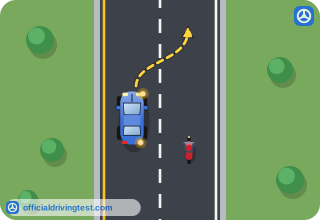
- Three times
- Once
- Twice
- Four times
Show answer
Correct answer: Twice
The manual says to check blind spots twice before changing lanes or making turns, because motorcycles are easy to miss.
Source: New Jersey Driver Manual (2026), page 146 · Open this page in the manual (Manual page 146)
-
According to the New Jersey Driver Manual, when should you especially watch for motorcycles?
- Only after dark
- At intersections and when turning left
- Only when driving on multi-lane highways
- Only when it is raining
Show answer
Correct answer: At intersections and when turning left
The manual tells motorists to watch for motorcycles at intersections and when making a left turn.
Source: New Jersey Driver Manual (2026), page 146 · Open this page in the manual (Manual page 146)
-
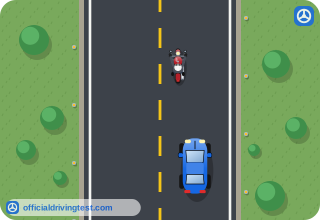
According to the New Jersey Driver Manual, why should you never follow a motorcycle too closely?
- Its exhaust can block your view
- It cannot brake at all in the rain
- It must always travel below the posted speed limit
- It may stop in a shorter distance than you can
Show answer
Correct answer: It may stop in a shorter distance than you can
Never follow a motorcycle too closely, because motorcycles could brake within shorter distances than other types of vehicles.
Source: New Jersey Driver Manual (2026), page 146 · Open this page in the manual (Manual page 146)
-
According to the New Jersey Driver Manual, why should you anticipate a motorcycle rider's maneuvers?
- Minor obstacles for a car can be dangerous to them
- Riders must travel on the shoulder
- Riders are not allowed to use hand or turn signals at all
- Riders are required to change lanes every mile
Show answer
Correct answer: Minor obstacles for a car can be dangerous to them
Anticipate a rider's maneuver to avoid obstructions that may be minimal to a car or truck but dangerous to a motorcycle.
Source: New Jersey Driver Manual (2026), page 146 · Open this page in the manual (Manual page 146)
-
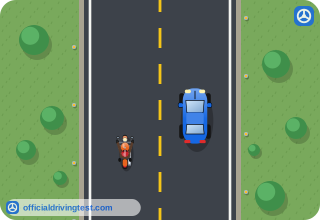
What should you do when you are being passed by a motorcycle?
- Brake hard to let it by
- Maintain your speed and position
- Move toward the motorcycle's side of the lane
- Speed up to stay beside it
Show answer
Correct answer: Maintain your speed and position
When passed by a motorcycle, maintain your speed and position and allow plenty of room for it to complete the pass.
Source: New Jersey Driver Manual (2026), page 147 · Open this page in the manual (Manual page 147)
-
According to the New Jersey Driver Manual, what is the most common cause of motorcycle crashes?
- Worn motorcycle tires and brakes
- Riders going well over the posted speed limit
- Potholes and poor road surfaces
- Drivers failing to notice motorcycles
Show answer
Correct answer: Drivers failing to notice motorcycles
A motorist's failure to detect and recognize motorcycles in traffic is the most common cause of motorcycle crashes.
Source: New Jersey Driver Manual (2026), page 147 · Open this page in the manual (Manual page 147)
-
According to the New Jersey Driver Manual, during bad weather a truck, tractor-trailer or bus can take as much as how much longer to stop?
- 75 percent
- 10 percent
- 25 percent
- 50 percent
Show answer
Correct answer: 25 percent
During bad weather, a truck, tractor-trailer or bus can take as much as 25 percent longer to stop.
Source: New Jersey Driver Manual (2026), page 147 · Open this page in the manual (Manual page 147)
-
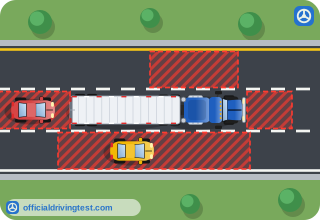
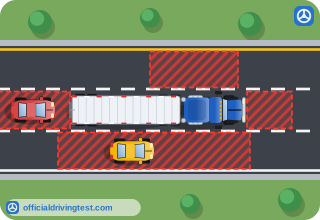
What are the "no-zones" around trucks, tractor-trailers and buses?
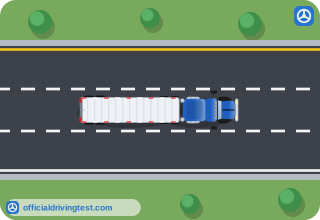
- Blind spots where the driver cannot see other vehicles
- Areas where passing is always illegal
- Zones where trucks may not park
- Lanes where trucks, tractor-trailers and buses may not drive
Show answer
Correct answer: Blind spots where the driver cannot see other vehicles
No-zones are blind spots in which the truck, tractor-trailer or bus driver cannot see other vehicles.
Source: New Jersey Driver Manual (2026), page 147 · Open this page in the manual (Manual page 147)
-
According to the New Jersey Driver Manual, why should you avoid moving too close to a truck or bus?
- It is the only way the truck driver will be able to see you
- It can restrict the driver's ability to stop or maneuver
- It lets you pass the truck faster
- It helps the truck save fuel
Show answer
Correct answer: It can restrict the driver's ability to stop or maneuver
Do not move so close to a truck or bus that the driver's ability to stop or maneuver is restricted; riding in the no-zone increases the potential for a crash.
Source: New Jersey Driver Manual (2026), page 147 · Open this page in the manual (Manual page 147)
-
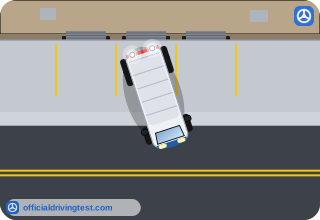
What should you do when a truck or tractor-trailer is preparing to back up or is backing up?
- Pass close behind it quickly
- Honk and pass behind it
- Pull right up so the driver sees you
- Stay far behind it
Show answer
Correct answer: Stay far behind it
Stay far behind a truck that is preparing to back up or is backing up, and never pass close behind it.
Source: New Jersey Driver Manual (2026), page 148 · Open this page in the manual (Manual page 148)
-
According to the New Jersey Driver Manual, the area behind a truck or tractor-trailer is a blind spot for whom?
- The truck driver and other motorists
- Only motorists behind the truck
- Only the truck driver
- No one, if its mirrors are adjusted
Show answer
Correct answer: The truck driver and other motorists
The area behind a truck or tractor-trailer is a no-zone not only for its driver but for other motorists as well, because the truck's width hides objects.
Source: New Jersey Driver Manual (2026), page 148 · Open this page in the manual (Manual page 148)
-
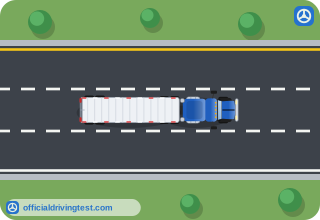
Why should you increase your following distance behind a truck, tractor-trailer or bus?
- So its driver can see you in the mirrors
- So you can read its rear plate
- So you can draft behind it to save fuel
- So you can pass it more quickly
Show answer
Correct answer: So its driver can see you in the mirrors
Increase your following distance so the truck or bus driver can spot your vehicle in the rearview mirrors.
Source: New Jersey Driver Manual (2026), page 149 · Open this page in the manual (Manual page 149)
-
According to the New Jersey Driver Manual, what should you never do around trucks, tractor-trailers or buses?
- Increase your following distance
- Remain sandwiched between them
- Keep a large space cushion
- Signal before changing lanes
Show answer
Correct answer: Remain sandwiched between them
Never tailgate or remain sandwiched between trucks, tractor-trailers or buses; keep a sizeable space cushion instead.
Source: New Jersey Driver Manual (2026), page 149 · Open this page in the manual (Manual page 149)
-
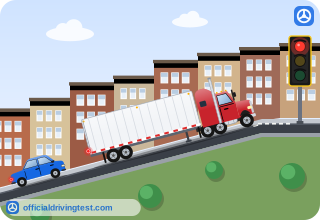
According to the New Jersey Driver Manual, why should you leave space when stopping behind a truck or bus at a light or sign, especially when facing uphill?
- It may release its air brakes loudly
- It may spray gravel from its tires
- Trucks must stop twice at every light
- It may roll back slightly as it starts
Show answer
Correct answer: It may roll back slightly as it starts
Leave space when stopping behind a truck, tractor-trailer or bus, especially uphill, because larger vehicles may roll backward slightly when starting.
Source: New Jersey Driver Manual (2026), page 149 · Open this page in the manual (Manual page 149)
-
According to the New Jersey Driver Manual, what may a truck have to do to make a right turn?
- Cut sharply across the right curb
- Wait for a green arrow only
- Swing wide to the left first
- Turn on its hazard lights
Show answer
Correct answer: Swing wide to the left first
Because trucks are large, their drivers may have to swing wide; for example, a truck may swing wide to the left to make a right turn, so give it more road space.
Source: New Jersey Driver Manual (2026), page 149 · Open this page in the manual (Manual page 149)
-
When passing a truck, when may you pull back in front of it?
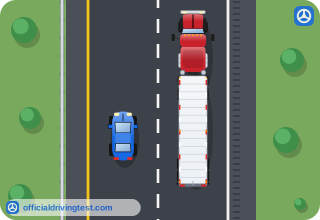
- When its whole front shows in your rearview mirror
- Once you are a few feet past its cab
- As soon as your rear bumper clears the truck's front bumper
- When the truck driver flashes the headlights
Show answer
Correct answer: When its whole front shows in your rearview mirror
Do not pull in front of a truck when passing until you can see the whole front of the truck in your rearview mirror.
Source: New Jersey Driver Manual (2026), page 149 · Open this page in the manual (Manual page 149)
-
What does the New Jersey Driver Manual say about passing a truck on the right?
- Pass on the right if the truck is slow
- Never pass a truck on the right
- Always pass a truck on the right
- Pass on whichever side is open
Show answer
Correct answer: Never pass a truck on the right
The manual says to always signal before changing lanes and never pass a truck on the right.
Source: New Jersey Driver Manual (2026), page 149 · Open this page in the manual (Manual page 149)
-
According to the New Jersey Driver Manual, how should you control your speed while passing a truck?
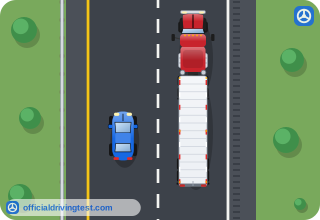
- Slow down beside its cab
- Vary your speed so it notices you
- Match its speed alongside it
- Keep a consistent speed
Show answer
Correct answer: Keep a consistent speed
The manual says to maintain a consistent speed when passing a truck.
Source: New Jersey Driver Manual (2026), page 149 · Open this page in the manual (Manual page 149)
-
According to the New Jersey Driver Manual, why should you not linger alongside a truck when passing?
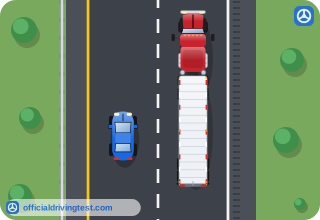
- Its tires give off too much heat
- Driving next to any truck on a highway is always illegal
- You would be in the way if it had to change lanes fast
- It forces the truck to slow down
Show answer
Correct answer: You would be in the way if it had to change lanes fast
The sides of trucks have long blind spots; if the driver must quickly change lanes or make an emergency maneuver, a vehicle there will be in the way.
Source: New Jersey Driver Manual (2026), page 150 · Open this page in the manual (Manual page 150)
-
What should you do when a large vehicle is traveling toward you from the opposite direction?
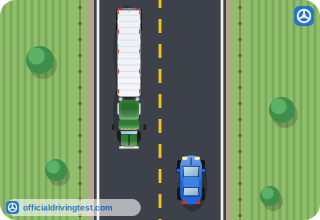
- Bear to the right
- Flash your high beams
- Move toward the center line
- Speed up to pass it quickly
Show answer
Correct answer: Bear to the right
Bear right when a large vehicle approaches from the opposite direction; this reduces wind turbulence and may prevent a sideswipe.
Source: New Jersey Driver Manual (2026), page 150 · Open this page in the manual (Manual page 150)
-
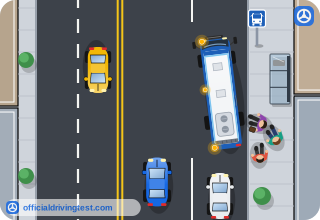
In New Jersey, what must non-emergency vehicles do when a bus is re-entering traffic after dropping off or picking up passengers?
- Sound the horn to warn the bus
- Speed up to pass the bus first
- Yield the right-of-way to the bus
- Yield only if it is a school bus
Show answer
Correct answer: Yield the right-of-way to the bus
State law requires all non-emergency vehicles to yield the right-of-way to buses re-entering traffic after dropping off or picking up passengers.
Source: New Jersey Driver Manual (2026), page 150 · Open this page in the manual (Manual page 150)
-
In New Jersey, once a bus is back in the normal flow of traffic, must motorists yield to it when it changes lanes?
- Yes, buses always have the right-of-way in New Jersey
- Only on roads that have a bus lane
- Only if the bus signals for 5 seconds
- No, not once it is back in the traffic flow
Show answer
Correct answer: No, not once it is back in the traffic flow
Once the bus is back in the normal flow of traffic, motorists are not required to yield the right-of-way to buses changing lanes.
Source: New Jersey Driver Manual (2026), page 150 · Open this page in the manual (Manual page 150)
-
In New Jersey, what is the penalty for violating the law requiring motorists to yield to buses re-entering traffic?
- A $1,000 to $2,000 fine and up to 90 days in jail
- $50 to $200 fine, up to 15 days in jail, or both
- $100 fine with no jail possible
- $500 fine and two penalty points
Show answer
Correct answer: $50 to $200 fine, up to 15 days in jail, or both
Violating the bus yield law (N.J.S.A. 39:4-87.1) carries a fine of $50 to $200, up to 15 days in jail, or both.
Source: New Jersey Driver Manual (2026), page 150 · Open this page in the manual (Manual page 150)
-
In New Jersey, what is the maximum speed at which a moped driver may travel?
- 35 mph
- 45 mph
- 15 mph
- 25 mph
Show answer
Correct answer: 25 mph
Moped drivers may not exceed 25 mph and must follow all traffic signs and signals.
Source: New Jersey Driver Manual (2026), page 150 · Open this page in the manual (Manual page 150)
-
In New Jersey, where on the road must a moped be driven?
- On the left side, facing traffic
- In the center of the travel lane
- On the right side, with the flow of traffic
- On the sidewalk whenever a sidewalk is available
Show answer
Correct answer: On the right side, with the flow of traffic
Moped drivers must drive on the right side of the road with the flow of traffic.
Source: New Jersey Driver Manual (2026), page 150 · Open this page in the manual (Manual page 150)
-
According to the New Jersey Driver Manual, what is a moped (motorized bicycle)?
- A low-speed, two-wheeled vehicle with pedals
- A miniature motorcycle with no pedals
- A four-wheeled vehicle limited to 25 mph
- A three-wheeled scooter for highway use
Show answer
Correct answer: A low-speed, two-wheeled vehicle with pedals
Motorized bicycles, or mopeds, are low-speed, two-wheeled vehicles with pedals, intended for limited use on public roadways.
Source: New Jersey Driver Manual (2026), page 150 · Open this page in the manual (Manual page 150)
-
According to the New Jersey Driver Manual, why should motorists always be alert for mopeds?
- They travel faster than most cars
- They are smaller than motorcycles and harder to see
- They are allowed to ignore traffic signs and signals
- They must ride against traffic
Show answer
Correct answer: They are smaller than motorcycles and harder to see
Mopeds are smaller than motorcycles and may be harder to see; their drivers have the same rights and responsibilities as other motor vehicle drivers.
Source: New Jersey Driver Manual (2026), page 150 · Open this page in the manual (Manual page 150)
-
Under New Jersey law, what rights and responsibilities do bicyclists, skateboarders and inline skaters have on the road?
- The same as motor vehicles
- Only the rights of pedestrians
- None; they may not use the road
- Rights, but no duty to obey signals
Show answer
Correct answer: The same as motor vehicles
Under New Jersey law, bicyclists, skateboarders and inline skaters have the same rights and responsibilities as motor vehicles.
Source: New Jersey Driver Manual (2026), page 150 · Open this page in the manual (Manual page 150)
-
In New Jersey, how are bicyclists, skateboarders and inline skaters classified?
- As slow-moving vehicles
- As pedestrians
- As vulnerable road users
- As motor vehicle operators
Show answer
Correct answer: As vulnerable road users
Although they have the same rights and responsibilities as motor vehicles, bicyclists, skateboarders and inline skaters are classified as vulnerable road users.
Source: New Jersey Driver Manual (2026), page 150 · Open this page in the manual (Manual page 150)
-
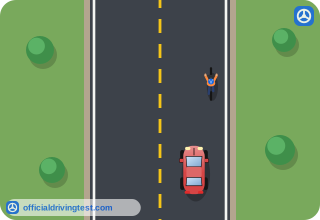
Under New Jersey's Safe Passing Law, what does passing a bicyclist with "due caution" mean?
- Flashing your headlights as you pass to warn the rider
- Slowing down and giving the rider plenty of space
- Honking twice before you pass
- Passing at the posted speed limit
Show answer
Correct answer: Slowing down and giving the rider plenty of space
The Safe Passing Law defines due caution as both slowing down and giving the other user plenty of space when passing.
Source: New Jersey Driver Manual (2026), page 150 · Open this page in the manual (Manual page 150)
-
In New Jersey, what rights and responsibilities do moped drivers have?
- None; mopeds may not use public roads
- Only the rights of pedestrians
- Fewer duties, because mopeds are slow
- The same as other motor vehicle drivers
Show answer
Correct answer: The same as other motor vehicle drivers
The manual says moped drivers have the same rights and responsibilities as those driving other motor vehicles.
Source: New Jersey Driver Manual (2026), page 150 · Open this page in the manual (Manual page 150)
-
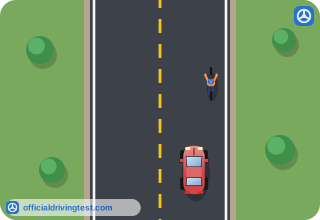
Under New Jersey's Safe Passing Law, when you pass a bicyclist traveling in your direction, do no-passing and speed laws still apply?
- No, you may cross a no-passing line to give room
- No, you may briefly speed up past the limit
- Only on roads that have more than one lane
- Yes, you must follow all no-passing and speed laws
Show answer
Correct answer: Yes, you must follow all no-passing and speed laws
Due caution under the Safe Passing Law includes following all current no-passing and no-speeding laws, and moving over a lane if there is one to move into.
Source: New Jersey Driver Manual (2026), page 150 · Open this page in the manual (Manual page 150)
-
In New Jersey, what is the penalty for a driver who violates the Safe Passing Law and causes bodily injury?
- $250 fine and one point
- $100 fine and no points
- $500 fine and two penalty points
- $1,000 fine and four penalty points
Show answer
Correct answer: $500 fine and two penalty points
Drivers who do not follow the Safe Passing Law and cause bodily injury are fined $500 and assessed two motor vehicle penalty points.
Source: New Jersey Driver Manual (2026), page 151 · Open this page in the manual (Manual page 151)
-
In New Jersey, what is the penalty for violating the Safe Passing Law when no bodily injury results?
- $100 fine and no penalty points
- $100 fine and two penalty points
- $500 fine and two penalty points
- No fine, only a written warning
Show answer
Correct answer: $100 fine and no penalty points
If no bodily injury results, the violator is fined $100 and is not assessed any penalty points.
Source: New Jersey Driver Manual (2026), page 151 · Open this page in the manual (Manual page 151)
-
In New Jersey, what must a bicycle ridden after dark have?
- Flashing lights on both wheels
- Front and rear lights plus a rear reflector
- Only a red rear light
- Only a white reflector on the front of the bicycle
Show answer
Correct answer: Front and rear lights plus a rear reflector
Bicycles ridden after dark must have front and rear lights and a rear reflector, but these may still be hard for motorists to see.
Source: New Jersey Driver Manual (2026), page 151 · Open this page in the manual (Manual page 151)
-
In New Jersey, a motorist signaling a right turn must yield to which of these moving through the intersection?
- No one, as long as your right turn signal is on
- Bicyclists, skateboarders and inline skaters
- Only vehicles turning left
- Only other motor vehicles
Show answer
Correct answer: Bicyclists, skateboarders and inline skaters
Motorists signaling a right turn must yield to bicyclists, skateboarders or inline skaters moving through an intersection, and should wait until the intersection clears.
Source: New Jersey Driver Manual (2026), page 151 · Open this page in the manual (Manual page 151)
-
According to the New Jersey Driver Manual, how may a bicyclist, skateboarder or inline skater make a left turn?
- Use the traffic lanes to turn like a vehicle
- By riding on the left side, against traffic
- Only by walking across in the crosswalk
- Only from the right-hand shoulder
Show answer
Correct answer: Use the traffic lanes to turn like a vehicle
To turn left, a bicyclist, skateboarder or inline skater may choose to use traffic lanes to turn as a vehicle would.
Source: New Jersey Driver Manual (2026), page 151 · Open this page in the manual (Manual page 151)
-
According to the New Jersey Driver Manual, where in a turn lane may a bicyclist, skateboarder or inline skater ride?
- Only behind all the cars
- Straddling the lane line
- On the left edge of the turn lane
- On the right edge of the turn lane
Show answer
Correct answer: On the right edge of the turn lane
Motorists should be aware that a bicyclist, skateboarder or inline skater may ride on the right edge of the turn lane.
Source: New Jersey Driver Manual (2026), page 151 · Open this page in the manual (Manual page 151)
-
According to the New Jersey Driver Manual, how should you check around your vehicle for bicyclists and skaters?
- By using only your side mirrors
- By using only your rearview mirror before you move
- By turning your head, not relying only on mirrors
- By honking before you move
Show answer
Correct answer: By turning your head, not relying only on mirrors
Check around your vehicle by turning your head instead of relying only on your mirrors.
Source: New Jersey Driver Manual (2026), page 151 · Open this page in the manual (Manual page 151)
-
According to the New Jersey Driver Manual, which of these is a time to check your blind spots for bicyclists and skaters?
- Only when backing out of a driveway
- Before opening your car door
- Only after dark
- Only when changing lanes on highways
Show answer
Correct answer: Before opening your car door
Check your blind spots before turning, parallel parking, opening a door or pulling away from a curb.
Source: New Jersey Driver Manual (2026), page 151 · Open this page in the manual (Manual page 151)
-
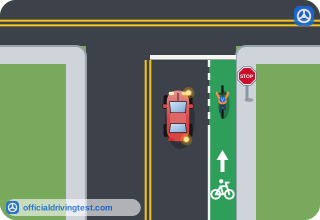
When turning right, why should you avoid turning in front of bicyclists, skateboarders and inline skaters?
- They must yield to all turning cars
- They must stop at every corner
- They may not be able to stop quickly
- They always ride on the sidewalk
Show answer
Correct answer: They may not be able to stop quickly
When turning right, check for bicyclists, skateboarders and inline skaters and avoid turning in front of them, because they may not be able to stop quickly.
Source: New Jersey Driver Manual (2026), page 151 · Open this page in the manual (Manual page 151)
-
When you turn left in New Jersey, whom must you yield to?
- All oncoming traffic, including bicyclists and skaters
- No one, if you have a green light
- Only oncoming buses
- Only oncoming cars and trucks, never bicycles or skaters
Show answer
Correct answer: All oncoming traffic, including bicyclists and skaters
When turning left, yield to all oncoming traffic, including bicyclists, skateboarders and inline skaters.
Source: New Jersey Driver Manual (2026), page 151 · Open this page in the manual (Manual page 151)
-
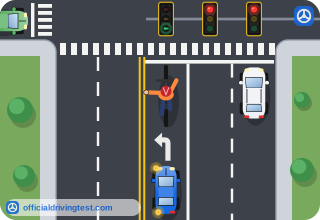
You are in a left-turn lane and a bicyclist is ahead of you in the same lane. What should you do?
- Turn alongside the rider
- Honk so the rider moves aside
- Pass the rider on the right side of the lane
- Wait until the rider finishes turning
Show answer
Correct answer: Wait until the rider finishes turning
If a bicyclist, skateboarder or inline skater is in front of you in a left turn lane, wait for them to complete their turn before you proceed.
Source: New Jersey Driver Manual (2026), page 151 · Open this page in the manual (Manual page 151)
-
In New Jersey, where may motorized scooters such as pocket bikes and mini choppers be driven?
- On highway shoulders
- Only on designated municipal or county property
- On public sidewalks, as long as they yield to pedestrians
- On any public road
Show answer
Correct answer: Only on designated municipal or county property
It is illegal to drive motorized scooters on any public road or sidewalk, except on designated municipal or county property.
Source: New Jersey Driver Manual (2026), page 151 · Open this page in the manual (Manual page 151)
-
In New Jersey, where must a motorized scooter be registered?
- In the owner's home municipality or county
- With the MVC, the same way a car is registered
- With the New Jersey State Police
- Nowhere; registration isn't required
Show answer
Correct answer: In the owner's home municipality or county
Motorized scooters must be registered in the municipality or county where the owner resides, and must be insured.
Source: New Jersey Driver Manual (2026), page 152 · Open this page in the manual (Manual page 152)
-
In New Jersey, must a motorized scooter be insured?
- No, insurance is never required
- Only if the rider is under 18
- Yes, it must be insured
- Only if it can go over 25 mph
Show answer
Correct answer: Yes, it must be insured
The manual states that motorized scooters must be registered locally and must be insured.
Source: New Jersey Driver Manual (2026), page 152 · Open this page in the manual (Manual page 152)
-
In New Jersey, unless the municipality or county sets a different age, no one under what age may operate a motorized scooter?
- 10
- 14
- 16
- 12
Show answer
Correct answer: 12
No one under age 12 (or the age set by the municipality or county where it is operated) may operate a motorized scooter.
Source: New Jersey Driver Manual (2026), page 152 · Open this page in the manual (Manual page 152)
-
Which of these is NOT considered a motorized scooter in New Jersey?
- A motorized wheelchair
- A pocket bike
- A motorized skateboard
- A mini chopper
Show answer
Correct answer: A motorized wheelchair
Pocket bikes, mini choppers and motorized skateboards are listed as motorized scooters; motorized wheelchairs are listed as not being motorized scooters.
Source: New Jersey Driver Manual (2026), page 152 · Open this page in the manual (Manual page 152)
-
Which of these IS an example of a motorized scooter under New Jersey law?
- An e-bike
- A mobility scooter for a person with a disability
- A low-speed vehicle
- A mini motorcycle
Show answer
Correct answer: A mini motorcycle
Mini motorcycles are listed as motorized scooters; e-bikes, low-speed vehicles and mobility scooters for people with disabilities are not motorized scooters.
Source: New Jersey Driver Manual (2026), page 152 · Open this page in the manual (Manual page 152)
-
In New Jersey, a person with a mobility-related disability may operate certain motorized scooters on any public street with a posted speed limit not exceeding:
- 45 mph
- 25 mph
- 15 mph
- 35 mph
Show answer
Correct answer: 25 mph
State law allows people with a mobility-related disability to operate certain motorized scooters on any public street posted at 25 mph or less.
Source: New Jersey Driver Manual (2026), page 152 · Open this page in the manual (Manual page 152)
-
In New Jersey, when may a person with a mobility-related disability operate a motorized scooter on a street posted above 25 mph but not more than 35 mph?
- Never, under any circumstances
- Only when accompanied by a licensed adult driver at all times
- If local government finds it poses no danger to traffic
- Only between sunrise and sunset
Show answer
Correct answer: If local government finds it poses no danger to traffic
They may use streets posted over 25 mph but not over 35 mph if local government determines the scooter does not pose a danger to safety and the flow of traffic.
Source: New Jersey Driver Manual (2026), page 152 · Open this page in the manual (Manual page 152)
-
In New Jersey, a motorized scooter operated on public streets by a person with a mobility-related disability may have a maximum speed capability of no more than:
- 25 mph
- 10 mph
- 20 mph
- 15 mph
Show answer
Correct answer: 15 mph
The motorized scooter may only have a maximum speed capability of no more than 15 mph.
Source: New Jersey Driver Manual (2026), page 152 · Open this page in the manual (Manual page 152)
-
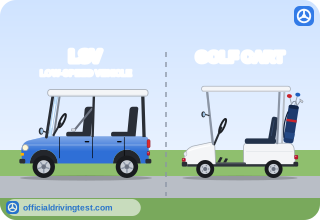
In New Jersey, a low-speed vehicle (LSV) is a four-wheeled vehicle with an attainable speed on a paved surface of:
- More than 35 mph but no more than 45 mph
- More than 20 mph but no more than 25 mph
- More than 25 mph but no more than 35 mph
- No more than 15 mph
Show answer
Correct answer: More than 20 mph but no more than 25 mph
An LSV is a four-wheeled vehicle whose attainable speed is more than 20 mph but no more than 25 mph on a paved surface.
Source: New Jersey Driver Manual (2026), page 153 · Open this page in the manual (Manual page 153)
-
In New Jersey, which statement about a low-speed vehicle (LSV) is true?
- It is exempt from federal safety standards
- It must run on diesel fuel
- It cannot be powered by gas or diesel fuel
- It must be powered by pedals
Show answer
Correct answer: It cannot be powered by gas or diesel fuel
An LSV cannot be powered by gas or diesel fuel and must comply with federal safety standards.
Source: New Jersey Driver Manual (2026), page 153 · Open this page in the manual (Manual page 153)
-
In New Jersey, may snowmobiles, ATVs and dirt bikes ride on public roadways with other vehicles?
- Yes, but only on highway shoulders
- Yes, on any public road
- Yes, but only on roads posted at 25 mph or less
- No, but they may cross certain roads when safe
Show answer
Correct answer: No, but they may cross certain roads when safe
It is illegal for these vehicles to ride on public roadways with other vehicles, but they are permitted to cross certain roadways when safety permits.
Source: New Jersey Driver Manual (2026), page 154 · Open this page in the manual (Manual page 154)
-
In New Jersey, what must operators of snowmobiles, ATVs and dirt bikes maintain and display?
- A slow-moving vehicle emblem and a flashing amber light
- A commercial driver license
- Proof of insurance and the vehicle's registration
- A farm vehicle exemption certificate
Show answer
Correct answer: Proof of insurance and the vehicle's registration
Operators of snowmobiles, ATVs and dirt bikes must maintain proof of insurance and always display the vehicle's registration.
Source: New Jersey Driver Manual (2026), page 154 · Open this page in the manual (Manual page 154)
-
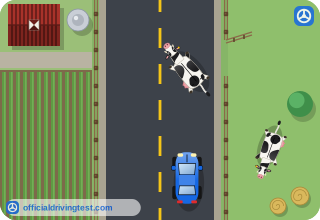
According to the New Jersey Driver Manual, what is the best defense against crashes involving animals?
- Honk your horn steadily in rural areas
- Watch both roadsides and expect sudden moves
- Keep your high beams on at all times
- Swerve sharply away as soon as you see an animal
Show answer
Correct answer: Watch both roadsides and expect sudden moves
Swerving to avoid an animal can make you hit something else or be hit from behind; the best defense is to watch both sides of the road ahead and be prepared for unexpected movement.
Source: New Jersey Driver Manual (2026), page 155 · Open this page in the manual (Manual page 155)
-
In New Jersey, what rights and responsibilities do horseback riders and horse-drawn vehicles have on public roadways?
- None; they may not use public roads
- The right-of-way over all other traffic
- Only those of pedestrians
- The same as drivers of motor vehicles
Show answer
Correct answer: The same as drivers of motor vehicles
Horse-drawn vehicles and horseback riders have the same rights and responsibilities as drivers of motor vehicles on public roadways.
Source: New Jersey Driver Manual (2026), page 155 · Open this page in the manual (Manual page 155)
-
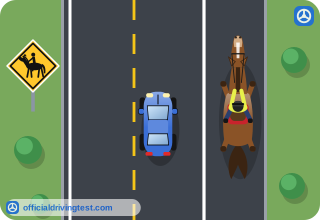
In New Jersey, when approaching or passing a person riding a horse or driving a horse-drawn vehicle, you must reduce your speed to:
- 15 mph or less
- 45 mph or less
- 25 mph or less
- 35 mph or less
Show answer
Correct answer: 25 mph or less
Motorists must reduce their speed to 25 mph or less and proceed with caution when approaching or passing a horse rider or horse-drawn vehicle.
Source: New Jersey Driver Manual (2026), page 155 · Open this page in the manual (Manual page 155)
-
In New Jersey, a person riding a horse toward you from the opposite direction puts up a hand to signal you. What must you do?
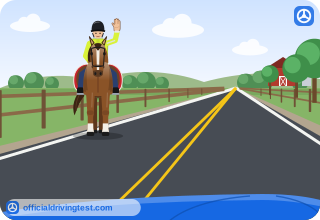
- Stop and stay stopped until the horse passes
- Flash your headlights and continue
- Tap the horn lightly to acknowledge the rider
- Slow to 25 mph and keep going
Show answer
Correct answer: Stop and stay stopped until the horse passes
At the request or hand signal of a rider or horse-drawn vehicle driver coming the opposite way, you must stop and remain stationary as long as it takes the horse to pass.
Source: New Jersey Driver Manual (2026), page 155 · Open this page in the manual (Manual page 155)
-
In New Jersey, how must horse-drawn vehicles and horseback riders travel on the road?
- On the sidewalk whenever possible
- In the center of the travel lane
- With traffic, keeping as far right as possible
- Against traffic, on the far left side of the road
Show answer
Correct answer: With traffic, keeping as far right as possible
Horse-drawn vehicles and horseback riders must ride with traffic, keeping as far to the right as possible, and may not use certain limited-access highways.
Source: New Jersey Driver Manual (2026), page 155 · Open this page in the manual (Manual page 155)
-
In New Jersey, a horse-drawn vehicle must display a light on its front during which period?
- 30 minutes after sunset to 30 minutes before sunrise
- Only between midnight and 5 a.m.
- Only during morning and evening rush hours
- From one hour after sunset to one hour before sunrise
Show answer
Correct answer: 30 minutes after sunset to 30 minutes before sunrise
A light must be displayed on the front of a horse-drawn vehicle from 30 minutes after sunset until 30 minutes before sunrise, and in low visibility.
Source: New Jersey Driver Manual (2026), page 155 · Open this page in the manual (Manual page 155)
-
In New Jersey, a horse-drawn vehicle must display a front light whenever visibility is at or below what distance?
- 1,000 feet
- 500 feet
- 250 feet
- 100 feet
Show answer
Correct answer: 500 feet
A light must be displayed on the front of a horse-drawn vehicle if visibility is 500 feet or less, as well as at night and in fog, mist or smoke.
Source: New Jersey Driver Manual (2026), page 155 · Open this page in the manual (Manual page 155)
-
According to the New Jersey Driver Manual, why can swerving to avoid an animal on the road be dangerous?
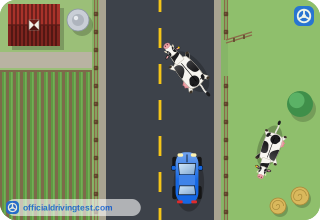
- Swerving is illegal on all New Jersey roads
- It switches off your car's anti-lock brakes
- It uses up more fuel than braking hard
- You may hit something else or be hit from behind
Show answer
Correct answer: You may hit something else or be hit from behind
Trying to avoid animals often causes crashes: by swerving, the vehicle may hit something else or be hit by another vehicle from behind.
Source: New Jersey Driver Manual (2026), page 155 · Open this page in the manual (Manual page 155)
-
What does a fluorescent, reflective orange triangular sign on a vehicle indicate?
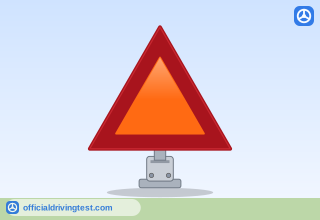
- It is carrying hazardous materials
- It is driven by a student driver
- It is an emergency vehicle
- It is a slow-moving vehicle
Show answer
Correct answer: It is a slow-moving vehicle
A fluorescent and reflective orange triangular sign indicates a slow-moving vehicle, such as farm and construction equipment on public highways.
Source: New Jersey Driver Manual (2026), page 217 · Open this page in the manual (Manual page 217)
-
Operators of slow-moving vehicles, such as farm equipment on public highways, must place a slow-moving vehicle sign where?
- On the roof of the cab
- On the back of the vehicle
- On the driver's side door
- On the front bumper
Show answer
Correct answer: On the back of the vehicle
Slow-moving vehicle operators must obey all traffic rules and place a slow-moving vehicle sign on the back of their vehicles to warn approaching motorists.
Source: New Jersey Driver Manual (2026), page 217 · Open this page in the manual (Manual page 217)