Nevada: Emergencies and bad weather — Part 2 Practice Test
Night driving, rain, snow and ice, skids, blowouts, brake failure, flash floods and other emergencies. — Part 2
Independent educational site · not affiliated with any government agency or DMV
Ready? Test yourself
- Instant feedback with an explanation
- Every answer cites its source in the manual
- Your best score is saved on this device
- Keyboard: press 1 to 4 to answer and Enter for the next question
Questions are original and based on the official manual "Nevada Driver's Handbook" (March 2024 (DMV 700)), Nevada Department of Motor Vehicles.
All 17 questions in this practice test
Take the test above first, then use this list to study. Tap “Show answer” to see the correct answer and explanation.
Show the questions and answersHide the questions
-
Your brakes fail and pumping the pedal does not help. What should you use?
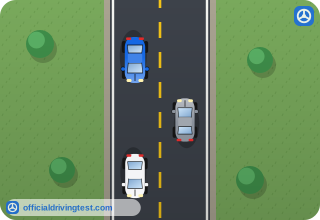
- The horn and headlights
- The emergency parking brake
- The cruise control
- The windshield wipers
Show answer
Correct answer: The emergency parking brake
If the brakes still do not respond after pumping, use the emergency parking brake.
Source: Nevada Driver's Handbook (March 2024 (DMV 700)), page 58 · Open this page in the manual (Manual page 58)
-
To prevent wear on the brakes when driving downhill for long stretches, what should you use?
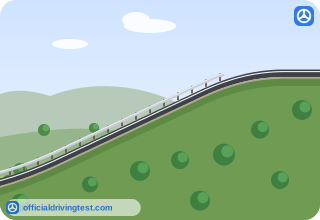
- Neutral
- A higher gear
- The emergency parking brake
- A lower gear
Show answer
Correct answer: A lower gear
The handbook says to use a lower gear when driving downhill for long stretches to prevent wear on the brakes.
Source: Nevada Driver's Handbook (March 2024 (DMV 700)), page 58 · Open this page in the manual (Manual page 58)
-
What should you NEVER do when your brakes fail?
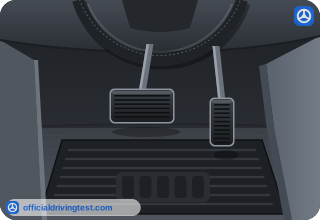
- Place the vehicle into “park”
- Shift to a lower gear
- Use the emergency parking brake
- Try pumping the brake pedal
Show answer
Correct answer: Place the vehicle into “park”
The handbook warns to never place the vehicle into “park” when the brakes fail.
Source: Nevada Driver's Handbook (March 2024 (DMV 700)), page 58 · Open this page in the manual (Manual page 58)
-
What should you do after driving through deep water?
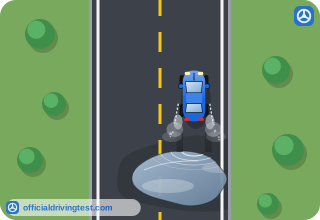
- Turn off the engine for a few minutes
- Shift to park until the brakes dry
- Test your brakes
- Check your tire pressure
Show answer
Correct answer: Test your brakes
After driving through deep water, brakes may pull to one side or not hold at all, so you should test them.
Source: Nevada Driver's Handbook (March 2024 (DMV 700)), page 58 · Open this page in the manual (Manual page 58)
-
How do you dry wet brakes?
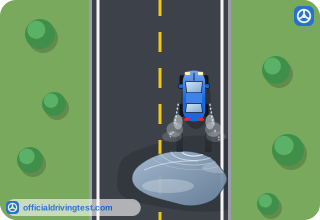
- Shift to neutral and coast with your foot off the pedals
- Put your car in low gear, drive slowly and lightly apply the brakes
- Drive fast in a high gear and brake hard
- Park and wait with the engine off
Show answer
Correct answer: Put your car in low gear, drive slowly and lightly apply the brakes
To dry wet brakes, put your car in low gear, drive slowly and lightly apply the brakes.
Source: Nevada Driver's Handbook (March 2024 (DMV 700)), page 58 · Open this page in the manual (Manual page 58)
-
While drying wet brakes, how often should you test them?
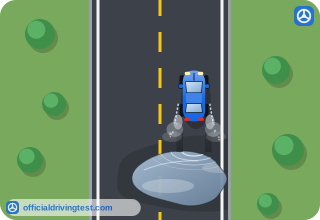
- About every 50 feet
- About every 1,000 feet
- About every mile
- About every 200 feet
Show answer
Correct answer: About every 200 feet
Test the brakes about every 200 feet, continuing until braking action returns to normal.
Source: Nevada Driver's Handbook (March 2024 (DMV 700)), page 58 · Open this page in the manual (Manual page 58)
-
What should you do if your windshield wipers fail in heavy rain or snow?
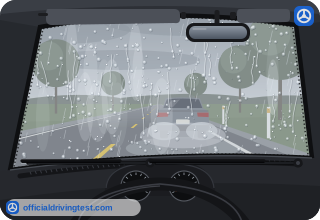
- Slow down, lower the window and put your head outside so you can see
- Keep driving at the same speed and use the defroster to clear the glass
- Stop in your lane and wait for the rain to end
- Speed up to leave the storm quickly
Show answer
Correct answer: Slow down, lower the window and put your head outside so you can see
If the wipers fail in heavy rain or snow, slow down, lower the window and put your head outside so you can see.
Source: Nevada Driver's Handbook (March 2024 (DMV 700)), page 58 · Open this page in the manual (Manual page 58)
-
If your wipers fail in heavy rain or snow, where should you move your car if possible?
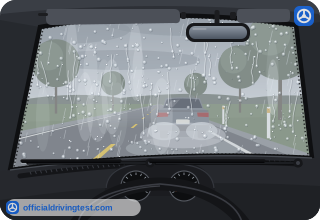
- Off the highway to the left
- Into the left lane
- Off the highway to the right
- Into the median
Show answer
Correct answer: Off the highway to the right
If possible, move the car off the highway to the right and stop as soon as possible.
Source: Nevada Driver's Handbook (March 2024 (DMV 700)), page 58 · Open this page in the manual (Manual page 58)
-
Your accelerator (gas pedal) sticks. What should you do first?
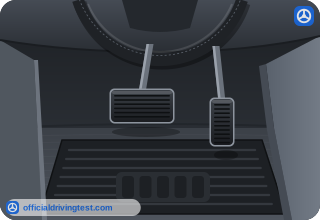
- Turn off the ignition and coast to a stop in the lane
- Quickly press your foot hard against the pedal and release
- Shift into park
- Brake as hard as you can
Show answer
Correct answer: Quickly press your foot hard against the pedal and release
Quickly pressing your foot hard against the pedal and releasing may free the stuck pedal.
Source: Nevada Driver's Handbook (March 2024 (DMV 700)), page 58 · Open this page in the manual (Manual page 58)
-
If pressing and releasing does not free a stuck accelerator, what should you do next?
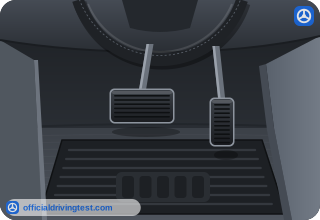
- Shift into park
- Shift to a higher gear
- Turn the steering wheel sharply
- Shift to neutral
Show answer
Correct answer: Shift to neutral
If the pedal is not freed, the handbook says to shift to neutral, apply the brakes and pull off the highway to the right if possible.
Source: Nevada Driver's Handbook (March 2024 (DMV 700)), page 58 · Open this page in the manual (Manual page 58)
-
What should you do if your headlights fail?
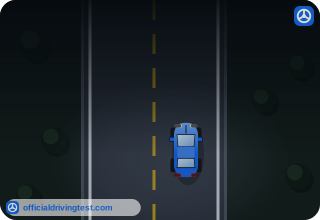
- Slow down and pull off the roadway as soon as you can
- Keep driving carefully until you reach your destination
- Stop in the travel lane and turn on the dome light
- Speed up to reach the nearest exit
Show answer
Correct answer: Slow down and pull off the roadway as soon as you can
When headlights fail, the handbook says to slow down and pull off the roadway as soon as you can.
Source: Nevada Driver's Handbook (March 2024 (DMV 700)), page 58 · Open this page in the manual (Manual page 58)
-
When your headlights fail, which lights will usually still work and can guide you safely to the side of the road?
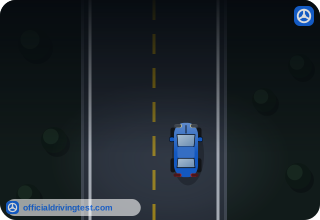
- Brake lights and the interior dome lights
- Only the high beams and tail lights
- Parking lights, turn signals or four-way flashers
- Backup lights and fog lights
Show answer
Correct answer: Parking lights, turn signals or four-way flashers
Parking lights, turn signals or four-way flashers will usually still work and can guide you to the side of the road.
Source: Nevada Driver's Handbook (March 2024 (DMV 700)), page 58 · Open this page in the manual (Manual page 58)
-
If smoke comes from under the hood of your vehicle, what should you do?
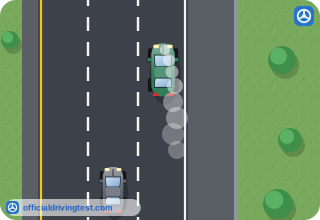
- Keep driving until the smoke stops
- Slow down, pull off the road and turn off the ignition immediately
- Keep the engine running and open the hood right away to cool it
- Speed up to reach the nearest help
Show answer
Correct answer: Slow down, pull off the road and turn off the ignition immediately
The handbook says to slow down, pull off the road and turn off the ignition immediately, then use extreme caution opening the hood.
Source: Nevada Driver's Handbook (March 2024 (DMV 700)), page 58 · Open this page in the manual (Manual page 58)
-
If you do not have a chemical fire extinguisher, what can you use to smother a vehicle fire?
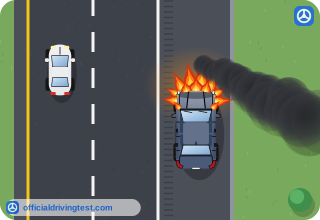
- Water from a bottle
- Motor oil
- Antifreeze
- Sand or dirt
Show answer
Correct answer: Sand or dirt
Without a chemical fire extinguisher, you can smother a fire by using sand or dirt.
Source: Nevada Driver's Handbook (March 2024 (DMV 700)), page 58 · Open this page in the manual (Manual page 58)
-
Why should you not use water on a vehicle fire?
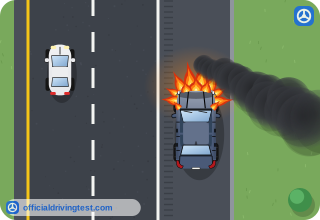
- Burning gasoline will float on water and spread the fire
- Water could damage the engine and the battery wiring
- Water makes the smoke much thicker
- Water freezes on a hot engine
Show answer
Correct answer: Burning gasoline will float on water and spread the fire
Burning gasoline floats on water and spreads the fire, so the handbook says not to use water.
Source: Nevada Driver's Handbook (March 2024 (DMV 700)), page 58 · Open this page in the manual (Manual page 58)
-
If you have no way to stop a vehicle fire or it gets out of control, how far away from the vehicle should you move?
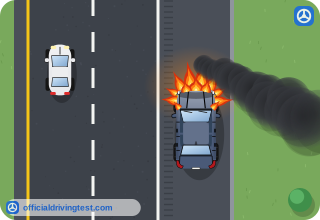
- At least 25 feet
- At least 50 feet
- At least 100 feet
- At least 500 feet
Show answer
Correct answer: At least 100 feet
The handbook says to move well away, at least 100 feet, from your vehicle.
Source: Nevada Driver's Handbook (March 2024 (DMV 700)), page 58 · Open this page in the manual (Manual page 58)
-
If you suddenly lose steering control, what should you do first?
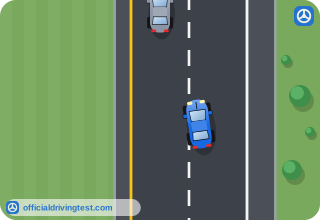
- Press the accelerator to regain control
- Ease up on the accelerator
- Shift into park
- Turn the wheel sharply back and forth
Show answer
Correct answer: Ease up on the accelerator
If you suddenly lose steering control, ease up on the accelerator.
Source: Nevada Driver's Handbook (March 2024 (DMV 700)), page 58 · Open this page in the manual (Manual page 58)