Nevada: Emergencies and bad weather
Night driving, rain, snow and ice, skids, blowouts, brake failure, flash floods and other emergencies. Split into 4 shorter tests so you're not stuck in one long quiz.
Independent educational site · not affiliated with any government agency or DMV
Choose a part
Emergencies and bad weather — Part 1
Questions in this part include: “If you stay with your car after car trouble, who will stop to help you?”
StartEmergencies and bad weather — Part 2
Night driving, rain, snow and ice, skids, blowouts, brake failure, flash floods and other emergencies. — Part 2
StartEmergencies and bad weather — Part 3
Questions in this part include: “Which of these is named as a major factor in crashes where a vehicle runs off the highway?”
StartEmergencies and bad weather — Part 4
Questions in this part include: “When does the handbook say you should be especially cautious about flood dangers?”
StartAll 67 Emergencies and bad weather questions with answers
Choose a part above to take a practice test, or study every question and answer here.
Show the questions and answersHide the questions
-
How should you use four-wheel ABS in an emergency stop?
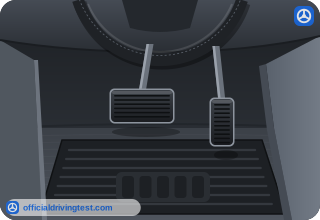
- Pump the brake pedal quickly while steering
- Press the brake pedal lightly and release it repeatedly
- Brake hard once, then release and steer
- Push the brake pedal down hard, hold it, and steer
Show answer
Correct answer: Push the brake pedal down hard, hold it, and steer
With four-wheel ABS, all drivers must do is brake and steer: push the brake pedal down hard, hold it down firmly and steer where you want the car to go.
Source: Nevada Driver's Handbook (March 2024 (DMV 700)), page 40 · Open this page in the manual (Manual page 40)
-
Why should you not pump the brakes yourself when your car has four-wheel ABS?
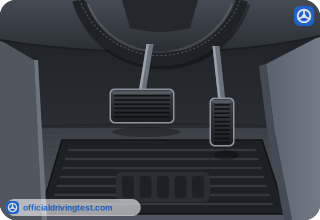
- ABS pumps the brakes automatically, much faster than you can
- Pumping would make the brake pads overheat and fade
- Pumping the pedal is only allowed on rear-wheel ABS
- Pumping the pedal wears out the ABS computer too quickly
Show answer
Correct answer: ABS pumps the brakes automatically, much faster than you can
In an emergency, four-wheel ABS pumps the brakes automatically at a much faster rate than the driver ever could.
Source: Nevada Driver's Handbook (March 2024 (DMV 700)), page 40 · Open this page in the manual (Manual page 40)
-
What can happen if you turn the steering wheel hard or jerk it too far during an emergency stop with ABS?
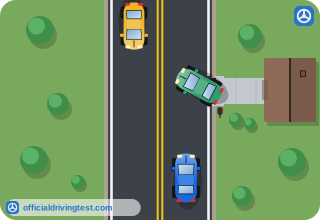
- The ABS will turn itself off for the rest of the trip
- The front brakes will lock while the rear brakes release
- You may end up on the shoulder or in the emergency stopping lane
- The tires will heat up and lose their grip on dry road
Show answer
Correct answer: You may end up on the shoulder or in the emergency stopping lane
Jerking the wheel too far can cause the vehicle to end up in the emergency stopping lane or on the shoulder of the road.
Source: Nevada Driver's Handbook (March 2024 (DMV 700)), page 40 · Open this page in the manual (Manual page 40)
-
When should you steer back into your original lane after avoiding a hazard?
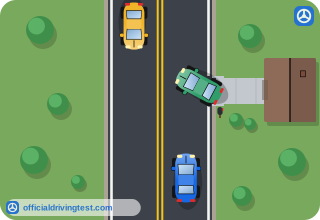
- After you have come to a complete stop
- As soon as the hazard is cleared
- Only after you have checked your speedometer
- After the ABS symbol on the dashboard turns off
Show answer
Correct answer: As soon as the hazard is cleared
Drivers should steer back into the original lane as soon as the hazard is cleared.
Source: Nevada Driver's Handbook (March 2024 (DMV 700)), page 40 · Open this page in the manual (Manual page 40)
-
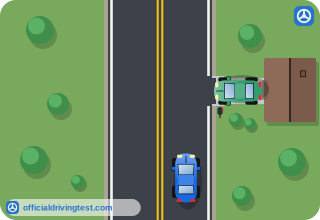
When you decide where to steer around a hazard during emergency braking, what should you check?
- That your hazard lights are on
- That your headlights are on high beam
- That your seat belt is fastened
- That traffic is clear
Show answer
Correct answer: That traffic is clear
Drivers should check that traffic is clear when they decide where to steer.
Source: Nevada Driver's Handbook (March 2024 (DMV 700)), page 40 · Open this page in the manual (Manual page 40)
-
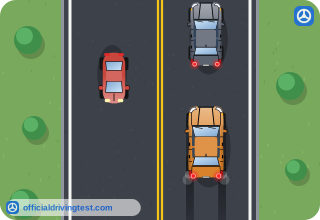
With rear-wheel ABS, what should you do if the front wheels lock and you lose steering control?
- Press the brake pedal harder until the front wheels release
- Let up on the brake just enough to let the front wheels roll
- Release the brake pedal completely and keep it released
- Shift to neutral and let the vehicle coast to a stop
Show answer
Correct answer: Let up on the brake just enough to let the front wheels roll
The front wheels can still lock with rear-wheel ABS, so you should let up on the brake pedal just enough for the front wheels to start rolling again and regain steering control.
Source: Nevada Driver's Handbook (March 2024 (DMV 700)), page 40 · Open this page in the manual (Manual page 40)
-
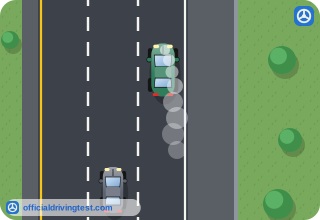
If you have car trouble, what should you do?
- Stop in your lane and wait for a trooper to arrive
- Continue driving slowly in the right lane until the problem clears up
- Move to the shoulder or emergency stopping area as soon as you safely can
- Pull into the nearest lane and wait for a tow truck to find you
Show answer
Correct answer: Move to the shoulder or emergency stopping area as soon as you safely can
With car trouble, you move to the shoulder or emergency stopping area as soon as you safely can.
Source: Nevada Driver's Handbook (March 2024 (DMV 700)), page 50 · Open this page in the manual (Manual page 50)
-
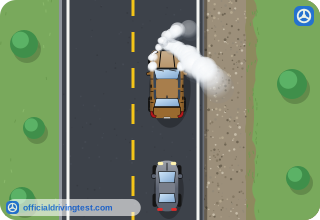
If you have car trouble and move to the shoulder, what should you turn on to warn other traffic?
- Your high-beam headlights
- Your four-way flashers
- Your turn signal
- Your windshield wipers
Show answer
Correct answer: Your four-way flashers
You turn on your four-way flashers to warn other traffic.
Source: Nevada Driver's Handbook (March 2024 (DMV 700)), page 50 · Open this page in the manual (Manual page 50)
-
If possible, where is it better to stay when you have car trouble on a freeway?
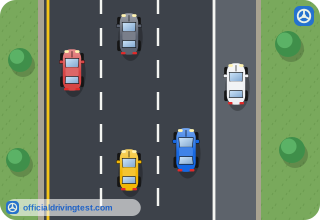
- Walking along the freeway to find a telephone nearby
- Standing behind your car on the side nearest traffic
- Sitting in the lane next to the front of your car
- In or near your car, on the far side from passing traffic
Show answer
Correct answer: In or near your car, on the far side from passing traffic
If possible, it is better to stay in or near your car on the far side from passing traffic, because walking along a freeway is dangerous.
Source: Nevada Driver's Handbook (March 2024 (DMV 700)), page 50 · Open this page in the manual (Manual page 50)
-
If you stay with your car after car trouble, who will stop to help you?
- A DMV driver examiner
- A highway department maintenance crew
- A Nevada Highway Patrol trooper
- A towing company driver
Show answer
Correct answer: A Nevada Highway Patrol trooper
If you stay with your car, a Nevada Highway Patrol trooper will stop to help you.
Source: Nevada Driver's Handbook (March 2024 (DMV 700)), page 50 · Open this page in the manual (Manual page 50)
-
When may you stop on a freeway?
- Only for an emergency
- To check a map or phone
- To let a passenger out
- To rest when you feel tired
Show answer
Correct answer: Only for an emergency
The handbook says do not stop on a freeway except for an emergency.
Source: Nevada Driver's Handbook (March 2024 (DMV 700)), page 50 · Open this page in the manual (Manual page 50)
-
What does skidding mean?
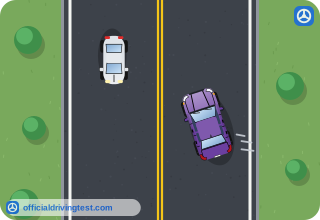
- Your vehicle’s tires have lost traction
- Your vehicle’s brakes have overheated
- Your vehicle’s engine has stalled
- Your vehicle’s steering has failed
Show answer
Correct answer: Your vehicle’s tires have lost traction
Skidding means your vehicle’s tires have lost traction.
Source: Nevada Driver's Handbook (March 2024 (DMV 700)), page 57 · Open this page in the manual (Manual page 57)
-
Where does skidding usually happen?
- On dry pavement only
- On fresh concrete only
- On ice or packed snow
- On dirt roads only
Show answer
Correct answer: On ice or packed snow
Skidding usually happens on ice or packed snow, but it can also occur on wet pavement or gravel roads.
Source: Nevada Driver's Handbook (March 2024 (DMV 700)), page 57 · Open this page in the manual (Manual page 57)
-
Where does the handbook direct you for specific information on skid recovery?
- A tow truck driver
- Your vehicle owner’s manual
- The posted speed limit signs
- A driving instructor only
Show answer
Correct answer: Your vehicle owner’s manual
Different braking and steering systems respond differently, so the handbook says to consult your vehicle owner’s manual for skid recovery.
Source: Nevada Driver's Handbook (March 2024 (DMV 700)), page 57 · Open this page in the manual (Manual page 57)
-
What does the handbook call the best source of information on mechanical system failures?
- A tow truck driver
- The posted road signs
- Other drivers on the road
- Your vehicle owner’s manual
Show answer
Correct answer: Your vehicle owner’s manual
Vehicle features and procedures vary greatly, so the owner’s manual is the best source for information on mechanical system failures.
Source: Nevada Driver's Handbook (March 2024 (DMV 700)), page 57 · Open this page in the manual (Manual page 57)
-
What does the handbook say to do in all emergencies?
- Stay calm and use common sense
- Stop immediately in the lane
- Sound your horn continuously
- Speed up to leave the danger
Show answer
Correct answer: Stay calm and use common sense
In all emergencies the handbook says to stay calm and use common sense.
Source: Nevada Driver's Handbook (March 2024 (DMV 700)), page 57 · Open this page in the manual (Manual page 57)
-
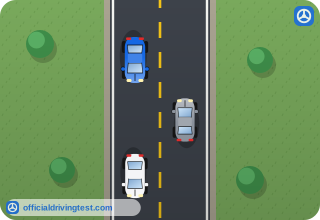
If your brakes fail, what should you try first?
- Shifting into park
- Turning off the ignition
- Pumping the brake pedal
- Steering onto the shoulder
Show answer
Correct answer: Pumping the brake pedal
When the brakes fail, the handbook says to try pumping the brake pedal first.
Source: Nevada Driver's Handbook (March 2024 (DMV 700)), page 58 · Open this page in the manual (Manual page 58)
-
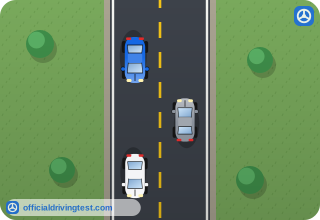
Your brakes fail and pumping the pedal does not help. What should you use?
- The horn and headlights
- The emergency parking brake
- The cruise control
- The windshield wipers
Show answer
Correct answer: The emergency parking brake
If the brakes still do not respond after pumping, use the emergency parking brake.
Source: Nevada Driver's Handbook (March 2024 (DMV 700)), page 58 · Open this page in the manual (Manual page 58)
-
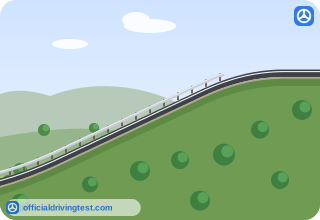
To prevent wear on the brakes when driving downhill for long stretches, what should you use?
- Neutral
- A higher gear
- The emergency parking brake
- A lower gear
Show answer
Correct answer: A lower gear
The handbook says to use a lower gear when driving downhill for long stretches to prevent wear on the brakes.
Source: Nevada Driver's Handbook (March 2024 (DMV 700)), page 58 · Open this page in the manual (Manual page 58)
-
What should you NEVER do when your brakes fail?
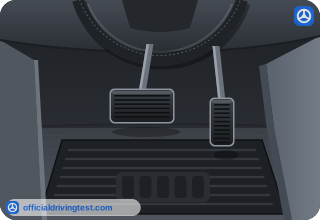
- Place the vehicle into “park”
- Shift to a lower gear
- Use the emergency parking brake
- Try pumping the brake pedal
Show answer
Correct answer: Place the vehicle into “park”
The handbook warns to never place the vehicle into “park” when the brakes fail.
Source: Nevada Driver's Handbook (March 2024 (DMV 700)), page 58 · Open this page in the manual (Manual page 58)
-
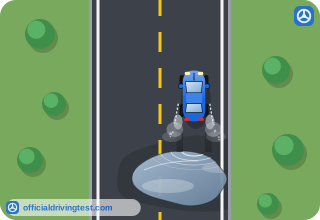
What should you do after driving through deep water?
- Turn off the engine for a few minutes
- Shift to park until the brakes dry
- Test your brakes
- Check your tire pressure
Show answer
Correct answer: Test your brakes
After driving through deep water, brakes may pull to one side or not hold at all, so you should test them.
Source: Nevada Driver's Handbook (March 2024 (DMV 700)), page 58 · Open this page in the manual (Manual page 58)
-
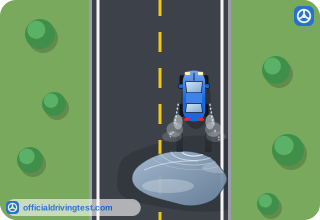
How do you dry wet brakes?
- Shift to neutral and coast with your foot off the pedals
- Put your car in low gear, drive slowly and lightly apply the brakes
- Drive fast in a high gear and brake hard
- Park and wait with the engine off
Show answer
Correct answer: Put your car in low gear, drive slowly and lightly apply the brakes
To dry wet brakes, put your car in low gear, drive slowly and lightly apply the brakes.
Source: Nevada Driver's Handbook (March 2024 (DMV 700)), page 58 · Open this page in the manual (Manual page 58)
-
While drying wet brakes, how often should you test them?
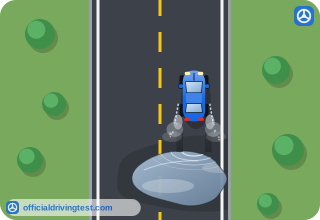
- About every 50 feet
- About every 1,000 feet
- About every mile
- About every 200 feet
Show answer
Correct answer: About every 200 feet
Test the brakes about every 200 feet, continuing until braking action returns to normal.
Source: Nevada Driver's Handbook (March 2024 (DMV 700)), page 58 · Open this page in the manual (Manual page 58)
-
What should you do if your windshield wipers fail in heavy rain or snow?
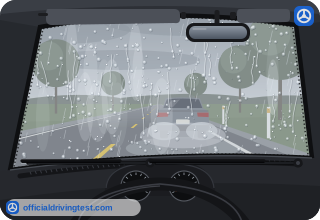
- Slow down, lower the window and put your head outside so you can see
- Keep driving at the same speed and use the defroster to clear the glass
- Stop in your lane and wait for the rain to end
- Speed up to leave the storm quickly
Show answer
Correct answer: Slow down, lower the window and put your head outside so you can see
If the wipers fail in heavy rain or snow, slow down, lower the window and put your head outside so you can see.
Source: Nevada Driver's Handbook (March 2024 (DMV 700)), page 58 · Open this page in the manual (Manual page 58)
-
If your wipers fail in heavy rain or snow, where should you move your car if possible?
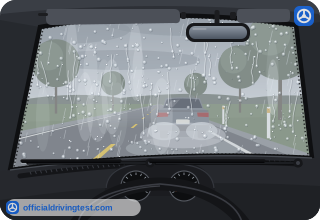
- Off the highway to the left
- Into the left lane
- Off the highway to the right
- Into the median
Show answer
Correct answer: Off the highway to the right
If possible, move the car off the highway to the right and stop as soon as possible.
Source: Nevada Driver's Handbook (March 2024 (DMV 700)), page 58 · Open this page in the manual (Manual page 58)
-
Your accelerator (gas pedal) sticks. What should you do first?
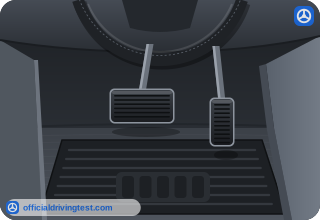
- Turn off the ignition and coast to a stop in the lane
- Quickly press your foot hard against the pedal and release
- Shift into park
- Brake as hard as you can
Show answer
Correct answer: Quickly press your foot hard against the pedal and release
Quickly pressing your foot hard against the pedal and releasing may free the stuck pedal.
Source: Nevada Driver's Handbook (March 2024 (DMV 700)), page 58 · Open this page in the manual (Manual page 58)
-
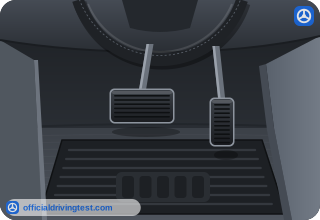
If pressing and releasing does not free a stuck accelerator, what should you do next?
- Shift into park
- Shift to a higher gear
- Turn the steering wheel sharply
- Shift to neutral
Show answer
Correct answer: Shift to neutral
If the pedal is not freed, the handbook says to shift to neutral, apply the brakes and pull off the highway to the right if possible.
Source: Nevada Driver's Handbook (March 2024 (DMV 700)), page 58 · Open this page in the manual (Manual page 58)
-
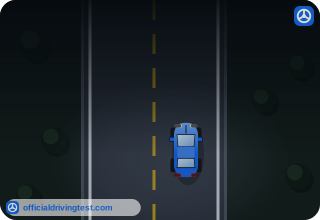
What should you do if your headlights fail?
- Slow down and pull off the roadway as soon as you can
- Keep driving carefully until you reach your destination
- Stop in the travel lane and turn on the dome light
- Speed up to reach the nearest exit
Show answer
Correct answer: Slow down and pull off the roadway as soon as you can
When headlights fail, the handbook says to slow down and pull off the roadway as soon as you can.
Source: Nevada Driver's Handbook (March 2024 (DMV 700)), page 58 · Open this page in the manual (Manual page 58)
-
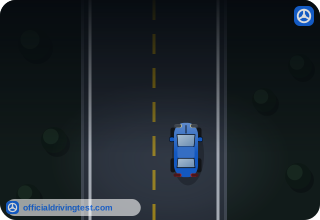
When your headlights fail, which lights will usually still work and can guide you safely to the side of the road?
- Brake lights and the interior dome lights
- Only the high beams and tail lights
- Parking lights, turn signals or four-way flashers
- Backup lights and fog lights
Show answer
Correct answer: Parking lights, turn signals or four-way flashers
Parking lights, turn signals or four-way flashers will usually still work and can guide you to the side of the road.
Source: Nevada Driver's Handbook (March 2024 (DMV 700)), page 58 · Open this page in the manual (Manual page 58)
-
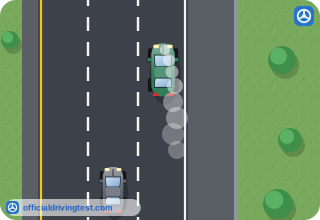
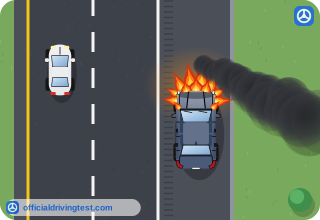
If smoke comes from under the hood of your vehicle, what should you do?
- Keep driving until the smoke stops
- Slow down, pull off the road and turn off the ignition immediately
- Keep the engine running and open the hood right away to cool it
- Speed up to reach the nearest help
Show answer
Correct answer: Slow down, pull off the road and turn off the ignition immediately
The handbook says to slow down, pull off the road and turn off the ignition immediately, then use extreme caution opening the hood.
Source: Nevada Driver's Handbook (March 2024 (DMV 700)), page 58 · Open this page in the manual (Manual page 58)
-
If you do not have a chemical fire extinguisher, what can you use to smother a vehicle fire?
- Water from a bottle
- Motor oil
- Antifreeze
- Sand or dirt
Show answer
Correct answer: Sand or dirt
Without a chemical fire extinguisher, you can smother a fire by using sand or dirt.
Source: Nevada Driver's Handbook (March 2024 (DMV 700)), page 58 · Open this page in the manual (Manual page 58)
-
Why should you not use water on a vehicle fire?
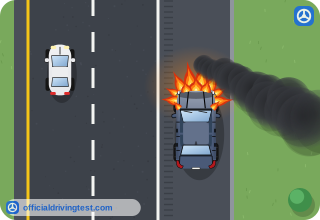
- Burning gasoline will float on water and spread the fire
- Water could damage the engine and the battery wiring
- Water makes the smoke much thicker
- Water freezes on a hot engine
Show answer
Correct answer: Burning gasoline will float on water and spread the fire
Burning gasoline floats on water and spreads the fire, so the handbook says not to use water.
Source: Nevada Driver's Handbook (March 2024 (DMV 700)), page 58 · Open this page in the manual (Manual page 58)
-
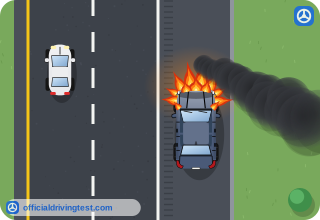
If you have no way to stop a vehicle fire or it gets out of control, how far away from the vehicle should you move?
- At least 25 feet
- At least 50 feet
- At least 100 feet
- At least 500 feet
Show answer
Correct answer: At least 100 feet
The handbook says to move well away, at least 100 feet, from your vehicle.
Source: Nevada Driver's Handbook (March 2024 (DMV 700)), page 58 · Open this page in the manual (Manual page 58)
-
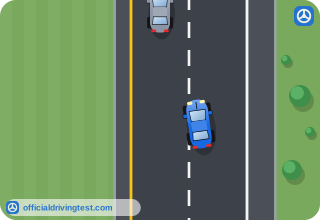
If you suddenly lose steering control, what should you do first?
- Press the accelerator to regain control
- Ease up on the accelerator
- Shift into park
- Turn the wheel sharply back and forth
Show answer
Correct answer: Ease up on the accelerator
If you suddenly lose steering control, ease up on the accelerator.
Source: Nevada Driver's Handbook (March 2024 (DMV 700)), page 58 · Open this page in the manual (Manual page 58)
-
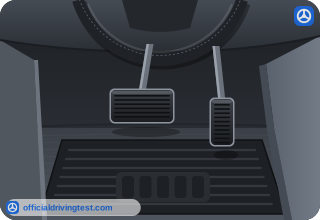
You lost steering control but your car continues to hold the lane. How should you use the brakes?
- Brake quickly using maximum pressure
- Do not use the brakes at all
- Pump the brakes rapidly
- Slow down and then gently apply the brakes
Show answer
Correct answer: Slow down and then gently apply the brakes
If your car continues to hold the lane, slow down and then gently apply the brakes and use four-way flashers.
Source: Nevada Driver's Handbook (March 2024 (DMV 700)), page 58 · Open this page in the manual (Manual page 58)
-
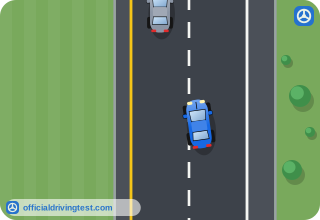
After a steering failure, your vehicle heads off the road or toward another vehicle or a pedestrian. What should you do?
- Apply the brakes quickly using maximum pressure
- Ease off the brakes and let the vehicle coast to a stop
- Gently tap the brakes
- Keep your foot off the pedals
Show answer
Correct answer: Apply the brakes quickly using maximum pressure
If the vehicle heads off the road or toward another vehicle or a pedestrian, apply the brakes quickly using maximum pressure.
Source: Nevada Driver's Handbook (March 2024 (DMV 700)), page 58 · Open this page in the manual (Manual page 58)
-
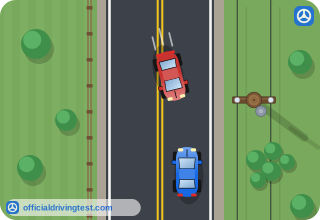
If you see a vehicle coming toward you in your lane, what should you do?
- Stop in your lane, turn on your four-way flashers and wait for the other vehicle to move
- Speed up and steer into the left lane to pass the vehicle
- Slow down, sound your horn, flash your headlights and pull as far to the right as you safely can
- Brake hard and steer into the lane the other vehicle left
Show answer
Correct answer: Slow down, sound your horn, flash your headlights and pull as far to the right as you safely can
The handbook says to slow down, sound your horn, flash your headlights and pull as far to the right as you safely can.
Source: Nevada Driver's Handbook (March 2024 (DMV 700)), page 58 · Open this page in the manual (Manual page 58)
-
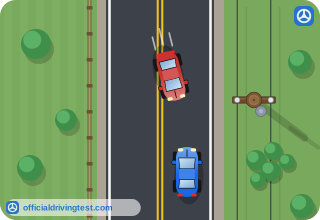
Why should you not swing into the lane an approaching vehicle has left?
- Traffic in that lane will usually be traveling much faster than the vehicle you just avoided
- The other driver may suddenly realize his or her mistake and turn back into the proper lane
- That lane is reserved for vehicles that are passing
- Vehicles in that lane have the right-of-way over you
Show answer
Correct answer: The other driver may suddenly realize his or her mistake and turn back into the proper lane
The other driver may suddenly turn back into the proper lane, so do not swing into the lane the vehicle left.
Source: Nevada Driver's Handbook (March 2024 (DMV 700)), page 58 · Open this page in the manual (Manual page 58)
-
If you are forced off the road or drift onto the shoulder, what should you do with the accelerator?
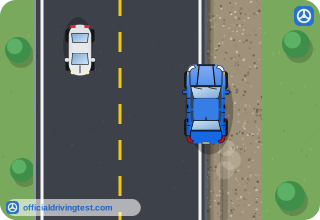
- Press it harder to return quickly
- Hold it steady
- Tap it repeatedly
- Take your foot off it
Show answer
Correct answer: Take your foot off it
The handbook says to take your foot off the accelerator and, if you brake, to do so carefully.
Source: Nevada Driver's Handbook (March 2024 (DMV 700)), page 59 · Open this page in the manual (Manual page 59)
-
After your vehicle runs off the pavement onto the shoulder, how should you return to the road?
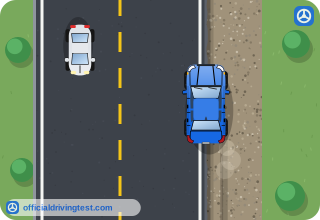
- Stay on the shoulder until you have the vehicle completely under control, then gently ease back onto the road
- Steer sharply back onto the pavement as soon as you can
- Brake hard and swerve back onto the pavement as soon as you see that the road is clear of traffic
- Stop on the shoulder and wait for a tow truck
Show answer
Correct answer: Stay on the shoulder until you have the vehicle completely under control, then gently ease back onto the road
Do not swerve back onto the pavement; stay on the shoulder until the vehicle is under control and then gently ease back onto the road.
Source: Nevada Driver's Handbook (March 2024 (DMV 700)), page 59 · Open this page in the manual (Manual page 59)
-
Which of these is named as a major factor in crashes where a vehicle runs off the highway?
- Wide road shoulders
- Bright street lighting
- Driver fatigue
- Dry pavement
Show answer
Correct answer: Driver fatigue
Driver fatigue, inattention and speeding are all major factors in these single-vehicle crashes.
Source: Nevada Driver's Handbook (March 2024 (DMV 700)), page 59 · Open this page in the manual (Manual page 59)
-
What is a blowout?
- When an engine overheats
- When a tire suddenly loses air
- When brakes suddenly lock
- When headlights suddenly go out
Show answer
Correct answer: When a tire suddenly loses air
A blowout is when a tire suddenly loses air, and it can throw a vehicle out of control.
Source: Nevada Driver's Handbook (March 2024 (DMV 700)), page 59 · Open this page in the manual (Manual page 59)
-
How should you slow down after a tire blowout?
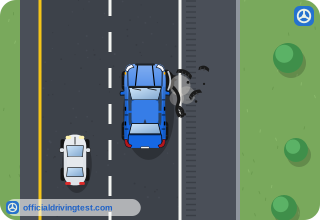
- Press the brake pedal firmly as soon as the tire goes flat
- Shift into park until the car stops
- Turn off the engine at once
- Ease up on the gas pedal and do not hit the brakes
Show answer
Correct answer: Ease up on the gas pedal and do not hit the brakes
After a blowout, ease up on the gas pedal to slow down and do not hit the brakes.
Source: Nevada Driver's Handbook (March 2024 (DMV 700)), page 59 · Open this page in the manual (Manual page 59)
-
After a blowout, when may you gently use the brakes to stop?
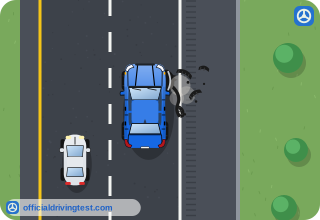
- When you are sure the vehicle is under control and you have slowed down
- As soon as you feel the tire lose air
- Immediately, while the vehicle is still swerving and before you have slowed down
- Only after the vehicle stops by itself
Show answer
Correct answer: When you are sure the vehicle is under control and you have slowed down
Once the vehicle is under control and you have slowed down, gently use the brakes to stop.
Source: Nevada Driver's Handbook (March 2024 (DMV 700)), page 59 · Open this page in the manual (Manual page 59)
-
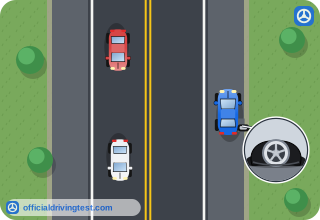
After a blowout, once your vehicle is safely off the roadway, how should you warn other drivers?
- Use high beams
- Sound the horn continuously
- Use parking lights or flashers
- Turn off all lights
Show answer
Correct answer: Use parking lights or flashers
Make sure the vehicle is safely off the roadway and use parking lights or flashers to warn other drivers.
Source: Nevada Driver's Handbook (March 2024 (DMV 700)), page 59 · Open this page in the manual (Manual page 59)
-
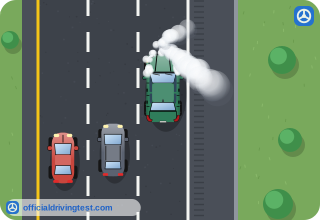
If your vehicle is disabled, how many wheels should be off the roadway, if possible?
- The two right wheels only
- All four wheels
- The two left wheels only
- Only the front wheels
Show answer
Correct answer: All four wheels
The handbook says that, if possible, you should get all four wheels off the roadway.
Source: Nevada Driver's Handbook (March 2024 (DMV 700)), page 59 · Open this page in the manual (Manual page 59)
-
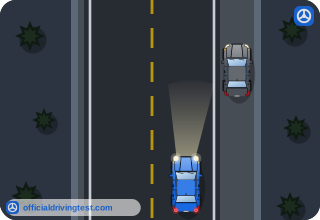
How should you warn other drivers about a disabled vehicle?
- Use only your high-beam headlights
- Sound the horn repeatedly
- Wave at passing vehicles
- Use parking lights, flashers or flares
Show answer
Correct answer: Use parking lights, flashers or flares
The handbook says to use parking lights, flashers or flares to warn other drivers.
Source: Nevada Driver's Handbook (March 2024 (DMV 700)), page 59 · Open this page in the manual (Manual page 59)
-
During which months does the handbook say flash flooding occurs particularly in Nevada?
- The summer months
- The winter months
- The autumn months
- The months of January and February
Show answer
Correct answer: The summer months
Nevada’s dry climate creates an ideal situation for flash flooding, particularly during the summer months.
Source: Nevada Driver's Handbook (March 2024 (DMV 700)), page 59 · Open this page in the manual (Manual page 59)
-
According to the handbook, how little water can cause a driver to lose control of a car?
- About 1 foot
- About 3 feet
- Less than 1 inch
- About 4 feet
Show answer
Correct answer: Less than 1 inch
Less than 1 inch of water can cause a driver to lose control of his or her car.
Source: Nevada Driver's Handbook (March 2024 (DMV 700)), page 59 · Open this page in the manual (Manual page 59)
-
According to the handbook, most vehicles can float in how much water?
- 4 feet or less
- 2 feet or less
- 5 feet or less
- 6 feet or less
Show answer
Correct answer: 2 feet or less
Most vehicles can float in 2 feet of water or less.
Source: Nevada Driver's Handbook (March 2024 (DMV 700)), page 59 · Open this page in the manual (Manual page 59)
-
Cars traveling at a high rate of speed can be pushed off the road by only how much water?
- 18 inches
- 3 feet
- 4 feet
- 6 inches
Show answer
Correct answer: 6 inches
Cars traveling at a high rate of speed can be pushed off the road by only 6 inches of water.
Source: Nevada Driver's Handbook (March 2024 (DMV 700)), page 59 · Open this page in the manual (Manual page 59)
-
What should you do if you encounter a flooded roadway?
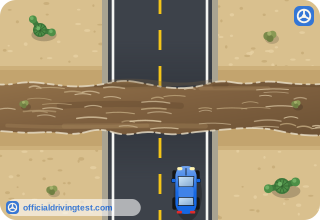
- Do not drive through it; turn around and seek an alternate route or wait until the water subsides
- Drive through slowly in a low gear, keeping the engine speed steady to avoid stalling
- Drive around it on the shoulder if the water looks shallow
- Follow another vehicle through the water
Show answer
Correct answer: Do not drive through it; turn around and seek an alternate route or wait until the water subsides
The handbook says not to attempt to drive through a flooded roadway; turn around and seek an alternate route or wait until the water subsides.
Source: Nevada Driver's Handbook (March 2024 (DMV 700)), page 59 · Open this page in the manual (Manual page 59)
-
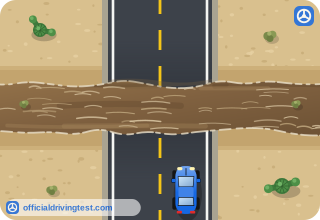
Why should you not drive through floodwater that looks like only a few inches of water?
- Floodwater is always deeper in the middle of the road than at the edges
- Shallow floodwater always drains away within minutes
- It is difficult to tell the depth, and the road may have washed away underneath
- Most flooded roads are closed by law
Show answer
Correct answer: It is difficult to tell the depth, and the road may have washed away underneath
It is difficult to determine the depth of floodwaters, and you have no idea if the road has washed away underneath.
Source: Nevada Driver's Handbook (March 2024 (DMV 700)), page 59 · Open this page in the manual (Manual page 59)
-
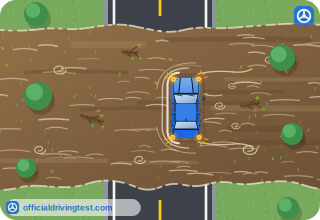
If your vehicle stalls in rising flood water, what should you do if you can safely do so?
- Keep restarting the engine until it runs, then drive on
- Abandon it immediately and seek higher ground
- Drive forward into deeper water to look for firmer road surface
- Back up slowly into the flowing water to turn around
Show answer
Correct answer: Abandon it immediately and seek higher ground
If your vehicle stalls in rising flood water and you can safely do so, abandon it immediately and seek higher ground.
Source: Nevada Driver's Handbook (March 2024 (DMV 700)), page 59 · Open this page in the manual (Manual page 59)
-
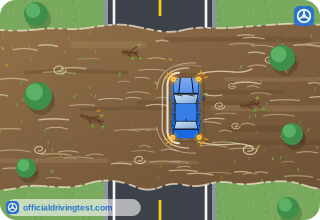
Why do deaths often occur in floods involving vehicles?
- People drive too slowly through shallow water
- People stop in the middle of the road to wait
- People often leave their vehicles too early and are swept away by the deep water
- People mistakenly believe that vehicles provide protection from rising, swiftly moving waters
Show answer
Correct answer: People mistakenly believe that vehicles provide protection from rising, swiftly moving waters
Deaths often occur because people mistakenly believe that vehicles provide protection from rising, swiftly moving waters.
Source: Nevada Driver's Handbook (March 2024 (DMV 700)), page 59 · Open this page in the manual (Manual page 59)
-
When does the handbook say you should be especially cautious about flood dangers?
- At night
- At noon
- In bright sunlight
- When roads are dry
Show answer
Correct answer: At night
It is harder to recognize flood dangers at night, so be especially cautious then.
Source: Nevada Driver's Handbook (March 2024 (DMV 700)), page 60 · Open this page in the manual (Manual page 60)
-
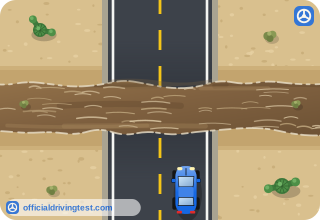
If you come upon rapidly rising waters while driving, what should you do?
- Keep driving to the nearest low spot beside a stream or flood control channel
- Stop beside a creek and wait for the water to pass
- Turn around, find another route and move to higher ground away from streams and creeks
- Drive through quickly to get to the other side
Show answer
Correct answer: Turn around, find another route and move to higher ground away from streams and creeks
If you come upon rapidly rising waters, turn around and find another route and move to higher ground away from streams, creeks and flood control channels.
Source: Nevada Driver's Handbook (March 2024 (DMV 700)), page 60 · Open this page in the manual (Manual page 60)
-
If your route is blocked by floodwaters or barricades, what should you do?
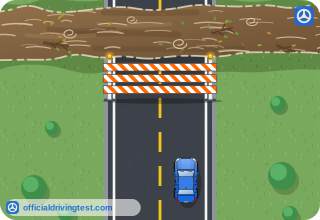
- Drive around the barricades if the water looks shallow
- Find another route and never drive around the barricades
- Move the barricades aside and continue
- Wait beside the barricades for water to drop
Show answer
Correct answer: Find another route and never drive around the barricades
Barricades are put up by local officials to protect people from unsafe roads, so find another route and never drive around them.
Source: Nevada Driver's Handbook (March 2024 (DMV 700)), page 60 · Open this page in the manual (Manual page 60)
-
When are the wheels of a trailer more likely to lock up and make the trailer swing around?
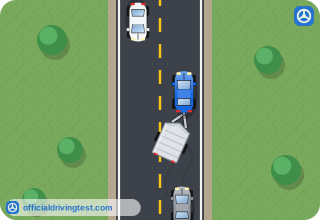
- When the trailer is fully loaded with cargo
- When the trailer is parked at the curb
- When the trailer is empty or lightly loaded
- Only when driving at very low speeds
Show answer
Correct answer: When the trailer is empty or lightly loaded
Trailer wheel lockup and swinging, often called a trailer jackknife, is more likely when the trailer is empty or lightly loaded.
Source: Nevada Driver's Handbook (March 2024 (DMV 700)), page 74 · Open this page in the manual (Manual page 74)
-
What is the earliest and best way to recognize that a trailer has started to skid?
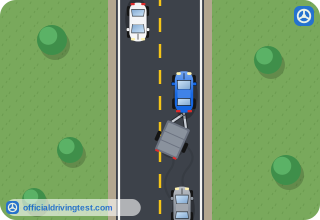
- Feeling the steering wheel go light
- Seeing it in your mirrors
- Listening for tire noise
- Waiting for a warning light
Show answer
Correct answer: Seeing it in your mirrors
The earliest and best way to recognize that the trailer has started to skid is by seeing it in your mirrors.
Source: Nevada Driver's Handbook (March 2024 (DMV 700)), page 74 · Open this page in the manual (Manual page 74)
-
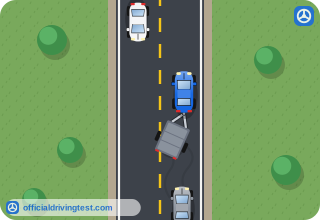
When should you check the mirrors to make sure the trailer is staying where it should?
- Only when the trailer is empty
- Only when backing up
- Only after the trailer has swung out
- Any time the brakes are applied hard
Show answer
Correct answer: Any time the brakes are applied hard
Any time the brakes are applied hard, check the mirrors to make sure the trailer is staying where it should.
Source: Nevada Driver's Handbook (March 2024 (DMV 700)), page 74 · Open this page in the manual (Manual page 74)
-
What is very difficult to do once the trailer swings out of your lane?
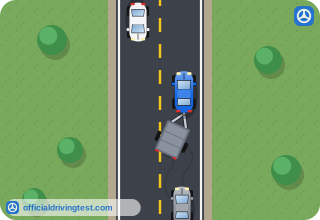
- Prevent a jackknife
- See the trailer in your mirrors
- Release the brakes
- Signal your intentions
Show answer
Correct answer: Prevent a jackknife
Once the trailer swings out of your lane, it is very difficult to prevent a jackknife.
Source: Nevada Driver's Handbook (March 2024 (DMV 700)), page 74 · Open this page in the manual (Manual page 74)
-
If the trailer starts to skid, what should you do with the brakes?
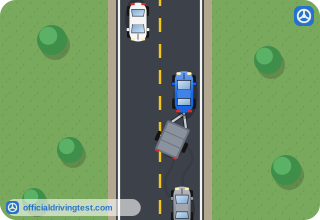
- Apply the trailer hand brake to straighten the rig
- Brake harder until the trailer stops
- Release the brakes to get traction back
- Pump the trailer hand brake repeatedly
Show answer
Correct answer: Release the brakes to get traction back
Release the brakes to get traction back; once the trailer wheels grip the road again, the trailer will start to follow the vehicle and straighten out.
Source: Nevada Driver's Handbook (March 2024 (DMV 700)), page 74 · Open this page in the manual (Manual page 74)
-
Why should you not use the trailer hand brake to straighten out a skidding rig?
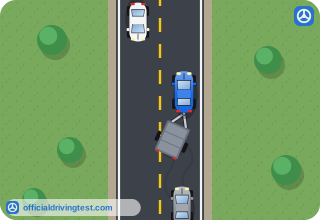
- The hand brake is too weak to have any effect on a trailer
- The brakes on the trailer wheels caused the skid in the first place
- The hand brake works only when the trailer is empty
- The hand brake should always be applied first in a skid
Show answer
Correct answer: The brakes on the trailer wheels caused the skid in the first place
Using the trailer hand brake is the wrong thing to do, since the brakes on the trailer wheels caused the skid in the first place.
Source: Nevada Driver's Handbook (March 2024 (DMV 700)), page 74 · Open this page in the manual (Manual page 74)
-
After a fender bender with only vehicle or property damage, no injuries, and a vehicle that can be moved safely, what should you do?
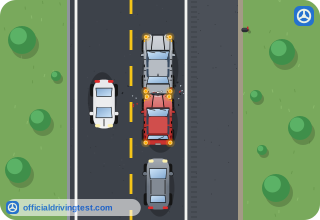
- Leave the vehicle in the traffic lane until the police arrive
- Move to a location that does not obstruct traffic and return to the scene
- Drive home and report the crash to your insurance company
- Move the vehicle and leave without exchanging information
Show answer
Correct answer: Move to a location that does not obstruct traffic and return to the scene
With only property damage and a vehicle that can be moved safely, you should move to a location that does not obstruct traffic and return to the scene.
Source: Nevada Driver's Handbook (March 2024 (DMV 700)), page 76 · Open this page in the manual (Manual page 76)
-
Which information must you exchange with the other drivers involved in a crash?
- Name, address, Social Security number and the name of your employer
- Name, telephone number, date of birth and license plate number only
- Name and address only, if no one was injured in the crash
- Name, address, driver license number, registration and insurance information
Show answer
Correct answer: Name, address, driver license number, registration and insurance information
You must exchange your name, address, driver license number, registration and insurance information with the other drivers.
Source: Nevada Driver's Handbook (March 2024 (DMV 700)), page 76 · Open this page in the manual (Manual page 76)
-
If a crash involves an unattended vehicle or other property, how may you give the owner your name, address, driver license number, registration and insurance information?
- In person or by leaving a note
- Only by calling the owner's insurance company
- Only by reporting it to the DMV within 24 hours
- By leaving the information with a neighbor
Show answer
Correct answer: In person or by leaving a note
If the crash involves an unattended vehicle or property, you must give the owner this information either in person or by leaving a note.
Source: Nevada Driver's Handbook (March 2024 (DMV 700)), page 76 · Open this page in the manual (Manual page 76)