Minnesota: Vehicle equipment and controls
The equipment the law requires on your vehicle, headlights and high beams, windows and windshields, hand and arm signals, anti-lock brakes and loading a trailer. Split into 5 shorter tests so you're not stuck in one long quiz.
Independent educational site · not affiliated with any government agency or DMV
Choose a part
Vehicle equipment and controls — Part 1
Questions in this part include: “At least how many separate brake systems must all cars and trucks have?”
StartVehicle equipment and controls — Part 2
Questions in this part include: “How much pressure can tires lose in a month?”
StartVehicle equipment and controls — Part 3
Questions in this part include: “Which of these is a fuel efficient technique listed in the manual?”
StartVehicle equipment and controls — Part 4
Questions in this part include: “You must use your headlights any time you cannot clearly see the road ahead for at least what distance?”
StartVehicle equipment and controls — Part 5
Questions in this part include: “What color must the tail lamps on a trailer be?”
StartAll 97 Vehicle equipment and controls questions with answers
Choose a part above to take a practice test, or study every question and answer here.
Show the questions and answersHide the questions
-
At least how many separate brake systems must all cars and trucks have?
- One
- Three
- Four
- Two
Show answer
Correct answer: Two
All cars and trucks must have at least two separate brake systems, like the foot brake and the parking/emergency brake.
Source: Minnesota Driver’s Manual (June 2026), page 22
-
What bumper requirement applies to pickup trucks and vans?
- Front bumpers and either rear bumpers or reflectors
- Rear bumpers only, with no front bumper needed
- Front and rear bumpers, with no exceptions
- No bumpers if they have reflectors
Show answer
Correct answer: Front bumpers and either rear bumpers or reflectors
Pickup trucks and vans must have front bumpers and either rear bumpers or reflectors.
Source: Minnesota Driver’s Manual (June 2026), page 22
-
What bumper requirement applies to private passenger vehicles?
- Front bumpers only
- Rear bumpers only
- Front and rear bumpers
- Rear bumpers or reflectors
Show answer
Correct answer: Front and rear bumpers
All private passenger vehicles must have front and rear bumpers.
Source: Minnesota Driver’s Manual (June 2026), page 22
-
Which of these are not horns and can only be used by emergency vehicles?
- Air horns and buzzers
- Bells, sirens and whistles
- Two-tone chimes and speakers
- Beepers and alarm bells
Show answer
Correct answer: Bells, sirens and whistles
Bells, sirens and whistles are not horns and can only be used by emergency vehicles.
Source: Minnesota Driver’s Manual (June 2026), page 22
-
According to the vehicle requirements, when should you use your horn?
- To announce your arrival
- To greet another driver you know
- To tell a slow driver to hurry
- To avoid a crash
Show answer
Correct answer: To avoid a crash
Use your horn to avoid a crash; do not honk unnecessarily or to announce your arrival.
Source: Minnesota Driver’s Manual (June 2026), page 22
-
How many white headlights must all motor vehicles except motorcycles have?
- Two, working on high and low beam
- One, working on high beam only
- Two, working on low beam only
- Four, working on high and low beam
Show answer
Correct answer: Two, working on high and low beam
All motor vehicles except motorcycles must have two white headlights that work on high and low beam.
Source: Minnesota Driver’s Manual (June 2026), page 23
-
The red taillights on a motor vehicle must light up when you do what?
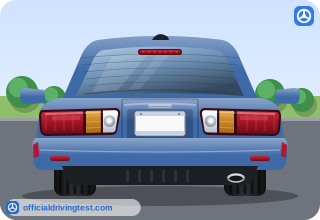
- Turn on the windshield wipers
- Shift into park
- Press the brake pedal
- Open the driver’s door
Show answer
Correct answer: Press the brake pedal
Red taillights must light up when you press the brake pedal.
Source: Minnesota Driver’s Manual (June 2026), page 23
-
By how much can dirty headlights reduce light output?
- Up to 10 percent
- Up to 75 percent
- Up to 25 percent
- Up to 50 percent
Show answer
Correct answer: Up to 75 percent
Dirty headlights can reduce light output by up to 75 percent, so clean them as often as your windshield.
Source: Minnesota Driver’s Manual (June 2026), page 23
-
How often should you have your headlights inspected to make sure they are aimed correctly?
- Every month
- Every five years
- Only when you buy a new vehicle
- At least once a year
Show answer
Correct answer: At least once a year
The manual says to have headlights inspected at least once a year to ensure they are aimed correctly.
Source: Minnesota Driver’s Manual (June 2026), page 23
-
Which lights do not turn on automatically on a vehicle with daytime running lights?
- Taillights and parking lights
- High beams and fog lights
- Brake lights and hazard lights
- License plate and dome lights
Show answer
Correct answer: Taillights and parking lights
Daytime running lights turn on automatically, but taillights and parking lights do not.
Source: Minnesota Driver’s Manual (June 2026), page 23
-
When must you turn on your headlights, and for how long must they stay on?
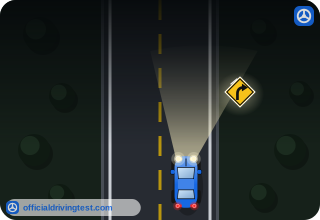
- At dusk, until midnight
- One hour before sunset, until one hour after sunrise
- At sunset, until sunrise
- Only when it is completely dark
Show answer
Correct answer: At sunset, until sunrise
Turn on your headlights at sunset and keep them on until sunrise.
Source: Minnesota Driver’s Manual (June 2026), page 23
-
Besides rain, snow, hail, sleet or fog, you must use your headlights any time you cannot see the road ahead for at least how far?
- 100 feet
- 500 feet
- 250 feet
- 750 feet
Show answer
Correct answer: 500 feet
Use headlights in bad weather or any time you cannot see the road ahead for at least 500 feet.
Source: Minnesota Driver’s Manual (June 2026), page 23
-
What color must the light be that illuminates the rear license plate?
- Red
- Yellow
- Blue
- White
Show answer
Correct answer: White
A white light must illuminate the rear license plate so it is visible at night.
Source: Minnesota Driver’s Manual (June 2026), page 23
-
Which vehicles can use blue lights?
- Snowplows, road maintenance equipment and authorized emergency vehicles
- School buses, tow trucks, rural mail carrier vehicles and taxis
- Farm equipment, service vehicles, tow trucks and school buses
- Taxis, delivery vans, school buses and rural mail carrier vehicles
Show answer
Correct answer: Snowplows, road maintenance equipment and authorized emergency vehicles
Only snowplows, road maintenance equipment and authorized emergency vehicles can use blue lights.
Source: Minnesota Driver’s Manual (June 2026), page 23
-
Which of these vehicles can use flashing lights?
- Rural mail carrier vehicles
- Taxis
- Tow trucks
- Delivery vans
Show answer
Correct answer: Tow trucks
Authorized emergency vehicles, school buses, road maintenance equipment, tow trucks, service vehicles and farm equipment can use flashing lights.
Source: Minnesota Driver’s Manual (June 2026), page 23
-
Which of these vehicles can use strobe lamps?
- Tow trucks
- Rural mail carrier vehicles
- Farm equipment
- Authorized emergency vehicles
Show answer
Correct answer: Rural mail carrier vehicles
School buses, snow removal equipment and rural mail carrier vehicles can use strobe lamps.
Source: Minnesota Driver’s Manual (June 2026), page 23
-
Why must motor vehicles have mufflers?
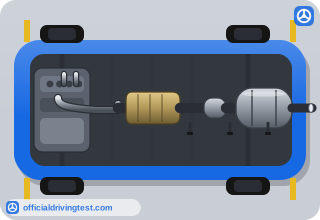
- To warn pedestrians that the engine is running
- To increase the vehicle’s fuel mileage
- To keep the engine from overheating
- To prevent sudden or prolonged loud noises
Show answer
Correct answer: To prevent sudden or prolonged loud noises
All motor vehicles must have mufflers to prevent sudden or prolonged loud noises, especially sharp popping or crackling sounds.
Source: Minnesota Driver’s Manual (June 2026), page 23
-
What should you regularly check a muffler for?
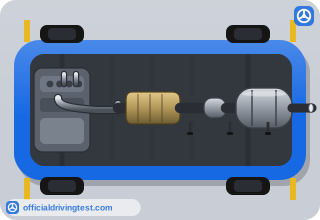
- Carbon monoxide leaks
- Excess oil
- Loose license plates
- Worn brake pads
Show answer
Correct answer: Carbon monoxide leaks
The manual says to regularly check the muffler for carbon monoxide leaks.
Source: Minnesota Driver’s Manual (June 2026), page 23
-
What additional mirror must a rental moving truck have if it does not allow a view through a rear window?
- A convex mirror on the roof
- A second rearview mirror inside the cab
- An additional side mirror
- A mirror on the rear bumper
Show answer
Correct answer: An additional side mirror
Vehicles like rental moving trucks that do not allow a view through a rear window must have an additional side mirror.
Source: Minnesota Driver’s Manual (June 2026), page 23
-
Why must pickup trucks, often used for hauling, have an extra side mirror?
- It lets you watch the truck bed while you park the truck
- It helps you see clearly when materials block the rearview mirror
- It replaces the need for a rear window in the truck cab
- It shows the cars beside you when you back the truck up
Show answer
Correct answer: It helps you see clearly when materials block the rearview mirror
The extra side mirror helps you see clearly when materials block the rearview mirror.
Source: Minnesota Driver’s Manual (June 2026), page 23
-
How much pressure can tires lose in a month?
- Up to 5 PSI
- Up to 1 PSI
- Up to 10 PSI
- Up to 15 PSI
Show answer
Correct answer: Up to 1 PSI
Tires can lose up to 1 PSI of pressure every month, so check pressure often.
Source: Minnesota Driver’s Manual (June 2026), page 24
-
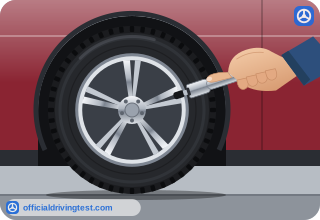
Where can you find your vehicle’s recommended tire pressure?
- On the tire’s sidewall, next to the tire size markings
- On the inside of the fuel filler cover or on the hood
- On the vehicle’s registration card or on its title
- On a sticker inside the driver’s door or in the owner’s manual
Show answer
Correct answer: On a sticker inside the driver’s door or in the owner’s manual
The recommended tire pressure is on a sticker inside the driver’s door or in the owner’s manual.
Source: Minnesota Driver’s Manual (June 2026), page 24
-
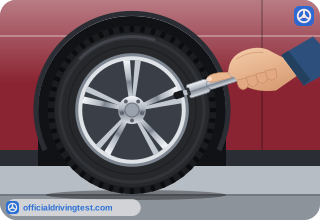
When should you check your tire pressure?
- Before driving or at least three hours after driving
- Right after a long drive, when tires are warm
- Only after a tire looks flat
- Just before each oil change
Show answer
Correct answer: Before driving or at least three hours after driving
Check tire pressure before driving or at least three hours after driving.
Source: Minnesota Driver’s Manual (June 2026), page 24
-
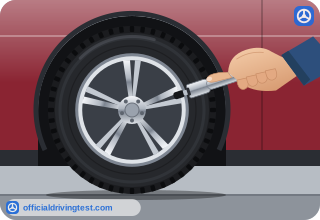
When you check tire pressure, what should you compare the measured PSI to?
- The PSI shown on the tire’s sidewall near the tire size
- The PSI shown on the spare tire stored in the trunk
- The PSI on the driver’s door sticker or in the owner’s manual
- The PSI you measured the last time you checked it
Show answer
Correct answer: The PSI on the driver’s door sticker or in the owner’s manual
Compare the measured PSI to the PSI on the sticker or in the owner’s manual, not the PSI on the tire’s sidewall.
Source: Minnesota Driver’s Manual (June 2026), page 24
-
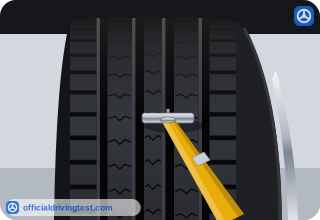
A tire is illegal if its tread is less than how deep?
- One-quarter inch
- One-sixteenth inch
- One-half inch
- One-eighth inch
Show answer
Correct answer: One-sixteenth inch
A tire is illegal if the tread is less than one-sixteenth inch deep.
Source: Minnesota Driver’s Manual (June 2026), page 24
-
In the penny test for tire wear, your tires are legal and safe if the tread covers what?
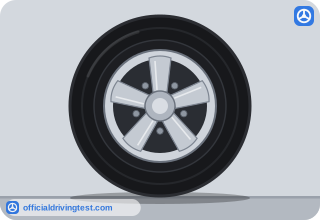
- None of Lincoln’s head
- Only Lincoln’s chin
- Lincoln’s whole body
- Any part of Lincoln’s head
Show answer
Correct answer: Any part of Lincoln’s head
If any part of Lincoln’s head is covered by the tread, your tires are legal and safe.
Source: Minnesota Driver’s Manual (June 2026), page 24
-
On which road surface do tires have less traction?
- Gravel or dirt roads
- Concrete roads
- Asphalt roads
- Paved roads
Show answer
Correct answer: Gravel or dirt roads
Tires have less traction on gravel or dirt roads than on concrete or asphalt.
Source: Minnesota Driver’s Manual (June 2026), page 24
-
What does the manual say you should always carry about tires?
- A second set of tires stored in the trunk
- A tire patch kit instead of a spare tire
- A good spare tire, with its pressure checked often
- A spare tire only when you take long trips
Show answer
Correct answer: A good spare tire, with its pressure checked often
Always carry a good spare tire and check its pressure often.
Source: Minnesota Driver’s Manual (June 2026), page 24
-
What does the manual say about hanging objects in your vehicle?
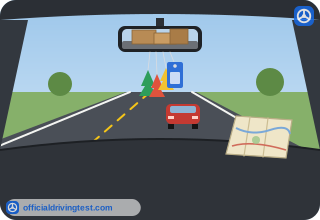
- You may hang small objects from the rearview mirror
- Do not hang objects between the driver and the windshield
- You may hang objects if they are lightweight
- Hanging objects is allowed only on the passenger side
Show answer
Correct answer: Do not hang objects between the driver and the windshield
Do not hang objects between the driver and the windshield.
Source: Minnesota Driver’s Manual (June 2026), page 24
-
Which of these can be placed on a windshield under state law?
- A reflective sun film
- A hanging air freshener
- Any sticker the owner chooses
- An EZpass device
Show answer
Correct answer: An EZpass device
Labels and stickers allowed by state law, such as state and national park stickers, safety inspection stickers and EZpass devices, can be placed on your windshield.
Source: Minnesota Driver’s Manual (June 2026), page 24
-
Where can a global positioning or other navigation system be mounted?
- Near the bottom part of the windshield
- Near the top part of the windshield
- In the center of the windshield
- On the driver’s side window glass
Show answer
Correct answer: Near the bottom part of the windshield
Global positioning and other navigation systems can be mounted near the bottom part of the windshield.
Source: Minnesota Driver’s Manual (June 2026), page 24
-
Where can driver feedback and safety-monitoring equipment be mounted?
- Anywhere on the windshield, if it is small enough to fit
- On the driver’s side window glass, next to the mirror
- Immediately behind, slightly above or below the rearview mirror
- On the dashboard directly in front of the driver’s seat
Show answer
Correct answer: Immediately behind, slightly above or below the rearview mirror
It can be mounted immediately behind, slightly above or slightly below the rearview mirror.
Source: Minnesota Driver’s Manual (June 2026), page 24
-
What can a windshield not be made of, covered by or treated with?
- Laminated safety glass that meets all state safety standards
- Materials that make it more reflective or reduce light passing through it
- Materials that prevent cracks from spreading across the glass
- Materials that block ultraviolet rays coming from the sun
Show answer
Correct answer: Materials that make it more reflective or reduce light passing through it
Windshields cannot be made of, covered by or treated with materials that make the glass more reflective or reduce the amount of light passing through it.
Source: Minnesota Driver’s Manual (June 2026), page 24
-
Window tint applied to side or rear windows after Aug. 1, 1985, must show what?
- The name of the installer who applied it to the vehicle
- The date it was installed on the vehicle by the shop
- The darkness grade of the film and the shop’s name
- The percentage of light transmitted and reflected
Show answer
Correct answer: The percentage of light transmitted and reflected
Any window tint applied after Aug. 1, 1985, must show the percentage of light transmitted and reflected.
Source: Minnesota Driver’s Manual (June 2026), page 24
-
Tint that transmits less than what percentage of available light is restricted to certain windows and vehicles?
- 50 percent
- 20 percent
- 35 percent
- 75 percent
Show answer
Correct answer: 50 percent
Tint that transmits less than 50 percent of available light can only be used on certain windows of certain vehicles.
Source: Minnesota Driver’s Manual (June 2026), page 24
-
Tint that reflects more than what percentage of available light is restricted to certain windows and vehicles?
- 10 percent
- 35 percent
- 20 percent
- 50 percent
Show answer
Correct answer: 20 percent
Tint that reflects more than 20 percent of available light can only be used on certain windows of certain vehicles.
Source: Minnesota Driver’s Manual (June 2026), page 24
-
Dark tint (transmitting under 50 percent or reflecting over 20 percent) can be used on which window of a pickup truck?
- The rear and side windows
- The rear window only
- The front side windows only
- The windshield
Show answer
Correct answer: The rear window only
Such tint can be used only on the rear window of a pickup truck, or the rear and side windows of a van, limousine or funeral home vehicle.
Source: Minnesota Driver’s Manual (June 2026), page 24
-
What must a vehicle with a glass windshield have?
- Tinted glass
- A windshield sun visor
- A rain-sensing camera
- Working windshield wipers
Show answer
Correct answer: Working windshield wipers
A vehicle with a glass windshield must have working windshield wipers.
Source: Minnesota Driver’s Manual (June 2026), page 24
-
Why are window defrosters necessary?
- To keep windows and the windshield clear of steam and frost
- To keep the tires from freezing to the road in winter
- To warm the engine faster on cold winter mornings
- To melt snow and ice on the roof of the vehicle
Show answer
Correct answer: To keep windows and the windshield clear of steam and frost
Window defrosters are necessary to keep windows and the windshield clear of steam and frost.
Source: Minnesota Driver’s Manual (June 2026), page 24
-
What must passenger vehicles have to prevent water, dirt and other material from being thrown into the air by the tires?
- Mud flaps on the rear only
- A rear spoiler
- Fenders or other wheel guards
- Studded tires
Show answer
Correct answer: Fenders or other wheel guards
Passenger vehicles must have fenders or other wheel guards to prevent water, dirt and other material from being thrown by the tires.
Source: Minnesota Driver’s Manual (June 2026), page 24
-
Which of these is a fuel efficient technique listed in the manual?
- Make several short trips instead of one long one
- Plan and combine errands into one trip
- Accelerate quickly to reach speed
- Keep extra heavy items in the vehicle for traction
Show answer
Correct answer: Plan and combine errands into one trip
The manual lists planning and combining errands into one trip as a way to drive efficiently.
Source: Minnesota Driver’s Manual (June 2026), page 25
-
Which of these helps your car use less fuel?
- Using the lowest available grade of motor oil
- Tuning your engine only when it stalls
- Letting the tires run slightly under-inflated
- Keeping tires properly inflated
Show answer
Correct answer: Keeping tires properly inflated
The manual lists keeping tires properly inflated among the ways to keep your car in good condition for fuel efficiency.
Source: Minnesota Driver’s Manual (June 2026), page 25
-
According to the manual, what should you do on the highway to drive efficiently?
- Use cruise control
- Drive slightly above the speed limit
- Use the lowest gear
- Brake often to keep pace
Show answer
Correct answer: Use cruise control
The manual lists using cruise control on the highway as a fuel efficient technique.
Source: Minnesota Driver’s Manual (June 2026), page 25
-
How many feet before you turn must you activate your signal?
- At least 25 feet
- At least 100 feet
- At least 50 feet
- At least 200 feet
Show answer
Correct answer: At least 100 feet
The manual says to activate your signal at least 100 feet before turning.
Source: Minnesota Driver’s Manual (June 2026), page 27
-
When can you use hand and arm signals in addition to or instead of turn signals?
- During daylight hours
- Only at night
- Only on freeways
- Only on gravel or dirt roads
Show answer
Correct answer: During daylight hours
During daylight hours you can use hand and arm signals in addition to or instead of turn signals.
Source: Minnesota Driver’s Manual (June 2026), page 27
-
In which situation must you not use hand signals?
- When you are turning left in daylight on a city street
- When you are driving slowly through heavy city traffic in daylight hours
- When you drive a vehicle that blocks other drivers from seeing your hand signals
- When your turn signals work and it is daylight
Show answer
Correct answer: When you drive a vehicle that blocks other drivers from seeing your hand signals
Do not use hand signals at night or when driving a vehicle that blocks other drivers from seeing them.
Source: Minnesota Driver’s Manual (June 2026), page 27
-
Which arm position is the hand signal for a left turn?
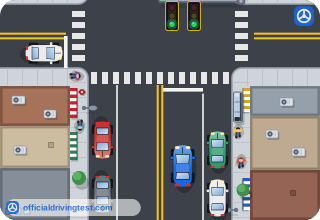
- The arm bent at the elbow with the forearm pointing up
- The arm extended straight out to the left side of the vehicle
- The arm hanging straight down with the hand open
- The arm extended straight out the front of the vehicle
Show answer
Correct answer: The arm extended straight out to the left side of the vehicle
The hand and arm signal for a left turn is the arm extended straight out to the left side of the vehicle.
Source: Minnesota Driver’s Manual (June 2026), page 27
-
Which arm position is the hand signal for a right turn?
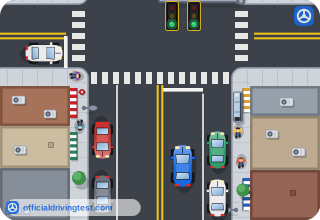
- The arm extended straight out to the left side of the vehicle
- The arm hanging straight down with the hand open
- The arm bent with the hand held over the roof of the vehicle
- The arm bent at the elbow with the forearm pointing up
Show answer
Correct answer: The arm bent at the elbow with the forearm pointing up
The hand and arm signal for a right turn is the arm bent at the elbow with the forearm pointing up.
Source: Minnesota Driver’s Manual (June 2026), page 27
-
Which arm position is the hand signal for stop?
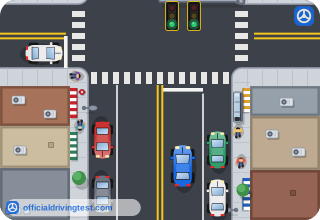
- The arm extended straight out to the left side of the vehicle
- The arm bent at the elbow with the forearm pointing up
- The arm bent at the elbow with the forearm pointing down
- The arm waving up and down outside the window
Show answer
Correct answer: The arm bent at the elbow with the forearm pointing down
To signal a stop, hold your left arm out and bend it at the elbow so your forearm points toward the ground.
Source: Minnesota Driver’s Manual (June 2026), page 27
-
Backing up on public roads can result in what charge?
- Failure to yield
- Leaving the scene of a crash
- Improper lane use
- Reckless or careless driving
Show answer
Correct answer: Reckless or careless driving
Backing up on public roads can result in a charge of reckless or careless driving.
Source: Minnesota Driver’s Manual (June 2026), page 34
-
If you must back out of a driveway onto a public road, what should you do?
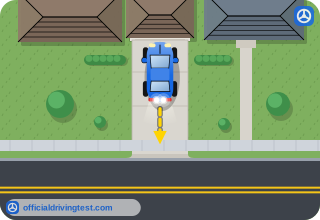
- Back across all of the lanes into the farthest lane
- Back into the nearest lane and drive forward from there
- Back out quickly to keep traffic moving
- Back onto the shoulder and wait for a gap
Show answer
Correct answer: Back into the nearest lane and drive forward from there
If you must back out of a driveway, back into the nearest lane and drive forward from there.
Source: Minnesota Driver’s Manual (June 2026), page 34
-
Before you back up, what should you do?
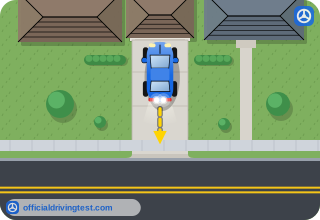
- Sound your horn twice and then back up
- Walk around your vehicle to make sure nothing is behind it
- Turn on your hazard lights and roll down your windows
- Roll down all of your windows
Show answer
Correct answer: Walk around your vehicle to make sure nothing is behind it
The manual says to walk around your vehicle before backing up to make sure nothing is behind it.
Source: Minnesota Driver’s Manual (June 2026), page 35
-
While backing up, how should you check for hazards?
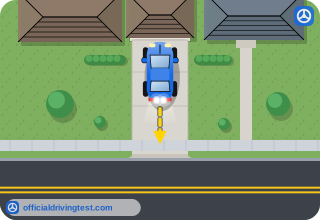
- Rely on your back-up camera if your vehicle has one installed
- Watch only your side mirrors
- Look straight ahead and use your horn
- Keep looking out the rear window, not only at mirrors or a camera
Show answer
Correct answer: Keep looking out the rear window, not only at mirrors or a camera
You should continue looking out the rear window while backing up and not rely solely on your mirrors or back-up camera.
Source: Minnesota Driver’s Manual (June 2026), page 35
-
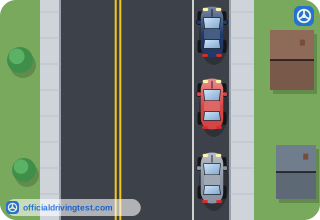
When you are stopped or parked on the side of a road, what must you do before opening any door?
- Turn on your hazard lights and wait for a gap in traffic
- Sound your horn once
- Check that it is safe and will not interfere with traffic
- Wait ten seconds
Show answer
Correct answer: Check that it is safe and will not interfere with traffic
Do not open any doors until you have checked to make sure it is safe and will not interfere with other traffic.
Source: Minnesota Driver’s Manual (June 2026), page 35
-
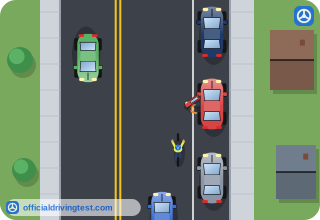
How long may you leave a door on the side closest to moving traffic open?
- Up to one minute while your hazard lights are flashing
- No longer than necessary to load or unload passengers
- As long as your hazard lights are on
- As long as the vehicle is in park
Show answer
Correct answer: No longer than necessary to load or unload passengers
A door on the side closest to moving traffic must not be left open longer than necessary to load or unload passengers.
Source: Minnesota Driver’s Manual (June 2026), page 35
-
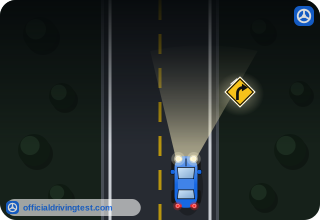
Which of these does the manual list as a step to help you reach your destination safely when driving at night?
- Keep your high beams on in all traffic
- Drive faster to spend less time in the dark
- Make sure your vehicle lights are working
- Tint your windshield to reduce glare
Show answer
Correct answer: Make sure your vehicle lights are working
The night driving list includes studying maps beforehand, making sure vehicle lights work, and ensuring the windshield is clean and free of defects.
Source: Minnesota Driver’s Manual (June 2026), page 73
-
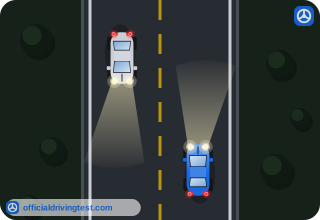
Within what distance of an oncoming vehicle must your headlights remain on low beam?
- 500 feet
- 1,000 feet
- 350 feet
- 200 feet
Show answer
Correct answer: 1,000 feet
When you are within 1,000 feet of an oncoming vehicle, your headlights must remain on low beam.
Source: Minnesota Driver’s Manual (June 2026), page 73
-
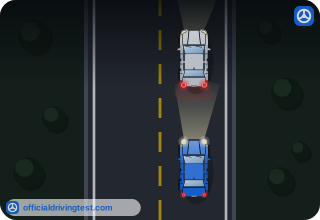
When following another vehicle, at what distance or closer must your headlights stay on low beam?
- 100 feet or less
- 350 feet or less
- 500 feet or less
- 200 feet or less
Show answer
Correct answer: 200 feet or less
Headlights must remain on low beam when following another vehicle at a distance of 200 feet or less.
Source: Minnesota Driver’s Manual (June 2026), page 73
-
When must your headlights be turned on?
- At sunset, and used until sunrise
- Only when it is completely dark
- Only when other drivers have theirs on
- One hour after sunset until one hour before sunrise
Show answer
Correct answer: At sunset, and used until sunrise
The manual says headlights must be turned on at sunset and used until sunrise.
Source: Minnesota Driver’s Manual (June 2026), page 73
-
You must use your headlights any time you cannot clearly see the road ahead for at least what distance?
- 200 feet
- 350 feet
- 500 feet
- 1,000 feet
Show answer
Correct answer: 500 feet
Headlights must be used any time you cannot clearly see the road ahead for at least 500 feet.
Source: Minnesota Driver’s Manual (June 2026), page 73
-
Which of these weather conditions does the manual list as one in which you must use your headlights?
- Strong wind
- Hail
- High heat
- Cloudy but dry weather
Show answer
Correct answer: Hail
Headlights must be used in rain, snow, hail, sleet or fog.
Source: Minnesota Driver’s Manual (June 2026), page 73
-
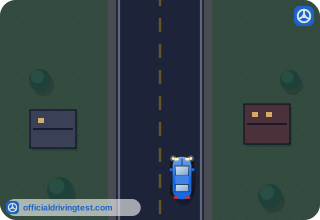
Within what distance should you be able to stop your vehicle when driving at night?
- The distance to the next intersection or stop sign
- The distance you can see in your rearview mirror
- The distance shown on the nearest speed limit sign
- The distance your headlights illuminate the road
Show answer
Correct answer: The distance your headlights illuminate the road
The manual says you should be able to stop within the distance your headlights illuminate the road.
Source: Minnesota Driver’s Manual (June 2026), page 73
-
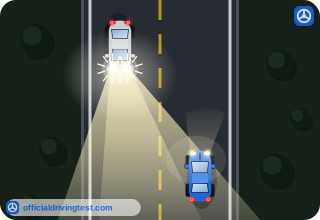
What should you do if you are blinded by glare from oncoming headlights?
- Flash your high beams until the other driver dims theirs
- Speed up so you pass the oncoming vehicle quickly
- Use the white line along the edge of the road as a reference
- Look straight into the lights to keep your bearings
Show answer
Correct answer: Use the white line along the edge of the road as a reference
If you are blinded by glare, the manual says to use the white line along the edge of the road as a reference.
Source: Minnesota Driver’s Manual (June 2026), page 73
-
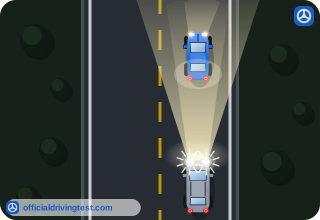
What can you do about glare from the headlights of a vehicle behind you?
- Turn on your high beams to warn the driver behind
- Use a “day-night” mirror or adjust your regular mirror
- Brake suddenly to make the driver behind pass
- Turn off your headlights until it passes
Show answer
Correct answer: Use a “day-night” mirror or adjust your regular mirror
For glare caused by headlights from behind, the manual says to use a day-night mirror or adjust your regular mirror.
Source: Minnesota Driver’s Manual (June 2026), page 73
-
It is illegal to drive a vehicle occupied by more than how many people in the front seat?
- Three
- Two
- Four
- Five
Show answer
Correct answer: Three
It is illegal to drive a vehicle packed with a load or occupied by more than three people in the front seat because they obstruct your view or control.
Source: Minnesota Driver’s Manual (June 2026), page 79
-
How far may a load stick out in front of the front wheels or bumper of a motor vehicle?
- No more than one foot
- No more than two feet
- No more than three feet
- No more than four feet
Show answer
Correct answer: No more than three feet
A load must not stick out more than three feet in front of the front wheels or bumper of any motor vehicle.
Source: Minnesota Driver’s Manual (June 2026), page 79
-
A load extending how far from the rear of a vehicle requires a flag?
- One foot or more
- Four feet or more
- Two feet or more
- Six feet or more
Show answer
Correct answer: Four feet or more
If a load extends four feet or more from the rear of any vehicle, a flag must be attached to the end of the load.
Source: Minnesota Driver’s Manual (June 2026), page 79
-
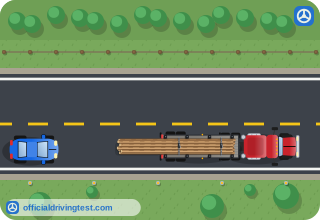
What color flag must be attached to a load that extends four feet or more from the rear of a vehicle?
- White, blue or green
- Black, white or green
- Red, white or blue
- Red, yellow or orange
Show answer
Correct answer: Red, yellow or orange
The flag attached to the end of such a load must be red, yellow or orange.
Source: Minnesota Driver’s Manual (June 2026), page 79
-
How large must the flag on a rear-projecting load be, at the smallest?
- 16 inches square
- 6 inches square
- 12 inches square
- 24 inches square
Show answer
Correct answer: 16 inches square
The flag must be at least 16 inches square.
Source: Minnesota Driver’s Manual (June 2026), page 79
-
At night, a red lantern or lamp on the end of a projecting load must be visible from at least what distance?
- 100 feet
- 200 feet
- 500 feet
- 1,000 feet
Show answer
Correct answer: 500 feet
At night a red lantern or lamp visible from a distance of at least 500 feet must be attached to the end of the load.
Source: Minnesota Driver’s Manual (June 2026), page 79
-
How far may a passenger vehicle’s load extend beyond the line of the fenders on the left side?
- Six inches
- Not at all
- One foot
- Three feet
Show answer
Correct answer: Not at all
Passenger vehicles may not carry loads that extend beyond the line of the fenders on the left side.
Source: Minnesota Driver’s Manual (June 2026), page 79
-
How far may a passenger vehicle’s load extend beyond the fender line on the right side?
- No more than 12 inches
- Not at all
- No more than three feet
- No more than six inches
Show answer
Correct answer: No more than six inches
Passenger vehicles may not carry loads that extend more than six inches beyond the fender line on the right side.
Source: Minnesota Driver’s Manual (June 2026), page 79
-
When a trailer is loaded, how much of its weight should be balanced on the hitch?
- 1 to 5 percent
- 25 to 30 percent
- 10 to 15 percent
- 50 percent
Show answer
Correct answer: 10 to 15 percent
The manual says 10 to 15 percent of the trailer’s weight should be balanced on the hitch.
Source: Minnesota Driver’s Manual (June 2026), page 79
-
When a trailer is correctly loaded, how should its floor sit?
- Tilted down toward the hitch
- Level
- Tilted up toward the hitch
- Lower at the rear than at the front
Show answer
Correct answer: Level
When a trailer is correctly loaded, its floor should be level.
Source: Minnesota Driver’s Manual (June 2026), page 79
-
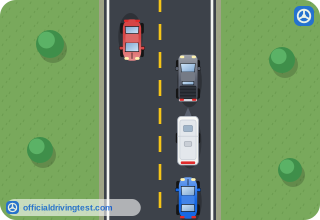
When pulling a trailer, what should you check after the first few miles and again at all rest stops?
- The engine oil and coolant
- Only the trailer tires
- The brake fluid and fuel level
- The hitch, tires, lights and load
Show answer
Correct answer: The hitch, tires, lights and load
After the first few miles you should stop and check the hitch, tires, lights and load, and repeat this at all rest stops.
Source: Minnesota Driver’s Manual (June 2026), page 79
-
What is the maximum width allowed for a trailer?
- 8 feet 6 inches
- 7 feet 6 inches
- 9 feet 6 inches
- 8 feet
Show answer
Correct answer: 8 feet 6 inches
The trailer requirements give a maximum width of 8 feet 6 inches.
Source: Minnesota Driver’s Manual (June 2026), page 80
-
What is the maximum height allowed for a trailer?
- 11 feet 6 inches
- 12 feet
- 13 feet 6 inches
- 14 feet 6 inches
Show answer
Correct answer: 13 feet 6 inches
The trailer requirements list a maximum height of 13 feet 6 inches.
Source: Minnesota Driver’s Manual (June 2026), page 80
-
What is the maximum length allowed for a trailer?
- 35 feet
- 45 feet
- 50 feet
- 30 feet
Show answer
Correct answer: 45 feet
The trailer requirements list a maximum length of 45 feet.
Source: Minnesota Driver’s Manual (June 2026), page 80
-
What color must the tail lamps on a trailer be?
- White
- Amber
- Blue
- Red
Show answer
Correct answer: Red
The trailer requirements call for two red tail lamps.
Source: Minnesota Driver’s Manual (June 2026), page 80
-
What color must a trailer’s rear license plate lamp be?
- Red
- White
- Amber
- Green
Show answer
Correct answer: White
The trailer requirements call for one white rear license plate lamp.
Source: Minnesota Driver’s Manual (June 2026), page 80
-
How many red reflectors must a trailer have?
- One
- Three
- Four
- Two
Show answer
Correct answer: Two
The trailer requirements list two red reflectors.
Source: Minnesota Driver’s Manual (June 2026), page 80
-
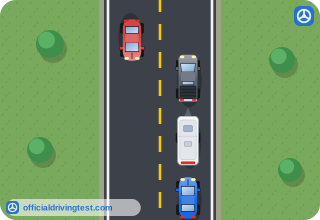
When must trailer stop and turn signals be used?
- At night and whenever the towing vehicle’s signals cannot be seen by other drivers
- Only when the trailer is loaded with more than 3,000 pounds of weight
- Only on roads where the posted speed limit is above 35 mph
- At night only, because daytime drivers can see the towing vehicle
Show answer
Correct answer: At night and whenever the towing vehicle’s signals cannot be seen by other drivers
Trailer stop and turn signals must be used for night driving and whenever the towing vehicle’s stop and turn signals are not visible to other drivers.
Source: Minnesota Driver’s Manual (June 2026), page 80
-
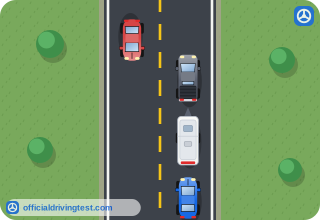
The width of a trailer may not extend beyond which part of the towing vehicle?
- The outer edges of its tires
- Its side body panels
- Its exterior rearview mirrors
- Its headlights
Show answer
Correct answer: Its exterior rearview mirrors
The manual says a trailer’s width may not extend beyond the exterior rearview mirrors of the towing vehicle.
Source: Minnesota Driver’s Manual (June 2026), page 80
-
The 102-inch width limit for self-propelled recreational vehicles does not include attachments that do not extend beyond what?
- The vehicle’s rear bumper
- The vehicle’s side body panels or tires
- The vehicle’s tires
- The vehicle’s exterior rearview mirrors
Show answer
Correct answer: The vehicle’s exterior rearview mirrors
The 102-inch (8 feet, 6 inches) width limit does not include attachments that do not extend beyond a self-propelled recreational vehicle’s exterior rearview mirrors.
Source: Minnesota Driver’s Manual (June 2026), page 80
-
What is the length limit for Type A, B or C motor homes?
- 45 feet
- 35 feet
- 50 feet
- 30 feet
Show answer
Correct answer: 45 feet
Type A, B or C motor homes may not be longer than 45 feet.
Source: Minnesota Driver’s Manual (June 2026), page 80
-
What is the general length limit for single-unit vehicles?
- 30 feet
- 35 feet
- 40 feet
- 50 feet
Show answer
Correct answer: 40 feet
The manual gives 40 feet as the general length limit for single-unit vehicles.
Source: Minnesota Driver’s Manual (June 2026), page 80
-
A trailer must be equipped with brakes when its gross vehicle weight is at least what?
- 1,000 pounds
- 3,000 pounds
- 2,000 pounds
- 5,000 pounds
Show answer
Correct answer: 3,000 pounds
All trailers with a gross vehicle weight of 3,000 pounds or more must have brakes.
Source: Minnesota Driver’s Manual (June 2026), page 80
-
What must all recreational trailers have that is clearly visible?
- A plate with current registration
- A sticker showing the trailer’s towing rating
- A decal showing the trailer’s maximum speed
- A tag listing the owner’s license number
Show answer
Correct answer: A plate with current registration
All recreational trailers must have a clearly visible plate with current registration.
Source: Minnesota Driver’s Manual (June 2026), page 80
-
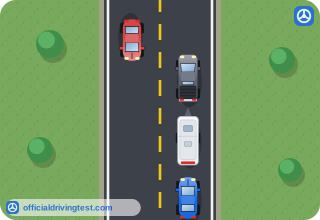
How must a trailer’s safety chain be attached?
- Fastened to the trailer only while it is moving on a freeway
- Attached to the towing vehicle and left loose on the trailer
- Permanently attached to the trailer and fastened to the towing vehicle
- Attached to the trailer only when it carries a heavy load
Show answer
Correct answer: Permanently attached to the trailer and fastened to the towing vehicle
A safety chain must be permanently attached to the trailer and fastened to the vehicle used for towing.
Source: Minnesota Driver’s Manual (June 2026), page 80
-
What is a recreational vehicle combination?
- Any passenger car that pulls a small utility trailer for hauling
- A pickup truck or recreational truck-tractor attached to a camper trailer
- A motor home that is longer than 45 feet and has no trailer
- A truck that carries a camper in its bed without a trailer
Show answer
Correct answer: A pickup truck or recreational truck-tractor attached to a camper trailer
A recreational vehicle combination is a pickup truck or recreational truck-tractor attached to a camper trailer, which can also have a trailer hitched to it.
Source: Minnesota Driver’s Manual (June 2026), page 80
-
What must be true of the towing rating of the pickup or recreational truck-tractor in a recreational vehicle combination?
- It must be at least twice the weight of the camper trailer alone
- It must be equal to or greater than the total weight of all vehicles towed
- It must be posted on a plate that is visible from the driver’s seat
- It must be less than the weight of the first trailer being towed
Show answer
Correct answer: It must be equal to or greater than the total weight of all vehicles towed
The towing rating of the pickup or recreational truck-tractor must be equal to or greater than the total weight of all vehicles being towed.
Source: Minnesota Driver’s Manual (June 2026), page 80
-
What is the maximum length of a recreational vehicle combination?
- 50 feet
- 60 feet
- 80 feet
- 70 feet
Show answer
Correct answer: 70 feet
A recreational vehicle combination may not be more than 70 feet in length.
Source: Minnesota Driver’s Manual (June 2026), page 80
-
When may a recreational vehicle combination not be driven in the Twin Cities Metro Area?
- Monday through Friday from 6 to 9 a.m. and 4 to 7 p.m.
- Monday through Friday from 7 to 9 a.m. and 3 to 6 p.m.
- Every day of the week from 6 to 9 a.m. and 4 to 7 p.m.
- Saturday and Sunday from 6 to 9 a.m. and 4 to 7 p.m.
Show answer
Correct answer: Monday through Friday from 6 to 9 a.m. and 4 to 7 p.m.
A recreational vehicle combination may not be driven in the Twin Cities Metro Area from Monday through Friday during the hours of 6 to 9 a.m. and 4 to 7 p.m.
Source: Minnesota Driver’s Manual (June 2026), page 80
-
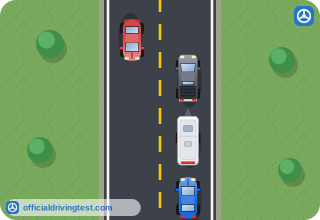
When towing extra weight, which part of your vehicle needs extra attention because the engine overheats more easily?
- The cooling system
- The charging system
- The windshield washer system
- The fuel system
Show answer
Correct answer: The cooling system
The manual says to pay extra attention to the cooling system when towing extra weight, since the engine overheats more easily in warm weather, at high speeds and in hilly areas.
Source: Minnesota Driver’s Manual (June 2026), page 80
-
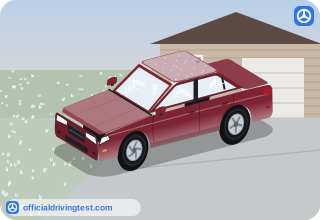
What should your windshield wiper fluid contain for winter driving?
- Antifreeze
- Motor oil
- Sand
- Salt
Show answer
Correct answer: Antifreeze
Winter driving safety advice is to make sure the windshield wiper fluid contains antifreeze.
Source: Minnesota Driver’s Manual (June 2026), page 81
-
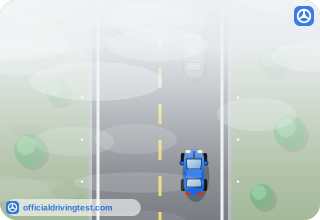
Which headlight setting should you use in heavy rain or fog to reduce glare?
- High beam
- Parking lights only
- Hazard warning lights only
- Low beam
Show answer
Correct answer: Low beam
In heavy rain or fog, headlights should be kept on low beam to reduce glare.
Source: Minnesota Driver’s Manual (June 2026), page 83
-
What can you use to warn others when approaching curves on narrow roads or where brush and trees block your view?
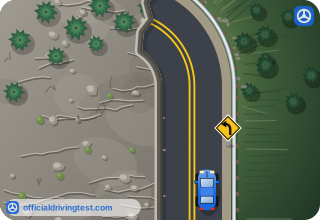
- Your windshield washers
- Your horn
- Your hazard warning lights
- Your parking brake
Show answer
Correct answer: Your horn
You can use your horn to warn other drivers or pedestrians that you are on the road.
Source: Minnesota Driver’s Manual (June 2026), page 83