Minnesota: Vehicle equipment and controls — Part 1 Practice Test
Questions in this part include: “At least how many separate brake systems must all cars and trucks have?” · “How often should you have your headlights inspected to make sure they are aimed correctly?”
Independent educational site · not affiliated with any government agency or DMV
Ready? Test yourself
- Instant feedback with an explanation
- Every answer cites its source in the manual
- Your best score is saved on this device
Questions are original and based on the official manual "Minnesota Driver’s Manual" (June 2026), Minnesota Driver and Vehicle Services.
All 20 questions in this practice test
Take the test above first, then use this list to study. Tap “Show answer” to see the correct answer and explanation.
Show the questions and answersHide the questions
-
At least how many separate brake systems must all cars and trucks have?
- One
- Three
- Four
- Two
Show answer
Correct answer: Two
All cars and trucks must have at least two separate brake systems, like the foot brake and the parking/emergency brake.
Source: Minnesota Driver’s Manual (June 2026), page 22
-
What bumper requirement applies to pickup trucks and vans?
- Front bumpers and either rear bumpers or reflectors
- Rear bumpers only, with no front bumper needed
- Front and rear bumpers, with no exceptions
- No bumpers if they have reflectors
Show answer
Correct answer: Front bumpers and either rear bumpers or reflectors
Pickup trucks and vans must have front bumpers and either rear bumpers or reflectors.
Source: Minnesota Driver’s Manual (June 2026), page 22
-
What bumper requirement applies to private passenger vehicles?
- Front bumpers only
- Rear bumpers only
- Front and rear bumpers
- Rear bumpers or reflectors
Show answer
Correct answer: Front and rear bumpers
All private passenger vehicles must have front and rear bumpers.
Source: Minnesota Driver’s Manual (June 2026), page 22
-
Which of these are not horns and can only be used by emergency vehicles?
- Air horns and buzzers
- Bells, sirens and whistles
- Two-tone chimes and speakers
- Beepers and alarm bells
Show answer
Correct answer: Bells, sirens and whistles
Bells, sirens and whistles are not horns and can only be used by emergency vehicles.
Source: Minnesota Driver’s Manual (June 2026), page 22
-
According to the vehicle requirements, when should you use your horn?
- To announce your arrival
- To greet another driver you know
- To tell a slow driver to hurry
- To avoid a crash
Show answer
Correct answer: To avoid a crash
Use your horn to avoid a crash; do not honk unnecessarily or to announce your arrival.
Source: Minnesota Driver’s Manual (June 2026), page 22
-
How many white headlights must all motor vehicles except motorcycles have?
- Two, working on high and low beam
- One, working on high beam only
- Two, working on low beam only
- Four, working on high and low beam
Show answer
Correct answer: Two, working on high and low beam
All motor vehicles except motorcycles must have two white headlights that work on high and low beam.
Source: Minnesota Driver’s Manual (June 2026), page 23
-
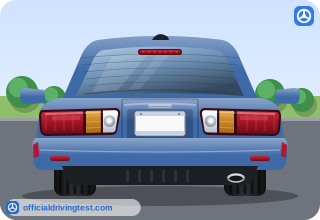
The red taillights on a motor vehicle must light up when you do what?
- Turn on the windshield wipers
- Shift into park
- Press the brake pedal
- Open the driver’s door
Show answer
Correct answer: Press the brake pedal
Red taillights must light up when you press the brake pedal.
Source: Minnesota Driver’s Manual (June 2026), page 23
-
By how much can dirty headlights reduce light output?
- Up to 10 percent
- Up to 75 percent
- Up to 25 percent
- Up to 50 percent
Show answer
Correct answer: Up to 75 percent
Dirty headlights can reduce light output by up to 75 percent, so clean them as often as your windshield.
Source: Minnesota Driver’s Manual (June 2026), page 23
-
How often should you have your headlights inspected to make sure they are aimed correctly?
- Every month
- Every five years
- Only when you buy a new vehicle
- At least once a year
Show answer
Correct answer: At least once a year
The manual says to have headlights inspected at least once a year to ensure they are aimed correctly.
Source: Minnesota Driver’s Manual (June 2026), page 23
-
Which lights do not turn on automatically on a vehicle with daytime running lights?
- Taillights and parking lights
- High beams and fog lights
- Brake lights and hazard lights
- License plate and dome lights
Show answer
Correct answer: Taillights and parking lights
Daytime running lights turn on automatically, but taillights and parking lights do not.
Source: Minnesota Driver’s Manual (June 2026), page 23
-
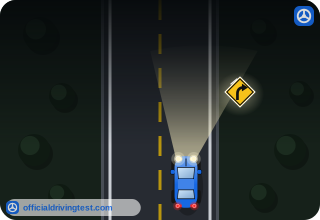
When must you turn on your headlights, and for how long must they stay on?
- At dusk, until midnight
- One hour before sunset, until one hour after sunrise
- At sunset, until sunrise
- Only when it is completely dark
Show answer
Correct answer: At sunset, until sunrise
Turn on your headlights at sunset and keep them on until sunrise.
Source: Minnesota Driver’s Manual (June 2026), page 23
-
Besides rain, snow, hail, sleet or fog, you must use your headlights any time you cannot see the road ahead for at least how far?
- 100 feet
- 500 feet
- 250 feet
- 750 feet
Show answer
Correct answer: 500 feet
Use headlights in bad weather or any time you cannot see the road ahead for at least 500 feet.
Source: Minnesota Driver’s Manual (June 2026), page 23
-
What color must the light be that illuminates the rear license plate?
- Red
- Yellow
- Blue
- White
Show answer
Correct answer: White
A white light must illuminate the rear license plate so it is visible at night.
Source: Minnesota Driver’s Manual (June 2026), page 23
-
Which vehicles can use blue lights?
- Snowplows, road maintenance equipment and authorized emergency vehicles
- School buses, tow trucks, rural mail carrier vehicles and taxis
- Farm equipment, service vehicles, tow trucks and school buses
- Taxis, delivery vans, school buses and rural mail carrier vehicles
Show answer
Correct answer: Snowplows, road maintenance equipment and authorized emergency vehicles
Only snowplows, road maintenance equipment and authorized emergency vehicles can use blue lights.
Source: Minnesota Driver’s Manual (June 2026), page 23
-
Which of these vehicles can use flashing lights?
- Rural mail carrier vehicles
- Taxis
- Tow trucks
- Delivery vans
Show answer
Correct answer: Tow trucks
Authorized emergency vehicles, school buses, road maintenance equipment, tow trucks, service vehicles and farm equipment can use flashing lights.
Source: Minnesota Driver’s Manual (June 2026), page 23
-
Which of these vehicles can use strobe lamps?
- Tow trucks
- Rural mail carrier vehicles
- Farm equipment
- Authorized emergency vehicles
Show answer
Correct answer: Rural mail carrier vehicles
School buses, snow removal equipment and rural mail carrier vehicles can use strobe lamps.
Source: Minnesota Driver’s Manual (June 2026), page 23
-
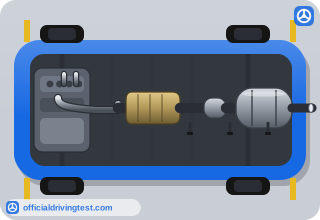
Why must motor vehicles have mufflers?
- To warn pedestrians that the engine is running
- To increase the vehicle’s fuel mileage
- To keep the engine from overheating
- To prevent sudden or prolonged loud noises
Show answer
Correct answer: To prevent sudden or prolonged loud noises
All motor vehicles must have mufflers to prevent sudden or prolonged loud noises, especially sharp popping or crackling sounds.
Source: Minnesota Driver’s Manual (June 2026), page 23
-
What should you regularly check a muffler for?
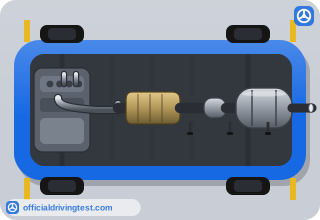
- Carbon monoxide leaks
- Excess oil
- Loose license plates
- Worn brake pads
Show answer
Correct answer: Carbon monoxide leaks
The manual says to regularly check the muffler for carbon monoxide leaks.
Source: Minnesota Driver’s Manual (June 2026), page 23
-
What additional mirror must a rental moving truck have if it does not allow a view through a rear window?
- A convex mirror on the roof
- A second rearview mirror inside the cab
- An additional side mirror
- A mirror on the rear bumper
Show answer
Correct answer: An additional side mirror
Vehicles like rental moving trucks that do not allow a view through a rear window must have an additional side mirror.
Source: Minnesota Driver’s Manual (June 2026), page 23
-
Why must pickup trucks, often used for hauling, have an extra side mirror?
- It lets you watch the truck bed while you park the truck
- It helps you see clearly when materials block the rearview mirror
- It replaces the need for a rear window in the truck cab
- It shows the cars beside you when you back the truck up
Show answer
Correct answer: It helps you see clearly when materials block the rearview mirror
The extra side mirror helps you see clearly when materials block the rearview mirror.
Source: Minnesota Driver’s Manual (June 2026), page 23