Michigan: Emergencies and special situations — Part 4 Practice Test
Questions in this part include: “What happens if you leave the scene of a crash you were involved in?”
Independent educational site · not affiliated with any government agency or DMV
Ready? Test yourself
- Instant feedback with an explanation
- Every answer cites its source in the manual
- Your best score is saved on this device
Questions are original and based on the official manual "What Every Driver Must Know" (October 2025), Michigan Secretary of State.
Did you know?
- In 1930, Fisher Body introduced the slanted windshield to reduce glare from the lights of oncoming traffic at night.
- In 1955, Ford Motor Co. announced that seat belts would be offered as a factory-installed option.
- In 1974, the first mass-produced air bags were offered as an option in some Cadillacs and Buicks.
More background reading from the manual →
All 16 questions in this practice test
Take the test above first, then use this list to study. Tap “Show answer” to see the correct answer and explanation.
Show the questions and answersHide the questions
-
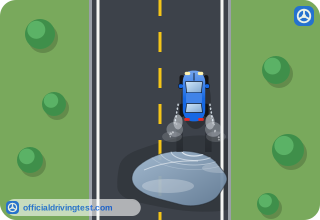
After driving through deep water, your brakes may become wet. What should you do?
- Turn off the engine and wait for them to dry
- Continue driving normally; wet brakes work the same
- Pull the parking brake repeatedly
- Slow down and gently push the pedal until they work properly
Show answer
Correct answer: Slow down and gently push the pedal until they work properly
Test your brakes after driving through deep water; slow down and gently push the brake pedal until they work properly again.
Source: What Every Driver Must Know (October 2025), page 62 · Open this page in the manual (Manual page 62)
-
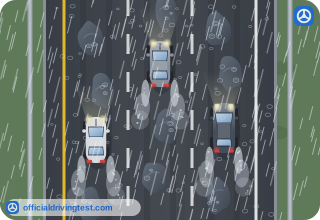
Which of the following contributes to hydroplaning?
- Driving slowly on dry, clean pavement
- Worn tires, low tire pressure, or driving too fast
- New tires inflated to the correct tire pressure
- Using cruise control
Show answer
Correct answer: Worn tires, low tire pressure, or driving too fast
Worn tires, low tire pressure or driving too fast contribute to hydroplaning.
Source: What Every Driver Must Know (October 2025), page 62 · Open this page in the manual (Manual page 62)
-
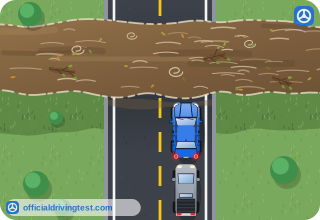
If there are no barricades at a flooded road, what does the manual suggest?
- Wait for another driver to test it first
- Always drive through regardless
- Consider finding an alternate route
- Drive through at normal speed
Show answer
Correct answer: Consider finding an alternate route
If there are no barricades at a flooded road, consider finding an alternate route; deep water can damage your vehicle's engine.
Source: What Every Driver Must Know (October 2025), page 63 · Open this page in the manual (Manual page 63)
-
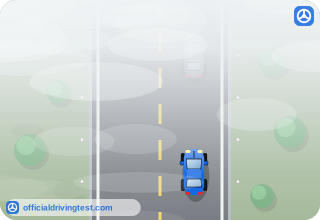
When driving in fog, you should:
- Follow the vehicle ahead closely to see the road
- Turn off your headlights
- Use low-beam headlights and be prepared to stop quickly
- Use your high beams for maximum visibility
Show answer
Correct answer: Use low-beam headlights and be prepared to stop quickly
Drive slowly in fog, turn on your low-beam headlights, and be prepared to stop quickly.
Source: What Every Driver Must Know (October 2025), page 63 · Open this page in the manual (Manual page 63)
-
In cold weather, drivers should be alert and listen for:
- Only emergency vehicles
- Only pedestrians
- Only other cars
- Snowmobiles, and watch for trail or crosswalk signs along the roadway
Show answer
Correct answer: Snowmobiles, and watch for trail or crosswalk signs along the roadway
In cold weather, be alert and listen for snowmobiles, and watch for trail or crosswalk signs along the roadway.
Source: What Every Driver Must Know (October 2025), page 63 · Open this page in the manual (Manual page 63)
-
When driving on snow or a slippery road, you should:
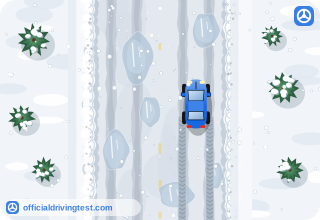
- Test your brakes lightly
- Brake as hard as possible immediately
- Avoid using your brakes entirely
- Pump the accelerator
Show answer
Correct answer: Test your brakes lightly
Test your vehicle's brakes lightly to get a feel for the road.
Source: What Every Driver Must Know (October 2025), page 63 · Open this page in the manual (Manual page 63)
-
Most skids happen when a driver:
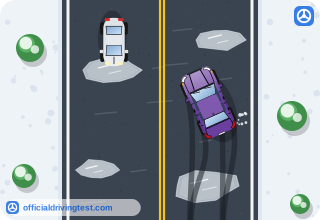
- Uses low-beam headlights in the rain
- Turns too quickly or stops suddenly
- Uses cruise control on dry roads
- Drives too slowly on a dry road
Show answer
Correct answer: Turns too quickly or stops suddenly
Most skids happen when a driver tries to turn too quickly or stops suddenly on slippery pavement.
Source: What Every Driver Must Know (October 2025), page 63 · Open this page in the manual (Manual page 63)
-
If your vehicle begins skidding, after taking your foot off the accelerator, you should:
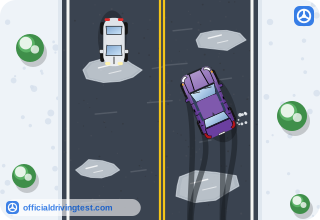
- Turn the steering wheel as far as it will go
- Apply the parking brake immediately
- Accelerate to regain traction
- Point the front wheels where you want to go
Show answer
Correct answer: Point the front wheels where you want to go
Turn the front wheels only enough to keep them pointed where you want to go, and be prepared for a secondary skid in the opposite direction.
Source: What Every Driver Must Know (October 2025), page 63 · Open this page in the manual (Manual page 63)
-
Your stopping distance can be affected by:
- Only the make of your vehicle
- Only the time of day when you are driving
- Fatigue, attention, road surface and weather
- Only the color of your vehicle
Show answer
Correct answer: Fatigue, attention, road surface and weather
Stopping distance can be affected by fatigue, attention, vehicle type and weight, tire/brake condition, road surface, and weather.
Source: What Every Driver Must Know (October 2025), page 64 · Open this page in the manual (Manual page 64)
-
To make a smooth stop on wet pavement, you should:
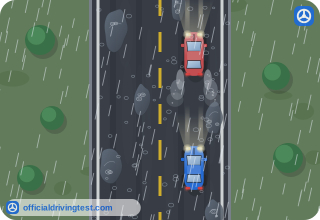
- Increase pressure gradually, then reduce it just before you stop
- Keep constant light pressure on the pedal the entire time
- Slam on the brakes hard at the last possible moment
- Pump the brakes rapidly throughout
Show answer
Correct answer: Increase pressure gradually, then reduce it just before you stop
On wet pavement, increase pressure on the brake pedal gradually and reduce it just before you stop for a smooth stop.
Source: What Every Driver Must Know (October 2025), page 64 · Open this page in the manual (Manual page 64)
-
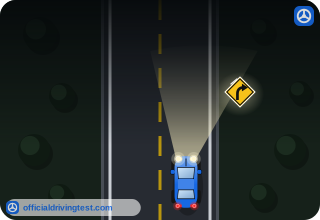
When driving at night, you should be able to:
- Rely on other drivers to warn you of hazards
- Only worry about stopping distance during the day
- Always drive at the speed limit regardless of visibility
- Stop within the clear distance you can see ahead
Show answer
Correct answer: Stop within the clear distance you can see ahead
You should be able to stop within the clear distance you can see ahead; drive within the range of your headlights.
Source: What Every Driver Must Know (October 2025), page 64 · Open this page in the manual (Manual page 64)
-
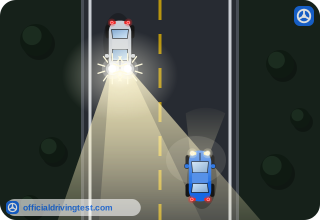
If an oncoming driver does not dim their high beams, you should:
- Close your eyes briefly
- Look directly at their headlights
- Keep your eyes on the right edge of the road ahead
- Flash your high beams repeatedly at them until they dim
Show answer
Correct answer: Keep your eyes on the right edge of the road ahead
Keep your eyes on the right edge of the road ahead; do not look directly into oncoming headlights, and a dirty windshield will make the glare worse.
Source: What Every Driver Must Know (October 2025), page 64 · Open this page in the manual (Manual page 64)
-
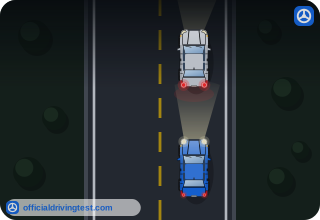
Why should you avoid using high beams when driving behind another vehicle?
- High beams do not work properly at low speeds
- It is only a courtesy, not a rule
- It saves fuel
- Bright light in their mirrors can be distracting
Show answer
Correct answer: Bright light in their mirrors can be distracting
Do not use high beams when behind other vehicles; bright lights shining in their rearview mirrors can be distracting.
Source: What Every Driver Must Know (October 2025), page 64 · Open this page in the manual (Manual page 64)
-
Headlights must be turned on any time there is not enough daylight to see people and vehicles clearly at:
- 50 feet
- 100 feet
- 1,000 feet
- 500 feet
Show answer
Correct answer: 500 feet
Headlights must be on any time there is not enough daylight to see people and vehicles clearly at 500 feet; it is illegal to use only parking lights when headlights are required.
Source: What Every Driver Must Know (October 2025), page 64 · Open this page in the manual (Manual page 64)
-
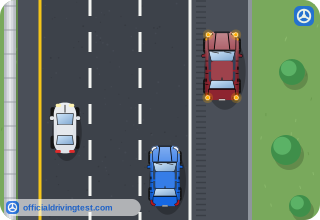
Generally, what is the safest thing to do if you are involved in a roadside emergency?
- Wave down passing vehicles from the road
- Try to fix the problem yourself in the traffic lane
- Get out and start walking to find help
- Stay in your car with your seat belt on until help arrives
Show answer
Correct answer: Stay in your car with your seat belt on until help arrives
Generally, the safest thing to do in a roadside emergency is to stay in your car, with your seat belt buckled, until help arrives.
Source: What Every Driver Must Know (October 2025), page 64 · Open this page in the manual (Manual page 64)
-
What happens if you leave the scene of a crash you were involved in?
- It is only a civil matter
- It is legal if you report it within a week
- It is illegal and punishable by fines, jail time or both
- There are no legal consequences if no one was hurt
Show answer
Correct answer: It is illegal and punishable by fines, jail time or both
Leaving the scene of a crash is against the law, punishable by fines, jail time or both; penalties increase if alcohol was involved or if there were injuries or fatalities.
Source: What Every Driver Must Know (October 2025), page 65 · Open this page in the manual (Manual page 65)