Massachusetts: Emergencies and crashes
Skids, blowouts, brake failure, breakdowns, a vehicle in water, tunnel emergencies, and what to do if you are in or see a crash and how to report it. Split into 5 shorter tests so you're not stuck in one long quiz.
Independent educational site · not affiliated with any government agency or DMV
Choose a part
Emergencies and crashes — Part 1
Questions in this part include: “Where does the manual say to store your car safety kit?”
StartEmergencies and crashes — Part 2
Questions in this part include: “When the brakes fail, how should you use the parking brake?”
StartEmergencies and crashes — Part 3
Questions in this part include: “After your headlights fail, what should you do with your emergency flashers once you have pulled off the road?”
StartEmergencies and crashes — Part 4
Questions in this part include: “Which center monitors most major tunnels within Massachusetts?”
StartEmergencies and crashes — Part 5
Questions in this part include: “Besides a crash with $1,000 or more in property damage, which crash must you report?”
StartAll 90 Emergencies and crashes questions with answers
Choose a part above to take a practice test, or study every question and answer here.
Show the questions and answersHide the questions
-
What does the manual recommend tying to your vehicle during a breakdown?
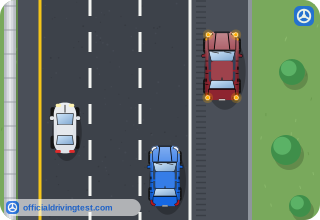
- Yellow and orange flags
- Blue and green ribbons
- White and red cloths
- Black and white banners
Show answer
Correct answer: White and red cloths
The manual recommends carrying white and red cloths to tie to your vehicle during a breakdown.
Source: Massachusetts Driver's Manual (Revised April 2026), page 35 · Open this page in the manual (Manual page 35)
-
Where does the manual say to store your car safety kit?
- In the trunk, beneath the spare tire and out of the way
- In a locked box in the garage at home
- Under the hood, next to the battery
- Within reach, such as in the glove compartment
Show answer
Correct answer: Within reach, such as in the glove compartment
The safety kit should be stored within reach of the driver or passengers, such as in the glove compartment.
Source: Massachusetts Driver's Manual (Revised April 2026), page 35 · Open this page in the manual (Manual page 35)
-
What does the Highway Assistance Patrol (HAP) provide?
- Free safety and emissions inspections
- Help to stranded drivers
- Driver license renewals along highways
- Installation of child safety seats
Show answer
Correct answer: Help to stranded drivers
The manual says the Highway Assistance Patrol provides help to stranded drivers.
Source: Massachusetts Driver's Manual (Revised April 2026), page 34 · Open this page in the manual (Manual page 34)
-
What should you do with your vehicle when it breaks down?
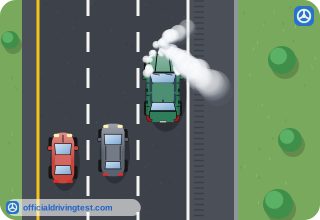
- Stay in the lane with your lights off and change the flat tire as quickly as you can
- Turn off all your lights so you do not distract other drivers
- Stand in the road behind your vehicle to flag down other drivers
- Use emergency lights and move as far to the side of the road as you can
Show answer
Correct answer: Use emergency lights and move as far to the side of the road as you can
Use emergency lights when your vehicle breaks down, move as far to the side as you can, and never change a flat tire in a traffic lane.
Source: Massachusetts Driver's Manual (Revised April 2026), page 45 · Open this page in the manual (Manual page 45)
-
Where should you never change a flat tire?
- On the side of the road
- In a traffic lane
- At the side of a parking area
- Beside a guardrail
Show answer
Correct answer: In a traffic lane
The manual says never to change a flat tire in a traffic lane; wait for help to arrive.
Source: Massachusetts Driver's Manual (Revised April 2026), page 45 · Open this page in the manual (Manual page 45)
-
Besides a breakdown, what else can you use your emergency lights for?
- To tell drivers behind you to pass
- To claim the right of way at an intersection ahead of you
- To warn drivers behind you about a crash or hazard
- To show you are parking briefly in a lane
Show answer
Correct answer: To warn drivers behind you about a crash or hazard
You can use emergency lights to warn drivers behind you about a traffic crash or hazard, giving them as much warning as possible.
Source: Massachusetts Driver's Manual (Revised April 2026), page 45 · Open this page in the manual (Manual page 45)
-
What is hydroplaning?
- Your tires locking up and sliding on dry pavement during a hard stop
- Your wheels spinning on loose gravel
- Your tires riding on water with no contact with the road
- Your brakes overheating on a long hill
Show answer
Correct answer: Your tires riding on water with no contact with the road
Hydroplaning happens when your tires are riding on water and have no contact with the road.
Source: Massachusetts Driver's Manual (Revised April 2026), page 47 · Open this page in the manual (Manual page 47)
-
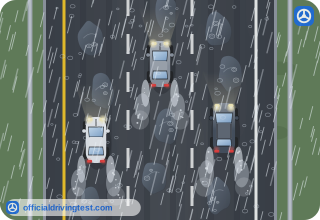
Hydroplaning is caused by which combination?
- Tire color, water, road width, and wind
- Road conditions, water, and speed
- Brake fluid, air, and wind
- Light, rain, and engine noise
Show answer
Correct answer: Road conditions, water, and speed
The manual says hydroplaning is caused by road conditions, water, and speed.
Source: Massachusetts Driver's Manual (Revised April 2026), page 47 · Open this page in the manual (Manual page 47)
-
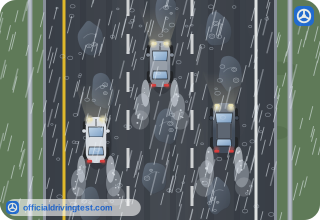
Your vehicle starts to hydroplane. What should you do?
- Hit the brakes hard
- Turn the wheel suddenly
- Press the gas pedal harder to speed through
- Slowly step off the gas pedal
Show answer
Correct answer: Slowly step off the gas pedal
If your vehicle starts to hydroplane, you are driving too fast; slowly step off the gas pedal and never hit the brakes or turn suddenly.
Source: Massachusetts Driver's Manual (Revised April 2026), page 47 · Open this page in the manual (Manual page 47)
-
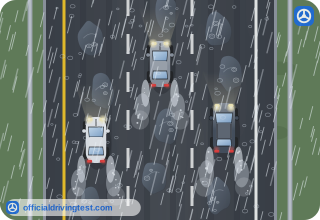
If your vehicle starts to hydroplane, what does the manual say it means?
- Your tires are too new for wet roads
- Your road is too dry
- Your engine is too cold
- You are driving too fast
Show answer
Correct answer: You are driving too fast
The manual says that if your vehicle starts to hydroplane, you are driving too fast.
Source: Massachusetts Driver's Manual (Revised April 2026), page 47 · Open this page in the manual (Manual page 47)
-
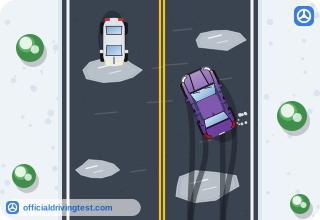
If you skid on ice or snow, which direction should you turn?
- Into the direction of the skid
- Away from the direction of the skid
- Back toward the center line
- Straight ahead with the wheel locked
Show answer
Correct answer: Into the direction of the skid
The manual says to turn into the direction of the skid.
Source: Massachusetts Driver's Manual (Revised April 2026), page 48 · Open this page in the manual (Manual page 48)
-
Before driving in winter, how much ice and snow must you remove from your vehicle?
- Only the ice and snow that is on the windshield and wipers
- Only the ice on the side and rear windows
- All of it, including from the roof, hood, and trunk
- Only what you can reach without a ladder
Show answer
Correct answer: All of it, including from the roof, hood, and trunk
The manual says to remove all ice and snow, and to clear the roof, hood, and trunk so it does not blow into vehicles behind you.
Source: Massachusetts Driver's Manual (Revised April 2026), page 48 · Open this page in the manual (Manual page 48)
-
For what can you be charged if you do not clear ice and snow from your vehicle before driving?
- Reckless endangerment
- Negligent operation
- Failure to yield
- Operating without insurance
Show answer
Correct answer: Negligent operation
If you do not clear the ice and snow from your vehicle, you can be charged with negligent operation.
Source: Massachusetts Driver's Manual (Revised April 2026), page 48 · Open this page in the manual (Manual page 48)
-
In winter, how full should you keep your gas tank to prevent the gas line from freezing?
- At least one-quarter full
- Completely empty
- Exactly three-quarters full
- At least half full
Show answer
Correct answer: At least half full
Keep your gas tank at least half full to prevent the gas line from freezing.
Source: Massachusetts Driver's Manual (Revised April 2026), page 48 · Open this page in the manual (Manual page 48)
-
Which items does the manual say to keep in your trunk in winter?
- A tow rope, jumper cables, and a spare fuse
- A map and a spare key
- A hammer and a bucket of water
- A blanket, flashlight, and small shovel
Show answer
Correct answer: A blanket, flashlight, and small shovel
In winter, keep a blanket, flashlight, and small shovel in your trunk.
Source: Massachusetts Driver's Manual (Revised April 2026), page 49 · Open this page in the manual (Manual page 49)
-
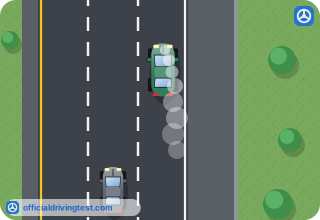
Your vehicle breaks down on a highway. Where should you move it?
- To the left lane, as close to the median as you can get
- To the breakdown lane or shoulder, away from the travel lane
- To the middle of the road, so that other drivers can see it
- To the right travel lane, with your hazard lights turned on
Show answer
Correct answer: To the breakdown lane or shoulder, away from the travel lane
If your vehicle breaks down, move it to the breakdown lane or shoulder and as far from the travel lane as you can.
Source: Massachusetts Driver's Manual (Revised April 2026), page 96 · Open this page in the manual (Manual page 96)
-
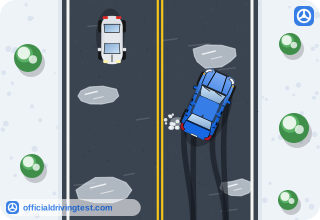
Your rear tires are skidding to the left. Which way should you turn the steering wheel?
- To the right
- Straight ahead
- To the left
- Back and forth quickly
Show answer
Correct answer: To the left
The manual says to turn the steering wheel in the direction of the skid: if the rear tires skid left, steer left.
Source: Massachusetts Driver's Manual (Revised April 2026), page 123 · Open this page in the manual (Manual page 123)
-
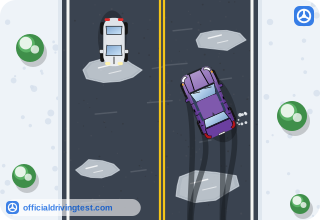
Why should you not hit the brakes when your vehicle skids?
- You will lose power steering
- You will make the skid worse
- You will damage the tires
- You will stall the engine
Show answer
Correct answer: You will make the skid worse
The manual says not to hit the brakes in a skid because you will make the skid worse.
Source: Massachusetts Driver's Manual (Revised April 2026), page 123 · Open this page in the manual (Manual page 123)
-
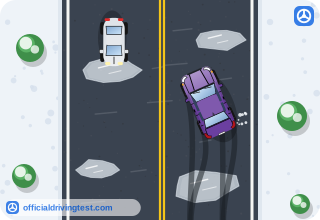
What is the first thing to do with your foot when your vehicle starts to skid?
- Press the gas pedal down harder
- Press the brake pedal firmly
- Place it on the parking brake
- Slowly remove it from the gas pedal
Show answer
Correct answer: Slowly remove it from the gas pedal
The manual says to slowly remove your foot from the gas pedal and shift into neutral.
Source: Massachusetts Driver's Manual (Revised April 2026), page 123 · Open this page in the manual (Manual page 123)
-
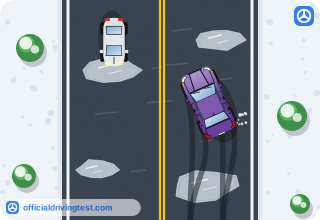
How should you handle a skid in a front-wheel drive vehicle compared with a rear-wheel drive vehicle?
- The same way for both
- Steer against the skid in front-wheel drive
- Brake hard in front-wheel drive only
- Accelerate in rear-wheel drive only
Show answer
Correct answer: The same way for both
The manual says you should handle a skid the same for front and rear-wheel drive vehicles.
Source: Massachusetts Driver's Manual (Revised April 2026), page 123 · Open this page in the manual (Manual page 123)
-
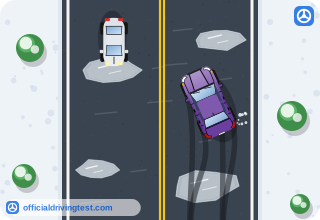
What may you need to do while recovering from a skid?
- Hold the wheel perfectly still until the car stops
- Pump the brake pedal until the car stops
- Steer left and right a few times to regain control
- Shift into reverse to slow down
Show answer
Correct answer: Steer left and right a few times to regain control
The manual says you may need to steer left and right a few times until you get your car completely under control.
Source: Massachusetts Driver's Manual (Revised April 2026), page 124 · Open this page in the manual (Manual page 124)
-
If you drive off the pavement onto the shoulder, what should you do first?
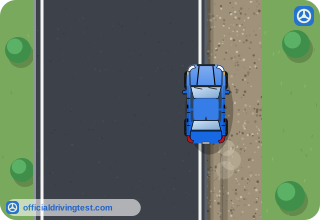
- Turn the steering wheel sharply back onto the road right away
- Hold the wheel tightly and slowly remove your foot from the gas pedal
- Brake as hard as you can to stop the vehicle at once
- Press the gas pedal firmly to regain your speed quickly
Show answer
Correct answer: Hold the wheel tightly and slowly remove your foot from the gas pedal
The manual says to hold the steering wheel tightly and slowly remove your foot from the gas pedal.
Source: Massachusetts Driver's Manual (Revised April 2026), page 124 · Open this page in the manual (Manual page 124)
-
After running off the pavement and slowing down, what should you do before steering back onto the road?
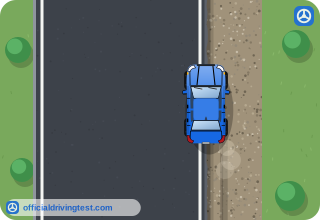
- Turn on your high beams
- Speed up to match traffic
- Sound your horn twice
- Check for traffic behind you
Show answer
Correct answer: Check for traffic behind you
The manual says to check for traffic behind you, then steer gently back onto the road.
Source: Massachusetts Driver's Manual (Revised April 2026), page 124 · Open this page in the manual (Manual page 124)
-
If you get a flat tire, a blowout, or lose a wheel, what should you do with the gas pedal?
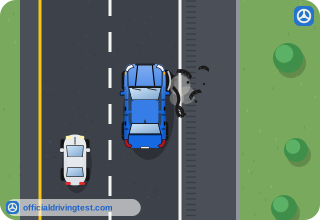
- Slowly remove your foot from it
- Press it harder to keep speed
- Pump it several times
- Hold it steady while you steer
Show answer
Correct answer: Slowly remove your foot from it
The manual says to grip the steering wheel tightly and slowly remove your foot from the gas pedal.
Source: Massachusetts Driver's Manual (Revised April 2026), page 124 · Open this page in the manual (Manual page 124)
-
After a flat tire or blowout, when should you pull your car off the road?
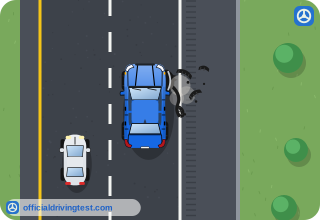
- Only after the car has stopped by itself
- Only after the tire has been changed
- As soon as it is safe
- Before you slow down
Show answer
Correct answer: As soon as it is safe
The manual says to pull your car off the road as soon as it is safe.
Source: Massachusetts Driver's Manual (Revised April 2026), page 124 · Open this page in the manual (Manual page 124)
-
Your vehicle has antilock brakes and the brakes do not respond when you fully press the pedal. What should you do first?
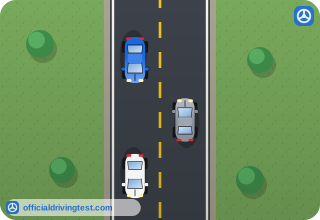
- Pump the brake pedal several times rapidly to build pressure
- Downshift to a lower gear, working down to the lowest if necessary
- Shift into reverse to bring the vehicle to a stop quickly
- Turn off the engine and coast to a stop on the shoulder
Show answer
Correct answer: Downshift to a lower gear, working down to the lowest if necessary
The manual says to downshift to a lower gear and work down to the lowest gear if necessary.
Source: Massachusetts Driver's Manual (Revised April 2026), page 124 · Open this page in the manual (Manual page 124)
-
When the brakes fail, how should you use the parking brake?
- Pull it fully up and leave it there until you stop
- Apply it with one quick, hard pull on the lever
- Use it only after the vehicle has come to a stop
- Apply it gently and hold the release in case of a skid
Show answer
Correct answer: Apply it gently and hold the release in case of a skid
The manual says to apply the parking brake gently and hold the brake release in case your vehicle starts to skid.
Source: Massachusetts Driver's Manual (Revised April 2026), page 124 · Open this page in the manual (Manual page 124)
-
If you cannot slow your vehicle after the brakes fail, what should you do?
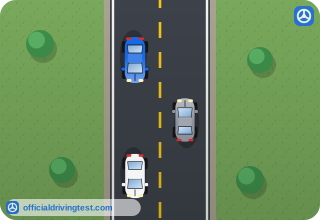
- Sound your horn and flash your lights to warn others
- Turn off the ignition and let the vehicle coast down
- Steer into the oncoming lane to get past slow traffic
- Shift into park to stop the wheels from turning
Show answer
Correct answer: Sound your horn and flash your lights to warn others
The manual says to sound your horn and flash your lights to warn drivers or pedestrians around you.
Source: Massachusetts Driver's Manual (Revised April 2026), page 124 · Open this page in the manual (Manual page 124)
-
If your vehicle does not have antilock brakes and the brakes fail, what should you do?
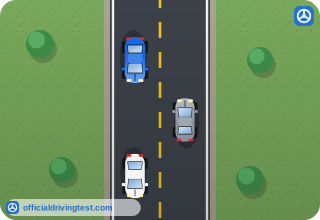
- Hold the brake pedal down steadily and wait
- Release the brake pedal completely
- Pump the brake pedal several times rapidly
- Pump the parking brake rapidly
Show answer
Correct answer: Pump the brake pedal several times rapidly
The manual says to pump the brake pedal several times rapidly to build up brake fluid pressure if the vehicle has no antilock brakes.
Source: Massachusetts Driver's Manual (Revised April 2026), page 124 · Open this page in the manual (Manual page 124)
-
How can you find out what type of brakes your vehicle has?
- By checking the sticker on the driver's door frame only
- By checking the dashboard indicator or the vehicle’s user manual
- By pressing the brake pedal while the car is parked
- By looking at the size of the tires
Show answer
Correct answer: By checking the dashboard indicator or the vehicle’s user manual
The manual says you can determine your brake type by checking the dashboard indicator or the vehicle's user manual.
Source: Massachusetts Driver's Manual (Revised April 2026), page 124 · Open this page in the manual (Manual page 124)
-
If your gas pedal sticks, what should you do first?
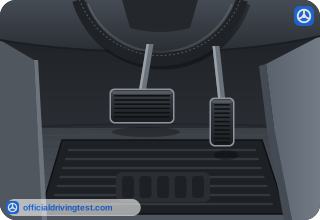
- Shift into reverse and press hard on the brake pedal to slow
- Pump the gas pedal repeatedly to try to free it up
- Steer to the shoulder without braking
- Put the car in neutral and press the brake pedal to slow down
Show answer
Correct answer: Put the car in neutral and press the brake pedal to slow down
The manual says to put your car in neutral and press the brake pedal to slow down.
Source: Massachusetts Driver's Manual (Revised April 2026), page 124 · Open this page in the manual (Manual page 124)
-
If a stuck gas pedal does not release when you try to free it with your foot, what should you do?
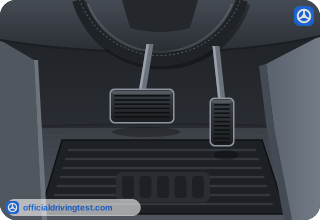
- Reapply the brakes
- Press the gas pedal harder
- Shift into park
- Turn the wheel sharply to the right
Show answer
Correct answer: Reapply the brakes
The manual says that if the gas pedal doesn't release, you reapply the brakes.
Source: Massachusetts Driver's Manual (Revised April 2026), page 124 · Open this page in the manual (Manual page 124)
-
A vehicle is driving toward you head on in your lane. Which way should you go?
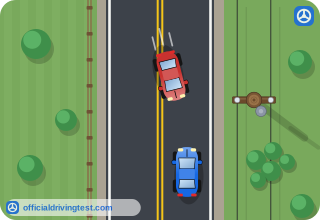
- Speed up and pull to the left
- Brake hard and stay in your lane
- Slow down and pull to the right
- Slow down and pull to the left
Show answer
Correct answer: Slow down and pull to the right
The manual says to slow down and pull to the right.
Source: Massachusetts Driver's Manual (Revised April 2026), page 125 · Open this page in the manual (Manual page 125)
-
A vehicle is driving toward you head on in your lane. What should you do to alert the other driver?
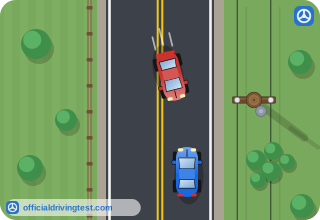
- Turn off your headlights
- Sound your horn
- Flash your hazard lights only
- Wave out the window
Show answer
Correct answer: Sound your horn
The manual says to sound your horn to alert the other driver.
Source: Massachusetts Driver's Manual (Revised April 2026), page 125 · Open this page in the manual (Manual page 125)
-
Your headlights suddenly go out. Which of these should you turn on?
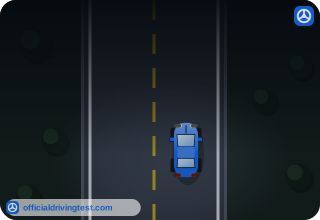
- Only your high beams, and keep driving as usual
- Your windshield wipers and the defroster fan
- Only your interior lights, and keep driving
- Parking lights, emergency flashers, or turn signal
Show answer
Correct answer: Parking lights, emergency flashers, or turn signal
The manual says to turn on your parking lights, emergency flashers, or turn signal.
Source: Massachusetts Driver's Manual (Revised April 2026), page 125 · Open this page in the manual (Manual page 125)
-
Your headlights suddenly go out. What should you try with the headlight switch?
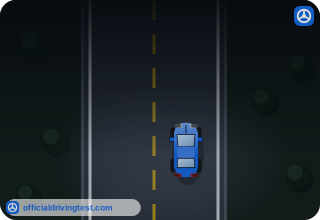
- Try it a few times
- Hold it down for a full minute
- Leave it alone and keep driving
- Switch it off and wait for ten minutes
Show answer
Correct answer: Try it a few times
The manual says to try the headlight switch a few times.
Source: Massachusetts Driver's Manual (Revised April 2026), page 125 · Open this page in the manual (Manual page 125)
-
After your headlights fail, what should you do with your emergency flashers once you have pulled off the road?
- Turn them off to save the battery
- Turn them off and use the high beams
- Leave them on
- Turn them off and use the turn signal
Show answer
Correct answer: Leave them on
The manual says to pull off the road as quickly as possible and leave your emergency flashers on.
Source: Massachusetts Driver's Manual (Revised April 2026), page 125 · Open this page in the manual (Manual page 125)
-
When your vehicle breaks down, where should you not park it?
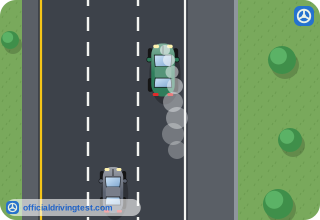
- On a straight, flat stretch of the road ahead
- Next to the right edge of the road surface
- On a hill or a curve where others cannot see you
- Off the pavement on firm ground
Show answer
Correct answer: On a hill or a curve where others cannot see you
The manual says never to park on a hill or a curve where others cannot see you.
Source: Massachusetts Driver's Manual (Revised April 2026), page 125 · Open this page in the manual (Manual page 125)
-
Your vehicle breaks down and you cannot get it off the pavement. What should you do?
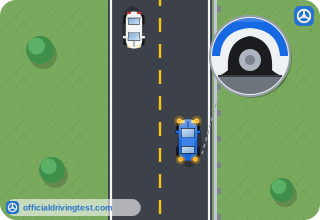
- Have the passengers push the vehicle toward the shoulder
- Get all passengers out of the vehicle and off the road
- Have everyone stand beside the vehicle
- Leave the passengers inside and walk for help alone
Show answer
Correct answer: Get all passengers out of the vehicle and off the road
The manual says that if you cannot get your vehicle off the pavement, you get all passengers out of the vehicle and off the road.
Source: Massachusetts Driver's Manual (Revised April 2026), page 125 · Open this page in the manual (Manual page 125)
-
On a highway with a breakdown lane or shoulder, where should you move a broken-down vehicle?
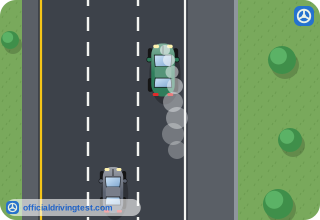
- Just inside the breakdown lane, next to the travel lane
- Onto the median strip
- Into the slowest travel lane
- As far from the travel lane as you can
Show answer
Correct answer: As far from the travel lane as you can
The manual says to move your vehicle as far from the travel lane as you can.
Source: Massachusetts Driver's Manual (Revised April 2026), page 125 · Open this page in the manual (Manual page 125)
-
After a breakdown, once your vehicle is parked and you are still inside it, which lights should you turn on?
- Your emergency warning (hazard) lights
- Your high beams and interior lights
- Your front and rear fog lights only
- Your backup (reverse) lights
Show answer
Correct answer: Your emergency warning (hazard) lights
The manual says to turn on your emergency warning (hazard) lights, and at night also your vehicle's interior lights.
Source: Massachusetts Driver's Manual (Revised April 2026), page 126 · Open this page in the manual (Manual page 126)
-
After a breakdown at night, what else should you turn on inside your parked vehicle besides the hazard lights?
- The high beams as well
- The windshield wipers too
- The vehicle's interior lights
- The radio and heater fan
Show answer
Correct answer: The vehicle's interior lights
The manual says that at night you also turn on your vehicle's interior lights.
Source: Massachusetts Driver's Manual (Revised April 2026), page 126 · Open this page in the manual (Manual page 126)
-
When should you put on your safety vest after a breakdown?
- After you place the warning triangles
- While you are still inside the vehicle
- After you raise the hood
- Only if it is dark outside
Show answer
Correct answer: While you are still inside the vehicle
The manual says to put your safety vest on while still inside the vehicle.
Source: Massachusetts Driver's Manual (Revised April 2026), page 126 · Open this page in the manual (Manual page 126)
-
Where does the manual say to tie a cloth to signal for help from a broken-down vehicle?
- To your antenna or door handle
- To your side mirror or bumper
- To your license plate
- To the steering wheel
Show answer
Correct answer: To your antenna or door handle
The manual says to tie a white cloth to your antenna or door handle.
Source: Massachusetts Driver's Manual (Revised April 2026), page 126 · Open this page in the manual (Manual page 126)
-
What color cloth should you tie to your antenna or door handle when it is snowing?
- White
- Yellow
- Red
- Blue
Show answer
Correct answer: Red
The manual says to use a red cloth when it is snowing.
Source: Massachusetts Driver's Manual (Revised April 2026), page 126 · Open this page in the manual (Manual page 126)
-
What does the manual say to do with your vehicle's hood when you are broken down and setting up safety equipment?
- Keep it closed and locked
- Raise it
- Remove it
- Cover it with a blanket
Show answer
Correct answer: Raise it
The manual lists raising your vehicle's hood as part of setting up safety equipment.
Source: Massachusetts Driver's Manual (Revised April 2026), page 126 · Open this page in the manual (Manual page 126)
-
If you stop on a divided highway, where should you place your warning triangles or LED flares?
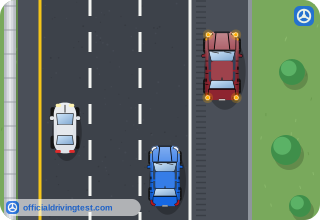
- 100 feet behind and 100 feet in front of your vehicle
- 10 feet in front and 100 feet behind your vehicle
- 200 feet behind your vehicle only
- 10 feet and 100 feet behind your vehicle
Show answer
Correct answer: 10 feet and 100 feet behind your vehicle
On a divided highway the manual places the triangles or flares 10 feet and 100 feet behind your vehicle.
Source: Massachusetts Driver's Manual (Revised April 2026), page 126 · Open this page in the manual (Manual page 126)
-
If you stop on a two-lane road with traffic in both directions, where should you place your warning triangles or LED flares?
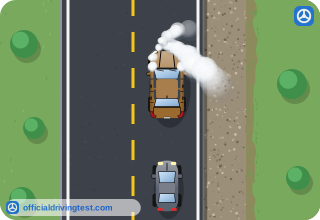
- 10 and 100 feet behind, and 100 feet in front of your vehicle
- 10 feet behind and 100 feet behind your vehicle only
- 50 feet behind and 150 feet in front of your vehicle
- 50 feet behind and 50 feet in front of your vehicle
Show answer
Correct answer: 10 and 100 feet behind, and 100 feet in front of your vehicle
On a two-lane road or an undivided highway the manual places them 10 feet and 100 feet behind and 100 feet in front of your vehicle.
Source: Massachusetts Driver's Manual (Revised April 2026), page 126 · Open this page in the manual (Manual page 126)
-
You see smoke coming from under your vehicle's hood. What should you do?
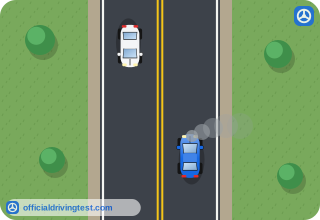
- Open the hood at once to check the engine and find the fire
- Pull off the road, turn off the ignition, and move away
- Keep driving to the nearest repair shop as fast as you can
- Stay inside and wait for the smoke to clear on its own
Show answer
Correct answer: Pull off the road, turn off the ignition, and move away
The manual says to pull off the road, turn off the ignition, and move away from the vehicle, then call the fire department or emergency services.
Source: Massachusetts Driver's Manual (Revised April 2026), page 127 · Open this page in the manual (Manual page 127)
-
When should you try to fight a car fire yourself?
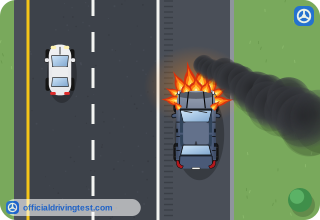
- Whenever the fire is small
- Whenever the fire is under the hood
- Whenever you cannot reach emergency services
- Only if you have an extinguisher
Show answer
Correct answer: Only if you have an extinguisher
The manual says not to try to fight the fire unless you have an extinguisher.
Source: Massachusetts Driver's Manual (Revised April 2026), page 127 · Open this page in the manual (Manual page 127)
-
If your car drives into water, how should you escape?
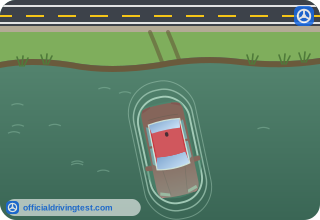
- Unfasten your safety belt and escape through a window
- Open a door and swim out as the water rises around you
- Stay inside and wait for the car to sink to the bottom
- Keep your safety belt on and wait for help
Show answer
Correct answer: Unfasten your safety belt and escape through a window
The manual says to unfasten your safety belt and escape through a window.
Source: Massachusetts Driver's Manual (Revised April 2026), page 127 · Open this page in the manual (Manual page 127)
-
Why should you not open a door if your car drives into water?
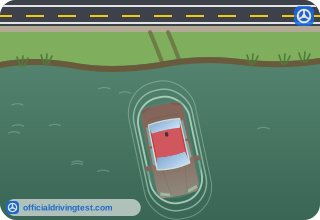
- The door would be damaged and the engine would stall
- The doors would lock automatically from the water
- Water would rush in and the vehicle could flip over
- Water pressure would break the windows
Show answer
Correct answer: Water would rush in and the vehicle could flip over
The manual says that opening a door would cause water to rush in and your vehicle could flip over.
Source: Massachusetts Driver's Manual (Revised April 2026), page 127 · Open this page in the manual (Manual page 127)
-
If your car drives into water and you have power windows, what should you do?
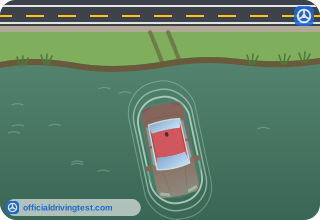
- Keep them closed to keep the water out of the car
- Open them quickly before water stops them working
- Open only the windows on the driver’s side
- Open only the rear windows
Show answer
Correct answer: Open them quickly before water stops them working
The manual says to open power windows quickly before the water causes them to stop working.
Source: Massachusetts Driver's Manual (Revised April 2026), page 127 · Open this page in the manual (Manual page 127)
-
If your vehicle sinks before you can get out, where may an air pocket form?
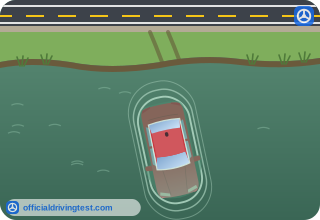
- Under the dashboard
- In the trunk
- In the front seat
- In the rear seat
Show answer
Correct answer: In the rear seat
The manual says to climb into the rear seat, where an air pocket may form.
Source: Massachusetts Driver's Manual (Revised April 2026), page 127 · Open this page in the manual (Manual page 127)
-
Which center monitors most major tunnels within Massachusetts?
- The Highway Operations Center
- The Registry Operations Center
- The State Tunnel Authority
- The Crash Records Center
Show answer
Correct answer: The Highway Operations Center
The manual says most major tunnels within Massachusetts are monitored by the Highway Operations Center.
Source: Massachusetts Driver's Manual (Revised April 2026), page 127 · Open this page in the manual (Manual page 127)
-
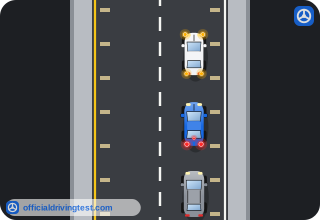
If you are in a crash or have a disabled vehicle in a tunnel, what does the manual say to do if it is safe?
- Walk to the nearest exit
- Stand beside the vehicle
- Stay in your vehicle
- Push the vehicle out of the tunnel
Show answer
Correct answer: Stay in your vehicle
The manual says to stay in your vehicle if it is safe to do so and wait for emergency personnel.
Source: Massachusetts Driver's Manual (Revised April 2026), page 128 · Open this page in the manual (Manual page 128)
-
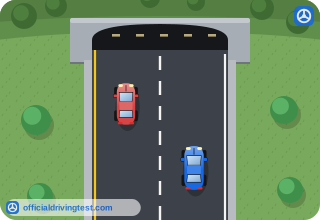
When entering a tunnel, what should you turn on?
- Your high beams
- Your headlights
- Your parking lights only
- Your fog lights only
Show answer
Correct answer: Your headlights
The manual says to turn on your headlights when entering a tunnel.
Source: Massachusetts Driver's Manual (Revised April 2026), page 128 · Open this page in the manual (Manual page 128)
-
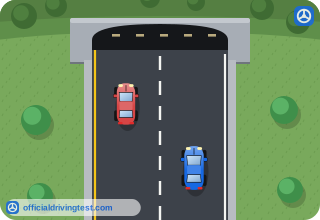
When should you not enter a tunnel?
- When the tunnel has more than one lane in each direction
- When traffic ahead of you is moving slowly in the tunnel
- When a message sign is displayed above the entrance
- When you notice smoke near the entrance or your car is smoking
Show answer
Correct answer: When you notice smoke near the entrance or your car is smoking
The manual says not to enter if you notice smoke near the entrance or if your car is smoking or burning.
Source: Massachusetts Driver's Manual (Revised April 2026), page 128 · Open this page in the manual (Manual page 128)
-
Which of these is prohibited in Massachusetts tunnels?
- Hazardous materials, including propane
- Motorcycles
- Passenger vans
- Vehicles carrying bicycles on roof racks
Show answer
Correct answer: Hazardous materials, including propane
The manual says hazardous materials are prohibited in tunnels, including propane.
Source: Massachusetts Driver's Manual (Revised April 2026), page 128 · Open this page in the manual (Manual page 128)
-
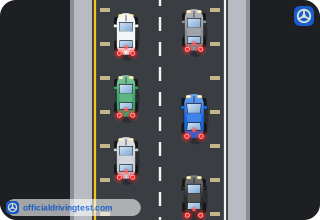
In heavy traffic in a tunnel, what distance should you keep from other vehicles?
- A close distance, when traffic is moving slowly
- No set distance, when traffic is stopped
- A safe distance, even if traffic is moving slowly
- A safe distance, only when traffic is moving fast
Show answer
Correct answer: A safe distance, even if traffic is moving slowly
The manual says to keep a safe distance from other vehicles, even if traffic is moving slowly.
Source: Massachusetts Driver's Manual (Revised April 2026), page 128 · Open this page in the manual (Manual page 128)
-
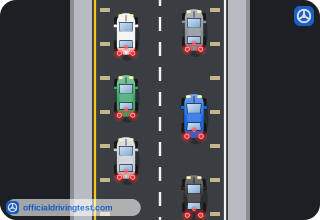
In heavy traffic in a tunnel, what should you note?
- The location of the next toll booth
- The location of emergency exits
- The speed of the vehicle ahead
- The brand of the nearest tow truck
Show answer
Correct answer: The location of emergency exits
The manual says to note the location of emergency exits when in heavy traffic in a tunnel.
Source: Massachusetts Driver's Manual (Revised April 2026), page 128 · Open this page in the manual (Manual page 128)
-
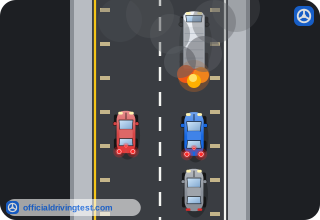
If there is a fire in a tunnel, what should you do with your keys?
- Take them with you when you exit the vehicle at once
- Give them to a passing driver who stops to help you
- Lock the vehicle and keep the keys in your pocket
- Leave them in the vehicle to help emergency personnel
Show answer
Correct answer: Leave them in the vehicle to help emergency personnel
The manual says to leave your keys in the vehicle to help emergency personnel.
Source: Massachusetts Driver's Manual (Revised April 2026), page 128 · Open this page in the manual (Manual page 128)
-
If there is a fire in a tunnel, what should you do with your belongings?
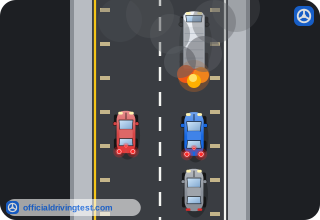
- Leave them in the vehicle
- Take them with you
- Place them in the trunk
- Hand them to emergency personnel
Show answer
Correct answer: Leave them in the vehicle
The manual says to leave your things in the vehicle for your safety, because fire and smoke can kill.
Source: Massachusetts Driver's Manual (Revised April 2026), page 128 · Open this page in the manual (Manual page 128)
-
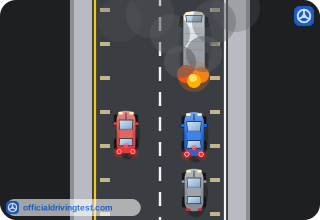
If there is a fire in a tunnel, where should you exit unless directed otherwise?
- At the farthest tunnel exit
- Through the roof ventilation
- At the nearest tunnel entrance
- Through the nearest vehicle door of another car
Show answer
Correct answer: At the nearest tunnel entrance
The manual says to exit at the nearest tunnel entrance, unless directed otherwise.
Source: Massachusetts Driver's Manual (Revised April 2026), page 128 · Open this page in the manual (Manual page 128)
-
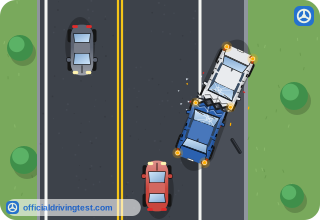
You are involved in a small crash. What must you do?
- Leave the scene if no one is injured in the crash
- Stop your vehicle; never leave the scene of a crash
- Leave the scene if the damage is under $1,000
- Leave the scene if the other driver has already left
Show answer
Correct answer: Stop your vehicle; never leave the scene of a crash
Even in a small crash you must stop your vehicle, and leaving the scene is against the law and could be charged as a hit and run.
Source: Massachusetts Driver's Manual (Revised April 2026), page 129 · Open this page in the manual (Manual page 129)
-
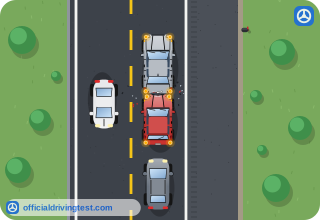
After a crash with no injuries, what does the Driver Removal Law require?
- That vehicles stay where they stopped until police arrive
- That only damaged vehicles be moved
- That drivers wait 30 minutes before moving
- That vehicles be moved out of travel lanes to a safe location
Show answer
Correct answer: That vehicles be moved out of travel lanes to a safe location
If there are no injuries, the Driver Removal Law requires that vehicles be moved out of travel lanes to a safe location.
Source: Massachusetts Driver's Manual (Revised April 2026), page 129 · Open this page in the manual (Manual page 129)
-
After a crash, which information must you exchange with the other drivers or property owners involved?
- Name, address, license number, registration, and insurance details
- Name, address, Social Security number, and date of birth
- Name, employer, phone number, and home insurance policy
- Name, address, license plate number, and bank account
Show answer
Correct answer: Name, address, license number, registration, and insurance details
The manual lists name, address, driver's license number, vehicle registration, and insurance information to be exchanged.
Source: Massachusetts Driver's Manual (Revised April 2026), page 129 · Open this page in the manual (Manual page 129)
-
You damage a parked vehicle or other property in a crash. What must you try to do?
- Leave a note with your phone number and then drive away
- Locate the owner to report the crash, or notify the local police
- Wait for the owner for at least one hour
- Report it only to your insurance company later that day
Show answer
Correct answer: Locate the owner to report the crash, or notify the local police
The manual says you must try to locate the owner to report the crash or notify the local police.
Source: Massachusetts Driver's Manual (Revised April 2026), page 129 · Open this page in the manual (Manual page 129)
-
Within how many days of a crash must you file a crash report with both the RMV and the local police department?
- Two days
- Ten days
- Thirty days
- Five days
Show answer
Correct answer: Five days
The manual says that within five days of the crash you must file a crash report with both the RMV and the local police department.
Source: Massachusetts Driver's Manual (Revised April 2026), page 129 · Open this page in the manual (Manual page 129)
-
How much property damage in a crash requires you to report it?
- $1,000 or more
- $100 or more
- $500 or more
- $5,000 or more
Show answer
Correct answer: $1,000 or more
The manual says you must report any crash with $1,000 or more of property damage.
Source: Massachusetts Driver's Manual (Revised April 2026), page 129 · Open this page in the manual (Manual page 129)
-
You have injured a cat, dog, or any other animal with your vehicle. What should you do?
- Move the animal off the road and then drive on home
- Notify only the RMV and nobody else
- Notify the local police and, if possible, the animal's owner
- Notify only your insurance company
Show answer
Correct answer: Notify the local police and, if possible, the animal's owner
The manual says to notify the local police and, if possible, the animal's owner.
Source: Massachusetts Driver's Manual (Revised April 2026), page 129 · Open this page in the manual (Manual page 129)
-
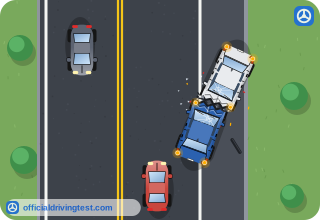
What is the first step in a crash involving injuries?
- Exchange insurance information
- Check to see if anyone is injured
- Notify your insurance company
- Move your vehicle off the road
Show answer
Correct answer: Check to see if anyone is injured
The manual lists checking to see if anyone is injured as the first step in a crash involving injuries.
Source: Massachusetts Driver's Manual (Revised April 2026), page 129 · Open this page in the manual (Manual page 129)
-
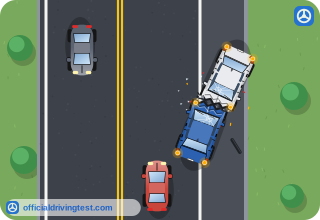
In a crash involving injuries, whom should you call if necessary?
- Only a tow truck company to clear the road
- Only your insurance agent
- Only the RMV
- The police, and request an ambulance or EMTs
Show answer
Correct answer: The police, and request an ambulance or EMTs
The manual says to call the police and request an ambulance or EMTs, if necessary.
Source: Massachusetts Driver's Manual (Revised April 2026), page 129 · Open this page in the manual (Manual page 129)
-
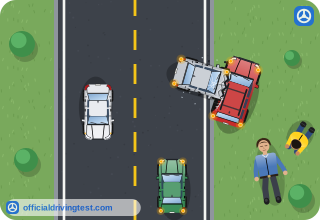
When should you move an injured person?
- Only if absolutely necessary
- As soon as possible
- Whenever the person asks
- Whenever the vehicle is in a travel lane
Show answer
Correct answer: Only if absolutely necessary
The manual says not to move an injured person unless absolutely necessary.
Source: Massachusetts Driver's Manual (Revised April 2026), page 129 · Open this page in the manual (Manual page 129)
-
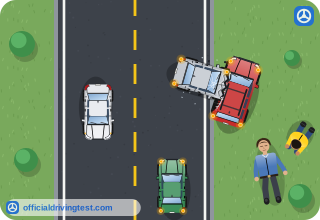
If you must move an injured person because of a life-threatening situation, what should you do?
- Lift the person by the arms
- Move the person quickly without support
- Fully support the person's head and spine
- Roll the person onto the stomach
Show answer
Correct answer: Fully support the person's head and spine
The manual says to fully support the person's head and spine when you must move someone.
Source: Massachusetts Driver's Manual (Revised April 2026), page 129 · Open this page in the manual (Manual page 129)
-
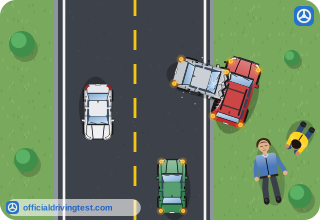
If an injured person is not breathing and you are certified in CPR, what should you do?
- Wait for the ambulance before doing anything
- Begin performing CPR immediately
- Cover the person with a blanket and wait
- Move the person to the roadside first
Show answer
Correct answer: Begin performing CPR immediately
The manual says that if the person is not breathing and you are certified in CPR, you begin performing CPR immediately.
Source: Massachusetts Driver's Manual (Revised April 2026), page 130 · Open this page in the manual (Manual page 130)
-
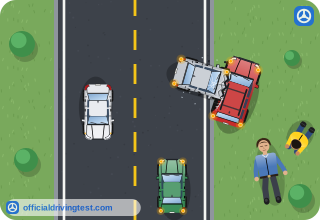
If an injured person is bleeding, what should you do?
- Remove the clothing from the wound and let it bleed
- Raise the person's head and wait
- Apply pressure for one minute and then release
- Put pressure directly on the wound until help arrives
Show answer
Correct answer: Put pressure directly on the wound until help arrives
The manual says to put pressure directly on the wound and maintain pressure until help arrives.
Source: Massachusetts Driver's Manual (Revised April 2026), page 130 · Open this page in the manual (Manual page 130)
-
Why should you cover an injured person with a blanket or coat?
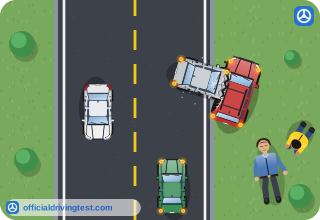
- To provide warmth and prevent shock
- To keep the person from moving
- To protect the person from sun
- To hide injuries from other drivers
Show answer
Correct answer: To provide warmth and prevent shock
The manual says to cover the injured person with a blanket or coat to provide warmth and prevent shock.
Source: Massachusetts Driver's Manual (Revised April 2026), page 130 · Open this page in the manual (Manual page 130)
-
When you are involved in a crash, what must you do at the scene?
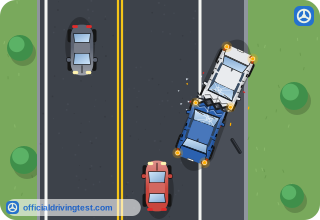
- Leave your contact details at the scene and go home if the damage is minor
- Identify yourself only if police officers are present at the scene
- Stay, identify yourself, give aid if possible, and call for help if needed
- Stay only if someone is injured or the vehicle cannot be driven
Show answer
Correct answer: Stay, identify yourself, give aid if possible, and call for help if needed
The manual says you must stay on the scene, properly identify yourself, give aid if possible, and call for emergency assistance if needed.
Source: Massachusetts Driver's Manual (Revised April 2026), page 130 · Open this page in the manual (Manual page 130)
-
You drive past a crash where police and emergency vehicles are already present. Why should you not stop or slow down to sightsee?
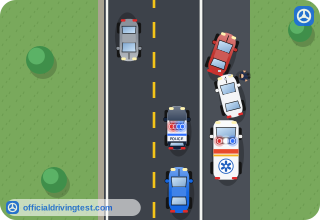
- It is illegal to look at a crash scene while driving
- It is dangerous and will cause a traffic problem
- It will delay the police response to the crash
- It will damage your brakes and tires
Show answer
Correct answer: It is dangerous and will cause a traffic problem
The manual says not to stop or slow down to sightsee because it is dangerous and will cause a traffic problem.
Source: Massachusetts Driver's Manual (Revised April 2026), page 131 · Open this page in the manual (Manual page 131)
-
You see a crash and there are no police or emergency vehicles. What should you do first?
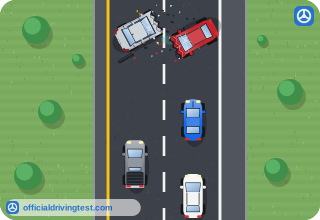
- Drive past and report it to the police later on
- Park in the travel lane and turn off your lights
- Stop beside the crash and sound your horn
- Park off the road and turn on your emergency flashers
Show answer
Correct answer: Park off the road and turn on your emergency flashers
The manual says to park your car off the road and turn on your emergency flashers to warn other drivers.
Source: Massachusetts Driver's Manual (Revised April 2026), page 131 · Open this page in the manual (Manual page 131)
-
You see a crash with no police nearby and you do not have a cellular phone. What does the manual say to do?
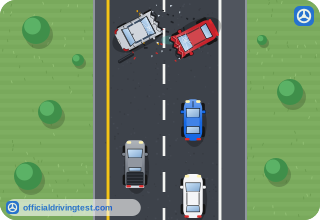
- Tell the next person who stops with a phone to call the police
- Drive away from the scene and call the police from home
- Wait in the road until the police arrive on their own
- Move the vehicles to the side and then leave
Show answer
Correct answer: Tell the next person who stops with a phone to call the police
The manual says to tell the next person who stops with a phone to call the police, or try to flag down a passing vehicle and ask the driver to get help.
Source: Massachusetts Driver's Manual (Revised April 2026), page 131 · Open this page in the manual (Manual page 131)
-
At a crash scene with no police, how far from the crash should you place flares, emergency triangles or reflectors?
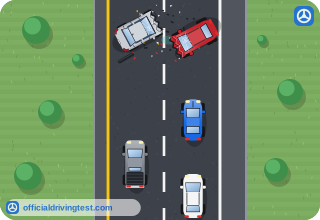
- 10 feet in front of the crash and nowhere else
- 50 feet behind the crash only
- 200 feet or more in front of and behind the crash
- 100 feet beside the crash on each side
Show answer
Correct answer: 200 feet or more in front of and behind the crash
The manual says to put flares, triangles or reflectors 200 feet or more in front of and behind the crash.
Source: Massachusetts Driver's Manual (Revised April 2026), page 131 · Open this page in the manual (Manual page 131)
-
At a crash scene with no police, what should you do with the ignition of the vehicles involved?
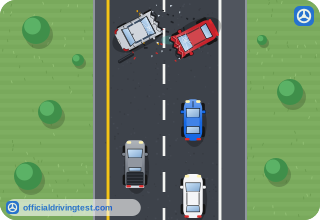
- Leave the engines running
- Turn off the ignition of all of them
- Turn off only the damaged vehicles
- Turn off only the vehicles with injured people
Show answer
Correct answer: Turn off the ignition of all of them
The manual says to turn off the ignition of all vehicles involved in the crash.
Source: Massachusetts Driver's Manual (Revised April 2026), page 131 · Open this page in the manual (Manual page 131)
-
At a crash scene with no police, if possible, where should you move the vehicles involved?
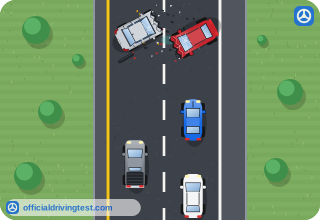
- To the center of the road
- Beyond the next intersection
- Into the nearest parking lot
- To the side of the road
Show answer
Correct answer: To the side of the road
The manual says that, if possible, you move all vehicles involved in the crash to the side of the road.
Source: Massachusetts Driver's Manual (Revised April 2026), page 131 · Open this page in the manual (Manual page 131)
-
Electrical wires have landed on a vehicle after a crash. What should you tell the people inside?
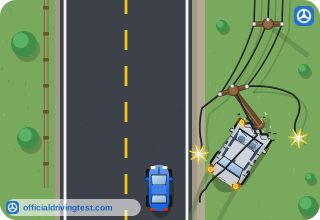
- To remain inside until emergency personnel arrive
- To get out and run away from the vehicle quickly
- To step out holding onto the door
- To push the vehicle away from the wires
Show answer
Correct answer: To remain inside until emergency personnel arrive
The manual says to tell the people inside to remain inside until emergency personnel arrive, and not to touch the vehicle.
Source: Massachusetts Driver's Manual (Revised April 2026), page 131 · Open this page in the manual (Manual page 131)
-
Besides a crash with $1,000 or more in property damage, which crash must you report?
- Only a crash involving three or more vehicles
- Only a crash in which a driver is charged
- Any crash that causes someone to be killed or hurt
- Only a crash that happens on a highway
Show answer
Correct answer: Any crash that causes someone to be killed or hurt
The manual says you must report any crash that causes someone to be killed or hurt, or that causes $1,000 or more in property damage.
Source: Massachusetts Driver's Manual (Revised April 2026), page 131 · Open this page in the manual (Manual page 131)
-
Where can you get a Motor Vehicle Crash Operator Report?
- At your local police station
- At a registry of deeds office
- At your local fire station
- At a hospital emergency room
Show answer
Correct answer: At your local police station
The manual says you can get the report at your local police station, at an RMV Service Center, or by calling the RMV's Contact Center.
Source: Massachusetts Driver's Manual (Revised April 2026), page 131 · Open this page in the manual (Manual page 131)
-
When you send in a completed crash report, one copy goes to the local police department and one to the RMV. Where does the third copy go?
- To the State Police
- To the other driver involved
- To your insurance company
- To the court clerk
Show answer
Correct answer: To your insurance company
The manual says to mail one copy to your insurance company, one to the local police department, and one to the RMV.
Source: Massachusetts Driver's Manual (Revised April 2026), page 131 · Open this page in the manual (Manual page 131)
-
What should you do with the crash report you completed?
- Give the original to the other driver
- Keep a copy for your own files
- Send all copies and keep none
- Destroy it after five days
Show answer
Correct answer: Keep a copy for your own files
The manual says you should keep a copy of the report for your own files.
Source: Massachusetts Driver's Manual (Revised April 2026), page 132 · Open this page in the manual (Manual page 132)