Massachusetts: Emergencies and crashes — Part 5 Practice Test
Questions in this part include: “Besides a crash with $1,000 or more in property damage, which crash must you report?” · “Where can you get a Motor Vehicle Crash Operator Report?”
Independent educational site · not affiliated with any government agency or DMV
Ready? Test yourself
- Instant feedback with an explanation
- Every answer cites its source in the manual
- Your best score is saved on this device
Questions are original and based on the official manual "Massachusetts Driver's Manual" (Revised April 2026), Massachusetts Registry of Motor Vehicles.
All 18 questions in this practice test
Take the test above first, then use this list to study. Tap “Show answer” to see the correct answer and explanation.
Show the questions and answersHide the questions
-
In a crash involving injuries, whom should you call if necessary?
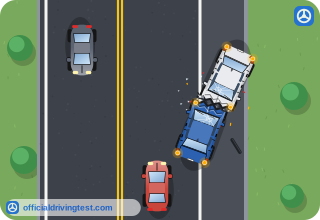
- Only a tow truck company to clear the road
- Only your insurance agent
- Only the RMV
- The police, and request an ambulance or EMTs
Show answer
Correct answer: The police, and request an ambulance or EMTs
The manual says to call the police and request an ambulance or EMTs, if necessary.
Source: Massachusetts Driver's Manual (Revised April 2026), page 129 · Open this page in the manual (Manual page 129)
-
When should you move an injured person?
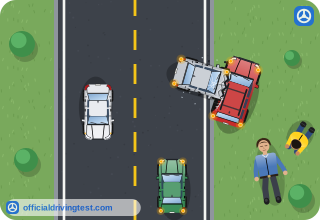
- Only if absolutely necessary
- As soon as possible
- Whenever the person asks
- Whenever the vehicle is in a travel lane
Show answer
Correct answer: Only if absolutely necessary
The manual says not to move an injured person unless absolutely necessary.
Source: Massachusetts Driver's Manual (Revised April 2026), page 129 · Open this page in the manual (Manual page 129)
-
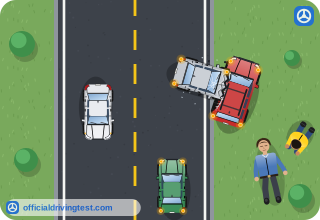
If you must move an injured person because of a life-threatening situation, what should you do?
- Lift the person by the arms
- Move the person quickly without support
- Fully support the person's head and spine
- Roll the person onto the stomach
Show answer
Correct answer: Fully support the person's head and spine
The manual says to fully support the person's head and spine when you must move someone.
Source: Massachusetts Driver's Manual (Revised April 2026), page 129 · Open this page in the manual (Manual page 129)
-
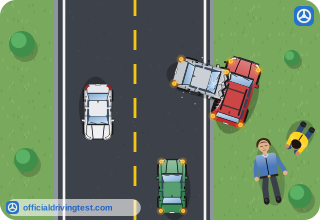
If an injured person is not breathing and you are certified in CPR, what should you do?
- Wait for the ambulance before doing anything
- Begin performing CPR immediately
- Cover the person with a blanket and wait
- Move the person to the roadside first
Show answer
Correct answer: Begin performing CPR immediately
The manual says that if the person is not breathing and you are certified in CPR, you begin performing CPR immediately.
Source: Massachusetts Driver's Manual (Revised April 2026), page 130 · Open this page in the manual (Manual page 130)
-
If an injured person is bleeding, what should you do?
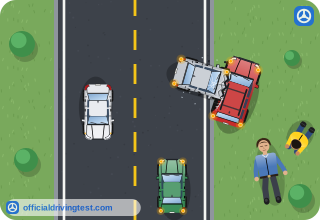
- Remove the clothing from the wound and let it bleed
- Raise the person's head and wait
- Apply pressure for one minute and then release
- Put pressure directly on the wound until help arrives
Show answer
Correct answer: Put pressure directly on the wound until help arrives
The manual says to put pressure directly on the wound and maintain pressure until help arrives.
Source: Massachusetts Driver's Manual (Revised April 2026), page 130 · Open this page in the manual (Manual page 130)
-
Why should you cover an injured person with a blanket or coat?
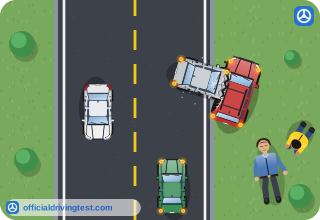
- To provide warmth and prevent shock
- To keep the person from moving
- To protect the person from sun
- To hide injuries from other drivers
Show answer
Correct answer: To provide warmth and prevent shock
The manual says to cover the injured person with a blanket or coat to provide warmth and prevent shock.
Source: Massachusetts Driver's Manual (Revised April 2026), page 130 · Open this page in the manual (Manual page 130)
-
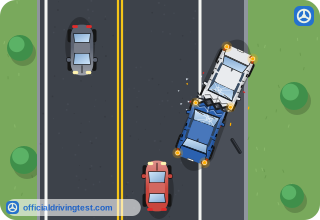
When you are involved in a crash, what must you do at the scene?
- Leave your contact details at the scene and go home if the damage is minor
- Identify yourself only if police officers are present at the scene
- Stay, identify yourself, give aid if possible, and call for help if needed
- Stay only if someone is injured or the vehicle cannot be driven
Show answer
Correct answer: Stay, identify yourself, give aid if possible, and call for help if needed
The manual says you must stay on the scene, properly identify yourself, give aid if possible, and call for emergency assistance if needed.
Source: Massachusetts Driver's Manual (Revised April 2026), page 130 · Open this page in the manual (Manual page 130)
-
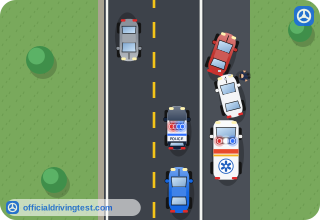
You drive past a crash where police and emergency vehicles are already present. Why should you not stop or slow down to sightsee?
- It is illegal to look at a crash scene while driving
- It is dangerous and will cause a traffic problem
- It will delay the police response to the crash
- It will damage your brakes and tires
Show answer
Correct answer: It is dangerous and will cause a traffic problem
The manual says not to stop or slow down to sightsee because it is dangerous and will cause a traffic problem.
Source: Massachusetts Driver's Manual (Revised April 2026), page 131 · Open this page in the manual (Manual page 131)
-
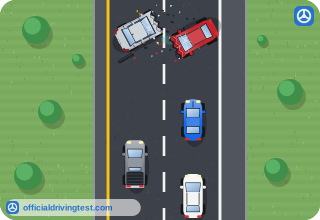
You see a crash and there are no police or emergency vehicles. What should you do first?
- Drive past and report it to the police later on
- Park in the travel lane and turn off your lights
- Stop beside the crash and sound your horn
- Park off the road and turn on your emergency flashers
Show answer
Correct answer: Park off the road and turn on your emergency flashers
The manual says to park your car off the road and turn on your emergency flashers to warn other drivers.
Source: Massachusetts Driver's Manual (Revised April 2026), page 131 · Open this page in the manual (Manual page 131)
-
You see a crash with no police nearby and you do not have a cellular phone. What does the manual say to do?
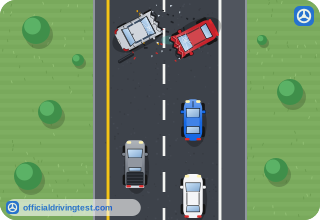
- Tell the next person who stops with a phone to call the police
- Drive away from the scene and call the police from home
- Wait in the road until the police arrive on their own
- Move the vehicles to the side and then leave
Show answer
Correct answer: Tell the next person who stops with a phone to call the police
The manual says to tell the next person who stops with a phone to call the police, or try to flag down a passing vehicle and ask the driver to get help.
Source: Massachusetts Driver's Manual (Revised April 2026), page 131 · Open this page in the manual (Manual page 131)
-
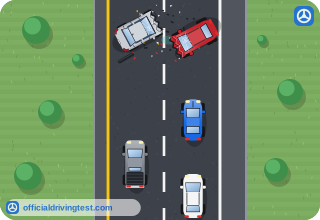
At a crash scene with no police, how far from the crash should you place flares, emergency triangles or reflectors?
- 10 feet in front of the crash and nowhere else
- 50 feet behind the crash only
- 200 feet or more in front of and behind the crash
- 100 feet beside the crash on each side
Show answer
Correct answer: 200 feet or more in front of and behind the crash
The manual says to put flares, triangles or reflectors 200 feet or more in front of and behind the crash.
Source: Massachusetts Driver's Manual (Revised April 2026), page 131 · Open this page in the manual (Manual page 131)
-
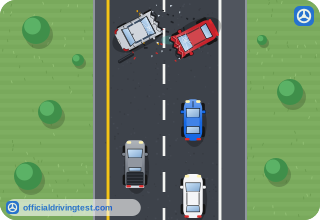
At a crash scene with no police, what should you do with the ignition of the vehicles involved?
- Leave the engines running
- Turn off the ignition of all of them
- Turn off only the damaged vehicles
- Turn off only the vehicles with injured people
Show answer
Correct answer: Turn off the ignition of all of them
The manual says to turn off the ignition of all vehicles involved in the crash.
Source: Massachusetts Driver's Manual (Revised April 2026), page 131 · Open this page in the manual (Manual page 131)
-
At a crash scene with no police, if possible, where should you move the vehicles involved?
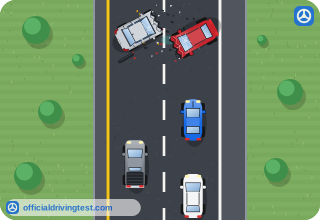
- To the center of the road
- Beyond the next intersection
- Into the nearest parking lot
- To the side of the road
Show answer
Correct answer: To the side of the road
The manual says that, if possible, you move all vehicles involved in the crash to the side of the road.
Source: Massachusetts Driver's Manual (Revised April 2026), page 131 · Open this page in the manual (Manual page 131)
-
Electrical wires have landed on a vehicle after a crash. What should you tell the people inside?
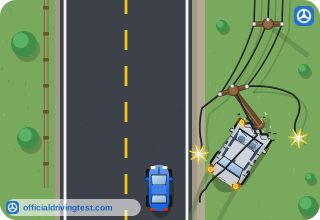
- To remain inside until emergency personnel arrive
- To get out and run away from the vehicle quickly
- To step out holding onto the door
- To push the vehicle away from the wires
Show answer
Correct answer: To remain inside until emergency personnel arrive
The manual says to tell the people inside to remain inside until emergency personnel arrive, and not to touch the vehicle.
Source: Massachusetts Driver's Manual (Revised April 2026), page 131 · Open this page in the manual (Manual page 131)
-
Besides a crash with $1,000 or more in property damage, which crash must you report?
- Only a crash involving three or more vehicles
- Only a crash in which a driver is charged
- Any crash that causes someone to be killed or hurt
- Only a crash that happens on a highway
Show answer
Correct answer: Any crash that causes someone to be killed or hurt
The manual says you must report any crash that causes someone to be killed or hurt, or that causes $1,000 or more in property damage.
Source: Massachusetts Driver's Manual (Revised April 2026), page 131 · Open this page in the manual (Manual page 131)
-
Where can you get a Motor Vehicle Crash Operator Report?
- At your local police station
- At a registry of deeds office
- At your local fire station
- At a hospital emergency room
Show answer
Correct answer: At your local police station
The manual says you can get the report at your local police station, at an RMV Service Center, or by calling the RMV's Contact Center.
Source: Massachusetts Driver's Manual (Revised April 2026), page 131 · Open this page in the manual (Manual page 131)
-
When you send in a completed crash report, one copy goes to the local police department and one to the RMV. Where does the third copy go?
- To the State Police
- To the other driver involved
- To your insurance company
- To the court clerk
Show answer
Correct answer: To your insurance company
The manual says to mail one copy to your insurance company, one to the local police department, and one to the RMV.
Source: Massachusetts Driver's Manual (Revised April 2026), page 131 · Open this page in the manual (Manual page 131)
-
What should you do with the crash report you completed?
- Give the original to the other driver
- Keep a copy for your own files
- Send all copies and keep none
- Destroy it after five days
Show answer
Correct answer: Keep a copy for your own files
The manual says you should keep a copy of the report for your own files.
Source: Massachusetts Driver's Manual (Revised April 2026), page 132 · Open this page in the manual (Manual page 132)