Hawaii: Emergencies
Blowouts, brake and steering failure, skids, vehicle fires, breakdowns and what to do after a crash. Split into 5 shorter tests so you're not stuck in one long quiz.
Independent educational site · not affiliated with any government agency or DMV
Choose a part
Emergencies — Part 1
Questions in this part include: “How must a traffic crash that causes personal injury to any extent be reported?”
StartEmergencies — Part 2
Questions in this part include: “What are the basic factors involved in all driving emergencies?”
StartEmergencies — Part 3
Questions in this part include: “If your power steering partly fails, what will you have to do to control the direction of the vehicle?”
StartEmergencies — Part 4
Questions in this part include: “With what does power steering failure usually occur?”
StartEmergencies — Part 5
Questions in this part include: “What must drivers of large vehicles know about their required emergency equipment?”
StartAll 81 Emergencies questions with answers
Choose a part above to take a practice test, or study every question and answer here.
Show the questions and answersHide the questions
-
How must a traffic crash that causes personal injury to any extent be reported?
- To the police immediately, by the quickest means of communication
- To the county examiner of drivers by mail within 24 hours
- To the insurance company only, by the end of the next day
- To the police in writing within one week of the crash
Show answer
Correct answer: To the police immediately, by the quickest means of communication
Crashes with personal injury to any extent must be reported to the police immediately by the quickest means of communication.
Source: Hawaii Driver's Manual (2023), page 52 · Open this page in the manual (Manual page 52)
-
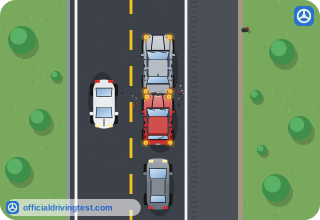
If you are involved in a crash, what must you do first?
- Drive to the nearest police station
- Call your insurance company
- Stop immediately
- Move your car to a nearby parking lot
Show answer
Correct answer: Stop immediately
The first step is to stop immediately, and if possible move your vehicle off the travelled portion of the roadway.
Source: Hawaii Driver's Manual (2023), page 52 · Open this page in the manual (Manual page 52)
-
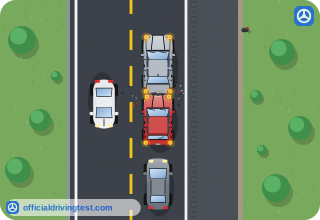
After you stop at a crash, where should you move your vehicle if it is possible?
- To the lane with the least traffic
- Off the travelled portion of the roadway
- Into the nearest intersection so others see it
- Onto the center of the road so others slow down
Show answer
Correct answer: Off the travelled portion of the roadway
The manual says to move your vehicle off the travelled portion of the roadway if possible.
Source: Hawaii Driver's Manual (2023), page 52 · Open this page in the manual (Manual page 52)
-
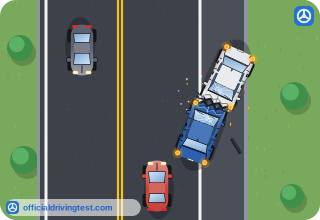
You may not leave the scene of a crash without doing what?
- Obtaining a written statement from a police officer
- Waiting for your insurance company to arrive
- Repairing any damage to the other vehicle
- Identifying yourself and rendering assistance
Show answer
Correct answer: Identifying yourself and rendering assistance
Do not leave the scene of a crash without identifying yourself and rendering assistance.
Source: Hawaii Driver's Manual (2023), page 52 · Open this page in the manual (Manual page 52)
-
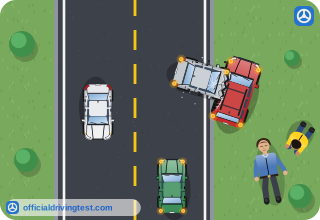
What does the manual say about moving an injured person at a crash scene?
- Move the injured away from the vehicles at once
- Sit the injured upright to help their breathing
- Do not move the injured unnecessarily
- Move the injured into your vehicle to keep warm
Show answer
Correct answer: Do not move the injured unnecessarily
Unskilled handling can make serious injuries out of minor ones, so do not move the injured unnecessarily.
Source: Hawaii Driver's Manual (2023), page 52 · Open this page in the manual (Manual page 52)
-
What should you do for an injured person until skilled help arrives?
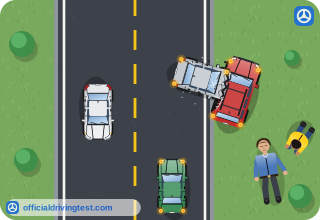
- Keep them warm
- Give them something to drink
- Have them walk around
- Cool them with wet cloths
Show answer
Correct answer: Keep them warm
The manual says to keep the injured warm until skilled help arrives.
Source: Hawaii Driver's Manual (2023), page 52 · Open this page in the manual (Manual page 52)
-
What should you do if an injured person has severe bleeding?
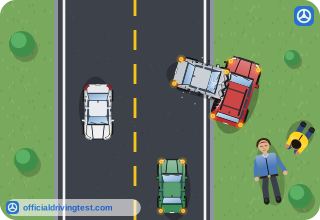
- Raise the person to a sitting position and wait
- Wrap the area loosely and drive the person to a hospital yourself
- Leave the wound alone until an ambulance arrives
- Attempt to stop the flow of blood with direct pressure
Show answer
Correct answer: Attempt to stop the flow of blood with direct pressure
With severe bleeding, you attempt to stop the flow of blood with direct pressure.
Source: Hawaii Driver's Manual (2023), page 52 · Open this page in the manual (Manual page 52)
-
At a crash scene, an injured victim should be protected from what?
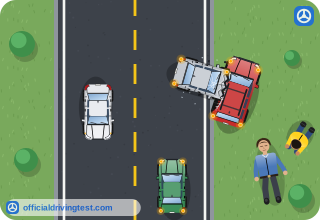
- Direct sunlight
- Oncoming traffic
- Curious bystanders
- Loud noises nearby
Show answer
Correct answer: Oncoming traffic
The manual says to protect the victim from the oncoming traffic.
Source: Hawaii Driver's Manual (2023), page 52 · Open this page in the manual (Manual page 52)
-
How can you help prevent further damage from oncoming traffic at a crash scene?
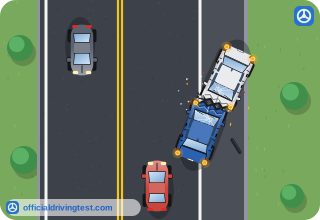
- Have someone warn approaching cars
- Turn off all lights on the vehicles
- Leave the damaged vehicles where they are and wait
- Block the road with the damaged vehicles
Show answer
Correct answer: Have someone warn approaching cars
Have someone warn approaching cars to prevent further damage from oncoming traffic.
Source: Hawaii Driver's Manual (2023), page 52 · Open this page in the manual (Manual page 52)
-
Which items does the manual say to keep in your vehicle for emergency use at a crash?
- A first-aid kit and a tire gauge
- A spare key and a tow rope
- A flashlight and flares
- A compass and a road map
Show answer
Correct answer: A flashlight and flares
The manual says to keep a flashlight and flares in your vehicle for emergency use.
Source: Hawaii Driver's Manual (2023), page 52 · Open this page in the manual (Manual page 52)
-
After a crash, what must drivers give to a person injured or to the driver of a damaged vehicle?
- Their name, insurance company and policy number only
- Their name, address, and vehicle registration information
- Their name, home telephone number and place of employment
- Their address and Social Security number only
Show answer
Correct answer: Their name, address, and vehicle registration information
Drivers must give their name, address, and vehicle registration information, and exhibit their driver's license if requested.
Source: Hawaii Driver's Manual (2023), page 52 · Open this page in the manual (Manual page 52)
-
What must you do if you strike an unattended vehicle?
- Drive on if no one is hurt, then report the crash to the police when you have time
- Stop and wait at the scene until a police officer arrives to deal with the owner
- Report the crash to your insurance company instead of notifying the owner of the vehicle
- Stop and locate the owner, or leave a written notice with your name, address and circumstances
Show answer
Correct answer: Stop and locate the owner, or leave a written notice with your name, address and circumstances
You must stop and locate the owner, or leave a written notice containing your name and address and the circumstances of the crash.
Source: Hawaii Driver's Manual (2023), page 52 · Open this page in the manual (Manual page 52)
-
If you damage other property along the highway in a crash, what must you do?
- Only call the police
- Repair it within seven days
- Notify the owner
- Leave your insurance card
Show answer
Correct answer: Notify the owner
The manual says that if you damage other property along the highway, you notify the owner.
Source: Hawaii Driver's Manual (2023), page 52 · Open this page in the manual (Manual page 52)
-
What should you do if rain is so heavy that you are unable to see clearly?
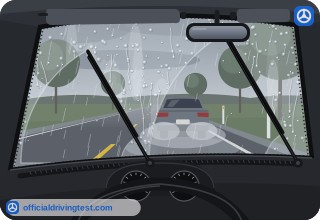
- Slow to a crawl and follow the taillights ahead
- Drive onto the road shoulder or other clear area and stop until the rain lets up
- Turn on the high beams and keep driving
- Stop in your lane and turn on the hazard warning signals until it passes
Show answer
Correct answer: Drive onto the road shoulder or other clear area and stop until the rain lets up
The manual says to drive onto the road shoulder or other clear area and stop until the rain lets up.
Source: Hawaii Driver's Manual (2023), page 76 · Open this page in the manual (Manual page 76)
-
Never drive through a flooded area where water is moving swiftly and is deeper than how much?
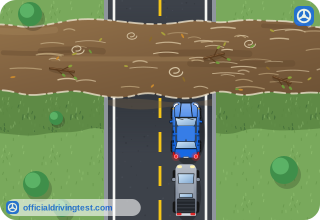
- 18 inches (45 cm)
- Two feet (60 cm)
- One foot (30 cm)
- Three feet (90 cm)
Show answer
Correct answer: One foot (30 cm)
The manual says never to drive through a flooded area where water over one foot deep (30 cm) is moving swiftly, because it will sweep the vehicle off the road.
Source: Hawaii Driver's Manual (2023), page 76 · Open this page in the manual (Manual page 76)
-
In fog, if you are unable to see at least how far ahead, should you pull completely off the pavement and stop?
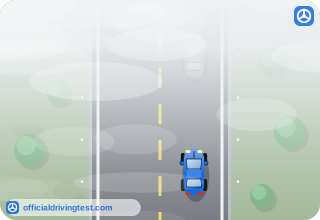
- One car length (20 feet or 6 meters)
- Two car lengths (40 feet or 12 meters)
- Three car lengths (60 feet or 18 meters)
- Five car lengths (100 feet or 30 meters)
Show answer
Correct answer: Two car lengths (40 feet or 12 meters)
The manual says if you cannot see at least two car lengths (40 feet or 12 meters), pull completely off the pavement and stop.
Source: Hawaii Driver's Manual (2023), page 76 · Open this page in the manual (Manual page 76)
-
After you pull completely off the pavement and stop because fog is too thick to see, what should you turn on?
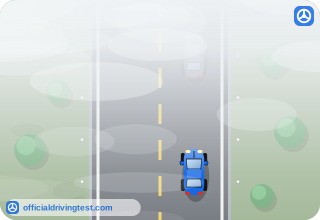
- The high beam head lamps
- The left turn signal only
- The hazard warning signals
- The windshield wipers only
Show answer
Correct answer: The hazard warning signals
The manual says to pull completely off the pavement, stop, and turn on the hazard warning signals.
Source: Hawaii Driver's Manual (2023), page 76 · Open this page in the manual (Manual page 76)
-
If you must stop on a freeway, where should you stop?
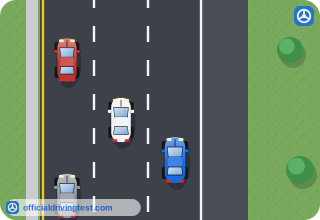
- Drive entirely off the roadway, as far away from traffic as possible
- In the right lane near an exit ramp with the hazard warning signals on
- Just past the nearest exit ramp in the traffic lane
- As close to the center divider as possible
Show answer
Correct answer: Drive entirely off the roadway, as far away from traffic as possible
The manual says if you must stop, drive entirely off the roadway as far away from traffic as possible.
Source: Hawaii Driver's Manual (2023), page 79 · Open this page in the manual (Manual page 79)
-
If you have a problem on a freeway, what should you try to do first?
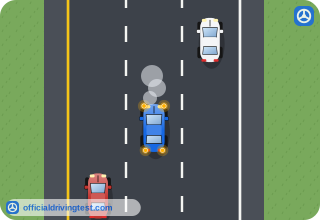
- Stop immediately in the right lane and wait
- Cross the center divider to reach help
- Walk to the nearest service station
- Get off the freeway at the next exit if you can
Show answer
Correct answer: Get off the freeway at the next exit if you can
The manual says to try to get off the freeway at the next exit if you can.
Source: Hawaii Driver's Manual (2023), page 79 · Open this page in the manual (Manual page 79)
-
What should you do if you see another driver in trouble on a freeway?
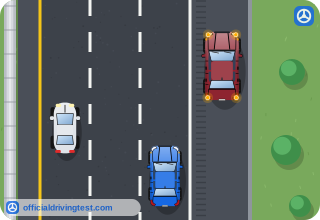
- Stop behind the driver and turn on the hazard warning signals
- Do not stop to assist; report the situation to the proper authorities
- Stop and walk over to help
- Stop to help only if you are in the right lane
Show answer
Correct answer: Do not stop to assist; report the situation to the proper authorities
The manual says not to stop to assist other drivers in trouble but to report the situation to the proper authorities.
Source: Hawaii Driver's Manual (2023), page 79 · Open this page in the manual (Manual page 79)
-
What are the basic factors involved in all driving emergencies?
- Speed, distance and lights
- Horn, mirrors and signals
- Tires, fuel and engine temperature
- Brakes, steering and power
Show answer
Correct answer: Brakes, steering and power
The manual says all driving emergencies involve the use of brakes, steering and power.
Source: Hawaii Driver's Manual (2023), page 80 · Open this page in the manual (Manual page 80)
-
Why should you avoid slamming on the brakes and sliding the wheels in an emergency?
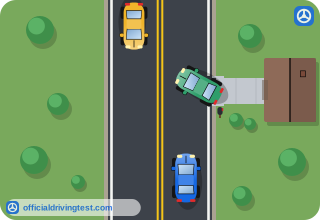
- You cannot control a vehicle when the wheels are sliding
- Sliding wheels will always cause a tire to blow out
- Sliding wheels make the engine stall
- You cannot steer unless the wheels are locked
Show answer
Correct answer: You cannot control a vehicle when the wheels are sliding
The manual states that you cannot control a vehicle when the wheels are sliding.
Source: Hawaii Driver's Manual (2023), page 80 · Open this page in the manual (Manual page 80)
-
What do antilock brakes do for you automatically?
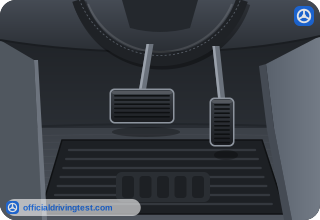
- Steer the vehicle into a less dangerous location by itself
- Release the parking brake in an emergency
- Keep the wheels from sliding when you brake hard
- Reduce your speed without any pedal pressure
Show answer
Correct answer: Keep the wheels from sliding when you brake hard
The manual says to avoid slamming on the brakes and sliding the wheels; antilock brakes do this for you automatically.
Source: Hawaii Driver's Manual (2023), page 80 · Open this page in the manual (Manual page 80)
-
If a wheel slides during hard braking, what should you do?
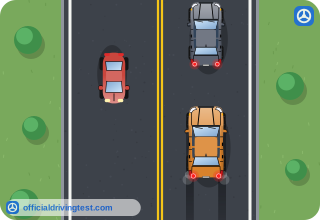
- Hold the brake pedal down until the vehicle stops
- Release the brakes and reapply them when no longer sliding
- Pump the accelerator until the wheel grips
- Turn off the engine and coast to a stop
Show answer
Correct answer: Release the brakes and reapply them when no longer sliding
The manual says to release the brakes and reapply them once the vehicle is no longer sliding or skidding.
Source: Hawaii Driver's Manual (2023), page 80 · Open this page in the manual (Manual page 80)
-
Why should you wear your safety belts in a driving emergency?
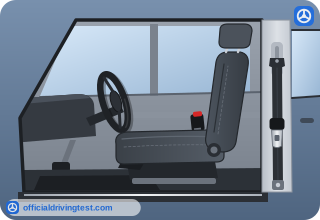
- So the vehicle will stop in a shorter distance
- So you can steer the vehicle using only one hand
- So the airbags will not inflate in a collision
- So you can remain in a position to control your vehicle
Show answer
Correct answer: So you can remain in a position to control your vehicle
The manual says safety belts keep you in a position to control your vehicle.
Source: Hawaii Driver's Manual (2023), page 80 · Open this page in the manual (Manual page 80)
-
After your vehicle strikes another object, what should you do?
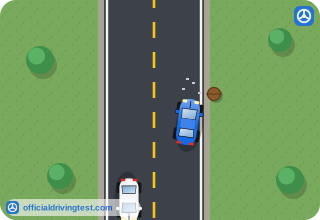
- Continue to try to control your vehicle
- Take your hands off the steering wheel
- Turn off the engine at once
- Remove your safety belt
Show answer
Correct answer: Continue to try to control your vehicle
The manual says to keep trying to control your vehicle even after striking another object.
Source: Hawaii Driver's Manual (2023), page 80 · Open this page in the manual (Manual page 80)
-
According to the manual, what most often causes tire blowouts?
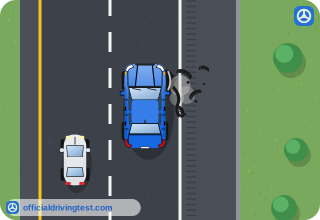
- Driving too often on wet pavement
- Improper tire care and maintenance
- Driving on a freeway
- Carrying too many passengers
Show answer
Correct answer: Improper tire care and maintenance
The manual says blowouts are most often the result of improper tire care and maintenance.
Source: Hawaii Driver's Manual (2023), page 80 · Open this page in the manual (Manual page 80)
-
If a tire blows out, what should you NOT do?
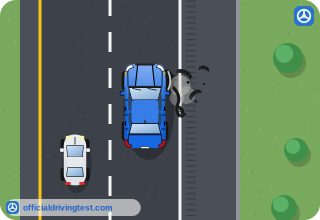
- Grip the steering wheel firmly
- Steer to stay in your traffic lane
- Reduce speed gradually
- Apply the brakes
Show answer
Correct answer: Apply the brakes
The manual says not to apply the brakes in a blowout because the vehicle may become uncontrollable.
Source: Hawaii Driver's Manual (2023), page 81 · Open this page in the manual (Manual page 81)
-
During a tire blowout, how should you handle the steering wheel?
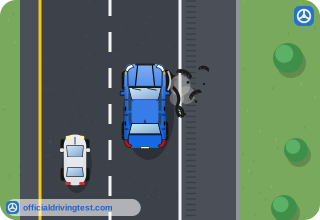
- Grip it firmly and steer to remain in your traffic lane
- Hold it loosely and let the vehicle drift to the shoulder
- Turn it sharply toward the side of the blown tire
- Let go of it until the vehicle slows
Show answer
Correct answer: Grip it firmly and steer to remain in your traffic lane
The manual says to grip the steering wheel firmly and keep the vehicle in your traffic lane, even though the pull may change direction.
Source: Hawaii Driver's Manual (2023), page 81 · Open this page in the manual (Manual page 81)
-
After a tire blowout, once you are moving very slowly, what should you do?
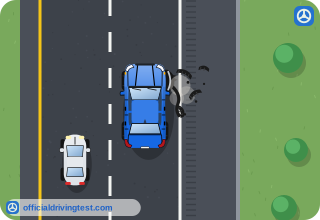
- Stop in the traffic lane and turn on the hazard lights
- Accelerate to reach the next exit
- Apply the brakes lightly and pull off the road into a safe area
- Apply the brakes firmly and stop at once
Show answer
Correct answer: Apply the brakes lightly and pull off the road into a safe area
The manual says to slow gradually without brakes until very slow, then brake lightly and pull off the road into a safe area.
Source: Hawaii Driver's Manual (2023), page 81 · Open this page in the manual (Manual page 81)
-
According to the manual, what can you do with a blown-out tire at a very slow speed?
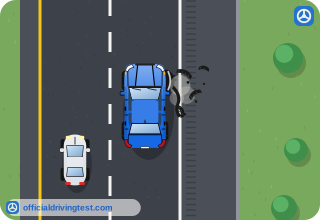
- Drive only a few feet before the rim is damaged
- Drive some distance without damaging the wheel rim
- Drive only on the freeway
- Drive only if the spare tire is also flat
Show answer
Correct answer: Drive some distance without damaging the wheel rim
The manual says you can drive for some distance with a blown-out tire at a very slow speed without damaging the wheel rim.
Source: Hawaii Driver's Manual (2023), page 81 · Open this page in the manual (Manual page 81)
-
If a wheel comes off your vehicle, what corrective procedure should you use?
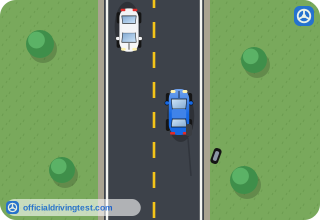
- The same procedure as for a skid
- The same procedure as for a stuck accelerator
- The same procedure as for steering failure
- The same procedure as for a tire blowout
Show answer
Correct answer: The same procedure as for a tire blowout
The manual says a loss of wheel is handled with the same corrective procedure as a tire blowout.
Source: Hawaii Driver's Manual (2023), page 81 · Open this page in the manual (Manual page 81)
-
What is likely to happen when a wheel is lost?
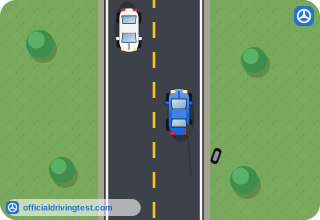
- A total or partial brake failure
- A total loss of engine power
- A stuck accelerator
- A power steering fire
Show answer
Correct answer: A total or partial brake failure
The manual says total or partial brake failure is likely when a wheel is lost.
Source: Hawaii Driver's Manual (2023), page 81 · Open this page in the manual (Manual page 81)
-
Once your vehicle has stopped after losing a wheel, what is true?
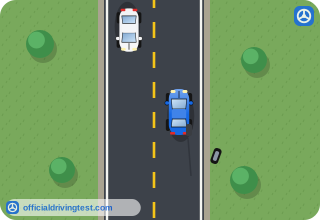
- You can drive it slowly to a repair shop
- You can replace the wheel with the spare and continue
- You will be unable to move the vehicle and it must be towed
- You can move it off the road in low gear
Show answer
Correct answer: You will be unable to move the vehicle and it must be towed
The manual says that once stopped you will be unable to move the vehicle and it must be towed.
Source: Hawaii Driver's Manual (2023), page 81 · Open this page in the manual (Manual page 81)
-
How is a partial brake failure indicated?
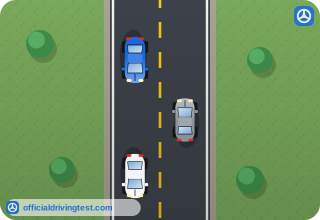
- By a loud squealing noise from the wheels
- By a warning light on the instrument panel
- By a vibrating steering wheel at any speed
- By a burning smell inside the vehicle
Show answer
Correct answer: By a warning light on the instrument panel
The manual says a partial failure reduces braking ability and is indicated by a warning light on the instrument panel.
Source: Hawaii Driver's Manual (2023), page 81 · Open this page in the manual (Manual page 81)
-
If your brakes fail completely, what should you do first?
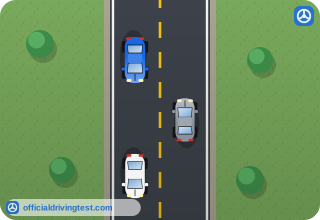
- Apply the parking brake with great force
- Turn the ignition switch to lock
- Steer onto the shoulder at full speed
- Pump the brake pedal quickly
Show answer
Correct answer: Pump the brake pedal quickly
The manual lists pumping the brake pedal quickly as the first step when the brakes fail completely.
Source: Hawaii Driver's Manual (2023), page 81 · Open this page in the manual (Manual page 81)
-
After pumping the pedal when your brakes fail completely, what should you do next?
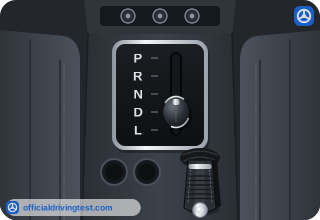
- Shift to a lower gear
- Shift to a higher gear
- Shift into neutral and coast
- Turn off the headlights
Show answer
Correct answer: Shift to a lower gear
The manual says to pump the brake pedal quickly and then shift to a lower gear.
Source: Hawaii Driver's Manual (2023), page 81 · Open this page in the manual (Manual page 81)
-
If your brakes fail completely, what should you look for?
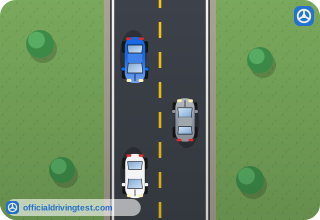
- A steep uphill road that will slow the vehicle
- A long line of parked cars to slow the vehicle
- An escape route such as a side road or flat open area
- A concrete barrier to scrape the side against
Show answer
Correct answer: An escape route such as a side road or flat open area
The manual says to look for an escape route (a side road or a flat open area) and use lights and horn to warn others.
Source: Hawaii Driver's Manual (2023), page 81 · Open this page in the manual (Manual page 81)
-
If your brakes fail completely, how should you use the parking brake?
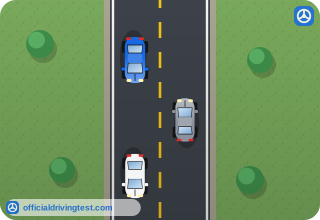
- Apply it rapidly and with great force at once
- Apply it gradually to bring the vehicle to a stop
- Apply it only after the vehicle has fully stopped
- Do not use the parking brake at any time
Show answer
Correct answer: Apply it gradually to bring the vehicle to a stop
The manual warns that applying the parking brake rapidly or with great force may cause you to lose control.
Source: Hawaii Driver's Manual (2023), page 81 · Open this page in the manual (Manual page 81)
-
If your power steering partly fails, what will you have to do to control the direction of the vehicle?
- Release pressure on the steering wheel
- Shift to a lower gear
- Turn the ignition off
- Exert greater effort on the steering wheel
Show answer
Correct answer: Exert greater effort on the steering wheel
The manual says a partial loss of power steering means you must exert greater effort on the wheel.
Source: Hawaii Driver's Manual (2023), page 81 · Open this page in the manual (Manual page 81)
-
If your steering fails completely, what should you do first?
- Slowly reduce speed
- Accelerate to straighten the vehicle
- Turn the ignition switch off
- Apply the parking brake with great force
Show answer
Correct answer: Slowly reduce speed
The manual says to slowly reduce speed and apply brakes as necessary to stop smoothly.
Source: Hawaii Driver's Manual (2023), page 82 · Open this page in the manual (Manual page 82)
-
If your vehicle slips off the edge of the pavement, what should you NOT do?
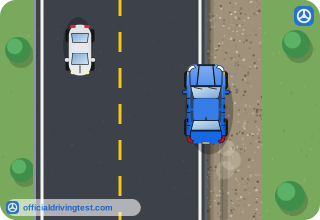
- Reduce your speed
- Use the brakes gently
- Jerk the steering wheel to force it back onto the pavement
- Continue to drive with the wheels off the pavement
Show answer
Correct answer: Jerk the steering wheel to force it back onto the pavement
The manual warns against forcing the vehicle back onto the pavement by jerking the steering wheel.
Source: Hawaii Driver's Manual (2023), page 82 · Open this page in the manual (Manual page 82)
-
When should you turn the steering wheel to return to the pavement after your wheels drop off the edge?
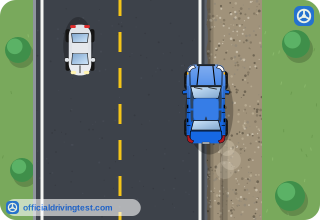
- As soon as the wheels leave the pavement
- When you are at a safe speed
- Only after the vehicle has stopped
- When you have accelerated past the gravel
Show answer
Correct answer: When you are at a safe speed
The manual says to turn back onto the pavement at a safe speed, ready to adjust to stay in your lane.
Source: Hawaii Driver's Manual (2023), page 82 · Open this page in the manual (Manual page 82)
-
What does the manual say about using the brakes when your wheels are off the pavement?
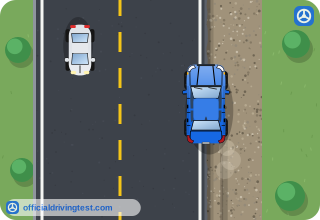
- Use them firmly to stop at once
- Do not use them at all
- Pump them quickly
- Use them gently
Show answer
Correct answer: Use them gently
The manual says to reduce speed and use the brakes gently while the wheels are off the pavement.
Source: Hawaii Driver's Manual (2023), page 82 · Open this page in the manual (Manual page 82)
-
Another vehicle is trying to pass you but cannot finish because of oncoming traffic. What can you do to help avoid a collision?
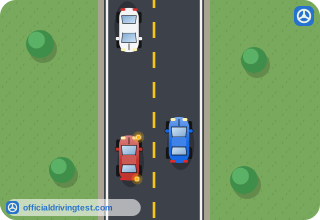
- Steer as far right as is safe, even onto the shoulder
- Steer toward the center line to give more room
- Speed up so the other driver stays behind you
- Stop in your lane and turn off your lights
Show answer
Correct answer: Steer as far right as is safe, even onto the shoulder
The manual says to steer as far to the right as is safe, even onto the shoulder if possible.
Source: Hawaii Driver's Manual (2023), page 82 · Open this page in the manual (Manual page 82)
-
A passing vehicle continues its attempt to pass you. What should you do?
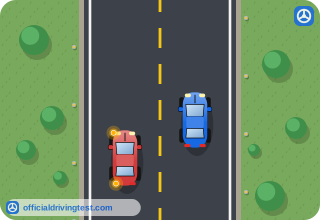
- Accelerate so that it cannot get ahead of you
- Move into the left lane to block the passing vehicle
- Slow down so the passing vehicle can move ahead of you
- Brake hard and stop in the middle of the lane
Show answer
Correct answer: Slow down so the passing vehicle can move ahead of you
The manual says to slow down so the passing vehicle can move into the lane ahead.
Source: Hawaii Driver's Manual (2023), page 82 · Open this page in the manual (Manual page 82)
-
A passing vehicle appears to be slowing to return to the lane behind you. What should you do?
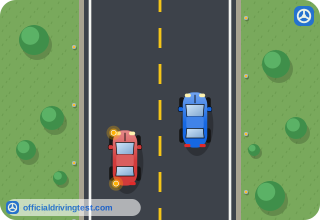
- Steer toward the center line to block it
- Accelerate so it can return to the lane behind you
- Move onto the shoulder and stop your vehicle completely
- Move into the left lane and stay beside it
Show answer
Correct answer: Accelerate so it can return to the lane behind you
The manual says to accelerate so the passing vehicle can return to the lane in the rear.
Source: Hawaii Driver's Manual (2023), page 82 · Open this page in the manual (Manual page 82)
-
Before you change your speed to help a vehicle that is trying to pass, what must you be certain of?
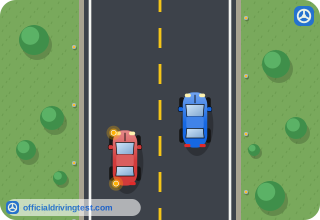
- The speed limit on that road
- The distance to the next intersection
- That no vehicles are behind you
- The intentions of the passing driver
Show answer
Correct answer: The intentions of the passing driver
The manual says to be certain of the passing driver's intentions before you change speed.
Source: Hawaii Driver's Manual (2023), page 82 · Open this page in the manual (Manual page 82)
-
What should you do first when you see an oncoming vehicle in your traffic lane?
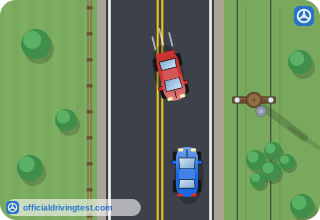
- Flash your lights and honk the horn
- Steer into the oncoming traffic lane
- Stop in the lane and wait
- Turn off your headlights
Show answer
Correct answer: Flash your lights and honk the horn
The manual says to flash your lights and honk the horn, then slow quickly and steer to the right.
Source: Hawaii Driver's Manual (2023), page 82 · Open this page in the manual (Manual page 82)
-
An oncoming vehicle is in your traffic lane. Where should you steer?
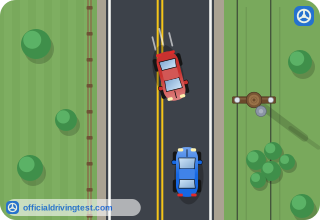
- To the left, into the oncoming traffic lane
- Straight ahead, toward the center line
- To the right, out of the lane into a clear area
- Toward the vehicle, to pass it
Show answer
Correct answer: To the right, out of the lane into a clear area
The manual says to steer to the right out of the lane and not to enter the oncoming traffic lane.
Source: Hawaii Driver's Manual (2023), page 82 · Open this page in the manual (Manual page 82)
-
If you must drive off the road to avoid an oncoming vehicle in your lane, what should you avoid?
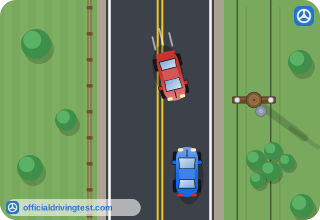
- Gravel and loose dirt
- Solid objects and pedestrians
- The shoulder or grass beside the road
- Grass and unpaved areas
Show answer
Correct answer: Solid objects and pedestrians
The manual says to drive off the road if necessary and to avoid solid objects and pedestrians.
Source: Hawaii Driver's Manual (2023), page 82 · Open this page in the manual (Manual page 82)
-
If your accelerator sticks open, what should you do first?
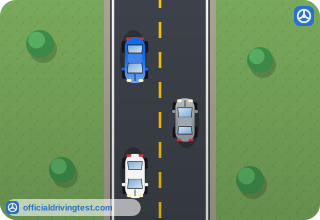
- Turn the steering wheel to the right
- Shift into park
- Pull the parking brake as hard as you can
- Slap the accelerator pedal hard with your foot
Show answer
Correct answer: Slap the accelerator pedal hard with your foot
The manual says to slap the accelerator pedal hard with your foot: quickly press it all the way down and quickly release it.
Source: Hawaii Driver's Manual (2023), page 83 · Open this page in the manual (Manual page 83)
-
When you turn off the ignition because the accelerator is stuck, how far should you move the switch?
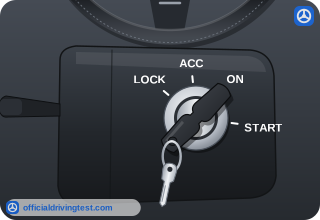
- Only far enough to stop the engine, not lock the wheel
- All the way to the lock position to stop quickly
- Only to the accessory position
- Back and forth several times
Show answer
Correct answer: Only far enough to stop the engine, not lock the wheel
The manual warns against engaging the steering wheel locking mechanism.
Source: Hawaii Driver's Manual (2023), page 83 · Open this page in the manual (Manual page 83)
-
After you have slapped the pedal, turned the ignition off and applied the brakes with a stuck accelerator, what should you do?
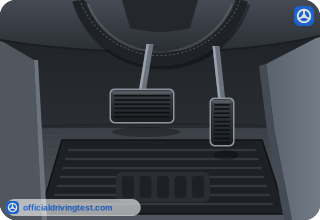
- Continue driving to the nearest repair shop
- Turn the ignition back on
- Pull off the roadway into a safe area
- Stop in the traffic lane
Show answer
Correct answer: Pull off the roadway into a safe area
The manual ends the stuck-accelerator steps with pulling off the roadway into a safe area.
Source: Hawaii Driver's Manual (2023), page 83 · Open this page in the manual (Manual page 83)
-
With what does power steering failure usually occur?
- A tire blowout on the front wheels
- Engine failure or loss of the power unit belt
- A stuck accelerator pedal that will not release
- A fire in the engine compartment
Show answer
Correct answer: Engine failure or loss of the power unit belt
The manual says power steering failure usually occurs with engine failure or loss of the belt driving the power unit.
Source: Hawaii Driver's Manual (2023), page 83 · Open this page in the manual (Manual page 83)
-
If you lose power steering, what should you do?
- Turn off the ignition and coast
- Speed up to keep control
- Apply the parking brake with great force
- Reduce speed, drive to a safe area and stop
Show answer
Correct answer: Reduce speed, drive to a safe area and stop
The manual says to reduce speed and drive to a safe area and stop, using additional effort to steer.
Source: Hawaii Driver's Manual (2023), page 83 · Open this page in the manual (Manual page 83)
-
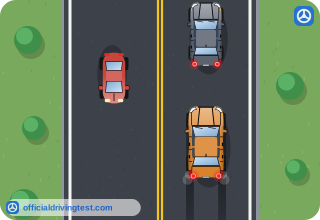
On which road surfaces should you use extra care to avoid skidding?
- Dry concrete surfaces in clear weather
- Wet, slippery or gravel-covered surfaces
- Freshly painted lanes
- Wide, straight roads
Show answer
Correct answer: Wet, slippery or gravel-covered surfaces
The manual says to use extra care on wet, slippery or gravel-covered road surfaces.
Source: Hawaii Driver's Manual (2023), page 83 · Open this page in the manual (Manual page 83)
-
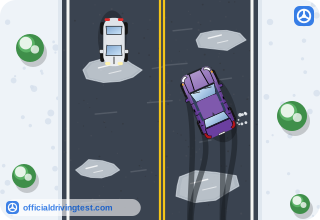
When you encounter a skid or control problem, what should you do?
- Do the exact opposite of what you were doing
- Brake as hard as possible
- Take your hands off the steering wheel
- Stop or reduce what you were doing when it started
Show answer
Correct answer: Stop or reduce what you were doing when it started
The manual says to stop or reduce whatever you were doing when the problem started.
Source: Hawaii Driver's Manual (2023), page 83 · Open this page in the manual (Manual page 83)
-
A skid started when you applied the brakes. What should you do?
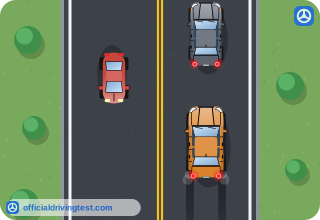
- Release the brakes
- Press the brakes harder
- Shift to a lower gear at once
- Apply the parking brake
Show answer
Correct answer: Release the brakes
The manual says to avoid using the brakes and to release them if the skid started when you applied them.
Source: Hawaii Driver's Manual (2023), page 83 · Open this page in the manual (Manual page 83)
-
To steer out of a skid, which way should you turn the steering wheel?
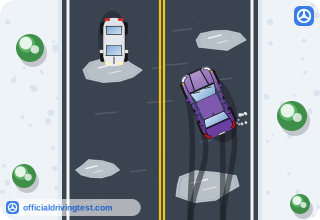
- Opposite to the direction the rear is skidding
- Toward the center line
- In the direction the rear of the vehicle is skidding
- Straight ahead until the vehicle stops
Show answer
Correct answer: In the direction the rear of the vehicle is skidding
The manual says if skidding to the right, turn right, and turn left for a skid to the left.
Source: Hawaii Driver's Manual (2023), page 83 · Open this page in the manual (Manual page 83)
-
What should you do with the accelerator when your vehicle begins to skid?
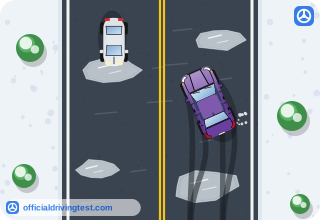
- Press it harder to pull out of the skid
- Ease off the accelerator
- Hold it steady
- Tap it quickly several times
Show answer
Correct answer: Ease off the accelerator
The manual says easing off the accelerator may stop the skid.
Source: Hawaii Driver's Manual (2023), page 83 · Open this page in the manual (Manual page 83)
-
As a skid stops, what should you do with the steering?
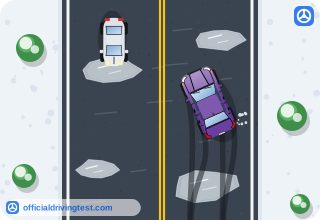
- Turn it fully in the direction of the skid
- Turn it fully away from the skid
- Let go of the wheel
- Turn it to the straight ahead position
Show answer
Correct answer: Turn it to the straight ahead position
The manual says to turn the steering to the straight ahead position as the skid stops.
Source: Hawaii Driver's Manual (2023), page 83 · Open this page in the manual (Manual page 83)
-
What may happen if you overcorrect while steering out of a skid?
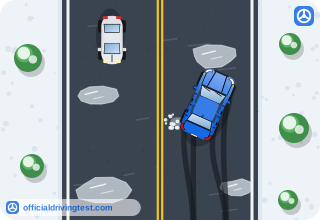
- The vehicle may skid in the opposite direction
- The vehicle will stop immediately and safely
- The tires will blow out
- The brakes will fail
Show answer
Correct answer: The vehicle may skid in the opposite direction
The manual says overcorrecting may cause a skid in the opposite direction, so steer gently into the skid again.
Source: Hawaii Driver's Manual (2023), page 83 · Open this page in the manual (Manual page 83)
-
According to the manual, which is a usual cause of vehicle fires?
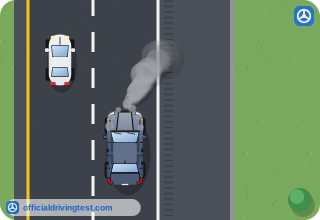
- A low tire, a loose mirror or a dirty windshield
- A worn wiper blade, a cracked lens or a loose belt
- An overheated engine, an electrical short, or a fuel leak
- A dim headlight, a stuck window or a worn seat cover
Show answer
Correct answer: An overheated engine, an electrical short, or a fuel leak
The manual says fires usually result from an overheated engine, electrical short, fuel leak or oil leak.
Source: Hawaii Driver's Manual (2023), page 84 · Open this page in the manual (Manual page 84)
-
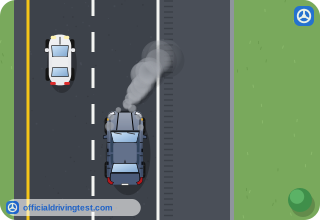
What should you do about any burning odor in your vehicle?
- Ignore it unless smoke appears
- Investigate it immediately
- Wait until your next service check
- Open the windows and keep driving
Show answer
Correct answer: Investigate it immediately
The manual says any burning odor should be immediately investigated.
Source: Hawaii Driver's Manual (2023), page 84 · Open this page in the manual (Manual page 84)
-
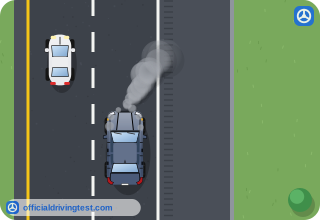
If a fire occurs or is suspected in your vehicle, what is the first action listed?
- Open the hood while driving
- Stop in the traffic lane to warn others
- Get out while the vehicle is moving
- Drive to a safe area clear of traffic and stop
Show answer
Correct answer: Drive to a safe area clear of traffic and stop
The manual lists driving to a safe area clear of traffic and stopping first.
Source: Hawaii Driver's Manual (2023), page 84 · Open this page in the manual (Manual page 84)
-
If your vehicle is on fire, what should you do with the ignition and other electrical switches?
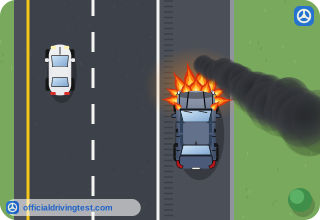
- Turn them all off
- Leave the hazard lights on only
- Turn them on to signal for help
- Leave them alone
Show answer
Correct answer: Turn them all off
The manual says to turn the ignition switch and all other electrical switches off.
Source: Hawaii Driver's Manual (2023), page 84 · Open this page in the manual (Manual page 84)
-
Why should all occupants get out of and away from a vehicle on fire?
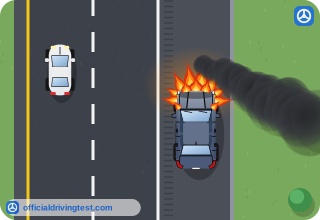
- The tires will quickly blow out from the heat
- The doors will lock automatically after a minute
- Poisonous fumes may rapidly fill the vehicle
- The horn will sound continuously
Show answer
Correct answer: Poisonous fumes may rapidly fill the vehicle
The manual says occupants should get out and clear off the roadway because poisonous fumes may rapidly fill the vehicle.
Source: Hawaii Driver's Manual (2023), page 84 · Open this page in the manual (Manual page 84)
-
What can you use to smother a small vehicle fire?
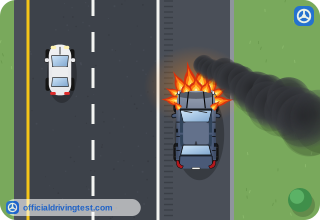
- Air blown in through the open hood and doors
- A fire extinguisher, dirt, sand or a blanket
- A tire jack or a flashlight
- Gasoline or oil
Show answer
Correct answer: A fire extinguisher, dirt, sand or a blanket
The manual lists a fire extinguisher, dirt, sand or a blanket for a small fire.
Source: Hawaii Driver's Manual (2023), page 84 · Open this page in the manual (Manual page 84)
-
On what types of fires should you NOT use water?
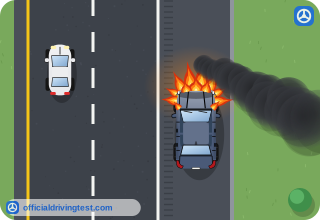
- Grass, paper or wood fires beside the road
- Tire fires only
- Fires in the trunk only
- Gasoline, oil or electrical fires
Show answer
Correct answer: Gasoline, oil or electrical fires
The manual warns not to use water on gasoline, oil or electrical fires.
Source: Hawaii Driver's Manual (2023), page 84 · Open this page in the manual (Manual page 84)
-
A large gasoline or oil fire develops in your vehicle. What should you do?
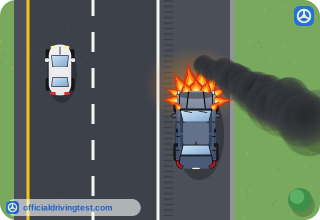
- Not try to put it out, and seek assistance
- Smother it with a blanket or dirt and sand
- Pour water on it
- Open the hood to let the smoke out
Show answer
Correct answer: Not try to put it out, and seek assistance
The manual says a large gasoline or oil fire might not be extinguishable, so don't try and seek assistance.
Source: Hawaii Driver's Manual (2023), page 84 · Open this page in the manual (Manual page 84)
-
Your vehicle has stalled in a hazardous position and cannot be moved, and no safe location can be reached by the occupants. What should the occupants do?
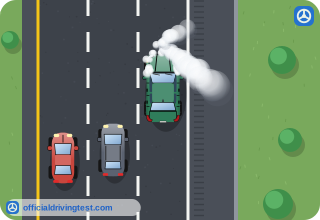
- Stand beside the vehicle
- Walk along the freeway for help
- Remain in the vehicle
- Sit on the shoulder in front of the vehicle
Show answer
Correct answer: Remain in the vehicle
The manual says in all other cases occupants should remain in the vehicle.
Source: Hawaii Driver's Manual (2023), page 84 · Open this page in the manual (Manual page 84)
-
Which items does the manual say should always be carried in your vehicle?
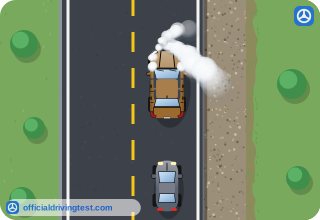
- A tow rope, a jack and a set of jumper cables
- Hazard warning lights, flares, reflectors and a flashlight
- A spare key, a map and a bottle of drinking water
- A shovel, a first-aid kit and a spare set of fuses
Show answer
Correct answer: Hazard warning lights, flares, reflectors and a flashlight
The manual lists hazard warning lights, flares, warning reflectors and a flashlight as items that should always be carried in your vehicle.
Source: Hawaii Driver's Manual (2023), page 84 · Open this page in the manual (Manual page 84)
-
A stranger offers help when your vehicle breaks down. What does the manual advise?
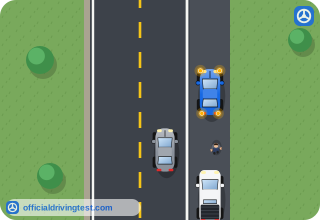
- Get out of the vehicle and let the person look at the engine
- Accept a ride to the nearest town
- Leave the doors open for easy access
- Remain locked inside until you are sure of the person's intentions
Show answer
Correct answer: Remain locked inside until you are sure of the person's intentions
The manual says to be cautious and, if in doubt, ask that the police be notified.
Source: Hawaii Driver's Manual (2023), page 84 · Open this page in the manual (Manual page 84)
-
What can you do to indicate that your broken-down vehicle needs assistance?
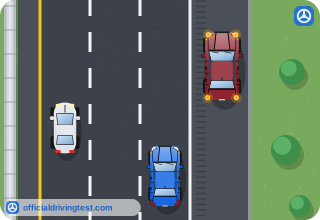
- Raise the hood of your vehicle
- Park across a traffic lane
- Turn on your high-beam headlights
- Stand in the roadway and wave
Show answer
Correct answer: Raise the hood of your vehicle
The manual says to indicate the need for assistance by raising the hood.
Source: Hawaii Driver's Manual (2023), page 84 · Open this page in the manual (Manual page 84)
-
What color cloth does the manual say to tie to the radio antenna or door handle to indicate you need assistance?
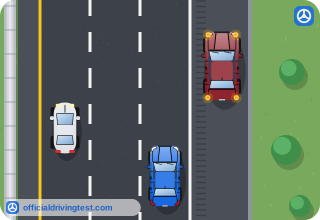
- Red
- Yellow
- White
- Orange
Show answer
Correct answer: White
The manual says to tie a white cloth to the radio antenna or the door handle.
Source: Hawaii Driver's Manual (2023), page 84 · Open this page in the manual (Manual page 84)
-
If you must leave your broken-down vehicle, what should you do?
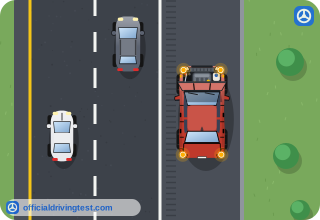
- Leave it unlocked so that police can move it away
- Lock it securely and return as soon as practicable
- Leave the engine running
- Leave the keys in the ignition
Show answer
Correct answer: Lock it securely and return as soon as practicable
The manual says to lock the vehicle securely and return as soon as practicable.
Source: Hawaii Driver's Manual (2023), page 84 · Open this page in the manual (Manual page 84)
-
If you must walk along the highway, how should you walk?
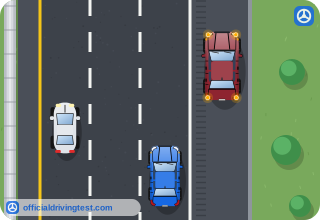
- With your back to traffic along the shoulder
- In the center of the lane
- Close to the edge of the pavement
- Facing traffic and well clear of the roadway
Show answer
Correct answer: Facing traffic and well clear of the roadway
The manual says to walk facing traffic and well clear of the roadway.
Source: Hawaii Driver's Manual (2023), page 84 · Open this page in the manual (Manual page 84)
-
If your vehicle breaks down on a freeway, what does the manual say about walking?
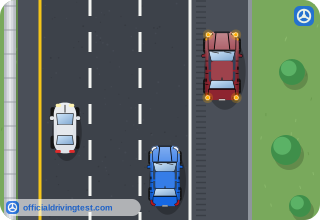
- Do not walk on freeways; stay with the vehicle
- Walk on the left shoulder to the next exit
- Walk along the right shoulder facing traffic
- Flag down a passing driver
Show answer
Correct answer: Do not walk on freeways; stay with the vehicle
The manual says not to walk on freeways but to stay with your vehicle until help arrives.
Source: Hawaii Driver's Manual (2023), page 84 · Open this page in the manual (Manual page 84)
-
What must drivers of large vehicles know about their required emergency equipment?
- What is required and how and when to use it
- Only where it is stored in the vehicle
- Only how often it must be replaced
- Only where it is sold
Show answer
Correct answer: What is required and how and when to use it
Drivers of these vehicles must know what equipment is required and how and when to use it.
Source: Hawaii Driver's Manual (2023), page 87 · Open this page in the manual (Manual page 87)
-
Which of these is listed as emergency equipment that most large vehicles are required to carry?
- A tow rope
- A spare windshield
- Emergency reflectors
- Tire chains
Show answer
Correct answer: Emergency reflectors
The manual lists fire extinguishers, flares, emergency reflectors and first aid kits.
Source: Hawaii Driver's Manual (2023), page 87 · Open this page in the manual (Manual page 87)