Hawaii: Emergencies — Part 1 Practice Test
Questions in this part include: “How must a traffic crash that causes personal injury to any extent be reported?” · “After a crash, what must drivers give to a person injured or to the driver of a damaged vehicle?”
Independent educational site · not affiliated with any government agency or DMV
Ready? Test yourself
- Instant feedback with an explanation
- Every answer cites its source in the manual
- Your best score is saved on this device
Questions are original and based on the official manual "Hawaii Driver's Manual" (2023), Hawaii Department of Transportation.
All 17 questions in this practice test
Take the test above first, then use this list to study. Tap “Show answer” to see the correct answer and explanation.
Show the questions and answersHide the questions
-
How must a traffic crash that causes personal injury to any extent be reported?
- To the police immediately, by the quickest means of communication
- To the county examiner of drivers by mail within 24 hours
- To the insurance company only, by the end of the next day
- To the police in writing within one week of the crash
Show answer
Correct answer: To the police immediately, by the quickest means of communication
Crashes with personal injury to any extent must be reported to the police immediately by the quickest means of communication.
Source: Hawaii Driver's Manual (2023), page 52 · Open this page in the manual (Manual page 52)
-
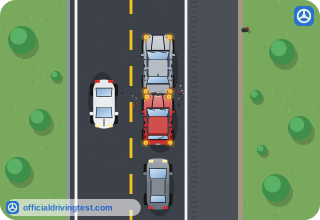
If you are involved in a crash, what must you do first?
- Drive to the nearest police station
- Call your insurance company
- Stop immediately
- Move your car to a nearby parking lot
Show answer
Correct answer: Stop immediately
The first step is to stop immediately, and if possible move your vehicle off the travelled portion of the roadway.
Source: Hawaii Driver's Manual (2023), page 52 · Open this page in the manual (Manual page 52)
-
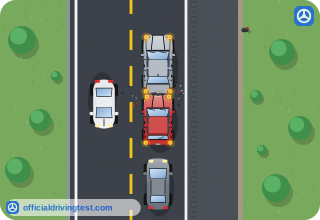
After you stop at a crash, where should you move your vehicle if it is possible?
- To the lane with the least traffic
- Off the travelled portion of the roadway
- Into the nearest intersection so others see it
- Onto the center of the road so others slow down
Show answer
Correct answer: Off the travelled portion of the roadway
The manual says to move your vehicle off the travelled portion of the roadway if possible.
Source: Hawaii Driver's Manual (2023), page 52 · Open this page in the manual (Manual page 52)
-
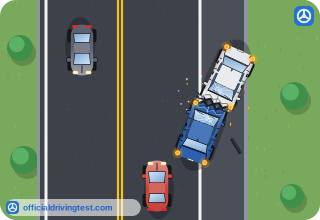
You may not leave the scene of a crash without doing what?
- Obtaining a written statement from a police officer
- Waiting for your insurance company to arrive
- Repairing any damage to the other vehicle
- Identifying yourself and rendering assistance
Show answer
Correct answer: Identifying yourself and rendering assistance
Do not leave the scene of a crash without identifying yourself and rendering assistance.
Source: Hawaii Driver's Manual (2023), page 52 · Open this page in the manual (Manual page 52)
-
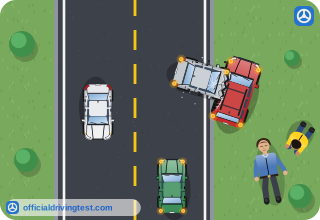
What does the manual say about moving an injured person at a crash scene?
- Move the injured away from the vehicles at once
- Sit the injured upright to help their breathing
- Do not move the injured unnecessarily
- Move the injured into your vehicle to keep warm
Show answer
Correct answer: Do not move the injured unnecessarily
Unskilled handling can make serious injuries out of minor ones, so do not move the injured unnecessarily.
Source: Hawaii Driver's Manual (2023), page 52 · Open this page in the manual (Manual page 52)
-
What should you do for an injured person until skilled help arrives?
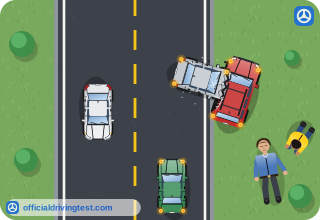
- Keep them warm
- Give them something to drink
- Have them walk around
- Cool them with wet cloths
Show answer
Correct answer: Keep them warm
The manual says to keep the injured warm until skilled help arrives.
Source: Hawaii Driver's Manual (2023), page 52 · Open this page in the manual (Manual page 52)
-
What should you do if an injured person has severe bleeding?
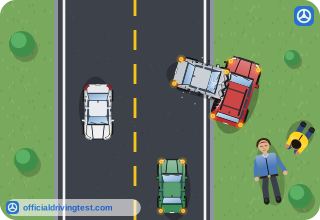
- Raise the person to a sitting position and wait
- Wrap the area loosely and drive the person to a hospital yourself
- Leave the wound alone until an ambulance arrives
- Attempt to stop the flow of blood with direct pressure
Show answer
Correct answer: Attempt to stop the flow of blood with direct pressure
With severe bleeding, you attempt to stop the flow of blood with direct pressure.
Source: Hawaii Driver's Manual (2023), page 52 · Open this page in the manual (Manual page 52)
-
At a crash scene, an injured victim should be protected from what?
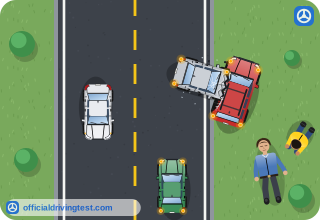
- Direct sunlight
- Oncoming traffic
- Curious bystanders
- Loud noises nearby
Show answer
Correct answer: Oncoming traffic
The manual says to protect the victim from the oncoming traffic.
Source: Hawaii Driver's Manual (2023), page 52 · Open this page in the manual (Manual page 52)
-
How can you help prevent further damage from oncoming traffic at a crash scene?
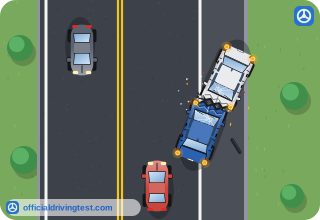
- Have someone warn approaching cars
- Turn off all lights on the vehicles
- Leave the damaged vehicles where they are and wait
- Block the road with the damaged vehicles
Show answer
Correct answer: Have someone warn approaching cars
Have someone warn approaching cars to prevent further damage from oncoming traffic.
Source: Hawaii Driver's Manual (2023), page 52 · Open this page in the manual (Manual page 52)
-
Which items does the manual say to keep in your vehicle for emergency use at a crash?
- A first-aid kit and a tire gauge
- A spare key and a tow rope
- A flashlight and flares
- A compass and a road map
Show answer
Correct answer: A flashlight and flares
The manual says to keep a flashlight and flares in your vehicle for emergency use.
Source: Hawaii Driver's Manual (2023), page 52 · Open this page in the manual (Manual page 52)
-
After a crash, what must drivers give to a person injured or to the driver of a damaged vehicle?
- Their name, insurance company and policy number only
- Their name, address, and vehicle registration information
- Their name, home telephone number and place of employment
- Their address and Social Security number only
Show answer
Correct answer: Their name, address, and vehicle registration information
Drivers must give their name, address, and vehicle registration information, and exhibit their driver's license if requested.
Source: Hawaii Driver's Manual (2023), page 52 · Open this page in the manual (Manual page 52)
-
What must you do if you strike an unattended vehicle?
- Drive on if no one is hurt, then report the crash to the police when you have time
- Stop and wait at the scene until a police officer arrives to deal with the owner
- Report the crash to your insurance company instead of notifying the owner of the vehicle
- Stop and locate the owner, or leave a written notice with your name, address and circumstances
Show answer
Correct answer: Stop and locate the owner, or leave a written notice with your name, address and circumstances
You must stop and locate the owner, or leave a written notice containing your name and address and the circumstances of the crash.
Source: Hawaii Driver's Manual (2023), page 52 · Open this page in the manual (Manual page 52)
-
If you damage other property along the highway in a crash, what must you do?
- Only call the police
- Repair it within seven days
- Notify the owner
- Leave your insurance card
Show answer
Correct answer: Notify the owner
The manual says that if you damage other property along the highway, you notify the owner.
Source: Hawaii Driver's Manual (2023), page 52 · Open this page in the manual (Manual page 52)
-
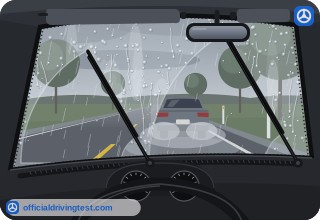
What should you do if rain is so heavy that you are unable to see clearly?
- Slow to a crawl and follow the taillights ahead
- Drive onto the road shoulder or other clear area and stop until the rain lets up
- Turn on the high beams and keep driving
- Stop in your lane and turn on the hazard warning signals until it passes
Show answer
Correct answer: Drive onto the road shoulder or other clear area and stop until the rain lets up
The manual says to drive onto the road shoulder or other clear area and stop until the rain lets up.
Source: Hawaii Driver's Manual (2023), page 76 · Open this page in the manual (Manual page 76)
-
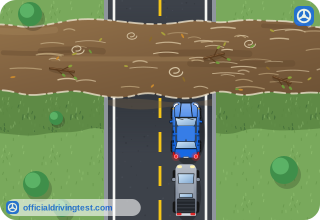
Never drive through a flooded area where water is moving swiftly and is deeper than how much?
- 18 inches (45 cm)
- Two feet (60 cm)
- One foot (30 cm)
- Three feet (90 cm)
Show answer
Correct answer: One foot (30 cm)
The manual says never to drive through a flooded area where water over one foot deep (30 cm) is moving swiftly, because it will sweep the vehicle off the road.
Source: Hawaii Driver's Manual (2023), page 76 · Open this page in the manual (Manual page 76)
-
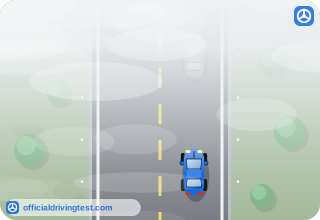
In fog, if you are unable to see at least how far ahead, should you pull completely off the pavement and stop?
- One car length (20 feet or 6 meters)
- Two car lengths (40 feet or 12 meters)
- Three car lengths (60 feet or 18 meters)
- Five car lengths (100 feet or 30 meters)
Show answer
Correct answer: Two car lengths (40 feet or 12 meters)
The manual says if you cannot see at least two car lengths (40 feet or 12 meters), pull completely off the pavement and stop.
Source: Hawaii Driver's Manual (2023), page 76 · Open this page in the manual (Manual page 76)
-
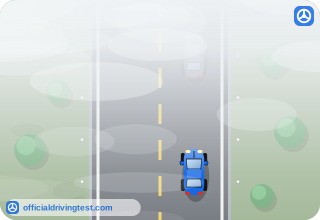
After you pull completely off the pavement and stop because fog is too thick to see, what should you turn on?
- The high beam head lamps
- The left turn signal only
- The hazard warning signals
- The windshield wipers only
Show answer
Correct answer: The hazard warning signals
The manual says to pull completely off the pavement, stop, and turn on the hazard warning signals.
Source: Hawaii Driver's Manual (2023), page 76 · Open this page in the manual (Manual page 76)