Hawaii: Emergencies — Part 5 Practice Test
Questions in this part include: “What must drivers of large vehicles know about their required emergency equipment?” · “Which of these is listed as emergency equipment that most large vehicles are required to carry?”
Independent educational site · not affiliated with any government agency or DMV
Ready? Test yourself
- Instant feedback with an explanation
- Every answer cites its source in the manual
- Your best score is saved on this device
Questions are original and based on the official manual "Hawaii Driver's Manual" (2023), Hawaii Department of Transportation.
All 16 questions in this practice test
Take the test above first, then use this list to study. Tap “Show answer” to see the correct answer and explanation.
Show the questions and answersHide the questions
-
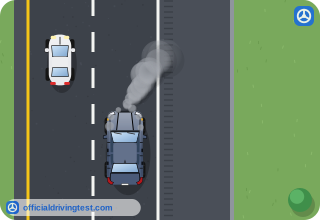
If a fire occurs or is suspected in your vehicle, what is the first action listed?
- Open the hood while driving
- Stop in the traffic lane to warn others
- Get out while the vehicle is moving
- Drive to a safe area clear of traffic and stop
Show answer
Correct answer: Drive to a safe area clear of traffic and stop
The manual lists driving to a safe area clear of traffic and stopping first.
Source: Hawaii Driver's Manual (2023), page 84 · Open this page in the manual (Manual page 84)
-
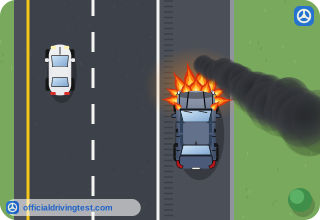
If your vehicle is on fire, what should you do with the ignition and other electrical switches?
- Turn them all off
- Leave the hazard lights on only
- Turn them on to signal for help
- Leave them alone
Show answer
Correct answer: Turn them all off
The manual says to turn the ignition switch and all other electrical switches off.
Source: Hawaii Driver's Manual (2023), page 84 · Open this page in the manual (Manual page 84)
-
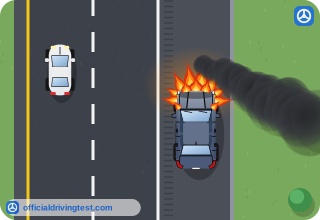
Why should all occupants get out of and away from a vehicle on fire?
- The tires will quickly blow out from the heat
- The doors will lock automatically after a minute
- Poisonous fumes may rapidly fill the vehicle
- The horn will sound continuously
Show answer
Correct answer: Poisonous fumes may rapidly fill the vehicle
The manual says occupants should get out and clear off the roadway because poisonous fumes may rapidly fill the vehicle.
Source: Hawaii Driver's Manual (2023), page 84 · Open this page in the manual (Manual page 84)
-
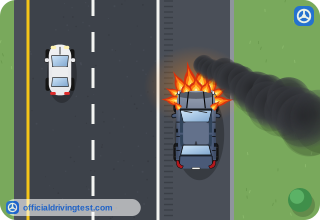
What can you use to smother a small vehicle fire?
- Air blown in through the open hood and doors
- A fire extinguisher, dirt, sand or a blanket
- A tire jack or a flashlight
- Gasoline or oil
Show answer
Correct answer: A fire extinguisher, dirt, sand or a blanket
The manual lists a fire extinguisher, dirt, sand or a blanket for a small fire.
Source: Hawaii Driver's Manual (2023), page 84 · Open this page in the manual (Manual page 84)
-
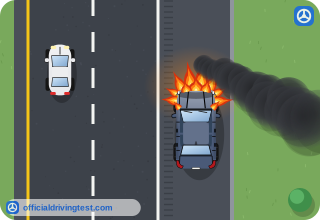
On what types of fires should you NOT use water?
- Grass, paper or wood fires beside the road
- Tire fires only
- Fires in the trunk only
- Gasoline, oil or electrical fires
Show answer
Correct answer: Gasoline, oil or electrical fires
The manual warns not to use water on gasoline, oil or electrical fires.
Source: Hawaii Driver's Manual (2023), page 84 · Open this page in the manual (Manual page 84)
-
A large gasoline or oil fire develops in your vehicle. What should you do?
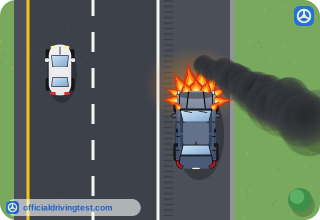
- Not try to put it out, and seek assistance
- Smother it with a blanket or dirt and sand
- Pour water on it
- Open the hood to let the smoke out
Show answer
Correct answer: Not try to put it out, and seek assistance
The manual says a large gasoline or oil fire might not be extinguishable, so don't try and seek assistance.
Source: Hawaii Driver's Manual (2023), page 84 · Open this page in the manual (Manual page 84)
-
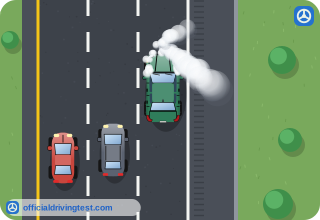
Your vehicle has stalled in a hazardous position and cannot be moved, and no safe location can be reached by the occupants. What should the occupants do?
- Stand beside the vehicle
- Walk along the freeway for help
- Remain in the vehicle
- Sit on the shoulder in front of the vehicle
Show answer
Correct answer: Remain in the vehicle
The manual says in all other cases occupants should remain in the vehicle.
Source: Hawaii Driver's Manual (2023), page 84 · Open this page in the manual (Manual page 84)
-
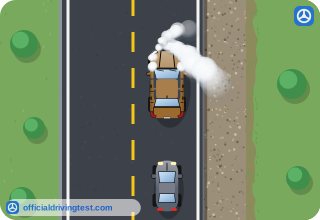
Which items does the manual say should always be carried in your vehicle?
- A tow rope, a jack and a set of jumper cables
- Hazard warning lights, flares, reflectors and a flashlight
- A spare key, a map and a bottle of drinking water
- A shovel, a first-aid kit and a spare set of fuses
Show answer
Correct answer: Hazard warning lights, flares, reflectors and a flashlight
The manual lists hazard warning lights, flares, warning reflectors and a flashlight as items that should always be carried in your vehicle.
Source: Hawaii Driver's Manual (2023), page 84 · Open this page in the manual (Manual page 84)
-
A stranger offers help when your vehicle breaks down. What does the manual advise?
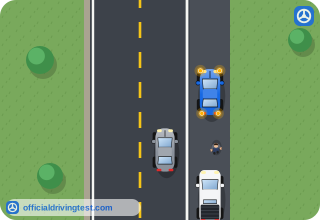
- Get out of the vehicle and let the person look at the engine
- Accept a ride to the nearest town
- Leave the doors open for easy access
- Remain locked inside until you are sure of the person's intentions
Show answer
Correct answer: Remain locked inside until you are sure of the person's intentions
The manual says to be cautious and, if in doubt, ask that the police be notified.
Source: Hawaii Driver's Manual (2023), page 84 · Open this page in the manual (Manual page 84)
-
What can you do to indicate that your broken-down vehicle needs assistance?
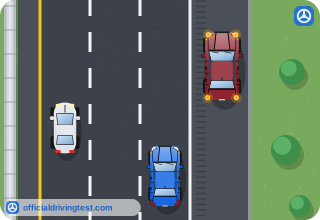
- Raise the hood of your vehicle
- Park across a traffic lane
- Turn on your high-beam headlights
- Stand in the roadway and wave
Show answer
Correct answer: Raise the hood of your vehicle
The manual says to indicate the need for assistance by raising the hood.
Source: Hawaii Driver's Manual (2023), page 84 · Open this page in the manual (Manual page 84)
-
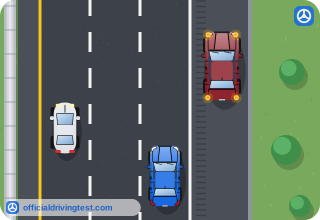
What color cloth does the manual say to tie to the radio antenna or door handle to indicate you need assistance?
- Red
- Yellow
- White
- Orange
Show answer
Correct answer: White
The manual says to tie a white cloth to the radio antenna or the door handle.
Source: Hawaii Driver's Manual (2023), page 84 · Open this page in the manual (Manual page 84)
-
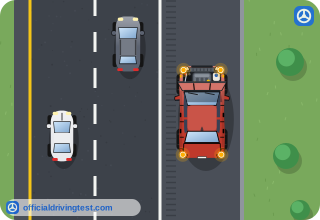
If you must leave your broken-down vehicle, what should you do?
- Leave it unlocked so that police can move it away
- Lock it securely and return as soon as practicable
- Leave the engine running
- Leave the keys in the ignition
Show answer
Correct answer: Lock it securely and return as soon as practicable
The manual says to lock the vehicle securely and return as soon as practicable.
Source: Hawaii Driver's Manual (2023), page 84 · Open this page in the manual (Manual page 84)
-
If you must walk along the highway, how should you walk?
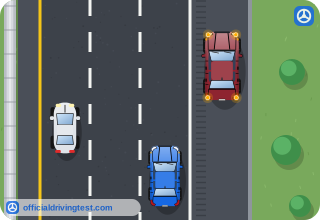
- With your back to traffic along the shoulder
- In the center of the lane
- Close to the edge of the pavement
- Facing traffic and well clear of the roadway
Show answer
Correct answer: Facing traffic and well clear of the roadway
The manual says to walk facing traffic and well clear of the roadway.
Source: Hawaii Driver's Manual (2023), page 84 · Open this page in the manual (Manual page 84)
-
If your vehicle breaks down on a freeway, what does the manual say about walking?
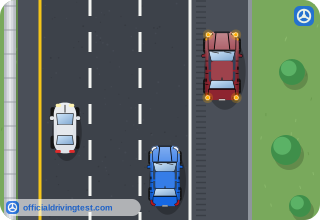
- Do not walk on freeways; stay with the vehicle
- Walk on the left shoulder to the next exit
- Walk along the right shoulder facing traffic
- Flag down a passing driver
Show answer
Correct answer: Do not walk on freeways; stay with the vehicle
The manual says not to walk on freeways but to stay with your vehicle until help arrives.
Source: Hawaii Driver's Manual (2023), page 84 · Open this page in the manual (Manual page 84)
-
What must drivers of large vehicles know about their required emergency equipment?
- What is required and how and when to use it
- Only where it is stored in the vehicle
- Only how often it must be replaced
- Only where it is sold
Show answer
Correct answer: What is required and how and when to use it
Drivers of these vehicles must know what equipment is required and how and when to use it.
Source: Hawaii Driver's Manual (2023), page 87 · Open this page in the manual (Manual page 87)
-
Which of these is listed as emergency equipment that most large vehicles are required to carry?
- A tow rope
- A spare windshield
- Emergency reflectors
- Tire chains
Show answer
Correct answer: Emergency reflectors
The manual lists fire extinguishers, flares, emergency reflectors and first aid kits.
Source: Hawaii Driver's Manual (2023), page 87 · Open this page in the manual (Manual page 87)