Hawaii: Emergencies — Part 3 Practice Test
Questions in this part include: “If your power steering partly fails, what will you have to do to control the direction of the vehicle?” · “If your steering fails completely, what should you do first?”
Independent educational site · not affiliated with any government agency or DMV
Ready? Test yourself
- Instant feedback with an explanation
- Every answer cites its source in the manual
- Your best score is saved on this device
Questions are original and based on the official manual "Hawaii Driver's Manual" (2023), Hawaii Department of Transportation.
All 16 questions in this practice test
Take the test above first, then use this list to study. Tap “Show answer” to see the correct answer and explanation.
Show the questions and answersHide the questions
-
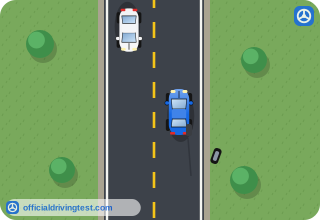
Once your vehicle has stopped after losing a wheel, what is true?
- You can drive it slowly to a repair shop
- You can replace the wheel with the spare and continue
- You will be unable to move the vehicle and it must be towed
- You can move it off the road in low gear
Show answer
Correct answer: You will be unable to move the vehicle and it must be towed
The manual says that once stopped you will be unable to move the vehicle and it must be towed.
Source: Hawaii Driver's Manual (2023), page 81 · Open this page in the manual (Manual page 81)
-
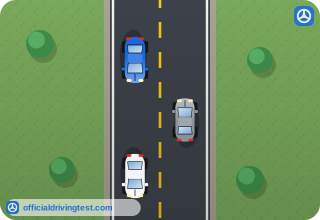
How is a partial brake failure indicated?
- By a loud squealing noise from the wheels
- By a warning light on the instrument panel
- By a vibrating steering wheel at any speed
- By a burning smell inside the vehicle
Show answer
Correct answer: By a warning light on the instrument panel
The manual says a partial failure reduces braking ability and is indicated by a warning light on the instrument panel.
Source: Hawaii Driver's Manual (2023), page 81 · Open this page in the manual (Manual page 81)
-
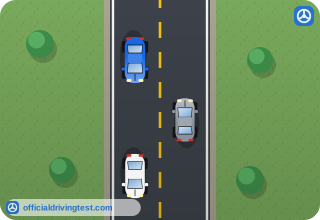
If your brakes fail completely, what should you do first?
- Apply the parking brake with great force
- Turn the ignition switch to lock
- Steer onto the shoulder at full speed
- Pump the brake pedal quickly
Show answer
Correct answer: Pump the brake pedal quickly
The manual lists pumping the brake pedal quickly as the first step when the brakes fail completely.
Source: Hawaii Driver's Manual (2023), page 81 · Open this page in the manual (Manual page 81)
-
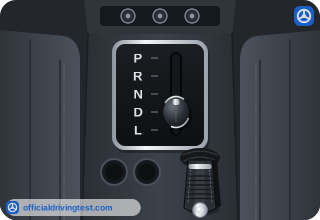
After pumping the pedal when your brakes fail completely, what should you do next?
- Shift to a lower gear
- Shift to a higher gear
- Shift into neutral and coast
- Turn off the headlights
Show answer
Correct answer: Shift to a lower gear
The manual says to pump the brake pedal quickly and then shift to a lower gear.
Source: Hawaii Driver's Manual (2023), page 81 · Open this page in the manual (Manual page 81)
-
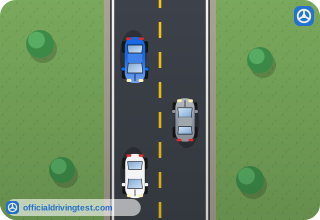
If your brakes fail completely, what should you look for?
- A steep uphill road that will slow the vehicle
- A long line of parked cars to slow the vehicle
- An escape route such as a side road or flat open area
- A concrete barrier to scrape the side against
Show answer
Correct answer: An escape route such as a side road or flat open area
The manual says to look for an escape route (a side road or a flat open area) and use lights and horn to warn others.
Source: Hawaii Driver's Manual (2023), page 81 · Open this page in the manual (Manual page 81)
-
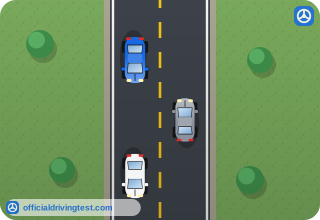
If your brakes fail completely, how should you use the parking brake?
- Apply it rapidly and with great force at once
- Apply it gradually to bring the vehicle to a stop
- Apply it only after the vehicle has fully stopped
- Do not use the parking brake at any time
Show answer
Correct answer: Apply it gradually to bring the vehicle to a stop
The manual warns that applying the parking brake rapidly or with great force may cause you to lose control.
Source: Hawaii Driver's Manual (2023), page 81 · Open this page in the manual (Manual page 81)
-
If your power steering partly fails, what will you have to do to control the direction of the vehicle?
- Release pressure on the steering wheel
- Shift to a lower gear
- Turn the ignition off
- Exert greater effort on the steering wheel
Show answer
Correct answer: Exert greater effort on the steering wheel
The manual says a partial loss of power steering means you must exert greater effort on the wheel.
Source: Hawaii Driver's Manual (2023), page 81 · Open this page in the manual (Manual page 81)
-
If your steering fails completely, what should you do first?
- Slowly reduce speed
- Accelerate to straighten the vehicle
- Turn the ignition switch off
- Apply the parking brake with great force
Show answer
Correct answer: Slowly reduce speed
The manual says to slowly reduce speed and apply brakes as necessary to stop smoothly.
Source: Hawaii Driver's Manual (2023), page 82 · Open this page in the manual (Manual page 82)
-
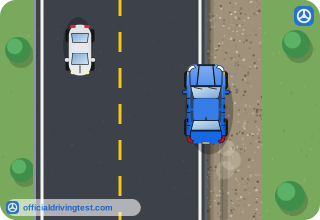
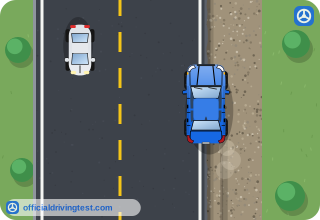
If your vehicle slips off the edge of the pavement, what should you NOT do?
- Reduce your speed
- Use the brakes gently
- Jerk the steering wheel to force it back onto the pavement
- Continue to drive with the wheels off the pavement
Show answer
Correct answer: Jerk the steering wheel to force it back onto the pavement
The manual warns against forcing the vehicle back onto the pavement by jerking the steering wheel.
Source: Hawaii Driver's Manual (2023), page 82 · Open this page in the manual (Manual page 82)
-
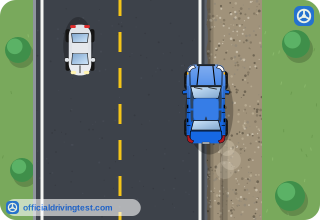
When should you turn the steering wheel to return to the pavement after your wheels drop off the edge?
- As soon as the wheels leave the pavement
- When you are at a safe speed
- Only after the vehicle has stopped
- When you have accelerated past the gravel
Show answer
Correct answer: When you are at a safe speed
The manual says to turn back onto the pavement at a safe speed, ready to adjust to stay in your lane.
Source: Hawaii Driver's Manual (2023), page 82 · Open this page in the manual (Manual page 82)
-
What does the manual say about using the brakes when your wheels are off the pavement?
- Use them firmly to stop at once
- Do not use them at all
- Pump them quickly
- Use them gently
Show answer
Correct answer: Use them gently
The manual says to reduce speed and use the brakes gently while the wheels are off the pavement.
Source: Hawaii Driver's Manual (2023), page 82 · Open this page in the manual (Manual page 82)
-
Another vehicle is trying to pass you but cannot finish because of oncoming traffic. What can you do to help avoid a collision?
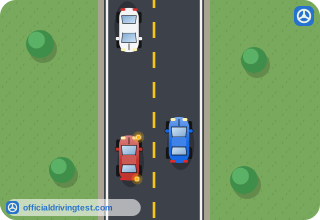
- Steer as far right as is safe, even onto the shoulder
- Steer toward the center line to give more room
- Speed up so the other driver stays behind you
- Stop in your lane and turn off your lights
Show answer
Correct answer: Steer as far right as is safe, even onto the shoulder
The manual says to steer as far to the right as is safe, even onto the shoulder if possible.
Source: Hawaii Driver's Manual (2023), page 82 · Open this page in the manual (Manual page 82)
-
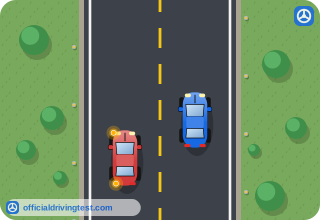
A passing vehicle continues its attempt to pass you. What should you do?
- Accelerate so that it cannot get ahead of you
- Move into the left lane to block the passing vehicle
- Slow down so the passing vehicle can move ahead of you
- Brake hard and stop in the middle of the lane
Show answer
Correct answer: Slow down so the passing vehicle can move ahead of you
The manual says to slow down so the passing vehicle can move into the lane ahead.
Source: Hawaii Driver's Manual (2023), page 82 · Open this page in the manual (Manual page 82)
-
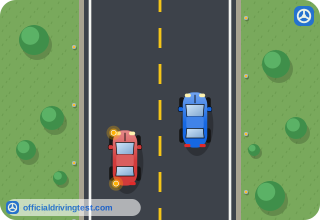
A passing vehicle appears to be slowing to return to the lane behind you. What should you do?
- Steer toward the center line to block it
- Accelerate so it can return to the lane behind you
- Move onto the shoulder and stop your vehicle completely
- Move into the left lane and stay beside it
Show answer
Correct answer: Accelerate so it can return to the lane behind you
The manual says to accelerate so the passing vehicle can return to the lane in the rear.
Source: Hawaii Driver's Manual (2023), page 82 · Open this page in the manual (Manual page 82)
-
Before you change your speed to help a vehicle that is trying to pass, what must you be certain of?
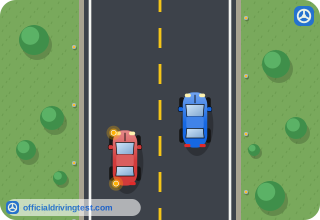
- The speed limit on that road
- The distance to the next intersection
- That no vehicles are behind you
- The intentions of the passing driver
Show answer
Correct answer: The intentions of the passing driver
The manual says to be certain of the passing driver's intentions before you change speed.
Source: Hawaii Driver's Manual (2023), page 82 · Open this page in the manual (Manual page 82)
-
What should you do first when you see an oncoming vehicle in your traffic lane?
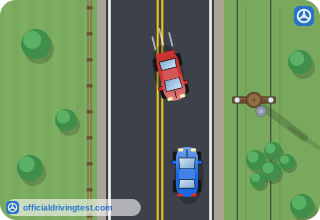
- Flash your lights and honk the horn
- Steer into the oncoming traffic lane
- Stop in the lane and wait
- Turn off your headlights
Show answer
Correct answer: Flash your lights and honk the horn
The manual says to flash your lights and honk the horn, then slow quickly and steer to the right.
Source: Hawaii Driver's Manual (2023), page 82 · Open this page in the manual (Manual page 82)