Traffic signals in Delaware
The Delaware Driver Manual shows or names everything on this page: 27 in all, on pages 69–74, 78.
Independent educational site · not affiliated with any government agency or DMV
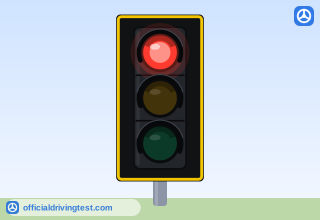
Steady Red Light
Stop. You must stop at the stop line, before the crosswalk, or before entering the intersection should no stop line or crosswalk be present. Right turns on red are permissible after full stop, except when prohibited by a posted sign or a steady red arrow is displayed. Left turns on red are permissible after full stop from a one-way street to another one-way street unless prohibited by a posted sign or a steady red arrow is displayed. Make turns with caution, when safe to do so.
Manual page 69 · Open this page in the manual (Manual page 69)
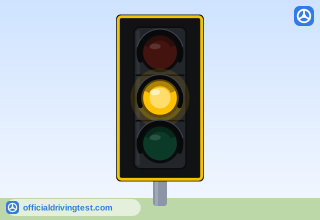
Steady Yellow Light
This means that the signal is changing from green to red; prepare to stop. If you are too close to stop safely, continue through the intersection with care.
Manual page 70 · Open this page in the manual (Manual page 70)
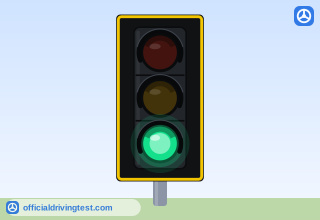
Steady Green Light
Proceed with caution. When it is safe to proceed, you may enter the intersection to go straight ahead or turn unless a sign or additional signal prohibits the turn. You must yield to pedestrians and vehicles already in the intersection or adjacent crosswalk. When you turn, you must be especially careful of pedestrians and oncoming traffic.
Manual page 70 · Open this page in the manual (Manual page 70)
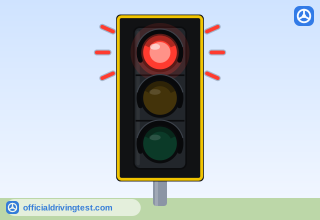
Flashing Red Light
Flashing red light means the same as a stop sign. You must come to a complete stop. Proceed only when safe.
Manual page 70 · Open this page in the manual (Manual page 70)
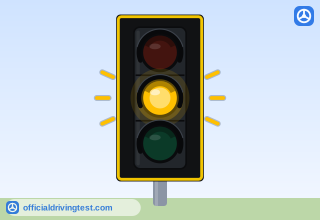
Flashing Yellow Light
Flashing yellow light means slow down, be more aware, and proceed with caution. Be careful of crossing intersection traffic, controlled by a flashing red.
Manual page 70 · Open this page in the manual (Manual page 70)
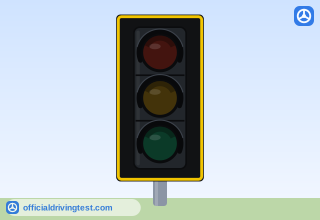
Dark Traffic Signal
In the event that traffic signals are in place and no lighted indication is visible to an approaching driver, the approaching driver shall reduce speed and prepare to yield to other vehicles that are in or approaching the intersection.
Manual page 70 · Open this page in the manual (Manual page 70)
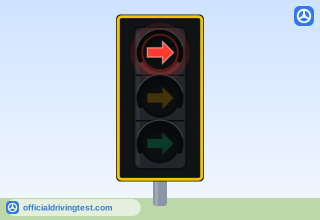
Steady Red Arrow
A full stop is required when a steady red arrow is displayed. You may not proceed in the direction of a steady red.
Manual page 71 · Open this page in the manual (Manual page 71)
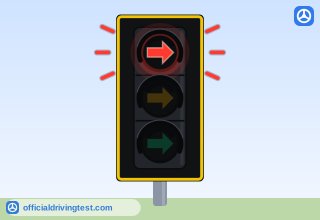
Flashing Red Arrow
Turns are permitted in the direction of a flashing red arrow after coming to a full stop. The full stop enables drivers to select a safe gap in the main flow of traffic, and then complete the turn without waiting for a green signal. Signal may be followed by a steady red arrow, steady yellow arrow or solid red ball.
Manual page 71 · Open this page in the manual (Manual page 71)
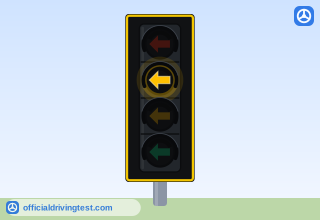
Steady Yellow Arrow
A green arrow display has ended. If you are too close to stop safely, continue thru the intersection with care.
Manual page 71 · Open this page in the manual (Manual page 71)
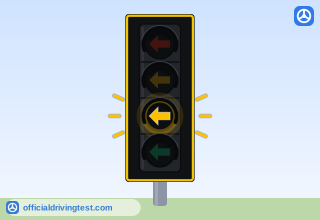
Flashing Yellow Arrow
The movement in the indicated direction is permitted after yielding to opposing traffic and pedestrians.
Manual page 71 · Open this page in the manual (Manual page 71)
Steady Green Arrow
Proceed with caution in the direction the arrow points. Remember that you must yield to all pedestrians and vehicles already lawfully in the intersection.
Manual page 71 · Open this page in the manual (Manual page 71)
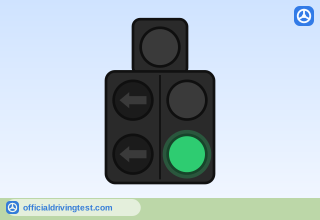
Five-Section Signal: Green Ball
Thru traffic and, if not otherwise prohibited, left and right turns may proceed when safe. Exercise special care when making turns, especially left turns across oncoming opposite traffic.
Manual page 72 · Open this page in the manual (Manual page 72)
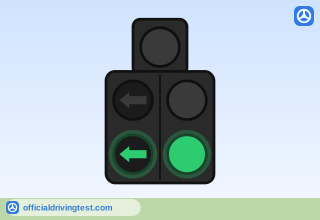
Five-Section Signal: Green Arrow and Green Ball
Left turns and thru traffic and, if not otherwise prohibited, right turns may proceed, when safe.
Manual page 72 · Open this page in the manual (Manual page 72)
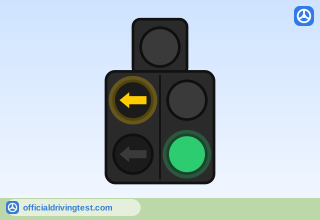
Five-Section Signal: Yellow Arrow and Green Ball
This is the change interval between the two displays above. It means that the green arrow interval has ended. If you are too close to the intersection to stop safely, complete your turn with care.
Manual page 72 · Open this page in the manual (Manual page 72)
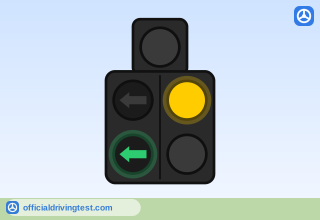
Five-Section Signal: Yellow Ball and Green Arrow
Here the green light for the thru and right turn has ended, but the left turn continues to be green. Continue left turning if safe. Straight thru and right- turning traffic should prepare to stop. If unable to stop, proceed with great caution.
Manual page 72 · Open this page in the manual (Manual page 72)
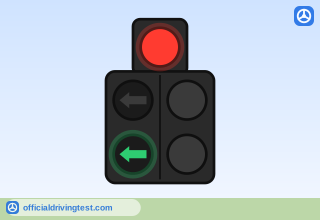
Five-Section Signal: Red Ball and Green Arrow
Left turns may proceed, if safe, but all others must stop. Right-turning traffic may turn after stopping, if safe and not otherwise prohibited.
Manual page 72 · Open this page in the manual (Manual page 72)
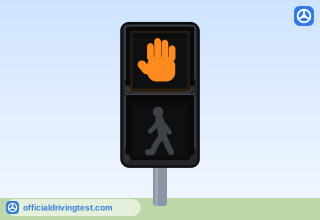
STEADY / DON'T CROSS
The steady DON'T WALK signal means that the pedestrian should not start to cross the street at all.
Manual page 72 · Open this page in the manual (Manual page 72)
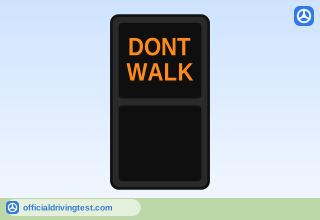
DONT WALK
The flashing DON'T WALK signal means that if the pedestrian has started to cross the street, they should finish crossing as rapidly as possible. If they have not started to cross, they should not start. The steady DON'T WALK signal means that the pedestrian should not start to cross the street at all.
Manual page 72 · Open this page in the manual (Manual page 72)
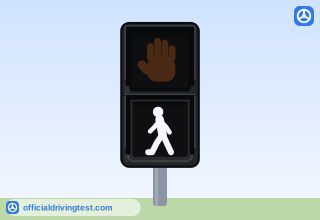
START CROSSING
The WALK signal means the pedestrian may proceed but needs to be alert for vehicles turning right or left across the crosswalk. Drivers are required to yield to pedestrians who have a "WALK" indicator.
Manual page 72 · Open this page in the manual (Manual page 72)
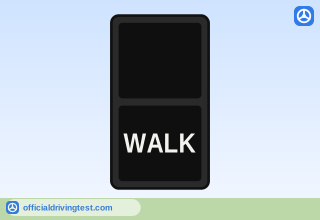
WALK
The WALK signal means the pedestrian may proceed but needs to be alert for vehicles turning right or left across the crosswalk. Drivers are required to yield to pedestrians who have a "WALK" indicator.
Manual page 72 · Open this page in the manual (Manual page 72)
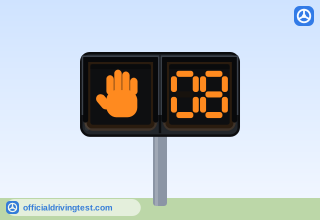
FLASHING TIMER
DON'T START Finish Crossing If Started; TIME REMAINING To Finish Crossing
Manual page 73 · Open this page in the manual (Manual page 73)
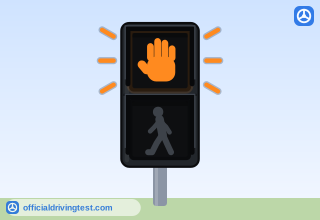
FLASHING / DON'T START
DON'T START Finish Crossing If Started
Manual page 73 · Open this page in the manual (Manual page 73)
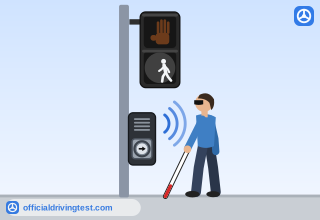
Accessible Pedestrian Signal (APS)
An Accessible Pedestrian Signal (APS) is a device that is used in conjunction with pedestrian signals that communicate pedestrian signal information in non-visual formats such as audible tones, verbal messages, and/or vibrating surfaces. APS lets pedestrians who are blind or visually impaired know when the WALK interval begins and terminates.
Manual page 73 · Open this page in the manual (Manual page 73)
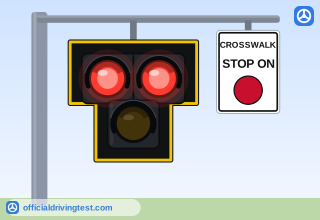
High Intensity Activated Crosswalk (HAWK)
The HAWK signal is activated when a pedestrian presses the crosswalk button, much like they do at a regular crosswalk, which will activate the signal. Once it is activated, the signal will go through a series of stages that will stop traffic long enough for pedestrians to safely cross the roadway. Traffic will then be allowed to proceed and the signal will reset itself until activated again.
Manual page 73 · Open this page in the manual (Manual page 73)
Rectangular Rapid Flashing Beacon
They flash more rapidly and in a "stutter" pattern, as opposed to the regular flash rate of most beacons. As a motorist, when you see these beacons flashing, slow down, look for pedestrians and bicyclists, and yield as necessary.
Manual page 73 · Open this page in the manual (Manual page 73)
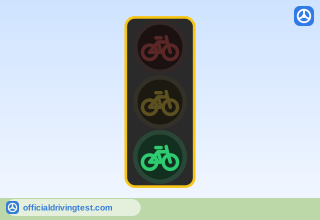
Bicycle Signal
Alternately, there are bicycle signal indicators that have the shape of a bicycle. These signals have the same meaning as circular signal indicators, but are only applicable to bicyclists in designated bicycle lanes or paths.
Manual page 74 · Open this page in the manual (Manual page 74)
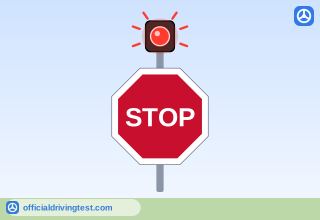
STOP with Red Beacons
Sometimes signs are supplemented with circular flashing beacons to better grab motorists' attention, to emphasize the critical nature of the message being conveyed by the sign, or to indicate when the associated signs message is applicable. The beacons supplementing warning signs and speed limit signs are yellow. Those supplementing Stop and Do Not Enter signs are red. These beacons, whether yellow or red, and whether on continuously or only intermittently, flash in a regular pattern, approximately once per second.
Manual page 78 · Open this page in the manual (Manual page 78)