Delaware: Traffic signals
Red, yellow and green lights, arrows, flashing signals, pedestrian signals, HAWK and rapid flashing beacons. Split into 2 shorter tests so you're not stuck in one long quiz.
Independent educational site · not affiliated with any government agency or DMV
All 42 Traffic signals questions with answers
Choose a part above to take a practice test, or study every question and answer here.
Show the questions and answersHide the questions
-
In the signal part of the sign and signal test, a red light is associated with which instruction?
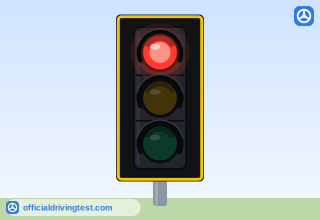
- Prepare to stop
- Proceed with caution
- Stop
- Yield to pedestrians only
Show answer
Correct answer: Stop
The manual’s example of colored signals labels red as Stop.
Source: Delaware Driver Manual (July 2026), page 41 · Open this page in the manual (Manual page 41)
-
In the signal part of the sign and signal test, a yellow light is associated with which instruction?
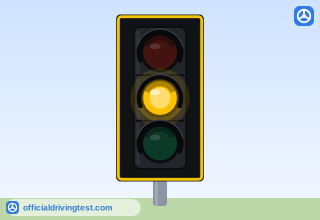
- Prepare to stop
- Stop
- Proceed with caution
- Yield to pedestrians only
Show answer
Correct answer: Prepare to stop
The manual’s example of colored signals labels yellow as Prepare to stop.
Source: Delaware Driver Manual (July 2026), page 41 · Open this page in the manual (Manual page 41)
-
In the signal part of the sign and signal test, a green light is associated with which instruction?
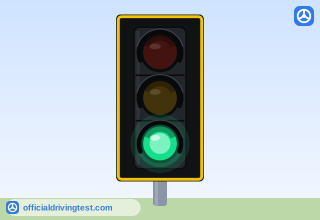
- Stop
- Prepare to stop
- Speed up
- Proceed with caution
Show answer
Correct answer: Proceed with caution
The manual’s example of colored signals labels green as Proceed with caution.
Source: Delaware Driver Manual (July 2026), page 41 · Open this page in the manual (Manual page 41)
-
Traffic signals and signs apply to which of these people?
- Only people driving motor vehicles
- Anyone walking, driving, or riding a bike
- Only drivers and motorcycle riders
- Only people driving cars and trucks on highways
Show answer
Correct answer: Anyone walking, driving, or riding a bike
The manual says signals and signs apply to every person walking, driving, or riding a bike on a street or highway.
Source: Delaware Driver Manual (July 2026), page 69 · Open this page in the manual (Manual page 69)
-
What does the manual call a major cause of crashes?
- Driving with the headlights on in daytime
- Stopping at a stop line before the crosswalk
- Yielding the right-of-way to other drivers
- Failing to heed a signal’s or sign’s message
Show answer
Correct answer: Failing to heed a signal’s or sign’s message
The manual names failing to heed a signal’s or sign’s message as a major cause of crashes.
Source: Delaware Driver Manual (July 2026), page 69 · Open this page in the manual (Manual page 69)
-
How are citations sent to drivers caught by Delaware’s Red Light Reinforcement Program?
- Automatically through the U.S. Postal Service
- By a police officer at the roadside
- By e-mail within one hour of the violation
- Delivered in person by a DMV employee
Show answer
Correct answer: Automatically through the U.S. Postal Service
The manual says citations are automatically sent via the U.S. Postal Service after the driver and tag are recorded.
Source: Delaware Driver Manual (July 2026), page 69 · Open this page in the manual (Manual page 69)
-
What does Delaware’s Red Light Reinforcement Program monitor busy intersections for?
- Vehicles with expired registration only
- Pedestrians crossing outside the crosswalk
- Motorists who disobey traffic laws
- Traffic jams at peak hours
Show answer
Correct answer: Motorists who disobey traffic laws
The program is described as a way of monitoring busy intersections for motorists who disobey traffic laws.
Source: Delaware Driver Manual (July 2026), page 69 · Open this page in the manual (Manual page 69)
-
The manual teaches four simple rules for traffic signals. What does the yellow signal mean in these rules?
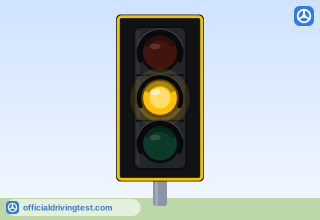
- Proceed with caution
- Prepare to stop
- Stop
- Speed up and clear the intersection
Show answer
Correct answer: Prepare to stop
The four rules list YELLOW as prepare to stop.
Source: Delaware Driver Manual (July 2026), page 69 · Open this page in the manual (Manual page 69)
-
In the manual’s four rules for understanding traffic signals, what does a green signal mean?
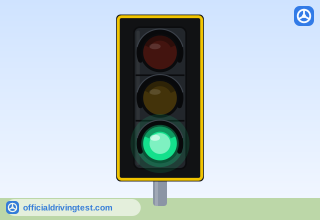
- Proceed at full speed
- Prepare to stop
- Yield to all traffic before moving
- Proceed with caution
Show answer
Correct answer: Proceed with caution
The four rules list GREEN as proceed with caution.
Source: Delaware Driver Manual (July 2026), page 69 · Open this page in the manual (Manual page 69)
-
In the manual’s four rules, to which directions do arrow signals apply?
- Only the direction indicated
- All directions, like round lenses
- Both the direction shown and straight ahead
- Only the direction opposite the arrow
Show answer
Correct answer: Only the direction indicated
The fourth rule states that arrows apply to only the direction indicated.
Source: Delaware Driver Manual (July 2026), page 69 · Open this page in the manual (Manual page 69)
-
At a steady red light with no stop line or crosswalk, where must you stop?
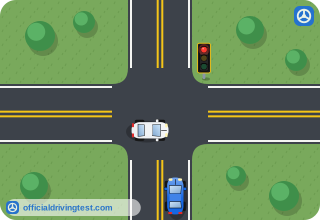
- At the middle of the intersection
- Before entering the intersection
- After you have entered the intersection
- At the far side of the intersection
Show answer
Correct answer: Before entering the intersection
Where there is no stop line or crosswalk, the manual says to stop before entering the intersection.
Source: Delaware Driver Manual (July 2026), page 69 · Open this page in the manual (Manual page 69)
-
What does a steady yellow light mean?
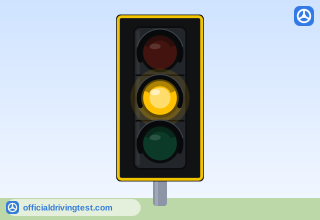
- The signal is changing from red to green
- You must stop immediately in all cases
- The signal is changing from green to red
- You may speed up to clear the intersection
Show answer
Correct answer: The signal is changing from green to red
The manual says a steady yellow light means the signal is changing from green to red; prepare to stop.
Source: Delaware Driver Manual (July 2026), page 70 · Open this page in the manual (Manual page 70)
-
What should you do if the light turns steady yellow and you are too close to stop safely?
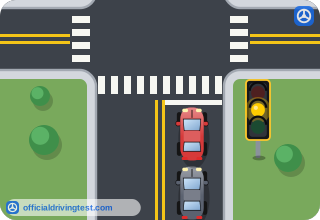
- Stop suddenly in the middle of the intersection
- Continue through the intersection with care
- Back up behind the stop line
- Turn around at the crosswalk
Show answer
Correct answer: Continue through the intersection with care
The manual says that if you are too close to stop safely, continue through the intersection with care.
Source: Delaware Driver Manual (July 2026), page 70 · Open this page in the manual (Manual page 70)
-
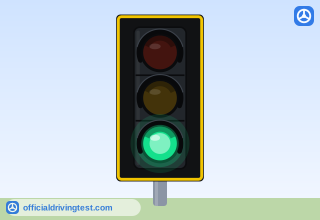
At a steady green light, whom must you yield to?
- Only vehicles approaching from the right
- Only vehicles that are turning left
- Nobody, because a green light gives you the right-of-way
- Pedestrians and vehicles already in the intersection
Show answer
Correct answer: Pedestrians and vehicles already in the intersection
The manual says you must yield to pedestrians and vehicles already in the intersection or adjacent crosswalk.
Source: Delaware Driver Manual (July 2026), page 70 · Open this page in the manual (Manual page 70)
-
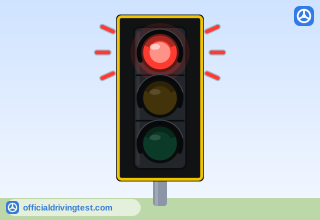
What does a flashing red light mean?
- Slow down and proceed without stopping
- The signal is about to turn green
- Stop completely, as at a stop sign
- Stop only if other vehicles are approaching
Show answer
Correct answer: Stop completely, as at a stop sign
The manual says a flashing red light means the same as a stop sign; you must come to a complete stop and proceed only when safe.
Source: Delaware Driver Manual (July 2026), page 70 · Open this page in the manual (Manual page 70)
-
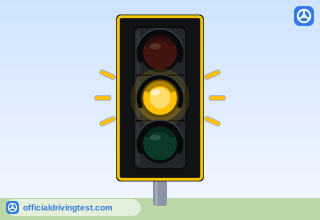
What does a flashing yellow light mean?
- Come to a complete stop and wait for a green light
- Slow down, be more aware, and proceed with caution
- The signal is about to turn red
- Stop and yield to all cross traffic
Show answer
Correct answer: Slow down, be more aware, and proceed with caution
The manual says a flashing yellow light means slow down, be more aware, and proceed with caution.
Source: Delaware Driver Manual (July 2026), page 70 · Open this page in the manual (Manual page 70)
-
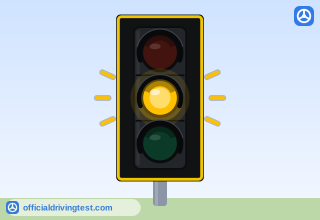
When you approach a flashing yellow light, you should be careful of what?
- Oncoming traffic that is controlled by a steady green light
- Pedestrians who have a steady DON’T WALK signal
- Vehicles stopped behind you
- Crossing intersection traffic controlled by a flashing red
Show answer
Correct answer: Crossing intersection traffic controlled by a flashing red
The manual warns to be careful of crossing intersection traffic controlled by a flashing red.
Source: Delaware Driver Manual (July 2026), page 70 · Open this page in the manual (Manual page 70)
-
What must you do when traffic signals are in place but no lighted indication is visible?
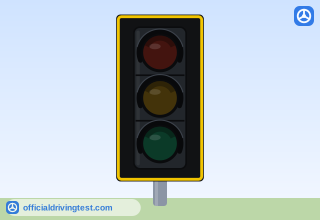
- Reduce speed and prepare to yield to vehicles in or approaching the intersection
- Treat the intersection as having no traffic control and keep your speed
- Wait for an officer before entering the intersection
- Stop and wait until the lights come back on
Show answer
Correct answer: Reduce speed and prepare to yield to vehicles in or approaching the intersection
The manual says a driver approaching a dark signal shall reduce speed and prepare to yield to other vehicles in or approaching the intersection.
Source: Delaware Driver Manual (July 2026), page 70 · Open this page in the manual (Manual page 70)
-
What is the difference between round color lenses and arrows?
- Arrows apply to all directions, while round lenses apply to one direction
- Arrows apply only to pedestrians, while round lenses apply to vehicles
- Arrows apply only to a specific direction, while round lenses apply to all directions
- Round lenses apply only to turns, while arrows apply only to going straight
Show answer
Correct answer: Arrows apply only to a specific direction, while round lenses apply to all directions
The manual says arrows apply only to a specific direction, while round lenses apply to all directions.
Source: Delaware Driver Manual (July 2026), page 71 · Open this page in the manual (Manual page 71)
-
What is required when a steady red arrow is displayed?
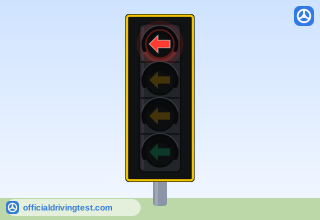
- A full stop, after which you may proceed in the arrow’s direction
- A full stop, and you may not proceed in the direction of the arrow
- Slowing down and yielding to oncoming traffic
- Stopping only if pedestrians are present
Show answer
Correct answer: A full stop, and you may not proceed in the direction of the arrow
The manual says a full stop is required and you may not proceed in the direction of a steady red arrow.
Source: Delaware Driver Manual (July 2026), page 71 · Open this page in the manual (Manual page 71)
-
What may you do at a flashing red arrow?
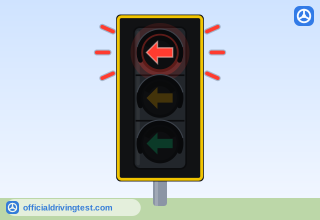
- Turn in the direction of the arrow without stopping
- Go straight ahead after slowing down
- Wait until the arrow turns steady yellow before turning
- Turn in the direction of the arrow after coming to a full stop
Show answer
Correct answer: Turn in the direction of the arrow after coming to a full stop
The manual permits turns in the direction of a flashing red arrow after a full stop.
Source: Delaware Driver Manual (July 2026), page 71 · Open this page in the manual (Manual page 71)
-
Why does the manual say a full stop is needed at a flashing red arrow?
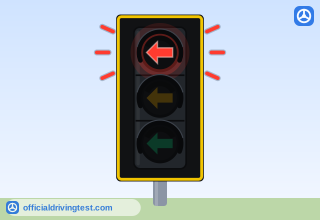
- It lets drivers pick a safe gap in traffic before turning
- It gives pedestrians time to leave the crosswalk
- It lets the signal change to green before you turn
- It lets following drivers safely pass you on the right
Show answer
Correct answer: It lets drivers pick a safe gap in traffic before turning
The full stop enables drivers to choose a safe gap and complete the turn without waiting for a green signal.
Source: Delaware Driver Manual (July 2026), page 71 · Open this page in the manual (Manual page 71)
-
A flashing red arrow signal may be followed by which of these?
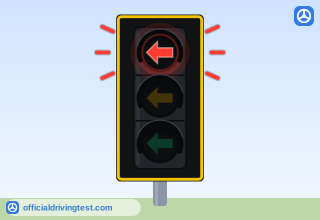
- A flashing yellow arrow or a steady green arrow
- A steady green arrow or a solid green ball
- A steady red arrow or a steady yellow arrow
- A dark signal for several seconds
Show answer
Correct answer: A steady red arrow or a steady yellow arrow
The manual says a flashing red arrow signal may be followed by a steady red arrow, steady yellow arrow or solid red ball.
Source: Delaware Driver Manual (July 2026), page 71 · Open this page in the manual (Manual page 71)
-
What does a steady yellow arrow mean?
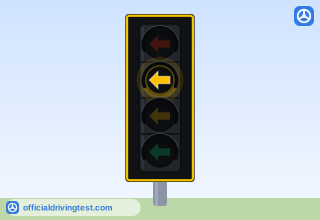
- A green arrow display is about to begin
- A green arrow display has ended
- Turns are never permitted in that direction
- You must yield to oncoming traffic before turning
Show answer
Correct answer: A green arrow display has ended
The manual says a steady yellow arrow means a green arrow display has ended; if too close to stop safely, continue with care.
Source: Delaware Driver Manual (July 2026), page 71 · Open this page in the manual (Manual page 71)
-
What must you do before moving in the direction of a flashing yellow arrow?
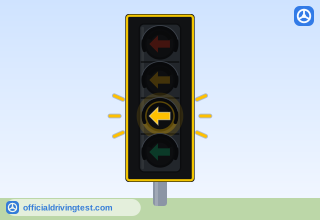
- Come to a complete stop and wait for a green arrow
- Sound your horn to warn oncoming vehicles
- Nothing, because oncoming traffic must stop
- Yield to opposing traffic and pedestrians
Show answer
Correct answer: Yield to opposing traffic and pedestrians
The manual says movement in the direction of a flashing yellow arrow is permitted after yielding to opposing traffic and pedestrians.
Source: Delaware Driver Manual (July 2026), page 71 · Open this page in the manual (Manual page 71)
-
At a steady green arrow, what must you remember?
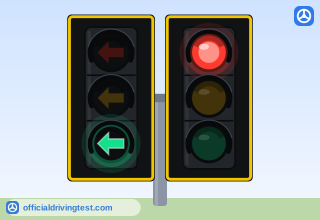
- Yield to pedestrians and vehicles already lawfully in the intersection
- You have the right-of-way over all pedestrians and other vehicles
- You must come to a complete stop before turning in the arrow’s direction
- You may go in any direction that is safe
Show answer
Correct answer: Yield to pedestrians and vehicles already lawfully in the intersection
The manual says to proceed with caution in the arrow’s direction while yielding to those already lawfully in the intersection.
Source: Delaware Driver Manual (July 2026), page 71 · Open this page in the manual (Manual page 71)
-
When a through-traffic green light is lit and no arrows are lit, what may traffic do?
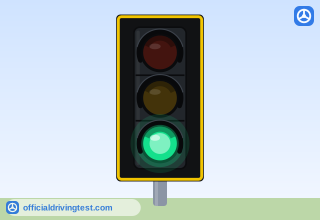
- Go through only, with no turns of any kind permitted
- Turn left only, while all other traffic must stop
- Go straight, or turn left or right when safe
- Go through only after stopping
Show answer
Correct answer: Go straight, or turn left or right when safe
The manual says through traffic and, if not otherwise prohibited, left and right turns may proceed when safe, with special care for left turns.
Source: Delaware Driver Manual (July 2026), page 72 · Open this page in the manual (Manual page 72)
-
A signal shows a green left arrow together with a green light for through traffic. What may proceed?
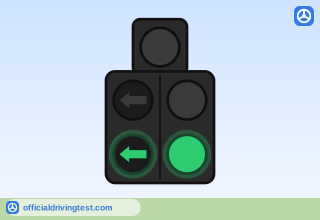
- Left turns only, while all other traffic must stop
- Left turns, through traffic, and right turns if allowed
- Through traffic only, with left turns stopped
- Right turns only, with all other traffic stopped
Show answer
Correct answer: Left turns, through traffic, and right turns if allowed
The manual says left turns and through traffic, and right turns if not prohibited, may proceed when safe.
Source: Delaware Driver Manual (July 2026), page 72 · Open this page in the manual (Manual page 72)
-
A signal shows a yellow left arrow with a green light for through traffic. What does this mean?
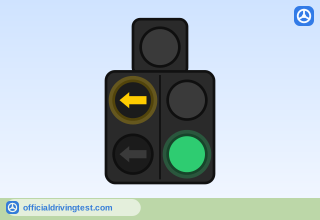
- A new green left arrow will begin after you stop
- Left turns are prohibited and through traffic must stop
- Left turns now have priority over oncoming traffic
- The green arrow interval has ended
Show answer
Correct answer: The green arrow interval has ended
The manual calls this the change interval, meaning the green arrow interval has ended.
Source: Delaware Driver Manual (July 2026), page 72 · Open this page in the manual (Manual page 72)
-
A signal shows a yellow light for through traffic and right turns, while the left turn arrow remains green. What should traffic do?
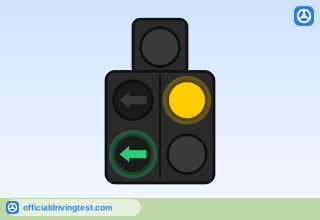
- Left turns continue, and straight traffic prepares to stop
- Left turns must stop, and straight traffic may continue
- All traffic must stop immediately
- All traffic may proceed at normal speed
Show answer
Correct answer: Left turns continue, and straight traffic prepares to stop
The manual says the left turn continues to be green while straight through and right-turning traffic should prepare to stop.
Source: Delaware Driver Manual (July 2026), page 72 · Open this page in the manual (Manual page 72)
-
A signal shows a red light together with a green left arrow. What may traffic do?
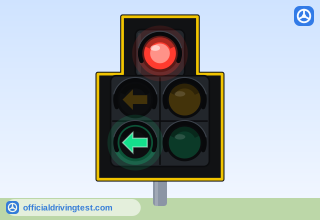
- All traffic may proceed after yielding
- Left turns must stop, and all others may proceed
- Left turns may proceed if safe, but all others must stop
- Through traffic may proceed, but left turns must stop
Show answer
Correct answer: Left turns may proceed if safe, but all others must stop
The manual says left turns may proceed if safe but all other traffic must stop, with right turns allowed after stopping.
Source: Delaware Driver Manual (July 2026), page 72 · Open this page in the manual (Manual page 72)
-
A circular or arrow signal has an adjacent sign designating it for bicyclists. To whom does that signal apply?
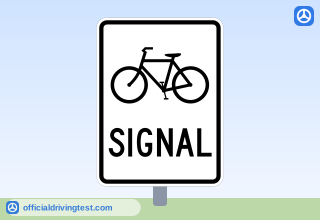
- Only bicyclists in designated bicycle lanes or paths
- All drivers in the lane next to the bicycle lane
- Only bicyclists and motorcyclists on that road
- Every road user approaching the intersection
Show answer
Correct answer: Only bicyclists in designated bicycle lanes or paths
Such a signal means the same as a regular circular or arrow indicator but applies only to bicyclists in designated bicycle lanes or paths.
Source: Delaware Driver Manual (July 2026), page 74 · Open this page in the manual (Manual page 74)
-
A traffic signal indicator has the shape of a bicycle. What does it mean?
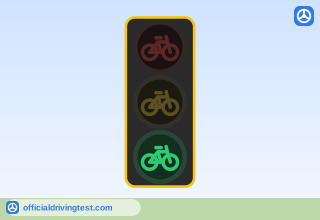
- It warns motorists that bicyclists may be on the road ahead
- It tells motorists to yield to any bicyclist crossing in front of them
- The same as a circular signal indicator, for bicyclists in designated lanes or paths
- It lets bicyclists ignore the regular signals at that intersection
Show answer
Correct answer: The same as a circular signal indicator, for bicyclists in designated lanes or paths
Bicycle-shaped signals have the same meaning as circular indicators but apply only to bicyclists in designated bicycle lanes or paths.
Source: Delaware Driver Manual (July 2026), page 74 · Open this page in the manual (Manual page 74)
-
Which signals must a bicyclist obey when traveling in a general travel lane?
- Only the signals shaped like a bicycle
- The regular circular and arrow traffic signals
- Only the signals marked for bicyclists by an adjacent sign
- None, because signals apply only to motor vehicles
Show answer
Correct answer: The regular circular and arrow traffic signals
Bicyclists in general travel lanes follow the regular circular and arrow signals.
Source: Delaware Driver Manual (July 2026), page 74 · Open this page in the manual (Manual page 74)
-
A police officer gives you an instruction that is contrary to a sign, signal or marking. What must you do?
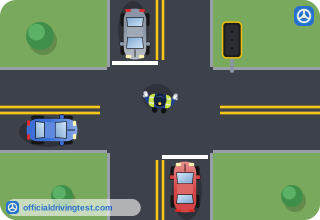
- Obey the sign, signal or marking
- Obey the police officer
- Wait until the officer repeats the instruction twice
- Follow whichever instruction is safer in your opinion
Show answer
Correct answer: Obey the police officer
The manual says you must obey a police officer even if the instruction is contrary to laws, signs, signals and markings.
Source: Delaware Driver Manual (July 2026), page 83 · Open this page in the manual (Manual page 83)
-
Why may a police officer give instructions that are contrary to signs, signals and markings?
- Officers are allowed to change traffic laws during their shift on duty
- Signs and signals are only advice to drivers
- Officers may use them to test drivers on the road
- Such instructions are occasionally necessary to keep traffic moving safely
Show answer
Correct answer: Such instructions are occasionally necessary to keep traffic moving safely
The manual says such instructions are occasionally necessary to keep traffic moving safely.
Source: Delaware Driver Manual (July 2026), page 83 · Open this page in the manual (Manual page 83)
-
May you avoid a traffic signal or road sign by leaving the road and driving across private property?
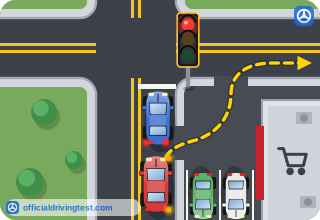
- No, that is not allowed
- Yes, if no other vehicles are around
- Yes, if the property is a parking lot
- Yes, if you signal before leaving the road
Show answer
Correct answer: No, that is not allowed
The manual lists this among the general laws you must know: do not evade a signal or sign by crossing private property.
Source: Delaware Driver Manual (July 2026), page 83 · Open this page in the manual (Manual page 83)
-
What is a reversible lane?
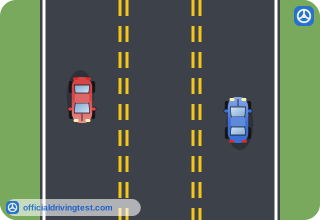
- A lane reserved for vehicles that need to turn around on the road
- A lane that carries traffic in both directions at the same time of day
- A lane that carries traffic one way at some times and the other way at others
- A lane that is closed to all traffic whenever it is raining hard
Show answer
Correct answer: A lane that carries traffic one way at some times and the other way at others
The manual describes reversible lanes as lanes that carry traffic in one direction at certain times and the opposite direction at other times.
Source: Delaware Driver Manual (July 2026), page 85 · Open this page in the manual (Manual page 85)
-
What should you do before you start driving in a reversible lane?
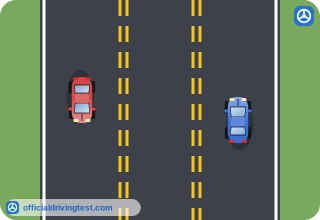
- Turn on your hazard lights and slow down
- Move into the left-most lane available
- Slow down to 10 mph and wait for a signal
- Check which lanes you can use at that time
Show answer
Correct answer: Check which lanes you can use at that time
The manual says to check which lanes you can use at that time before driving in them.
Source: Delaware Driver Manual (July 2026), page 85 · Open this page in the manual (Manual page 85)
-
What does a green arrow over a reversible lane mean?
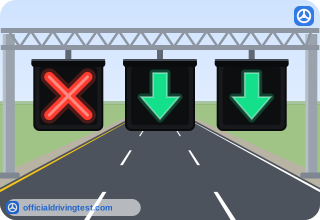
- You can use the lane beneath it
- The lane is changing and you should move out
- The lane is closed to all traffic
- You must merge into the next lane
Show answer
Correct answer: You can use the lane beneath it
The manual says a green arrow means you can use the lane beneath it.
Source: Delaware Driver Manual (July 2026), page 85 · Open this page in the manual (Manual page 85)
-
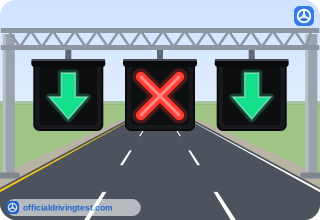
What does a red “X” over a reversible lane mean?
- You may use the lane after stopping
- You may use the lane only to turn left
- You cannot use the lane beneath it
- The lane is reserved for buses
Show answer
Correct answer: You cannot use the lane beneath it
The manual says a red X means you cannot use the lane beneath it.
Source: Delaware Driver Manual (July 2026), page 85 · Open this page in the manual (Manual page 85)
-
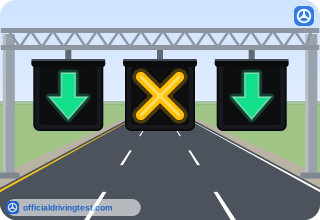
What does a steady yellow “X” over a reversible lane mean?
- You may continue in the lane until the next red “X” appears
- The lane use is changing, so move out of it as soon as it is safe
- The lane is open to traffic in both directions at the same time
- You must stop in the lane and wait for a green arrow to appear
Show answer
Correct answer: The lane use is changing, so move out of it as soon as it is safe
The manual says a steady yellow X means the lane use is changing and you should leave the lane when safe.
Source: Delaware Driver Manual (July 2026), page 85 · Open this page in the manual (Manual page 85)