Connecticut: Right-of-way and turning
Who goes first at intersections and roundabouts, left and right turns, U-turns, lane changes and passing. Split into 5 shorter tests so you're not stuck in one long quiz.
Independent educational site · not affiliated with any government agency or DMV
Choose a part
Right-of-way and turning — Part 1
Questions in this part include: “Every time you make a turn during the road test, what should you be aware of and what should you adjust?”
StartRight-of-way and turning — Part 2
Questions in this part include: “Which of these counts as changing lanes?”
StartRight-of-way and turning — Part 3
Questions in this part include: “Where is it dangerous to pass because vehicles are likely to enter or cross the road?”
StartRight-of-way and turning — Part 4
Questions in this part include: “When is it legal to back a vehicle in a travel lane?”
StartRight-of-way and turning — Part 5
Questions in this part include: “A driver overtaking a vehicle traveling in the same direction must do what?”
StartAll 94 Right-of-way and turning questions with answers
Choose a part above to take a practice test, or study every question and answer here.
Show the questions and answersHide the questions
-
Every time you make a turn during the road test, what should you be aware of and what should you adjust?
- Only other vehicles; your following distance
- Only road signs; your lane position
- Weather conditions; your headlights
- Other traffic and pedestrians; your speed
Show answer
Correct answer: Other traffic and pedestrians; your speed
You should be aware of other traffic and pedestrians at every turn, and your speed should also be adjusted for the turn.
Source: Connecticut Driver's Manual (Revised March 2023), page 7 · Open this page in the manual (Manual page 7)
-
According to the manual, what is an intersection?
- Any place where traffic merges or crosses
- Only a place where two paved roads meet at a traffic light
- Only a crossing marked by painted crosswalk lines
- Only a place controlled by a stop sign or a stop light
Show answer
Correct answer: Any place where traffic merges or crosses
The manual defines an intersection as any place where traffic merges or crosses, including cross streets, side streets, driveways and parking lot entrances.
Source: Connecticut Driver's Manual (Revised March 2023), page 15 · Open this page in the manual (Manual page 15)
-
When you are stopped at an intersection, what should you do just before you start moving?
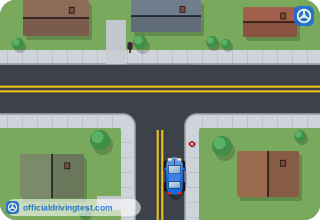
- Look only straight ahead
- Look only at the traffic light
- Look both left and right
- Tap the horn to warn cross traffic
Show answer
Correct answer: Look both left and right
The manual says that when stopped, you look both left and right just before you start moving.
Source: Connecticut Driver's Manual (Revised March 2023), page 15 · Open this page in the manual (Manual page 15)
-
Before you start to move through an intersection, why should you look across it?
- To make sure no police officer is waiting on the far side of the intersection
- To make sure the path is clear all the way through, so you will not block it if you must stop
- To make sure that the traffic light on the far side is the same color as yours
- To decide whether you can speed up to get through before the light changes
Show answer
Correct answer: To make sure the path is clear all the way through, so you will not block it if you must stop
You look across the intersection to be sure the path is clear all the way through and that you will not block it if you have to stop.
Source: Connecticut Driver's Manual (Revised March 2023), page 15 · Open this page in the manual (Manual page 15)
-
Before you turn left across traffic, what must you remember about oncoming traffic?
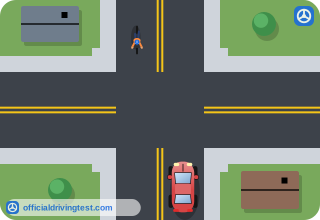
- It must yield to you if you signaled first
- Bicycles must yield to you but cars do not
- It has the right-of-way only when it has a green light
- It always has the right-of-way, including bicycles
Show answer
Correct answer: It always has the right-of-way, including bicycles
The manual states that oncoming traffic, including bicycles, always has the right-of-way when you turn left.
Source: Connecticut Driver's Manual (Revised March 2023), page 15 · Open this page in the manual (Manual page 15)
-
Before turning left, what should you check on the street onto which you are turning?
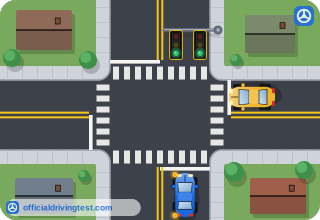
- That the street has a posted speed limit sign
- That the street has no parked cars on the far side
- That no vehicles, bicycles or pedestrians are in your path
- That the street has a marked bicycle lane
Show answer
Correct answer: That no vehicles, bicycles or pedestrians are in your path
You check that nothing is in your path on the street you are entering, otherwise you would be stuck in the path of oncoming traffic.
Source: Connecticut Driver's Manual (Revised March 2023), page 15 · Open this page in the manual (Manual page 15)
-
Just before you turn left, what should you do?
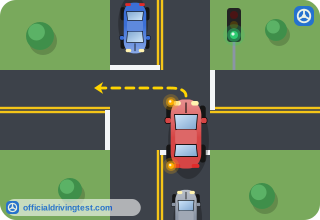
- Tap your horn to warn oncoming traffic
- Look one more time in the direction of oncoming traffic
- Check your mirrors for traffic behind you
- Stop and wait for oncoming drivers to wave you through
Show answer
Correct answer: Look one more time in the direction of oncoming traffic
The manual says to look one more time in the direction of oncoming traffic before you turn.
Source: Connecticut Driver's Manual (Revised March 2023), page 15 · Open this page in the manual (Manual page 15)
-
Before turning right, which of these must you make sure of?
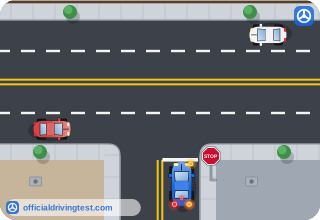
- No traffic is approaching from your right and no vehicle is stopped behind your vehicle
- No other vehicle has parked within one block of the corner where you will turn
- No traffic light is visible on the street onto which you will be turning
- No traffic is approaching from your left and no oncoming traffic is turning into your path
Show answer
Correct answer: No traffic is approaching from your left and no oncoming traffic is turning into your path
Before a right turn you make sure that no traffic approaches from your left and no oncoming traffic turns into your path.
Source: Connecticut Driver's Manual (Revised March 2023), page 15 · Open this page in the manual (Manual page 15)
-
Which of these is a rule for beginning a right turn?
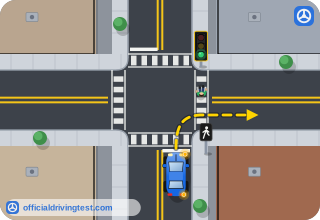
- Check for pedestrians crossing where you will be turning
- Turn first, then look for pedestrians
- Sound the horn so pedestrians clear the crossing
- Check only for vehicles, since pedestrians must yield to turning drivers
Show answer
Correct answer: Check for pedestrians crossing where you will be turning
Do not begin your turn without checking for pedestrians crossing where you will be turning.
Source: Connecticut Driver's Manual (Revised March 2023), page 15 · Open this page in the manual (Manual page 15)
-
How soon after passing a bicycle may you turn right?
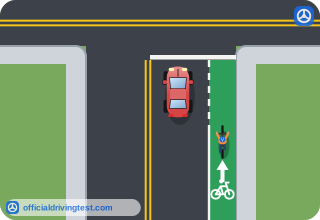
- Right away, if you have signaled
- Not immediately after passing it
- Right away, if the bicycle is in a bike lane
- Right away, if the bicycle is going slower than you
Show answer
Correct answer: Not immediately after passing it
The manual says not to turn immediately after passing a bicycle.
Source: Connecticut Driver's Manual (Revised March 2023), page 15 · Open this page in the manual (Manual page 15)
-
Why is it especially important to look left and right just after a light has turned green?
- People on the cross street are most likely to hurry through before their light turns red
- Vehicles waiting behind you tend to sound their horns and pull around you
- Pedestrians on the cross street always have a walk signal when your light turns green
- Cross-street drivers usually wait several seconds after their own light turns red
Show answer
Correct answer: People on the cross street are most likely to hurry through before their light turns red
Just after the light turns green is when people on the cross street are most likely to hurry through the intersection before the light changes to red.
Source: Connecticut Driver's Manual (Revised March 2023), page 15 · Open this page in the manual (Manual page 15)
-
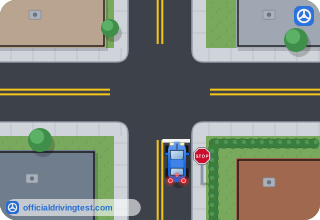
If you are stopped and your view of a cross street is blocked, what should you do?
- Sound your horn and then go
- Wait until another driver waves you ahead
- Stay stopped until the blockage disappears
- Edge forward slowly until you can see
Show answer
Correct answer: Edge forward slowly until you can see
You edge forward slowly until you can see the cross street.
Source: Connecticut Driver's Manual (Revised March 2023), page 15 · Open this page in the manual (Manual page 15)
-
Why does moving forward slowly help when your view of a cross street is blocked?
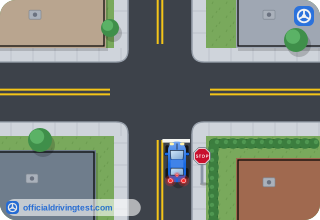
- Crossing drivers can see the front of your vehicle before you can see them
- It tells crossing drivers that you are about to turn left at the intersection
- It gives you time to check your mirrors for traffic behind you
- It lets pedestrians know that you plan to stop completely
Show answer
Correct answer: Crossing drivers can see the front of your vehicle before you can see them
Crossing drivers see the front of your vehicle first, which gives them a chance to slow down and warn you if necessary.
Source: Connecticut Driver's Manual (Revised March 2023), page 15 · Open this page in the manual (Manual page 15)
-
What does the manual say about entering an intersection during heavy traffic?
- Enter whenever your light is green, even if you may have to stop inside it
- Enter only if you can drive through without using your turn signal
- Do not enter unless there is room on the far side for your vehicle
- Enter only if no pedestrians are waiting at the crosswalk
Show answer
Correct answer: Do not enter unless there is room on the far side for your vehicle
Drivers may not enter an intersection unless there is enough space on the opposite side; entering without it is known as blocking the box or causing gridlock.
Source: Connecticut Driver's Manual (Revised March 2023), page 15 · Open this page in the manual (Manual page 15)
-
At an intersection, how must a driver treat a bicyclist?
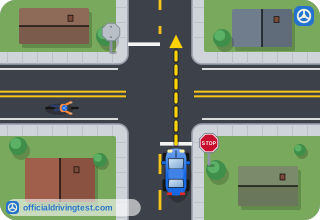
- Go first because bicyclists are slower than cars
- Yield as you would for pedestrians and other vehicles
- Expect the bicyclist to wait until you have passed
- Honk to tell the bicyclist to stop
Show answer
Correct answer: Yield as you would for pedestrians and other vehicles
Drivers must yield to bicyclists in intersections as they would for pedestrians and other vehicles.
Source: Connecticut Driver's Manual (Revised March 2023), page 17 · Open this page in the manual (Manual page 17)
-
When a bicycle path or bike lane intersects a road, who must yield the right-of-way?
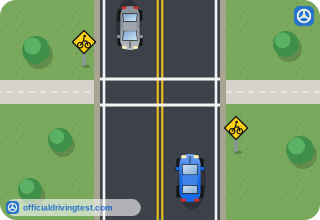
- The bicyclist must yield to the driver
- The one traveling more slowly must yield
- The vehicle on the left must yield
- The driver must yield to the bicyclist
Show answer
Correct answer: The driver must yield to the bicyclist
A driver must yield the right-of-way to a bicyclist when a bicycle path or bike lane intersects a road.
Source: Connecticut Driver's Manual (Revised March 2023), page 17 · Open this page in the manual (Manual page 17)
-
Before you turn across a bicycle lane or a sidewalk, what must you do?
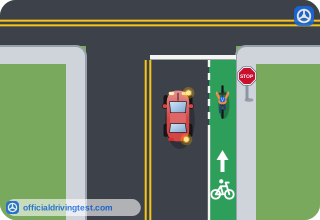
- Yield to bicyclists and persons on the sidewalk
- Honk to warn bicyclists that you are turning
- Move into the bicycle lane before you turn
- Slow down but keep moving through the lane
Show answer
Correct answer: Yield to bicyclists and persons on the sidewalk
You must yield to bicyclists in a bicycle lane or persons on a sidewalk before you turn across the lane or sidewalk.
Source: Connecticut Driver's Manual (Revised March 2023), page 17 · Open this page in the manual (Manual page 17)
-
When making turns, what should you watch carefully for?
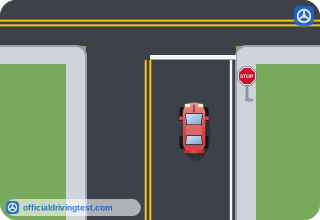
- Only pedestrians in front of you
- Bicyclists entering your lane
- Only vehicles behind you
- Only signals on the far side
Show answer
Correct answer: Bicyclists entering your lane
The manual says to watch carefully for bicyclists entering your lane when making turns.
Source: Connecticut Driver's Manual (Revised March 2023), page 17 · Open this page in the manual (Manual page 17)
-
A bicyclist is beside you and you are about to turn right. What should you do?
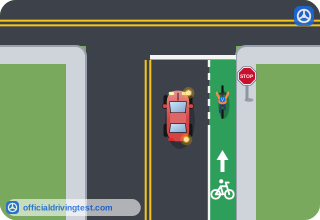
- Pass the bicyclist quickly and then make your turn
- Slow down and let the cyclist clear the intersection
- Turn in front of the bicyclist with your signal on
- Sound your horn and then make your turn
Show answer
Correct answer: Slow down and let the cyclist clear the intersection
If you are about to make a right turn, you must not pass a bicyclist immediately before the turn; slow down and let the cyclist clear the intersection.
Source: Connecticut Driver's Manual (Revised March 2023), page 17 · Open this page in the manual (Manual page 17)
-
Before turning left, how should you look for motorcycles?
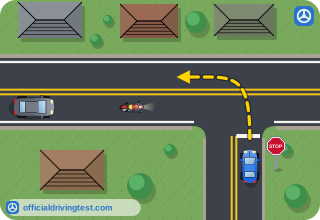
- Looking only in your mirrors and behind you
- Listening carefully for the sound of an engine
- Looking only at the traffic directly behind your vehicle
- Looking carefully to the front and sides of your vehicle
Show answer
Correct answer: Looking carefully to the front and sides of your vehicle
Before turning left, be alert for motorcycles by looking carefully to the front and sides of your vehicle.
Source: Connecticut Driver's Manual (Revised March 2023), page 18 · Open this page in the manual (Manual page 18)
-
A motorcycle ahead has its turn signal flashing. When should you pull out in front of it?
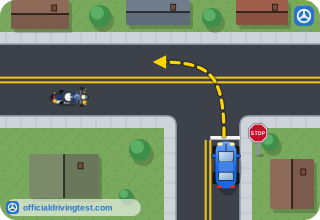
- As soon as you see the signal flashing
- Not until you see it actually begin to turn
- After counting two seconds
- When the motorcyclist waves you ahead
Show answer
Correct answer: Not until you see it actually begin to turn
Do not pull out in front of a motorcycle until you see that it is actually beginning to turn.
Source: Connecticut Driver's Manual (Revised March 2023), page 18 · Open this page in the manual (Manual page 18)
-
When is stopping halfway across traffic safe?
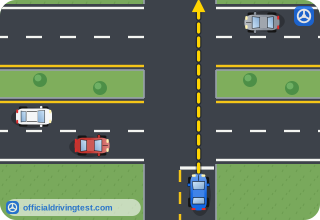
- Whenever the other lanes of traffic look busy to you
- Only when a median divider is large enough for your vehicle
- Only when you have a green light at the intersection
- Whenever you are driving a small vehicle such as a car
Show answer
Correct answer: Only when a median divider is large enough for your vehicle
The manual says it is safe only when the median divider is large enough for your vehicle.
Source: Connecticut Driver's Manual (Revised March 2023), page 21 · Open this page in the manual (Manual page 21)
-
What must you not do when you stop in a divider while crossing traffic?
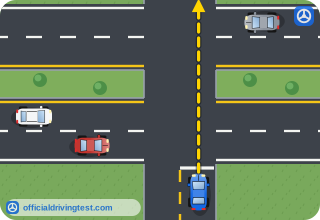
- Use your turn signal while you are waiting there
- Wait for a gap in the next lane of traffic
- Leave part of your vehicle sticking into traffic
- Check for pedestrians in the crosswalk ahead of you
Show answer
Correct answer: Leave part of your vehicle sticking into traffic
The manual says not to stop in a divider where part of your vehicle is sticking into traffic.
Source: Connecticut Driver's Manual (Revised March 2023), page 21 · Open this page in the manual (Manual page 21)
-
You have a green light, but vehicles are blocking your way across the intersection. What should you do?
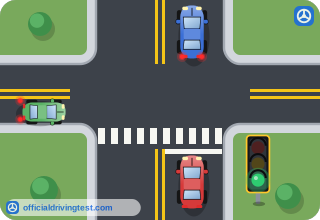
- Start across and wait in the middle
- Do not start across the intersection
- Sound your horn until traffic clears
- Drive around the blocking vehicles
Show answer
Correct answer: Do not start across the intersection
The manual says not to start across the intersection if vehicles are blocking your way, even with a green light.
Source: Connecticut Driver's Manual (Revised March 2023), page 21 · Open this page in the manual (Manual page 21)
-
What can happen if you are caught in an intersection when the light changes to red?
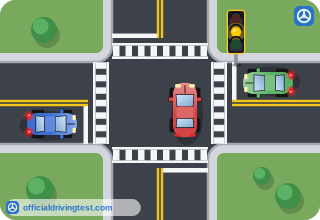
- You are allowed to wait until the light is green again
- You get the right of way over crossing traffic
- Nothing, because you entered on green
- You block other traffic and can get a ticket
Show answer
Correct answer: You block other traffic and can get a ticket
The manual says you will block other traffic and can get a ticket for blocking an intersection.
Source: Connecticut Driver's Manual (Revised March 2023), page 21 · Open this page in the manual (Manual page 21)
-
An approaching vehicle has a turn signal on. What should you do before you turn?
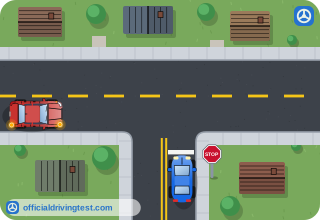
- Wait until the other driver actually starts to turn
- Turn right away, since that driver is turning too
- Assume the other driver will give you enough space
- Flash your headlights once and then start your turn
Show answer
Correct answer: Wait until the other driver actually starts to turn
The manual says never to assume another driver will share space; wait until the driver actually starts to turn.
Source: Connecticut Driver's Manual (Revised March 2023), page 21 · Open this page in the manual (Manual page 21)
-
Why should you not assume an approaching vehicle will turn because its signal is on?
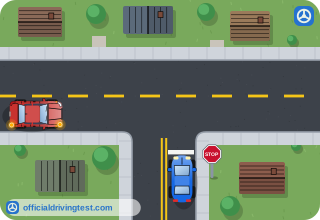
- Turn signals only work on vehicles that have two headlights
- The signal shows only the speed of the approaching vehicle
- The driver may turn later or may have forgotten a prior signal
- The driver is required to turn at the next corner ahead
Show answer
Correct answer: The driver may turn later or may have forgotten a prior signal
The manual says the driver may plan to turn after passing you or may have forgotten to turn the signal off.
Source: Connecticut Driver's Manual (Revised March 2023), page 21 · Open this page in the manual (Manual page 21)
-
Which of these counts as changing lanes?
- Slowing down while staying inside your own lane
- Stopping at a red light in the same lane you used
- Entering the roadway from the curb or shoulder
- Turning on your headlights before you drive away at dusk
Show answer
Correct answer: Entering the roadway from the curb or shoulder
Changing lanes includes moving from one lane to another, merging from an entrance ramp, and entering the roadway from the curb or shoulder.
Source: Connecticut Driver's Manual (Revised March 2023), page 23 · Open this page in the manual (Manual page 23)
-
Before you change lanes, which traffic must you check for?
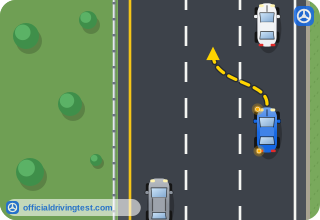
- Only traffic in front of your vehicle
- Traffic to the side of and behind your vehicle
- Only traffic in the lane you are leaving
- Only oncoming traffic
Show answer
Correct answer: Traffic to the side of and behind your vehicle
You must check for traffic to the side of and behind your vehicle before you change lanes.
Source: Connecticut Driver's Manual (Revised March 2023), page 23 · Open this page in the manual (Manual page 23)
-
What are "blind spots" when you drive?
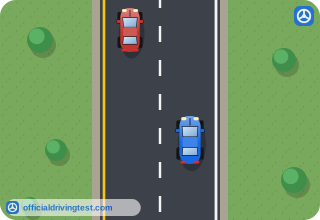
- Places on the road where a no passing zone begins
- Areas directly in front of your hood and bumper
- Parts of the road hidden from view by darkness
- Areas near the rear corners you cannot see in mirrors
Show answer
Correct answer: Areas near the rear corners you cannot see in mirrors
The manual calls the areas near the rear corners of your vehicle blind spots because you cannot see them through your mirrors.
Source: Connecticut Driver's Manual (Revised March 2023), page 23 · Open this page in the manual (Manual page 23)
-
How must you check your blind spot before changing lanes?
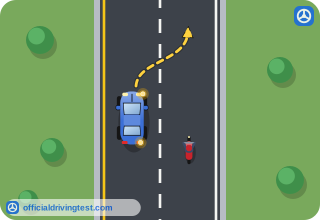
- Turn your head and look over your shoulder
- Look only in the rear-view mirror
- Look only in both side mirrors
- Sound your horn and wait for a reply
Show answer
Correct answer: Turn your head and look over your shoulder
You must turn your head and look to see vehicles in your blind spot.
Source: Connecticut Driver's Manual (Revised March 2023), page 23 · Open this page in the manual (Manual page 23)
-
When you check traffic before a lane change, how long may you take your eyes off the road ahead?
- Up to 5 seconds
- Up to 10 seconds
- No more than an instant
- As long as the lane looks clear
Show answer
Correct answer: No more than an instant
Do not take your eyes off the road ahead for more than an instant, because traffic ahead could stop suddenly.
Source: Connecticut Driver's Manual (Revised March 2023), page 23 · Open this page in the manual (Manual page 23)
-
When should you check over your shoulder for traffic in your blind spot?
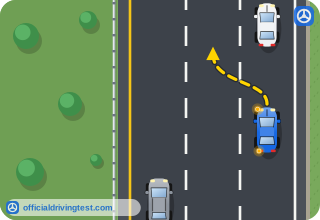
- Only after you have entered the new lane
- Just before you change lanes
- Only when you are parked
- Several minutes before you plan to move
Show answer
Correct answer: Just before you change lanes
The manual says to check over your shoulder for traffic in your blind spot just before you change lanes.
Source: Connecticut Driver's Manual (Revised March 2023), page 23 · Open this page in the manual (Manual page 23)
-
Why should you check the far lane before changing lanes?
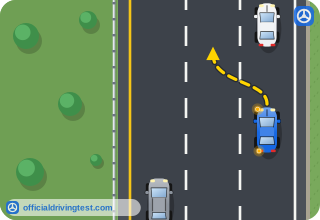
- Vehicles in the far lane always have the right-of-way
- The far lane is always the passing lane on the road
- You must signal to drivers in the far lane first
- Someone there may be planning to move into your target lane
Show answer
Correct answer: Someone there may be planning to move into your target lane
Another driver in the far lane may be planning to move into the same lane that you want to enter.
Source: Connecticut Driver's Manual (Revised March 2023), page 23 · Open this page in the manual (Manual page 23)
-
If you want to change several lanes, how should you do it?
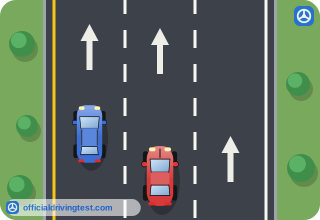
- One lane at a time
- Wait until all lanes are clear, then cross them at once
- Cross all lanes quickly with your horn sounding
- Use the far lane first and then work back
Show answer
Correct answer: One lane at a time
It is safest and easiest to merge one lane at a time, like taking stairs one step at a time.
Source: Connecticut Driver's Manual (Revised March 2023), page 23 · Open this page in the manual (Manual page 23)
-
As a general rule, how many vehicles should you pass at one time?
- Two vehicles
- Three vehicles
- One vehicle
- As many as the road markings allow
Show answer
Correct answer: One vehicle
The manual says not to count on having time to pass several vehicles at once; as a general rule, pass only one vehicle at a time.
Source: Connecticut Driver's Manual (Revised March 2023), page 23 · Open this page in the manual (Manual page 23)
-
Which of these may cause you to lose your space for passing?
- A long straight road with no other traffic
- A narrow bridge or reduced lane width
- Traffic far behind you on the road
- A wide, paved shoulder beside your lane
Show answer
Correct answer: A narrow bridge or reduced lane width
The manual lists people or bicyclists near the road, a narrow bridge or reduced lane width, and ice, a pothole or an object on the road.
Source: Connecticut Driver's Manual (Revised March 2023), page 23 · Open this page in the manual (Manual page 23)
-
At 55 mph, how much clear distance do you need to pass safely, counting the oncoming vehicle's travel?
- About 400 feet
- About 800 feet
- Over 1600 feet
- About 3,200 feet
Show answer
Correct answer: Over 1600 feet
You travel over 800 feet and so does the oncoming vehicle, so you need over 1600 feet (about one-third of a mile).
Source: Connecticut Driver's Manual (Revised March 2023), page 23 · Open this page in the manual (Manual page 23)
-
How does the speed of an oncoming vehicle that is far away usually look to you?
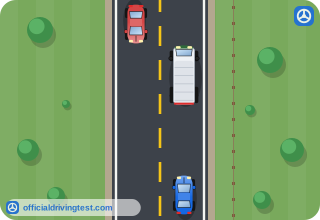
- Faster than it really is
- Slower than it really is
- Exactly as fast as it really is
- Faster at night and slower by day
Show answer
Correct answer: Slower than it really is
Oncoming vehicles at that distance do not seem to be coming as fast as they really are.
Source: Connecticut Driver's Manual (Revised March 2023), page 23 · Open this page in the manual (Manual page 23)
-
If you can actually see a distant oncoming vehicle coming closer, what does that mean for passing?
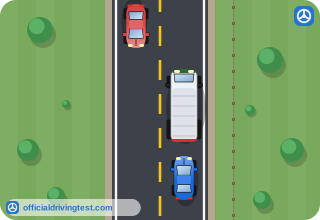
- It is far enough away that passing is safe
- You should speed up and pass quickly
- You should flash your headlights and pass
- It may be too close for you to pass
Show answer
Correct answer: It may be too close for you to pass
A vehicle that is far away appears to be standing still, so if you can see it coming closer it may be too close for you to pass.
Source: Connecticut Driver's Manual (Revised March 2023), page 23 · Open this page in the manual (Manual page 23)
-
If you are not sure there is enough space to pass, what should you do?
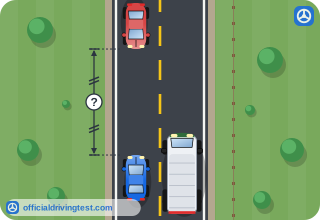
- Wait to pass until you are sure there is enough space
- Pass quickly and hope other drivers make room
- Pass on the shoulder
- Sound your horn and begin to pass
Show answer
Correct answer: Wait to pass until you are sure there is enough space
The manual says to wait to pass until you are sure that there is enough space.
Source: Connecticut Driver's Manual (Revised March 2023), page 23 · Open this page in the manual (Manual page 23)
-
After passing a vehicle, when is it safe to return to the driving lane?
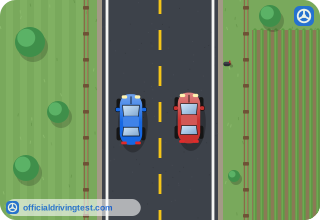
- As soon as you are even with its rear bumper
- As soon as one of its headlights is visible
- Both its headlights show in your rear-view mirror
- When it has disappeared from your mirror
Show answer
Correct answer: Both its headlights show in your rear-view mirror
Seeing both headlights of the vehicle you just passed in your rear-view mirror shows it is safe to return to the driving lane.
Source: Connecticut Driver's Manual (Revised March 2023), page 23 · Open this page in the manual (Manual page 23)
-
When you pass, what should you NOT count on?
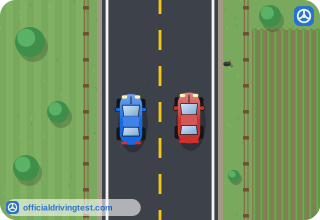
- Having a clear view of the road ahead
- Other drivers making room for you
- Having your headlights turned on
- Having a signal to warn other drivers
Show answer
Correct answer: Other drivers making room for you
The manual says not to pass unless you have space to return to the lane and not to count on other drivers to make room for you.
Source: Connecticut Driver's Manual (Revised March 2023), page 23 · Open this page in the manual (Manual page 23)
-
What do signs or lane markings that show a no passing zone tell you?
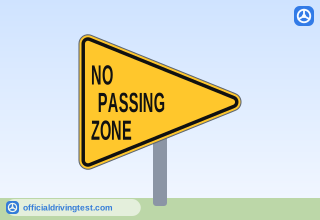
- The road ahead is closed to all traffic
- The speed limit is lower ahead
- Vehicles ahead are slower than you
- You cannot see far enough ahead to pass
Show answer
Correct answer: You cannot see far enough ahead to pass
No passing zone signs or markings tell you that you cannot see far enough ahead to pass.
Source: Connecticut Driver's Manual (Revised March 2023), page 23 · Open this page in the manual (Manual page 23)
-
Where is it dangerous to pass because vehicles are likely to enter or cross the road?
- Intersections, railroad crossings and shopping center entrances
- Long, straight highway stretches with no side roads or driveways
- Any road that has a paved shoulder beside it
- Roads that have only two lanes in total
Show answer
Correct answer: Intersections, railroad crossings and shopping center entrances
The manual names intersections, railroad crossings and shopping center entrances as places where passing is dangerous.
Source: Connecticut Driver's Manual (Revised March 2023), page 23 · Open this page in the manual (Manual page 23)
-
What does the manual say about passing on the shoulder?
- You may pass on a paved shoulder if no one is behind you
- You may pass on the shoulder only on highways
- Never pass on the shoulder, whether it is paved or not
- You may pass on the shoulder only at night
Show answer
Correct answer: Never pass on the shoulder, whether it is paved or not
Other drivers will never expect you on the shoulder and may pull off the road without looking.
Source: Connecticut Driver's Manual (Revised March 2023), page 23 · Open this page in the manual (Manual page 23)
-
On a multi-lane road, which lane is intended for passing slower vehicles?
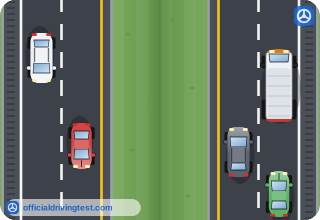
- The right-most lane
- The left-most lane
- The middle lane only
- Whichever lane is empty
Show answer
Correct answer: The left-most lane
The left-most lane is intended for passing slower vehicles.
Source: Connecticut Driver's Manual (Revised March 2023), page 23 · Open this page in the manual (Manual page 23)
-
Why is passing on the right on a multi-lane road risky?
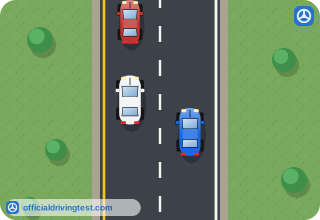
- The right lane is always reserved for trucks and buses
- Passing on the right is prohibited by every sign
- Right-lane vehicles are required to stop when passed
- Other drivers may not see you and may change lanes suddenly
Show answer
Correct answer: Other drivers may not see you and may change lanes suddenly
The other driver may have difficulty seeing you and might suddenly change lanes in front of you.
Source: Connecticut Driver's Manual (Revised March 2023), page 23 · Open this page in the manual (Manual page 23)
-
When your direction of travel has fewer than three lanes, which lane does Connecticut law require you to use?
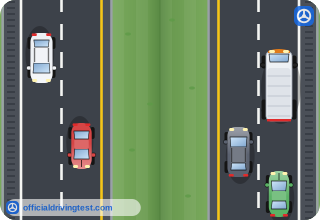
- The right lane, except when passing
- The left lane, except when exiting
- Any lane you choose
- The center lane at all times
Show answer
Correct answer: The right lane, except when passing
Connecticut law requires you to drive in the right lane, except when passing, when your direction of travel is less than three lanes.
Source: Connecticut Driver's Manual (Revised March 2023), page 23 · Open this page in the manual (Manual page 23)
-
On a multi-lane road, when may you move into the left lane even if you are not passing?
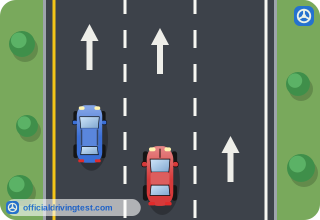
- When you want to drive faster than the traffic around you
- When the right lane has a bicycle in it
- When you must turn left or exit on the left
- Any time the left lane happens to be clear
Show answer
Correct answer: When you must turn left or exit on the left
If you need to make a left turn or exit the highway on the left, you may move into the left lane, safely and with a signal.
Source: Connecticut Driver's Manual (Revised March 2023), page 23 · Open this page in the manual (Manual page 23)
-
Where no signs or lane markings control turning, which lane should you turn from and into?
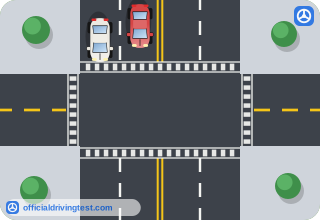
- From the center lane of the road, into the lane farthest from where you came from
- From the lane nearest your direction, into the lane nearest where you came from
- From any lane at all, into the left-most lane on the new road
- From the lane farthest from your direction, into the closest lane
Show answer
Correct answer: From the lane nearest your direction, into the lane nearest where you came from
Turning this way means you cross the fewest lanes of traffic.
Source: Connecticut Driver's Manual (Revised March 2023), page 23 · Open this page in the manual (Manual page 23)
-
When making a turn, how should you go from one lane to the other?
- By moving wide into the next lane first, then correcting
- By crossing lane lines to reach the farthest lane
- By stopping in the middle to check traffic
- As directly as possible, without crossing lane lines
Show answer
Correct answer: As directly as possible, without crossing lane lines
The manual says to go from one lane to the other as directly as possible without crossing lane lines or interfering with traffic.
Source: Connecticut Driver's Manual (Revised March 2023), page 23 · Open this page in the manual (Manual page 23)
-
After you complete a turn, when may you change to another lane if you need to?
- Once it is safe, after looking and signaling
- Immediately, before you look at traffic
- Only after you have driven another mile
- Only after another driver honks at you
Show answer
Correct answer: Once it is safe, after looking and signaling
After the turn is complete and once it is safe, you can change lanes, always looking and signaling before changing lanes.
Source: Connecticut Driver's Manual (Revised March 2023), page 23 · Open this page in the manual (Manual page 23)
-
What should you avoid when making a right turn?
- Turning from the lane closest to the curb
- Signaling before the turn
- Swinging wide to the left before making the turn
- Staying in your lane during the turn
Show answer
Correct answer: Swinging wide to the left before making the turn
If you swing wide, the driver behind may think you are changing lanes or turning left and may try to pass you on the right.
Source: Connecticut Driver's Manual (Revised March 2023), page 24 · Open this page in the manual (Manual page 24)
-
Why should you not swing wide as you complete a right turn?
- Your tires will wear faster on the curb side
- Drivers in the far lane will not expect you there
- Right turns must always be made sharply
- The curb lane is closed to turning vehicles
Show answer
Correct answer: Drivers in the far lane will not expect you there
If you swing wide as you complete the turn, drivers who are in the far lane will not expect to see you there.
Source: Connecticut Driver's Manual (Revised March 2023), page 24 · Open this page in the manual (Manual page 24)
-
What should you avoid when making a left turn?
- Leaving room for oncoming vehicles to turn left in front of you
- Giving a signal well before you begin the left turn
- Looking over your shoulder before you begin to turn
- Cutting the corner so sharply you hit someone approaching from the left
Show answer
Correct answer: Cutting the corner so sharply you hit someone approaching from the left
The manual says to avoid cutting the corner so sharply that you run into someone approaching from the left.
Source: Connecticut Driver's Manual (Revised March 2023), page 24 · Open this page in the manual (Manual page 24)
-
When you make a left turn, what room should you leave?
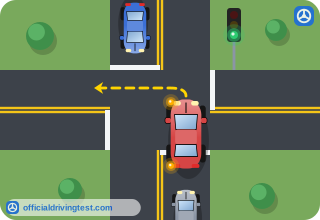
- Room for oncoming vehicles to turn left in front of you
- Room for vehicles behind you to pass on the left
- Room for pedestrians to cross in front of the vehicle behind
- No room is needed beyond your own lane
Show answer
Correct answer: Room for oncoming vehicles to turn left in front of you
While not cutting the corner, be sure to leave room for oncoming vehicles to turn left in front of you.
Source: Connecticut Driver's Manual (Revised March 2023), page 24 · Open this page in the manual (Manual page 24)
-
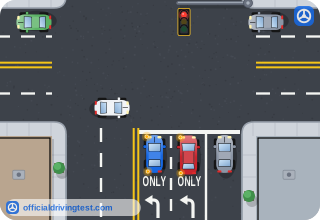
If signs or lane markings allow two or more turning lanes, what should you do during the turn?
- Move to the far left lane
- Move into the nearest lane to the curb
- Stay in your lane
- Switch lanes halfway through the turn
Show answer
Correct answer: Stay in your lane
The manual says to stay in your lane during the turn where two or more turning lanes are allowed.
Source: Connecticut Driver's Manual (Revised March 2023), page 24 · Open this page in the manual (Manual page 24)
-
When is it legal to back a vehicle in a travel lane?
- Only to parallel park or to perform a three-point or K turn
- Whenever you miss your turn
- Whenever you miss your exit and no one is behind you
- Whenever the lane is empty
Show answer
Correct answer: Only to parallel park or to perform a three-point or K turn
The manual says never to back in any travel lane, except to parallel park or perform a three-point or K turn.
Source: Connecticut Driver's Manual (Revised March 2023), page 24 · Open this page in the manual (Manual page 24)
-
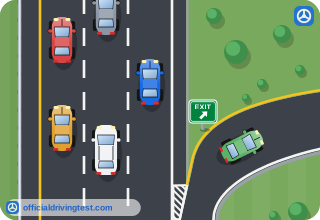
If you miss your turn or exit, what should you do?
- Back up carefully to the missed turn or exit
- Stop and wait for traffic to clear first
- Go on to where you can safely turn around
- Make a U-turn in the middle of the travel lane
Show answer
Correct answer: Go on to where you can safely turn around
The manual says not to back up but to go on to where you can safely turn around.
Source: Connecticut Driver's Manual (Revised March 2023), page 24 · Open this page in the manual (Manual page 24)
-
Instead of stopping in a travel lane (for confusion, a breakdown or to let out a passenger), what does the manual say to do?
- Stop and wait in the lane until traffic clears
- Keep moving until you can safely pull off the road
- Stop only if you are letting out a passenger
- Back up to the last safe place
Show answer
Correct answer: Keep moving until you can safely pull off the road
The manual says not to stop in travel lanes for any reason and to keep moving until you can safely pull off the road.
Source: Connecticut Driver's Manual (Revised March 2023), page 24 · Open this page in the manual (Manual page 24)
-
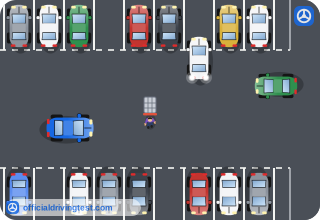
In a shopping center, what kind of parking space should you try to find?
- One as close to the building entrance as possible
- One at the far end of the lot, away from other cars
- One you can back into quickly and easily
- One you can drive through, so you can leave going forward
Show answer
Correct answer: One you can drive through, so you can leave going forward
Because it is hard to see behind your vehicle, the manual suggests a drive-through space so you do not need to back out.
Source: Connecticut Driver's Manual (Revised March 2023), page 24 · Open this page in the manual (Manual page 24)
-
Why should you check behind your vehicle before you get in to back up?
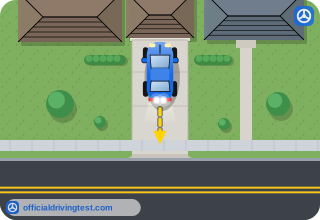
- Small objects or children can't be seen from the seat
- The rear lights may be dirty or may not be working
- The tires may need air before you move backward
- Your mirrors may have moved out of position overnight
Show answer
Correct answer: Small objects or children can't be seen from the seat
The manual says children or small objects cannot be seen from the driver’s seat.
Source: Connecticut Driver's Manual (Revised March 2023), page 24 · Open this page in the manual (Manual page 24)
-
When backing, which way should you look to see directly through the rear window?
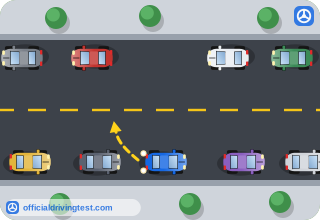
- Look into your rear-view mirror only
- Look into your side mirrors only
- Turn and look over your right shoulder
- Look straight through the windshield
Show answer
Correct answer: Turn and look over your right shoulder
The manual says not to depend on your rearview or side mirrors, as you cannot see directly behind the vehicle with them.
Source: Connecticut Driver's Manual (Revised March 2023), page 24 · Open this page in the manual (Manual page 24)
-
How fast should you back up?
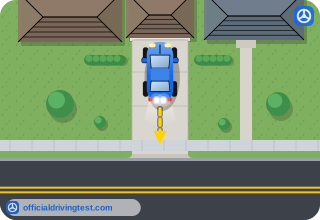
- Quickly, so that you clear the lane sooner
- Slowly, since the vehicle is harder to steer
- At about the speed of surrounding traffic
- At the same speed you use going forward
Show answer
Correct answer: Slowly, since the vehicle is harder to steer
The manual says to back slowly because the vehicle is much harder to steer when backing.
Source: Connecticut Driver's Manual (Revised March 2023), page 24 · Open this page in the manual (Manual page 24)
-
Why is it helpful to stop occasionally while backing and check your rear view mirrors?
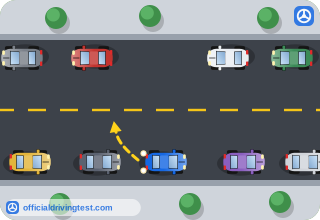
- Your mirrors lose their position when backing
- Backing automatically sounds the horn
- The law requires a check every 10 feet
- Some vehicles' design prevents a clear rear view
Show answer
Correct answer: Some vehicles' design prevents a clear rear view
The manual says it is helpful because the design of some vehicles prevents a clear view to the rear.
Source: Connecticut Driver's Manual (Revised March 2023), page 24 · Open this page in the manual (Manual page 24)
-
Whenever possible, who should help you when you must back your vehicle?
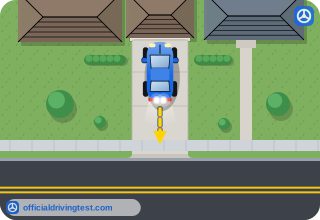
- A person outside the vehicle
- A passenger sitting beside you
- A passenger in the back seat
- No one, since helpers distract the driver
Show answer
Correct answer: A person outside the vehicle
The manual says to use a person outside the vehicle to help you back whenever possible.
Source: Connecticut Driver's Manual (Revised March 2023), page 24 · Open this page in the manual (Manual page 24)
-
Under “Failure to Turn,” which lane should you avoid if you are not turning right?
- The right-hand lane
- The left-hand lane
- The center of the road
- Any lane next to a bus stop
Show answer
Correct answer: The right-hand lane
The manual says to avoid the right-hand lane if you are not turning right.
Source: Connecticut Driver's Manual (Revised March 2023), page 26 · Open this page in the manual (Manual page 26)
-
In most areas, when are right-hand turns allowed at a red light?
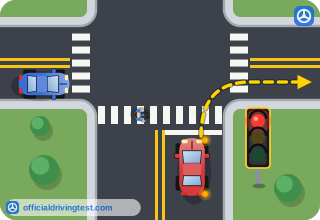
- Only when a green arrow is shown
- Only after waiting for the light to change
- After a stop
- After slowing down without stopping
Show answer
Correct answer: After a stop
The manual says that in most areas right-hand turns are allowed after a stop at a red light.
Source: Connecticut Driver's Manual (Revised March 2023), page 26 · Open this page in the manual (Manual page 26)
-
What does the law say about the right-of-way?
- It says who must yield; it does not give anyone the right-of-way
- It gives the right-of-way to the driver who arrives first
- It gives the right-of-way to the larger vehicle
- It gives the right-of-way to whoever has a green light
Show answer
Correct answer: It says who must yield; it does not give anyone the right-of-way
The law only says who must yield, so you must do everything you can to avoid a crash.
Source: Connecticut Driver's Manual (Revised March 2023), page 36 · Open this page in the manual (Manual page 36)
-
If a law enforcement officer's signals contradict the traffic signal, what must you do?
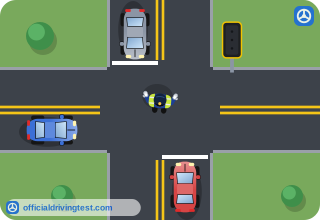
- Obey the traffic signal
- Stop and wait for the signal to change
- Follow the vehicle in front of you
- Obey the officer's signals
Show answer
Correct answer: Obey the officer's signals
The manual says to obey an officer's signals even when they contradict the signal.
Source: Connecticut Driver's Manual (Revised March 2023), page 36 · Open this page in the manual (Manual page 36)
-
When you turn left, whom must you yield to?
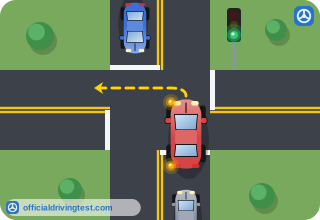
- Vehicles making a right turn behind you
- Only vehicles that have a green light
- Vehicles that are stopped at the intersection
- Oncoming vehicles going straight
Show answer
Correct answer: Oncoming vehicles going straight
Left-turning drivers must yield to oncoming vehicles going straight.
Source: Connecticut Driver's Manual (Revised March 2023), page 36 · Open this page in the manual (Manual page 36)
-
What must you do when you enter a traffic circle or rotary?
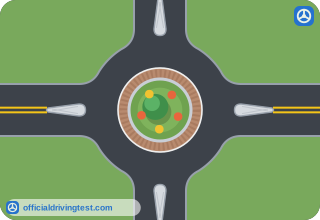
- Speed up to merge ahead of the other drivers
- Stop and wait until the circle is empty
- Yield only to vehicles coming from your right
- Yield to drivers already in the circle
Show answer
Correct answer: Yield to drivers already in the circle
Entering drivers yield to those already in the circle.
Source: Connecticut Driver's Manual (Revised March 2023), page 36 · Open this page in the manual (Manual page 36)
-
At an intersection with no stop sign, yield sign or oncoming traffic signal, to whom must drivers yield?
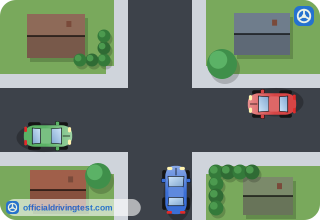
- Vehicles coming from the left
- Vehicles coming from the right
- Vehicles larger than their own
- Vehicles that are going straight ahead only
Show answer
Correct answer: Vehicles coming from the right
Without signs or signals, drivers yield to vehicles coming from the right.
Source: Connecticut Driver's Manual (Revised March 2023), page 36 · Open this page in the manual (Manual page 36)
-
At a four-way stop, who goes first?
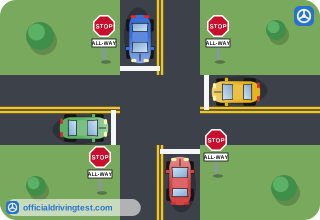
- The driver who is positioned on the left side of the intersection
- The driver who is making a right turn at the intersection
- The driver reaching the intersection first, after a complete stop
- The driver of the largest vehicle at the intersection
Show answer
Correct answer: The driver reaching the intersection first, after a complete stop
The first driver to arrive goes first, after coming to a complete stop.
Source: Connecticut Driver's Manual (Revised March 2023), page 36 · Open this page in the manual (Manual page 36)
-
At a four-way stop, if more than one vehicle arrives at the same time, which vehicle goes first?
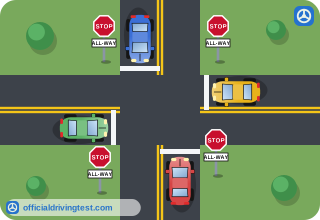
- The vehicle on the right
- The vehicle on the left
- The vehicle going straight
- The vehicle that is turning left
Show answer
Correct answer: The vehicle on the right
When vehicles arrive together at a four-way stop, the vehicle on the right goes first.
Source: Connecticut Driver's Manual (Revised March 2023), page 36 · Open this page in the manual (Manual page 36)
-
What must drivers entering a road from a driveway, alley or roadside do?
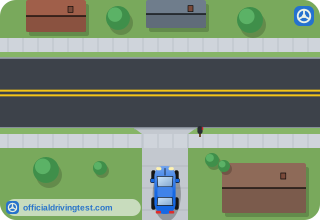
- Yield only to vehicles coming from the left
- Yield to vehicles already on the main road
- Enter quickly so that they do not block the driveway
- Sound the horn and then enter the road
Show answer
Correct answer: Yield to vehicles already on the main road
Vehicles already on the main road have the right-of-way.
Source: Connecticut Driver's Manual (Revised March 2023), page 37 · Open this page in the manual (Manual page 37)
-
When may drivers enter an intersection?
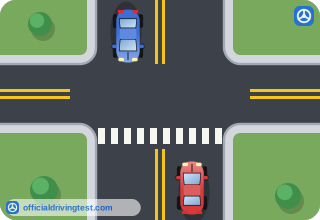
- Whenever the light is green, even if traffic ahead is stopped
- Whenever no pedestrian is in the crosswalk
- Only when they intend to turn
- Only when they can get through it without having to stop
Show answer
Correct answer: Only when they can get through it without having to stop
The manual says to wait until traffic ahead clears so you do not block the intersection.
Source: Connecticut Driver's Manual (Revised March 2023), page 37 · Open this page in the manual (Manual page 37)
-
A driver overtaking a vehicle traveling in the same direction must do what?
- Yield to that vehicle, even if it is slowing or coming to a stop
- Sound the horn and continue to pass it without stopping
- Get ahead of it quickly before it comes to a stop
- Yield only if the vehicle has its turn signal turned on
Show answer
Correct answer: Yield to that vehicle, even if it is slowing or coming to a stop
The overtaking driver must yield to the vehicle being overtaken.
Source: Connecticut Driver's Manual (Revised March 2023), page 37 · Open this page in the manual (Manual page 37)
-
When are drivers required to yield the right-of-way to a bus traveling in the same direction?
- Only when the bus has passengers on board
- Only when the bus is in the right lane
- When the bus appropriately signals
- Never, because buses must yield to cars
Show answer
Correct answer: When the bus appropriately signals
Drivers must yield to a same-direction bus that signals appropriately.
Source: Connecticut Driver's Manual (Revised March 2023), page 37 · Open this page in the manual (Manual page 37)
-
What is a roundabout?
- A road that loops back to the place where it first started
- A parking lot area that is built around a circular island
- A road that has only one lane and is shaped like a circle
- An intersection controlled by a circular island in the center
Show answer
Correct answer: An intersection controlled by a circular island in the center
A roundabout is an intersection controlled by a circular island in the center.
Source: Connecticut Driver's Manual (Revised March 2023), page 37 · Open this page in the manual (Manual page 37)
-
How many lanes may a roundabout have?
- Only a single lane
- One lane or two lanes
- Always exactly two lanes
- Up to four lanes
Show answer
Correct answer: One lane or two lanes
A roundabout may have one lane or two lanes.
Source: Connecticut Driver's Manual (Revised March 2023), page 37 · Open this page in the manual (Manual page 37)
-
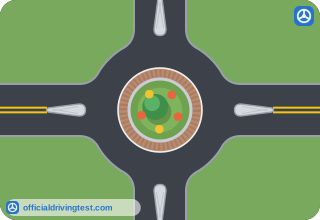
In a roundabout, who must yield the right-of-way?
- Circulating traffic must yield to entering traffic
- The larger vehicle must yield to the smaller one
- Entering traffic must yield to circulating traffic
- The vehicle that arrives last must always stop
Show answer
Correct answer: Entering traffic must yield to circulating traffic
Entering traffic yields to traffic already circulating.
Source: Connecticut Driver's Manual (Revised March 2023), page 37 · Open this page in the manual (Manual page 37)
-
How is each road approaching a roundabout marked?
- With a yield sign, and possibly yield line markings on the pavement
- With a stop sign and a solid stop line painted on the pavement
- With a traffic signal that is placed on each road approaching it
- With a no-passing sign and a double yellow line on the pavement
Show answer
Correct answer: With a yield sign, and possibly yield line markings on the pavement
Each approach has a yield sign and may also have yield lines painted on the pavement.
Source: Connecticut Driver's Manual (Revised March 2023), page 37 · Open this page in the manual (Manual page 37)
-
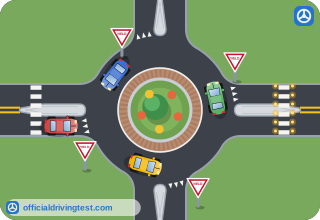
What should you do when approaching a roundabout?
- Speed up to enter before other vehicles
- Slow down
- Stop at its entrance every time
- Move toward the center of the road
Show answer
Correct answer: Slow down
The manual says to slow down when approaching a roundabout.
Source: Connecticut Driver's Manual (Revised March 2023), page 37 · Open this page in the manual (Manual page 37)
-
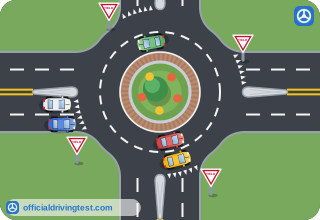
If there is more than one lane as you approach a roundabout, how do you choose the proper lane?
- Always use the left lane so that you can get around much faster
- Always use the right lane to stay out of the way of others
- Use the lane that has the fewest vehicles in it at that moment
- Follow the posted signs and lane-use controls for your intended movement
Show answer
Correct answer: Follow the posted signs and lane-use controls for your intended movement
The posted signs and lane-use controls show the proper lane.
Source: Connecticut Driver's Manual (Revised March 2023), page 37 · Open this page in the manual (Manual page 37)
-
Should you stop within a roundabout to allow traffic to enter from another leg?
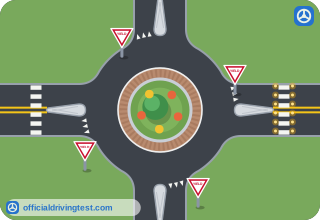
- Yes, whenever the entering vehicle is a large truck or a bus
- Yes, whenever you are driving in the outer lane of it
- No, do not stop within the roundabout to allow traffic to enter
- Yes, if you turn on your hazard lights before you stop
Show answer
Correct answer: No, do not stop within the roundabout to allow traffic to enter
The manual says not to stop within the roundabout for entering traffic.
Source: Connecticut Driver's Manual (Revised March 2023), page 37 · Open this page in the manual (Manual page 37)
-
What must you do before you make a U-turn?
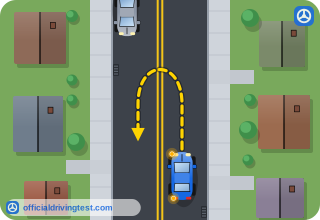
- Check for signs prohibiting them
- Sound your horn twice
- Turn on your hazard lights
- Move to the right lane of the road
Show answer
Correct answer: Check for signs prohibiting them
U-turns are not legal everywhere, so check for signs that prohibit them.
Source: Connecticut Driver's Manual (Revised March 2023), page 37 · Open this page in the manual (Manual page 37)
-
When making a U-turn, which lane should you proceed into?
- The left lane that is closest to the center of the road
- The outside or right hand lane traveling in the opposite direction
- Any lane that happens to be open when you complete it
- The lane that has the fewest vehicles in it at that time
Show answer
Correct answer: The outside or right hand lane traveling in the opposite direction
After the U-turn you proceed into the outside or right hand lane in the opposite direction.
Source: Connecticut Driver's Manual (Revised March 2023), page 37 · Open this page in the manual (Manual page 37)
-
What is the correct procedure when making a U-turn?
- Give a left turn signal, stop, and check for approaching traffic
- Give a right turn signal and then turn in one motion
- Sound your horn and begin to turn at once without stopping
- Slow down and turn without stopping or checking traffic
Show answer
Correct answer: Give a left turn signal, stop, and check for approaching traffic
The procedure is a left turn signal, a stop, and a check for approaching traffic.
Source: Connecticut Driver's Manual (Revised March 2023), page 37 · Open this page in the manual (Manual page 37)
-
What must you do before turning right on a red light?
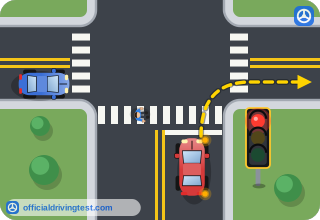
- Slow down and turn if no pedestrians are in the crosswalk, whatever the signs say
- Wait for the light to turn yellow before making the turn
- Stop only if other vehicles are present, then turn when the way is clear
- Stop fully and check that no traffic is oncoming and no sign prohibits the turn
Show answer
Correct answer: Stop fully and check that no traffic is oncoming and no sign prohibits the turn
You may turn right on red after a full stop and checking for oncoming traffic and for a sign prohibiting the turn.
Source: Connecticut Driver's Manual (Revised March 2023), page 45 · Open this page in the manual (Manual page 45)
-
What does a steady green traffic light mean when you are turning left?
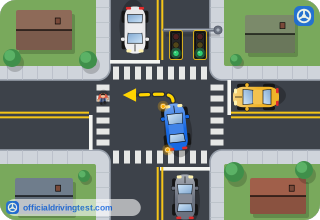
- You may turn, but only when it is safe to do so
- You must wait for a green arrow before you may turn
- You have the right-of-way over all oncoming traffic
- You may turn only after the light turns yellow
Show answer
Correct answer: You may turn, but only when it is safe to do so
With a steady green light you may turn left only when it is safe to do so.
Source: Connecticut Driver's Manual (Revised March 2023), page 45 · Open this page in the manual (Manual page 45)
-
If you are turning right on a green light, whom must you yield to?
- Vehicles behind you
- Bicyclists only
- Pedestrians crossing the street
- Nobody, because you have a green light
Show answer
Correct answer: Pedestrians crossing the street
When turning right on green you must yield to pedestrians crossing the street.
Source: Connecticut Driver's Manual (Revised March 2023), page 45 · Open this page in the manual (Manual page 45)
-
What does a green arrow signal mean?
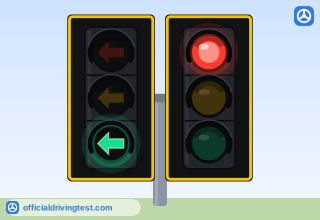
- You must yield to oncoming traffic before turning
- You may only go straight through the intersection
- You must stop and wait for the arrow to go out
- You can safely turn in the direction of the arrow
Show answer
Correct answer: You can safely turn in the direction of the arrow
A green arrow means you can safely turn in the direction of the arrow, with no oncoming or crossing traffic.
Source: Connecticut Driver's Manual (Revised March 2023), page 45 · Open this page in the manual (Manual page 45)