Connecticut: Right-of-way and turning — Part 4 Practice Test
Questions in this part include: “When is it legal to back a vehicle in a travel lane?” · “Under “Failure to Turn,” which lane should you avoid if you are not turning right?”
Independent educational site · not affiliated with any government agency or DMV
Ready? Test yourself
- Instant feedback with an explanation
- Every answer cites its source in the manual
- Your best score is saved on this device
Questions are original and based on the official manual "Connecticut Driver's Manual" (Revised March 2023), Connecticut Department of Motor Vehicles (DMV).
All 19 questions in this practice test
Take the test above first, then use this list to study. Tap “Show answer” to see the correct answer and explanation.
Show the questions and answersHide the questions
-
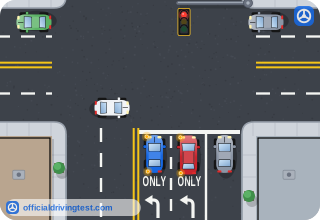
If signs or lane markings allow two or more turning lanes, what should you do during the turn?
- Move to the far left lane
- Move into the nearest lane to the curb
- Stay in your lane
- Switch lanes halfway through the turn
Show answer
Correct answer: Stay in your lane
The manual says to stay in your lane during the turn where two or more turning lanes are allowed.
Source: Connecticut Driver's Manual (Revised March 2023), page 24 · Open this page in the manual (Manual page 24)
-
When is it legal to back a vehicle in a travel lane?
- Only to parallel park or to perform a three-point or K turn
- Whenever you miss your turn
- Whenever you miss your exit and no one is behind you
- Whenever the lane is empty
Show answer
Correct answer: Only to parallel park or to perform a three-point or K turn
The manual says never to back in any travel lane, except to parallel park or perform a three-point or K turn.
Source: Connecticut Driver's Manual (Revised March 2023), page 24 · Open this page in the manual (Manual page 24)
-
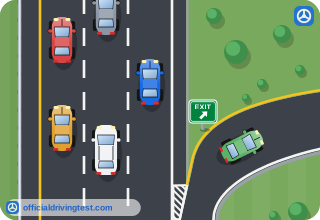
If you miss your turn or exit, what should you do?
- Back up carefully to the missed turn or exit
- Stop and wait for traffic to clear first
- Go on to where you can safely turn around
- Make a U-turn in the middle of the travel lane
Show answer
Correct answer: Go on to where you can safely turn around
The manual says not to back up but to go on to where you can safely turn around.
Source: Connecticut Driver's Manual (Revised March 2023), page 24 · Open this page in the manual (Manual page 24)
-
Instead of stopping in a travel lane (for confusion, a breakdown or to let out a passenger), what does the manual say to do?
- Stop and wait in the lane until traffic clears
- Keep moving until you can safely pull off the road
- Stop only if you are letting out a passenger
- Back up to the last safe place
Show answer
Correct answer: Keep moving until you can safely pull off the road
The manual says not to stop in travel lanes for any reason and to keep moving until you can safely pull off the road.
Source: Connecticut Driver's Manual (Revised March 2023), page 24 · Open this page in the manual (Manual page 24)
-
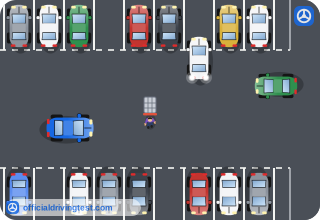
In a shopping center, what kind of parking space should you try to find?
- One as close to the building entrance as possible
- One at the far end of the lot, away from other cars
- One you can back into quickly and easily
- One you can drive through, so you can leave going forward
Show answer
Correct answer: One you can drive through, so you can leave going forward
Because it is hard to see behind your vehicle, the manual suggests a drive-through space so you do not need to back out.
Source: Connecticut Driver's Manual (Revised March 2023), page 24 · Open this page in the manual (Manual page 24)
-
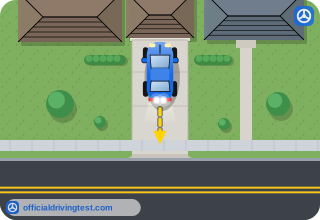
Why should you check behind your vehicle before you get in to back up?
- Small objects or children can't be seen from the seat
- The rear lights may be dirty or may not be working
- The tires may need air before you move backward
- Your mirrors may have moved out of position overnight
Show answer
Correct answer: Small objects or children can't be seen from the seat
The manual says children or small objects cannot be seen from the driver’s seat.
Source: Connecticut Driver's Manual (Revised March 2023), page 24 · Open this page in the manual (Manual page 24)
-
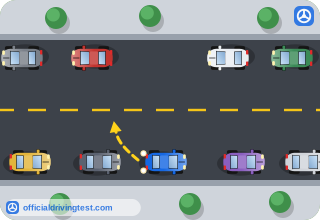
When backing, which way should you look to see directly through the rear window?
- Look into your rear-view mirror only
- Look into your side mirrors only
- Turn and look over your right shoulder
- Look straight through the windshield
Show answer
Correct answer: Turn and look over your right shoulder
The manual says not to depend on your rearview or side mirrors, as you cannot see directly behind the vehicle with them.
Source: Connecticut Driver's Manual (Revised March 2023), page 24 · Open this page in the manual (Manual page 24)
-
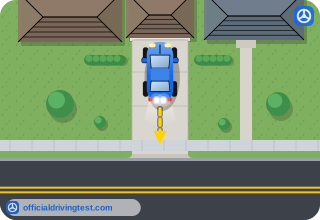
How fast should you back up?
- Quickly, so that you clear the lane sooner
- Slowly, since the vehicle is harder to steer
- At about the speed of surrounding traffic
- At the same speed you use going forward
Show answer
Correct answer: Slowly, since the vehicle is harder to steer
The manual says to back slowly because the vehicle is much harder to steer when backing.
Source: Connecticut Driver's Manual (Revised March 2023), page 24 · Open this page in the manual (Manual page 24)
-
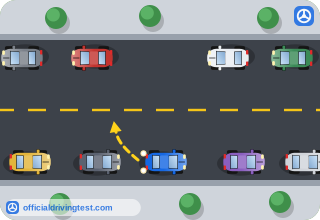
Why is it helpful to stop occasionally while backing and check your rear view mirrors?
- Your mirrors lose their position when backing
- Backing automatically sounds the horn
- The law requires a check every 10 feet
- Some vehicles' design prevents a clear rear view
Show answer
Correct answer: Some vehicles' design prevents a clear rear view
The manual says it is helpful because the design of some vehicles prevents a clear view to the rear.
Source: Connecticut Driver's Manual (Revised March 2023), page 24 · Open this page in the manual (Manual page 24)
-
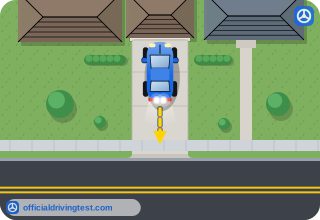
Whenever possible, who should help you when you must back your vehicle?
- A person outside the vehicle
- A passenger sitting beside you
- A passenger in the back seat
- No one, since helpers distract the driver
Show answer
Correct answer: A person outside the vehicle
The manual says to use a person outside the vehicle to help you back whenever possible.
Source: Connecticut Driver's Manual (Revised March 2023), page 24 · Open this page in the manual (Manual page 24)
-
Under “Failure to Turn,” which lane should you avoid if you are not turning right?
- The right-hand lane
- The left-hand lane
- The center of the road
- Any lane next to a bus stop
Show answer
Correct answer: The right-hand lane
The manual says to avoid the right-hand lane if you are not turning right.
Source: Connecticut Driver's Manual (Revised March 2023), page 26 · Open this page in the manual (Manual page 26)
-
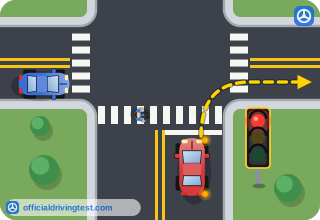
In most areas, when are right-hand turns allowed at a red light?
- Only when a green arrow is shown
- Only after waiting for the light to change
- After a stop
- After slowing down without stopping
Show answer
Correct answer: After a stop
The manual says that in most areas right-hand turns are allowed after a stop at a red light.
Source: Connecticut Driver's Manual (Revised March 2023), page 26 · Open this page in the manual (Manual page 26)
-
What does the law say about the right-of-way?
- It says who must yield; it does not give anyone the right-of-way
- It gives the right-of-way to the driver who arrives first
- It gives the right-of-way to the larger vehicle
- It gives the right-of-way to whoever has a green light
Show answer
Correct answer: It says who must yield; it does not give anyone the right-of-way
The law only says who must yield, so you must do everything you can to avoid a crash.
Source: Connecticut Driver's Manual (Revised March 2023), page 36 · Open this page in the manual (Manual page 36)
-
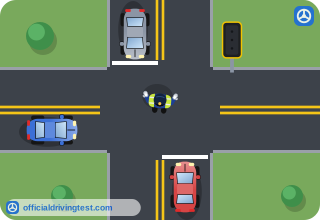
If a law enforcement officer's signals contradict the traffic signal, what must you do?
- Obey the traffic signal
- Stop and wait for the signal to change
- Follow the vehicle in front of you
- Obey the officer's signals
Show answer
Correct answer: Obey the officer's signals
The manual says to obey an officer's signals even when they contradict the signal.
Source: Connecticut Driver's Manual (Revised March 2023), page 36 · Open this page in the manual (Manual page 36)
-
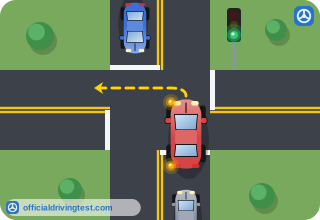
When you turn left, whom must you yield to?
- Vehicles making a right turn behind you
- Only vehicles that have a green light
- Vehicles that are stopped at the intersection
- Oncoming vehicles going straight
Show answer
Correct answer: Oncoming vehicles going straight
Left-turning drivers must yield to oncoming vehicles going straight.
Source: Connecticut Driver's Manual (Revised March 2023), page 36 · Open this page in the manual (Manual page 36)
-
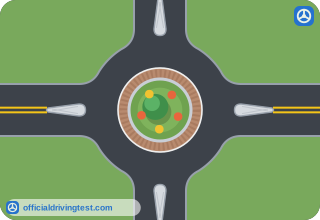
What must you do when you enter a traffic circle or rotary?
- Speed up to merge ahead of the other drivers
- Stop and wait until the circle is empty
- Yield only to vehicles coming from your right
- Yield to drivers already in the circle
Show answer
Correct answer: Yield to drivers already in the circle
Entering drivers yield to those already in the circle.
Source: Connecticut Driver's Manual (Revised March 2023), page 36 · Open this page in the manual (Manual page 36)
-
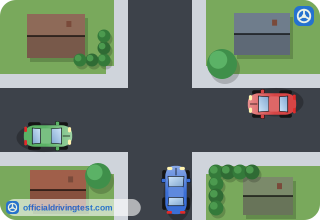
At an intersection with no stop sign, yield sign or oncoming traffic signal, to whom must drivers yield?
- Vehicles coming from the left
- Vehicles coming from the right
- Vehicles larger than their own
- Vehicles that are going straight ahead only
Show answer
Correct answer: Vehicles coming from the right
Without signs or signals, drivers yield to vehicles coming from the right.
Source: Connecticut Driver's Manual (Revised March 2023), page 36 · Open this page in the manual (Manual page 36)
-
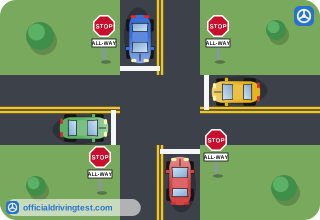
At a four-way stop, who goes first?
- The driver who is positioned on the left side of the intersection
- The driver who is making a right turn at the intersection
- The driver reaching the intersection first, after a complete stop
- The driver of the largest vehicle at the intersection
Show answer
Correct answer: The driver reaching the intersection first, after a complete stop
The first driver to arrive goes first, after coming to a complete stop.
Source: Connecticut Driver's Manual (Revised March 2023), page 36 · Open this page in the manual (Manual page 36)
-
At a four-way stop, if more than one vehicle arrives at the same time, which vehicle goes first?
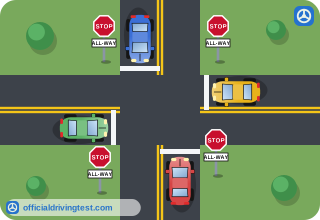
- The vehicle on the right
- The vehicle on the left
- The vehicle going straight
- The vehicle that is turning left
Show answer
Correct answer: The vehicle on the right
When vehicles arrive together at a four-way stop, the vehicle on the right goes first.
Source: Connecticut Driver's Manual (Revised March 2023), page 36 · Open this page in the manual (Manual page 36)