Colorado: Speed and following distance
Colorado speed limits, stopping distances, following distance, night driving, weather, snow and ice, and mountain driving. Split into 4 shorter tests so you're not stuck in one long quiz.
Independent educational site · not affiliated with any government agency or DMV
Choose a part
Speed and following distance — Part 1
Questions in this part include: “Which is part of the drive test's speed control factor?”
StartSpeed and following distance — Part 2
Questions in this part include: “What is stopping distance?”
StartSpeed and following distance — Part 3
Questions in this part include: “When should you not use cruise control?”
StartSpeed and following distance — Part 4
Questions in this part include: “How far ahead of your vehicle should you look down the road?”
StartAll 65 Speed and following distance questions with answers
Choose a part above to take a practice test, or study every question and answer here.
Show the questions and answersHide the questions
-
Which is part of the drive test's speed control factor?
- Maintaining a steady speed during a lane change
- Speeding up while changing lanes
- Slowing sharply before every lane change
- Braking hard during turns to stay in control
Show answer
Correct answer: Maintaining a steady speed during a lane change
Speed control includes maintaining a steady speed during a lane change.
Source: Colorado Driver Handbook (DR 2337, January 2025), page 2 · Open this page in the manual (Manual page 2)
-
At what speed should you approach an intersection on the drive test, according to speed control?
- A speed that lets you come to a complete stop before every turn you make
- A speed slightly above the limit so that you clear the intersection quickly
- A speed that lets you make the turn without stopping or braking during the turn
- A speed that lets you brake firmly once you are in the middle of the turn
Show answer
Correct answer: A speed that lets you make the turn without stopping or braking during the turn
You should approach an intersection at a speed that allows the turn to be made without stopping or braking during the turn.
Source: Colorado Driver Handbook (DR 2337, January 2025), page 2 · Open this page in the manual (Manual page 2)
-
How can you tell on the drive test that you are at an adequate distance from the vehicle in front of you when stopped?
- You can see the bumper of that vehicle in your mirror
- You can see the license plate of that vehicle clearly
- You can see about one car length of pavement ahead
- You can see the rear wheels of that vehicle touching the ground
Show answer
Correct answer: You can see the rear wheels of that vehicle touching the ground
If you can see the rear wheels touching the ground of the vehicle in front of you, you are at an adequate distance.
Source: Colorado Driver Handbook (DR 2337, January 2025), page 2 · Open this page in the manual (Manual page 2)
-
According to the handbook, what is the greatest factor influencing the severity of a crash?
- Weather
- Driver age
- Vehicle size
- Speed
Show answer
Correct answer: Speed
The handbook states that speed is the greatest factor influencing the severity of a crash.
Source: Colorado Driver Handbook (DR 2337, January 2025), page 12 · Open this page in the manual (Manual page 12)
-
What do speed limit signs show?
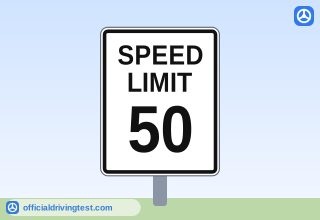
- The maximum speed allowed in ideal conditions
- The speed you should always drive
- The average speed of traffic
- The minimum speed allowed in ideal conditions
Show answer
Correct answer: The maximum speed allowed in ideal conditions
Speed limit signs show the maximum speed allowed in ideal conditions.
Source: Colorado Driver Handbook (DR 2337, January 2025), page 12 · Open this page in the manual (Manual page 12)
-
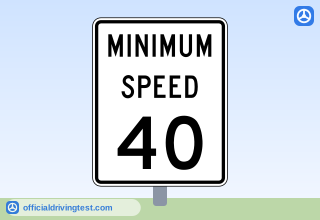
What is the rule on driving slower than a posted minimum speed limit, such as on a freeway?
- It is allowed in the right lane only, at any time of day
- It is allowed whenever you turn on your hazard lights
- It is a traffic violation, unless due to road or weather
- It is allowed at night when the road has no other traffic
Show answer
Correct answer: It is a traffic violation, unless due to road or weather
Driving slower than the minimum speed limit is a traffic violation, unless due to road or weather conditions.
Source: Colorado Driver Handbook (DR 2337, January 2025), page 12 · Open this page in the manual (Manual page 12)
-
In which of these conditions does the handbook say it is important to slow down?
- On a freeway with no other vehicles near
- During poor weather
- When driving on a dry road in the daytime
- When no pedestrians are nearby
Show answer
Correct answer: During poor weather
The handbook lists poor weather and the presence of railroad tracks, pedestrians, bicyclists, animals and school buses.
Source: Colorado Driver Handbook (DR 2337, January 2025), page 12 · Open this page in the manual (Manual page 12)
-
What can driving much slower than the posted speed in normal conditions do?
- It makes a crash less likely in every situation
- It reduces your stopping distance to almost zero
- It gives other drivers time to rest and relax
- It can affect traffic flow and create unsafe situations
Show answer
Correct answer: It can affect traffic flow and create unsafe situations
Driving much slower than the posted speed in normal conditions can affect traffic flow and create unsafe situations.
Source: Colorado Driver Handbook (DR 2337, January 2025), page 12 · Open this page in the manual (Manual page 12)
-
What does the handbook say about the posted speed limit and reduced speed zones?
- It may be necessary to reduce speed regardless of the posted limit
- Reduced speed zones apply only at night
- The posted limit is always safe, so you never need to slow down
- Reduced limits apply only in school zones
Show answer
Correct answer: It may be necessary to reduce speed regardless of the posted limit
Regardless of the posted limit it may be necessary to reduce speed, and signs show when a reduced speed limit is in effect.
Source: Colorado Driver Handbook (DR 2337, January 2025), page 12 · Open this page in the manual (Manual page 12)
-
Unless otherwise posted, what is the speed limit on narrow, winding mountain highways and blind curves?
- 15 mph
- 25 mph
- 20 mph
- 30 mph
Show answer
Correct answer: 20 mph
Colorado's speed limit on narrow, winding mountain highways and blind curves is 20 mph unless otherwise posted.
Source: Colorado Driver Handbook (DR 2337, January 2025), page 12 · Open this page in the manual (Manual page 12)
-
Unless otherwise posted, what is the speed limit in any business district?
- 20 mph
- 25 mph
- 30 mph
- 35 mph
Show answer
Correct answer: 25 mph
The handbook lists 25 mph in any business district.
Source: Colorado Driver Handbook (DR 2337, January 2025), page 12 · Open this page in the manual (Manual page 12)
-
Unless otherwise posted, what is the speed limit in any residence district?
- 20 mph
- 25 mph
- 35 mph
- 30 mph
Show answer
Correct answer: 30 mph
The handbook lists 30 mph in any residence district.
Source: Colorado Driver Handbook (DR 2337, January 2025), page 12 · Open this page in the manual (Manual page 12)
-
Unless otherwise posted, what is the speed limit on open mountain highways?
- 40 mph
- 30 mph
- 35 mph
- 45 mph
Show answer
Correct answer: 40 mph
The handbook lists 40 mph on open mountain highways.
Source: Colorado Driver Handbook (DR 2337, January 2025), page 12 · Open this page in the manual (Manual page 12)
-
Unless otherwise posted, what is the speed limit for vehicles in the business of hauling trash?
- 35 mph
- 40 mph
- 45 mph
- 55 mph
Show answer
Correct answer: 45 mph
The handbook lists 45 mph for vehicles in the business of hauling trash.
Source: Colorado Driver Handbook (DR 2337, January 2025), page 12 · Open this page in the manual (Manual page 12)
-
Unless otherwise posted, what is the speed limit on urban interstates and highways?
- 45 mph
- 55 mph
- 50 mph
- 65 mph
Show answer
Correct answer: 55 mph
The handbook lists 55 mph on urban interstate and highways.
Source: Colorado Driver Handbook (DR 2337, January 2025), page 12 · Open this page in the manual (Manual page 12)
-
Unless otherwise posted, what is the speed limit range on designated rural interstates and highways?
- 55 to 65 mph
- 55 to 70 mph
- 70 to 80 mph
- 65 to 75 mph
Show answer
Correct answer: 65 to 75 mph
The handbook lists 65-75 mph on designated rural interstate and highways.
Source: Colorado Driver Handbook (DR 2337, January 2025), page 12 · Open this page in the manual (Manual page 12)
-
What may cities or towns do about speed limits in their jurisdictions?
- Adopt lower speed limits by ordinance
- Raise the speed limits above the state limits
- Remove the speed limits on local roads
- Adopt speed limits only on freeways
Show answer
Correct answer: Adopt lower speed limits by ordinance
The handbook says cities or towns may by ordinance adopt lower speed limits.
Source: Colorado Driver Handbook (DR 2337, January 2025), page 12 · Open this page in the manual (Manual page 12)
-
What is stopping distance?
- The distance your vehicle travels after you press the brake pedal
- The distance your vehicle needs to stop after the brakes lock
- The distance traveled from when you realize you must stop until you stop
- The distance between you and the vehicle ahead of you
Show answer
Correct answer: The distance traveled from when you realize you must stop until you stop
Stopping distance runs from the moment you realize you must stop until the vehicle stops.
Source: Colorado Driver Handbook (DR 2337, January 2025), page 12 · Open this page in the manual (Manual page 12)
-
Which of these factors affects your stopping distance?
- The color of your vehicle and its paint finish
- The time it takes you to recognize you need to stop
- The number on your vehicle's license plate
- The brand name printed on your tires
Show answer
Correct answer: The time it takes you to recognize you need to stop
Stopping distance depends on speed, recognition time, reaction time and the time the brakes take to slow and stop the vehicle.
Source: Colorado Driver Handbook (DR 2337, January 2025), page 12 · Open this page in the manual (Manual page 12)
-
How does giving yourself space behind other motorists help you?
- It lets you drive faster than the posted limit
- It means you never need to check your mirrors
- It shortens the time your brakes need to stop the vehicle
- You can assess well ahead when you will need to stop
Show answer
Correct answer: You can assess well ahead when you will need to stop
Space lets you judge early when you must stop; slowing down or changing lanes may let you avoid stopping or stop more gradually.
Source: Colorado Driver Handbook (DR 2337, January 2025), page 12 · Open this page in the manual (Manual page 12)
-
What is stopping suddenly often the result of?
- A driver who was not paying attention or trailing too closely
- A driver who was driving well below the posted speed limit
- A driver who was using a turn signal before slowing
- A driver who was in the right-hand lane of the road
Show answer
Correct answer: A driver who was not paying attention or trailing too closely
The handbook says sudden stops are often the result of a driver who was not paying attention or was following too closely.
Source: Colorado Driver Handbook (DR 2337, January 2025), page 12 · Open this page in the manual (Manual page 12)
-
What could happen if you brake too quickly?
- Your vehicle's brakes would reset themselves
- Your stopping distance would be zero
- You could skid or lose control of your vehicle
- Your tires would grip the road better
Show answer
Correct answer: You could skid or lose control of your vehicle
Braking too quickly could cause a skid, a loss of control or a crash with the vehicle behind.
Source: Colorado Driver Handbook (DR 2337, January 2025), page 12 · Open this page in the manual (Manual page 12)
-
According to the National Safety Council, in about how many feet can a lightweight passenger car traveling 55 mph stop?
- About 100 feet
- About 200 feet
- About 300 feet
- About 400 feet
Show answer
Correct answer: About 200 feet
The handbook cites the National Safety Council: a lightweight passenger car at 55 mph can stop in about 200 feet.
Source: Colorado Driver Handbook (DR 2337, January 2025), page 12 · Open this page in the manual (Manual page 12)
-
In the handbook's chart of approximate stopping distances at 55 MPH, what distance is shown for the bus?
- 200 feet
- 300 feet
- 5280 feet
- 230 feet
Show answer
Correct answer: 230 feet
The chart shows 230 feet for the bus at 55 MPH under ideal conditions.
Source: Colorado Driver Handbook (DR 2337, January 2025), page 12 · Open this page in the manual (Manual page 12)
-
In the handbook's chart of approximate stopping distances at 55 MPH, what distance is shown for the large truck (tractor-trailer)?
- 300 feet
- 200 feet
- 230 feet
- 5280 feet
Show answer
Correct answer: 300 feet
The chart shows 300 feet for the large truck at 55 MPH under ideal conditions.
Source: Colorado Driver Handbook (DR 2337, January 2025), page 12 · Open this page in the manual (Manual page 12)
-
In the handbook's chart of approximate stopping distances at 55 MPH, what distance is shown for the train?
- 530 feet
- 2640 feet
- 5280 feet
- 1000 feet
Show answer
Correct answer: 5280 feet
The chart shows 5280 feet for the train; the line would be 53 inches long.
Source: Colorado Driver Handbook (DR 2337, January 2025), page 12 · Open this page in the manual (Manual page 12)
-
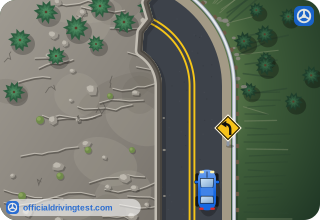
What should you be prepared to do when approaching a curve or hill that obscures your view of the road?
- Stop
- Pass the vehicle ahead
- Switch on your high beams
- Accelerate to the top
Show answer
Correct answer: Stop
Hills and curves can hide obstructions, so be prepared to stop.
Source: Colorado Driver Handbook (DR 2337, January 2025), page 16 · Open this page in the manual (Manual page 16)
-
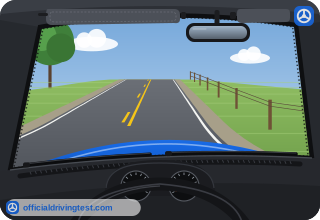
If you cannot see over the top of a hill, what should you do?
- Keep your speed and sound your horn as you reach the top
- Move to the center of the road so oncoming drivers see you
- Slow down until you crest the hill and can see the roadway
- Switch to your high beams and keep a steady speed uphill
Show answer
Correct answer: Slow down until you crest the hill and can see the roadway
Slow down to an appropriate speed until you crest the hill and regain sight of the roadway.
Source: Colorado Driver Handbook (DR 2337, January 2025), page 16 · Open this page in the manual (Manual page 16)
-
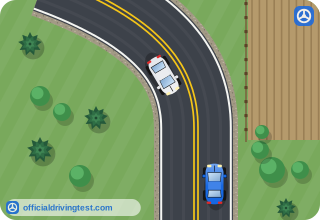
What can happen if you go through a curve too fast?
- Your brakes will lock and the engine will stall
- Your tires will not grip the road and the vehicle will skid
- Your headlights will point away from the road ahead
- Your steering wheel will lock in place
Show answer
Correct answer: Your tires will not grip the road and the vehicle will skid
The handbook says that at too high a speed your tires cannot grip the road and the vehicle will skid.
Source: Colorado Driver Handbook (DR 2337, January 2025), page 16 · Open this page in the manual (Manual page 16)
-
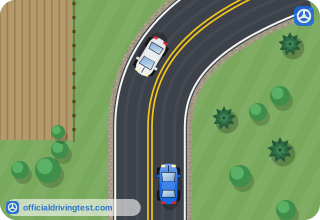
When in a curve should you begin to accelerate?
- As soon as you enter the curve
- Just before you enter the curve
- Only after you fully leave the curve
- After reaching the middle of the curve
Show answer
Correct answer: After reaching the middle of the curve
Begin your acceleration only after reaching the middle of the curve.
Source: Colorado Driver Handbook (DR 2337, January 2025), page 16 · Open this page in the manual (Manual page 16)
-
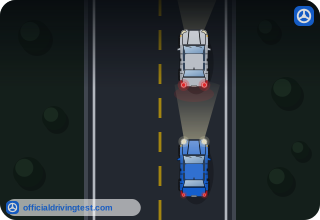
What should you do with your following distance when driving at night or on unfamiliar roads?
- Decrease it
- Increase it
- Keep it the same as in the daytime
- Shorten it so you can see the taillights better
Show answer
Correct answer: Increase it
The handbook says to increase your following distance at night or on unfamiliar roads.
Source: Colorado Driver Handbook (DR 2337, January 2025), page 16 · Open this page in the manual (Manual page 16)
-
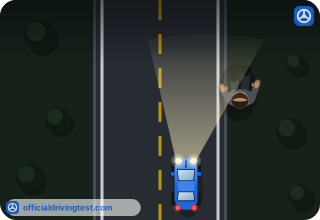
What should you do in poorly lit areas where vehicles, pedestrians, bicyclists or animals might be traveling?
- Slow down and stay alert
- Speed up to pass through quickly
- Use only your parking lights to avoid glare
- Stop and wait for daylight
Show answer
Correct answer: Slow down and stay alert
The handbook says to slow down and stay alert in poorly lit areas.
Source: Colorado Driver Handbook (DR 2337, January 2025), page 16 · Open this page in the manual (Manual page 16)
-
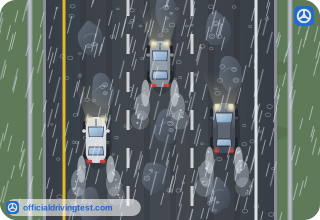
In rain, fog, ice, high winds or dust, what are the two most important actions you can take?
- Turn on your hazard lights and keep to the center lane
- Slow your speed and increase your following distance
- Use cruise control and keep up with traffic
- Switch to high beams and move to the left lane
Show answer
Correct answer: Slow your speed and increase your following distance
The two most important actions in inclement weather are to slow your speed and increase your following distance.
Source: Colorado Driver Handbook (DR 2337, January 2025), page 16 · Open this page in the manual (Manual page 16)
-
When should you not use cruise control?
- When the highway is wet or icy
- When driving on a freeway
- When driving in daylight
- When driving uphill
Show answer
Correct answer: When the highway is wet or icy
If the highway is wet or icy, do not use cruise control.
Source: Colorado Driver Handbook (DR 2337, January 2025), page 16 · Open this page in the manual (Manual page 16)
-
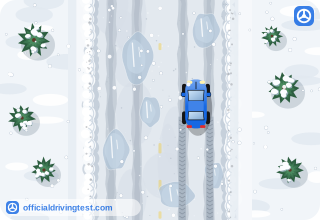
How does weather affect a vehicle with four-wheel drive or all-wheel drive?
- It does not, because those vehicles keep full traction
- Only front wheel drive vehicles are affected by weather
- It affects how the vehicle drives, as with any other vehicle
- Only rear wheel drive vehicles are affected by weather
Show answer
Correct answer: It affects how the vehicle drives, as with any other vehicle
Weather significantly affects how a vehicle drives regardless of whether it has front wheel, rear wheel, four-wheel or all-wheel drive.
Source: Colorado Driver Handbook (DR 2337, January 2025), page 16 · Open this page in the manual (Manual page 16)
-
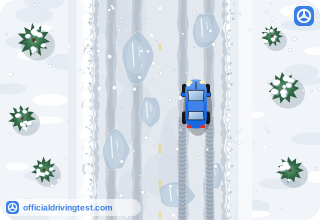
When are snow- or ice-covered streets and highways most hazardous?
- When the snow is freshly fallen
- When the snow or ice begins to melt
- When temperatures are far below freezing
- At midday, when traffic is heavy
Show answer
Correct answer: When the snow or ice begins to melt
The handbook says snow- and ice-covered roads are most hazardous when the snow or ice begins to melt.
Source: Colorado Driver Handbook (DR 2337, January 2025), page 17 · Open this page in the manual (Manual page 17)
-
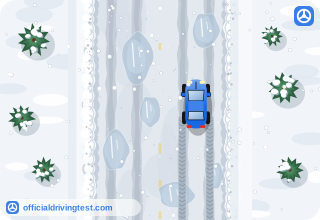
What happens when the road is slippery?
- Your tires grip better and you stop sooner
- Your stopping distance stays the same if you have all-wheel drive
- Only your brakes are affected, not your tires
- Your tires do not grip as well and it takes longer to stop
Show answer
Correct answer: Your tires do not grip as well and it takes longer to stop
On a slippery road your tires do not grip as well and it will take longer to stop.
Source: Colorado Driver Handbook (DR 2337, January 2025), page 17 · Open this page in the manual (Manual page 17)
-
Which of these places can be icy even when other pavement is not?
- Overpasses, bridges and shaded areas
- Only roads at high mountain elevations
- Only gravel or unpaved roads
- Only lanes that have not been driven on
Show answer
Correct answer: Overpasses, bridges and shaded areas
Overpasses, bridges, shaded areas and snow packed portions of the road can be icy even when other pavement is not.
Source: Colorado Driver Handbook (DR 2337, January 2025), page 17 · Open this page in the manual (Manual page 17)
-
How does a vehicle with 4-wheel drive compare with a conventional car when stopping?
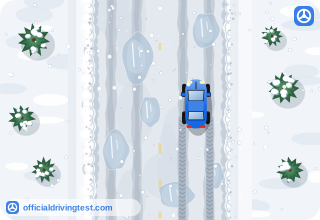
- It cannot stop any sooner
- It stops sooner because of its extra traction
- It stops in a much shorter distance on ice
- It stops sooner only when it has chains
Show answer
Correct answer: It cannot stop any sooner
4-wheel drive gives more traction but the vehicle cannot stop any sooner than a conventional car.
Source: Colorado Driver Handbook (DR 2337, January 2025), page 17 · Open this page in the manual (Manual page 17)
-
In winter, which of these is preferable for traction according to the handbook?
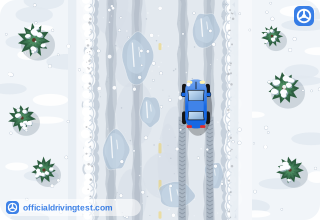
- Tires inflated well above recommended pressure
- Bald tires that reduce road resistance
- Chains, snow tires or alternative traction devices
- Four-wheel drive alone, with no other aids
Show answer
Correct answer: Chains, snow tires or alternative traction devices
In winter chains, snow tires or alternative traction devices are preferable and may be required on highways.
Source: Colorado Driver Handbook (DR 2337, January 2025), page 17 · Open this page in the manual (Manual page 17)
-
Can chains and snow tires still slip on slick pavement?
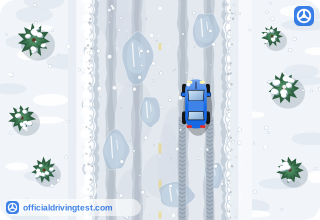
- No, they prevent all slipping on slick pavement
- Yes, they will slip on slick pavement
- No, they grip on every kind of slick surface
- Only chains slip; snow tires never do
Show answer
Correct answer: Yes, they will slip on slick pavement
The handbook reminds drivers that even chains and snow tires will slip on slick pavement.
Source: Colorado Driver Handbook (DR 2337, January 2025), page 17 · Open this page in the manual (Manual page 17)
-
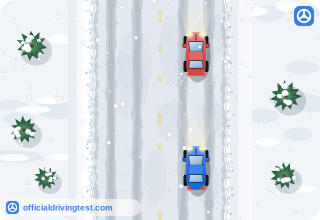
In conditions that affect stopping distance, such as snow and ice, how much space should you keep between you and the vehicle ahead?
- The normal space for dry roads
- A smaller space to stay in the plowed track
- No more space than usual if you drive slowly
- An extra large space
Show answer
Correct answer: An extra large space
Maintain an extra large space between you and the vehicle ahead in snow and ice, and slow down.
Source: Colorado Driver Handbook (DR 2337, January 2025), page 17 · Open this page in the manual (Manual page 17)
-
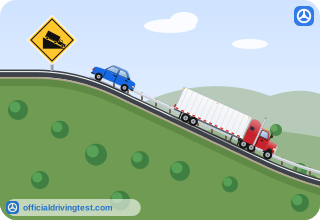
How can you control your speed when driving down steep hills or mountains?
- Shift to a higher gear
- Shift to lower gears
- Shift into neutral and coast
- Keep the brake pedal pressed down
Show answer
Correct answer: Shift to lower gears
Shift to lower gears to control speeds when driving down steep hills or mountains.
Source: Colorado Driver Handbook (DR 2337, January 2025), page 17 · Open this page in the manual (Manual page 17)
-
Which of these can rural roads have, according to the handbook?
- Wide shoulders and guard rails on every curve
- Sharp curves, blind curves, steep hills and dips
- Guide signs at every intersection
- Smooth, well-maintained pavement throughout
Show answer
Correct answer: Sharp curves, blind curves, steep hills and dips
Rural roads can have a lot of sharp curves, blind curves, steep hills and dips.
Source: Colorado Driver Handbook (DR 2337, January 2025), page 17 · Open this page in the manual (Manual page 17)
-
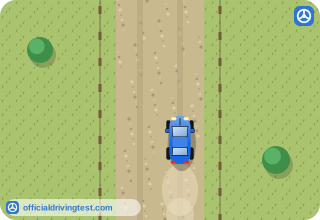
Some rural roads are unpaved (dirt or gravel). What is the result?
- Less traction
- More traction
- Smoother steering
- Better braking
Show answer
Correct answer: Less traction
Unpaved rural roads result in less traction.
Source: Colorado Driver Handbook (DR 2337, January 2025), page 17 · Open this page in the manual (Manual page 17)
-
What is washboarding, often found on gravel roads?
- A layer of loose water that lifts the tires off the road
- Rutting caused by heavy snowplows on rural highways
- A series of potholes that can affect steering and vehicle control
- A skid that happens when the brakes are locked
Show answer
Correct answer: A series of potholes that can affect steering and vehicle control
Washboarding is a series of potholes that can affect steering and vehicle control.
Source: Colorado Driver Handbook (DR 2337, January 2025), page 17 · Open this page in the manual (Manual page 17)
-
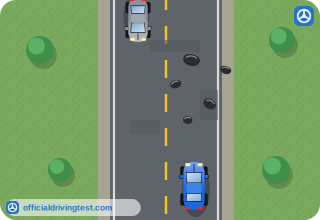
What can roads with potholes do to your vehicle?
- Increase your tires' grip on rough pavement
- Make it jolt and cause your tires to lose traction
- Give a smoother ride at high speeds
- Cause your steering to lock in place
Show answer
Correct answer: Make it jolt and cause your tires to lose traction
Potholes may cause your vehicle to bounce or jolt and can cause your tires to lose traction.
Source: Colorado Driver Handbook (DR 2337, January 2025), page 17 · Open this page in the manual (Manual page 17)
-
What does defensive driving do?
- Protects you and others from unsafe and unexpected situations
- Allows you to drive faster whenever the traffic is light
- Lets you ignore the rules that other drivers are breaking
- Replaces the need to look behind you while driving
Show answer
Correct answer: Protects you and others from unsafe and unexpected situations
Defensive driving protects you and others from unsafe and unexpected driving situations.
Source: Colorado Driver Handbook (DR 2337, January 2025), page 18 · Open this page in the manual (Manual page 18)
-
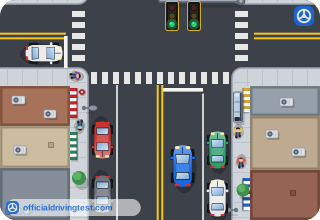
When turning, or driving through or entering an intersection, in what order should you look?
- Left, right and then left again
- Right, left and then right again
- Straight ahead and then left only
- Left and then right only
Show answer
Correct answer: Left, right and then left again
The handbook says always look left, right and then left again at intersections and when turning.
Source: Colorado Driver Handbook (DR 2337, January 2025), page 18 · Open this page in the manual (Manual page 18)
-
How far ahead of your vehicle should you look down the road?
- At least 2 seconds
- At least 10 seconds
- At least 5 seconds
- At least 30 seconds
Show answer
Correct answer: At least 10 seconds
You should look down the road at least 10 seconds ahead of your vehicle.
Source: Colorado Driver Handbook (DR 2337, January 2025), page 18 · Open this page in the manual (Manual page 18)
-
On an open road, looking 10 seconds ahead of your vehicle means looking about how far?
- One block
- One mile
- 100 feet
- Half a mile
Show answer
Correct answer: Half a mile
The handbook gives half a mile for the open road.
Source: Colorado Driver Handbook (DR 2337, January 2025), page 18 · Open this page in the manual (Manual page 18)
-
In the city, looking 10 seconds ahead of your vehicle means looking about how far?
- One block
- Half a mile
- One mile
- Ten blocks
Show answer
Correct answer: One block
The handbook gives one block for the city.
Source: Colorado Driver Handbook (DR 2337, January 2025), page 18 · Open this page in the manual (Manual page 18)
-
Why should you look down the road at least 10 seconds ahead of your vehicle?
- To read the license plates of vehicles ahead
- To judge when a traffic signal will change colors
- To avoid last-minute braking or abrupt turns
- To find parking spaces earlier
Show answer
Correct answer: To avoid last-minute braking or abrupt turns
Looking ahead helps you avoid last-minute braking or the need to turn abruptly.
Source: Colorado Driver Handbook (DR 2337, January 2025), page 18 · Open this page in the manual (Manual page 18)
-
Looking well ahead and being ready to stop or change lanes helps you do which of these?
- Avoid using your mirrors
- Save on fuel
- Skip checking blind spots
- Drive faster than the posted limit
Show answer
Correct answer: Save on fuel
By looking well ahead you can drive more safely, save on fuel and help keep traffic moving at a steady pace.
Source: Colorado Driver Handbook (DR 2337, January 2025), page 18 · Open this page in the manual (Manual page 18)
-
Why should you look for other vehicles and pedestrians on both sides and beyond the curb?
- Curbs are always marked with warning colors
- It is the only way to know your lane position
- Signs giving directions are always at the curb
- Others might cross or enter your path at any time
Show answer
Correct answer: Others might cross or enter your path at any time
Other vehicles or pedestrians might cross or enter your path at any time.
Source: Colorado Driver Handbook (DR 2337, January 2025), page 18 · Open this page in the manual (Manual page 18)
-
How often must you check traffic behind you in your rear view mirror?
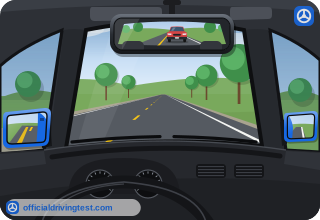
- Every 5 to 8 seconds
- Every 1 to 2 seconds
- Every 10 to 15 seconds
- Every 30 seconds
Show answer
Correct answer: Every 5 to 8 seconds
You must check traffic behind you in your rear view mirror every 5 to 8 seconds.
Source: Colorado Driver Handbook (DR 2337, January 2025), page 18 · Open this page in the manual (Manual page 18)
-
When should you check traffic behind you more often than every 5 to 8 seconds?
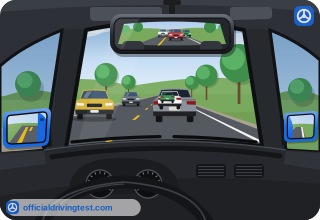
- When traffic is light
- On open rural roads
- When traffic is heavy
- When the road is dry
Show answer
Correct answer: When traffic is heavy
You need to check more often when traffic is heavy.
Source: Colorado Driver Handbook (DR 2337, January 2025), page 18 · Open this page in the manual (Manual page 18)
-
In which situation is it very important to look behind you?
- When you hold a steady speed on a flat road
- When you drive down a long or steep hill
- When you are parked with the engine off
- When you turn on your windshield wipers
Show answer
Correct answer: When you drive down a long or steep hill
It is very important to look behind you when you change lanes, slow down, back up, exit an intersection or drive down a long or steep hill.
Source: Colorado Driver Handbook (DR 2337, January 2025), page 18 · Open this page in the manual (Manual page 18)
-
What does following the vehicle in front of you too closely do?
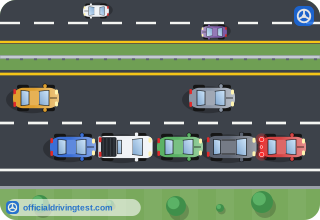
- Improves your view of traffic ahead
- Gives you extra time to react to hazards
- Saves fuel by reducing wind resistance
- Limits your view and your time to react
Show answer
Correct answer: Limits your view and your time to react
Following too closely limits your vision of the road and does not allow you enough time to react to avoid a crash.
Source: Colorado Driver Handbook (DR 2337, January 2025), page 18 · Open this page in the manual (Manual page 18)
-
Under normal conditions, which rule gauges the space to leave between your vehicle and the vehicle in front of you?
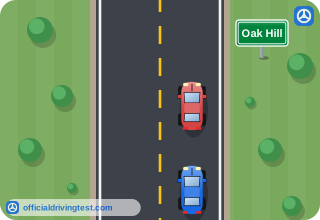
- Three-second rule
- Six-second rule
- Two-car-length rule
- Ten-second rule
Show answer
Correct answer: Three-second rule
Under normal conditions use the three-second rule to gauge the space between you and the vehicle ahead.
Source: Colorado Driver Handbook (DR 2337, January 2025), page 18 · Open this page in the manual (Manual page 18)
-
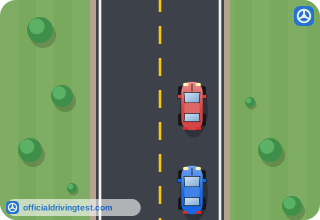
In the three-second rule, when do you begin counting?
- When the vehicle ahead brakes suddenly
- When your vehicle reaches the intersection
- When the vehicle ahead passes a reference point
- When the traffic signal turns green
Show answer
Correct answer: When the vehicle ahead passes a reference point
You watch the vehicle ahead; when it passes a reference point such as a mile marker, sign or telephone pole, you start counting.
Source: Colorado Driver Handbook (DR 2337, January 2025), page 18 · Open this page in the manual (Manual page 18)
-
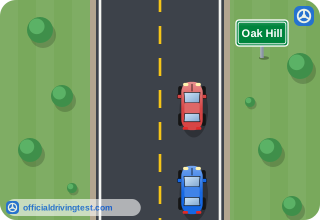
Using the three-second rule, you pass the reference point before you finish counting. What does that mean?
- You have the correct following distance
- You are following too closely
- You are following too far behind
- You should speed up
Show answer
Correct answer: You are following too closely
If you pass the reference point before you finish counting, you are following too closely.
Source: Colorado Driver Handbook (DR 2337, January 2025), page 18 · Open this page in the manual (Manual page 18)
-
According to the handbook, what happens when you travel much faster than traffic?
- It lets traffic flow more smoothly by keeping everyone moving
- It results in frequent passing, which increases the chance of a crash
- It lowers the number of passing situations on the road
- It causes back-ups and more passing situations behind you
Show answer
Correct answer: It results in frequent passing, which increases the chance of a crash
Traveling much faster than traffic results in frequent passing, increasing the opportunity for a crash.
Source: Colorado Driver Handbook (DR 2337, January 2025), page 19 · Open this page in the manual (Manual page 19)
-
What can result from driving considerably slower than other vehicles?
- Smoother traffic with fewer lane changes by other drivers
- Lower risk of a crash because you have more time to react
- Less need for others to pass you on the road
- Back-ups and more passing situations that compromise safety
Show answer
Correct answer: Back-ups and more passing situations that compromise safety
Driving considerably slower increases unpredictability and compromises safety by causing back-ups and more passing situations.
Source: Colorado Driver Handbook (DR 2337, January 2025), page 19 · Open this page in the manual (Manual page 19)
-
Which of these is listed in the handbook as a place that requires slower speeds and increased attention?
- Toll plazas
- Long, straight rural highways
- Wide freeway shoulders
- Empty parking lots at night
Show answer
Correct answer: Toll plazas
The handbook's list of slow zones includes shopping centers, schools, parks and playgrounds, residential streets, rush hour traffic, narrow bridges, toll plazas and rail crossings.
Source: Colorado Driver Handbook (DR 2337, January 2025), page 19 · Open this page in the manual (Manual page 19)