Colorado: Speed and following distance — Part 3 Practice Test
Questions in this part include: “When should you not use cruise control?” · “Which of these can rural roads have, according to the handbook?”
Independent educational site · not affiliated with any government agency or DMV
Ready? Test yourself
- Instant feedback with an explanation
- Every answer cites its source in the manual
- Your best score is saved on this device
Questions are original and based on the official manual "Colorado Driver Handbook" (DR 2337, January 2025), Colorado Division of Motor Vehicles (DMV).
All 16 questions in this practice test
Take the test above first, then use this list to study. Tap “Show answer” to see the correct answer and explanation.
Show the questions and answersHide the questions
-
When should you not use cruise control?
- When the highway is wet or icy
- When driving on a freeway
- When driving in daylight
- When driving uphill
Show answer
Correct answer: When the highway is wet or icy
If the highway is wet or icy, do not use cruise control.
Source: Colorado Driver Handbook (DR 2337, January 2025), page 16 · Open this page in the manual (Manual page 16)
-
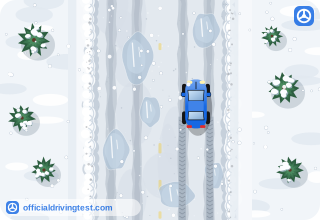
How does weather affect a vehicle with four-wheel drive or all-wheel drive?
- It does not, because those vehicles keep full traction
- Only front wheel drive vehicles are affected by weather
- It affects how the vehicle drives, as with any other vehicle
- Only rear wheel drive vehicles are affected by weather
Show answer
Correct answer: It affects how the vehicle drives, as with any other vehicle
Weather significantly affects how a vehicle drives regardless of whether it has front wheel, rear wheel, four-wheel or all-wheel drive.
Source: Colorado Driver Handbook (DR 2337, January 2025), page 16 · Open this page in the manual (Manual page 16)
-
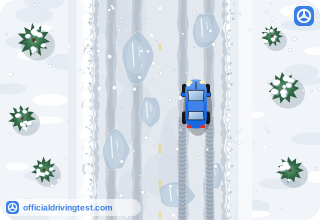
When are snow- or ice-covered streets and highways most hazardous?
- When the snow is freshly fallen
- When the snow or ice begins to melt
- When temperatures are far below freezing
- At midday, when traffic is heavy
Show answer
Correct answer: When the snow or ice begins to melt
The handbook says snow- and ice-covered roads are most hazardous when the snow or ice begins to melt.
Source: Colorado Driver Handbook (DR 2337, January 2025), page 17 · Open this page in the manual (Manual page 17)
-
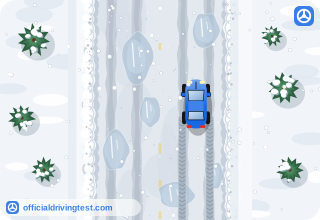
What happens when the road is slippery?
- Your tires grip better and you stop sooner
- Your stopping distance stays the same if you have all-wheel drive
- Only your brakes are affected, not your tires
- Your tires do not grip as well and it takes longer to stop
Show answer
Correct answer: Your tires do not grip as well and it takes longer to stop
On a slippery road your tires do not grip as well and it will take longer to stop.
Source: Colorado Driver Handbook (DR 2337, January 2025), page 17 · Open this page in the manual (Manual page 17)
-
Which of these places can be icy even when other pavement is not?
- Overpasses, bridges and shaded areas
- Only roads at high mountain elevations
- Only gravel or unpaved roads
- Only lanes that have not been driven on
Show answer
Correct answer: Overpasses, bridges and shaded areas
Overpasses, bridges, shaded areas and snow packed portions of the road can be icy even when other pavement is not.
Source: Colorado Driver Handbook (DR 2337, January 2025), page 17 · Open this page in the manual (Manual page 17)
-
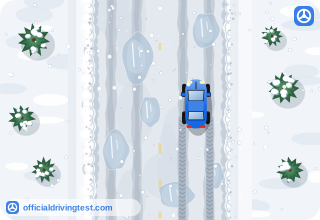
How does a vehicle with 4-wheel drive compare with a conventional car when stopping?
- It cannot stop any sooner
- It stops sooner because of its extra traction
- It stops in a much shorter distance on ice
- It stops sooner only when it has chains
Show answer
Correct answer: It cannot stop any sooner
4-wheel drive gives more traction but the vehicle cannot stop any sooner than a conventional car.
Source: Colorado Driver Handbook (DR 2337, January 2025), page 17 · Open this page in the manual (Manual page 17)
-
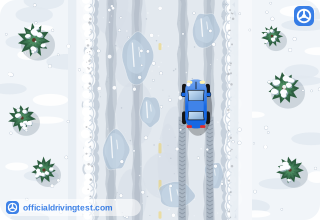
In winter, which of these is preferable for traction according to the handbook?
- Tires inflated well above recommended pressure
- Bald tires that reduce road resistance
- Chains, snow tires or alternative traction devices
- Four-wheel drive alone, with no other aids
Show answer
Correct answer: Chains, snow tires or alternative traction devices
In winter chains, snow tires or alternative traction devices are preferable and may be required on highways.
Source: Colorado Driver Handbook (DR 2337, January 2025), page 17 · Open this page in the manual (Manual page 17)
-
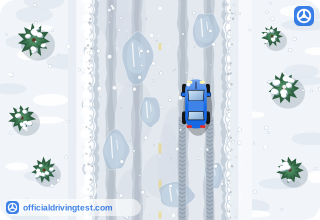
Can chains and snow tires still slip on slick pavement?
- No, they prevent all slipping on slick pavement
- Yes, they will slip on slick pavement
- No, they grip on every kind of slick surface
- Only chains slip; snow tires never do
Show answer
Correct answer: Yes, they will slip on slick pavement
The handbook reminds drivers that even chains and snow tires will slip on slick pavement.
Source: Colorado Driver Handbook (DR 2337, January 2025), page 17 · Open this page in the manual (Manual page 17)
-
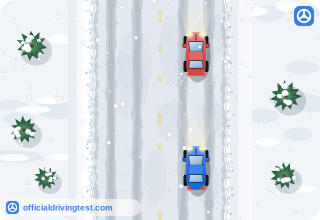
In conditions that affect stopping distance, such as snow and ice, how much space should you keep between you and the vehicle ahead?
- The normal space for dry roads
- A smaller space to stay in the plowed track
- No more space than usual if you drive slowly
- An extra large space
Show answer
Correct answer: An extra large space
Maintain an extra large space between you and the vehicle ahead in snow and ice, and slow down.
Source: Colorado Driver Handbook (DR 2337, January 2025), page 17 · Open this page in the manual (Manual page 17)
-
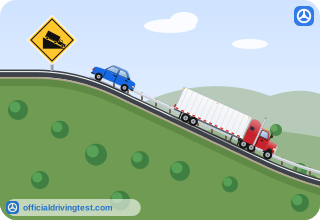
How can you control your speed when driving down steep hills or mountains?
- Shift to a higher gear
- Shift to lower gears
- Shift into neutral and coast
- Keep the brake pedal pressed down
Show answer
Correct answer: Shift to lower gears
Shift to lower gears to control speeds when driving down steep hills or mountains.
Source: Colorado Driver Handbook (DR 2337, January 2025), page 17 · Open this page in the manual (Manual page 17)
-
Which of these can rural roads have, according to the handbook?
- Wide shoulders and guard rails on every curve
- Sharp curves, blind curves, steep hills and dips
- Guide signs at every intersection
- Smooth, well-maintained pavement throughout
Show answer
Correct answer: Sharp curves, blind curves, steep hills and dips
Rural roads can have a lot of sharp curves, blind curves, steep hills and dips.
Source: Colorado Driver Handbook (DR 2337, January 2025), page 17 · Open this page in the manual (Manual page 17)
-
Some rural roads are unpaved (dirt or gravel). What is the result?
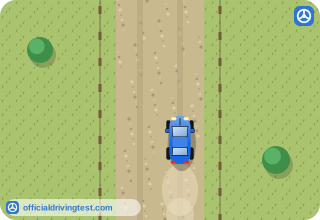
- Less traction
- More traction
- Smoother steering
- Better braking
Show answer
Correct answer: Less traction
Unpaved rural roads result in less traction.
Source: Colorado Driver Handbook (DR 2337, January 2025), page 17 · Open this page in the manual (Manual page 17)
-
What is washboarding, often found on gravel roads?
- A layer of loose water that lifts the tires off the road
- Rutting caused by heavy snowplows on rural highways
- A series of potholes that can affect steering and vehicle control
- A skid that happens when the brakes are locked
Show answer
Correct answer: A series of potholes that can affect steering and vehicle control
Washboarding is a series of potholes that can affect steering and vehicle control.
Source: Colorado Driver Handbook (DR 2337, January 2025), page 17 · Open this page in the manual (Manual page 17)
-
What can roads with potholes do to your vehicle?
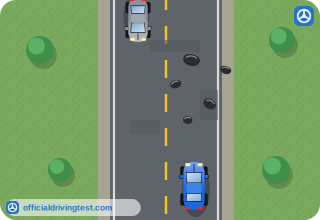
- Increase your tires' grip on rough pavement
- Make it jolt and cause your tires to lose traction
- Give a smoother ride at high speeds
- Cause your steering to lock in place
Show answer
Correct answer: Make it jolt and cause your tires to lose traction
Potholes may cause your vehicle to bounce or jolt and can cause your tires to lose traction.
Source: Colorado Driver Handbook (DR 2337, January 2025), page 17 · Open this page in the manual (Manual page 17)
-
What does defensive driving do?
- Protects you and others from unsafe and unexpected situations
- Allows you to drive faster whenever the traffic is light
- Lets you ignore the rules that other drivers are breaking
- Replaces the need to look behind you while driving
Show answer
Correct answer: Protects you and others from unsafe and unexpected situations
Defensive driving protects you and others from unsafe and unexpected driving situations.
Source: Colorado Driver Handbook (DR 2337, January 2025), page 18 · Open this page in the manual (Manual page 18)
-
When turning, or driving through or entering an intersection, in what order should you look?
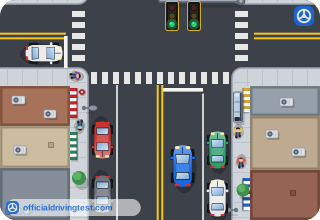
- Left, right and then left again
- Right, left and then right again
- Straight ahead and then left only
- Left and then right only
Show answer
Correct answer: Left, right and then left again
The handbook says always look left, right and then left again at intersections and when turning.
Source: Colorado Driver Handbook (DR 2337, January 2025), page 18 · Open this page in the manual (Manual page 18)