Colorado: Sharing the road
School buses, large trucks and buses, bicyclists, motorcyclists, aggressive drivers and traffic stops on Colorado roads. Split into 6 shorter tests so you're not stuck in one long quiz.
Independent educational site · not affiliated with any government agency or DMV
Choose a part
Sharing the road — Part 1
Questions in this part include: “Where may a bicyclist ride in a lane marked with a sharrow?”
StartSharing the road — Part 2
Questions in this part include: “What may not be visible on rural roads because of trees, crops and bushes?”
StartSharing the road — Part 3
Questions in this part include: “What is one sign of a runaway truck or bus?”
StartSharing the road — Part 4
Questions in this part include: “What does the handbook say about violating school bus traffic laws?”
StartSharing the road — Part 5
Questions in this part include: “On a multi-lane, one-way street, where can a bicyclist ride?”
StartSharing the road — Part 6
Questions in this part include: “What can create dangers for motorcyclists?”
StartAll 103 Sharing the road questions with answers
Choose a part above to take a practice test, or study every question and answer here.
Show the questions and answersHide the questions
-
When must a driver passing or overtaking a bicyclist allow 3 feet of clearance?
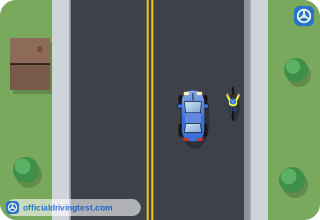
- Only on roadways where a PASS 3 FT MIN sign is posted
- Only on roadways that have a marked bike lane
- Only on roadways with a speed limit above 25 miles per hour
- On all roadways, even if no sign is posted
Show answer
Correct answer: On all roadways, even if no sign is posted
Motorists must allow 3 feet of clearance when passing bicyclists on all roadways, even if a sign is not posted.
Source: Colorado Driver Handbook (DR 2337, January 2025), page 9 · Open this page in the manual (Manual page 9)
-
Why may a bicyclist ride in the center of the lane under a "MAY USE FULL LANE" sign?
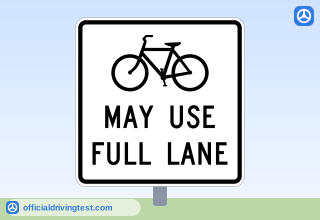
- Hazards or poor visibility make the right side of the lane unsafe
- The bicyclist is traveling faster than the cars around them
- The lane is reserved for bicycles during morning and evening hours
- The bicyclist is turning left at the next intersection
Show answer
Correct answer: Hazards or poor visibility make the right side of the lane unsafe
The sign reminds drivers that bicyclists have a right to ride in the center of the lane if hazards or poor visibility compromise their safety on the right side.
Source: Colorado Driver Handbook (DR 2337, January 2025), page 9 · Open this page in the manual (Manual page 9)
-
Where may a bicyclist ride in a lane marked with a sharrow?
- Only on the far right edge of the lane
- Only on the sidewalk beside the road
- In the center of the lane
- Only on the left edge of the lane
Show answer
Correct answer: In the center of the lane
Bicyclists may ride in the center of a lane with a sharrow.
Source: Colorado Driver Handbook (DR 2337, January 2025), page 9 · Open this page in the manual (Manual page 9)
-
Which statement about drivers and a bike lane is correct?
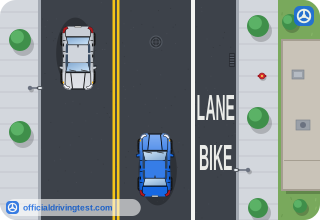
- Drivers may park in it briefly when loading or unloading
- Drivers may not drive, idle or park in it or obstruct it
- Drivers may drive in it when no bicyclists are in sight
- Drivers may idle in it but may not park there
Show answer
Correct answer: Drivers may not drive, idle or park in it or obstruct it
Drivers are prohibited from driving, idling or parking in or otherwise obstructing a bike lane; the handbook allows crossing a bike lane when turning, entering or leaving another road, driveway or alley.
Source: Colorado Driver Handbook (DR 2337, January 2025), page 10 · Open this page in the manual (Manual page 10)
-
Who has the right-of-way in a bike lane?
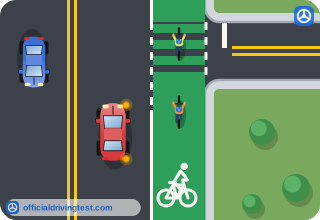
- Drivers turning right at the intersection
- Any vehicle that arrived in the lane first
- Slow moving vehicles and bicyclists
- Bicyclists and other authorized users
Show answer
Correct answer: Bicyclists and other authorized users
Bicyclists and other authorized users have the right-of-way in a bike lane.
Source: Colorado Driver Handbook (DR 2337, January 2025), page 10 · Open this page in the manual (Manual page 10)
-
Does a bike lane continue through an intersection where no paint connects the two sides?
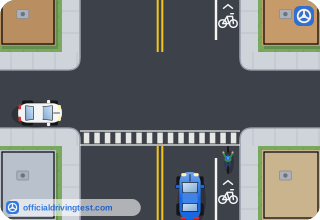
- Yes, the bike lane still extends through the intersection
- No, the bike lane ends where the paint stops
- No, it ends at every intersection with a traffic signal
- Only if a sign at the intersection says so
Show answer
Correct answer: Yes, the bike lane still extends through the intersection
A bike lane extends through an intersection regardless of whether paint connects the bike lane on either side.
Source: Colorado Driver Handbook (DR 2337, January 2025), page 10 · Open this page in the manual (Manual page 10)
-
How does the handbook describe bicycles on the road?
- As vehicles that must always give way to every motor vehicle
- As vehicles with many of the same rights and responsibilities
- As devices that have the same rights as pedestrians in every lane
- As vehicles that may ignore traffic signs on narrow roads
Show answer
Correct answer: As vehicles with many of the same rights and responsibilities
Bicycles on the road are considered vehicles with many of the same rights and responsibilities as motor vehicles.
Source: Colorado Driver Handbook (DR 2337, January 2025), page 11 · Open this page in the manual (Manual page 11)
-
When must drivers yield the right-of-way to bicyclists in a designated bike lane?
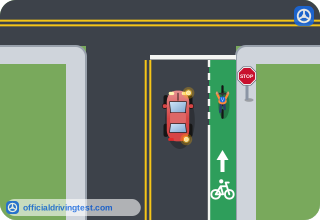
- Only when the bicyclist has a green signal
- Only when the bike lane is painted green
- Only when the bicyclist is traveling faster than traffic
- When merging with or crossing the bike lane to turn
Show answer
Correct answer: When merging with or crossing the bike lane to turn
Drivers must yield to bicyclists in a designated bike lane when merging with or crossing it to turn.
Source: Colorado Driver Handbook (DR 2337, January 2025), page 11 · Open this page in the manual (Manual page 11)
-
A bicyclist is riding on a sidewalk or crosswalk. What rights and responsibilities does the bicyclist have?
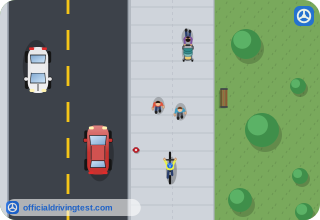
- The same as a pedestrian
- The same as a motor vehicle
- None, because bicycles are not allowed there
- Fewer than a pedestrian, because bicycles are vehicles
Show answer
Correct answer: The same as a pedestrian
Bicyclists riding on a sidewalk or crosswalk have the same rights and responsibilities as pedestrians.
Source: Colorado Driver Handbook (DR 2337, January 2025), page 11 · Open this page in the manual (Manual page 11)
-
When passing a bicyclist, when may you briefly cross a solid yellow line?
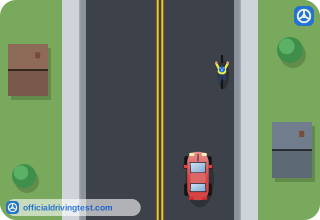
- When the bicyclist is riding on the shoulder
- When the bicyclist is traveling slower than 10 miles per hour
- When there is no oncoming traffic and you have a clear view ahead
- When you have signaled and the road is straight
Show answer
Correct answer: When there is no oncoming traffic and you have a clear view ahead
The handbook says you can briefly cross a solid yellow line when there is no oncoming traffic and you have a clear view ahead.
Source: Colorado Driver Handbook (DR 2337, January 2025), page 15 · Open this page in the manual (Manual page 15)
-
Why should you give a bicyclist more space on rural roadways, when operating a large vehicle or in windy conditions?
- Bicyclists cannot hear large vehicles coming
- Wind blasts can knock a bicyclist off their bike
- Bicyclists must always ride on the shoulder
- Bicyclists cannot judge distance very well
Show answer
Correct answer: Wind blasts can knock a bicyclist off their bike
The handbook warns of wind blasts that can knock a bicyclist off their bike and says to give more space in those conditions.
Source: Colorado Driver Handbook (DR 2337, January 2025), page 15 · Open this page in the manual (Manual page 15)
-
After sunset, what should you be alert to?
- Traffic signals that have been turned off for the night
- Parked vehicles that always have their lights on
- Roadside signs that no longer reflect light
- Vehicles, including bicyclists, with no lights on
Show answer
Correct answer: Vehicles, including bicyclists, with no lights on
Be alert to vehicles, including bicyclists, traveling after sunset without their lights on.
Source: Colorado Driver Handbook (DR 2337, January 2025), page 16 · Open this page in the manual (Manual page 16)
-
At night, what should you look for to spot bicyclists and motorcyclists?
- Two red tail lamps
- Reflective stripes on their helmets
- The single front light
- A pair of headlights
Show answer
Correct answer: The single front light
Look for the single front light of bicyclists and motorcyclists traveling at night.
Source: Colorado Driver Handbook (DR 2337, January 2025), page 16 · Open this page in the manual (Manual page 16)
-
Which of these is something the handbook says to be aware of when mountain driving?
- Toll booths at every summit
- Traffic signals at every curve
- Wildlife and rocks on the roadway
- Roundabouts on every hill
Show answer
Correct answer: Wildlife and rocks on the roadway
Mountain driving calls for awareness of steep hills, changing weather, bicyclists, wildlife and rocks on the roadway.
Source: Colorado Driver Handbook (DR 2337, January 2025), page 17 · Open this page in the manual (Manual page 17)
-
What should you be prepared for when mountain driving, regarding intersections?
- Intersections that are always marked by signs
- Intersections closed in winter
- Intersections with extra turn lanes
- Intersections hidden by trees, brush or crops
Show answer
Correct answer: Intersections hidden by trees, brush or crops
Be prepared for intersections hidden by trees, brush or crops and for animals on or near the roadway.
Source: Colorado Driver Handbook (DR 2337, January 2025), page 17 · Open this page in the manual (Manual page 17)
-
Your vehicle has difficulty traveling up a steep roadway. What should you do?
- Pull off at the first safe place or stay in the right lane
- Stop in the travel lane and turn on your hazard lights
- Move to the left lane and slow down to a crawl
- Speed up and ride close behind the next vehicle
Show answer
Correct answer: Pull off at the first safe place or stay in the right lane
Pull off the road at the first safe place or stay in the right lane to let other vehicles pass.
Source: Colorado Driver Handbook (DR 2337, January 2025), page 17 · Open this page in the manual (Manual page 17)
-
Why can it be difficult to pass other vehicles on rural roads?
- Rural roads are narrow
- Rural roads have too many traffic signals
- Rural roads are always closed to passing
- Rural roads have too many lanes
Show answer
Correct answer: Rural roads are narrow
Rural roads are narrow, which can make it difficult to pass other vehicles.
Source: Colorado Driver Handbook (DR 2337, January 2025), page 17 · Open this page in the manual (Manual page 17)
-
Which statement about rural roads is correct?
- All have wide paved shoulders and guard rails
- All have shoulders, but few have guard rails
- Many have no shoulders, and some have no guard rails
- Most have guard rails, but few have shoulders
Show answer
Correct answer: Many have no shoulders, and some have no guard rails
The handbook says many rural roads have no shoulders and some have no guard rails.
Source: Colorado Driver Handbook (DR 2337, January 2025), page 17 · Open this page in the manual (Manual page 17)
-
What may not be visible on rural roads because of trees, crops and bushes?
- Speed limit signs on freeways
- Blind driveways and T-intersections
- Street lights along the shoulder
- Center lines on straight roads
Show answer
Correct answer: Blind driveways and T-intersections
Rural roads can have blind driveways, T-intersections and side streets hidden by trees, crops and bushes.
Source: Colorado Driver Handbook (DR 2337, January 2025), page 17 · Open this page in the manual (Manual page 17)
-
Which of these obstacles may be on a rural road?
- Toll plazas, weigh stations and rest areas
- Parking meters, bus lanes and bike boxes
- Roundabouts, traffic signals and crosswalks
- Farm vehicle and unmarked railroad crossings
Show answer
Correct answer: Farm vehicle and unmarked railroad crossings
Rural roads may have obstacles such as rocks, debris, animals, farm vehicle crossings and unmarked railroad crossings.
Source: Colorado Driver Handbook (DR 2337, January 2025), page 17 · Open this page in the manual (Manual page 17)
-
Where might bicyclists ride on a rural road that has no shoulder or a shoulder with debris?
- Only on the sidewalk
- On the center line
- In the oncoming lane
- In the travel lane
Show answer
Correct answer: In the travel lane
Watch for bicyclists riding on the shoulder, or in the travel lane if there is no shoulder or it has debris.
Source: Colorado Driver Handbook (DR 2337, January 2025), page 17 · Open this page in the manual (Manual page 17)
-
Which smaller road users should you look for as you scan?
- Only large trucks, buses and recreational vehicles
- Only passenger vehicles traveling in your own lane
- Pedestrians, bicyclists and motorcyclists
- Only pedestrians who are using marked crosswalks
Show answer
Correct answer: Pedestrians, bicyclists and motorcyclists
Be sure to look for smaller road users, including pedestrians, bicyclists and motorcyclists.
Source: Colorado Driver Handbook (DR 2337, January 2025), page 18 · Open this page in the manual (Manual page 18)
-
A two-wheeled motorcycle may pass stopped vehicles in the same lane, if there is enough room, at what maximum speed?
- 5 miles per hour
- 10 miles per hour
- 15 miles per hour
- 25 miles per hour
Show answer
Correct answer: 15 miles per hour
The handbook allows this only at a speed no greater than 15 miles per hour.
Source: Colorado Driver Handbook (DR 2337, January 2025), page 19 · Open this page in the manual (Manual page 19)
-
What does the handbook call it when a two-wheeled motorcycle passes stopped vehicles in the same lane because the vehicles in the next lanes are also stopped and there is room?
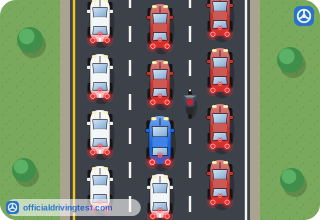
- Zipper passing
- Lane filtering
- Lane sharing
- Shoulder riding
Show answer
Correct answer: Lane filtering
The handbook names this maneuver lane filtering.
Source: Colorado Driver Handbook (DR 2337, January 2025), page 19 · Open this page in the manual (Manual page 19)
-
Why should you stay behind the white-painted stop bars at stop signs and traffic lights, according to the handbook?
- They show where school buses must stop to load children
- They mark the exact spot where cameras photograph vehicles
- They are set where drivers can best see approaching bikes
- Many are carefully measured to give trucks room to turn
Show answer
Correct answer: Many are carefully measured to give trucks room to turn
The handbook says many stop bars are carefully measured to give trucks the room they need for turns.
Source: Colorado Driver Handbook (DR 2337, January 2025), page 20 · Open this page in the manual (Manual page 20)
-
What are the blind spots around trucks and buses called?
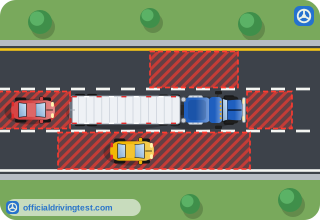
- No Zones
- Stop Zones
- Truck Pockets
- Dead Zones
Show answer
Correct answer: No Zones
The handbook calls the blind spots around trucks and buses “No Zones.”
Source: Colorado Driver Handbook (DR 2337, January 2025), page 20 · Open this page in the manual (Manual page 20)
-
What happens when your vehicle is traveling in a truck or bus No Zone?
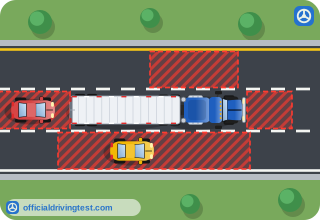
- You are protected because the truck driver slows down
- The driver sees you in the mirrors but may not signal
- The driver cannot see you, which greatly raises crash potential
- You can see the driver, so the driver can see you
Show answer
Correct answer: The driver cannot see you, which greatly raises crash potential
Vehicles in No Zones cannot be seen and greatly increase the potential for a crash.
Source: Colorado Driver Handbook (DR 2337, January 2025), page 20 · Open this page in the manual (Manual page 20)
-
What should you do around a truck or bus that is preparing to back up?
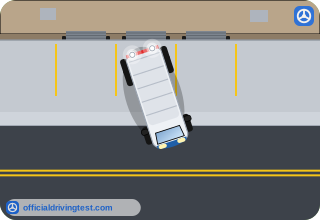
- Pass quickly on the right side
- Do not pass or stop close to it
- Stop close behind it to show where you are
- Honk to warn the driver and stay behind it
Show answer
Correct answer: Do not pass or stop close to it
The trailer will obstruct objects in the No Zone, so you should not pass or stop close to a truck or bus that is backing up.
Source: Colorado Driver Handbook (DR 2337, January 2025), page 20 · Open this page in the manual (Manual page 20)
-
How does the handbook say you should pass a truck?
- Slowly and on the right to stay out of its blind spot
- Slowly, staying beside it to let the driver see you
- On the right, staying beside it until traffic clears
- Quickly and on the left when possible
Show answer
Correct answer: Quickly and on the left when possible
The handbook says to pass trucks quickly and on the left when possible.
Source: Colorado Driver Handbook (DR 2337, January 2025), page 20 · Open this page in the manual (Manual page 20)
-
After passing a truck or bus, when can you pull in front of it?
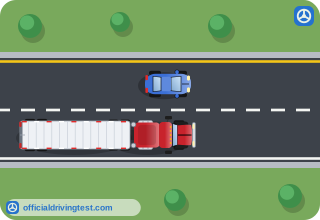
- When you can see both of its headlights in your rear view mirror
- When you can see one headlight in your rear view mirror
- As soon as your rear bumper is past its front bumper
- As soon as you have passed it and signaled briefly
Show answer
Correct answer: When you can see both of its headlights in your rear view mirror
Trucks need longer distances to slow down, so wait until you can see both headlights on the front of the vehicle in your mirror.
Source: Colorado Driver Handbook (DR 2337, January 2025), page 20 · Open this page in the manual (Manual page 20)
-
Why should you not tailgate a truck or bus?
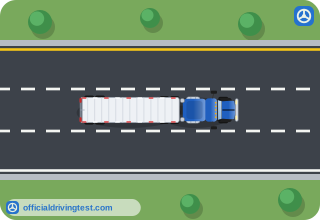
- The truck's exhaust can damage your vehicle's engine
- The driver will think you want to pass and speed up
- The driver cannot see you and it cuts off your view of traffic
- Tailgating a large vehicle is allowed only on freeways
Show answer
Correct answer: The driver cannot see you and it cuts off your view of traffic
Trucks and buses have large rear blind spots, so the driver cannot see you and your own view of traffic is cut off.
Source: Colorado Driver Handbook (DR 2337, January 2025), page 20 · Open this page in the manual (Manual page 20)
-
How do the side blind spots of trucks and buses compare with those of cars?
- About the same size as a car's
- Much larger on both sides
- Larger only on the right side
- Larger only on the driver's side
Show answer
Correct answer: Much larger on both sides
Trucks and buses have much larger blind spots on both sides than cars.
Source: Colorado Driver Handbook (DR 2337, January 2025), page 20 · Open this page in the manual (Manual page 20)
-
What increases the possibility of a collision when a large truck or bus makes a right turn?
- Staying well behind it until it completes the turn
- Slowing down to let it complete the turn
- Stopping behind the stop bar until it turns
- Cutting in between it and the curb or shoulder
Show answer
Correct answer: Cutting in between it and the curb or shoulder
Trucks and buses often move to the left lane to make right turns, and cutting in between them and the curb increases the possibility of a collision.
Source: Colorado Driver Handbook (DR 2337, January 2025), page 20 · Open this page in the manual (Manual page 20)
-
What were runaway truck ramps built to prevent?
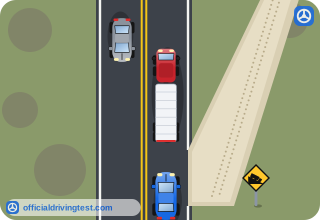
- Serious crashes from out of control vehicles
- Trucks from exceeding the speed limit downhill
- Slow trucks from blocking mountain highways
- Trucks from using the shoulder in snow
Show answer
Correct answer: Serious crashes from out of control vehicles
The handbook says runaway truck ramps were built to prevent serious crashes from out of control vehicles.
Source: Colorado Driver Handbook (DR 2337, January 2025), page 20 · Open this page in the manual (Manual page 20)
-
According to the handbook, which action on a runaway truck ramp or its entrance is both illegal and unsafe?
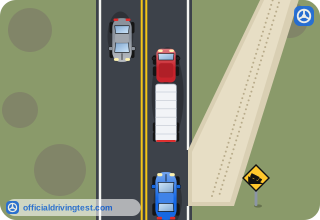
- Passing a slower vehicle near it
- Signaling a lane change near it
- Changing a tire
- Driving past it in the right lane
Show answer
Correct answer: Changing a tire
The handbook says never to chain up, change a tire or park on the ramp or the entrance.
Source: Colorado Driver Handbook (DR 2337, January 2025), page 20 · Open this page in the manual (Manual page 20)
-
What is one sign of a runaway truck or bus?
- Hazard lights flashing continuously
- Smoke coming from the brakes
- A loud horn blowing in short bursts
- Brake lights staying off on a downgrade
Show answer
Correct answer: Smoke coming from the brakes
The handbook lists smoke coming from the brakes as one sign of a runaway truck or bus.
Source: Colorado Driver Handbook (DR 2337, January 2025), page 20 · Open this page in the manual (Manual page 20)
-
If you see a runaway truck or bus, what should you do?
- Follow closely to stay out of its blind spots
- Pass it quickly on the left to get in front
- Brake hard in front of it to slow it down
- Get out of the way and do not get in front of it
Show answer
Correct answer: Get out of the way and do not get in front of it
The handbook says to get out of the way and not to get in front of the truck or bus.
Source: Colorado Driver Handbook (DR 2337, January 2025), page 20 · Open this page in the manual (Manual page 20)
-
What should you do when driving behind a bus, since buses frequently stop?
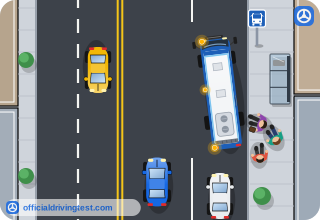
- Stay alert so you can stop smoothly and safely
- Pass it at the first chance to avoid delay
- Follow closely so other drivers cannot cut in
- Flash your lights each time it slows down
Show answer
Correct answer: Stay alert so you can stop smoothly and safely
Buses frequently stop, so you must stay alert to allow for smooth and safe stopping of your vehicle.
Source: Colorado Driver Handbook (DR 2337, January 2025), page 20 · Open this page in the manual (Manual page 20)
-
Why should you use care when passing a stopped bus?
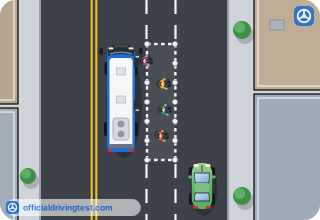
- Buses are required to pull to the right when you pass
- The bus is required to wait until you finish passing
- The bus may start to move out into your lane of traffic
- The bus lights show it will turn left across your path
Show answer
Correct answer: The bus may start to move out into your lane of traffic
The handbook says a stopped bus may start to move out into your lane of traffic.
Source: Colorado Driver Handbook (DR 2337, January 2025), page 20 · Open this page in the manual (Manual page 20)
-
Who has the right-of-way when a bus is leaving a drop-off location and merging into traffic?
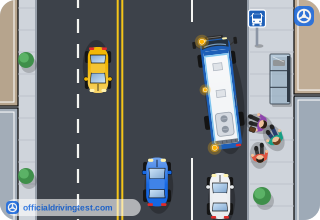
- The vehicle already in the lane
- The bus
- The vehicle that is going faster
- The vehicle that signals first
Show answer
Correct answer: The bus
The handbook says buses have the right-of-way when leaving a drop-off location and merging into traffic; for transit buses it adds that you must yield when the bus is signaling to enter a traffic lane and the yield sign on its rear is lit.
Source: Colorado Driver Handbook (DR 2337, January 2025), page 20 · Open this page in the manual (Manual page 20)
-
Which people should you look for when driving near a bus?
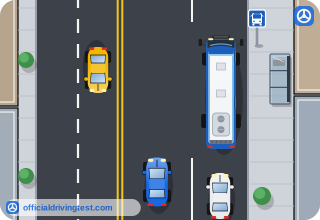
- Only pedestrians already crossing the road
- Motorcyclists passing on the right of the bus
- Bus drivers waving other vehicles through
- Pedestrians exiting or waiting to board the bus
Show answer
Correct answer: Pedestrians exiting or waiting to board the bus
The handbook tells you to look for pedestrians who might be exiting or waiting to board the bus.
Source: Colorado Driver Handbook (DR 2337, January 2025), page 20 · Open this page in the manual (Manual page 20)
-
Where should you watch for people walking and loading bikes around a bus?
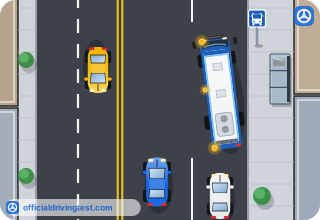
- In front of the bus
- Behind the bus
- Beside the rear doors
- On the far shoulder
Show answer
Correct answer: In front of the bus
The handbook says to watch for people walking and loading bikes in front of the bus.
Source: Colorado Driver Handbook (DR 2337, January 2025), page 20 · Open this page in the manual (Manual page 20)
-
Why should you use extra caution near school buses, especially in neighborhoods and school zones?
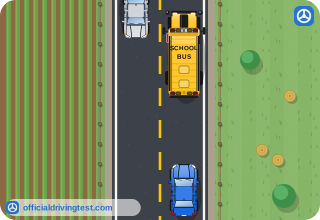
- School buses there may ignore traffic signals
- Bus drivers in those areas cannot see vehicles behind them
- Students are likely to be getting on and off and crossing roads
- School buses in those areas always travel faster than traffic
Show answer
Correct answer: Students are likely to be getting on and off and crossing roads
These areas are likely to have students getting on and off the bus as well as crossing roads.
Source: Colorado Driver Handbook (DR 2337, January 2025), page 20 · Open this page in the manual (Manual page 20)
-
When does a school bus driver activate the overhead amber (yellow) warning lights?
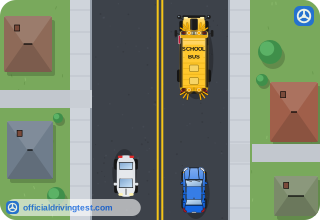
- Only after the bus has come to a complete stop
- When the bus is about to stop to load or unload children
- Whenever the bus is traveling slower than traffic
- When the bus is stopped and children are crossing
Show answer
Correct answer: When the bus is about to stop to load or unload children
The driver activates the amber warning lights when the bus is about to stop and load or unload children.
Source: Colorado Driver Handbook (DR 2337, January 2025), page 20 · Open this page in the manual (Manual page 20)
-
How long do a school bus's overhead yellow warning lights stay on?
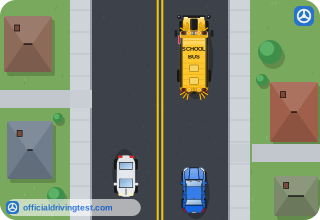
- Until the bus stops moving
- Until the last child has boarded
- Until the bus driver turns on the hazard lights
- Until the bus door opens
Show answer
Correct answer: Until the bus door opens
The handbook says the yellow warning lights stay on until the bus door opens.
Source: Colorado Driver Handbook (DR 2337, January 2025), page 20 · Open this page in the manual (Manual page 20)
-
What activates when a school bus driver opens the bus door?
- The red STOP lights and STOP arm
- The amber warning lights only
- The yellow hazard flashers and a horn
- Only the bus's brake lights
Show answer
Correct answer: The red STOP lights and STOP arm
When the bus driver opens the bus door, the red STOP lights and STOP arm activate.
Source: Colorado Driver Handbook (DR 2337, January 2025), page 20 · Open this page in the manual (Manual page 20)
-
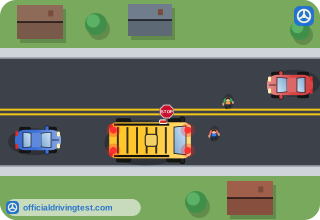
When must you stay stopped for a school bus that has its red STOP lights and STOP arm activated?
- Until the first child has crossed the road in front of you
- Until the bus begins to move and children are inside
- Until the driver retracts the stop arm and turns off the red lights
- Until the amber warning lights start flashing again
Show answer
Correct answer: Until the driver retracts the stop arm and turns off the red lights
You must remain stopped until the bus driver retracts the stop arm and deactivates the red warning lights.
Source: Colorado Driver Handbook (DR 2337, January 2025), page 20 · Open this page in the manual (Manual page 20)
-
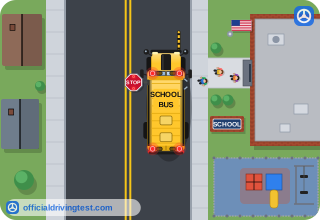
What is the minimum distance from the front or rear bumper of a school bus at which vehicles must stop?
- 5 feet
- 20 feet
- 10 feet
- 15 feet
Show answer
Correct answer: 20 feet
Vehicles must stop no less than 20 feet from the front or rear bumper of the school bus.
Source: Colorado Driver Handbook (DR 2337, January 2025), page 20 · Open this page in the manual (Manual page 20)
-
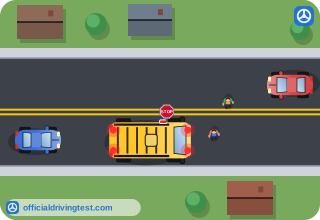
What does the handbook say about not stopping when a school bus has its stop lights on and stop arm extended?
- It is allowed if you slow down and proceed carefully
- It is only a violation if a child is in the road
- It is allowed if no children are visible
- It is illegal and dangerous
Show answer
Correct answer: It is illegal and dangerous
The handbook says it is illegal and dangerous not to stop in this situation.
Source: Colorado Driver Handbook (DR 2337, January 2025), page 20 · Open this page in the manual (Manual page 20)
-
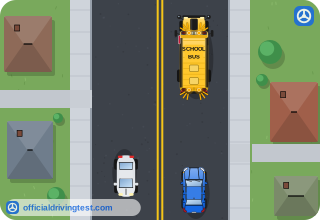
On a school bus with overhead red and yellow lights, what should you do when the yellow lights are flashing?
- Prepare to stop
- Stop at least 20 feet away
- Proceed at normal speed
- Pass the bus on the left
Show answer
Correct answer: Prepare to stop
The school bus diagram says that when the yellow lights are flashing you should prepare to stop.
Source: Colorado Driver Handbook (DR 2337, January 2025), page 20 · Open this page in the manual (Manual page 20)
-
The school bus diagram says that when yellow hazard warning lights are flashing on any school bus, what should you do?
- Stop at least 20 feet away
- Stop until the lights go off
- Proceed with caution
- Pass the bus quickly on the left
Show answer
Correct answer: Proceed with caution
The diagram for all school buses says to proceed with caution when the yellow hazard warning lights are flashing.
Source: Colorado Driver Handbook (DR 2337, January 2025), page 20 · Open this page in the manual (Manual page 20)
-
After the flashing red lights of a stopped school bus turn off, how should you proceed?
- At normal speed
- With caution
- After honking once
- Only after the bus moves
Show answer
Correct answer: With caution
The handbook says not to proceed until the flashing red lights stop, and then to proceed with caution.
Source: Colorado Driver Handbook (DR 2337, January 2025), page 20 · Open this page in the manual (Manual page 20)
-
On a divided highway with four or more lanes and a median separating the traffic, which vehicles must stop for a school bus that is stopped with its red lights flashing?
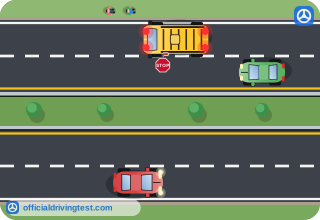
- Vehicles traveling in both directions
- Only vehicles in the lane next to the bus
- Only vehicles in the right lane behind it
- Only vehicles in both lanes behind the bus
Show answer
Correct answer: Only vehicles in both lanes behind the bus
With a median separating the traffic, only the vehicles in both lanes behind the school bus must stop, not the opposite traffic.
Source: Colorado Driver Handbook (DR 2337, January 2025), page 20 · Open this page in the manual (Manual page 20)
-
On a two-lane roadway, which traffic must stop for a school bus that is stopped with its red lights flashing?
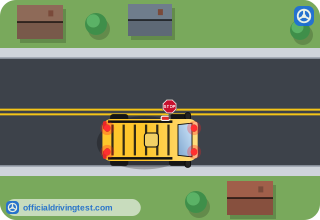
- Traffic in both directions
- Only traffic behind the bus
- Only traffic in the bus's lane
- Only traffic in the opposite direction
Show answer
Correct answer: Traffic in both directions
On a two-lane roadway, traffic in both directions is required to stop.
Source: Colorado Driver Handbook (DR 2337, January 2025), page 20 · Open this page in the manual (Manual page 20)
-
On a four-lane road without a median, which traffic must stop for a school bus that is stopped with its red lights flashing?
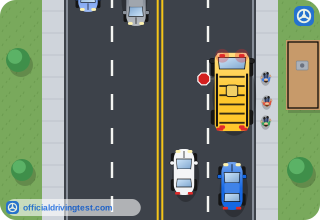
- Only vehicles behind the bus
- Only vehicles in the bus's lane
- Vehicles in both directions
- Only vehicles in the opposite direction
Show answer
Correct answer: Vehicles in both directions
On a four-lane road without a median, traffic in both directions must stop.
Source: Colorado Driver Handbook (DR 2337, January 2025), page 20 · Open this page in the manual (Manual page 20)
-
On a highway with five or more lanes and a shared center turn lane, which vehicles must come to a complete stop for a stopped school bus with its red lights flashing?
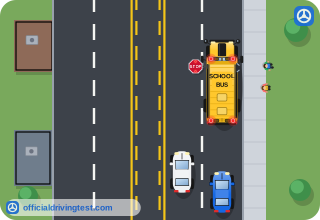
- Vehicles in all lanes, in both directions
- Only vehicles in both lanes behind the bus
- Only vehicles in the lane next to the bus
- Only vehicles in the center turn lane
Show answer
Correct answer: Only vehicles in both lanes behind the bus
With a shared center turn lane, only the vehicles in both lanes behind the school bus must stop, and opposite traffic is not required to.
Source: Colorado Driver Handbook (DR 2337, January 2025), page 20 · Open this page in the manual (Manual page 20)
-
What does the handbook say about violating school bus traffic laws?
- It results in a written warning only
- It is a minor offense for a first violation
- It applies only to vehicles behind the bus
- It has serious legal consequences
Show answer
Correct answer: It has serious legal consequences
The handbook states that violating school bus traffic laws has serious legal consequences.
Source: Colorado Driver Handbook (DR 2337, January 2025), page 21 · Open this page in the manual (Manual page 21)
-
How does the handbook classify bicycles on the roadway?
- As vehicles
- As pedestrians
- As a separate class with no duty to follow the rules of the road
- As equipment that may use only sidewalks
Show answer
Correct answer: As vehicles
The handbook states that bicycles are considered vehicles on the roadway, with many of the same rights and responsibilities as motorists.
Source: Colorado Driver Handbook (DR 2337, January 2025), page 22 · Open this page in the manual (Manual page 22)
-
Where should you check for laws that may apply differently to bicyclists, such as riding on sidewalks and in crosswalks?
- Your vehicle owner’s manual
- The license plate registration rules
- Your local ordinances
- The lane markings on the road
Show answer
Correct answer: Your local ordinances
The manual says to check local ordinances, because in some communities bicyclists may ride on sidewalks and in crosswalks.
Source: Colorado Driver Handbook (DR 2337, January 2025), page 22 · Open this page in the manual (Manual page 22)
-
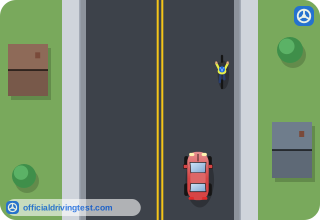
Why must drivers be especially alert and cautious when approaching or passing bicyclists?
- Bicyclists are not allowed to use any road with a posted speed limit
- Bicycles are smaller and bicyclists are more vulnerable than people in vehicles
- Bicyclists always have the same level of experience and skill as drivers
- Bicyclists are required to stop and yield to every motor vehicle
Show answer
Correct answer: Bicycles are smaller and bicyclists are more vulnerable than people in vehicles
The manual says bicycles are smaller and bicyclists are more vulnerable than people inside of motor vehicles.
Source: Colorado Driver Handbook (DR 2337, January 2025), page 22 · Open this page in the manual (Manual page 22)
-
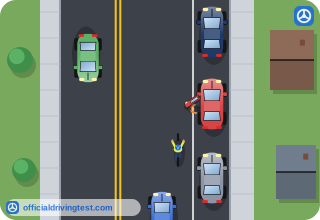
Colorado law says bicyclists should ride as far to the right as judged safe. Where may bicyclists ride on a narrow road or to avoid obstacles such as the door zone of parked cars?
- Only on the left shoulder
- Only on the sidewalk
- Only in the farthest right part of the lane, with no exceptions
- In the center of the travel lane
Show answer
Correct answer: In the center of the travel lane
The manual says bicyclists may ride in the center of the travel lane on narrow roads or to avoid obstacles such as the door zone of parked cars, broken glass or drainage grates.
Source: Colorado Driver Handbook (DR 2337, January 2025), page 22 · Open this page in the manual (Manual page 22)
-
What is the minimum distance a motorist must give when passing a bicyclist, including one in a bike lane?
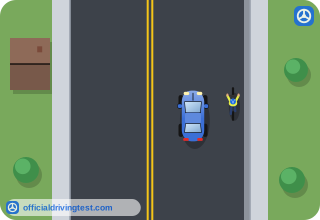
- Three feet from the outermost part of the vehicle or any attachments
- Two feet from the center line of the road or any attachments
- Four feet from the bicyclist's handlebars on roads with a bike lane
- Five feet from the outermost part of the vehicle, but only in town
Show answer
Correct answer: Three feet from the outermost part of the vehicle or any attachments
The manual requires a minimum of three feet from the outermost part of the vehicle or any attachments.
Source: Colorado Driver Handbook (DR 2337, January 2025), page 22 · Open this page in the manual (Manual page 22)
-
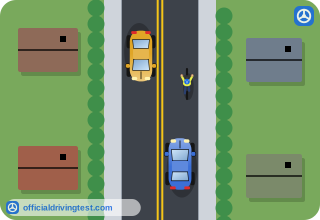
If you are unable to give a bicyclist three feet of passing distance, what should you do?
- Sound your horn and pass as closely as needed
- Slow down and remain behind the bicyclist until it is safe to pass
- Pass on the right side of the bicyclist
- Pass at the same speed, staying as far left as possible
Show answer
Correct answer: Slow down and remain behind the bicyclist until it is safe to pass
The manual says to slow down and stay behind the bicyclist until it is safe to pass.
Source: Colorado Driver Handbook (DR 2337, January 2025), page 22 · Open this page in the manual (Manual page 22)
-
When may bicyclists ride side by side?
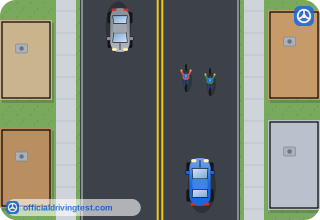
- Never, because they must always ride in single file on every road
- Only on roads with a posted speed limit under 25 miles per hour
- Only when they are riding in a designated bike lane or on a path
- If they are not impeding the normal and reasonable movement of traffic
Show answer
Correct answer: If they are not impeding the normal and reasonable movement of traffic
The manual allows side-by-side riding if bicyclists are not impeding the normal and reasonable movement of traffic.
Source: Colorado Driver Handbook (DR 2337, January 2025), page 22 · Open this page in the manual (Manual page 22)
-
How must you treat bicyclists in intersections?
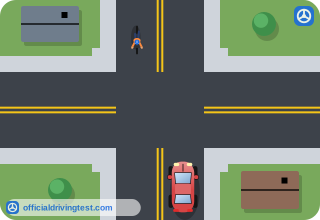
- Yield to them as you would for pedestrians and other vehicles
- Expect them to yield to you because they are slower
- Pass them first, then turn
- Ignore them unless they use hand signals
Show answer
Correct answer: Yield to them as you would for pedestrians and other vehicles
The manual says to yield to bicyclists in intersections as you would for pedestrians and other vehicles.
Source: Colorado Driver Handbook (DR 2337, January 2025), page 22 · Open this page in the manual (Manual page 22)
-
What is true of bike lanes at intersections?
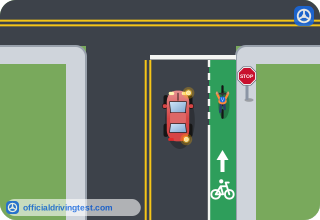
- They end at the edge of every intersection, even where paint continues
- They continue only where paint extends through the intersection
- They continue through intersections, with or without paint across them
- They continue only at intersections that have traffic signals
Show answer
Correct answer: They continue through intersections, with or without paint across them
The manual says people on bikes have the right-of-way in a bike lane, and bike lanes continue through intersections regardless of paint.
Source: Colorado Driver Handbook (DR 2337, January 2025), page 22 · Open this page in the manual (Manual page 22)
-
Why should you not stop, park or drive in a designated bicycle path or lane?
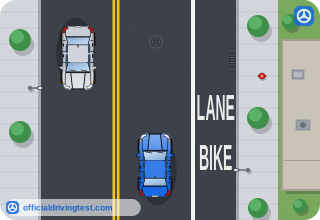
- It is allowed, but only when no bicyclist is present in the lane
- It forces bicyclists into the main travel lane and can put them in danger
- It makes the bicycle lane markings wear out faster than other markings
- It blocks the view of other drivers who are behind you on the road
Show answer
Correct answer: It forces bicyclists into the main travel lane and can put them in danger
The manual says impeding bicycle traffic in a bike lane forces bicyclists into the main travel lane and can put them in an unsafe situation.
Source: Colorado Driver Handbook (DR 2337, January 2025), page 22 · Open this page in the manual (Manual page 22)
-
When may a driver cross a bike lane?
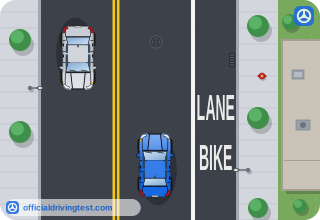
- Never, under any circumstances, even when turning at an intersection
- Only when passing a bicyclist who is riding in the bike lane
- Only when the bike lane is empty and the road surface is wet
- When turning, or entering or leaving a road, driveway or alley
Show answer
Correct answer: When turning, or entering or leaving a road, driveway or alley
The manual says you may cross a bike lane when turning, entering or leaving another road, driveway or alley.
Source: Colorado Driver Handbook (DR 2337, January 2025), page 23 · Open this page in the manual (Manual page 23)
-
Are people on bikes required to stay in a bike lane when one is present?
- No, people on bikes may ride outside of a bike lane
- Yes, they must always use the bike lane when there is one
- Yes, unless they are riding side by side with others
- Yes, but only during daylight hours on weekdays
Show answer
Correct answer: No, people on bikes may ride outside of a bike lane
The manual states that people on bikes may ride outside of a bike lane.
Source: Colorado Driver Handbook (DR 2337, January 2025), page 23 · Open this page in the manual (Manual page 23)
-
On a multi-lane, one-way street, where can a bicyclist ride?
- Only on the right side of the roadway
- On the right or left side of the roadway
- Only on the left side of the roadway
- Only in the center lane
Show answer
Correct answer: On the right or left side of the roadway
The manual says a bicyclist can ride on the right or left side of the roadway on a multi-lane, one-way street.
Source: Colorado Driver Handbook (DR 2337, January 2025), page 23 · Open this page in the manual (Manual page 23)
-
What does the handbook say about forcing a bicyclist off the road?
- It constitutes aggressive driving and has legal consequences
- It is legal if the bicyclist is not in a bike lane
- It is a parking violation
- It is permitted when the bicyclist rides side by side with another
Show answer
Correct answer: It constitutes aggressive driving and has legal consequences
The manual states that forcing a bicyclist off the road constitutes aggressive driving and has legal consequences.
Source: Colorado Driver Handbook (DR 2337, January 2025), page 23 · Open this page in the manual (Manual page 23)
-
A law passed in 2022 lets bicyclists treat stop signs as yield signs and stop lights as stop signs, when the intersection is clear and the bicyclist already has the right-of-way. What is the minimum age?
- 12
- 14
- 15
- 18
Show answer
Correct answer: 15
The manual says the 2022 law applies to bicyclists ages 15 and older.
Source: Colorado Driver Handbook (DR 2337, January 2025), page 23 · Open this page in the manual (Manual page 23)
-
Under the 2022 law, how may bicyclists ages 15 and older treat a stop light when the intersection is clear and they already have the right-of-way?
- As a yield sign
- As a stop sign
- As a green light
- As a flashing yellow light
Show answer
Correct answer: As a stop sign
The manual says such bicyclists may treat stop lights as stop signs, and stop signs as yield signs.
Source: Colorado Driver Handbook (DR 2337, January 2025), page 23 · Open this page in the manual (Manual page 23)
-
The handbook advises leaving more than three feet of passing distance in which situations?
- When driving a small car on a city street at low speed
- Only when the bicyclist is wearing dark clothing at night
- Only when it is raining heavily or the road is icy
- When driving larger vehicles or in rural or windy conditions
Show answer
Correct answer: When driving larger vehicles or in rural or windy conditions
The manual advises more than three feet in these conditions to avoid dangerous wind blasts.
Source: Colorado Driver Handbook (DR 2337, January 2025), page 23 · Open this page in the manual (Manual page 23)
-
Why should you not turn sharply, slow down or stop abruptly in front of a bicyclist?
- A motor vehicle's brakes are more powerful than a bicycle's
- A bicycle's brakes are more powerful than a motor vehicle's
- Bicyclists cannot see the brake lights of vehicles ahead
- Bicyclists never slow down once they begin riding
Show answer
Correct answer: A motor vehicle's brakes are more powerful than a bicycle's
The manual says a motor vehicle's brakes are more powerful than a bicycle's and you could cause a crash.
Source: Colorado Driver Handbook (DR 2337, January 2025), page 23 · Open this page in the manual (Manual page 23)
-
Why should you be particularly careful around bicyclists when the roadway is wet or covered with debris?
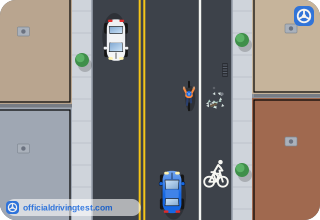
- Bicyclists are required to stop riding in such conditions
- Bicyclists are not allowed on wet roads or roads with debris
- They affect people on bicycles much more than people in vehicles
- Motor vehicles are affected more than bicycles by these things
Show answer
Correct answer: They affect people on bicycles much more than people in vehicles
The manual says wet or debris-covered roads affect people on bicycles much more than people in vehicles.
Source: Colorado Driver Handbook (DR 2337, January 2025), page 23 · Open this page in the manual (Manual page 23)
-
What is the "Dutch Reach" way of opening your vehicle door?
- Opening it with the hand that is closest to the door itself
- Opening it with the hand closest to the center of the vehicle
- Honking your horn twice before you open your door at all
- Opening it a few inches and waiting for traffic to pass
Show answer
Correct answer: Opening it with the hand closest to the center of the vehicle
The manual describes the Dutch Reach as using the hand closest to the center of the vehicle to open your door.
Source: Colorado Driver Handbook (DR 2337, January 2025), page 23 · Open this page in the manual (Manual page 23)
-
When parked on the street, what should you do before you open your vehicle door?
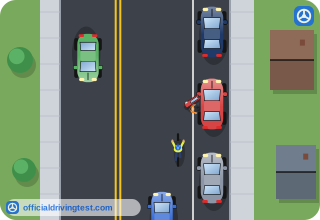
- Sound your horn
- Turn on your hazard lights
- Wait for a bicyclist to pass in front of you
- Check to the sides and rear for bicyclists
Show answer
Correct answer: Check to the sides and rear for bicyclists
The manual says to check to the sides and rear for bicyclists before opening your door.
Source: Colorado Driver Handbook (DR 2337, January 2025), page 23 · Open this page in the manual (Manual page 23)
-
Before backing up, changing lanes or turning, what should you check for?
- Bicyclists in your path and blind spots
- Only vehicles in the mirror
- Only pedestrians in the crosswalk
- Only bike lane signs
Show answer
Correct answer: Bicyclists in your path and blind spots
The manual says to check for bicyclists in your path and blind spots before backing up, changing lanes or turning.
Source: Colorado Driver Handbook (DR 2337, January 2025), page 23 · Open this page in the manual (Manual page 23)
-
When should you sound your horn close to bicyclists?
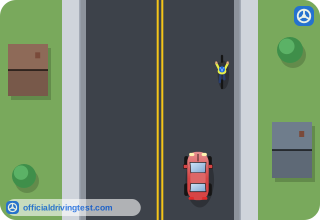
- Only if there is an immediate risk of a crash
- Always, to warn them you are passing
- Whenever you approach them from behind
- Whenever they ride in the center of the lane
Show answer
Correct answer: Only if there is an immediate risk of a crash
The manual says to avoid sounding your horn close to bicyclists unless there is an immediate risk of a crash, because it may startle them.
Source: Colorado Driver Handbook (DR 2337, January 2025), page 23 · Open this page in the manual (Manual page 23)
-
If a bicyclist is not giving a hand signal, what else can show the bicyclist's intent?
- Ringing a bell or sounding a small horn as they ride
- Turning their head or looking over their shoulder
- Pedaling faster just before they change lane position
- Moving to the far left edge of the road at once
Show answer
Correct answer: Turning their head or looking over their shoulder
The manual tells drivers to look for clues such as turning the head or looking over the shoulder before the bicyclist changes lane position.
Source: Colorado Driver Handbook (DR 2337, January 2025), page 23 · Open this page in the manual (Manual page 23)
-
What rights and responsibilities do motorcyclists have on the road?
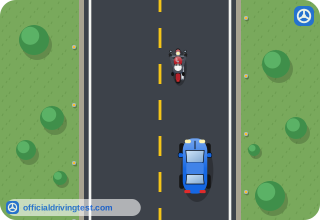
- Fewer rights than other drivers
- The same as other drivers
- Rights only in designated motorcycle lanes
- No responsibility to follow traffic signals
Show answer
Correct answer: The same as other drivers
The handbook states that motorcyclists have the same rights and responsibilities as other drivers.
Source: Colorado Driver Handbook (DR 2337, January 2025), page 23 · Open this page in the manual (Manual page 23)
-
How much of a lane is a motorcyclist entitled to?
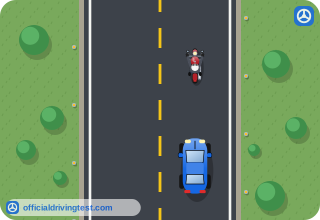
- Half of the lane width, on the left side
- Only the left third of the lane, when it is wide
- Only the part of the lane not needed by cars
- The same full lane width as other vehicles
Show answer
Correct answer: The same full lane width as other vehicles
The manual says motorcyclists are entitled to the same full lane width as other vehicles.
Source: Colorado Driver Handbook (DR 2337, January 2025), page 23 · Open this page in the manual (Manual page 23)
-
Why do motorcyclists frequently move around in their lane?
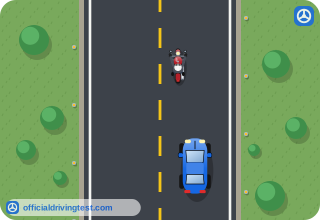
- To see, be seen and avoid road hazards
- Because they are not allowed to hold a position
- To pass cars in the same lane at any speed
- To save fuel
Show answer
Correct answer: To see, be seen and avoid road hazards
The manual explains that motorcyclists move in their lane so they can see, be seen and avoid road hazards.
Source: Colorado Driver Handbook (DR 2337, January 2025), page 23 · Open this page in the manual (Manual page 23)
-
What can unexpectedly move a motorcycle out of its lane?
- Light rain
- Bright headlights
- Strong winds
- Painted lane markings
Show answer
Correct answer: Strong winds
The manual says strong winds can unexpectedly move a motorcycle out of its lane.
Source: Colorado Driver Handbook (DR 2337, January 2025), page 23 · Open this page in the manual (Manual page 23)
-
What must be true for a two-wheeled motorcycle to lane filter past another vehicle in the same lane?
- Only the vehicle ahead is stopped and the adjacent lanes are moving
- The adjacent lanes are empty and the motorcycle uses a bike lane
- The motorcycle is traveling at 25 miles per hour or slower in free traffic
- Vehicles ahead and in adjacent lanes are stopped, with room to pass safely
Show answer
Correct answer: Vehicles ahead and in adjacent lanes are stopped, with room to pass safely
The manual lists these conditions for a two-wheeled motorcycle passing another motor vehicle in the same lane.
Source: Colorado Driver Handbook (DR 2337, January 2025), page 23 · Open this page in the manual (Manual page 23)
-
Which statement about motorcycles does the handbook make?
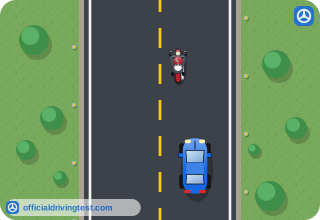
- They are smaller, harder to see and can stop quicker than expected
- They are larger and easier to see than most other vehicles
- They always take longer to stop than cars and trucks do
- They cannot be affected by road debris, wind or road defects
Show answer
Correct answer: They are smaller, harder to see and can stop quicker than expected
The manual says motorcycles are smaller than other motor vehicles, harder to see and can move faster and stop quicker than expected.
Source: Colorado Driver Handbook (DR 2337, January 2025), page 23 · Open this page in the manual (Manual page 23)
-
What can create dangers for motorcyclists?
- Only heavy rain
- Only wide lanes
- Road defects and debris
- Only roads with a bike lane
Show answer
Correct answer: Road defects and debris
The manual says road defects and debris can create dangers for motorcyclists.
Source: Colorado Driver Handbook (DR 2337, January 2025), page 23 · Open this page in the manual (Manual page 23)
-
What should you do when driving around motorcyclists?
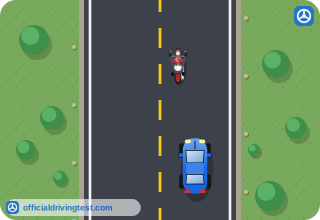
- Follow closely so they are able to see you in their mirrors
- Use extra caution and increase your following distance
- Pass them within the same lane to keep traffic moving
- Decrease your following distance to match their speed
Show answer
Correct answer: Use extra caution and increase your following distance
The manual says to watch for motorcyclists, use extra caution and increase your following distance.
Source: Colorado Driver Handbook (DR 2337, January 2025), page 23 · Open this page in the manual (Manual page 23)
-
What does the handbook say sharing the road is?
- A courtesy only
- A suggestion for new drivers
- It is the law
- A rule that applies only in cities
Show answer
Correct answer: It is the law
The manual states that sharing the road is important for safety and it is the law.
Source: Colorado Driver Handbook (DR 2337, January 2025), page 24 · Open this page in the manual (Manual page 24)
-
How does the handbook define aggressive driving?
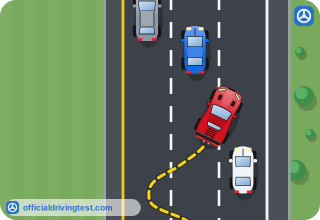
- Behavior behind the wheel that endangers others or property through willful action, ignoring safety
- Any driving over the posted speed limit that is done on purpose or by accident, on any type of road
- Any driving that results in a crash caused by accident or by poor road conditions
- Failing to signal a lane change or turn within the required distance on any road
Show answer
Correct answer: Behavior behind the wheel that endangers others or property through willful action, ignoring safety
The manual defines aggressive driving as behind-the-wheel behavior that endangers others or property through willful action without regard to safety.
Source: Colorado Driver Handbook (DR 2337, January 2025), page 24 · Open this page in the manual (Manual page 24)
-
Which of these acts could a law enforcement officer see as aggressive driving if the officer believes it is willful and places others in danger?
- Signaling before a lane change
- Passing on the shoulder
- Driving at the posted speed limit
- Letting another driver merge ahead of you
Show answer
Correct answer: Passing on the shoulder
The handbook lists tailgating, passing on the shoulder and running a red light as acts an officer could see as aggressive if willful and dangerous.
Source: Colorado Driver Handbook (DR 2337, January 2025), page 25 · Open this page in the manual (Manual page 25)
-
Which of these acts can result in criminal charges beyond a reckless driving charge?
- Honking once to warn another driver
- Changing lanes without checking the mirrors
- Following another vehicle too closely for a moment
- Displaying a weapon at another motorist
Show answer
Correct answer: Displaying a weapon at another motorist
The handbook says displaying a weapon at another motorist, bumping or ramming another vehicle, or a high speed pursuit can bring criminal charges beyond reckless driving.
Source: Colorado Driver Handbook (DR 2337, January 2025), page 25 · Open this page in the manual (Manual page 25)
-
What should you do to protect yourself from an aggressive driver?
- Avoid eye contact and do not engage with that driver
- Match the other driver’s actions to show you are not afraid
- Stay close behind the driver to get the license plate number
- Speed up to get away from the driver as fast as you can
Show answer
Correct answer: Avoid eye contact and do not engage with that driver
The handbook says not to engage, to avoid eye contact and not to attempt to match an aggressive act.
Source: Colorado Driver Handbook (DR 2337, January 2025), page 25 · Open this page in the manual (Manual page 25)
-
If the other driver is angry, what does the manual advise you to do?
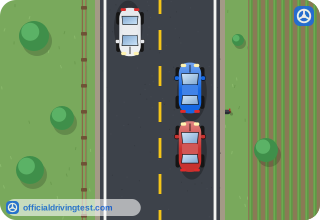
- Stay in your lane and refuse to give way
- Pull alongside and ask the driver to calm down
- Back off, give way and let the aggressive driver go
- Follow the driver to see where the driver goes
Show answer
Correct answer: Back off, give way and let the aggressive driver go
The handbook says to back off, give way to the angry driver and let the aggressive driver go.
Source: Colorado Driver Handbook (DR 2337, January 2025), page 25 · Open this page in the manual (Manual page 25)
-
Who handles a call made to the special number for reporting aggressive drivers?
- The staff of the nearest DMV driver license office
- A private roadside assistance company’s operator
- The clerk of the county court nearest the caller
- The closest state patrol trooper or a local agency
Show answer
Correct answer: The closest state patrol trooper or a local agency
The call is handled by the closest state patrol trooper or referred to a participating local law enforcement agency.
Source: Colorado Driver Handbook (DR 2337, January 2025), page 25 · Open this page in the manual (Manual page 25)
-
Which statement about aggressive driving does the manual make?
- Only new drivers are capable of becoming aggressive drivers
- Only drivers of large vehicles become aggressive drivers
- Anyone is capable of becoming an aggressive driver
- Careful drivers can never become aggressive drivers
Show answer
Correct answer: Anyone is capable of becoming an aggressive driver
The handbook says anyone is capable of becoming an aggressive driver, though some drivers may be more likely to.
Source: Colorado Driver Handbook (DR 2337, January 2025), page 25 · Open this page in the manual (Manual page 25)
-
Which of these is one of the questions the manual asks to see whether you could become an aggressive driver?
- Do you let people merge, even after they did something uncourteous?
- Do you close up space to stop other motorists from merging or changing lanes?
- Do you leave early for any trip so that you do not feel rushed?
- Do you expect other drivers to make mistakes while you keep calm?
Show answer
Correct answer: Do you close up space to stop other motorists from merging or changing lanes?
Closing up space to stop others from merging or changing lanes is on the handbook’s list of aggressive-driver warning questions.
Source: Colorado Driver Handbook (DR 2337, January 2025), page 25 · Open this page in the manual (Manual page 25)
-
If you answer yes to even just a couple of the manual’s aggressive-driver questions, what does that mean?
- You must retake the written test
- You are already guilty of reckless driving
- You should not be allowed to drive at night
- You may be at risk to become an aggressive driver
Show answer
Correct answer: You may be at risk to become an aggressive driver
The handbook says a yes to any of the questions, even just a couple, may put you at risk to become an aggressive driver.
Source: Colorado Driver Handbook (DR 2337, January 2025), page 25 · Open this page in the manual (Manual page 25)
-
Which of these is a tip the manual gives to avoid becoming an aggressive driver?
- Leave early for any trip
- Drive faster to make up lost time
- Honk at drivers who make mistakes
- Tailgate slow drivers so they move over
Show answer
Correct answer: Leave early for any trip
The handbook’s first tip is to leave early for any trip so you allow enough time.
Source: Colorado Driver Handbook (DR 2337, January 2025), page 25 · Open this page in the manual (Manual page 25)
-
Another driver has done something uncourteous and wants to merge. What does the manual advise?
- Close the gap so the driver cannot merge ahead of you
- Honk to show your disapproval before letting them in
- Let that driver merge and do not make the problem yours
- Speed up so that the other driver falls behind you
Show answer
Correct answer: Let that driver merge and do not make the problem yours
The handbook advises letting people merge, even if they have done something uncourteous.
Source: Colorado Driver Handbook (DR 2337, January 2025), page 25 · Open this page in the manual (Manual page 25)
-
What does the manual tell you to expect from other drivers?
- That they will always yield to you
- That they will make mistakes
- That they will always signal their turns
- That they will never follow too closely
Show answer
Correct answer: That they will make mistakes
The handbook’s tips include expecting others to make mistakes and keeping calm.
Source: Colorado Driver Handbook (DR 2337, January 2025), page 25 · Open this page in the manual (Manual page 25)
-
What should you avoid transferring into your driving, according to the manual?
- Fatigue you feel at the end of a long day
- Nervousness about a driving test
- Excitement about arriving early
- Anger you may feel from other situations
Show answer
Correct answer: Anger you may feel from other situations
The handbook says not to transfer the anger you may feel from other situations into your driving.
Source: Colorado Driver Handbook (DR 2337, January 2025), page 25 · Open this page in the manual (Manual page 25)