Wisconsin: Traffic signals Practice Test
Red, yellow and green lights and arrows, flashing signals, turns on red and signals that are out.
Independent educational site · not affiliated with any government agency or DMV
Ready? Test yourself
Answer to start, or tap Start below:
A police officer, school crossing guard or other worker gives you directions that are different from the traffic light or sign on the road. What must you do?
- Instant feedback with an explanation
- Every answer cites its source in the manual
- Your best score is saved on this device
- Keyboard: press 1 to 4 to answer and Enter for the next question
Questions are original and based on the official manual "Wisconsin Motorists' Handbook" (2026 (BDS126)), Wisconsin Department of Transportation, Division of Motor Vehicles (DMV).
All 23 questions in this practice test
Take the test above first, then use this list to study. Tap “Show answer” to see the correct answer and explanation.
Show the questions and answersHide the questions
-
A police officer, school crossing guard or other worker gives you directions that are different from the traffic light or sign on the road. What must you do?
- Follow the worker's directions
- Follow the traffic light or sign
- Wait for the signal to change
- Pull over until the worker leaves
Show answer
Correct answer: Follow the worker's directions
You must follow the directions of police, school crossing guards and other workers, even when they differ from the traffic light or sign on the road.
Source: Wisconsin Motorists' Handbook (2026 (BDS126)), page 22 · Open this page in the manual (Manual page 22)
-
In a standard traffic light, which color is at the top?
- Red
- Yellow
- Green
- White
Show answer
Correct answer: Red
A traffic light has red at the top, yellow in the middle and green at the bottom.
Source: Wisconsin Motorists' Handbook (2026 (BDS126)), page 32 · Open this page in the manual (Manual page 32)
-
What should you do when a traffic light loses power or is not working right?
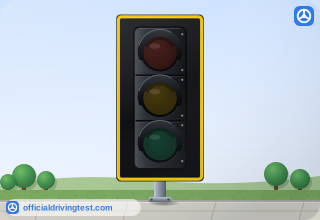
- Proceed as if the signal were a yield sign
- Proceed as if the signal were a stop sign
- Wait for the light to turn green
- Go through if there is no cross traffic in sight
Show answer
Correct answer: Proceed as if the signal were a stop sign
A signal that has no power or is not working right is treated like a stop sign.
Source: Wisconsin Motorists' Handbook (2026 (BDS126)), page 32 · Open this page in the manual (Manual page 32)
-
What should you do if a police officer is directing traffic at an intersection?
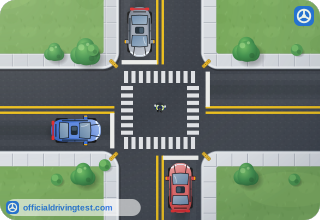
- Follow the signal instead of the officer
- Treat the intersection as a four-way stop
- Wait for the light to turn green before moving
- Follow the officer's directions
Show answer
Correct answer: Follow the officer's directions
When an officer is directing traffic, you follow the officer's directions.
Source: Wisconsin Motorists' Handbook (2026 (BDS126)), page 32 · Open this page in the manual (Manual page 32)
-
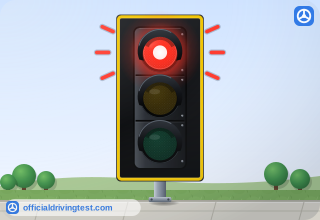
What must you do at a flashing red light?
- Slow down and proceed with caution without stopping
- Stop and wait until the light turns green
- Yield to cross traffic but keep moving
- Come to a full stop, then go when it is safe
Show answer
Correct answer: Come to a full stop, then go when it is safe
A flashing red light requires a full stop, after which you may go when it is safe.
Source: Wisconsin Motorists' Handbook (2026 (BDS126)), page 32 · Open this page in the manual (Manual page 32)
-
What must you do when facing a steady red arrow?
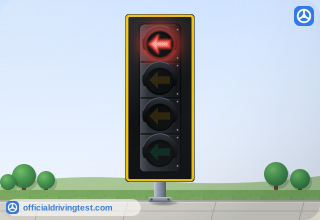
- Come to a full stop and wait for the light to turn green
- Come to a full stop, then proceed when it is safe to do so
- Slow down, then turn in the arrow's direction with caution
- Yield to oncoming and crossing traffic, then turn
Show answer
Correct answer: Come to a full stop and wait for the light to turn green
A steady red arrow means a full stop and waiting until the light turns green.
Source: Wisconsin Motorists' Handbook (2026 (BDS126)), page 32 · Open this page in the manual (Manual page 32)
-
What does a flashing red arrow tell you to do?
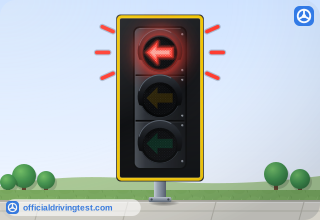
- Come to a full stop and wait for the light to turn green
- Slow down and yield before turning
- Come to a full stop, then go when it is safe to do so
- Proceed in the arrow's direction with caution
Show answer
Correct answer: Come to a full stop, then go when it is safe to do so
A flashing red arrow means you stop completely and may go once it is safe.
Source: Wisconsin Motorists' Handbook (2026 (BDS126)), page 32 · Open this page in the manual (Manual page 32)
-
What must you do when a steady yellow light comes on as you approach an intersection?
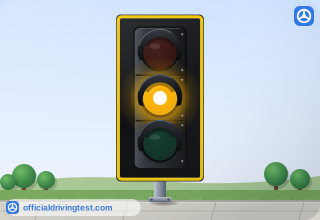
- Speed up to clear the intersection before it turns red
- Slow down and stop before entering the intersection
- Yield to cross traffic and continue through
- Proceed with caution without slowing
Show answer
Correct answer: Slow down and stop before entering the intersection
A steady yellow means the light is about to turn red, so you slow down and stop before the intersection.
Source: Wisconsin Motorists' Handbook (2026 (BDS126)), page 33 · Open this page in the manual (Manual page 33)
-
What should you do if you are already in the intersection when the yellow light comes on?
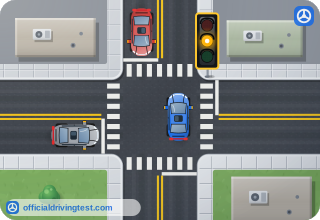
- Stop immediately where you are
- Back up to the stop line
- Stop and wait for the light to turn green again
- Do not stop; continue through the intersection
Show answer
Correct answer: Do not stop; continue through the intersection
A driver already in the intersection when the light turns yellow keeps going through.
Source: Wisconsin Motorists' Handbook (2026 (BDS126)), page 33 · Open this page in the manual (Manual page 33)
-
What should you do at a flashing yellow light?
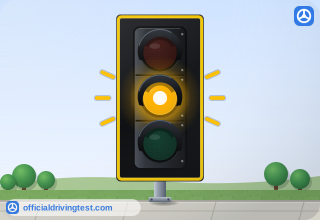
- Slow down, check for cross traffic and proceed with caution
- Come to a full stop and go only when the way is clear
- Keep your speed because cross traffic must stop
- Stop before entering the intersection and wait for green
Show answer
Correct answer: Slow down, check for cross traffic and proceed with caution
A flashing yellow light means slowing down, checking for cross traffic and proceeding with caution.
Source: Wisconsin Motorists' Handbook (2026 (BDS126)), page 33 · Open this page in the manual (Manual page 33)
-
What should you do when a steady yellow arrow appears?
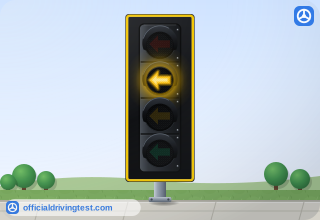
- Speed up to finish your turn before the light changes
- Turn in the arrow's direction with no need to yield
- Stop if it is safe to do so; the light will soon turn red
- Wait for the arrow to flash before turning
Show answer
Correct answer: Stop if it is safe to do so; the light will soon turn red
A steady yellow arrow warns that the light is about to change to red, and you should stop if it is safe.
Source: Wisconsin Motorists' Handbook (2026 (BDS126)), page 33 · Open this page in the manual (Manual page 33)
-
What should you do at a flashing yellow arrow?
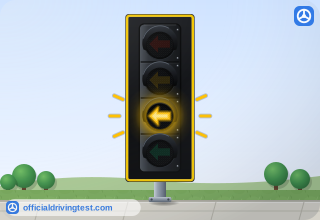
- Come to a full stop and wait for a green arrow
- Yield first before turning and proceed with caution
- Turn first because oncoming traffic must yield
- Stop only if cross traffic is present
Show answer
Correct answer: Yield first before turning and proceed with caution
With a flashing yellow arrow you yield before turning and then proceed with caution.
Source: Wisconsin Motorists' Handbook (2026 (BDS126)), page 33 · Open this page in the manual (Manual page 33)
-
At a steady green light, to whom must you yield?
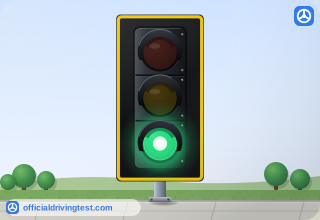
- Only vehicles that entered the intersection first
- Only vehicles turning right
- No one, because the light gives you the right-of-way
- Emergency vehicles and others as required by law
Show answer
Correct answer: Emergency vehicles and others as required by law
Even on a green light you must yield to emergency vehicles and others as the law requires.
Source: Wisconsin Motorists' Handbook (2026 (BDS126)), page 33 · Open this page in the manual (Manual page 33)
-
What does a steady green arrow allow you to do?
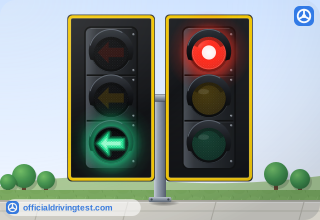
- Go straight through the intersection only
- Turn in the direction of the arrow
- Turn only after yielding to oncoming traffic
- Stop and wait for the arrow to flash
Show answer
Correct answer: Turn in the direction of the arrow
A steady green arrow lets you turn in the direction the arrow points.
Source: Wisconsin Motorists' Handbook (2026 (BDS126)), page 33 · Open this page in the manual (Manual page 33)
-
While a steady green arrow is showing, what should there be?
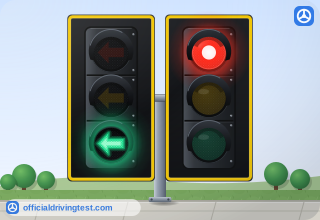
- Oncoming traffic that you must yield to
- Crossing traffic that has the right-of-way
- Pedestrians only on the far crosswalk
- No oncoming or crossing traffic
Show answer
Correct answer: No oncoming or crossing traffic
Drivers should have no oncoming or crossing traffic while the arrow is green.
Source: Wisconsin Motorists' Handbook (2026 (BDS126)), page 33 · Open this page in the manual (Manual page 33)
-
When turning on a steady green arrow, what should you remember to watch for?
- Pedestrians
- Animals on the shoulder
- Vehicles parked at the curb
- Railroad crossing gates
Show answer
Correct answer: Pedestrians
Even with a green arrow, drivers must remember to watch for pedestrians.
Source: Wisconsin Motorists' Handbook (2026 (BDS126)), page 33 · Open this page in the manual (Manual page 33)
-
What tells you which reversible lanes you can use while driving?
- Painted white arrows
- Special lights
- Overhead speed limit signs
- A flashing yellow beacon
Show answer
Correct answer: Special lights
Special lights over the lanes show which reversible lanes you can use.
Source: Wisconsin Motorists' Handbook (2026 (BDS126)), page 36 · Open this page in the manual (Manual page 36)
-
What does a red X over a reversible lane mean?
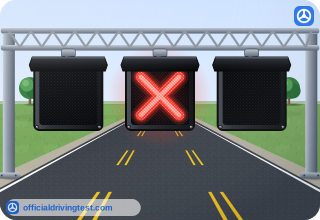
- The lane is open
- The lane is changing
- The lane is for buses only
- The lane is closed
Show answer
Correct answer: The lane is closed
A red X signals that the reversible lane is closed.
Source: Wisconsin Motorists' Handbook (2026 (BDS126)), page 36 · Open this page in the manual (Manual page 36)
-
What does a green arrow over a reversible lane mean?
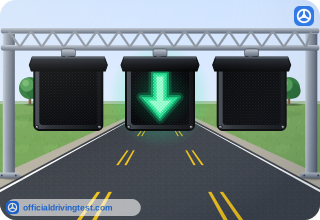
- The lane is open
- The lane is closed
- The lane is changing
- Move to the next lane
Show answer
Correct answer: The lane is open
A green arrow shows that the reversible lane is open.
Source: Wisconsin Motorists' Handbook (2026 (BDS126)), page 36 · Open this page in the manual (Manual page 36)
-
What should you do when a yellow X is shown over your reversible lane?
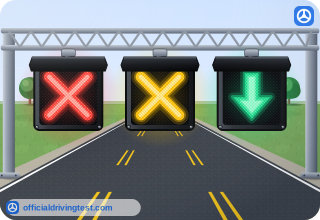
- Stop in the lane until it turns green
- Continue driving; the lane is still open
- Move to a lane with a green arrow
- Move to a lane with a red X
Show answer
Correct answer: Move to a lane with a green arrow
A yellow X means the lane is changing, so you move to a lane with a green arrow.
Source: Wisconsin Motorists' Handbook (2026 (BDS126)), page 36 · Open this page in the manual (Manual page 36)
-
What does a green arrow over a flex lane mean?
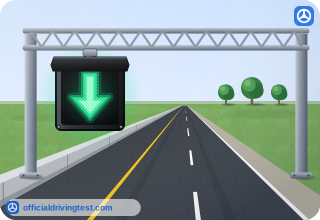
- The lane is closing and you must merge
- The lane is open and can be used
- The lane is closed and cannot be used
- The lane is reserved for large trucks
Show answer
Correct answer: The lane is open and can be used
A green arrow shows the flex lane is open.
Source: Wisconsin Motorists' Handbook (2026 (BDS126)), page 38 · Open this page in the manual (Manual page 38)
-
What should you do when a yellow X is shown over the flex lane?
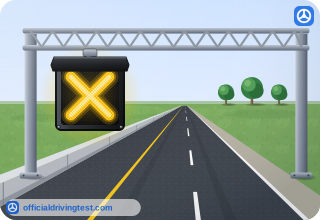
- Stay in the flex lane and slow down
- Stop on the shoulder until it turns green
- Speed up to leave the flex lane quickly
- Merge to the general-purpose lanes
Show answer
Correct answer: Merge to the general-purpose lanes
A yellow X means the lane is closing, so you merge to the normal lanes.
Source: Wisconsin Motorists' Handbook (2026 (BDS126)), page 38 · Open this page in the manual (Manual page 38)
-
What does a red X over a flex lane mean?
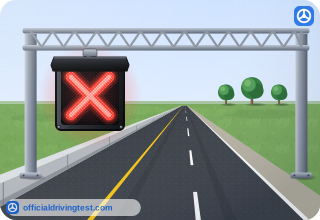
- The lane is closed and cannot be used
- The lane is open but only for cars
- The lane is closing and you should merge soon
- The lane is for emergency vehicles only
Show answer
Correct answer: The lane is closed and cannot be used
A red X means the flex lane is closed.
Source: Wisconsin Motorists' Handbook (2026 (BDS126)), page 38 · Open this page in the manual (Manual page 38)