Traffic signals in Wisconsin
The Wisconsin Motorists' Handbook shows or names everything on this page: 16 in all, on pages 32–33, 36, 41.
Independent educational site · not affiliated with any government agency or DMV
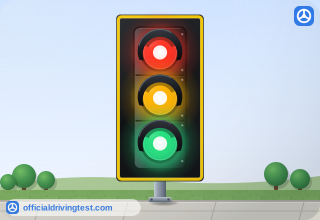
Traffic Signal
Traffic signals are lights that tell you when and where to stop or go. They are usually at intersections. The lights are red (top), yellow (middle) and green (bottom). A lot of intersections in the country have a single yellow or red light. If a traffic light loses power or is not working right, proceed as if the signal were a stop sign.
Manual page 32 · Open this page in the manual (Manual page 32)
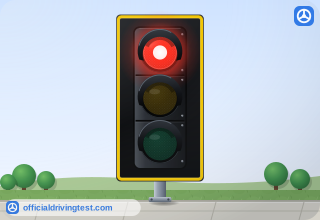
Steady Red
Come to a full stop. You must wait until the traffic light turns green and there is no cross traffic. You can turn right on red if it is safe to do so and there is no sign prohibiting it. You may turn left on red if you are turning from a one-way on to a one-way street. When turning on red you need to stop first, yield to all traffic and then proceed staying in your lane.
Manual page 32 · Open this page in the manual (Manual page 32)
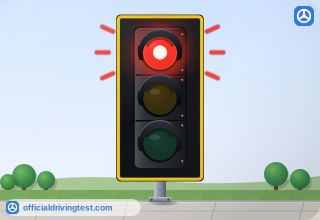
Flashing Red
You must come to a full stop. You may go when it is safe to do so.
Manual page 32 · Open this page in the manual (Manual page 32)
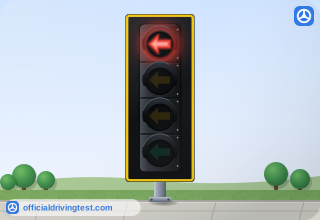
Steady Red Arrow
You must come to a full stop and wait for the light to turn green.
Manual page 32 · Open this page in the manual (Manual page 32)
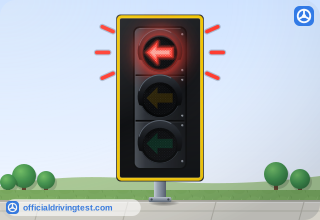
Flashing Red Arrow
You must come to a full stop. You may go when it is safe to do so.
Manual page 32 · Open this page in the manual (Manual page 32)
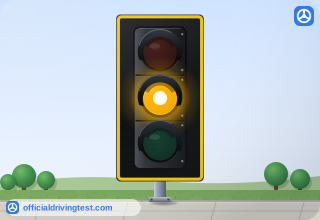
Steady Yellow
The light is about to change to red. You must slow down and stop before entering the intersection. If you are in the intersection when the yellow light comes on, do not stop. You can continue through the intersection.
Manual page 33 · Open this page in the manual (Manual page 33)
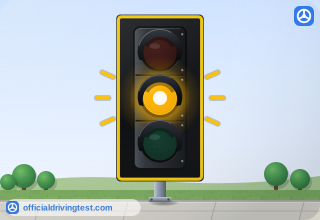
Flashing Yellow
Slow down, check for cross traffic and proceed with caution.
Manual page 33 · Open this page in the manual (Manual page 33)
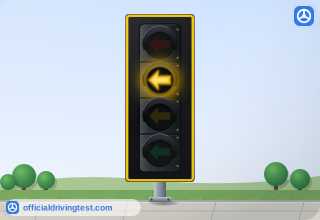
Steady Yellow Arrow
The light is about to change to red. You should stop if it is safe to do so.
Manual page 33 · Open this page in the manual (Manual page 33)
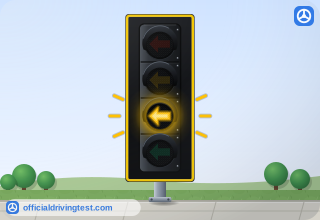
Flashing Yellow Arrow
Yield first before turning and proceed with caution.
Manual page 33 · Open this page in the manual (Manual page 33)
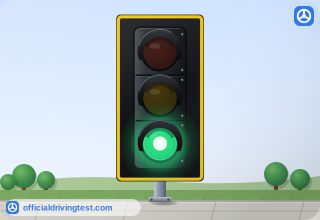
Steady Green
You can go through the intersection. You must yield to emergency vehicles and others as required by law. If you are stopped and then the light turns green, you must allow cross traffic to clear before you can go ahead. If you are turning left, a steady green light means you may turn, but only when it is safe to do so. Oncoming traffic has the right-of-way.
Manual page 33 · Open this page in the manual (Manual page 33)
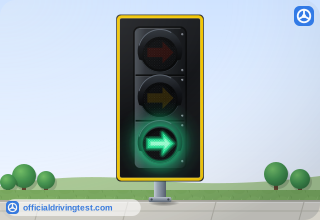
Steady Green Arrow
You can turn in the direction of the arrow. There should be no oncoming or crossing traffic while the arrow is green. Remember to watch for pedestrians.
Manual page 33 · Open this page in the manual (Manual page 33)
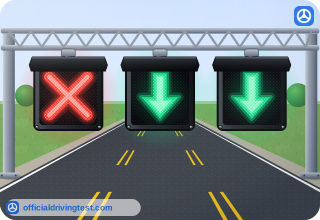
Reversible lane control signals
Reversible lanes have different operational hours for each lane. Each lane has double dashed yellow lines. Special lights tell you which lanes you can use when you are driving.
Manual page 36 · Open this page in the manual (Manual page 36)
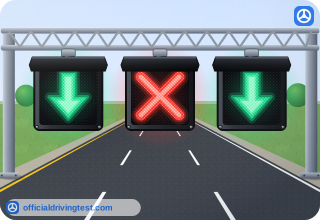
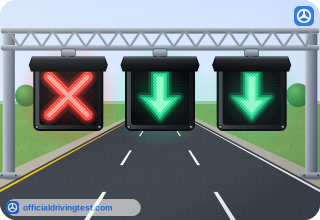
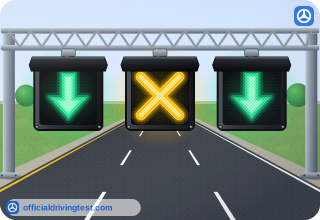
Yellow X
Lane is changing. Move to a Green “arrow” lane
Manual page 36 · Open this page in the manual (Manual page 36)
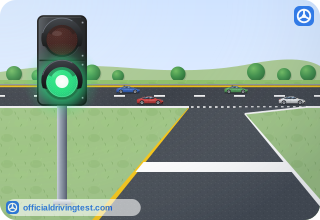
Ramp meter signal
Some freeway entrance ramps have traffic signals. This helps evenly space the number of vehicles merging on to the freeway. ... You should pull completely up to the white stop line so your tires will trigger the sensors in the pavement. Each lane has its own traffic signal. When your signal turns green you may go and merge with traffic. If you disobey a ramp signal, you can be ticketed.
Manual page 41 · Open this page in the manual (Manual page 41)