West Virginia: Distracted and drowsy driving
West Virginia’s hands-free law for wireless devices, inattention, and the signs and dangers of drowsy driving. Split into 2 shorter tests so you're not stuck in one long quiz.
Independent educational site · not affiliated with any government agency or DMV
Choose a part
Distracted and drowsy driving — Part 1
Questions in this part include: “Which description fits a hands-free electronic communication device?”
Distracted and drowsy driving — Part 2
Questions in this part include: “If you display any of the bad driving habits, what must you do first?”
Questions are original and based on the official manual "West Virginia Driver's Licensing Handbook" (Revised July 2026), West Virginia Division of Motor Vehicles (DMV).
All 47 Distracted and drowsy driving questions with answers
Choose a part above to take a practice test, or study every question and answer here.
Show the questions and answersHide the questions
1Part 124 questions
-
What does West Virginia law say about drivers under age 18 using a cell phone while operating a motor vehicle?
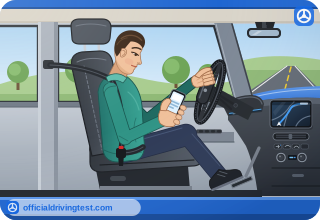
- They may not use one while driving
- They may use one while driving only at stop signs
- They may use one if a supervising adult is in the vehicle
- They may use one for texting only
Show answer
Correct answer: They may not use one while driving
Drivers under 18 may not use a cell phone while operating a motor vehicle.
Source: West Virginia Driver's Licensing Handbook (Revised July 2026), page 11 · Open this page in the manual (Manual page 11)
-
On a public street or highway, the use of an electronic communications device while driving is prohibited unless the use is accomplished by what?
- Hands-free equipment
- Holding the device below the dashboard
- Using it only at speeds below 25 mph
- Using it only on roads with little traffic
Show answer
Correct answer: Hands-free equipment
West Virginia prohibits using an electronic communications device while driving unless it is done with hands-free equipment.
Source: West Virginia Driver's Licensing Handbook (Revised July 2026), page 17 · Open this page in the manual (Manual page 17)
-
Which description fits a hands-free electronic communication device?
- It can be held in one hand while the other hand stays on the steering wheel
- It may be used only while the vehicle is stopped at a red light or stop sign
- It has a feature or function that lets the user engage it without using either or both hands
- It has been tested and approved by the DMV for use by drivers on public roads
Show answer
Correct answer: It has a feature or function that lets the user engage it without using either or both hands
A hands-free device lets the user engage it without using either or both hands.
Source: West Virginia Driver's Licensing Handbook (Revised July 2026), page 17 · Open this page in the manual (Manual page 17)
-
Which of these is defined as an electronic communications device?
- A laptop computer
- A paper road atlas
- A dashboard fuel gauge
- A windshield wiper switch
Show answer
Correct answer: A laptop computer
The handbook's definition lists a laptop computer, along with cell phones, pagers, electronic games and portable computing devices.
Source: West Virginia Driver's Licensing Handbook (Revised July 2026), page 17 · Open this page in the manual (Manual page 17)
-
Which of these is a violation of the law on electronic communications devices while driving?
- Making a call with a device enabled as hands-free
- Using a device to report a fire to the proper authorities
- Playing a game on a device that is not enabled as hands-free
- Using a device to report a serious road hazard to the authorities
Show answer
Correct answer: Playing a game on a device that is not enabled as hands-free
Playing games on a device that is not hands-free is a violation, while hands-free calls and emergency reports are not.
Source: West Virginia Driver's Licensing Handbook (Revised July 2026), page 17 · Open this page in the manual (Manual page 17)
-
Which use of an electronic communications device while driving is not a violation of the law?
- Reading an e-mail on a device that is not hands-free
- Reporting a traffic crash to the appropriate authorities
- Browsing the internet on a device that is not hands-free
- Sending a text message from a device that is not hands-free
Show answer
Correct answer: Reporting a traffic crash to the appropriate authorities
Using a device to report a fire, traffic crash, serious road hazard, or emergency to the authorities is not a violation.
Source: West Virginia Driver's Licensing Handbook (Revised July 2026), page 18 · Open this page in the manual (Manual page 18)
-
Which of these may use an electronic communications device while driving while performing their duties without violating the law?
- A taxi driver carrying a passenger
- A mail carrier on a delivery route
- A school bus driver on a route
- A paramedic
Show answer
Correct answer: A paramedic
Law-enforcement officers, firefighters, emergency medical technicians, paramedics, and operators of authorized emergency vehicles are exempt when performing their duties.
Source: West Virginia Driver's Licensing Handbook (Revised July 2026), page 18 · Open this page in the manual (Manual page 18)
-
What is the fine for a first offense of using an electronic communications device that is not hands-free while driving?
- $50
- $200
- $100
- $300
Show answer
Correct answer: $100
A first offense carries a $100 fine and zero points.
Source: West Virginia Driver's Licensing Handbook (Revised July 2026), page 17 · Open this page in the manual (Manual page 17)
-
What is the fine for a second offense of using an electronic communications device that is not hands-free while driving?
- $200
- $100
- $300
- $500
Show answer
Correct answer: $200
A second offense carries a $200 fine and zero points.
Source: West Virginia Driver's Licensing Handbook (Revised July 2026), page 17 · Open this page in the manual (Manual page 17)
-
What penalty applies to a third and subsequent offense of using an electronic communications device that is not hands-free while driving?
- A $300 fine and zero points
- A $200 fine and three points
- A $500 fine and six points
- A $300 fine and three points
Show answer
Correct answer: A $300 fine and three points
Third and subsequent offenses carry a $300 fine and three points on the driving record.
Source: West Virginia Driver's Licensing Handbook (Revised July 2026), page 17 · Open this page in the manual (Manual page 17)
-
After being awake for how many hours are driving skills comparable to those of someone under the influence of drugs or alcohol (time varies)?
- 8 hours
- 12 hours
- 18 hours
- 4 hours
Show answer
Correct answer: 18 hours
After about 18 hours awake, driving skills are comparable to those of someone under the influence, although the time varies.
Source: West Virginia Driver's Licensing Handbook (Revised July 2026), page 23 · Open this page in the manual (Manual page 23)
-
How can driving drowsy affect you?
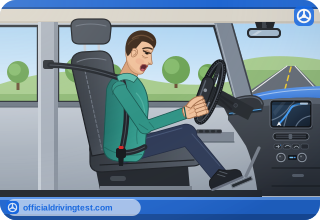
- It can sharpen your reaction time but dull your hearing
- It can lower your crash risk because you drive more slowly
- It can slow your reactions and increase your crash risk
- It has no effect unless you actually fall asleep
Show answer
Correct answer: It can slow your reactions and increase your crash risk
Drowsy driving can slow your reaction time and raise your risk of a crash.
Source: West Virginia Driver's Licensing Handbook (Revised July 2026), page 23 · Open this page in the manual (Manual page 23)
-
Which can happen if you drive while drowsy?
- You may struggle to process complex information coming from many places at once
- You may react faster to sudden hazards because you are relaxed and calm
- You may notice every road sign and exit sooner than a rested driver would
- You may judge distances more accurately because you drive more slowly
Show answer
Correct answer: You may struggle to process complex information coming from many places at once
A drowsy driver may become slower to respond and may struggle to process complex information coming from several places at once.
Source: West Virginia Driver's Licensing Handbook (Revised July 2026), page 23 · Open this page in the manual (Manual page 23)
-
Which is listed as a sign that you are drowsy while driving?
- Gripping the wheel tightly with both hands
- Feeling more alert after hours of driving
- Stopping smoothly at every red light
- Difficulty remembering the last few miles driven
Show answer
Correct answer: Difficulty remembering the last few miles driven
Not remembering the last few miles driven is a sign that you are drowsy.
Source: West Virginia Driver's Licensing Handbook (Revised July 2026), page 23 · Open this page in the manual (Manual page 23)
-
You notice you are falling asleep at stop lights. What does the handbook say this is a sign of?
- Your brakes need adjusting
- You are drowsy while driving
- Your engine is idling too fast
- Your seat is set too low
Show answer
Correct answer: You are drowsy while driving
Falling asleep at stop lights is one of the handbook’s signs that you are drowsy while driving.
Source: West Virginia Driver's Licensing Handbook (Revised July 2026), page 23 · Open this page in the manual (Manual page 23)
-
You keep missing road signs or exits. What does the handbook list this as a sign of?
- Drowsiness while driving
- A faulty speedometer
- Worn windshield wipers
- A low tire pressure
Show answer
Correct answer: Drowsiness while driving
Missing road signs or exits is one of the handbook’s signs that you are drowsy while driving.
Source: West Virginia Driver's Licensing Handbook (Revised July 2026), page 23 · Open this page in the manual (Manual page 23)
-
Which is listed as a sign that another driver may be drowsy?
- Signaling early before every turn and keeping to the speed limit
- Staying centered in the lane at a steady speed on a straight road
- Drifting out of the travel lane or hitting the rumble strips
- Slowing smoothly for every stop sign and stopping behind the line
Show answer
Correct answer: Drifting out of the travel lane or hitting the rumble strips
Drifting out of the travel lane, crossing edge lines or center lines, or hitting rumble strips are signs of a drowsy driver.
Source: West Virginia Driver's Licensing Handbook (Revised July 2026), page 23 · Open this page in the manual (Manual page 23)
-
Another driver has near miss crashes, especially rear end ones. What may this be a sign of, according to the handbook?
- The driver has a new vehicle
- The driver may be drowsy
- The road was just repaved
- The driver is using cruise control
Show answer
Correct answer: The driver may be drowsy
Near miss crashes, especially rear end, are one of the handbook’s signs that another driver may be drowsy.
Source: West Virginia Driver's Licensing Handbook (Revised July 2026), page 23 · Open this page in the manual (Manual page 23)
-
According to the handbook, what is the best way to reduce drowsiness?
- Drive faster to finish the trip sooner
- Skip rest stops to arrive sooner
- Drive only on roads with several lanes
- Get more sleep
Show answer
Correct answer: Get more sleep
The handbook says the best way to reduce drowsiness is to get more sleep.
Source: West Virginia Driver's Licensing Handbook (Revised July 2026), page 23 · Open this page in the manual (Manual page 23)
-
If you are drowsy while driving, what does the handbook say to do?
- Keep driving until you reach the next large town or rest area
- Drive faster to reach your destination sooner than planned
- Stay in the left lane so other cars pass you on the right
- Pull over to a safe area as soon as you can and take a short nap
Show answer
Correct answer: Pull over to a safe area as soon as you can and take a short nap
A drowsy driver should not keep driving but should pull over to a safe area as soon as possible and take a short nap.
Source: West Virginia Driver's Licensing Handbook (Revised July 2026), page 23 · Open this page in the manual (Manual page 23)
-
As little as how much sleep can make a big difference when you are drowsy?
- 2-5 minutes
- 10-20 minutes
- 30-45 minutes
- 60-90 minutes
Show answer
Correct answer: 10-20 minutes
As little as 10 to 20 minutes of sleep can make a big difference.
Source: West Virginia Driver's Licensing Handbook (Revised July 2026), page 23 · Open this page in the manual (Manual page 23)
-
For many people, when do they feel sleepy and should avoid driving if possible?
- At midday and in the early afternoon, just after lunch
- Only after a large meal eaten in the middle of the day
- In the early morning, during the late afternoon, or at night
- Only after midnight, when the roads are mostly empty
Show answer
Correct answer: In the early morning, during the late afternoon, or at night
For many people, sleepiness comes in the early morning, during the late afternoon, or at night.
Source: West Virginia Driver's Licensing Handbook (Revised July 2026), page 23 · Open this page in the manual (Manual page 23)
-
What does the handbook suggest when you are too drowsy to drive?
- Let a well-rested person drive
- Lower your speed and stay in the right lane
- Switch to a road with fewer curves
- Wait until the next exit and keep going
Show answer
Correct answer: Let a well-rested person drive
The handbook says to let a well-rested person drive, or to carpool, use public transportation, or call a taxi.
Source: West Virginia Driver's Licensing Handbook (Revised July 2026), page 23 · Open this page in the manual (Manual page 23)
-
Which of these does the handbook name as a cause of bad driving habits?
- Arrogance
- Nervousness
- Forgetfulness
- Inexperience
Show answer
Correct answer: Arrogance
Bad driving habits result from laziness, impatience, inattention, arrogance, and aggressiveness.
Source: West Virginia Driver's Licensing Handbook (Revised July 2026), page 61 · Open this page in the manual (Manual page 61)
2Part 223 questions
-
If you display any of the bad driving habits, what must you do first?
- Take a defensive driving course first
- Ask a passenger to take over the driving
- Evaluate your behavior and adjust accordingly
- Report your behavior to the Division of Motor Vehicles
Show answer
Correct answer: Evaluate your behavior and adjust accordingly
Before anything else, you must evaluate your own behavior and adjust it in order to be a safe driver.
Source: West Virginia Driver's Licensing Handbook (Revised July 2026), page 61 · Open this page in the manual (Manual page 61)
-
According to the handbook, what does defensive driving mean?
- Driving only when traffic is light and roads are dry
- Being prepared through the practice of good driving habits
- Avoiding every passing maneuver and staying in the right lane
- Reacting to other drivers' mistakes after they happen
Show answer
Correct answer: Being prepared through the practice of good driving habits
Defensive driving is being prepared by practicing good driving habits every trip, whether short or long.
Source: West Virginia Driver's Licensing Handbook (Revised July 2026), page 61 · Open this page in the manual (Manual page 61)
-
When do safety techniques begin, according to the handbook?
- When you start the engine
- When you pull away from the curb
- When you enter moving traffic
- The moment you step into the vehicle
Show answer
Correct answer: The moment you step into the vehicle
Safety techniques begin the moment you get into the vehicle, so good habits should start immediately and be used every trip.
Source: West Virginia Driver's Licensing Handbook (Revised July 2026), page 61 · Open this page in the manual (Manual page 61)
-
Which describes an impatient driver, according to the handbook?
- Weaves in and out of traffic and often tailgates other drivers
- Drives well below the speed of traffic and keeps a large gap
- Stays in one lane and always yields to following vehicles
- Stops completely at every stop sign and signals every turn
Show answer
Correct answer: Weaves in and out of traffic and often tailgates other drivers
An impatient driver speeds from stop to stop, weaves in and out of traffic, and often tailgates.
Source: West Virginia Driver's Licensing Handbook (Revised July 2026), page 61 · Open this page in the manual (Manual page 61)
-
As a good driver, what should you do with your body and the steering wheel?
- Lean back and hold the wheel loosely with one hand
- Sit up straight and keep a firm grip on the steering wheel
- Sit close to the door and rest an arm on the window
- Keep a light touch on the wheel so the car can drift
Show answer
Correct answer: Sit up straight and keep a firm grip on the steering wheel
A good driver sits up straight, has a firm grip on the wheel, and pays attention to developing traffic problems.
Source: West Virginia Driver's Licensing Handbook (Revised July 2026), page 61 · Open this page in the manual (Manual page 61)
-
If you relax, lean back, release your grip on the wheel, and let your attention wander, what may happen?
- Your reaction time may improve
- Your vehicle will steer straighter on its own
- Your tires will grip the road better
- Your vehicle may also wander
Show answer
Correct answer: Your vehicle may also wander
The handbook warns that a wandering attention can make the vehicle wander too.
Source: West Virginia Driver's Licensing Handbook (Revised July 2026), page 61 · Open this page in the manual (Manual page 61)
-
Which behavior can identify you as an inattentive driver, according to the handbook?
- Driving with one arm out the window
- Sitting up straight with a firm grip on the wheel
- Being aware of where you are
- Paying attention to developing traffic problems
Show answer
Correct answer: Driving with one arm out the window
The handbook lists driving with one arm out the window among the signs of an inattentive driver; sitting up straight and watching traffic are marks of a good driver.
Source: West Virginia Driver's Licensing Handbook (Revised July 2026), page 61 · Open this page in the manual (Manual page 61)
-
How does the handbook describe an arrogant or aggressive driver compared with an impatient driver?
- Unaware of being in a hurry
- In a hurry only because of pressure from followers
- Purposely in a hurry, not simply in a hurry
- In a hurry only when running late for work
Show answer
Correct answer: Purposely in a hurry, not simply in a hurry
An impatient driver is simply in a hurry, while an arrogant or aggressive driver is hurrying on purpose.
Source: West Virginia Driver's Licensing Handbook (Revised July 2026), page 62 · Open this page in the manual (Manual page 62)
-
The handbook says an arrogant or aggressive driver competes with the vehicle because it is an extension of what?
- Speed
- Skill
- Wealth
- Ego
Show answer
Correct answer: Ego
The arrogant or aggressive driver treats the vehicle as an extension of his or her ego.
Source: West Virginia Driver's Licensing Handbook (Revised July 2026), page 62 · Open this page in the manual (Manual page 62)
-
What attitude toward traffic laws does the handbook attribute to an arrogant or aggressive driver?
- Little or no respect for traffic laws or others' rights
- Strict obedience to every posted limit
- Respect for pedestrians but not for other drivers
- Respect for laws but not for road signs
Show answer
Correct answer: Little or no respect for traffic laws or others' rights
Arrogant or aggressive drivers have little or no respect for traffic laws or the rights of other drivers or pedestrians.
Source: West Virginia Driver's Licensing Handbook (Revised July 2026), page 62 · Open this page in the manual (Manual page 62)
-
Which is described as one of the most important elements of safe driving?
- Fast reflexes
- A powerful engine
- Concentration
- Knowing the route well
Show answer
Correct answer: Concentration
The handbook calls concentration one of the most important elements of safe driving.
Source: West Virginia Driver's Licensing Handbook (Revised July 2026), page 62 · Open this page in the manual (Manual page 62)
-
How does the handbook describe driving an automobile?
- A skill that becomes automatic with practice
- A full-time job
- A task that needs attention only in heavy traffic
- A part-time responsibility shared with passengers
Show answer
Correct answer: A full-time job
Driving needs concentration all the time; the handbook calls it a full-time job.
Source: West Virginia Driver's Licensing Handbook (Revised July 2026), page 62 · Open this page in the manual (Manual page 62)
-
Which is named as a common driver condition affecting the safe operation of a vehicle?
- Worn tire tread and brakes
- Poorly marked or narrow roads
- Defective eyesight or hearing
- Heavy rush-hour traffic jams
Show answer
Correct answer: Defective eyesight or hearing
Fatigue, alcohol, emotional state, and defective eyesight or hearing are the common driver conditions.
Source: West Virginia Driver's Licensing Handbook (Revised July 2026), page 65 · Open this page in the manual (Manual page 65)
-
What may cause fatigue, according to the handbook?
- Driving only in light traffic
- Lack of sleep or driving too long
- Driving with the windows down
- Listening to the radio while driving
Show answer
Correct answer: Lack of sleep or driving too long
Fatigue may be caused by lack of sleep or by driving too long.
Source: West Virginia Driver's Licensing Handbook (Revised July 2026), page 65 · Open this page in the manual (Manual page 65)
-
What does being tired do to a driver, according to the handbook?
- Sharpens your sense of hearing
- Increases your stopping distance only at night
- Makes your eyesight better in the dark
- Dulls your mind and slows your reaction time
Show answer
Correct answer: Dulls your mind and slows your reaction time
Being tired dulls the mind and slows reaction time.
Source: West Virginia Driver's Licensing Handbook (Revised July 2026), page 65 · Open this page in the manual (Manual page 65)
-
If you are alone and become tired, what should you do?
- Open the window and keep driving
- Turn up the radio and drive faster to finish
- Pull off the road and rest
- Drive to the next exit without stopping
Show answer
Correct answer: Pull off the road and rest
A tired driver who is alone should pull off the road and rest.
Source: West Virginia Driver's Licensing Handbook (Revised July 2026), page 65 · Open this page in the manual (Manual page 65)
-
If other licensed drivers are in the vehicle and one driver becomes tired, what should happen?
- The tired driver should keep driving with the others awake
- Change drivers as soon as one driver becomes tired
- Change drivers only after the next fuel stop
- The tired driver should continue until the next rest area
Show answer
Correct answer: Change drivers as soon as one driver becomes tired
The handbook says to change drivers as soon as one driver gets tired.
Source: West Virginia Driver's Licensing Handbook (Revised July 2026), page 65 · Open this page in the manual (Manual page 65)
-
On a long trip, what rest break does the handbook say to take?
- A 5-minute break at least every hour
- A 30-minute break at least every four hours
- A 15-minute break at least every three hours
- A 10-minute break at least every two hours
Show answer
Correct answer: A 10-minute break at least every two hours
On a long trip take a 10-minute rest break at least every two hours.
Source: West Virginia Driver's Licensing Handbook (Revised July 2026), page 65 · Open this page in the manual (Manual page 65)
-
Where should the rest break on a long trip be spent?
- Outside of the vehicle
- In the driver's seat with the seat reclined
- In the back seat
- In the vehicle with the engine running
Show answer
Correct answer: Outside of the vehicle
The rest break should be spent outside the vehicle, such as walking around or getting a drink.
Source: West Virginia Driver's Licensing Handbook (Revised July 2026), page 65 · Open this page in the manual (Manual page 65)
-
Which can reduce the monotony of driving, according to the handbook?
- Closing all the windows
- Rolling your window down
- Turning the radio off
- Using the cruise control
Show answer
Correct answer: Rolling your window down
Rolling your window down, turning your radio on, or singing can reduce the monotony of driving.
Source: West Virginia Driver's Licensing Handbook (Revised July 2026), page 65 · Open this page in the manual (Manual page 65)
-
Which of these is named as an emotional state you should control before driving?
- Boredom
- Excitement
- Pride
- Worry
Show answer
Correct answer: Worry
The handbook names anger, worry, and fear as emotional states to control before driving.
Source: West Virginia Driver's Licensing Handbook (Revised July 2026), page 65 · Open this page in the manual (Manual page 65)
-
What should you attempt to do about emotions such as anger, worry, or fear?
- Control them and gain self control before driving
- Drive faster to work them off
- Ignore them once you are on the road
- Drive on quiet roads only until they pass
Show answer
Correct answer: Control them and gain self control before driving
You should control these emotions and gain self control before you drive.
Source: West Virginia Driver's Licensing Handbook (Revised July 2026), page 65 · Open this page in the manual (Manual page 65)
-
What do the 8 simple steps say to do with your wireless communication device before driving?
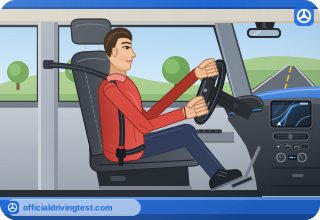
- Turn it off or enable the hands-free function
- Place it in your lap so you can see incoming calls
- Set it to vibrate and use it only at red lights
- Keep it on and answer only calls from family
Show answer
Correct answer: Turn it off or enable the hands-free function
The steps advise turning the device off, or enabling the hands-free function, before you drive.
Source: West Virginia Driver's Licensing Handbook (Revised July 2026), page 69 · Open this page in the manual (Manual page 69)