Texas: Emergencies and special situations — Part 2 Practice Test
Questions in this part include: “Is signing a traffic citation an admission of guilt?” · “What does "Your Keys to Safe Driving" say about courtesy?”
Independent educational site · not affiliated with any government agency or DMV
Ready? Test yourself
Answer to start, or tap Start below:
Is signing a traffic citation an admission of guilt?
- Instant feedback with an explanation
- Every answer cites its source in the manual
- Your best score is saved on this device
- Keyboard: press 1 to 4 to answer and Enter for the next question
Questions are original and based on the official manual "Texas Driver Handbook" (Revised January 2026), Texas Department of Public Safety (DPS).
All 18 questions in this practice test
Take the test above first, then use this list to study. Tap “Show answer” to see the correct answer and explanation.
Show the questions and answersHide the questions
-
Is signing a traffic citation an admission of guilt?
- Yes, it is a full admission of guilt to the charges
- Yes, but only for moving violations
- No, but it forfeits your right to a trial
- No, it confirms your promise to pay or contact the court
Show answer
Correct answer: No, it confirms your promise to pay or contact the court
Signing a citation is not admitting guilt; it simply confirms your promise to pay the fine or contact the court.
Source: Texas Driver Handbook (Revised January 2026), page 66
-
What is the offense called when a person gives a false or fictitious name to a law enforcement officer who has lawfully arrested or detained them?
- Contempt of court
- False identification
- Perjury
- Obstruction of justice
Show answer
Correct answer: False identification
A person commits a False Identification Offense if he/she gives a false or fictitious name to a law enforcement officer who has lawfully arrested or detained the person.
Source: Texas Driver Handbook (Revised January 2026), page 66
-
What happens if a person intentionally flees from someone they know is a peace officer attempting a lawful arrest, using a vehicle to do so?
- It is not an offense as long as no one is injured
- It only becomes an offense if the person is caught within one mile
- It is treated the same as a parking violation
- It is evading arrest or detention, with higher penalties for using a vehicle
Show answer
Correct answer: It is evading arrest or detention, with higher penalties for using a vehicle
A person commits an offense of evading arrest or detention if they intentionally flee from a known peace officer attempting a lawful arrest or detention, and penalties are higher if a vehicle or watercraft is used or injury is caused.
Source: Texas Driver Handbook (Revised January 2026), page 66
-
If you believe an officer acted inappropriately during a traffic stop, what does the handbook recommend?
- Post the officer's information publicly online immediately
- Refuse to sign any citation until the complaint is resolved
- Report it to the officer's superiors and follow agency guidelines
- Argue with the officer at the scene until they apologize
Show answer
Correct answer: Report it to the officer's superiors and follow agency guidelines
If you believe an officer acted inappropriately, you should report that conduct to the officer's superiors and follow agency guidelines for submitting complaints as soon as possible.
Source: Texas Driver Handbook (Revised January 2026), page 66
-
What is aggressive driving also referred to as in the Texas Driver Handbook?
- Defensive driving
- Distracted driving
- Reckless parking
- Road rage
Show answer
Correct answer: Road rage
Road rage, also referred to as aggressive driving, causes hundreds of injuries and deaths each year.
Source: Texas Driver Handbook (Revised January 2026), page 66
-
To avoid road rage, what does the handbook suggest doing regarding your trip?
- Avoid checking traffic conditions before leaving
- Skip planning altogether and leave whenever you want
- Plan ahead and allow extra time for traffic or breakdowns
- Always drive as fast as possible to save time
Show answer
Correct answer: Plan ahead and allow extra time for traffic or breakdowns
The handbook suggests planning your trip or schedule in advance and allowing extra time in case of a breakdown or traffic congestion.
Source: Texas Driver Handbook (Revised January 2026), page 66
-
If you need to use your horn to alert another driver, what does the handbook say you should do?
- Tap the horn; do not hold it down
- Hold the horn down until the other driver responds
- Avoid using the horn under any circumstances
- Flash your headlights instead and never use the horn
Show answer
Correct answer: Tap the horn; do not hold it down
Should you need to use the horn, tap the horn; do not hold down the horn, and do not confront other drivers or make obscene gestures.
Source: Texas Driver Handbook (Revised January 2026), page 66
-
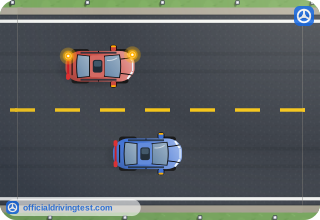
What does the handbook advise against doing to keep someone from passing or entering your lane of travel?
- Maintaining a steady, consistent speed
- Checking your mirrors frequently
- Slowing down, braking hard, or speeding up
- Signaling your lane change in advance
Show answer
Correct answer: Slowing down, braking hard, or speeding up
The handbook advises not to intentionally slow down, slam on your brakes, or speed up to keep someone from passing or entering your lane of travel.
Source: Texas Driver Handbook (Revised January 2026), page 66
-
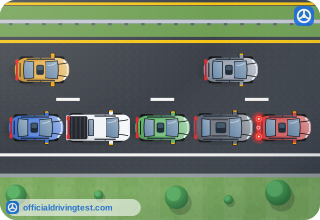
What does the handbook say about tailgating as a way to avoid road rage?
- Tailgating is acceptable if you are in a hurry
- Tailgating helps other drivers move faster
- It is not addressed in the handbook
- Do not tailgate; follow at a safe distance
Show answer
Correct answer: Do not tailgate; follow at a safe distance
The handbook advises drivers to not tailgate and instead follow at a safe distance to help avoid road rage.
Source: Texas Driver Handbook (Revised January 2026), page 66
-
What does "Your Keys to Safe Driving" say about courtesy?
- The fastest driver always has the right-of-way
- Right-of-way should always be taken immediately when available
- Courtesy is optional if you are in a hurry
- Safety comes before the right-of-way
Show answer
Correct answer: Safety comes before the right-of-way
Under "Courtesy," the handbook states that safety comes before the right-of-way.
Source: Texas Driver Handbook (Revised January 2026), page 67
-
What does the handbook say about failing to signal?
- It is dangerous and inconsiderate
- It is only a minor inconvenience with no real risk
- It is required only in heavy traffic
- It has no effect on the safety of others
Show answer
Correct answer: It is dangerous and inconsiderate
Under "Proper Signaling," the handbook states that failure to signal is dangerous and inconsiderate.
Source: Texas Driver Handbook (Revised January 2026), page 67
-
Regarding fitness to drive, what does "Your Keys to Safe Driving" recommend?
- Drive more slowly if you feel tired but keep going
- Take a short break at highway speed
- Let someone else drive if you are not physically or mentally alert
- Drink coffee and continue driving regardless of how you feel
Show answer
Correct answer: Let someone else drive if you are not physically or mentally alert
Under "Fitness to drive," the handbook recommends letting someone else drive if you are not physically or mentally alert.
Source: Texas Driver Handbook (Revised January 2026), page 67
-
Which of the following should you avoid to help prevent carbon monoxide poisoning?
- Driving with the windows down
- Using cruise control on the highway
- Checking your mirrors frequently
- Leaving the motor running in a garage
Show answer
Correct answer: Leaving the motor running in a garage
To avoid carbon monoxide poisoning, the handbook warns against leaving the motor running in a garage.
Source: Texas Driver Handbook (Revised January 2026), page 68
-
The handbook warns against leaving vents open in which situation, to avoid carbon monoxide exposure?
- When driving through a tunnel briefly
- When driving at highway speed
- When following closely behind another car
- When parked in direct sunlight
Show answer
Correct answer: When following closely behind another car
The handbook warns against leaving vents open when following closely behind another car, which can draw in exhaust fumes.
Source: Texas Driver Handbook (Revised January 2026), page 68
-
If you encounter a carbon monoxide poisoning victim, what should you do?
- Leave the windows closed and wait for help
- Move them to fresh air and call 911
- Give them water and wait for them to recover on their own
- Drive them to the nearest gas station
Show answer
Correct answer: Move them to fresh air and call 911
If you encounter a carbon monoxide poisoning victim, move them to fresh air and call 911.
Source: Texas Driver Handbook (Revised January 2026), page 68
-
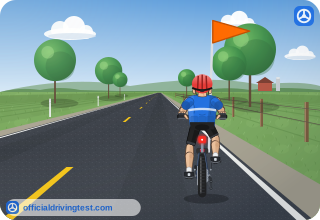
You see this flag on the back of a bicycle. What should you do?
- Sound your horn continuously to get their attention
- Flash your headlights repeatedly and pass immediately
- Ignore the flag since it has no legal meaning
- Slow down, as the operator may be hearing impaired
Show answer
Correct answer: Slow down, as the operator may be hearing impaired
If you see this flag on the back of a bicycle, slow down, as the operator may be hearing impaired. The flag may also be displayed on vehicles to alert others that the driver may be hearing impaired.
Source: Texas Driver Handbook (Revised January 2026), page 35
-
The basic rule that applies in all difficult driving situations is:
- Always accelerate out of danger
- Turn off the engine immediately
- Think before you act
- Always brake as hard as possible
Show answer
Correct answer: Think before you act
There is one basic rule that applies in all driving situations: think before you act.
Source: Texas Driver Handbook (Revised January 2026), page 48
-
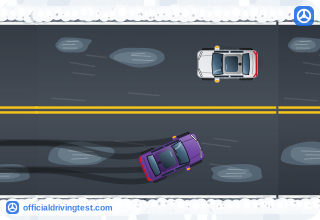
If your car starts to skid, you should first:
- Hit the brakes as hard as possible immediately
- Accelerate firmly to help the tires regain traction
- Shift into reverse
- Take your foot off the gas and do not brake suddenly and hard
Show answer
Correct answer: Take your foot off the gas and do not brake suddenly and hard
If the car starts to skid, do not hit the brakes suddenly and hard; take your foot off the gas pedal.
Source: Texas Driver Handbook (Revised January 2026), page 48