Tennessee: Vehicle controls and signals — Brakes, Antilock Brakes and Vehicle Checks Practice Test
Questions in this part include: “By law, what two methods of applying the brakes must all automobiles have?” · “In which weather do car batteries tend to run down more rapidly?”
Independent educational site · not affiliated with any government agency or DMV
Ready? Test yourself
- Instant feedback with an explanation
- Every answer cites its source in the manual
- Your best score is saved on this device
- Keyboard: press 1 to 4 to answer and Enter for the next question
Questions are original and based on the official manual "Tennessee Comprehensive Driver License Manual" (March 2025 printing), Tennessee Department of Safety and Homeland Security.
All 16 questions in this practice test
Take the test above first, then use this list to study. Tap “Show answer” to see the correct answer and explanation.
Show the questions and answersHide the questions
-
By law, what two methods of applying the brakes must all automobiles have?
- A regular foot brake and a parking brake
- A foot brake and a hand throttle
- A foot brake only
- A parking brake and an engine brake
Show answer
Correct answer: A regular foot brake and a parking brake
Automobiles must have two separate ways to apply the brakes: a regular foot brake and a parking brake.
Source: Tennessee Comprehensive Driver License Manual (March 2025 printing), page 22 · Open this page in the manual (Manual page 22)
-
By law, how many separate methods of applying brakes must all automobiles have?
- Two
- Three
- One
- Four
Show answer
Correct answer: Two
Cars must have two separate methods, commonly the regular foot brake and the parking or emergency brake.
Source: Tennessee Comprehensive Driver License Manual (March 2025 printing), page 48 · Open this page in the manual (Manual page 48)
-
When slowing or stopping with anti-lock brakes (ABS), what should you apply to the brake pedal?
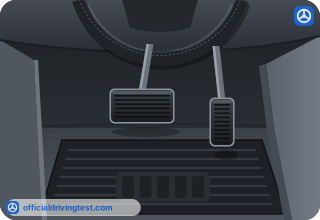
- Firm, steady pressure, never pumping the pedal
- Light taps, pumped repeatedly
- Pressure that you release just before stopping
- Gradual pressure released when the pedal vibrates
Show answer
Correct answer: Firm, steady pressure, never pumping the pedal
With ABS, apply firm, steady pressure and never pump the pedal; pumping or lifting your foot disengages the anti-lock system.
Source: Tennessee Comprehensive Driver License Manual (March 2025 printing), page 48 · Open this page in the manual (Manual page 48)
-
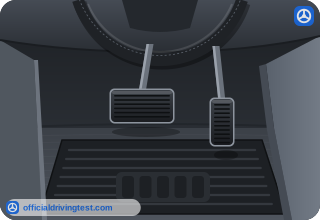
With anti-lock brakes, what does noise and vibration in the brake pedal tell you?
- That the brakes are failing
- That the tires are worn out
- That the ABS is working
- That you should lift your foot off the pedal
Show answer
Correct answer: That the ABS is working
Noise and vibration are signs the anti-lock system is working, so keep your foot firmly on the pedal.
Source: Tennessee Comprehensive Driver License Manual (March 2025 printing), page 48 · Open this page in the manual (Manual page 48)
-
What are antilock brakes designed to overcome?
- Tire wear
- Engine overheating
- A loss of steering control
- Loss of headlight power
Show answer
Correct answer: A loss of steering control
Antilock brakes help you keep steering control when braking hard.
Source: Tennessee Comprehensive Driver License Manual (March 2025 printing), page 78 · Open this page in the manual (Manual page 78)
-
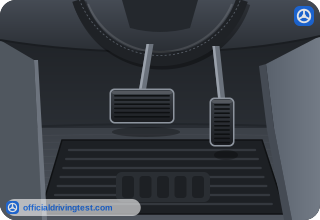
To make antilock brakes work correctly, how should you apply the brake pedal?
- With quick repeated pumps
- With constant, firm pressure
- With light taps
- With a brief hard push, then release
Show answer
Correct answer: With constant, firm pressure
The manual says to apply constant, firm pressure to the pedal for ABS to work correctly.
Source: Tennessee Comprehensive Driver License Manual (March 2025 printing), page 78 · Open this page in the manual (Manual page 78)
-
During an emergency stop with antilock brakes, even in wet or icy conditions, what may you need to do?
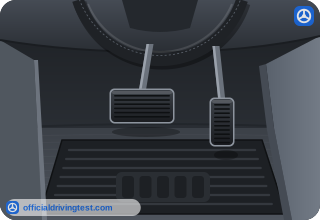
- Pump the pedal several times quickly
- Apply only light pressure to the pedal
- Lift off the pedal when it begins to pulse
- Push the brake pedal all the way to the floor
Show answer
Correct answer: Push the brake pedal all the way to the floor
In an emergency stop with ABS the pedal may need to go all the way down.
Source: Tennessee Comprehensive Driver License Manual (March 2025 printing), page 78 · Open this page in the manual (Manual page 78)
-
According to the manual, whose duty is it to make certain the vehicle is safe to operate?
- The vehicle manufacturer’s
- The driver’s
- The insurance company’s
- The Driver Service Center’s
Show answer
Correct answer: The driver’s
It is the duty of drivers to make sure the vehicles they drive are safe to operate.
Source: Tennessee Comprehensive Driver License Manual (March 2025 printing), page 99 · Open this page in the manual (Manual page 99)
-
What should you do if your brakes make a lot of noise, smell funny or the brake pedal goes to the floor?
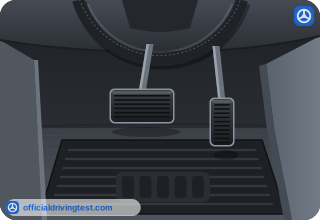
- Have a mechanic check them
- Pump the pedal before every stop
- Keep driving until they stop working
- Add brake fluid and drive on
Show answer
Correct answer: Have a mechanic check them
Only your brakes can stop the vehicle, so a mechanic should check any sign of a problem.
Source: Tennessee Comprehensive Driver License Manual (March 2025 printing), page 100 · Open this page in the manual (Manual page 100)
-
From where should you check that your turn signals, brake lights, taillights and headlights are operating properly?
- From the driver’s seat while driving
- From inside with the engine off
- From the outside of the vehicle
- Only at an inspection station
Show answer
Correct answer: From the outside of the vehicle
The manual says the lights should be checked from the outside of the vehicle.
Source: Tennessee Comprehensive Driver License Manual (March 2025 printing), page 100 · Open this page in the manual (Manual page 100)
-
In which weather do car batteries tend to run down more rapidly?
- Hot, dry weather
- Cold or damp weather
- Mild, sunny weather
- Windy weather
Show answer
Correct answer: Cold or damp weather
Batteries run down faster in cold or damp weather, so a neglected one can leave you stranded.
Source: Tennessee Comprehensive Driver License Manual (March 2025 printing), page 100 · Open this page in the manual (Manual page 100)
-
What does the manual say it is a prudent idea to keep in your vehicle in case the battery runs down?
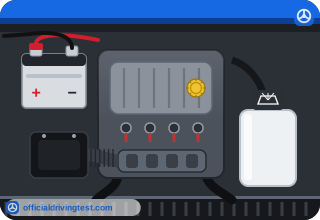
- A spare battery
- A battery charger
- A set of spark plugs
- A set of jumper cables
Show answer
Correct answer: A set of jumper cables
Jumper cables may help start a vehicle whose battery has run down.
Source: Tennessee Comprehensive Driver License Manual (March 2025 printing), page 100 · Open this page in the manual (Manual page 100)
-
What should you do if the vehicle is hard to turn or does not turn when the steering wheel is first turned?
- Add power steering fluid and keep driving
- Turn the ignition to the “lock” position
- Have the steering checked by a mechanic
- Drive slowly until it improves
Show answer
Correct answer: Have the steering checked by a mechanic
A steering problem makes it hard to control direction, so a mechanic should check it.
Source: Tennessee Comprehensive Driver License Manual (March 2025 printing), page 100 · Open this page in the manual (Manual page 100)
-
What may a vehicle that keeps bouncing after a bump or a stop, or is hard to control, need?
- A new set of brake pads and rotors
- A new battery
- A new steering wheel
- New shocks or other suspension parts
Show answer
Correct answer: New shocks or other suspension parts
Continued bouncing or poor control points to worn shocks or other suspension parts.
Source: Tennessee Comprehensive Driver License Manual (March 2025 printing), page 101 · Open this page in the manual (Manual page 101)
-
Why should you make sure there are no objects on the floor of your vehicle?
- They could block the heater vents and fog up the windshield
- They could scratch the floor mats
- They could set off the air bag
- They could roll under the brake pedal and prevent you from stopping
Show answer
Correct answer: They could roll under the brake pedal and prevent you from stopping
A loose object under the brake pedal could stop you from braking.
Source: Tennessee Comprehensive Driver License Manual (March 2025 printing), page 101 · Open this page in the manual (Manual page 101)
-
How much gas should your vehicle always have before you start a trip of significant length?
- At least a half tank
- At least a quarter tank
- A completely full tank
- At least a third of a tank
Show answer
Correct answer: At least a half tank
The manual says to have at least a half tank before any trip of significant length.
Source: Tennessee Comprehensive Driver License Manual (March 2025 printing), page 101 · Open this page in the manual (Manual page 101)