Tennessee: Interstate driving — Part 2 Practice Test
Questions in this part include: “According to the manual, what is the benefit of driving at an even speed on the interstate?” · “Where should you keep your vehicle within your traffic lane on the interstate?”
Independent educational site · not affiliated with any government agency or DMV
Ready? Test yourself
- Instant feedback with an explanation
- Every answer cites its source in the manual
- Your best score is saved on this device
- Keyboard: press 1 to 4 to answer and Enter for the next question
Questions are original and based on the official manual "Tennessee Comprehensive Driver License Manual" (March 2025 printing), Tennessee Department of Safety and Homeland Security.
All 17 questions in this practice test
Take the test above first, then use this list to study. Tap “Show answer” to see the correct answer and explanation.
Show the questions and answersHide the questions
-
Which signal should you give on the entrance ramp to show that you need to enter the traffic lane?
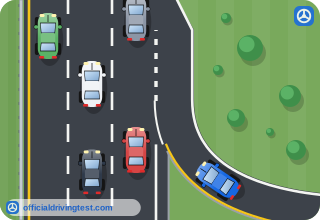
- A right turn signal
- Your emergency flashers
- A tap on the horn
- A left turn signal
Show answer
Correct answer: A left turn signal
The manual says to give the proper left turn signal on the ramp to show you need to enter the traffic lane.
Source: Tennessee Comprehensive Driver License Manual (March 2025 printing), page 68 · Open this page in the manual (Manual page 68)
-
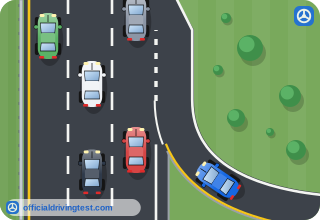
According to the manual, what does unnecessary stopping on interstate on-ramps cause?
- Many head-on collisions
- Many rollover crashes
- Many rear-end collisions
- Many crashes in the HOV lane
Show answer
Correct answer: Many rear-end collisions
Drivers behind you on the ramp do not expect you to stop, so needless stops on on-ramps cause many rear-end collisions and block the even flow of traffic.
Source: Tennessee Comprehensive Driver License Manual (March 2025 printing), page 68 · Open this page in the manual (Manual page 68)
-
Why should you not drive to the end of the entrance ramp and stop?
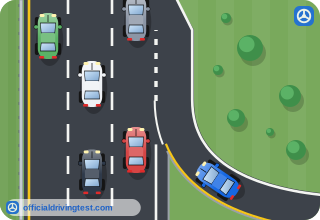
- You will not have enough room to get up to interstate speed
- Stopping there is allowed only for buses and trucks
- The end of the ramp is reserved for exiting traffic
- You would block the view of drivers on the interstate
Show answer
Correct answer: You will not have enough room to get up to interstate speed
From a stop at the end of the ramp there is not enough room left to reach the speed of interstate traffic, and drivers behind you will not expect the stop.
Source: Tennessee Comprehensive Driver License Manual (March 2025 printing), page 68 · Open this page in the manual (Manual page 68)
-
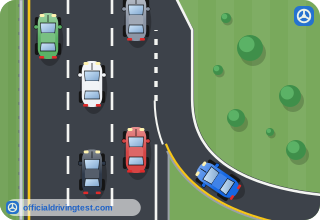
If you have to wait for space to enter an interstate, what should you do?
- Stop at the end of the ramp until the lane is clear
- Drive onto the paved shoulder and wait for a gap
- Keep your speed and force your way into the lane
- Slow down on the ramp so you still have room to speed up
Show answer
Correct answer: Slow down on the ramp so you still have room to speed up
Slowing down while still on the ramp leaves you some room to speed up again before you have to merge.
Source: Tennessee Comprehensive Driver License Manual (March 2025 printing), page 68 · Open this page in the manual (Manual page 68)
-
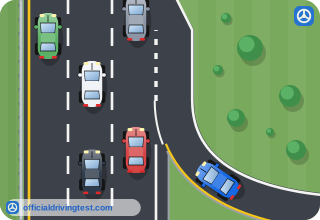
Heavy traffic has caused a slowdown at an entrance ramp. Unless it is absolutely unavoidable, what is best?
- Stop and wait until the ramp is completely clear
- Keep your vehicle moving, at least at a slow pace
- Back up and use a different entrance ramp
- Drive around the slowdown on the paved shoulder
Show answer
Correct answer: Keep your vehicle moving, at least at a slow pace
Even in a slowdown at an entrance ramp, the manual says it is best to keep the vehicle moving at least slowly unless stopping cannot be avoided.
Source: Tennessee Comprehensive Driver License Manual (March 2025 printing), page 68 · Open this page in the manual (Manual page 68)
-
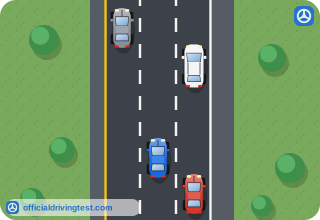
On an interstate with several lanes going in the same direction, which lane should you leave for faster traffic?
- The extreme right lane
- The center lane
- The extreme left lane
- The lane nearest the ramps
Show answer
Correct answer: The extreme left lane
On interstates with several lanes in one direction, the extreme left lane is left for faster traffic.
Source: Tennessee Comprehensive Driver License Manual (March 2025 printing), page 68 · Open this page in the manual (Manual page 68)
-
According to the manual, what is the benefit of driving at an even speed on the interstate?
- You may use the HOV lane while driving alone
- You will have less need to change lanes
- You may drive below the minimum speed limit
- You may follow the car ahead more closely
Show answer
Correct answer: You will have less need to change lanes
Holding an even speed means you have less need to change lanes.
Source: Tennessee Comprehensive Driver License Manual (March 2025 printing), page 68 · Open this page in the manual (Manual page 68)
-
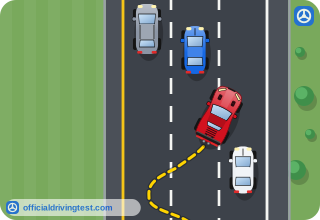
What does the manual say about lane-hopping on the interstate?
- It is safe as long as you signal before each change
- It is the best way to get through heavy traffic
- It is allowed only in the two left-most lanes
- It is dangerous and very seldom saves much time
Show answer
Correct answer: It is dangerous and very seldom saves much time
Lane-hopping is dangerous at any time, raises the risk of a collision and very seldom saves the driver any significant travel time.
Source: Tennessee Comprehensive Driver License Manual (March 2025 printing), page 68 · Open this page in the manual (Manual page 68)
-
Where should you keep your vehicle within your traffic lane on the interstate?
- In the middle of the lane
- Near the left lane line
- Near the right lane line
- Wherever traffic is lightest
Show answer
Correct answer: In the middle of the lane
The manual tells you to keep your vehicle in the middle of your traffic lane.
Source: Tennessee Comprehensive Driver License Manual (March 2025 printing), page 68 · Open this page in the manual (Manual page 68)
-
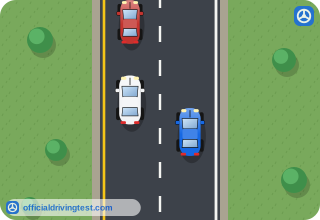
Why should you not travel alongside other vehicles at the same speed on the interstate?
- It blocks drivers who want to use the HOV lane
- It makes your vehicle use more fuel than usual
- You risk being in the other drivers' blind spots
- It forces you below the minimum speed limit
Show answer
Correct answer: You risk being in the other drivers' blind spots
Riding beside another vehicle at the same speed can keep you in that driver's blind spot, where you may not be seen.
Source: Tennessee Comprehensive Driver License Manual (March 2025 printing), page 68 · Open this page in the manual (Manual page 68)
-
What does the manual say about cars moving in packs on the interstate?
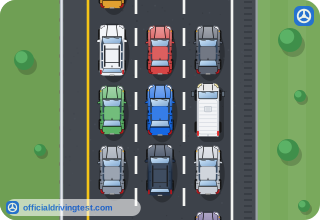
- Join the pack, since there is safety in numbers
- Avoid them and keep a safe space cushion around you
- Stay close behind the pack to save fuel
- Pass the pack on the paved shoulder
Show answer
Correct answer: Avoid them and keep a safe space cushion around you
Stay away from packs of cars and keep a safe space cushion around your vehicle so you have room for emergency maneuvers.
Source: Tennessee Comprehensive Driver License Manual (March 2025 printing), page 69 · Open this page in the manual (Manual page 69)
-
If you are going to exit the interstate, when should you move to the right lane?
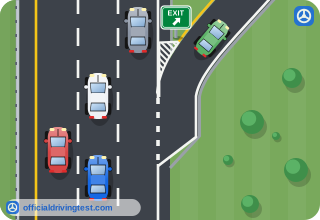
- At the last moment before the exit
- Only after you see the exit ramp
- When you reach the deceleration lane
- As early as possible
Show answer
Correct answer: As early as possible
Moving right as early as possible avoids hasty lane changes near the exit, which could lead to a dangerous situation or a crash.
Source: Tennessee Comprehensive Driver License Manual (March 2025 printing), page 69 · Open this page in the manual (Manual page 69)
-
How far ahead of your vehicle should you try to watch on the interstate for cars braking, entering or exiting?
- 15-20 seconds
- 2-4 seconds
- 5-8 seconds
- 45-60 seconds
Show answer
Correct answer: 15-20 seconds
Scan the road ahead and try to watch 15 to 20 seconds in front of your vehicle for cars that are braking, entering or exiting.
Source: Tennessee Comprehensive Driver License Manual (March 2025 printing), page 69 · Open this page in the manual (Manual page 69)
-
On the interstate you see the brake lights of cars ahead come on. What should you do?
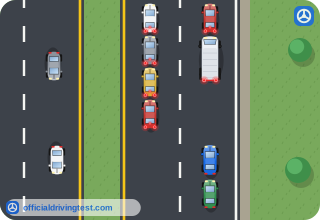
- Change to the left lane at once
- Prepare to slow down
- Sound your horn
- Speed up and pass them
Show answer
Correct answer: Prepare to slow down
Brake lights ahead are a hint that traffic is not moving at a normal pace, so get ready to slow down.
Source: Tennessee Comprehensive Driver License Manual (March 2025 printing), page 69 · Open this page in the manual (Manual page 69)
-
You spot a tie-up on the interstate that makes you slow down or stop. How should you alert drivers behind you?
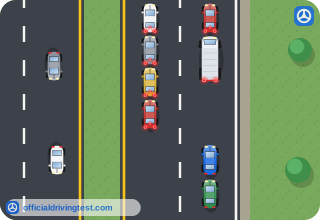
- Sound your horn several times
- Flash your high beams several times
- Turn your headlights off and on
- Lightly tap your brake pedal several times
Show answer
Correct answer: Lightly tap your brake pedal several times
Tapping the brake pedal lightly a few times flashes your brake lights and warns the drivers behind you that you are slowing.
Source: Tennessee Comprehensive Driver License Manual (March 2025 printing), page 69 · Open this page in the manual (Manual page 69)
-
If you drive at a speed below the flow of traffic on the interstate, which lane must you use?
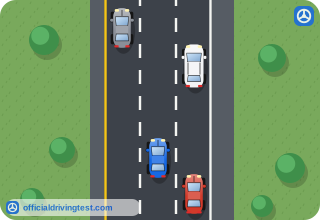
- The left lane
- The right lane
- The HOV lane
- The center lane
Show answer
Correct answer: The right lane
A driver going slower than the flow of traffic must use the right lane.
Source: Tennessee Comprehensive Driver License Manual (March 2025 printing), page 69 · Open this page in the manual (Manual page 69)
-
You are traveling in the left lane of the interstate and someone comes up behind you at a faster speed. What should you do?
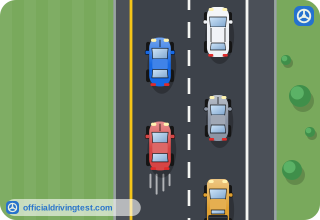
- Speed up to stay ahead of the car
- Tap your brakes to slow the driver
- Stay in your lane and keep your speed
- Move one lane to your right
Show answer
Correct answer: Move one lane to your right
When a faster vehicle comes up behind you in the left lane, move one lane to the right and let it pass.
Source: Tennessee Comprehensive Driver License Manual (March 2025 printing), page 69 · Open this page in the manual (Manual page 69)