South Dakota: Speed and following distance — Part 3 Practice Test
Looking ahead, adjusting speed to the road and weather, stopping distance, the four-second following distance and space around your vehicle. — Part 3
Independent educational site · not affiliated with any government agency or DMV
Ready? Test yourself
- Instant feedback with an explanation
- Every answer cites its source in the manual
- Your best score is saved on this device
- Keyboard: press 1 to 4 to answer and Enter for the next question
Questions are original and based on the official manual "South Dakota Driver License Manual" (Revised 11/2024), South Dakota Department of Public Safety.
All 17 questions in this practice test
Take the test above first, then use this list to study. Tap “Show answer” to see the correct answer and explanation.
Show the questions and answersHide the questions
-
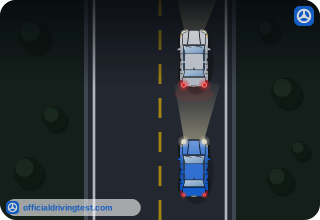
When it is hard to see because of darkness or bad weather, what should you do?
- Follow the vehicle ahead more closely
- Increase your following distance
- Keep the same following distance
- Tap the horn as you follow
Show answer
Correct answer: Increase your following distance
A bigger following distance lets you see ahead or have time to stop if necessary.
Source: South Dakota Driver License Manual (Revised 11/2024), page 51
-
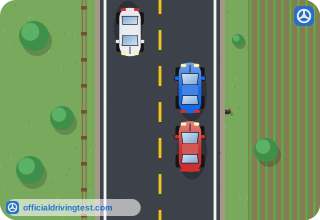
If someone is following you closely, what should you do about the space in front of you?
- Keep a short gap so the driver behind stays well back
- Allow extra room so you can stop without being hit from behind
- Brake hard to warn the driver behind
- Move closer to the vehicle ahead
Show answer
Correct answer: Allow extra room so you can stop without being hit from behind
Extra room in front lets you stop gradually without being hit from behind.
Source: South Dakota Driver License Manual (Revised 11/2024), page 51
-
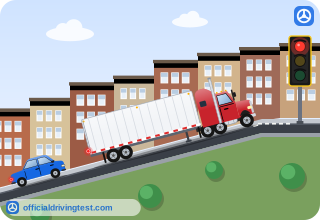
Why should you leave extra room when stopped on a hill or incline?
- The brakes work less well when you are on a hill
- The vehicle ahead may run out of fuel
- Drivers behind you will want to pass
- The vehicle ahead may roll back when it starts moving
Show answer
Correct answer: The vehicle ahead may roll back when it starts moving
A vehicle starting uphill can roll back, so extra space protects you.
Source: South Dakota Driver License Manual (Revised 11/2024), page 51
-
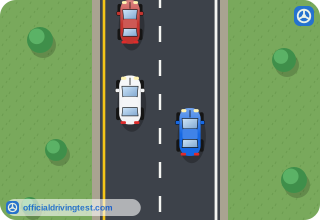
Why should you avoid driving next to other vehicles for long periods of time?
- It uses more fuel than driving behind them in the same lane
- It makes the other driver speed up
- You may be in their blind spot, and have less room to avoid a crash
- It is against the law in every lane
Show answer
Correct answer: You may be in their blind spot, and have less room to avoid a crash
Driving alongside puts you where the other driver may not see you and leaves less room to react.
Source: South Dakota Driver License Manual (Revised 11/2024), page 52
-
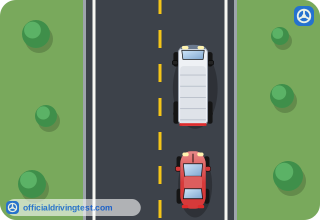
What should you avoid doing in relation to the center line marking?
- Looking at it
- Driving on the right side of it
- Slowing near it
- Crowding it
Show answer
Correct answer: Crowding it
Keep as much space as possible between you and oncoming traffic.
Source: South Dakota Driver License Manual (Revised 11/2024), page 52
-
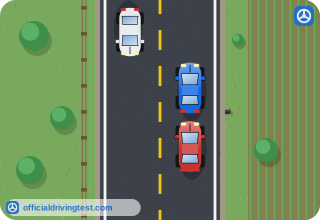
How can you help a driver behind you keep a safe distance?
- Drive slightly faster than the posted limit at all times
- Tap the brakes often to warn the driver
- Stay close to the center line
- Keep a steady speed and signal early before you slow or turn
Show answer
Correct answer: Keep a steady speed and signal early before you slow or turn
A steady speed and early signals give the driver behind you time to react.
Source: South Dakota Driver License Manual (Revised 11/2024), page 52
-
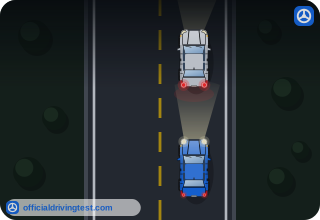
How much should you add to your following distance for night driving conditions?
- At least half a second
- At least one additional second
- At least three additional seconds
- At least five additional seconds
Show answer
Correct answer: At least one additional second
The manual says to add at least one extra second of following distance for night conditions.
Source: South Dakota Driver License Manual (Revised 11/2024), page 66
-
How much should you add to your following distance when driving on an unfamiliar roadway at night?
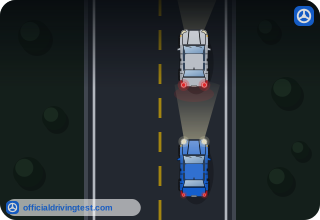
- At least two additional seconds
- At least one additional second
- At least four additional seconds
- No extra time if you use high beams
Show answer
Correct answer: At least two additional seconds
For unfamiliar roads at night, add at least two extra seconds of following distance.
Source: South Dakota Driver License Manual (Revised 11/2024), page 66
-
What is the "first is worst" warning about winter driving?
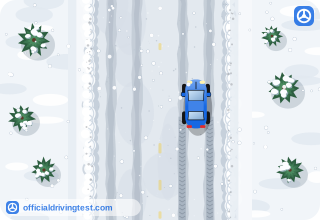
- The first car on a road clears the snow for everyone behind it, so follow closely
- The first snowfall of the year is always the heaviest one, so avoid driving
- In the first storm of the season, most drivers have forgotten their safe winter driving skills
- The first driver at a snowy intersection always has the right-of-way over others
Show answer
Correct answer: In the first storm of the season, most drivers have forgotten their safe winter driving skills
In the first storm of the season, drivers tend to drive too fast and stop too quickly, so you should go slowly and relearn your skills.
Source: South Dakota Driver License Manual (Revised 11/2024), page 67
-
What mistakes do most drivers make in the first storm of the season?
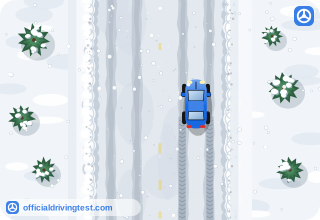
- They drive too slowly and stop too late
- They drive too fast and try to stop too quickly
- They follow too far behind and brake too gently
- They use high beams and turn too sharply
Show answer
Correct answer: They drive too fast and try to stop too quickly
Drivers who have forgotten their winter skills tend to drive too fast and brake too hard.
Source: South Dakota Driver License Manual (Revised 11/2024), page 67
-
How fast should you drive in winter conditions?
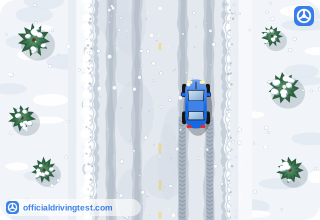
- At the posted speed limit
- Slightly above the posted speed limit
- At the speed of the vehicle ahead
- Well below the posted speed limit
Show answer
Correct answer: Well below the posted speed limit
The manual tells you to go slowly and drive well below the posted limit in winter.
Source: South Dakota Driver License Manual (Revised 11/2024), page 67
-
For what conditions are posted speed limits intended, according to the winter driving tips?
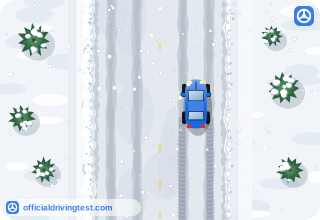
- Any season on wet pavement
- Daytime driving in any weather
- Summer months on dry pavement
- Rural roads only
Show answer
Correct answer: Summer months on dry pavement
Posted limits assume summer and dry pavement, so snow and ice call for a lower speed.
Source: South Dakota Driver License Manual (Revised 11/2024), page 67
-
What can happen when you try to stop on a gravel or dirt road?
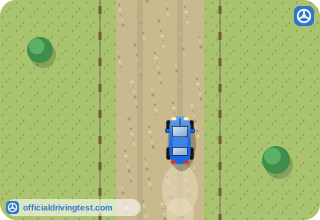
- The brakes will lock automatically
- You may skid
- The vehicle will stop in a shorter distance
- The tires will grip better than on pavement
Show answer
Correct answer: You may skid
Traction is reduced on gravel or dirt, so you should slow down, follow farther back, and expect to skid when stopping.
Source: South Dakota Driver License Manual (Revised 11/2024), page 67
-
What should you do on a narrow rural road that may have ditches or drop offs instead of shoulders?
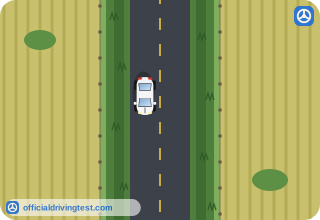
- Drive on the right edge of the road to leave more room for others
- Increase your speed to get through the narrow part of the road quickly
- Drive on the left side of the road to see farther ahead of you
- Reduce speed, center the vehicle in the lane, and watch for oncoming traffic
Show answer
Correct answer: Reduce speed, center the vehicle in the lane, and watch for oncoming traffic
Narrow rural roads have little margin, so you slow down, center your vehicle, and watch for oncoming traffic that may come into your lane.
Source: South Dakota Driver License Manual (Revised 11/2024), page 67
-
What should you do when driving over open bridge gratings or steel bridges?
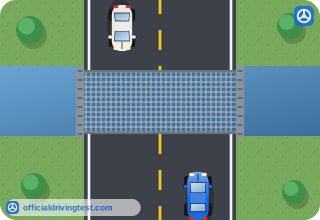
- Speed up to cross quickly and loosen your grip on the steering wheel
- Reduce speed and brake hard once you are on the steel bridge surface
- Keep your speed and follow closer to the vehicle ahead of you
- Reduce speed, increase following distance, and keep a firm grip on the wheel
Show answer
Correct answer: Reduce speed, increase following distance, and keep a firm grip on the wheel
Open gratings and steel bridges reduce traction, so you slow down, leave more space, and hold the wheel firmly.
Source: South Dakota Driver License Manual (Revised 11/2024), page 67
-
Which of these can create blind corners and limit how far you can see on rural roads?
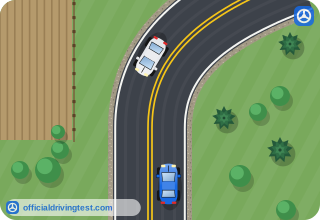
- Paved shoulders
- Crops growing in fields
- Wide lanes
- Painted center lines
Show answer
Correct answer: Crops growing in fields
Wooded areas, crops growing in fields, and steep hills can all limit your view on rural roads.
Source: South Dakota Driver License Manual (Revised 11/2024), page 67
-
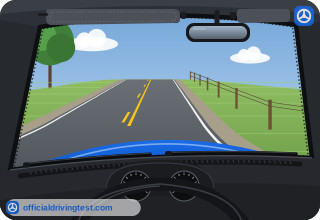
What should you always do in areas of reduced vision on rural roads?
- Sound your horn and keep your speed
- Move to the shoulder
- Use your high beams during the day
- Reduce speed and be prepared to stop
Show answer
Correct answer: Reduce speed and be prepared to stop
When you cannot see far ahead, slow down and be ready to stop.
Source: South Dakota Driver License Manual (Revised 11/2024), page 67