South Carolina: Signals and vehicle controls — Part 3 Practice Test
Questions in this part include: “What should you always keep clean and damage free so your safety features work?” · “How should you hold the steering wheel with your hands?”
Independent educational site · not affiliated with any government agency or DMV
Ready? Test yourself
- Instant feedback with an explanation
- Every answer cites its source in the manual
- Your best score is saved on this device
- Keyboard: press 1 to 4 to answer and Enter for the next question
Questions are original and based on the official manual "South Carolina Driver's Manual" (2026 (posted April 2026)), South Carolina Department of Motor Vehicles.
All 19 questions in this practice test
Take the test above first, then use this list to study. Tap “Show answer” to see the correct answer and explanation.
Show the questions and answersHide the questions
-
What should you always keep clean and damage free so your safety features work?
- Seat covers
- Dashboard vents
- Floor mats
- Vehicle sensors
Show answer
Correct answer: Vehicle sensors
The manual says to always keep vehicle sensors clean and damage free.
Source: South Carolina Driver's Manual (2026 (posted April 2026)), page 4-10 · Open this page in the manual (Manual page 4-10)
-
What does the manual say to do about your vehicle’s software technology?
- Keep it up to date (if applicable) and follow the manufacturer’s advice
- Update it only when the vehicle is being inspected by the SCDMV
- Never update it during the winter months
- Leave it alone, because updates are not needed
Show answer
Correct answer: Keep it up to date (if applicable) and follow the manufacturer’s advice
The manual says to keep software up to date, if applicable, and follow the vehicle manufacturer’s recommendations.
Source: South Carolina Driver's Manual (2026 (posted April 2026)), page 4-10 · Open this page in the manual (Manual page 4-10)
-
What should you do with your right foot and the gear selector lever when you start the engine?
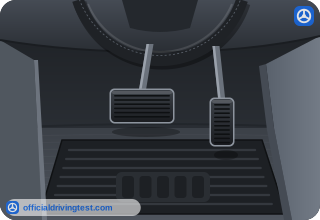
- Place your right foot on the brake pedal and check that the gear selector lever is in park
- Place your right foot on the accelerator and check that the gear selector lever is in neutral
- Press the accelerator to the floor and leave the gear selector lever in drive
- Keep your foot off every pedal and check that the gear selector lever is in reverse
Show answer
Correct answer: Place your right foot on the brake pedal and check that the gear selector lever is in park
The manual tells you to put your right foot on the brake and check the selector for park before starting.
Source: South Carolina Driver's Manual (2026 (posted April 2026)), page 5-1 · Open this page in the manual (Manual page 5-1)
-
Once the engine is started, what should you check?
- The tire pressure and tread depth, by walking around the vehicle
- Only the radio and heater settings before you move away
- The gauges and any dashboard indicator lights that need attention
- The expiration date on your registration card and insurance
Show answer
Correct answer: The gauges and any dashboard indicator lights that need attention
After starting, you check the gauges and warning lights such as fuel, oil, ABS and air bags.
Source: South Carolina Driver's Manual (2026 (posted April 2026)), page 5-1 · Open this page in the manual (Manual page 5-1)
-
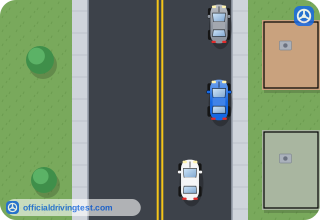
How does the manual say to check blind spots before you move the vehicle?
- By looking only in the rearview mirror
- By looking over your shoulder
- By tapping the horn and waiting for a reply
- By using the hazard flashers
Show answer
Correct answer: By looking over your shoulder
Blind spots are checked by looking over your shoulder before the vehicle moves.
Source: South Carolina Driver's Manual (2026 (posted April 2026)), page 5-1 · Open this page in the manual (Manual page 5-1)
-
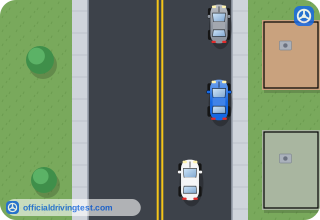
After you check around the vehicle for a safe path, what should you do before you press gently on the accelerator to move?
- Sound your horn
- Turn on the hazard flashers
- Shift into neutral
- Signal
Show answer
Correct answer: Signal
The manual says to signal and, if it is safe, press the accelerator gently.
Source: South Carolina Driver's Manual (2026 (posted April 2026)), page 5-1 · Open this page in the manual (Manual page 5-1)
-
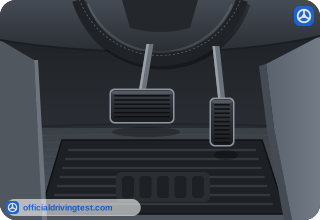
How should your foot rest on the accelerator pedal?
- With your whole foot lifted off the floor above the pedal
- With your heel on the pedal and your toes on the floor
- With the ball of your foot pressed hard to the floor
- With the top of your foot on the pedal and the heel on the floor
Show answer
Correct answer: With the top of your foot on the pedal and the heel on the floor
You accelerate gradually using the top of your foot on the pedal with the heel on the floor.
Source: South Carolina Driver's Manual (2026 (posted April 2026)), page 5-1 · Open this page in the manual (Manual page 5-1)
-
What should you do before you move your foot from the accelerator to the brake to stop the vehicle?
- Shift the gear selector lever into park before you slow down
- Check your mirrors for traffic at the rear of your vehicle
- Turn off the engine and let the vehicle coast to a stop
- Sound the horn to warn the vehicles behind you
Show answer
Correct answer: Check your mirrors for traffic at the rear of your vehicle
Stopping starts with a mirror check of traffic behind you, then the foot moves to the brake.
Source: South Carolina Driver's Manual (2026 (posted April 2026)), page 5-1 · Open this page in the manual (Manual page 5-1)
-
How should you press the brake pedal when you stop the vehicle?
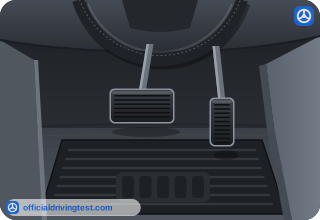
- With short, sudden stabs until the vehicle slows
- With a hard push that you release just before stopping
- With steady pressure until the vehicle comes to a stop
- With light taps that you alternate with the accelerator
Show answer
Correct answer: With steady pressure until the vehicle comes to a stop
The manual says to press with steady pressure until the vehicle stops.
Source: South Carolina Driver's Manual (2026 (posted April 2026)), page 5-2 · Open this page in the manual (Manual page 5-2)
-
In which direction do you turn the steering wheel?
- The direction you want the vehicle to move, forward or in reverse
- The opposite direction when you are moving in reverse
- The opposite direction when the vehicle is moving forward
- Away from the direction of the turn, then back to it
Show answer
Correct answer: The direction you want the vehicle to move, forward or in reverse
The wheel turns toward the direction you want the vehicle to go, whether forward or in reverse.
Source: South Carolina Driver's Manual (2026 (posted April 2026)), page 5-2 · Open this page in the manual (Manual page 5-2)
-
How should you hold the steering wheel with your hands?
- Grip with your fingers, not the palms, and keep your thumbs up along the face of the wheel
- Grip with the palms of your hands and keep your thumbs tucked inside the rim of the wheel
- Grip as tightly as you can, with your thumbs wrapped around the rim of the wheel
- Rest both hands loosely on the top of the wheel with your thumbs pointing down
Show answer
Correct answer: Grip with your fingers, not the palms, and keep your thumbs up along the face of the wheel
The manual says to grip with the fingers, not the palms, with thumbs up along the face of the wheel.
Source: South Carolina Driver's Manual (2026 (posted April 2026)), page 5-2 · Open this page in the manual (Manual page 5-2)
-
Which way of gripping the steering wheel is never to be used when turning the wheel?
- Gripping the outside of the wheel with both hands on opposite sides
- Gripping it firmly but gently with your fingers
- Gripping it from the inside of the rim
- Keeping your thumbs up along the face of the wheel
Show answer
Correct answer: Gripping it from the inside of the rim
You never turn the wheel while holding it from the inside of the rim.
Source: South Carolina Driver's Manual (2026 (posted April 2026)), page 5-2 · Open this page in the manual (Manual page 5-2)
-
Where should your hands be on the steering wheel, thinking of the wheel as a clock face?
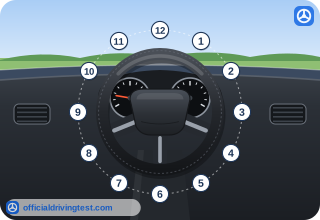
- Left hand at 10 to 11 o’clock and right hand at 1 to 2 o’clock
- Left hand at 7 to 9 o’clock and right hand at 3 to 5 o’clock
- Left hand at 9 to 11 o’clock and right hand at 1 to 3 o’clock
- Left hand at 5 to 6 o’clock and right hand at 6 to 7 o’clock
Show answer
Correct answer: Left hand at 7 to 9 o’clock and right hand at 3 to 5 o’clock
The manual places the left hand at 7 to 9 and the right hand at 3 to 5 o’clock.
Source: South Carolina Driver's Manual (2026 (posted April 2026)), page 5-2 · Open this page in the manual (Manual page 5-2)
-
When may one of your hands leave the steering wheel?
- When the road ahead is straight and there is little traffic
- When you are driving slowly on a lightly traveled rural road
- When your arms get tired on a long drive on a quiet road
- When it is doing another necessary driving task, such as shifting gears
Show answer
Correct answer: When it is doing another necessary driving task, such as shifting gears
Both hands stay on the wheel except for a necessary task such as shifting, wipers or hand signals.
Source: South Carolina Driver's Manual (2026 (posted April 2026)), page 5-2 · Open this page in the manual (Manual page 5-2)
-
When you are first learning to handle a car or truck, what kind of road should you choose when possible?
- Busy city streets with many intersections
- Multi-lane highways with steady traffic
- Roads with no traffic signs
- Lightly traveled rural roads
Show answer
Correct answer: Lightly traveled rural roads
A new driver should practice on lightly traveled rural roads before moving to turning and parking.
Source: South Carolina Driver's Manual (2026 (posted April 2026)), page 5-2 · Open this page in the manual (Manual page 5-2)
-
What is hand-to-hand steering commonly called?
- Cross-arm steering
- Push/pull steering
- One hand steering
- Palm steering
Show answer
Correct answer: Push/pull steering
The manual says hand-to-hand steering is commonly called push/pull steering.
Source: South Carolina Driver's Manual (2026 (posted April 2026)), page 5-2 · Open this page in the manual (Manual page 5-2)
-
At what speed range does the manual say to use hand-to-hand (push/pull) steering when turning the wheel during normal driving?
- Going forward above 25-30 mph
- Going forward below 10-15 mph
- Going forward above 10-15 mph
- Only at highway speeds above 45-50 mph
Show answer
Correct answer: Going forward above 10-15 mph
Hand-to-hand steering is for normal driving going forward above 10-15 mph; slower turns use hand-over-hand.
Source: South Carolina Driver's Manual (2026 (posted April 2026)), page 5-3 · Open this page in the manual (Manual page 5-3)
-
With hand-to-hand steering, where do your hands grasp the wheel?
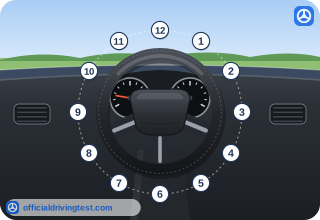
- Left hand between 7 and 8 o’clock and right hand between 4 and 5 o’clock
- Left hand between 10 and 11 o’clock and right hand between 1 and 2 o’clock
- Left hand between 9 and 10 o’clock and right hand between 2 and 3 o’clock
- Left hand between 5 and 6 o’clock and right hand between 6 and 7 o’clock
Show answer
Correct answer: Left hand between 7 and 8 o’clock and right hand between 4 and 5 o’clock
In hand-to-hand steering the left hand sits at 7 to 8 and the right hand at 4 to 5 o’clock.
Source: South Carolina Driver's Manual (2026 (posted April 2026)), page 5-3 · Open this page in the manual (Manual page 5-3)
-
What tends to happen when your left hand is between 7 and 9 o’clock and your right hand is between 3 and 5 o’clock?
- There is less muscle stress and less steering that could cause weaving in a lane
- There is more steering effort, which helps keep the vehicle straight
- Your arms cross over the wheel, which gives you better control
- There is less need to keep both hands on the wheel at all times
Show answer
Correct answer: There is less muscle stress and less steering that could cause weaving in a lane
This hand position tends to cause less muscle stress and so less weaving in the lane.
Source: South Carolina Driver's Manual (2026 (posted April 2026)), page 5-3 · Open this page in the manual (Manual page 5-3)