South Carolina: Signals and vehicle controls
Checking tires, lights and mirrors, adjusting the seat and mirrors, steering methods, backing, driver assistance systems, turn signals, the horn and headlights. Split into 6 shorter tests so you're not stuck in one long quiz.
Independent educational site · not affiliated with any government agency or DMV
Choose a part
Signals and vehicle controls — Part 1
Checking tires, lights and mirrors, adjusting the seat and mirrors, steering methods, backing, driver assistance systems, turn signals, the horn and headlights. — Part 1
StartSignals and vehicle controls — Part 2
Questions in this part include: “What is a driver guilty of who fails to properly secure a load?”
StartSignals and vehicle controls — Part 3
Questions in this part include: “What should you always keep clean and damage free so your safety features work?”
StartSignals and vehicle controls — Part 4
Questions in this part include: “When does the manual say to use hand-over-hand steering?”
StartSignals and vehicle controls — Part 5
Questions in this part include: “Under normal circumstances, how much horn use should be all that is needed?”
StartSignals and vehicle controls — Part 6
Questions in this part include: “At night, what should you look for well ahead of your headlight beams?”
StartAll 116 Signals and vehicle controls questions with answers
Choose a part above to take a practice test, or study every question and answer here.
Show the questions and answersHide the questions
-
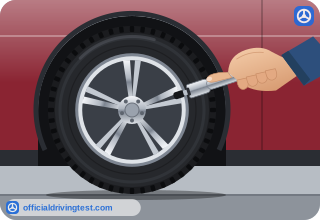
How often does the manual say to check your tire pressure with a pressure gauge?
- Monthly
- Weekly
- Every six months
- Once a year
Show answer
Correct answer: Monthly
The manual tells drivers to check tire pressure with a gauge every month.
Source: South Carolina Driver's Manual (2026 (posted April 2026)), page 4-1 · Open this page in the manual (Manual page 4-1)
-
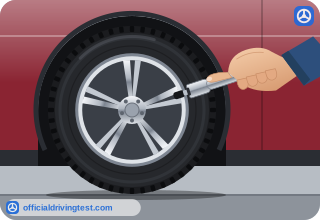
Where do you find the PSI number your tire pressure should match?
- On the inside of the glove box door
- On the engine cover under the hood
- On a sticker on the inside doorframe
- On the vehicle registration card
Show answer
Correct answer: On a sticker on the inside doorframe
The manual says to open the vehicle door and note the PSI number on the sticker on the inside doorframe.
Source: South Carolina Driver's Manual (2026 (posted April 2026)), page 4-1 · Open this page in the manual (Manual page 4-1)
-
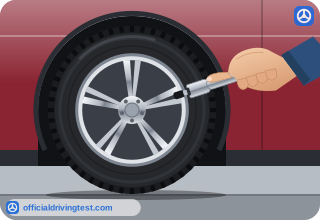
What does PSI mean when it is used for tire pressure?
- Pressure per Standard Inflation
- Pounds per Square Inch
- Pounds per Safe Inflation
- Pressure per Square Inch
Show answer
Correct answer: Pounds per Square Inch
PSI stands for Pounds per Square Inch, the measurement for tire pressure.
Source: South Carolina Driver's Manual (2026 (posted April 2026)), page 4-2 · Open this page in the manual (Manual page 4-2)
-
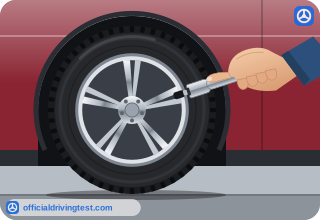
When should you check the pressure of your tires?
- Right after a long highway drive
- When the tires are warm from driving
- Just after the vehicle has been washed
- When the tires are cold
Show answer
Correct answer: When the tires are cold
The manual says to make sure you check the pressure when the tires are cold.
Source: South Carolina Driver's Manual (2026 (posted April 2026)), page 4-2 · Open this page in the manual (Manual page 4-2)
-
Your pressure gauge reads higher than the PSI number on the doorframe sticker. What should you do?
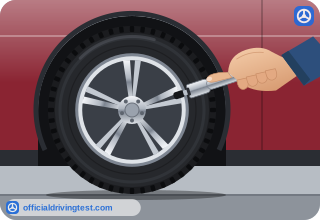
- Let air out of your tires
- Inflate the tires until the numbers match
- Drive until the tires warm up, then check again
- Replace the tires with new ones
Show answer
Correct answer: Let air out of your tires
A reading higher than the doorframe number means the tires are over-inflated, so the manual says to let air out.
Source: South Carolina Driver's Manual (2026 (posted April 2026)), page 4-2 · Open this page in the manual (Manual page 4-2)
-
Your pressure gauge reads lower than the PSI number on the doorframe sticker. What should you do?
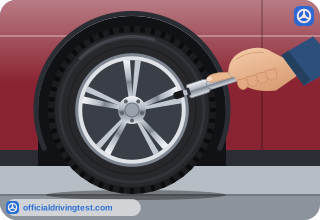
- Let some air out of the tires
- Leave the tires as they are
- Inflate the tires until the numbers match
- Press the gauge on the valve stem again until it reads higher
Show answer
Correct answer: Inflate the tires until the numbers match
When the gauge number is lower than the doorframe number, you add air until the two numbers match.
Source: South Carolina Driver's Manual (2026 (posted April 2026)), page 4-2 · Open this page in the manual (Manual page 4-2)
-
How do you get an accurate reading with a tire pressure gauge?
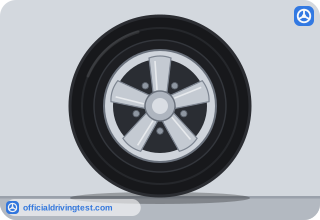
- Press the gauge firmly against the tire sidewall
- Remove the cap and press the gauge evenly onto the valve stem
- Hold the gauge against the tread of the tire
- Unscrew the valve stem and insert the gauge into the tire
Show answer
Correct answer: Remove the cap and press the gauge evenly onto the valve stem
The gauge is pressed evenly onto the valve stem after the cap is removed.
Source: South Carolina Driver's Manual (2026 (posted April 2026)), page 4-2 · Open this page in the manual (Manual page 4-2)
-
In the penny test for tread depth, how is the penny placed in the tire groove?
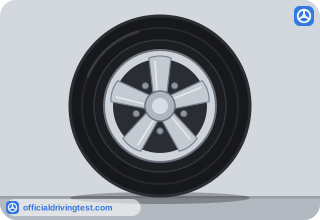
- Lincoln’s head going first into the shallowest groove
- Lincoln’s body going first into the deepest-looking groove
- Flat against the side of the tire
- Lincoln’s head going first into the deepest-looking groove
Show answer
Correct answer: Lincoln’s head going first into the deepest-looking groove
The penny goes into the deepest-looking groove with Lincoln’s head going first.
Source: South Carolina Driver's Manual (2026 (posted April 2026)), page 4-2 · Open this page in the manual (Manual page 4-2)
-
In the penny test, you can see all of Lincoln’s head. What does this mean?
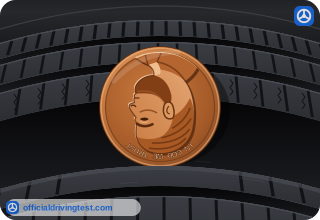
- The tires are too worn and should be replaced
- The tires still have enough tread to keep using
- The tires are over-inflated and need air let out
- The tires need more air before the next drive
Show answer
Correct answer: The tires are too worn and should be replaced
If all of his head shows, the tread is too worn, so you should not drive on the tires and should get them replaced.
Source: South Carolina Driver's Manual (2026 (posted April 2026)), page 4-3 · Open this page in the manual (Manual page 4-3)
-
How should you sit when you drive?
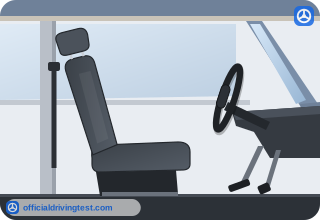
- Slightly reclined, with your arms stretched out toward the wheel
- Leaning forward, with your chest close to the steering wheel
- Upright, with your back against the seat and feet on the floor
- Slouched down, with your feet resting on the pedals only
Show answer
Correct answer: Upright, with your back against the seat and feet on the floor
The manual says to sit upright with your back against the seat and your feet on the floor.
Source: South Carolina Driver's Manual (2026 (posted April 2026)), page 4-3 · Open this page in the manual (Manual page 4-3)
-
What can an improper seating position, such as slouching, result in?
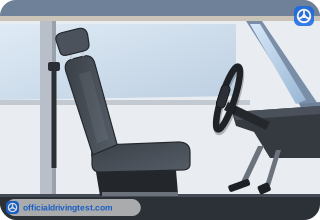
- Faster response when you brake in an emergency
- Reduced effectiveness of the vehicle’s restraint system
- A better view of the road ahead of the vehicle
- Less strain on your neck and shoulders on long trips
Show answer
Correct answer: Reduced effectiveness of the vehicle’s restraint system
Slouching can make the vehicle’s restraint system work less well.
Source: South Carolina Driver's Manual (2026 (posted April 2026)), page 4-3 · Open this page in the manual (Manual page 4-3)
-
What does adjusting your seat and mirrors before you start to drive let you do?
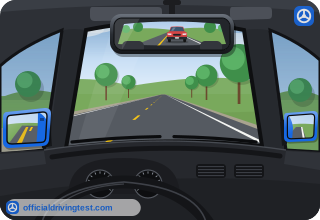
- Drive without checking your blind spots over your shoulder
- Keep your eyes off the road for longer periods of time
- Stay awake on long trips without any rest stops
- See clearly and have full control of the pedals and steering wheel
Show answer
Correct answer: See clearly and have full control of the pedals and steering wheel
Adjusting first lets you see clearly and control the pedals and steering wheel.
Source: South Carolina Driver's Manual (2026 (posted April 2026)), page 4-3 · Open this page in the manual (Manual page 4-3)
-
When your seat is adjusted correctly, your foot should pivot smoothly from the brake to the accelerator while which part stays on the floor?
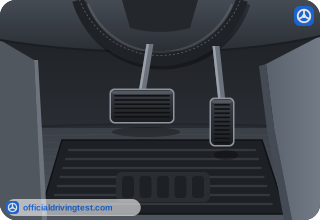
- Your heel
- Your toes
- The ball of your foot
- The side of your foot
Show answer
Correct answer: Your heel
The manual says the heel stays on the floor while the foot pivots between the pedals.
Source: South Carolina Driver's Manual (2026 (posted April 2026)), page 4-3 · Open this page in the manual (Manual page 4-3)
-
How high may the top of the steering wheel be, compared with your body?
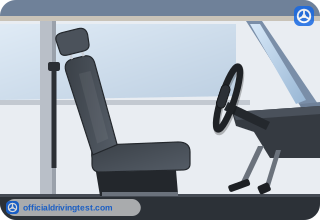
- No higher than the top of your head
- No higher than the middle of your chest
- No higher than the top of your shoulders
- No higher than your elbows
Show answer
Correct answer: No higher than the top of your shoulders
The top of the wheel should be no higher than the top of your shoulders.
Source: South Carolina Driver's Manual (2026 (posted April 2026)), page 4-3 · Open this page in the manual (Manual page 4-3)
-
How much space should there be between your chest and the steering wheel?
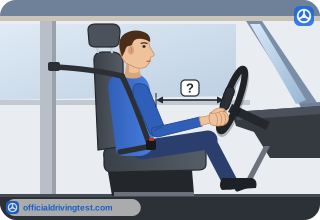
- At least 4 inches
- At least 10 inches
- At least 6 inches
- At least 15 inches
Show answer
Correct answer: At least 10 inches
The manual says to leave at least 10 inches between your chest and the wheel.
Source: South Carolina Driver's Manual (2026 (posted April 2026)), page 4-3 · Open this page in the manual (Manual page 4-3)
-
Which of these should you avoid when you adjust your seat?
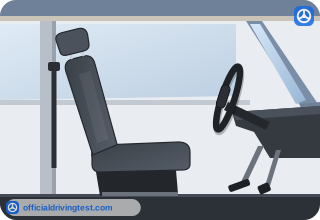
- Resting your back against the seat
- Keeping your heel on the floor
- Sitting upright
- Reclining the seat
Show answer
Correct answer: Reclining the seat
The manual says not to recline the seat or move it so far forward that you cannot easily steer.
Source: South Carolina Driver's Manual (2026 (posted April 2026)), page 4-3 · Open this page in the manual (Manual page 4-3)
-
What are head restraints designed to prevent?
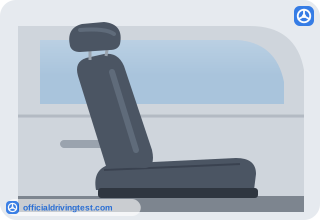
- Whiplash
- Blind spots
- Hydroplaning
- Glare
Show answer
Correct answer: Whiplash
Head restraints are designed to prevent whiplash.
Source: South Carolina Driver's Manual (2026 (posted April 2026)), page 4-3 · Open this page in the manual (Manual page 4-3)
-
How should a head restraint be adjusted?
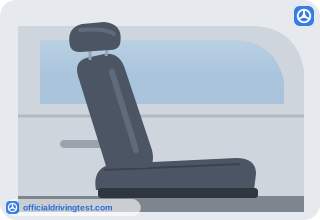
- It sits several inches behind your head, level with your shoulders
- It contacts the back of your neck, below the level of your ears
- It contacts the back of your head and is not below the level of your ears
- It is folded flat so that it does not touch your head
Show answer
Correct answer: It contacts the back of your head and is not below the level of your ears
The head restraint should touch the back of your head and not sit below ear level.
Source: South Carolina Driver's Manual (2026 (posted April 2026)), page 4-3 · Open this page in the manual (Manual page 4-3)
-
Which mirror is the primary mirror used to view the rear?
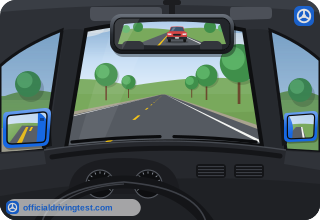
- The left outside mirror
- The rearview mirror on the windshield
- The right outside mirror
- A small mirror on the dashboard
Show answer
Correct answer: The rearview mirror on the windshield
The manual calls the interior rearview mirror on the windshield the primary mirror for viewing the rear.
Source: South Carolina Driver's Manual (2026 (posted April 2026)), page 4-3 · Open this page in the manual (Manual page 4-3)
-
How should you adjust your rearview mirror?
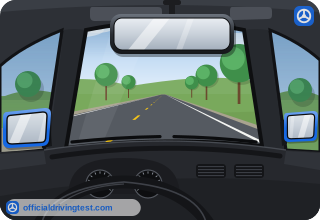
- So that it shows only the lane on your right
- So that it shows the back seat and your own head
- So that it points down at the road behind the bumper
- So that it frames the rear window
Show answer
Correct answer: So that it frames the rear window
The rearview mirror should frame the rear window so you can see traffic flow to the rear.
Source: South Carolina Driver's Manual (2026 (posted April 2026)), page 4-4 · Open this page in the manual (Manual page 4-4)
-
If your vehicle has a day/night mirror, how should it be set?
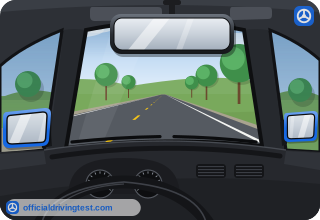
- For the time of day you are driving
- Always on the night setting, whatever the hour
- Always on the day setting, whatever the hour
- Tilted up toward the roof
Show answer
Correct answer: For the time of day you are driving
A day/night mirror should be set to match the time of day you are driving.
Source: South Carolina Driver's Manual (2026 (posted April 2026)), page 4-4 · Open this page in the manual (Manual page 4-4)
-
When you set the left side mirror with the method the manual encourages, where do you rest your head?
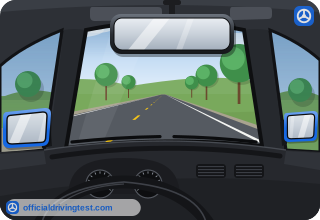
- Directly below the rearview mirror
- Against the closed window on the left
- Above the center console
- Against the head restraint
Show answer
Correct answer: Against the closed window on the left
To set the left mirror, the driver rests his or her head against the closed left window and adjusts the mirror until the rear edge of the vehicle barely shows.
Source: South Carolina Driver's Manual (2026 (posted April 2026)), page 4-5 · Open this page in the manual (Manual page 4-5)
-
When you set the right side mirror with the method the manual encourages, where should your head be?
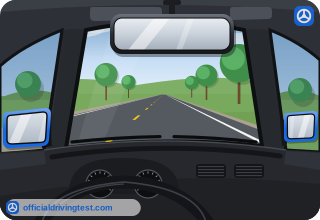
- Against the closed window on the right side of the vehicle
- Resting against the head restraint of the seat
- Directly above the steering wheel
- Directly below the rearview mirror or above the center console
Show answer
Correct answer: Directly below the rearview mirror or above the center console
The driver leans to the right so the head is below the rearview mirror or above the center console, then adjusts the mirror so the edge of the vehicle can barely be seen.
Source: South Carolina Driver's Manual (2026 (posted April 2026)), page 4-5 · Open this page in the manual (Manual page 4-5)
-
When the outside mirrors are set so that you no longer see the sides of your own vehicle in them, how much additional viewing area does that add to each side?
- 12 to 16 degrees
- 2 to 4 degrees
- 5 to 8 degrees
- 20 to 30 degrees
Show answer
Correct answer: 12 to 16 degrees
The adjustment adds 12 to 16 degrees of additional viewing area to each side.
Source: South Carolina Driver's Manual (2026 (posted April 2026)), page 4-5 · Open this page in the manual (Manual page 4-5)
-
What is a driver guilty of who fails to properly secure a load?
- A felony
- A violation with only a warning
- A violation that cancels the license
- A misdemeanor
Show answer
Correct answer: A misdemeanor
Failing to properly secure a load is a misdemeanor, with a possible fine and cleanup costs.
Source: South Carolina Driver's Manual (2026 (posted April 2026)), page 4-8 · Open this page in the manual (Manual page 4-8)
-
When is a load considered secure?
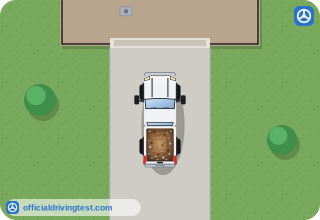
- Only when nothing can slide, shift, fall, sift out or become airborne
- When it is covered by a tarp, even if parts of it could still shift
- When most of it is tied down and the rest is lightweight
- When it stays on the vehicle at normal speeds on local roads
Show answer
Correct answer: Only when nothing can slide, shift, fall, sift out or become airborne
A load counts as secure only when nothing can slide, shift, fall, sift onto the road or become airborne.
Source: South Carolina Driver's Manual (2026 (posted April 2026)), page 4-8 · Open this page in the manual (Manual page 4-8)
-
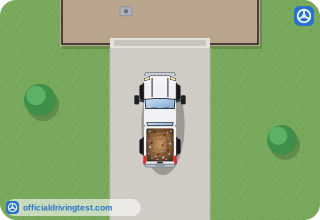
How does the manual say to tie down a load?
- With tape wrapped around the outer edges of the whole load
- By stacking the heaviest items on top of the lighter ones
- With rope, netting, or straps directly to your vehicle or trailer
- With a loose cord attached to the bumper
Show answer
Correct answer: With rope, netting, or straps directly to your vehicle or trailer
The manual says to tie the load down with rope, netting, or straps directly to the vehicle or trailer.
Source: South Carolina Driver's Manual (2026 (posted April 2026)), page 4-8 · Open this page in the manual (Manual page 4-8)
-
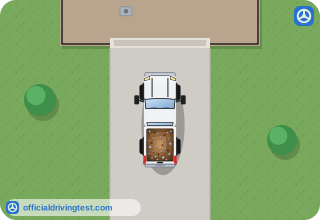
What does the manual say to consider doing with a load you are securing?
- Covering only the front of the load with plastic wrap
- Covering the entire load with a sturdy tarp or netting
- Leaving the top of the load open to the air
- Removing the cover once you reach the highway
Show answer
Correct answer: Covering the entire load with a sturdy tarp or netting
The manual says to consider covering the whole load with a sturdy tarp or netting.
Source: South Carolina Driver's Manual (2026 (posted April 2026)), page 4-8 · Open this page in the manual (Manual page 4-8)
-
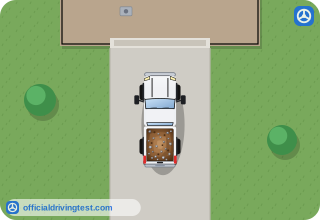
Which is part of securing a load in or on your vehicle or trailer?
- Loading as much as will physically fit
- Checking the load only at the start of the trip
- Leaving animals unrestrained if they are calm
- Not overloading your vehicle or trailer
Show answer
Correct answer: Not overloading your vehicle or trailer
The manual says not to overload the vehicle or trailer.
Source: South Carolina Driver's Manual (2026 (posted April 2026)), page 4-8 · Open this page in the manual (Manual page 4-8)
-
What does the manual say about animals when you secure a load?
- They should also be properly secured
- They need no restraint if they are calm
- They should ride loose in the cargo area
- They should be tied to the roof
Show answer
Correct answer: They should also be properly secured
Animals should also be properly secured.
Source: South Carolina Driver's Manual (2026 (posted April 2026)), page 4-8 · Open this page in the manual (Manual page 4-8)
-
What should you always do to make sure your load is secure?
- Tie it once and trust it
- Check it only after a hard stop
- Double check it
- Rely on its weight to hold it down
Show answer
Correct answer: Double check it
The manual says to always double check your load.
Source: South Carolina Driver's Manual (2026 (posted April 2026)), page 4-8 · Open this page in the manual (Manual page 4-8)
-
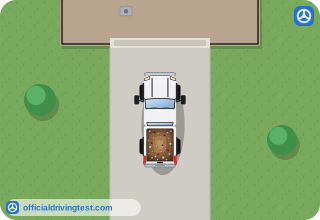
Before you drive with a load, the manual says to ask whether you would feel safe doing what?
- Riding in the cargo area
- Driving behind your own vehicle
- Passing your own vehicle on the left
- Driving in front of a large truck
Show answer
Correct answer: Driving behind your own vehicle
One of the manual’s questions asks whether you would feel safe driving behind your own vehicle and its load.
Source: South Carolina Driver's Manual (2026 (posted April 2026)), page 4-9 · Open this page in the manual (Manual page 4-9)
-
Besides giving alerts, what may some driver assistance safety features do?
- Choose your route and decide where you are going
- Make it unnecessary to use turn signals or check mirrors
- Reduce the need for tire maintenance
- Take control, such as adjusting the braking or steering
Show answer
Correct answer: Take control, such as adjusting the braking or steering
Some features alert you with sounds or vibration, and some may take control by adjusting the braking or steering.
Source: South Carolina Driver's Manual (2026 (posted April 2026)), page 4-9 · Open this page in the manual (Manual page 4-9)
-
Which of these is listed as an Advanced Driver Assistance Systems (ADAS) safety feature?
- Lane keeping assistance
- Heated seats
- Power windows
- A rear window defroster
Show answer
Correct answer: Lane keeping assistance
The manual lists lane keeping assistance among the safety features, along with blind spot warning and automatic emergency braking.
Source: South Carolina Driver's Manual (2026 (posted April 2026)), page 4-9 · Open this page in the manual (Manual page 4-9)
-
Which of these are you not allowed to use when taking your driving test?
- Turn signals and headlights
- The horn and windshield wipers
- Parking assist and cruise control
- The parking brake and gear selector
Show answer
Correct answer: Parking assist and cruise control
The manual says certain safety features, such as parking assist and cruise control, may not be used during the driving test.
Source: South Carolina Driver's Manual (2026 (posted April 2026)), page 4-9 · Open this page in the manual (Manual page 4-9)
-
What does the manual say about driver assistance safety features?
- They can drive the vehicle for you in good weather
- They assist you but are not there to drive the vehicle
- They make head checks unnecessary
- They are required on every vehicle used for the driving test
Show answer
Correct answer: They assist you but are not there to drive the vehicle
The features only assist with driving, and you must stay engaged and focused at all times.
Source: South Carolina Driver's Manual (2026 (posted April 2026)), page 4-9 · Open this page in the manual (Manual page 4-9)
-
Who is responsible for the safe operation of a vehicle that has safety features?
- The vehicle manufacturer
- The safety features themselves
- The company that wrote the vehicle’s software
- You, the driver, at all times
Show answer
Correct answer: You, the driver, at all times
The manual says you are responsible for the safe operation of your vehicle at all times.
Source: South Carolina Driver's Manual (2026 (posted April 2026)), page 4-10 · Open this page in the manual (Manual page 4-10)
-
How do you stay aware of everything around you in a vehicle with safety features?
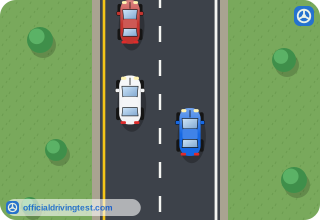
- By performing head checks and using mirrors and cameras
- By relying on the vehicle’s alerts alone
- By watching only the dashboard displays
- By letting the vehicle monitor the blind spots
Show answer
Correct answer: By performing head checks and using mirrors and cameras
You must do head checks and use mirrors and cameras to observe traffic and other road users, and not rely on safety features alone.
Source: South Carolina Driver's Manual (2026 (posted April 2026)), page 4-10 · Open this page in the manual (Manual page 4-10)
-
Where does the manual say to learn how your vehicle’s safety features operate?
- On your driver’s license
- In your insurance policy
- In your vehicle owner’s manual
- On your registration card
Show answer
Correct answer: In your vehicle owner’s manual
The manual says to read the vehicle owner’s manual to learn how the safety features operate.
Source: South Carolina Driver's Manual (2026 (posted April 2026)), page 4-10 · Open this page in the manual (Manual page 4-10)
-
In which condition does the manual say safety features may not work properly?
- Dry pavement
- Fog
- Light traffic
- Flat, straight roads
Show answer
Correct answer: Fog
The manual lists rain, snow, ice, fog, hills and curves as conditions where the features may not work properly.
Source: South Carolina Driver's Manual (2026 (posted April 2026)), page 4-10 · Open this page in the manual (Manual page 4-10)
-
What should you always keep clean and damage free so your safety features work?
- Seat covers
- Dashboard vents
- Floor mats
- Vehicle sensors
Show answer
Correct answer: Vehicle sensors
The manual says to always keep vehicle sensors clean and damage free.
Source: South Carolina Driver's Manual (2026 (posted April 2026)), page 4-10 · Open this page in the manual (Manual page 4-10)
-
What does the manual say to do about your vehicle’s software technology?
- Keep it up to date (if applicable) and follow the manufacturer’s advice
- Update it only when the vehicle is being inspected by the SCDMV
- Never update it during the winter months
- Leave it alone, because updates are not needed
Show answer
Correct answer: Keep it up to date (if applicable) and follow the manufacturer’s advice
The manual says to keep software up to date, if applicable, and follow the vehicle manufacturer’s recommendations.
Source: South Carolina Driver's Manual (2026 (posted April 2026)), page 4-10 · Open this page in the manual (Manual page 4-10)
-
What should you do with your right foot and the gear selector lever when you start the engine?
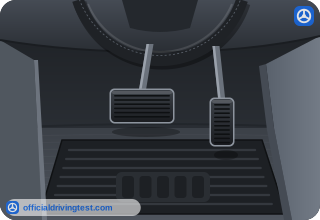
- Place your right foot on the brake pedal and check that the gear selector lever is in park
- Place your right foot on the accelerator and check that the gear selector lever is in neutral
- Press the accelerator to the floor and leave the gear selector lever in drive
- Keep your foot off every pedal and check that the gear selector lever is in reverse
Show answer
Correct answer: Place your right foot on the brake pedal and check that the gear selector lever is in park
The manual tells you to put your right foot on the brake and check the selector for park before starting.
Source: South Carolina Driver's Manual (2026 (posted April 2026)), page 5-1 · Open this page in the manual (Manual page 5-1)
-
Once the engine is started, what should you check?
- The tire pressure and tread depth, by walking around the vehicle
- Only the radio and heater settings before you move away
- The gauges and any dashboard indicator lights that need attention
- The expiration date on your registration card and insurance
Show answer
Correct answer: The gauges and any dashboard indicator lights that need attention
After starting, you check the gauges and warning lights such as fuel, oil, ABS and air bags.
Source: South Carolina Driver's Manual (2026 (posted April 2026)), page 5-1 · Open this page in the manual (Manual page 5-1)
-
How does the manual say to check blind spots before you move the vehicle?
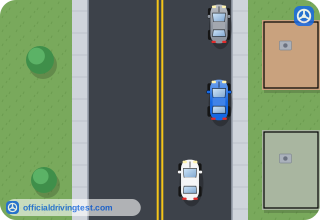
- By looking only in the rearview mirror
- By looking over your shoulder
- By tapping the horn and waiting for a reply
- By using the hazard flashers
Show answer
Correct answer: By looking over your shoulder
Blind spots are checked by looking over your shoulder before the vehicle moves.
Source: South Carolina Driver's Manual (2026 (posted April 2026)), page 5-1 · Open this page in the manual (Manual page 5-1)
-
After you check around the vehicle for a safe path, what should you do before you press gently on the accelerator to move?
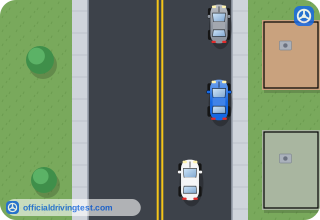
- Sound your horn
- Turn on the hazard flashers
- Shift into neutral
- Signal
Show answer
Correct answer: Signal
The manual says to signal and, if it is safe, press the accelerator gently.
Source: South Carolina Driver's Manual (2026 (posted April 2026)), page 5-1 · Open this page in the manual (Manual page 5-1)
-
How should your foot rest on the accelerator pedal?
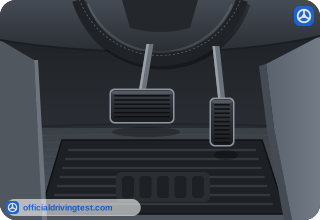
- With your whole foot lifted off the floor above the pedal
- With your heel on the pedal and your toes on the floor
- With the ball of your foot pressed hard to the floor
- With the top of your foot on the pedal and the heel on the floor
Show answer
Correct answer: With the top of your foot on the pedal and the heel on the floor
You accelerate gradually using the top of your foot on the pedal with the heel on the floor.
Source: South Carolina Driver's Manual (2026 (posted April 2026)), page 5-1 · Open this page in the manual (Manual page 5-1)
-
What should you do before you move your foot from the accelerator to the brake to stop the vehicle?
- Shift the gear selector lever into park before you slow down
- Check your mirrors for traffic at the rear of your vehicle
- Turn off the engine and let the vehicle coast to a stop
- Sound the horn to warn the vehicles behind you
Show answer
Correct answer: Check your mirrors for traffic at the rear of your vehicle
Stopping starts with a mirror check of traffic behind you, then the foot moves to the brake.
Source: South Carolina Driver's Manual (2026 (posted April 2026)), page 5-1 · Open this page in the manual (Manual page 5-1)
-
How should you press the brake pedal when you stop the vehicle?
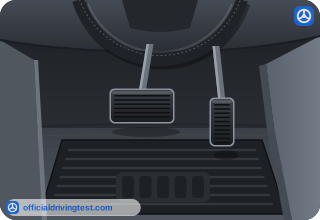
- With short, sudden stabs until the vehicle slows
- With a hard push that you release just before stopping
- With steady pressure until the vehicle comes to a stop
- With light taps that you alternate with the accelerator
Show answer
Correct answer: With steady pressure until the vehicle comes to a stop
The manual says to press with steady pressure until the vehicle stops.
Source: South Carolina Driver's Manual (2026 (posted April 2026)), page 5-2 · Open this page in the manual (Manual page 5-2)
-
In which direction do you turn the steering wheel?
- The direction you want the vehicle to move, forward or in reverse
- The opposite direction when you are moving in reverse
- The opposite direction when the vehicle is moving forward
- Away from the direction of the turn, then back to it
Show answer
Correct answer: The direction you want the vehicle to move, forward or in reverse
The wheel turns toward the direction you want the vehicle to go, whether forward or in reverse.
Source: South Carolina Driver's Manual (2026 (posted April 2026)), page 5-2 · Open this page in the manual (Manual page 5-2)
-
How should you hold the steering wheel with your hands?
- Grip with your fingers, not the palms, and keep your thumbs up along the face of the wheel
- Grip with the palms of your hands and keep your thumbs tucked inside the rim of the wheel
- Grip as tightly as you can, with your thumbs wrapped around the rim of the wheel
- Rest both hands loosely on the top of the wheel with your thumbs pointing down
Show answer
Correct answer: Grip with your fingers, not the palms, and keep your thumbs up along the face of the wheel
The manual says to grip with the fingers, not the palms, with thumbs up along the face of the wheel.
Source: South Carolina Driver's Manual (2026 (posted April 2026)), page 5-2 · Open this page in the manual (Manual page 5-2)
-
Which way of gripping the steering wheel is never to be used when turning the wheel?
- Gripping the outside of the wheel with both hands on opposite sides
- Gripping it firmly but gently with your fingers
- Gripping it from the inside of the rim
- Keeping your thumbs up along the face of the wheel
Show answer
Correct answer: Gripping it from the inside of the rim
You never turn the wheel while holding it from the inside of the rim.
Source: South Carolina Driver's Manual (2026 (posted April 2026)), page 5-2 · Open this page in the manual (Manual page 5-2)
-
Where should your hands be on the steering wheel, thinking of the wheel as a clock face?
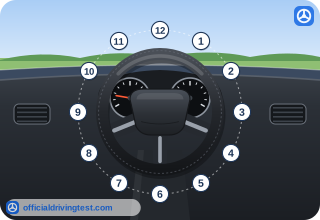
- Left hand at 10 to 11 o’clock and right hand at 1 to 2 o’clock
- Left hand at 7 to 9 o’clock and right hand at 3 to 5 o’clock
- Left hand at 9 to 11 o’clock and right hand at 1 to 3 o’clock
- Left hand at 5 to 6 o’clock and right hand at 6 to 7 o’clock
Show answer
Correct answer: Left hand at 7 to 9 o’clock and right hand at 3 to 5 o’clock
The manual places the left hand at 7 to 9 and the right hand at 3 to 5 o’clock.
Source: South Carolina Driver's Manual (2026 (posted April 2026)), page 5-2 · Open this page in the manual (Manual page 5-2)
-
When may one of your hands leave the steering wheel?
- When the road ahead is straight and there is little traffic
- When you are driving slowly on a lightly traveled rural road
- When your arms get tired on a long drive on a quiet road
- When it is doing another necessary driving task, such as shifting gears
Show answer
Correct answer: When it is doing another necessary driving task, such as shifting gears
Both hands stay on the wheel except for a necessary task such as shifting, wipers or hand signals.
Source: South Carolina Driver's Manual (2026 (posted April 2026)), page 5-2 · Open this page in the manual (Manual page 5-2)
-
When you are first learning to handle a car or truck, what kind of road should you choose when possible?
- Busy city streets with many intersections
- Multi-lane highways with steady traffic
- Roads with no traffic signs
- Lightly traveled rural roads
Show answer
Correct answer: Lightly traveled rural roads
A new driver should practice on lightly traveled rural roads before moving to turning and parking.
Source: South Carolina Driver's Manual (2026 (posted April 2026)), page 5-2 · Open this page in the manual (Manual page 5-2)
-
What is hand-to-hand steering commonly called?
- Cross-arm steering
- Push/pull steering
- One hand steering
- Palm steering
Show answer
Correct answer: Push/pull steering
The manual says hand-to-hand steering is commonly called push/pull steering.
Source: South Carolina Driver's Manual (2026 (posted April 2026)), page 5-2 · Open this page in the manual (Manual page 5-2)
-
At what speed range does the manual say to use hand-to-hand (push/pull) steering when turning the wheel during normal driving?
- Going forward above 25-30 mph
- Going forward below 10-15 mph
- Going forward above 10-15 mph
- Only at highway speeds above 45-50 mph
Show answer
Correct answer: Going forward above 10-15 mph
Hand-to-hand steering is for normal driving going forward above 10-15 mph; slower turns use hand-over-hand.
Source: South Carolina Driver's Manual (2026 (posted April 2026)), page 5-3 · Open this page in the manual (Manual page 5-3)
-
With hand-to-hand steering, where do your hands grasp the wheel?
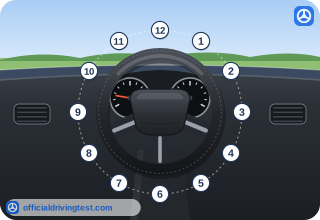
- Left hand between 7 and 8 o’clock and right hand between 4 and 5 o’clock
- Left hand between 10 and 11 o’clock and right hand between 1 and 2 o’clock
- Left hand between 9 and 10 o’clock and right hand between 2 and 3 o’clock
- Left hand between 5 and 6 o’clock and right hand between 6 and 7 o’clock
Show answer
Correct answer: Left hand between 7 and 8 o’clock and right hand between 4 and 5 o’clock
In hand-to-hand steering the left hand sits at 7 to 8 and the right hand at 4 to 5 o’clock.
Source: South Carolina Driver's Manual (2026 (posted April 2026)), page 5-3 · Open this page in the manual (Manual page 5-3)
-
What tends to happen when your left hand is between 7 and 9 o’clock and your right hand is between 3 and 5 o’clock?
- There is less muscle stress and less steering that could cause weaving in a lane
- There is more steering effort, which helps keep the vehicle straight
- Your arms cross over the wheel, which gives you better control
- There is less need to keep both hands on the wheel at all times
Show answer
Correct answer: There is less muscle stress and less steering that could cause weaving in a lane
This hand position tends to cause less muscle stress and so less weaving in the lane.
Source: South Carolina Driver's Manual (2026 (posted April 2026)), page 5-3 · Open this page in the manual (Manual page 5-3)
-
Why is there less chance of injury to your face, hands and arms in a frontal crash when your hands are at 7 to 9 and 3 to 5 o’clock on a car with a driver’s side air bag?
- Your hands are placed close together at the top of the wheel
- Your arms are held straight out in front of your face
- Your hands and arms never cross over the steering wheel
- Your hands are held at the 10 and 2 positions
Show answer
Correct answer: Your hands and arms never cross over the steering wheel
With this grip your hands and arms never cross over the wheel, so an air bag is less likely to injure them.
Source: South Carolina Driver's Manual (2026 (posted April 2026)), page 5-3 · Open this page in the manual (Manual page 5-3)
-
Which hand position is not recommended because it can be dangerous in vehicles equipped with airbags?
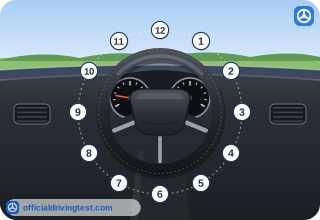
- 7 and 5 o’clock
- 2 and 10 o’clock
- 9 and 3 o’clock
- 8 and 4 o’clock
Show answer
Correct answer: 2 and 10 o’clock
The manual says that 2 and 10 o’clock is not recommended because of the danger with airbags.
Source: South Carolina Driver's Manual (2026 (posted April 2026)), page 5-4 · Open this page in the manual (Manual page 5-4)
-
When does the manual say to use hand-over-hand steering?
- When driving straight ahead on a highway at speeds above 45-50 mph
- Whenever you need to make a quick lane change at highway speed
- Only when you are backing the vehicle up in a parking lot
- When turning at low speeds, such as at an intersection or when parking
Show answer
Correct answer: When turning at low speeds, such as at an intersection or when parking
Hand-over-hand steering is for low-speed turns such as at intersections or while parking.
Source: South Carolina Driver's Manual (2026 (posted April 2026)), page 5-4 · Open this page in the manual (Manual page 5-4)
-
With hand-over-hand steering, where do your hands grasp the wheel?
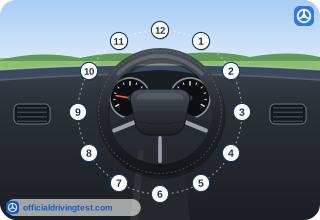
- Left hand between 10 and 11 o’clock and right hand between 1 and 2 o’clock
- Left hand between 9 and 10 o’clock and right hand between 2 and 3 o’clock
- Left hand between 6 and 7 o’clock and right hand between 5 and 6 o’clock
- Left hand between 8 and 9 o’clock and right hand between 3 and 4 o’clock
Show answer
Correct answer: Left hand between 8 and 9 o’clock and right hand between 3 and 4 o’clock
For hand-over-hand steering the left hand is at 8 to 9 and the right hand at 3 to 4 o’clock.
Source: South Carolina Driver's Manual (2026 (posted April 2026)), page 5-4 · Open this page in the manual (Manual page 5-4)
-
In hand-over-hand steering, which part of the wheel do you use to move the wheel to the right?
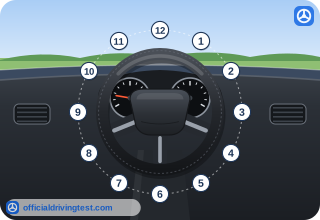
- The left bottom third of the steering wheel
- The right top third of the steering wheel
- The right bottom third of the steering wheel
- The left top third of the steering wheel
Show answer
Correct answer: The right top third of the steering wheel
To steer right you use the right top third of the wheel; for left you use the left top third.
Source: South Carolina Driver's Manual (2026 (posted April 2026)), page 5-4 · Open this page in the manual (Manual page 5-4)
-
When does the manual say to use one hand steering?
- Whenever you are driving on a straight road with no traffic
- Whenever you drive below 10-15 mph in a parking lot area
- Only when backing up or reaching briefly for a vehicle control
- Whenever you make a turn at an intersection at low speed
Show answer
Correct answer: Only when backing up or reaching briefly for a vehicle control
One hand steering is only for backing up or briefly reaching for controls such as wipers, flashers or lights.
Source: South Carolina Driver's Manual (2026 (posted April 2026)), page 5-4 · Open this page in the manual (Manual page 5-4)
-
When you reach for a vehicle control, where should you keep your other hand on the wheel?
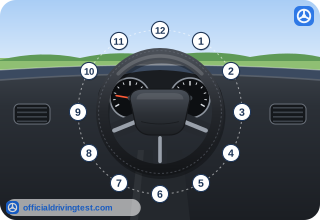
- At 8-9 o’clock or 3-4 o’clock, depending on the steering wheel design
- At 12 o’clock, at the top of the wheel
- At 10 o’clock or 2 o’clock, depending on the steering wheel design
- At 6 o’clock, at the bottom of the wheel
Show answer
Correct answer: At 8-9 o’clock or 3-4 o’clock, depending on the steering wheel design
The other hand stays in the normal operating position of 8-9 or 3-4 o’clock.
Source: South Carolina Driver's Manual (2026 (posted April 2026)), page 5-4 · Open this page in the manual (Manual page 5-4)
-
Why should you check behind the vehicle before you get in it to back up?
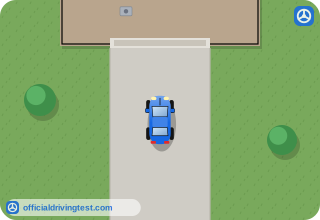
- Children and small objects cannot be seen from the driver’s seat
- Mirrors cannot show anything behind the vehicle at night
- The rearview camera works only after you start the engine
- Other drivers must be warned before you shift to reverse
Show answer
Correct answer: Children and small objects cannot be seen from the driver’s seat
Children and small objects behind the vehicle are not visible from the driver’s seat.
Source: South Carolina Driver's Manual (2026 (posted April 2026)), page 5-5 · Open this page in the manual (Manual page 5-5)
-
What should you do with your foot when you shift to reverse to back up?
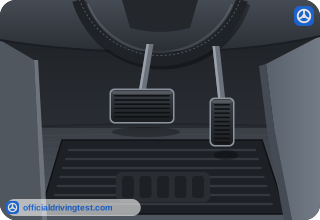
- Place your foot on the accelerator
- Keep your foot off the pedals
- Place your foot on the brake
- Place your foot on the parking brake
Show answer
Correct answer: Place your foot on the brake
Your foot is on the brake when you shift into reverse.
Source: South Carolina Driver's Manual (2026 (posted April 2026)), page 5-5 · Open this page in the manual (Manual page 5-5)
-
When backing up, where does the manual say to place your left hand on the steering wheel?
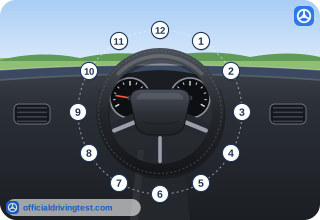
- At the 9 o’clock position
- At the 12 o’clock position
- At the 6 o’clock position
- At the 3 o’clock position
Show answer
Correct answer: At the 12 o’clock position
The manual tells you to grasp the wheel at 12 o’clock with your left hand when backing.
Source: South Carolina Driver's Manual (2026 (posted April 2026)), page 5-5 · Open this page in the manual (Manual page 5-5)
-
When backing up, how should you look to see where you are going?
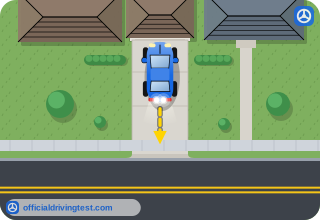
- Look only in the rearview mirror, without turning your body or head
- Watch only the side mirrors while keeping both hands on the steering wheel
- Look over your left shoulder through the driver’s side window as you steer
- Put your right arm on the back of the passenger seat and look through the rear window
Show answer
Correct answer: Put your right arm on the back of the passenger seat and look through the rear window
The manual says to put your right arm on the back of the passenger seat and look through the rear window.
Source: South Carolina Driver's Manual (2026 (posted April 2026)), page 5-5 · Open this page in the manual (Manual page 5-5)
-
What do your mirrors fail to show when you back up?
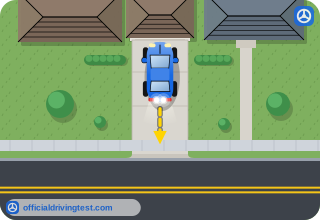
- The area beside your front doors and fenders
- The vehicles that are two lanes away
- The road that is far behind you
- The area immediately behind your vehicle
Show answer
Correct answer: The area immediately behind your vehicle
Mirrors do not show the area immediately behind the vehicle, so you must also look to the rear.
Source: South Carolina Driver's Manual (2026 (posted April 2026)), page 5-5 · Open this page in the manual (Manual page 5-5)
-
How should you use a rearview camera when backing up, if your vehicle has one?
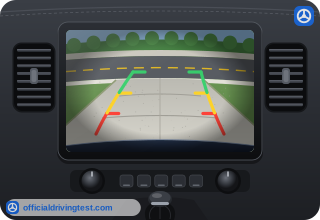
- Use it instead of looking to the rear
- Check it occasionally while backing up
- Use it only after the vehicle has stopped
- Ignore it, since cameras are not allowed
Show answer
Correct answer: Check it occasionally while backing up
The manual says to occasionally check a rearview camera while backing up.
Source: South Carolina Driver's Manual (2026 (posted April 2026)), page 5-5 · Open this page in the manual (Manual page 5-5)
-
Why should you keep your speed slow when backing up?
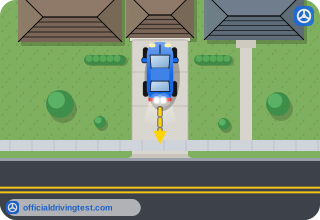
- Your brakes work less well in reverse
- Your mirrors cannot be used in reverse
- Your vehicle is much harder to steer while you are backing up
- Your vehicle cannot go faster than 10 mph in reverse
Show answer
Correct answer: Your vehicle is much harder to steer while you are backing up
The manual says to accelerate gently and stay slow because steering is much harder in reverse.
Source: South Carolina Driver's Manual (2026 (posted April 2026)), page 5-5 · Open this page in the manual (Manual page 5-5)
-
When backing up, in which direction should you steer slightly?
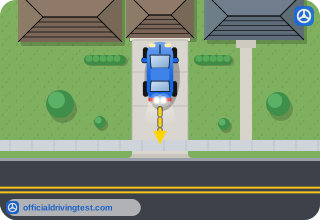
- In the direction the rear of the vehicle should move
- In the direction the front of the vehicle should move
- Away from the side you are backing toward
- Straight ahead, until the vehicle stops
Show answer
Correct answer: In the direction the rear of the vehicle should move
You steer slightly toward the direction the rear of the vehicle should go.
Source: South Carolina Driver's Manual (2026 (posted April 2026)), page 5-6 · Open this page in the manual (Manual page 5-6)
-
If you are backing up while turning, what should you do?
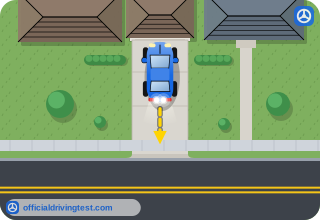
- Make quick checks to the front and sides
- Keep your eyes on the rear window only
- Stop and use only your mirrors
- Look only at the dashboard gauges
Show answer
Correct answer: Make quick checks to the front and sides
While backing in a turn you make quick checks to the front and sides.
Source: South Carolina Driver's Manual (2026 (posted April 2026)), page 5-6 · Open this page in the manual (Manual page 5-6)
-
How long should you continue looking to the rear when backing up?
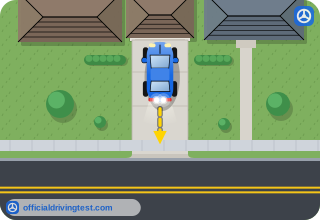
- Until the vehicle starts to move
- Until you have backed up one car length
- Until you come to a complete stop
- Until the rear wheels are straight
Show answer
Correct answer: Until you come to a complete stop
You keep looking to the rear until the vehicle has come to a complete stop.
Source: South Carolina Driver's Manual (2026 (posted April 2026)), page 5-6 · Open this page in the manual (Manual page 5-6)
-
It is your responsibility to do what regarding other roadway users?
- Make your vehicle visible to them
- Predict their movements before they act
- Guide them through intersections
- Leave the road when they approach
Show answer
Correct answer: Make your vehicle visible to them
The manual says it is your responsibility to make your vehicle visible to other roadway users.
Source: South Carolina Driver's Manual (2026 (posted April 2026)), page 8-8 · Open this page in the manual (Manual page 8-8)
-
On rainy, snowy, or foggy days, what should you do with your headlights?

- Use your high beams and keep your speed
- Use only your parking lights and slow down
- Turn them off to prevent glare and slow down
- Use your low-beam lights and slow down
Show answer
Correct answer: Use your low-beam lights and slow down
On rainy, snowy or foggy days the manual says to use low-beam lights and slow down.
Source: South Carolina Driver's Manual (2026 (posted April 2026)), page 8-8 · Open this page in the manual (Manual page 8-8)
-
Which of these is a time when turning on your headlights is especially important?
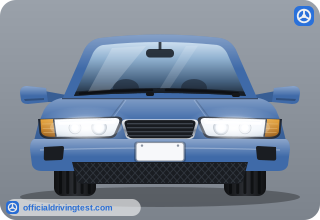
- When driving at noon in clear, dry weather
- When it begins to get dark
- When your vehicle is parked beside a building
- When you are in a parking space in daylight
Show answer
Correct answer: When it begins to get dark
Headlights help others see you, especially when it begins to get dark.
Source: South Carolina Driver's Manual (2026 (posted April 2026)), page 8-8 · Open this page in the manual (Manual page 8-8)
-
When is turning on your headlights especially important, besides bad weather and dusk?
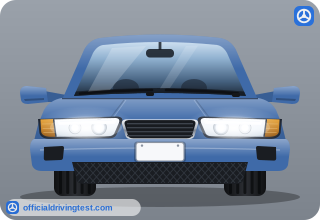
- When driving away from a rising or setting sun
- When driving at midday with the sun directly overhead
- When driving in light traffic on a dry, clear day
- When driving on a road with no curves or hills
Show answer
Correct answer: When driving away from a rising or setting sun
The manual lists driving away from a rising or setting sun as a time when headlights especially help others see you.
Source: South Carolina Driver's Manual (2026 (posted April 2026)), page 8-8 · Open this page in the manual (Manual page 8-8)
-
Under normal circumstances, how much horn use should be all that is needed?
- One long blast held until the other driver responds
- Two short blasts followed by one long blast
- A light tap on the horn
- Repeated taps until the other driver looks at you
Show answer
Correct answer: A light tap on the horn
A light tap on the horn should be all that is needed under normal circumstances.
Source: South Carolina Driver's Manual (2026 (posted April 2026)), page 8-8 · Open this page in the manual (Manual page 8-8)
-
Which driver might you give a light tap on the horn?
- One who is traveling at the speed limit ahead of you
- One who is not paying attention or may have trouble seeing you
- One who is waiting behind you at a red light
- One who is driving slowly in the right lane
Show answer
Correct answer: One who is not paying attention or may have trouble seeing you
A light tap can get the attention of a driver who is inattentive or may not see you.
Source: South Carolina Driver's Manual (2026 (posted April 2026)), page 8-9 · Open this page in the manual (Manual page 8-9)
-
While passing another vehicle, when may you want to give a light tap on the horn?
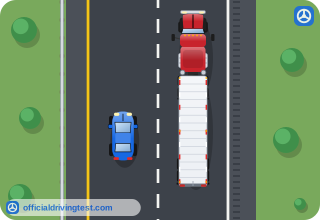
- When that driver is signaling a turn away from your lane
- When that driver is traveling at a steady speed
- When that driver is already well behind you
- When that driver starts to turn into your lane
Show answer
Correct answer: When that driver starts to turn into your lane
A light tap warns a driver who begins to turn into your lane while you pass.
Source: South Carolina Driver's Manual (2026 (posted April 2026)), page 8-9 · Open this page in the manual (Manual page 8-9)
-
Which of these may call for a light tap on the horn?
- A pedestrian who is waiting on the sidewalk
- A bicyclist riding in the same direction far ahead
- Pedestrians or bicyclists who appear to be moving into your lane
- Another driver who is signaling a turn at an intersection
Show answer
Correct answer: Pedestrians or bicyclists who appear to be moving into your lane
A light tap can warn pedestrians or bicyclists who appear to be moving into your lane of travel.
Source: South Carolina Driver's Manual (2026 (posted April 2026)), page 8-9 · Open this page in the manual (Manual page 8-9)
-
Why should you use your horn only when you need to communicate with other road users?
- Using it inappropriately could scare or anger another road user
- Using it too often can weaken the horn and drain the vehicle battery
- A horn sounded in traffic may be mistaken for an emergency siren
- Other drivers are not required to respond to a horn
Show answer
Correct answer: Using it inappropriately could scare or anger another road user
The manual says an inappropriate horn blast could scare or anger another road user.
Source: South Carolina Driver's Manual (2026 (posted April 2026)), page 8-9 · Open this page in the manual (Manual page 8-9)
-
When should you not use your horn?
- When a driver is not paying attention to you
- When you are passing a driver who starts to turn into your lane
- When you are in heavy traffic during daylight hours
- When you are near blind pedestrians
Show answer
Correct answer: When you are near blind pedestrians
The manual says you should not use your horn when near blind pedestrians.
Source: South Carolina Driver's Manual (2026 (posted April 2026)), page 8-9 · Open this page in the manual (Manual page 8-9)
-
Under state law, how far before changing lanes, turning, or merging into traffic must you use a turn signal?
- 25 feet or more
- 100 feet or more
- 50 feet or more
- 150 feet or more
Show answer
Correct answer: 100 feet or more
It is state law to signal 100 feet or more before changing lanes, turning left or right, or merging into traffic.
Source: South Carolina Driver's Manual (2026 (posted April 2026)), page 8-9 · Open this page in the manual (Manual page 8-9)
-
Why should you cancel your turn signal once your action is completed?
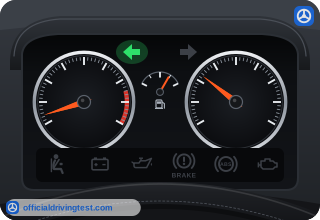
- To avoid confusing other drivers
- To keep the signal lever from sticking
- To save the turn signal bulbs from wear
- To reset the brake lights for the next turn
Show answer
Correct answer: To avoid confusing other drivers
A signal left on after your turn or lane change can confuse other drivers.
Source: South Carolina Driver's Manual (2026 (posted April 2026)), page 8-9 · Open this page in the manual (Manual page 8-9)
-
What do brake lights let other roadway users know?
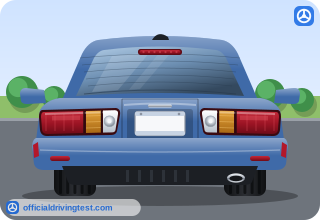
- That the driver ahead is about to change lanes
- That the vehicle ahead is about to turn left
- That the vehicle in front is slowing down
- That the driver ahead is about to accelerate
Show answer
Correct answer: That the vehicle in front is slowing down
Brake lights tell other roadway users that the vehicle in front is slowing down.
Source: South Carolina Driver's Manual (2026 (posted April 2026)), page 8-10 · Open this page in the manual (Manual page 8-10)
-
Which of these is a time to signal before reducing speed?
- Driving straight at a steady speed on a road with light traffic
- Turning off a roadway that does not have separate turning or exiting lanes
- Accelerating away from a stop sign onto an empty roadway
- Continuing in your lane through a green light
Show answer
Correct answer: Turning off a roadway that does not have separate turning or exiting lanes
You should signal before slowing when you turn off a roadway that has no separate turning or exiting lanes.
Source: South Carolina Driver's Manual (2026 (posted April 2026)), page 8-10 · Open this page in the manual (Manual page 8-10)
-
Which of these is a time to signal before you reduce speed?
- Driving straight at a steady speed on an open road
- Following a slower car in your own lane
- Continuing in your lane through a green light
- Parking or turning before an intersection
Show answer
Correct answer: Parking or turning before an intersection
Signal before slowing when you are parking or turning before an intersection.
Source: South Carolina Driver's Manual (2026 (posted April 2026)), page 8-10 · Open this page in the manual (Manual page 8-10)
-
How far can you see with high beams compared with low beams?
- Twice as far
- Half as far
- One and a half times as far
- Three times as far
Show answer
Correct answer: Twice as far
High beams light the road about twice as far ahead as low beams do.
Source: South Carolina Driver's Manual (2026 (posted April 2026)), page 11-1 · Open this page in the manual (Manual page 11-1)
-
At night, when should you use your high beams?
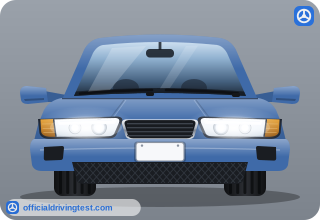
- Whenever you are following another vehicle
- Whenever it is foggy, rainy, or snowy
- Whenever there are no oncoming vehicles
- Only when you are driving on a freeway
Show answer
Correct answer: Whenever there are no oncoming vehicles
Use your high beams whenever there are no oncoming vehicles; they let you see twice as far as low beams.
Source: South Carolina Driver's Manual (2026 (posted April 2026)), page 11-1 · Open this page in the manual (Manual page 11-1)
-
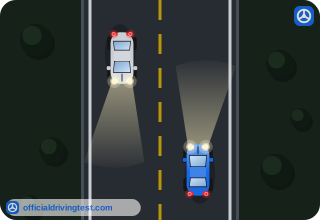
At about what distance from an oncoming vehicle should you dim your high beams?
- 100 feet
- 500 feet or more
- 200 feet
- 50 feet
Show answer
Correct answer: 500 feet or more
You should dim your high beams when you are 500 feet or more away from any oncoming vehicle.
Source: South Carolina Driver's Manual (2026 (posted April 2026)), page 11-1 · Open this page in the manual (Manual page 11-1)
-
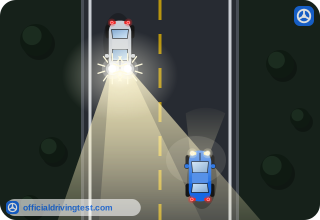
If an oncoming vehicle has its high beams on, where should you glance to avoid being blinded?
- Toward the left side of the road
- Directly at the oncoming headlights
- Down at your dashboard
- Toward the right side of the road
Show answer
Correct answer: Toward the right side of the road
Looking toward the right side of the road keeps you from being distracted or briefly blinded by the oncoming headlights.
Source: South Carolina Driver's Manual (2026 (posted April 2026)), page 11-1 · Open this page in the manual (Manual page 11-1)
-
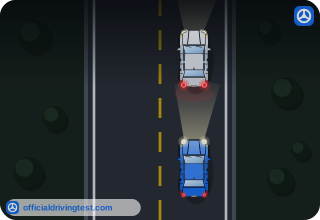
Which headlights should you use when following another vehicle that is less than 200 feet in front of you?
- High beams
- Parking lights only
- Hazard flashers
- Low beams
Show answer
Correct answer: Low beams
Use your low beams when the vehicle you are following is less than 200 feet ahead.
Source: South Carolina Driver's Manual (2026 (posted April 2026)), page 11-2 · Open this page in the manual (Manual page 11-2)
-
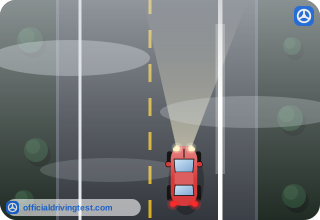
Which headlight setting should you use in fog, rain, or snow?
- High beams
- Low beams
- Parking lights only
- Headlights turned off
Show answer
Correct answer: Low beams
Light from high beams can cause glare and make it harder to see ahead in fog, rain, or snow.
Source: South Carolina Driver's Manual (2026 (posted April 2026)), page 11-2 · Open this page in the manual (Manual page 11-2)
-
At night, what should you look for well ahead of your headlight beams?
- Bright reflections beside the road
- Lane markings only
- Dark shapes on the roadway
- Fog lights on other vehicles
Show answer
Correct answer: Dark shapes on the roadway
Searching well beyond your headlight beams for dark shapes on the road helps you spot hazards early.
Source: South Carolina Driver's Manual (2026 (posted April 2026)), page 11-2 · Open this page in the manual (Manual page 11-2)
-
Why should you glance occasionally to the right and left when driving at night?
- To find the pavement edge and hazards from the sides
- To confirm that your headlights are properly aimed
- To rest your eyes from the glare of the road ahead
- To look for street signs before you reach them
Show answer
Correct answer: To find the pavement edge and hazards from the sides
Glancing to each side shows where the edge of the pavement is and any hazards that may come from the sides.
Source: South Carolina Driver's Manual (2026 (posted April 2026)), page 11-2 · Open this page in the manual (Manual page 11-2)
-
What should you do about sunglasses or colored lenses when driving at night or on overcast days?
- Do not wear them, because tinted lenses reduce your vision
- Wear them to reduce the glare of oncoming headlights
- Wear them only if they are lightly tinted
- Wear them only on overcast days
Show answer
Correct answer: Do not wear them, because tinted lenses reduce your vision
Tinted or colored lenses reduce your vision, so you should not wear them at night or on overcast days.
Source: South Carolina Driver's Manual (2026 (posted April 2026)), page 11-2 · Open this page in the manual (Manual page 11-2)
-
When you begin to hook up a trailer, what should you do?
- Finish the process before doing anything else
- Pause to do other tasks and finish it later
- Hook up quickly and check the connection at the next stop
- Check the connection only after the first mile
Show answer
Correct answer: Finish the process before doing anything else
You should not pause or stop to do something else; always finish the hookup first.
Source: South Carolina Driver's Manual (2026 (posted April 2026)), page 11-9 · Open this page in the manual (Manual page 11-9)
-
Before leaving, what should you check when connecting a trailer?
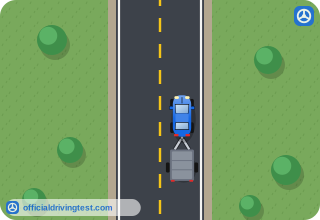
- That your side mirrors are folded in tightly
- That the gas tank is at least half full
- That the coupler and hitch-ball are connected
- That the trailer plate is clean and visible
Show answer
Correct answer: That the coupler and hitch-ball are connected
Before leaving you check that the coupler and hitch-ball are properly connected.
Source: South Carolina Driver's Manual (2026 (posted April 2026)), page 11-9 · Open this page in the manual (Manual page 11-9)
-
What should your vehicle be equipped with when towing a trailer?
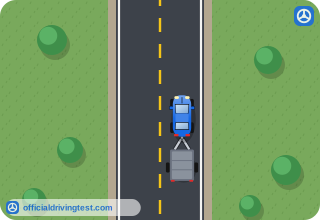
- A rear camera mounted on the trailer
- Clean, undamaged mirrors on both sides
- Tinted side windows to reduce glare
- A mirror on the driver side only
Show answer
Correct answer: Clean, undamaged mirrors on both sides
Dirty or inadequate side mirrors restrict what you can see behind you.
Source: South Carolina Driver's Manual (2026 (posted April 2026)), page 11-9 · Open this page in the manual (Manual page 11-9)
-
How should a trailer be loaded?
- Heavier in the back
- Heavier on one side
- Evenly front to back
- Heavier in the front
Show answer
Correct answer: Heavier in the front
Trailers must be loaded heavier in the front.
Source: South Carolina Driver's Manual (2026 (posted April 2026)), page 11-10 · Open this page in the manual (Manual page 11-10)
-
What does loading heavier items in the front of a trailer reduce?
- Fuel use
- Tire wear
- The need for safety chains
- The possibility of sway
Show answer
Correct answer: The possibility of sway
Heavier loading in front reduces the chance that the trailer sways.
Source: South Carolina Driver's Manual (2026 (posted April 2026)), page 11-10 · Open this page in the manual (Manual page 11-10)
-
What share of a trailer's cargo weight should go in the front, nearest the towing vehicle?
- Fifty percent
- Sixty percent
- Forty percent
- Seventy-five percent
Show answer
Correct answer: Sixty percent
Sixty percent of the cargo weight goes in the front and 40 percent in the back.
Source: South Carolina Driver's Manual (2026 (posted April 2026)), page 11-10 · Open this page in the manual (Manual page 11-10)
-
Where should you keep heavy items in a trailer?
- On the floor of the trailer
- Packed on top of other items
- Hanging from the trailer roof
- Against the rear door
Show answer
Correct answer: On the floor of the trailer
Heavy items belong on the floor, not packed on top of other items.
Source: South Carolina Driver's Manual (2026 (posted April 2026)), page 11-11 · Open this page in the manual (Manual page 11-11)
-
How should you secure partial loads in a trailer?
- With a single rope tied around the hitch
- By leaving them loose to absorb bumps
- With tiedowns or straps and packing material
- By placing them against the rear door
Show answer
Correct answer: With tiedowns or straps and packing material
Partial loads are secured with tiedowns or straps and packing material.
Source: South Carolina Driver's Manual (2026 (posted April 2026)), page 11-11 · Open this page in the manual (Manual page 11-11)
-
What can exceeding a trailer manufacturer's maximum gross weight lead to?
- Improved stability when towing downhill
- Damage or failure of the trailer's components
- Longer tire life because of the load
- A shorter distance needed to stop the load
Show answer
Correct answer: Damage or failure of the trailer's components
Overloading a trailer can damage it or make its parts fail.
Source: South Carolina Driver's Manual (2026 (posted April 2026)), page 11-11 · Open this page in the manual (Manual page 11-11)
-
When backing up a trailer, where should you keep your hand on the steering wheel?
- At the top of the wheel
- At the bottom of the wheel
- At the left side only
- On the center of the wheel
Show answer
Correct answer: At the bottom of the wheel
You keep your hand at the bottom of the steering wheel.
Source: South Carolina Driver's Manual (2026 (posted April 2026)), page 11-12 · Open this page in the manual (Manual page 11-12)
-
When backing a trailer, which way should you move your hand to move the trailer to the left?
- Move your hand to the right
- Keep your hand still and use the mirrors only
- Move your hand to the left
- Move your hand toward the top of the wheel
Show answer
Correct answer: Move your hand to the left
The trailer follows your hand: left moves it left and right moves it right.
Source: South Carolina Driver's Manual (2026 (posted April 2026)), page 11-12 · Open this page in the manual (Manual page 11-12)
-
If you are unsure how to hook up, load, or drive with a trailer, what should you do?
- Seek advice from a trailer professional
- Practice at highway speed to learn faster
- Hook up without a safety chain to save time
- Tow only at night when traffic is light
Show answer
Correct answer: Seek advice from a trailer professional
The manual says to seek advice from a trailer professional.
Source: South Carolina Driver's Manual (2026 (posted April 2026)), page 11-12 · Open this page in the manual (Manual page 11-12)
-
What should you recognize when you tow a trailer?
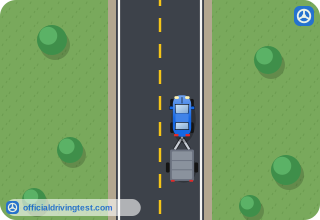
- You may drive as you would without a trailer
- A trailer handles the same as the tow vehicle
- You are driving a vehicle-trailer combination
- Only the trailer needs to be inspected
Show answer
Correct answer: You are driving a vehicle-trailer combination
You are no longer driving just a vehicle but a vehicle-trailer combination.
Source: South Carolina Driver's Manual (2026 (posted April 2026)), page 11-12 · Open this page in the manual (Manual page 11-12)
-
When should you walk around the vehicle-trailer combination to recheck it?
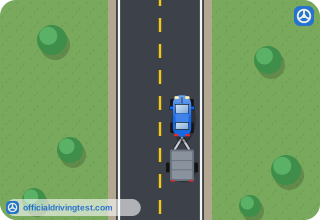
- Only once at the beginning of the day
- Before driving and at each fuel stop
- Only when you hear an unusual noise
- Only when the trailer is fully loaded
Show answer
Correct answer: Before driving and at each fuel stop
You walk around the combination before driving and at each fuel stop to recheck it.
Source: South Carolina Driver's Manual (2026 (posted April 2026)), page 11-12 · Open this page in the manual (Manual page 11-12)
-
Which of these should you recheck when you walk around the vehicle-trailer combination?
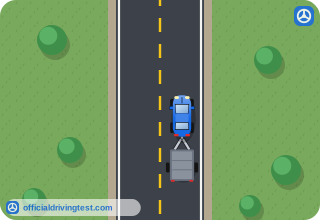
- Brake fluid level
- Windshield washer fluid
- Wiper blade condition
- Hitch and coupler tightness
Show answer
Correct answer: Hitch and coupler tightness
The recheck covers the hitch and coupler tightness, safety chains, lights, and tire pressures.
Source: South Carolina Driver's Manual (2026 (posted April 2026)), page 11-12 · Open this page in the manual (Manual page 11-12)
-
On a long trip with a trailer, what should you do instead of driving straight through?
- Drive through the night to arrive early
- Plan a rest stop to drive rested and in daylight
- Stop only when the fuel gauge is low
- Drive at a faster pace to shorten the trip
Show answer
Correct answer: Plan a rest stop to drive rested and in daylight
You plan a rest stop so you can drive in daylight while rested and alert.
Source: South Carolina Driver's Manual (2026 (posted April 2026)), page 11-13 · Open this page in the manual (Manual page 11-13)