South Carolina: Signals and vehicle controls — Part 1 Practice Test
Checking tires, lights and mirrors, adjusting the seat and mirrors, steering methods, backing, driver assistance systems, turn signals, the horn and headlights. — Part 1
Independent educational site · not affiliated with any government agency or DMV
Ready? Test yourself
- Instant feedback with an explanation
- Every answer cites its source in the manual
- Your best score is saved on this device
- Keyboard: press 1 to 4 to answer and Enter for the next question
Questions are original and based on the official manual "South Carolina Driver's Manual" (2026 (posted April 2026)), South Carolina Department of Motor Vehicles.
All 20 questions in this practice test
Take the test above first, then use this list to study. Tap “Show answer” to see the correct answer and explanation.
Show the questions and answersHide the questions
-
How often does the manual say to check your tire pressure with a pressure gauge?
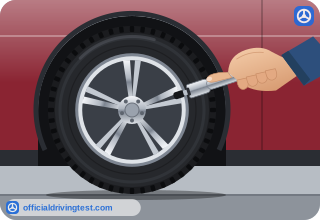
- Monthly
- Weekly
- Every six months
- Once a year
Show answer
Correct answer: Monthly
The manual tells drivers to check tire pressure with a gauge every month.
Source: South Carolina Driver's Manual (2026 (posted April 2026)), page 4-1 · Open this page in the manual (Manual page 4-1)
-
Where do you find the PSI number your tire pressure should match?
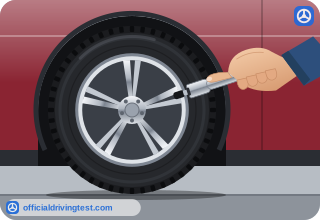
- On the inside of the glove box door
- On the engine cover under the hood
- On a sticker on the inside doorframe
- On the vehicle registration card
Show answer
Correct answer: On a sticker on the inside doorframe
The manual says to open the vehicle door and note the PSI number on the sticker on the inside doorframe.
Source: South Carolina Driver's Manual (2026 (posted April 2026)), page 4-1 · Open this page in the manual (Manual page 4-1)
-
What does PSI mean when it is used for tire pressure?
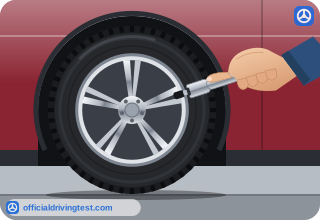
- Pressure per Standard Inflation
- Pounds per Square Inch
- Pounds per Safe Inflation
- Pressure per Square Inch
Show answer
Correct answer: Pounds per Square Inch
PSI stands for Pounds per Square Inch, the measurement for tire pressure.
Source: South Carolina Driver's Manual (2026 (posted April 2026)), page 4-2 · Open this page in the manual (Manual page 4-2)
-
When should you check the pressure of your tires?
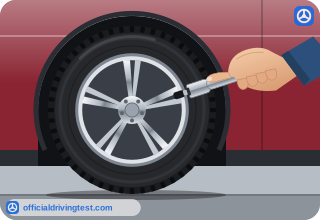
- Right after a long highway drive
- When the tires are warm from driving
- Just after the vehicle has been washed
- When the tires are cold
Show answer
Correct answer: When the tires are cold
The manual says to make sure you check the pressure when the tires are cold.
Source: South Carolina Driver's Manual (2026 (posted April 2026)), page 4-2 · Open this page in the manual (Manual page 4-2)
-
Your pressure gauge reads higher than the PSI number on the doorframe sticker. What should you do?
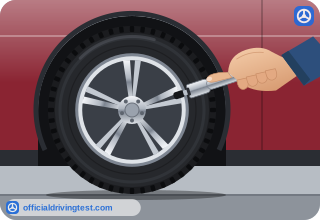
- Let air out of your tires
- Inflate the tires until the numbers match
- Drive until the tires warm up, then check again
- Replace the tires with new ones
Show answer
Correct answer: Let air out of your tires
A reading higher than the doorframe number means the tires are over-inflated, so the manual says to let air out.
Source: South Carolina Driver's Manual (2026 (posted April 2026)), page 4-2 · Open this page in the manual (Manual page 4-2)
-
Your pressure gauge reads lower than the PSI number on the doorframe sticker. What should you do?
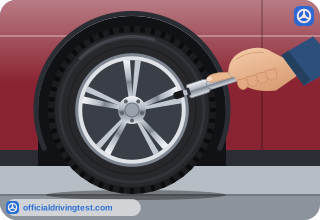
- Let some air out of the tires
- Leave the tires as they are
- Inflate the tires until the numbers match
- Press the gauge on the valve stem again until it reads higher
Show answer
Correct answer: Inflate the tires until the numbers match
When the gauge number is lower than the doorframe number, you add air until the two numbers match.
Source: South Carolina Driver's Manual (2026 (posted April 2026)), page 4-2 · Open this page in the manual (Manual page 4-2)
-
How do you get an accurate reading with a tire pressure gauge?
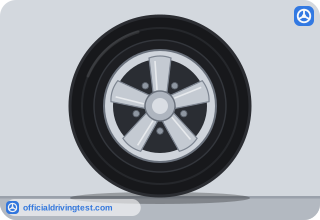
- Press the gauge firmly against the tire sidewall
- Remove the cap and press the gauge evenly onto the valve stem
- Hold the gauge against the tread of the tire
- Unscrew the valve stem and insert the gauge into the tire
Show answer
Correct answer: Remove the cap and press the gauge evenly onto the valve stem
The gauge is pressed evenly onto the valve stem after the cap is removed.
Source: South Carolina Driver's Manual (2026 (posted April 2026)), page 4-2 · Open this page in the manual (Manual page 4-2)
-
In the penny test for tread depth, how is the penny placed in the tire groove?
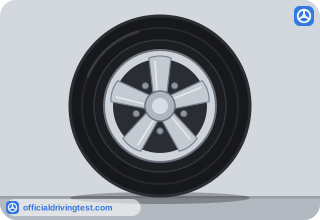
- Lincoln’s head going first into the shallowest groove
- Lincoln’s body going first into the deepest-looking groove
- Flat against the side of the tire
- Lincoln’s head going first into the deepest-looking groove
Show answer
Correct answer: Lincoln’s head going first into the deepest-looking groove
The penny goes into the deepest-looking groove with Lincoln’s head going first.
Source: South Carolina Driver's Manual (2026 (posted April 2026)), page 4-2 · Open this page in the manual (Manual page 4-2)
-
In the penny test, you can see all of Lincoln’s head. What does this mean?
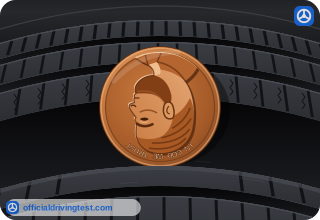
- The tires are too worn and should be replaced
- The tires still have enough tread to keep using
- The tires are over-inflated and need air let out
- The tires need more air before the next drive
Show answer
Correct answer: The tires are too worn and should be replaced
If all of his head shows, the tread is too worn, so you should not drive on the tires and should get them replaced.
Source: South Carolina Driver's Manual (2026 (posted April 2026)), page 4-3 · Open this page in the manual (Manual page 4-3)
-
How should you sit when you drive?
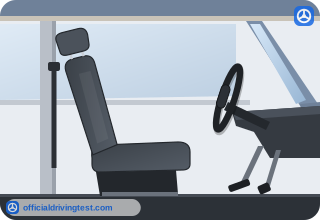
- Slightly reclined, with your arms stretched out toward the wheel
- Leaning forward, with your chest close to the steering wheel
- Upright, with your back against the seat and feet on the floor
- Slouched down, with your feet resting on the pedals only
Show answer
Correct answer: Upright, with your back against the seat and feet on the floor
The manual says to sit upright with your back against the seat and your feet on the floor.
Source: South Carolina Driver's Manual (2026 (posted April 2026)), page 4-3 · Open this page in the manual (Manual page 4-3)
-
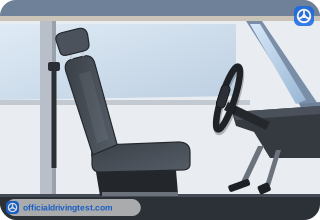
What can an improper seating position, such as slouching, result in?
- Faster response when you brake in an emergency
- Reduced effectiveness of the vehicle’s restraint system
- A better view of the road ahead of the vehicle
- Less strain on your neck and shoulders on long trips
Show answer
Correct answer: Reduced effectiveness of the vehicle’s restraint system
Slouching can make the vehicle’s restraint system work less well.
Source: South Carolina Driver's Manual (2026 (posted April 2026)), page 4-3 · Open this page in the manual (Manual page 4-3)
-
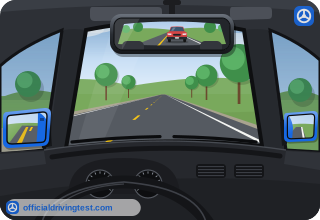
What does adjusting your seat and mirrors before you start to drive let you do?
- Drive without checking your blind spots over your shoulder
- Keep your eyes off the road for longer periods of time
- Stay awake on long trips without any rest stops
- See clearly and have full control of the pedals and steering wheel
Show answer
Correct answer: See clearly and have full control of the pedals and steering wheel
Adjusting first lets you see clearly and control the pedals and steering wheel.
Source: South Carolina Driver's Manual (2026 (posted April 2026)), page 4-3 · Open this page in the manual (Manual page 4-3)
-
When your seat is adjusted correctly, your foot should pivot smoothly from the brake to the accelerator while which part stays on the floor?
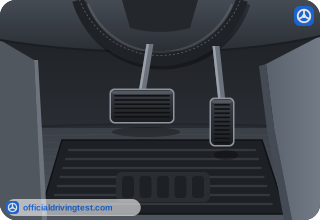
- Your heel
- Your toes
- The ball of your foot
- The side of your foot
Show answer
Correct answer: Your heel
The manual says the heel stays on the floor while the foot pivots between the pedals.
Source: South Carolina Driver's Manual (2026 (posted April 2026)), page 4-3 · Open this page in the manual (Manual page 4-3)
-
How high may the top of the steering wheel be, compared with your body?
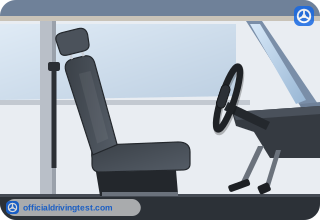
- No higher than the top of your head
- No higher than the middle of your chest
- No higher than the top of your shoulders
- No higher than your elbows
Show answer
Correct answer: No higher than the top of your shoulders
The top of the wheel should be no higher than the top of your shoulders.
Source: South Carolina Driver's Manual (2026 (posted April 2026)), page 4-3 · Open this page in the manual (Manual page 4-3)
-
How much space should there be between your chest and the steering wheel?
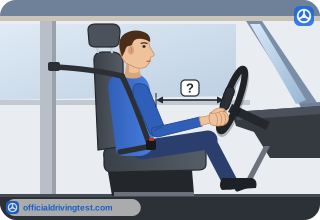
- At least 4 inches
- At least 10 inches
- At least 6 inches
- At least 15 inches
Show answer
Correct answer: At least 10 inches
The manual says to leave at least 10 inches between your chest and the wheel.
Source: South Carolina Driver's Manual (2026 (posted April 2026)), page 4-3 · Open this page in the manual (Manual page 4-3)
-
Which of these should you avoid when you adjust your seat?
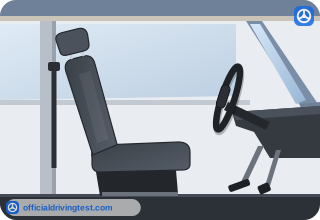
- Resting your back against the seat
- Keeping your heel on the floor
- Sitting upright
- Reclining the seat
Show answer
Correct answer: Reclining the seat
The manual says not to recline the seat or move it so far forward that you cannot easily steer.
Source: South Carolina Driver's Manual (2026 (posted April 2026)), page 4-3 · Open this page in the manual (Manual page 4-3)
-
What are head restraints designed to prevent?
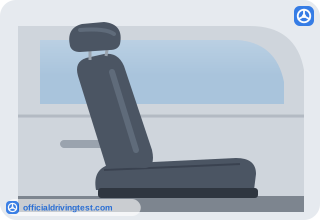
- Whiplash
- Blind spots
- Hydroplaning
- Glare
Show answer
Correct answer: Whiplash
Head restraints are designed to prevent whiplash.
Source: South Carolina Driver's Manual (2026 (posted April 2026)), page 4-3 · Open this page in the manual (Manual page 4-3)
-
How should a head restraint be adjusted?
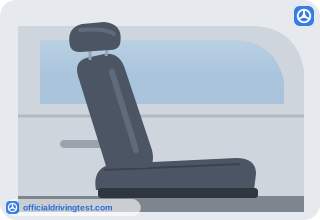
- It sits several inches behind your head, level with your shoulders
- It contacts the back of your neck, below the level of your ears
- It contacts the back of your head and is not below the level of your ears
- It is folded flat so that it does not touch your head
Show answer
Correct answer: It contacts the back of your head and is not below the level of your ears
The head restraint should touch the back of your head and not sit below ear level.
Source: South Carolina Driver's Manual (2026 (posted April 2026)), page 4-3 · Open this page in the manual (Manual page 4-3)
-
Which mirror is the primary mirror used to view the rear?
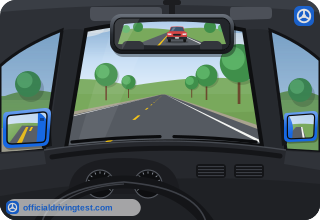
- The left outside mirror
- The rearview mirror on the windshield
- The right outside mirror
- A small mirror on the dashboard
Show answer
Correct answer: The rearview mirror on the windshield
The manual calls the interior rearview mirror on the windshield the primary mirror for viewing the rear.
Source: South Carolina Driver's Manual (2026 (posted April 2026)), page 4-3 · Open this page in the manual (Manual page 4-3)
-
How should you adjust your rearview mirror?
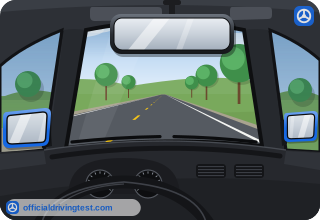
- So that it shows only the lane on your right
- So that it shows the back seat and your own head
- So that it points down at the road behind the bumper
- So that it frames the rear window
Show answer
Correct answer: So that it frames the rear window
The rearview mirror should frame the rear window so you can see traffic flow to the rear.
Source: South Carolina Driver's Manual (2026 (posted April 2026)), page 4-4 · Open this page in the manual (Manual page 4-4)