South Carolina: Right-of-way and turning — Part 5 Practice Test
Questions in this part include: “On multi-lane roads, which lane is to be used for passing slower vehicles?” · “When you are being passed, where should you stay?”
Independent educational site · not affiliated with any government agency or DMV
Ready? Test yourself
- Instant feedback with an explanation
- Every answer cites its source in the manual
- Your best score is saved on this device
- Keyboard: press 1 to 4 to answer and Enter for the next question
Questions are original and based on the official manual "South Carolina Driver's Manual" (2026 (posted April 2026)), South Carolina Department of Motor Vehicles.
All 16 questions in this practice test
Take the test above first, then use this list to study. Tap “Show answer” to see the correct answer and explanation.
Show the questions and answersHide the questions
-
On multi-lane roads, which lane is to be used for passing slower vehicles?
- The right-most lane
- The left-most lane
- The center lane only
- The shoulder
Show answer
Correct answer: The left-most lane
On multi-lane roads the left-most lane is the one to use for passing slower vehicles.
Source: South Carolina Driver's Manual (2026 (posted April 2026)), page 7-15 · Open this page in the manual (Manual page 7-15)
-
When may you pass another vehicle on the shoulder?
- Only when the shoulder is paved and wide enough
- Only when traffic ahead of you is stopped
- Only when you have signaled and checked your mirrors
- Never, whether the shoulder is paved or not
Show answer
Correct answer: Never, whether the shoulder is paved or not
The manual says never to pass on the shoulder, paved or not.
Source: South Carolina Driver's Manual (2026 (posted April 2026)), page 7-15 · Open this page in the manual (Manual page 7-15)
-
How does the manual describe the shoulder?
- A hard surface on the right side of the roadway used as an emergency stopping lane
- A lane reserved for vehicles that are passing slower traffic on the left
- A hard surface on the left side of the roadway used by slow-moving and stopped traffic
- A lane used for through traffic whenever the main lanes are crowded
Show answer
Correct answer: A hard surface on the right side of the roadway used as an emergency stopping lane
The shoulder is a hard surface on the right side that serves as an emergency stopping lane, not for through traffic.
Source: South Carolina Driver's Manual (2026 (posted April 2026)), page 7-15 · Open this page in the manual (Manual page 7-15)
-
Why should you pass another vehicle as quickly and safely as possible?
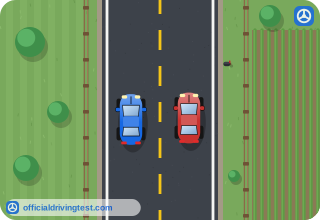
- Passing slowly burns more fuel and wears out your brakes and tires sooner
- Passing slowly lets the other driver speed up and block you
- The longer you stay alongside, the longer you may be in its blind spot
- A longer pass makes the other driver miss your turn signal
Show answer
Correct answer: The longer you stay alongside, the longer you may be in its blind spot
Staying beside another vehicle keeps you in its blind spot, where a driver moving toward your lane may not see you.
Source: South Carolina Driver's Manual (2026 (posted April 2026)), page 7-15 · Open this page in the manual (Manual page 7-15)
-
How far before passing should you signal your intentions when it is safe to pass?
- 25 feet
- 100 feet or more
- 50 feet
- 200 feet
Show answer
Correct answer: 100 feet or more
You signal at least 100 feet before you pass.
Source: South Carolina Driver's Manual (2026 (posted April 2026)), page 7-16 · Open this page in the manual (Manual page 7-16)
-
While passing, how long do you continue to pass before returning to your lane?
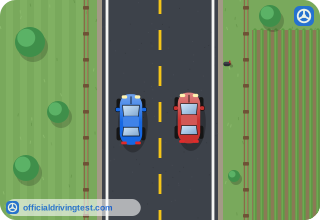
- Until you are at least one full car length ahead of the other vehicle in the lane
- Until the passed vehicle slows down
- Until you see the other vehicle's headlights in your side mirror
- Until the complete front of the passed vehicle is in your rearview mirror
Show answer
Correct answer: Until the complete front of the passed vehicle is in your rearview mirror
You keep passing until you can see the complete front of the passed vehicle in your rearview mirror, then signal and return.
Source: South Carolina Driver's Manual (2026 (posted April 2026)), page 7-16 · Open this page in the manual (Manual page 7-16)
-
What should you do when another driver is passing you?
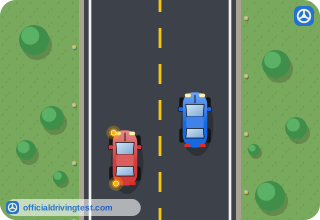
- Maintain a constant speed to allow the driver to pass
- Speed up so the pass is over as quickly as possible
- Slow down sharply so that the other driver can finish passing you
- Move onto the shoulder to give the driver room
Show answer
Correct answer: Maintain a constant speed to allow the driver to pass
When being passed you maintain a constant speed so the other driver can pass.
Source: South Carolina Driver's Manual (2026 (posted April 2026)), page 7-16 · Open this page in the manual (Manual page 7-16)
-
When you are being passed, where should you stay?
- On the shoulder
- On the center line
- In your lane
- Where the passing driver wants you to be
Show answer
Correct answer: In your lane
The manual says to stay in your lane when being passed.
Source: South Carolina Driver's Manual (2026 (posted April 2026)), page 7-16 · Open this page in the manual (Manual page 7-16)
-
In which situation should you not attempt to pass?
- When the vehicle ahead is traveling slower than you
- When your view is blocked by a curve or a hill
- When you have signaled 100 feet before passing
- When there is a paved shoulder on the right
Show answer
Correct answer: When your view is blocked by a curve or a hill
Do not try to pass when a curve or hill blocks your view.
Source: South Carolina Driver's Manual (2026 (posted April 2026)), page 7-16 · Open this page in the manual (Manual page 7-16)
-
Which is a place where you should not attempt to pass?
- On a multi-lane road in the left-most lane
- On a straight road after a stop sign
- After a school bus has moved away
- Before a highway-railroad crossing or bridge
Show answer
Correct answer: Before a highway-railroad crossing or bridge
The manual says not to attempt to pass at intersections or before a highway-railroad crossing or bridge.
Source: South Carolina Driver's Manual (2026 (posted April 2026)), page 7-16 · Open this page in the manual (Manual page 7-16)
-
Which is a time when you should not attempt to pass?
- While at an intersection
- When no traffic is following you
- When your mirrors are clear
- When the passing lane is on the left
Show answer
Correct answer: While at an intersection
Passing is not to be attempted at intersections.
Source: South Carolina Driver's Manual (2026 (posted April 2026)), page 7-16 · Open this page in the manual (Manual page 7-16)
-
How should you treat bicyclists in intersections?
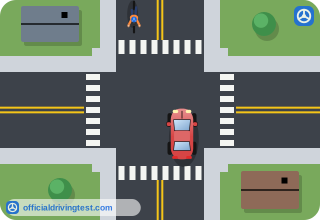
- Yield to them as you would for pedestrians and other vehicles
- Pass them before they enter the intersection
- Expect them to yield to every motor vehicle in the intersection
- Sound your horn so they know you are there
Show answer
Correct answer: Yield to them as you would for pedestrians and other vehicles
Drivers yield to bicyclists in intersections just as they do for pedestrians and other vehicles.
Source: South Carolina Driver's Manual (2026 (posted April 2026)), page 10-3 · Open this page in the manual (Manual page 10-3)
-
A bicyclist is in the intersection where you want to turn. What should you do?
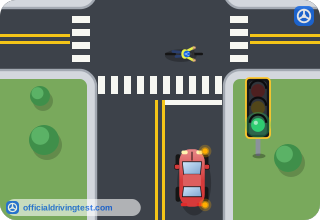
- Slow down and let the cyclist clear the intersection before you turn
- Turn quickly in front of the cyclist before they reach the corner
- Honk and turn at once
- Speed up and turn before the cyclist reaches you
Show answer
Correct answer: Slow down and let the cyclist clear the intersection before you turn
You should slow down and let the cyclist clear the intersection before making your turn.
Source: South Carolina Driver's Manual (2026 (posted April 2026)), page 10-3 · Open this page in the manual (Manual page 10-3)
-
Who generally has the right-of-way at a narrow or single-lane bridge?
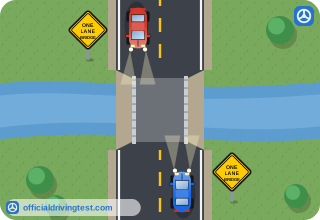
- The first driver to reach the bridge
- The driver in the larger vehicle
- The driver traveling faster
- The driver coming from the right
Show answer
Correct answer: The first driver to reach the bridge
Drivers take turns crossing, and generally the first driver to the bridge goes first.
Source: South Carolina Driver's Manual (2026 (posted April 2026)), page 11-5 · Open this page in the manual (Manual page 11-5)
-
How should you approach an uncontrolled rural intersection?
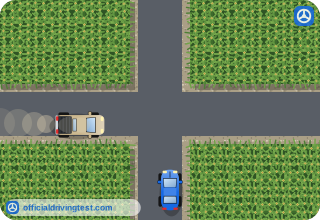
- Maintain your speed, since no sign controls you
- Speed up to clear the intersection quickly
- Sound your horn and continue through
- Slow down and be prepared to stop
Show answer
Correct answer: Slow down and be prepared to stop
With no yield or stop sign, you should slow down and be ready to stop for crossing or oncoming traffic.
Source: South Carolina Driver's Manual (2026 (posted April 2026)), page 11-6 · Open this page in the manual (Manual page 11-6)
-
When making turns while towing, what should you remember about the trailer?
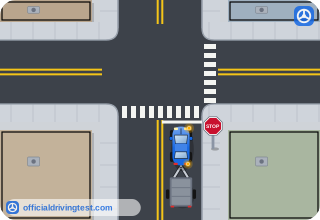
- It follows directly behind your rear wheels
- It needs less room than the car
- It stays within the width of the car's turn
- It may require extra room to turn safely
Show answer
Correct answer: It may require extra room to turn safely
The trailer does not follow directly behind the car and may need extra room to turn.
Source: South Carolina Driver's Manual (2026 (posted April 2026)), page 11-12 · Open this page in the manual (Manual page 11-12)