South Carolina: Right-of-way and turning — Part 1 Practice Test
Questions in this part include: “Which lane should you be in when you are turning?” · “As you finish a turn and accelerate, what should you make sure of?”
Independent educational site · not affiliated with any government agency or DMV
Ready? Test yourself
- Instant feedback with an explanation
- Every answer cites its source in the manual
- Your best score is saved on this device
- Keyboard: press 1 to 4 to answer and Enter for the next question
Questions are original and based on the official manual "South Carolina Driver's Manual" (2026 (posted April 2026)), South Carolina Department of Motor Vehicles.
All 17 questions in this practice test
Take the test above first, then use this list to study. Tap “Show answer” to see the correct answer and explanation.
Show the questions and answersHide the questions
-
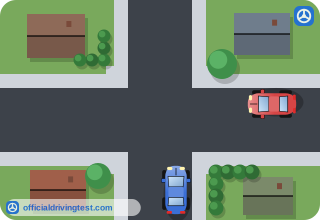
Yielding right-of-way rules are only a guide. What must always be considered at each intersection?
- Only which vehicle is the largest
- Only which driver is traveling faster
- The situation and circumstances there
- Only the posted speed limit on the road
Show answer
Correct answer: The situation and circumstances there
No one should assume they automatically have the right-of-way; the situation and circumstances at each intersection must always be considered.
Source: South Carolina Driver's Manual (2026 (posted April 2026)), page 6-1 · Open this page in the manual (Manual page 6-1)
-
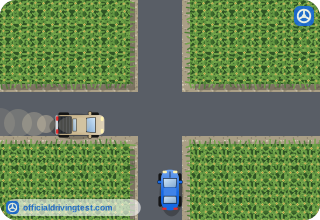
At an intersection, which driver should you yield the right-of-way to?
- The driver who arrives after you do
- The driver who is traveling faster
- The driver in the larger vehicle
- The driver who is at or arrives before you
Show answer
Correct answer: The driver who is at or arrives before you
You yield to the driver who is at or arrives before you at the intersection.
Source: South Carolina Driver's Manual (2026 (posted April 2026)), page 6-1 · Open this page in the manual (Manual page 6-1)
-
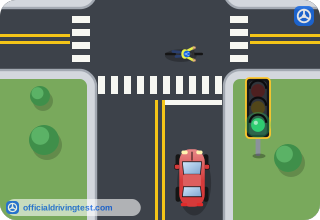
A bicyclist is still in the intersection when you arrive. What should you do?
- Go ahead, because bicycles are small and slow
- Speed up to clear the intersection first
- Honk so the bicyclist moves out of your way
- Yield the right-of-way to the bicyclist
Show answer
Correct answer: Yield the right-of-way to the bicyclist
You yield to pedestrians, bicyclists and other drivers who are still in the intersection.
Source: South Carolina Driver's Manual (2026 (posted April 2026)), page 6-1 · Open this page in the manual (Manual page 6-1)
-
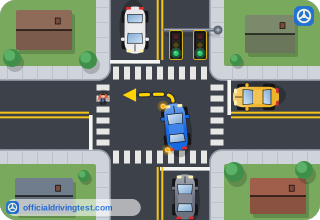
When you are making a left turn, to whom should you yield the right-of-way?
- Drivers behind you in your lane
- Drivers in the opposing traffic lane
- Drivers who are turning right on the cross street
- Drivers who arrive after you at the intersection
Show answer
Correct answer: Drivers in the opposing traffic lane
A driver turning left yields to drivers in the opposing traffic lane.
Source: South Carolina Driver's Manual (2026 (posted April 2026)), page 6-2 · Open this page in the manual (Manual page 6-2)
-
You and another driver arrive at the same time at a four-way intersection controlled by stop signs. Who should yield?
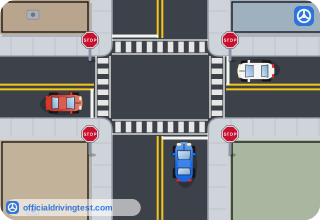
- You should yield to the driver on your left
- You should yield to the driver across from you
- You should yield to the driver on your right
- You should go first and let the other driver wait
Show answer
Correct answer: You should yield to the driver on your right
At a four-way stop, when both arrive together, you yield to the driver on your right.
Source: South Carolina Driver's Manual (2026 (posted April 2026)), page 6-2 · Open this page in the manual (Manual page 6-2)
-
You are entering a public highway from a driveway or a private road. To whom should you yield the right-of-way?
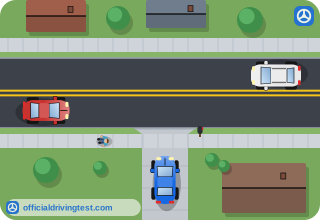
- Drivers on the public highway
- Only drivers coming from your left
- Only drivers who are turning
- No one, because you are already moving
Show answer
Correct answer: Drivers on the public highway
Drivers entering from a driveway or private road yield to drivers already on the public highway.
Source: South Carolina Driver's Manual (2026 (posted April 2026)), page 6-2 · Open this page in the manual (Manual page 6-2)
-
You are on the entrance or acceleration ramp of a limited access or interstate highway. To whom should you yield?
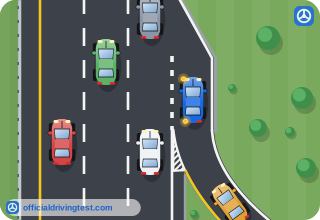
- Drivers already on the highway
- Drivers who are exiting the highway
- Drivers who are following you on the ramp
- No one, because the ramp has the right-of-way
Show answer
Correct answer: Drivers already on the highway
On an entrance or acceleration ramp, you yield to drivers already on the interstate.
Source: South Carolina Driver's Manual (2026 (posted April 2026)), page 6-2 · Open this page in the manual (Manual page 6-2)
-
At a stop sign, what must you look for?
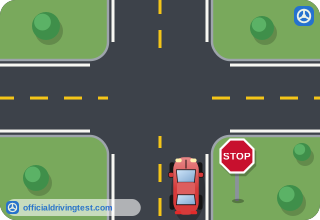
- Only vehicles approaching from the right, and yield only to them
- Only pedestrians already in the crosswalk, and yield only to them
- Only vehicles that are stopped at the stop sign across from you
- Crossing vehicles and pedestrians in all directions, and yield
Show answer
Correct answer: Crossing vehicles and pedestrians in all directions, and yield
At a stop sign you look for crossing vehicles and pedestrians in all directions and yield the right-of-way.
Source: South Carolina Driver's Manual (2026 (posted April 2026)), page 6-10 · Open this page in the manual (Manual page 6-10)
-
What does a yield sign mean?
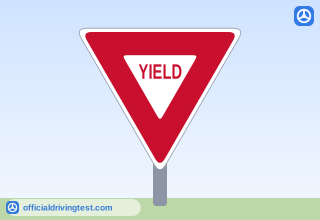
- Stop completely, then go when the way is clear of all other traffic
- Slow down and let traffic that has the right-of-way cross before you enter
- Speed up to merge ahead of cross traffic that is still far away
- Stop only if another vehicle is already stopped at the intersection
Show answer
Correct answer: Slow down and let traffic that has the right-of-way cross before you enter
A yield sign means you slow down and allow traffic with the right-of-way to cross before you enter.
Source: South Carolina Driver's Manual (2026 (posted April 2026)), page 6-10 · Open this page in the manual (Manual page 6-10)
-
When you are about to turn, what should you search all corners for?
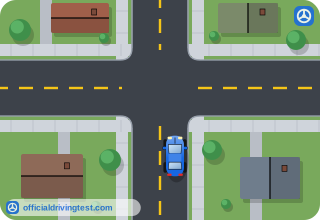
- Traffic controls, pedestrians, and vehicles
- Only vehicles that are following you
- Open parking spaces and side driveways
- Billboards and business signs nearby
Show answer
Correct answer: Traffic controls, pedestrians, and vehicles
Before a turn you should check every corner for traffic controls, pedestrians and other vehicles, and signal what you plan to do.
Source: South Carolina Driver's Manual (2026 (posted April 2026)), page 7-1 · Open this page in the manual (Manual page 7-1)
-
Which lane should you be in when you are turning?
- The lane farthest from the direction you want to turn
- The center lane of the road
- The lane closest to the direction you want to turn
- Whichever lane has the least traffic
Show answer
Correct answer: The lane closest to the direction you want to turn
You should enter and stay in the lane nearest the direction of your turn.
Source: South Carolina Driver's Manual (2026 (posted April 2026)), page 7-1 · Open this page in the manual (Manual page 7-1)
-
While making a turn, where should you direct your gaze?
- Down at the pavement just in front of your bumper
- Through the turn to the farthest point possible
- At the vehicle directly ahead of you only
- At the turn signal indicator on your dashboard
Show answer
Correct answer: Through the turn to the farthest point possible
The manual tells drivers to look through the turn to the farthest point possible along the intended path.
Source: South Carolina Driver's Manual (2026 (posted April 2026)), page 7-1 · Open this page in the manual (Manual page 7-1)
-
As you finish a turn and accelerate, what should you make sure of?
- That your hazard flashers are turned on
- That your headlights are on high beam
- That your horn has been sounded
- That your turn signal has been cancelled
Show answer
Correct answer: That your turn signal has been cancelled
After turning you accelerate smoothly, make sure the turn signal is cancelled, and stay aware of traffic behind you.
Source: South Carolina Driver's Manual (2026 (posted April 2026)), page 7-1 · Open this page in the manual (Manual page 7-1)
-
What should you avoid doing before making a right turn?
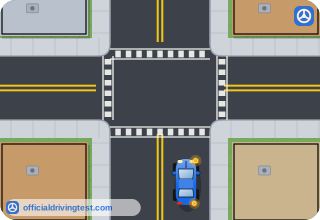
- Swinging wide to the left before the turn
- Signaling your intention to turn right
- Checking for pedestrians at the corner
- Slowing down as you approach the turn
Show answer
Correct answer: Swinging wide to the left before the turn
For a right turn the manual says to avoid swinging wide to the left before making the turn.
Source: South Carolina Driver's Manual (2026 (posted April 2026)), page 7-1 · Open this page in the manual (Manual page 7-1)
-
From which part of your lane should you always make a right turn?
- The center of the lane
- The left-most portion
- The right-most portion
- Any portion with the most room
Show answer
Correct answer: The right-most portion
A right turn is always made from the right-most portion of your lane.
Source: South Carolina Driver's Manual (2026 (posted April 2026)), page 7-2 · Open this page in the manual (Manual page 7-2)
-
When you make a left turn, what must you do about oncoming traffic?
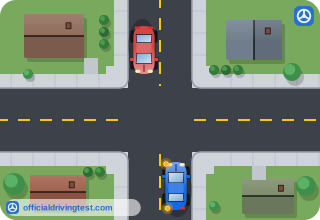
- Go first if you signaled early
- Yield to oncoming traffic
- Speed up to clear the lane first
- Honk and proceed ahead of it
Show answer
Correct answer: Yield to oncoming traffic
A driver turning left must yield to oncoming traffic.
Source: South Carolina Driver's Manual (2026 (posted April 2026)), page 7-2 · Open this page in the manual (Manual page 7-2)
-
From which part of your lane should you always make a left turn?
- The right-most portion of the lane
- The center of the lane
- Whichever part is widest
- The left-most portion
Show answer
Correct answer: The left-most portion
A left turn is always made from the left-most portion of your lane.
Source: South Carolina Driver's Manual (2026 (posted April 2026)), page 7-2 · Open this page in the manual (Manual page 7-2)