South Carolina: Right-of-way and turning
Who yields at intersections, turning and turnabouts, roundabouts and traffic circles, the diverging diamond, changing lanes and passing. Split into 5 shorter tests so you're not stuck in one long quiz.
Independent educational site · not affiliated with any government agency or DMV
Choose a part
Right-of-way and turning — Part 1
Questions in this part include: “Which lane should you be in when you are turning?”
StartRight-of-way and turning — Part 2
Questions in this part include: “Once you are in the lane you will turn from, how long should you stay in it?”
StartRight-of-way and turning — Part 3
Questions in this part include: “Which of these must a three-point turnabout be performed without?”
StartRight-of-way and turning — Part 4
Questions in this part include: “What does a restricted crossing U-turn (RCUT) intersection eliminate from cross street approaches?”
StartRight-of-way and turning — Part 5
Questions in this part include: “On multi-lane roads, which lane is to be used for passing slower vehicles?”
StartAll 81 Right-of-way and turning questions with answers
Choose a part above to take a practice test, or study every question and answer here.
Show the questions and answersHide the questions
-
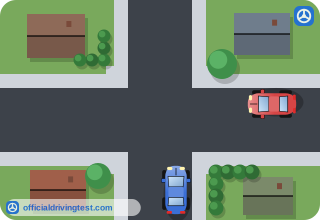
Yielding right-of-way rules are only a guide. What must always be considered at each intersection?
- Only which vehicle is the largest
- Only which driver is traveling faster
- The situation and circumstances there
- Only the posted speed limit on the road
Show answer
Correct answer: The situation and circumstances there
No one should assume they automatically have the right-of-way; the situation and circumstances at each intersection must always be considered.
Source: South Carolina Driver's Manual (2026 (posted April 2026)), page 6-1 · Open this page in the manual (Manual page 6-1)
-
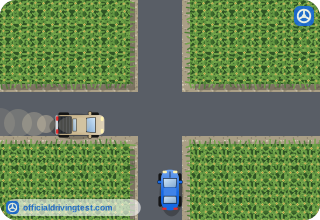
At an intersection, which driver should you yield the right-of-way to?
- The driver who arrives after you do
- The driver who is traveling faster
- The driver in the larger vehicle
- The driver who is at or arrives before you
Show answer
Correct answer: The driver who is at or arrives before you
You yield to the driver who is at or arrives before you at the intersection.
Source: South Carolina Driver's Manual (2026 (posted April 2026)), page 6-1 · Open this page in the manual (Manual page 6-1)
-
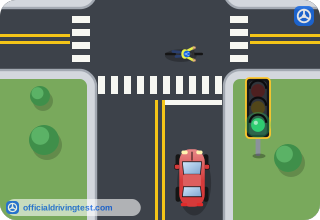
A bicyclist is still in the intersection when you arrive. What should you do?
- Go ahead, because bicycles are small and slow
- Speed up to clear the intersection first
- Honk so the bicyclist moves out of your way
- Yield the right-of-way to the bicyclist
Show answer
Correct answer: Yield the right-of-way to the bicyclist
You yield to pedestrians, bicyclists and other drivers who are still in the intersection.
Source: South Carolina Driver's Manual (2026 (posted April 2026)), page 6-1 · Open this page in the manual (Manual page 6-1)
-
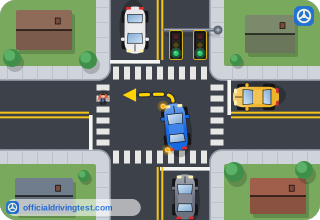
When you are making a left turn, to whom should you yield the right-of-way?
- Drivers behind you in your lane
- Drivers in the opposing traffic lane
- Drivers who are turning right on the cross street
- Drivers who arrive after you at the intersection
Show answer
Correct answer: Drivers in the opposing traffic lane
A driver turning left yields to drivers in the opposing traffic lane.
Source: South Carolina Driver's Manual (2026 (posted April 2026)), page 6-2 · Open this page in the manual (Manual page 6-2)
-
You and another driver arrive at the same time at a four-way intersection controlled by stop signs. Who should yield?
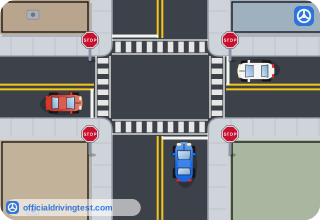
- You should yield to the driver on your left
- You should yield to the driver across from you
- You should yield to the driver on your right
- You should go first and let the other driver wait
Show answer
Correct answer: You should yield to the driver on your right
At a four-way stop, when both arrive together, you yield to the driver on your right.
Source: South Carolina Driver's Manual (2026 (posted April 2026)), page 6-2 · Open this page in the manual (Manual page 6-2)
-
You are entering a public highway from a driveway or a private road. To whom should you yield the right-of-way?
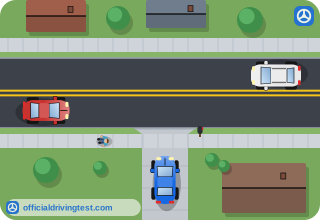
- Drivers on the public highway
- Only drivers coming from your left
- Only drivers who are turning
- No one, because you are already moving
Show answer
Correct answer: Drivers on the public highway
Drivers entering from a driveway or private road yield to drivers already on the public highway.
Source: South Carolina Driver's Manual (2026 (posted April 2026)), page 6-2 · Open this page in the manual (Manual page 6-2)
-
You are on the entrance or acceleration ramp of a limited access or interstate highway. To whom should you yield?
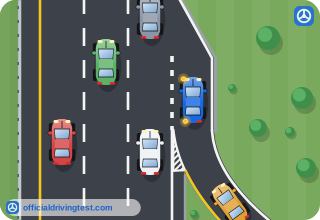
- Drivers already on the highway
- Drivers who are exiting the highway
- Drivers who are following you on the ramp
- No one, because the ramp has the right-of-way
Show answer
Correct answer: Drivers already on the highway
On an entrance or acceleration ramp, you yield to drivers already on the interstate.
Source: South Carolina Driver's Manual (2026 (posted April 2026)), page 6-2 · Open this page in the manual (Manual page 6-2)
-
At a stop sign, what must you look for?
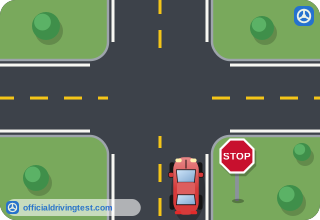
- Only vehicles approaching from the right, and yield only to them
- Only pedestrians already in the crosswalk, and yield only to them
- Only vehicles that are stopped at the stop sign across from you
- Crossing vehicles and pedestrians in all directions, and yield
Show answer
Correct answer: Crossing vehicles and pedestrians in all directions, and yield
At a stop sign you look for crossing vehicles and pedestrians in all directions and yield the right-of-way.
Source: South Carolina Driver's Manual (2026 (posted April 2026)), page 6-10 · Open this page in the manual (Manual page 6-10)
-
What does a yield sign mean?
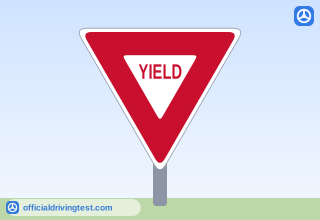
- Stop completely, then go when the way is clear of all other traffic
- Slow down and let traffic that has the right-of-way cross before you enter
- Speed up to merge ahead of cross traffic that is still far away
- Stop only if another vehicle is already stopped at the intersection
Show answer
Correct answer: Slow down and let traffic that has the right-of-way cross before you enter
A yield sign means you slow down and allow traffic with the right-of-way to cross before you enter.
Source: South Carolina Driver's Manual (2026 (posted April 2026)), page 6-10 · Open this page in the manual (Manual page 6-10)
-
When you are about to turn, what should you search all corners for?
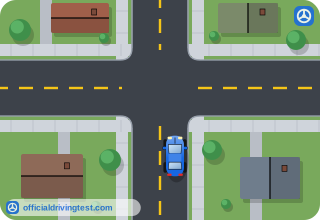
- Traffic controls, pedestrians, and vehicles
- Only vehicles that are following you
- Open parking spaces and side driveways
- Billboards and business signs nearby
Show answer
Correct answer: Traffic controls, pedestrians, and vehicles
Before a turn you should check every corner for traffic controls, pedestrians and other vehicles, and signal what you plan to do.
Source: South Carolina Driver's Manual (2026 (posted April 2026)), page 7-1 · Open this page in the manual (Manual page 7-1)
-
Which lane should you be in when you are turning?
- The lane farthest from the direction you want to turn
- The center lane of the road
- The lane closest to the direction you want to turn
- Whichever lane has the least traffic
Show answer
Correct answer: The lane closest to the direction you want to turn
You should enter and stay in the lane nearest the direction of your turn.
Source: South Carolina Driver's Manual (2026 (posted April 2026)), page 7-1 · Open this page in the manual (Manual page 7-1)
-
While making a turn, where should you direct your gaze?
- Down at the pavement just in front of your bumper
- Through the turn to the farthest point possible
- At the vehicle directly ahead of you only
- At the turn signal indicator on your dashboard
Show answer
Correct answer: Through the turn to the farthest point possible
The manual tells drivers to look through the turn to the farthest point possible along the intended path.
Source: South Carolina Driver's Manual (2026 (posted April 2026)), page 7-1 · Open this page in the manual (Manual page 7-1)
-
As you finish a turn and accelerate, what should you make sure of?
- That your hazard flashers are turned on
- That your headlights are on high beam
- That your horn has been sounded
- That your turn signal has been cancelled
Show answer
Correct answer: That your turn signal has been cancelled
After turning you accelerate smoothly, make sure the turn signal is cancelled, and stay aware of traffic behind you.
Source: South Carolina Driver's Manual (2026 (posted April 2026)), page 7-1 · Open this page in the manual (Manual page 7-1)
-
What should you avoid doing before making a right turn?
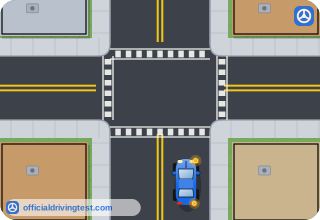
- Swinging wide to the left before the turn
- Signaling your intention to turn right
- Checking for pedestrians at the corner
- Slowing down as you approach the turn
Show answer
Correct answer: Swinging wide to the left before the turn
For a right turn the manual says to avoid swinging wide to the left before making the turn.
Source: South Carolina Driver's Manual (2026 (posted April 2026)), page 7-1 · Open this page in the manual (Manual page 7-1)
-
From which part of your lane should you always make a right turn?
- The center of the lane
- The left-most portion
- The right-most portion
- Any portion with the most room
Show answer
Correct answer: The right-most portion
A right turn is always made from the right-most portion of your lane.
Source: South Carolina Driver's Manual (2026 (posted April 2026)), page 7-2 · Open this page in the manual (Manual page 7-2)
-
When you make a left turn, what must you do about oncoming traffic?
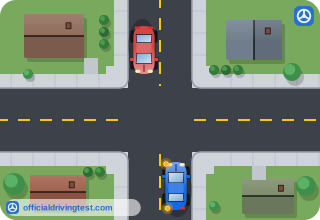
- Go first if you signaled early
- Yield to oncoming traffic
- Speed up to clear the lane first
- Honk and proceed ahead of it
Show answer
Correct answer: Yield to oncoming traffic
A driver turning left must yield to oncoming traffic.
Source: South Carolina Driver's Manual (2026 (posted April 2026)), page 7-2 · Open this page in the manual (Manual page 7-2)
-
From which part of your lane should you always make a left turn?
- The right-most portion of the lane
- The center of the lane
- Whichever part is widest
- The left-most portion
Show answer
Correct answer: The left-most portion
A left turn is always made from the left-most portion of your lane.
Source: South Carolina Driver's Manual (2026 (posted April 2026)), page 7-2 · Open this page in the manual (Manual page 7-2)
-
At an intersection with multiple lanes turning, what should you do?
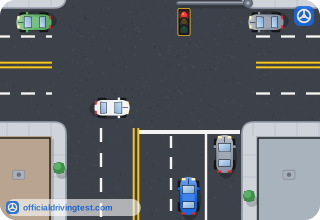
- Identify and enter the lane from which you will turn
- Wait until you reach the corner to choose a lane
- Choose whichever lane has the fastest traffic
- Enter the lane farthest from where you will turn
Show answer
Correct answer: Identify and enter the lane from which you will turn
You should pick and enter the lane you will turn from before the turn.
Source: South Carolina Driver's Manual (2026 (posted April 2026)), page 7-2 · Open this page in the manual (Manual page 7-2)
-
Once you are in the lane you will turn from, how long should you stay in it?
- Until you reach the stop line
- Until the first car ahead has turned
- Until the turn is completed
- Until the cross street is clear to see
Show answer
Correct answer: Until the turn is completed
You stay in your chosen lane until the turn is completed.
Source: South Carolina Driver's Manual (2026 (posted April 2026)), page 7-2 · Open this page in the manual (Manual page 7-2)
-
Which maneuver uses a street, alley, or driveway to reverse your direction when it is not practical to drive around a block?
- A three-point turnabout
- A two-point turnabout
- A zipper merge
- A roundabout exit
Show answer
Correct answer: A two-point turnabout
A two-point turnabout uses a street, alley, or driveway to reverse direction when you cannot practically drive around the block.
Source: South Carolina Driver's Manual (2026 (posted April 2026)), page 7-2 · Open this page in the manual (Manual page 7-2)
-
In a reverse two-point turnabout, which turn do you signal before you stop and check traffic?
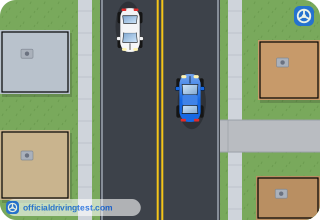
- A left turn
- Four-way flashers
- No signal at all
- A right turn
Show answer
Correct answer: A right turn
In the reverse two-point turnabout you signal your intention to turn right, then stop and check traffic to the sides and rear.
Source: South Carolina Driver's Manual (2026 (posted April 2026)), page 7-2 · Open this page in the manual (Manual page 7-2)
-
In a reverse two-point turnabout, how far do you move back before steering?
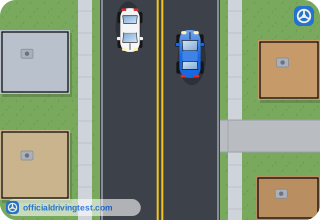
- Until the rear bumper reaches the near edge of the driveway
- Until the rear bumper is fully inside the driveway
- Until the rear wheels are against the far edge of the driveway
- Until the front bumper is even with the driveway
Show answer
Correct answer: Until the rear bumper reaches the near edge of the driveway
You back up until the rear bumper reaches the near edge of the driveway.
Source: South Carolina Driver's Manual (2026 (posted April 2026)), page 7-2 · Open this page in the manual (Manual page 7-2)
-
While backing slowly in a reverse two-point turnabout, how should you steer?
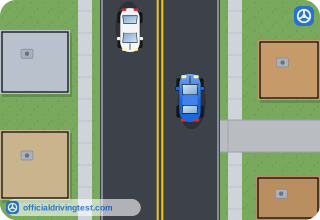
- Slowly all the way to the left
- Rapidly all the way to the left
- Rapidly all the way to the right
- Gently, keeping the wheels straight
Show answer
Correct answer: Rapidly all the way to the right
While backing slowly you steer rapidly all the way to the right.
Source: South Carolina Driver's Manual (2026 (posted April 2026)), page 7-2 · Open this page in the manual (Manual page 7-2)
-
In a reverse two-point turnabout, what do you do as the vehicle centers in the driveway?
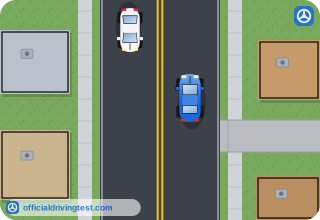
- Keep the wheels turned and keep backing
- Straighten the wheels and stop
- Turn the wheels all the way to the left
- Shift to park and turn off the engine
Show answer
Correct answer: Straighten the wheels and stop
As the vehicle centers in the driveway you straighten the wheels and stop.
Source: South Carolina Driver's Manual (2026 (posted April 2026)), page 7-2 · Open this page in the manual (Manual page 7-2)
-
To finish a reverse two-point turnabout, after you shift to drive and check both directions, what do you do if the way is clear?
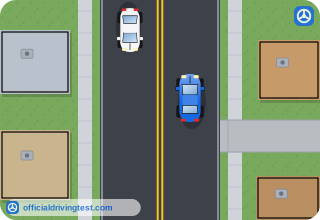
- Signal and turn right into the proper lane
- Back out again without signaling
- Wait for another vehicle to pass first
- Signal and turn left into the proper lane
Show answer
Correct answer: Signal and turn left into the proper lane
Once in drive and clear in both directions, you signal and turn left into the proper lane and accelerate as appropriate.
Source: South Carolina Driver's Manual (2026 (posted April 2026)), page 7-3 · Open this page in the manual (Manual page 7-3)
-
In a forward two-point turnabout, which turn do you signal before moving close to the center of the road?
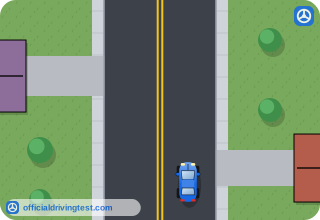
- A left turn
- A right turn
- A stop
- Four-way flashers
Show answer
Correct answer: A left turn
The forward two-point turnabout starts with a check of the mirrors and a signal for a left turn.
Source: South Carolina Driver's Manual (2026 (posted April 2026)), page 7-3 · Open this page in the manual (Manual page 7-3)
-
In a forward two-point turnabout, where do you move before turning into the driveway or alley?
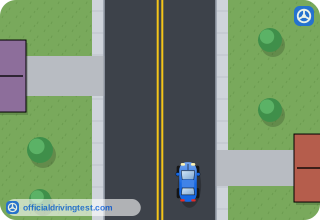
- As close as possible to the right curb
- Across both lanes to the far edge
- Close to the center of the road
- Onto the shoulder of the road
Show answer
Correct answer: Close to the center of the road
You move close to the center of the road and turn into the driveway or alley as near as possible to the left side.
Source: South Carolina Driver's Manual (2026 (posted April 2026)), page 7-3 · Open this page in the manual (Manual page 7-3)
-
In a forward two-point turnabout, when do you stop after turning into the driveway or alley?
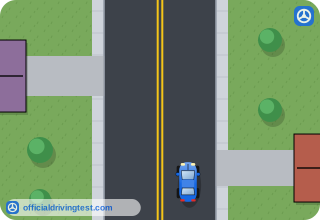
- When the front bumper reaches the end of the driveway
- As the rear of the vehicle clears the curb or edge
- After the whole vehicle is well inside the driveway
- As soon as the front wheels leave the road
Show answer
Correct answer: As the rear of the vehicle clears the curb or edge
You stop as the rear of the vehicle clears the curb or edge of the driveway.
Source: South Carolina Driver's Manual (2026 (posted April 2026)), page 7-3 · Open this page in the manual (Manual page 7-3)
-
In a forward two-point turnabout, which signal do you give after checking all directions and before shifting to reverse?
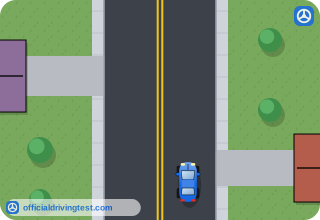
- A left turn signal
- Four-way flashers
- No signal at all
- A right turn signal
Show answer
Correct answer: A right turn signal
After stopping in the driveway you check all directions, signal a right turn and shift to reverse.
Source: South Carolina Driver's Manual (2026 (posted April 2026)), page 7-3 · Open this page in the manual (Manual page 7-3)
-
In a forward two-point turnabout, how do you turn the steering wheel while moving slowly back?
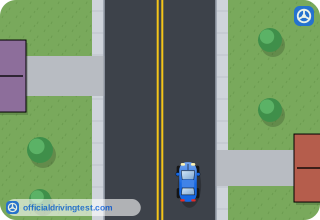
- Quickly all the way to the right
- Slowly all the way to the left
- Quickly all the way to the left
- Gently, a quarter turn to the right
Show answer
Correct answer: Quickly all the way to the right
While moving slowly back you turn the wheel quickly all the way to the right.
Source: South Carolina Driver's Manual (2026 (posted April 2026)), page 7-3 · Open this page in the manual (Manual page 7-3)
-
A three-point turnabout should be used only when the road is too narrow to make a U-turn and which other condition applies?
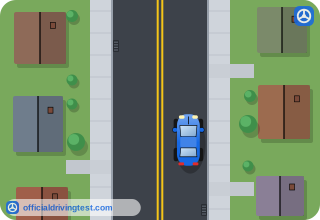
- Traffic is heavy in both directions
- You are on a road with three lanes
- You cannot go around the block
- You are driving in a residential area
Show answer
Correct answer: You cannot go around the block
The manual limits the three-point turnabout to narrow roads where a U-turn is impossible and you cannot go around the block.
Source: South Carolina Driver's Manual (2026 (posted April 2026)), page 7-3 · Open this page in the manual (Manual page 7-3)
-
On what kind of road should a three-point turnabout be used?
- A four-lane road with light traffic
- A two-lane roadway that is not busy
- A busy two-lane street at rush hour
- A freeway entrance ramp
Show answer
Correct answer: A two-lane roadway that is not busy
The manual says to use a three-point turnabout only on a two-lane roadway that is not busy.
Source: South Carolina Driver's Manual (2026 (posted April 2026)), page 7-3 · Open this page in the manual (Manual page 7-3)
-
If the street is busy, what does the manual say is better than a three-point turnabout?
- Stopping and waiting for the street to empty
- Backing slowly down the street
- Honking to warn traffic and turning anyway
- Circling an entire city block
Show answer
Correct answer: Circling an entire city block
On a busy street it is better to circle an entire city block than to make a three-point turnabout.
Source: South Carolina Driver's Manual (2026 (posted April 2026)), page 7-3 · Open this page in the manual (Manual page 7-3)
-
Which of these must a three-point turnabout be performed without?
- Using a side street or driveway
- Using your turn signals
- Checking your blind spots
- Stopping on the right edge of the road
Show answer
Correct answer: Using a side street or driveway
A three-point turnabout must be done without hitting the curb, leaving the road surface, or using a side street or driveway.
Source: South Carolina Driver's Manual (2026 (posted April 2026)), page 7-3 · Open this page in the manual (Manual page 7-3)
-
What do you do first in a three-point turnabout?
- Signal left, pull to the left edge of the road, and stop
- Turn hard left across the road without stopping first
- Signal right, pull to the right edge of the road, and stop
- Shift to reverse and back toward the curb
Show answer
Correct answer: Signal right, pull to the right edge of the road, and stop
The first step is to check mirrors, signal right, pull to the right edge of the road and stop.
Source: South Carolina Driver's Manual (2026 (posted April 2026)), page 7-3 · Open this page in the manual (Manual page 7-3)
-
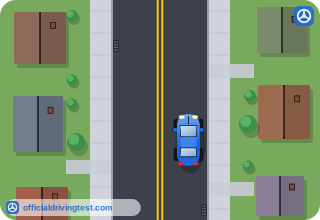
In a three-point turnabout, how do you check your blind spot before turning hard left to the other side of the road?
- By looking over your right shoulder
- By looking over your left shoulder
- By using only your rearview mirror
- By using only your side mirrors
Show answer
Correct answer: By looking over your left shoulder
After signaling left and checking traffic, you check the blind spot by looking over your left shoulder.
Source: South Carolina Driver's Manual (2026 (posted April 2026)), page 7-3 · Open this page in the manual (Manual page 7-3)
-
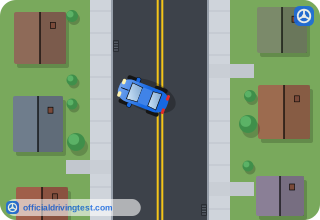
In a three-point turnabout, how do you check blind spots after placing the vehicle in reverse?
- On the left side only, over your shoulder
- On the right side only, in your side mirror
- None, because your rearview mirror is enough
- On both sides, by looking over your shoulders
Show answer
Correct answer: On both sides, by looking over your shoulders
In reverse you check traffic and the blind spots on both sides by looking over your shoulders, not relying on the rearview mirror alone.
Source: South Carolina Driver's Manual (2026 (posted April 2026)), page 7-4 · Open this page in the manual (Manual page 7-4)
-
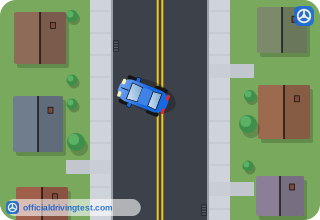
While backing to the other side of the road in a three-point turnabout, which way do you turn the wheel?
- Hard right
- Hard left
- Straight
- Slightly left
Show answer
Correct answer: Hard right
In the reverse step you turn hard right to the other side of the road and stop.
Source: South Carolina Driver's Manual (2026 (posted April 2026)), page 7-4 · Open this page in the manual (Manual page 7-4)
-
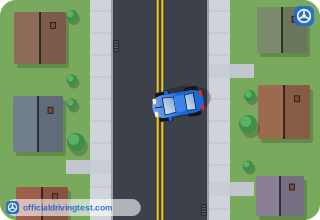
When you finish a three-point turnabout, into which lane do you drive forward?
- The left lane of traffic heading in the new direction
- Whichever lane has the least traffic
- The right lane of traffic heading in the new direction
- The center of the roadway until traffic clears
Show answer
Correct answer: The right lane of traffic heading in the new direction
The last step is to turn hard left and drive forward into the right lane of traffic heading in the new direction.
Source: South Carolina Driver's Manual (2026 (posted April 2026)), page 7-4 · Open this page in the manual (Manual page 7-4)
-
What should you do at all intersections?
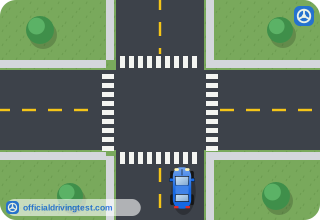
- Maintain your speed if you have the right-of-way
- Reduce your speed and search for hazards
- Speed up to clear the intersection quickly
- Stop completely, even where nothing controls traffic
Show answer
Correct answer: Reduce your speed and search for hazards
At every intersection you reduce your speed and search for controls, traffic, pedestrians, road conditions and limited visibility.
Source: South Carolina Driver's Manual (2026 (posted April 2026)), page 7-4 · Open this page in the manual (Manual page 7-4)
-
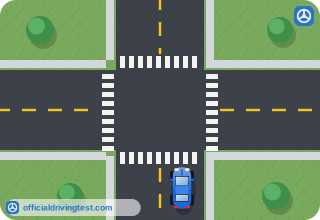
Which of these should you search for at all intersections?
- Businesses with large signs
- Parked vehicles two blocks away
- Parking meters along the curb
- Areas of limited visibility
Show answer
Correct answer: Areas of limited visibility
The list includes traffic control devices, oncoming and cross traffic, pedestrians and bicyclists, roadway condition, and areas of limited visibility.
Source: South Carolina Driver's Manual (2026 (posted April 2026)), page 7-4 · Open this page in the manual (Manual page 7-4)
-
What should you do about other road users who may not yield the right-of-way?
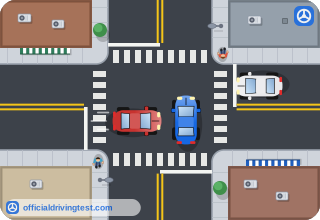
- Be prepared to avoid a collision
- Rely on them to obey signals
- Speed up to pass through before them
- Sound your horn and keep moving
Show answer
Correct answer: Be prepared to avoid a collision
Some road users may not yield, so you must be ready to avoid a collision.
Source: South Carolina Driver's Manual (2026 (posted April 2026)), page 7-5 · Open this page in the manual (Manual page 7-5)
-
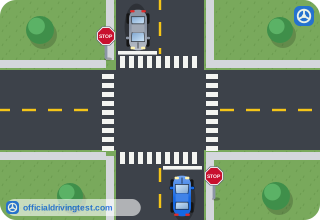
Before moving again after you have stopped at an intersection, what should you take extra time to check?
- The radio station you are playing
- Your fuel gauge and mirrors
- For crossing traffic and bicyclists
- Whether the cross street has a bike lane
Show answer
Correct answer: For crossing traffic and bicyclists
After a stop you should take extra time to check for crossing traffic and bicyclists.
Source: South Carolina Driver's Manual (2026 (posted April 2026)), page 7-5 · Open this page in the manual (Manual page 7-5)
-
In what order should you look before entering an intersection?
- Right, then left, and right again
- Left, then right, and left again
- Left, then straight ahead, then right
- Straight ahead only, then right
Show answer
Correct answer: Left, then right, and left again
You should always look left, then right, and left again before entering the intersection.
Source: South Carolina Driver's Manual (2026 (posted April 2026)), page 7-5 · Open this page in the manual (Manual page 7-5)
-
When a traffic signal turns green, what should you avoid doing?
- Looking for crossing traffic
- Checking that your path is clear
- Accelerating to an appropriate speed
- Immediately moving into the intersection
Show answer
Correct answer: Immediately moving into the intersection
On green you should take time to make sure your path is clear and there is no crossing traffic.
Source: South Carolina Driver's Manual (2026 (posted April 2026)), page 7-5 · Open this page in the manual (Manual page 7-5)
-
What may be true of a driver whose turn signal is active as they approach your vehicle?
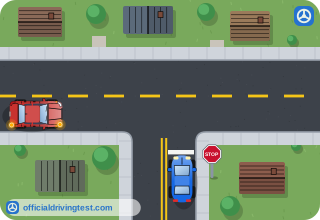
- They may have forgotten to turn the signal off
- They are required to turn at the next corner
- They are giving you the right-of-way
- They are about to stop for you
Show answer
Correct answer: They may have forgotten to turn the signal off
The driver may plan to turn after passing you or may have forgotten to cancel a signal from an earlier turn, so you should not turn into the lane on that basis alone.
Source: South Carolina Driver's Manual (2026 (posted April 2026)), page 7-5 · Open this page in the manual (Manual page 7-5)
-
What should you never assume about another driver?
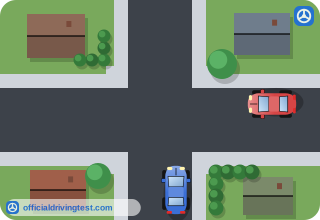
- That they are driving under the speed limit
- That they are wearing a seat belt
- That they will share space or give you extra space
- That they are familiar with the road
Show answer
Correct answer: That they will share space or give you extra space
Never assume another driver will share space with your vehicle or give it any additional space.
Source: South Carolina Driver's Manual (2026 (posted April 2026)), page 7-5 · Open this page in the manual (Manual page 7-5)
-
What is the primary difference between a diverging diamond interchange (DDI) and a conventional interchange?
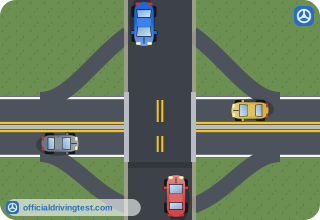
- The number of ramps leading to the interstate
- The design of the directional crossovers
- The width of the bridge over the interstate
- The posted speed limit on the crossroad
Show answer
Correct answer: The design of the directional crossovers
The manual says the main difference is the design of the directional crossovers on either side of the interchange.
Source: South Carolina Driver's Manual (2026 (posted April 2026)), page 7-5 · Open this page in the manual (Manual page 7-5)
-
In a DDI, cross street traffic is shifted to which side of the street between the crossover intersections?
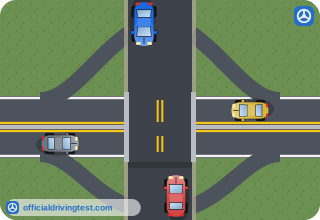
- The right side
- Alternating sides
- The median only
- The left side
Show answer
Correct answer: The left side
A DDI shifts cross street traffic to the left side of the street between the signalized crossover intersections.
Source: South Carolina Driver's Manual (2026 (posted April 2026)), page 7-5 · Open this page in the manual (Manual page 7-5)
-
At a DDI, what do vehicles making a left turn on to or off of ramps no longer do?
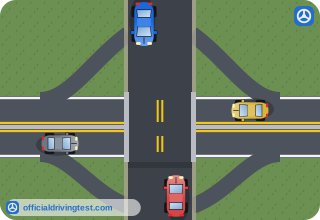
- Cross the paths of approaching through vehicles
- Share a lane with right-turning vehicles
- Enter the interchange from a side street
- Yield to pedestrians at crosswalks
Show answer
Correct answer: Cross the paths of approaching through vehicles
The DDI design removes the need for left-turning vehicles to cross the paths of approaching through vehicles.
Source: South Carolina Driver's Manual (2026 (posted April 2026)), page 7-5 · Open this page in the manual (Manual page 7-5)
-
Compared with a conventional diamond interchange, what does the DDI design do to the number of vehicle-to-vehicle conflict points?
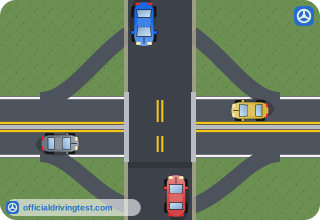
- Slightly increases it
- Leaves it unchanged
- Significantly reduces it
- Significantly increases it
Show answer
Correct answer: Significantly reduces it
The DDI design significantly reduces the number of vehicle-to-vehicle conflict points compared to a conventional diamond interchange.
Source: South Carolina Driver's Manual (2026 (posted April 2026)), page 7-5 · Open this page in the manual (Manual page 7-5)
-
How does a DDI affect the severity of conflicts between vehicles?
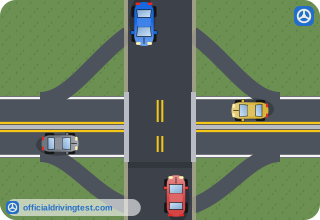
- It increases their severity
- It reduces their severity
- It has no effect on severity
- It raises severity at the ramps
Show answer
Correct answer: It reduces their severity
The manual says the DDI also reduces the severity of conflicts.
Source: South Carolina Driver's Manual (2026 (posted April 2026)), page 7-6 · Open this page in the manual (Manual page 7-6)
-
What does a restricted crossing U-turn (RCUT) intersection eliminate from cross street approaches?
- The right-turn and through movements
- All left-turn and right-turn movements
- The stop signs and traffic signals
- The left-turn and through movements
Show answer
Correct answer: The left-turn and through movements
An RCUT removes the left-turn and through movements from the cross street approaches.
Source: South Carolina Driver's Manual (2026 (posted April 2026)), page 7-6 · Open this page in the manual (Manual page 7-6)
-
How does an RCUT intersection require cross street drivers to make left-turn and through movements?
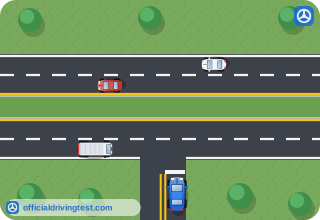
- Turn right, then make a U-turn at a median opening
- Turn left directly across the main road after stopping
- Cross on a signal-controlled bridge over the road
- Turn left after yielding on a separate side road
Show answer
Correct answer: Turn right, then make a U-turn at a median opening
RCUT drivers turn right onto the main road and then make a U-turn at a one-way median opening.
Source: South Carolina Driver's Manual (2026 (posted April 2026)), page 7-6 · Open this page in the manual (Manual page 7-6)
-
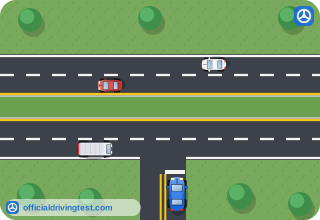
How may an RCUT intersection be controlled?
- Only by a traffic signal, never by signs
- Only by a stop sign on the cross street
- A signal, a stop sign, or a merge or yield sign
- By yield signs only
Show answer
Correct answer: A signal, a stop sign, or a merge or yield sign
An RCUT may be controlled by a traffic signal, a stop sign, or a merge or yield sign.
Source: South Carolina Driver's Manual (2026 (posted April 2026)), page 7-6 · Open this page in the manual (Manual page 7-6)
-
What is another name for a roundabout?
- A diverging diamond
- A traffic circle
- A zipper merge
- A three-point turnabout
Show answer
Correct answer: A traffic circle
The manual says a roundabout is also known as a traffic circle.
Source: South Carolina Driver's Manual (2026 (posted April 2026)), page 7-7 · Open this page in the manual (Manual page 7-7)
-
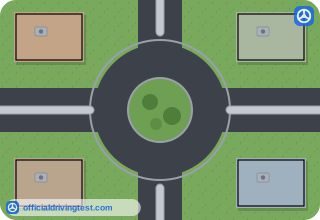
In which direction do vehicles travel around the center island of a roundabout?
- Clockwise
- Back and forth across the island
- Toward the nearest exit only
- Counterclockwise
Show answer
Correct answer: Counterclockwise
Vehicles travel counterclockwise around the raised center island of a roundabout.
Source: South Carolina Driver's Manual (2026 (posted April 2026)), page 7-7 · Open this page in the manual (Manual page 7-7)
-
Who has the right-of-way at a roundabout?
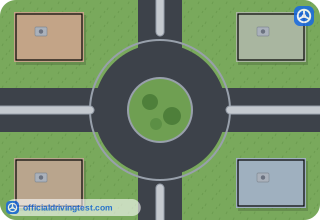
- Traffic already circulating in it
- Traffic waiting to enter the roundabout
- The vehicle that arrives first at the entrance
- Traffic entering from the right
Show answer
Correct answer: Traffic already circulating in it
Entering traffic must yield the right-of-way to circulating traffic.
Source: South Carolina Driver's Manual (2026 (posted April 2026)), page 7-7 · Open this page in the manual (Manual page 7-7)
-
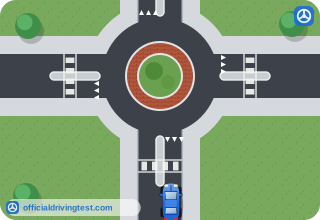
How should you approach a roundabout or traffic circle?
- Speed up to merge with circulating traffic
- Stop completely at the entrance every time
- Slow down to enter it
- Stay in the left lane until you are inside
Show answer
Correct answer: Slow down to enter it
You should slow down to enter a roundabout or traffic circle.
Source: South Carolina Driver's Manual (2026 (posted April 2026)), page 7-7 · Open this page in the manual (Manual page 7-7)
-
In a roundabout or traffic circle, what do you do after you proceed to the appropriate exit?
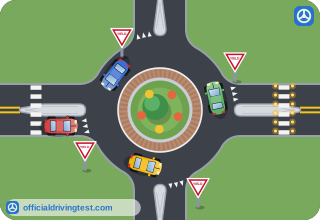
- Sound your horn and exit
- Exit without signaling
- Stop in the circle to let others pass
- Signal your intent and exit
Show answer
Correct answer: Signal your intent and exit
You proceed to the appropriate exit, signal your intent, and exit.
Source: South Carolina Driver's Manual (2026 (posted April 2026)), page 7-7 · Open this page in the manual (Manual page 7-7)
-
To make a left turn at a roundabout, how far around do you go before completing your turn?
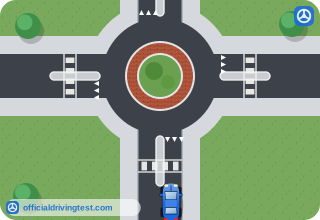
- About three-quarters of the way around
- About one-quarter of the way around
- About halfway around
- A full lap, then exit on the next road
Show answer
Correct answer: About three-quarters of the way around
For a left turn you yield to traffic in the roundabout and go three-quarters of the way around before completing the turn.
Source: South Carolina Driver's Manual (2026 (posted April 2026)), page 7-7 · Open this page in the manual (Manual page 7-7)
-
How should you make a U-turn at a roundabout?
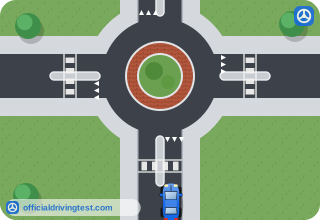
- Go three-quarters of the way around, then exit
- Stop at the entrance and back out onto the road
- Stay right and exit on the same road you entered
- Go halfway around and exit on the next road
Show answer
Correct answer: Stay right and exit on the same road you entered
For a U-turn you yield, stay to the right, continue around the roundabout and exit on the same road you entered from.
Source: South Carolina Driver's Manual (2026 (posted April 2026)), page 7-7 · Open this page in the manual (Manual page 7-7)
-
Which types of collisions do roundabouts eliminate compared with traditional intersections?
- Rear-end and lane-change
- Head-on and high-speed right-angle
- Low-speed parking lot collisions
- Collisions with fixed objects
Show answer
Correct answer: Head-on and high-speed right-angle
Roundabouts are safer because they eliminate head-on and high-speed right-angle collisions.
Source: South Carolina Driver's Manual (2026 (posted April 2026)), page 7-8 · Open this page in the manual (Manual page 7-8)
-
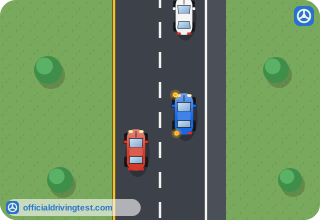
When changing lanes, how do you check your blind spots?
- By checking only your rearview mirror, since it shows every area beside and behind you
- By glancing at the side mirror on the side toward which you plan to move
- By sounding your horn and moving over once other drivers have slowed
- By turning your head and looking over your shoulder in the direction you plan to move
Show answer
Correct answer: By turning your head and looking over your shoulder in the direction you plan to move
Blind spots are checked by turning your head and looking over your shoulder toward the lane you want to enter.
Source: South Carolina Driver's Manual (2026 (posted April 2026)), page 7-14 · Open this page in the manual (Manual page 7-14)
-
When changing lanes, after you identify a gap in traffic and signal, what do you do before steering into the lane?
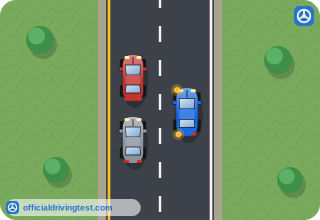
- Look again in the direction of the lane change
- Brake to slow down below the other traffic
- Sound your horn to warn other drivers
- Cancel your turn signal
Show answer
Correct answer: Look again in the direction of the lane change
After finding a gap and signaling, you look again toward the new lane, adjust speed, and then steer into the lane.
Source: South Carolina Driver's Manual (2026 (posted April 2026)), page 7-14 · Open this page in the manual (Manual page 7-14)
-
On multi-lane roads, which lane is to be used for passing slower vehicles?
- The right-most lane
- The left-most lane
- The center lane only
- The shoulder
Show answer
Correct answer: The left-most lane
On multi-lane roads the left-most lane is the one to use for passing slower vehicles.
Source: South Carolina Driver's Manual (2026 (posted April 2026)), page 7-15 · Open this page in the manual (Manual page 7-15)
-
When may you pass another vehicle on the shoulder?
- Only when the shoulder is paved and wide enough
- Only when traffic ahead of you is stopped
- Only when you have signaled and checked your mirrors
- Never, whether the shoulder is paved or not
Show answer
Correct answer: Never, whether the shoulder is paved or not
The manual says never to pass on the shoulder, paved or not.
Source: South Carolina Driver's Manual (2026 (posted April 2026)), page 7-15 · Open this page in the manual (Manual page 7-15)
-
How does the manual describe the shoulder?
- A hard surface on the right side of the roadway used as an emergency stopping lane
- A lane reserved for vehicles that are passing slower traffic on the left
- A hard surface on the left side of the roadway used by slow-moving and stopped traffic
- A lane used for through traffic whenever the main lanes are crowded
Show answer
Correct answer: A hard surface on the right side of the roadway used as an emergency stopping lane
The shoulder is a hard surface on the right side that serves as an emergency stopping lane, not for through traffic.
Source: South Carolina Driver's Manual (2026 (posted April 2026)), page 7-15 · Open this page in the manual (Manual page 7-15)
-
Why should you pass another vehicle as quickly and safely as possible?
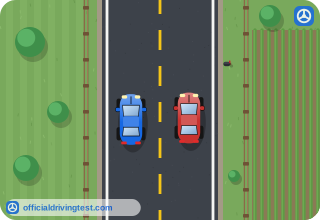
- Passing slowly burns more fuel and wears out your brakes and tires sooner
- Passing slowly lets the other driver speed up and block you
- The longer you stay alongside, the longer you may be in its blind spot
- A longer pass makes the other driver miss your turn signal
Show answer
Correct answer: The longer you stay alongside, the longer you may be in its blind spot
Staying beside another vehicle keeps you in its blind spot, where a driver moving toward your lane may not see you.
Source: South Carolina Driver's Manual (2026 (posted April 2026)), page 7-15 · Open this page in the manual (Manual page 7-15)
-
How far before passing should you signal your intentions when it is safe to pass?
- 25 feet
- 100 feet or more
- 50 feet
- 200 feet
Show answer
Correct answer: 100 feet or more
You signal at least 100 feet before you pass.
Source: South Carolina Driver's Manual (2026 (posted April 2026)), page 7-16 · Open this page in the manual (Manual page 7-16)
-
While passing, how long do you continue to pass before returning to your lane?
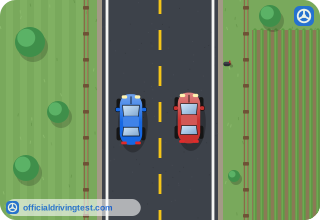
- Until you are at least one full car length ahead of the other vehicle in the lane
- Until the passed vehicle slows down
- Until you see the other vehicle's headlights in your side mirror
- Until the complete front of the passed vehicle is in your rearview mirror
Show answer
Correct answer: Until the complete front of the passed vehicle is in your rearview mirror
You keep passing until you can see the complete front of the passed vehicle in your rearview mirror, then signal and return.
Source: South Carolina Driver's Manual (2026 (posted April 2026)), page 7-16 · Open this page in the manual (Manual page 7-16)
-
What should you do when another driver is passing you?
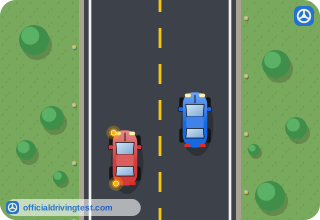
- Maintain a constant speed to allow the driver to pass
- Speed up so the pass is over as quickly as possible
- Slow down sharply so that the other driver can finish passing you
- Move onto the shoulder to give the driver room
Show answer
Correct answer: Maintain a constant speed to allow the driver to pass
When being passed you maintain a constant speed so the other driver can pass.
Source: South Carolina Driver's Manual (2026 (posted April 2026)), page 7-16 · Open this page in the manual (Manual page 7-16)
-
When you are being passed, where should you stay?
- On the shoulder
- On the center line
- In your lane
- Where the passing driver wants you to be
Show answer
Correct answer: In your lane
The manual says to stay in your lane when being passed.
Source: South Carolina Driver's Manual (2026 (posted April 2026)), page 7-16 · Open this page in the manual (Manual page 7-16)
-
In which situation should you not attempt to pass?
- When the vehicle ahead is traveling slower than you
- When your view is blocked by a curve or a hill
- When you have signaled 100 feet before passing
- When there is a paved shoulder on the right
Show answer
Correct answer: When your view is blocked by a curve or a hill
Do not try to pass when a curve or hill blocks your view.
Source: South Carolina Driver's Manual (2026 (posted April 2026)), page 7-16 · Open this page in the manual (Manual page 7-16)
-
Which is a place where you should not attempt to pass?
- On a multi-lane road in the left-most lane
- On a straight road after a stop sign
- After a school bus has moved away
- Before a highway-railroad crossing or bridge
Show answer
Correct answer: Before a highway-railroad crossing or bridge
The manual says not to attempt to pass at intersections or before a highway-railroad crossing or bridge.
Source: South Carolina Driver's Manual (2026 (posted April 2026)), page 7-16 · Open this page in the manual (Manual page 7-16)
-
Which is a time when you should not attempt to pass?
- While at an intersection
- When no traffic is following you
- When your mirrors are clear
- When the passing lane is on the left
Show answer
Correct answer: While at an intersection
Passing is not to be attempted at intersections.
Source: South Carolina Driver's Manual (2026 (posted April 2026)), page 7-16 · Open this page in the manual (Manual page 7-16)
-
How should you treat bicyclists in intersections?
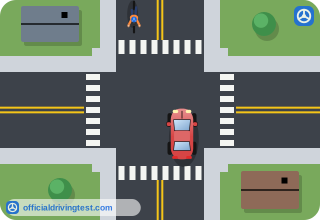
- Yield to them as you would for pedestrians and other vehicles
- Pass them before they enter the intersection
- Expect them to yield to every motor vehicle in the intersection
- Sound your horn so they know you are there
Show answer
Correct answer: Yield to them as you would for pedestrians and other vehicles
Drivers yield to bicyclists in intersections just as they do for pedestrians and other vehicles.
Source: South Carolina Driver's Manual (2026 (posted April 2026)), page 10-3 · Open this page in the manual (Manual page 10-3)
-
A bicyclist is in the intersection where you want to turn. What should you do?
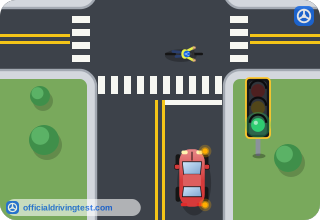
- Slow down and let the cyclist clear the intersection before you turn
- Turn quickly in front of the cyclist before they reach the corner
- Honk and turn at once
- Speed up and turn before the cyclist reaches you
Show answer
Correct answer: Slow down and let the cyclist clear the intersection before you turn
You should slow down and let the cyclist clear the intersection before making your turn.
Source: South Carolina Driver's Manual (2026 (posted April 2026)), page 10-3 · Open this page in the manual (Manual page 10-3)
-
Who generally has the right-of-way at a narrow or single-lane bridge?
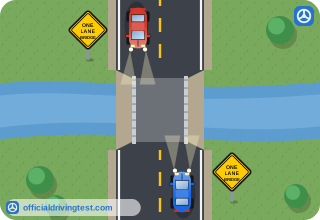
- The first driver to reach the bridge
- The driver in the larger vehicle
- The driver traveling faster
- The driver coming from the right
Show answer
Correct answer: The first driver to reach the bridge
Drivers take turns crossing, and generally the first driver to the bridge goes first.
Source: South Carolina Driver's Manual (2026 (posted April 2026)), page 11-5 · Open this page in the manual (Manual page 11-5)
-
How should you approach an uncontrolled rural intersection?
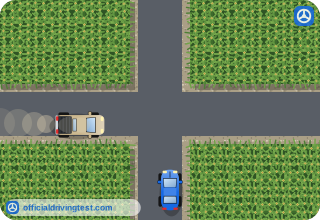
- Maintain your speed, since no sign controls you
- Speed up to clear the intersection quickly
- Sound your horn and continue through
- Slow down and be prepared to stop
Show answer
Correct answer: Slow down and be prepared to stop
With no yield or stop sign, you should slow down and be ready to stop for crossing or oncoming traffic.
Source: South Carolina Driver's Manual (2026 (posted April 2026)), page 11-6 · Open this page in the manual (Manual page 11-6)
-
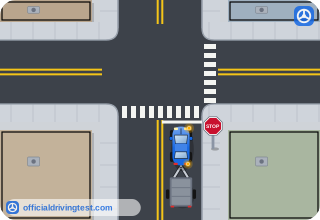
When making turns while towing, what should you remember about the trailer?
- It follows directly behind your rear wheels
- It needs less room than the car
- It stays within the width of the car's turn
- It may require extra room to turn safely
Show answer
Correct answer: It may require extra room to turn safely
The trailer does not follow directly behind the car and may need extra room to turn.
Source: South Carolina Driver's Manual (2026 (posted April 2026)), page 11-12 · Open this page in the manual (Manual page 11-12)