South Carolina: Right-of-way and turning — Part 3 Practice Test
Questions in this part include: “Which of these must a three-point turnabout be performed without?” · “In what order should you look before entering an intersection?”
Independent educational site · not affiliated with any government agency or DMV
Ready? Test yourself
- Instant feedback with an explanation
- Every answer cites its source in the manual
- Your best score is saved on this device
- Keyboard: press 1 to 4 to answer and Enter for the next question
Questions are original and based on the official manual "South Carolina Driver's Manual" (2026 (posted April 2026)), South Carolina Department of Motor Vehicles.
All 16 questions in this practice test
Take the test above first, then use this list to study. Tap “Show answer” to see the correct answer and explanation.
Show the questions and answersHide the questions
-
Which of these must a three-point turnabout be performed without?
- Using a side street or driveway
- Using your turn signals
- Checking your blind spots
- Stopping on the right edge of the road
Show answer
Correct answer: Using a side street or driveway
A three-point turnabout must be done without hitting the curb, leaving the road surface, or using a side street or driveway.
Source: South Carolina Driver's Manual (2026 (posted April 2026)), page 7-3 · Open this page in the manual (Manual page 7-3)
-
What do you do first in a three-point turnabout?
- Signal left, pull to the left edge of the road, and stop
- Turn hard left across the road without stopping first
- Signal right, pull to the right edge of the road, and stop
- Shift to reverse and back toward the curb
Show answer
Correct answer: Signal right, pull to the right edge of the road, and stop
The first step is to check mirrors, signal right, pull to the right edge of the road and stop.
Source: South Carolina Driver's Manual (2026 (posted April 2026)), page 7-3 · Open this page in the manual (Manual page 7-3)
-
In a three-point turnabout, how do you check your blind spot before turning hard left to the other side of the road?
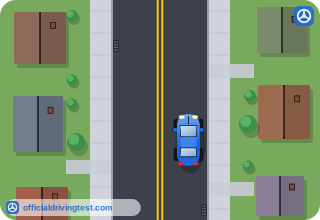
- By looking over your right shoulder
- By looking over your left shoulder
- By using only your rearview mirror
- By using only your side mirrors
Show answer
Correct answer: By looking over your left shoulder
After signaling left and checking traffic, you check the blind spot by looking over your left shoulder.
Source: South Carolina Driver's Manual (2026 (posted April 2026)), page 7-3 · Open this page in the manual (Manual page 7-3)
-
In a three-point turnabout, how do you check blind spots after placing the vehicle in reverse?
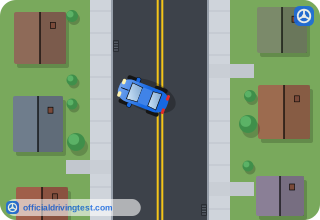
- On the left side only, over your shoulder
- On the right side only, in your side mirror
- None, because your rearview mirror is enough
- On both sides, by looking over your shoulders
Show answer
Correct answer: On both sides, by looking over your shoulders
In reverse you check traffic and the blind spots on both sides by looking over your shoulders, not relying on the rearview mirror alone.
Source: South Carolina Driver's Manual (2026 (posted April 2026)), page 7-4 · Open this page in the manual (Manual page 7-4)
-
While backing to the other side of the road in a three-point turnabout, which way do you turn the wheel?
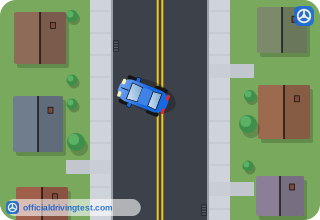
- Hard right
- Hard left
- Straight
- Slightly left
Show answer
Correct answer: Hard right
In the reverse step you turn hard right to the other side of the road and stop.
Source: South Carolina Driver's Manual (2026 (posted April 2026)), page 7-4 · Open this page in the manual (Manual page 7-4)
-
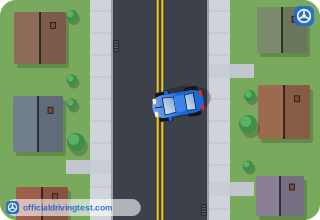
When you finish a three-point turnabout, into which lane do you drive forward?
- The left lane of traffic heading in the new direction
- Whichever lane has the least traffic
- The right lane of traffic heading in the new direction
- The center of the roadway until traffic clears
Show answer
Correct answer: The right lane of traffic heading in the new direction
The last step is to turn hard left and drive forward into the right lane of traffic heading in the new direction.
Source: South Carolina Driver's Manual (2026 (posted April 2026)), page 7-4 · Open this page in the manual (Manual page 7-4)
-
What should you do at all intersections?
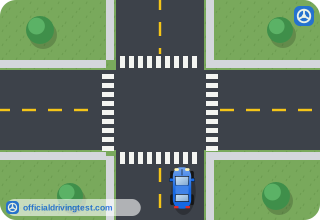
- Maintain your speed if you have the right-of-way
- Reduce your speed and search for hazards
- Speed up to clear the intersection quickly
- Stop completely, even where nothing controls traffic
Show answer
Correct answer: Reduce your speed and search for hazards
At every intersection you reduce your speed and search for controls, traffic, pedestrians, road conditions and limited visibility.
Source: South Carolina Driver's Manual (2026 (posted April 2026)), page 7-4 · Open this page in the manual (Manual page 7-4)
-
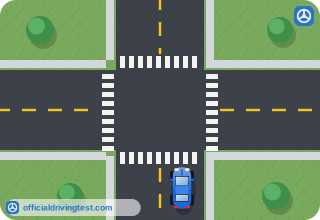
Which of these should you search for at all intersections?
- Businesses with large signs
- Parked vehicles two blocks away
- Parking meters along the curb
- Areas of limited visibility
Show answer
Correct answer: Areas of limited visibility
The list includes traffic control devices, oncoming and cross traffic, pedestrians and bicyclists, roadway condition, and areas of limited visibility.
Source: South Carolina Driver's Manual (2026 (posted April 2026)), page 7-4 · Open this page in the manual (Manual page 7-4)
-
What should you do about other road users who may not yield the right-of-way?
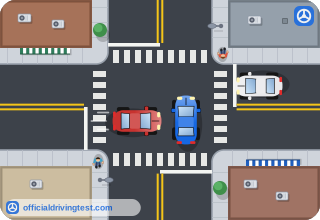
- Be prepared to avoid a collision
- Rely on them to obey signals
- Speed up to pass through before them
- Sound your horn and keep moving
Show answer
Correct answer: Be prepared to avoid a collision
Some road users may not yield, so you must be ready to avoid a collision.
Source: South Carolina Driver's Manual (2026 (posted April 2026)), page 7-5 · Open this page in the manual (Manual page 7-5)
-
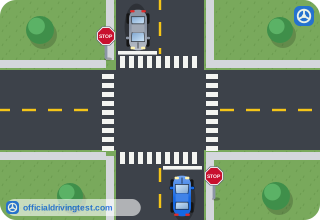
Before moving again after you have stopped at an intersection, what should you take extra time to check?
- The radio station you are playing
- Your fuel gauge and mirrors
- For crossing traffic and bicyclists
- Whether the cross street has a bike lane
Show answer
Correct answer: For crossing traffic and bicyclists
After a stop you should take extra time to check for crossing traffic and bicyclists.
Source: South Carolina Driver's Manual (2026 (posted April 2026)), page 7-5 · Open this page in the manual (Manual page 7-5)
-
In what order should you look before entering an intersection?
- Right, then left, and right again
- Left, then right, and left again
- Left, then straight ahead, then right
- Straight ahead only, then right
Show answer
Correct answer: Left, then right, and left again
You should always look left, then right, and left again before entering the intersection.
Source: South Carolina Driver's Manual (2026 (posted April 2026)), page 7-5 · Open this page in the manual (Manual page 7-5)
-
When a traffic signal turns green, what should you avoid doing?
- Looking for crossing traffic
- Checking that your path is clear
- Accelerating to an appropriate speed
- Immediately moving into the intersection
Show answer
Correct answer: Immediately moving into the intersection
On green you should take time to make sure your path is clear and there is no crossing traffic.
Source: South Carolina Driver's Manual (2026 (posted April 2026)), page 7-5 · Open this page in the manual (Manual page 7-5)
-
What may be true of a driver whose turn signal is active as they approach your vehicle?
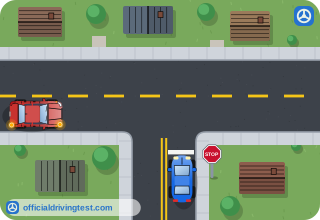
- They may have forgotten to turn the signal off
- They are required to turn at the next corner
- They are giving you the right-of-way
- They are about to stop for you
Show answer
Correct answer: They may have forgotten to turn the signal off
The driver may plan to turn after passing you or may have forgotten to cancel a signal from an earlier turn, so you should not turn into the lane on that basis alone.
Source: South Carolina Driver's Manual (2026 (posted April 2026)), page 7-5 · Open this page in the manual (Manual page 7-5)
-
What should you never assume about another driver?
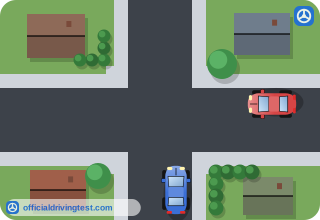
- That they are driving under the speed limit
- That they are wearing a seat belt
- That they will share space or give you extra space
- That they are familiar with the road
Show answer
Correct answer: That they will share space or give you extra space
Never assume another driver will share space with your vehicle or give it any additional space.
Source: South Carolina Driver's Manual (2026 (posted April 2026)), page 7-5 · Open this page in the manual (Manual page 7-5)
-
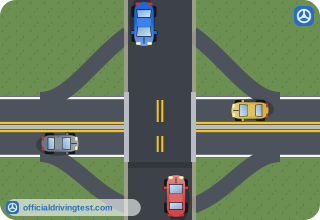
What is the primary difference between a diverging diamond interchange (DDI) and a conventional interchange?
- The number of ramps leading to the interstate
- The design of the directional crossovers
- The width of the bridge over the interstate
- The posted speed limit on the crossroad
Show answer
Correct answer: The design of the directional crossovers
The manual says the main difference is the design of the directional crossovers on either side of the interchange.
Source: South Carolina Driver's Manual (2026 (posted April 2026)), page 7-5 · Open this page in the manual (Manual page 7-5)
-
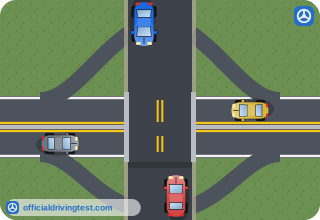
In a DDI, cross street traffic is shifted to which side of the street between the crossover intersections?
- The right side
- Alternating sides
- The median only
- The left side
Show answer
Correct answer: The left side
A DDI shifts cross street traffic to the left side of the street between the signalized crossover intersections.
Source: South Carolina Driver's Manual (2026 (posted April 2026)), page 7-5 · Open this page in the manual (Manual page 7-5)