Rhode Island: Sharing the road
Large trucks and their no-zones, motorcycles, bicycles, school buses, and aggressive driving and road rage. Split into 6 shorter tests so you're not stuck in one long quiz.
Independent educational site · not affiliated with any government agency or DMV
Choose a part
Sharing the road — Part 1
Questions in this part include: “Why does the Governor's message say you should be vigilant and cautious of other drivers?”
StartSharing the road — Part 2
Questions in this part include: “How does the manual say to treat other road users even when they are not courteous to you?”
StartSharing the road — Part 3
Questions in this part include: “How does carrying a passenger affect a motorcyclist?”
StartSharing the road — Part 4
Questions in this part include: “Where does the requirement to stop for a school bus with flashing red lights apply?”
StartSharing the road — Part 5
Questions in this part include: “Who must wear a certified bicycle helmet on a public highway, bicycle path or other public right-of-way?”
StartSharing the road — Part 6
Questions in this part include: “What is the "Dutch Reach" that operators of motor vehicles should practice?”
StartAll 103 Sharing the road questions with answers
Choose a part above to take a practice test, or study every question and answer here.
Show the questions and answersHide the questions
-
Why does the Governor's message say you should be vigilant and cautious of other drivers?
- Most other drivers are overly cautious on the road
- Other drivers always signal their intentions clearly
- Not everyone is responsible, alert, or follows the rules
- Other drivers are responsible for your safety
Show answer
Correct answer: Not everyone is responsible, alert, or follows the rules
The message warns that even a safe driver cannot control others, because not everyone is responsible, alert or follows the rules.
Source: Rhode Island Driver’s Manual (April 2024), page 2
-
Aggressive driving occurs when a driver operates a vehicle in what manner?
- Slow or hesitant
- Drowsy or tired
- Inattentive or lost
- Pushy or bold
Show answer
Correct answer: Pushy or bold
The manual says aggressive driving is operating a vehicle in a pushy or bold manner.
Source: Rhode Island Driver’s Manual (April 2024), page 23
-
Which of these is an example of aggressive driving?
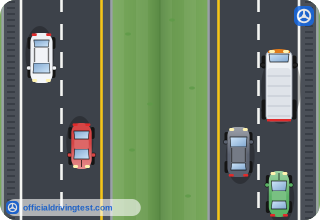
- Following too closely
- Driving slightly below the speed limit
- Signaling before a lane change
- Yielding to merging traffic
Show answer
Correct answer: Following too closely
The manual lists exceeding the speed limit, following too closely, ignoring traffic controls and improper turns as aggressive driving.
Source: Rhode Island Driver’s Manual (April 2024), page 23
-
Road rage is an escalation of emotions generally ignited by what?
- Drowsy or fatigued driving
- Driver inattention
- Aggressive driving behaviors
- Heavy traffic alone
Show answer
Correct answer: Aggressive driving behaviors
The manual says road rage is an escalation of emotions generally ignited by aggressive driving behaviors.
Source: Rhode Island Driver’s Manual (April 2024), page 23
-
Which of these is an example of road rage given in the manual?
- Tapping the horn twice
- Attempting to ram another vehicle
- Leaving plenty of room around your vehicle
- Moving out of the right-hand lane
Show answer
Correct answer: Attempting to ram another vehicle
Throwing objects at a vehicle, yelling at a specific roadway user and attempting to ram another vehicle are listed examples.
Source: Rhode Island Driver’s Manual (April 2024), page 23
-
What does the manual say about the passing lane?
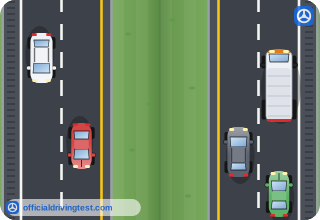
- Stay in it whenever you drive at the speed limit
- Except when passing, stay out of the far-left lane
- Use it to drive slowly so others pass on the right
- Use it whenever you are following too closely
Show answer
Correct answer: Except when passing, stay out of the far-left lane
The manual says not to block the passing lane and to stay out of the far-left lane except when passing.
Source: Rhode Island Driver’s Manual (April 2024), page 24
-
Which horn use may be perceived as less aggressive?
- One long blast
- Repeated long blasts
- Holding it until the other driver moves
- A couple of short taps
Show answer
Correct answer: A couple of short taps
The manual says to use the horn sparingly, because short taps seem less aggressive than one long blast.
Source: Rhode Island Driver’s Manual (April 2024), page 24
-
Which parking practice does the manual say helps prevent aggressive driving and road rage?
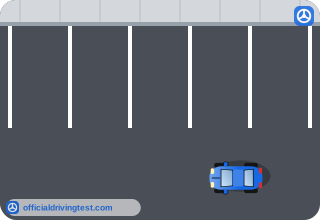
- Not parking across multiple parking spaces
- Parking across two spaces to protect your vehicle
- Parking close enough that your doors touch adjacent vehicles
- Parking in the first open space you see
Show answer
Correct answer: Not parking across multiple parking spaces
The manual says not to park across multiple spaces or touch adjacent vehicles with your car or its doors.
Source: Rhode Island Driver’s Manual (April 2024), page 24
-
When using high-beam headlights, when should you return to low beams, according to the guidelines for preventing aggressive driving?
- Once a pedestrian is ahead
- When you reach a curve
- As soon as you detect an oncoming vehicle
- When you reach a railroad crossing ahead
Show answer
Correct answer: As soon as you detect an oncoming vehicle
The manual says to switch back to low beams as soon as you detect an oncoming vehicle.
Source: Rhode Island Driver’s Manual (April 2024), page 24
-
According to the guidelines for preventing aggressive driving, what should you not do when driving close behind another vehicle?
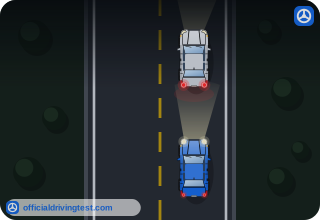
- Keep both hands on the steering wheel
- Drive with your high-beam headlights on
- Keep your low-beam headlights on
- Check your mirrors often
Show answer
Correct answer: Drive with your high-beam headlights on
The manual says not to drive behind another vehicle with your high-beam headlights on.
Source: Rhode Island Driver’s Manual (April 2024), page 24
-
Why does the manual say to move out of the right-hand lane, if safe to do so?
- To get ready to exit the roadway at the next ramp or intersection
- To pass slower vehicles
- To avoid pedestrians
- To allow vehicles entering the roadway to merge with minimal difficulty
Show answer
Correct answer: To allow vehicles entering the roadway to merge with minimal difficulty
Leaving the right-hand lane when safe makes it easier for entering vehicles to merge.
Source: Rhode Island Driver’s Manual (April 2024), page 24
-
What should you always use before changing lanes, according to the guidelines for preventing aggressive driving?
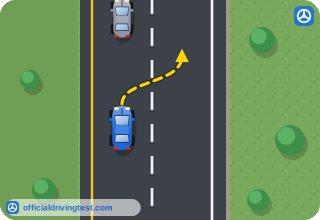
- Your turn signals
- Your horn
- Your hazard lights
- Your high beams
Show answer
Correct answer: Your turn signals
The manual says to always use turn signals before changing lanes.
Source: Rhode Island Driver’s Manual (April 2024), page 24
-
Following too closely can easily cause the driver being followed to do what?
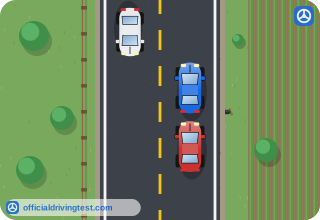
- Pull over immediately
- Speed up to leave a gap
- Become frustrated
- Turn on the hazard lights
Show answer
Correct answer: Become frustrated
The manual says following too closely can make the driver ahead frustrated.
Source: Rhode Island Driver’s Manual (April 2024), page 24
-
If confronted by a driver displaying aggressive behaviors toward you, what does the manual say about getting out of your vehicle?
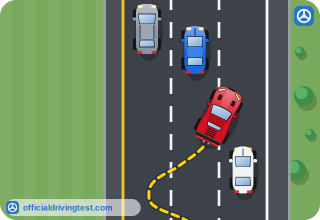
- Get out and speak calmly to the driver
- Do not get out, because your vehicle offers protection
- Get out only if the other driver stays inside
- Get out and take a photo of the license plate
Show answer
Correct answer: Do not get out, because your vehicle offers protection
The manual says your vehicle offers protection, so do not get out.
Source: Rhode Island Driver’s Manual (April 2024), page 24
-
If confronted by an aggressive driver, what does the manual say about eye contact?
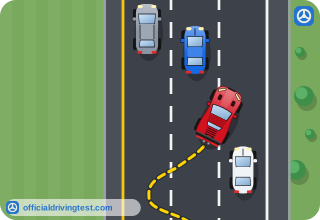
- Make steady eye contact with the driver to show you are calm
- Look at the other driver only when you speak
- Make eye contact to show you are not afraid
- Avoid eye contact with the other driver or passengers
Show answer
Correct answer: Avoid eye contact with the other driver or passengers
The manual says to avoid eye contact with the other driver or passengers.
Source: Rhode Island Driver’s Manual (April 2024), page 24
-
If a driver displays aggressive behaviors toward you, how does the manual say to respond to that driver?
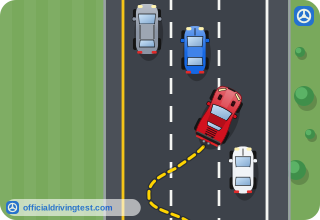
- Do not respond to the other driver
- Honk to show you are aware
- Match the other driver’s speed
- Slow down in front of the other driver
Show answer
Correct answer: Do not respond to the other driver
The manual says not to respond, to avoid escalating the conflict.
Source: Rhode Island Driver’s Manual (April 2024), page 24
-
If confronted by an aggressive driver and necessary, whom does the manual say to contact for assistance?
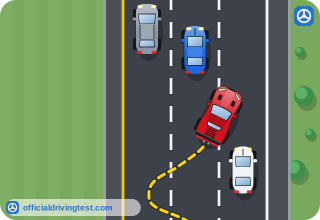
- The DMV
- Your insurance company
- 911
- A tow truck service
Show answer
Correct answer: 911
The manual says to contact 911 if necessary.
Source: Rhode Island Driver’s Manual (April 2024), page 24
-
If necessary, where does the manual say to drive when an aggressive driver confronts you?
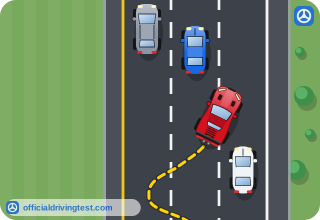
- A quiet side street away from traffic where you can stop and calm down
- A busy public place with witnesses, such as a hospital or fire station
- An empty parking lot where the other driver cannot follow
- Your own home, so you can leave the vehicle quickly
Show answer
Correct answer: A busy public place with witnesses, such as a hospital or fire station
A busy public place with witnesses, such as a hospital, fire station or busy convenience store, gives you safety.
Source: Rhode Island Driver’s Manual (April 2024), page 24
-
How does the manual say to treat other road users even when they are not courteous to you?
- Respond with the same behavior
- Follow them closely to show your displeasure
- Warn them with your horn
- Show courtesy and consideration
Show answer
Correct answer: Show courtesy and consideration
The manual says to show courtesy and consideration to other road users, even when they are not courteous to you.
Source: Rhode Island Driver’s Manual (April 2024), page 24
-
What can help you remain calm while driving, according to the guidelines for preventing aggressive driving?
- Listening to soothing music
- Listening to music at a high volume
- Making phone calls
- Listening to talk radio arguments
Show answer
Correct answer: Listening to soothing music
The manual says to always remain calm and notes that soothing music can help.
Source: Rhode Island Driver’s Manual (April 2024), page 24
-
Why does the manual say to be especially careful when buses stop?
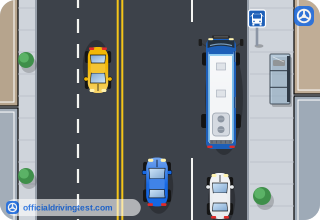
- The bus may suddenly reverse
- The bus may be carrying hazardous materials
- Passengers may be entering or leaving the bus
- The bus driver may be changing a flat tire
Show answer
Correct answer: Passengers may be entering or leaving the bus
Passengers may be getting on or off when a bus stops.
Source: Rhode Island Driver’s Manual (April 2024), page 36
-
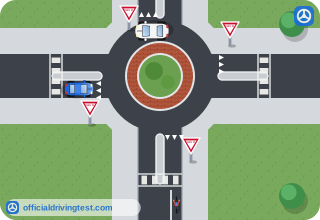
How should cyclists generally cross the pedestrian crosswalk at a roundabout?
- Ride across at full speed
- Ride across in the roadway beside vehicles
- Walk their bicycles across
- Ride across the center island
Show answer
Correct answer: Walk their bicycles across
Cyclists should generally walk their bicycles across the pedestrian crosswalk.
Source: Rhode Island Driver’s Manual (April 2024), page 41
-
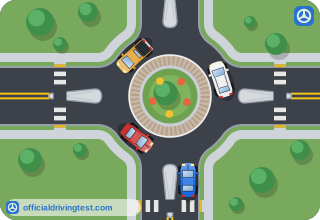
Who may navigate roundabouts like motorists?
- Inexperienced cyclists
- Experienced cyclists
- Pedestrians
- Cyclists on sidewalks
Show answer
Correct answer: Experienced cyclists
The manual says experienced cyclists may navigate roundabouts like motorists.
Source: Rhode Island Driver’s Manual (April 2024), page 41
-
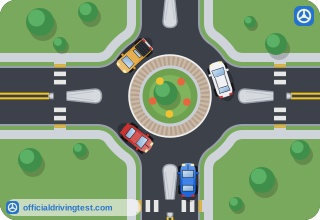
Where in the lane should a bicyclist ride in a roundabout?
- Near the curb line, out of the way of traffic
- On the center island of the roundabout
- On the splitter island
- In the middle of the lane, not near the curb line
Show answer
Correct answer: In the middle of the lane, not near the curb line
Riding in the middle of the lane keeps vehicles from passing the bicyclist.
Source: Rhode Island Driver’s Manual (April 2024), page 41
-
At a roundabout crosswalk, what must cyclists do for pedestrians?
- Yield to pedestrians in the crosswalk
- Ring a bell and keep riding through
- Ride ahead of them to clear the way
- Pass them on the right side
Show answer
Correct answer: Yield to pedestrians in the crosswalk
Like motor vehicles, cyclists must yield to pedestrians in crosswalks.
Source: Rhode Island Driver’s Manual (April 2024), page 41
-
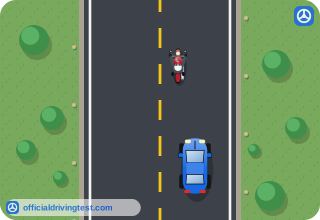
Why may a motorcycle slow down without showing a brake light?
- Motorcycles do not have brake lights at all
- Motorcyclists often slow by downshifting or rolling off the throttle
- Motorcyclists never use their brakes when riding in traffic
- Motorcycle brake lights only come on at night
Show answer
Correct answer: Motorcyclists often slow by downshifting or rolling off the throttle
Slowing by downshifting or easing off the throttle does not activate the brake light, so allow more following distance.
Source: Rhode Island Driver’s Manual (April 2024), page 48
-
How much space cushion should you keep at minimum when following a motorcyclist?
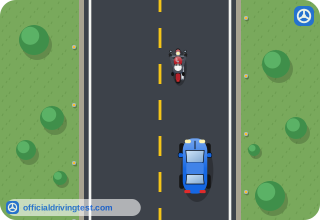
- At least two seconds
- At least one second
- At least half a second
- At least four seconds
Show answer
Correct answer: At least four seconds
The manual says to keep at least a four-second space cushion when following a motorcyclist.
Source: Rhode Island Driver’s Manual (April 2024), page 48
-
Why do motorcyclists often adjust their position within a lane?
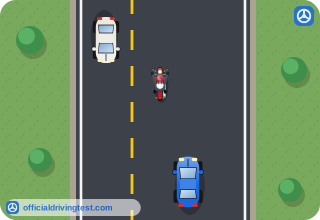
- To be seen more easily and to reduce the effects of wind and debris
- To keep other vehicles from passing them on either side of the lane
- To avoid being followed too closely by other drivers
- To make the lane markings easier for them to see
Show answer
Correct answer: To be seen more easily and to reduce the effects of wind and debris
The manual says riders move within the lane to be more visible and to minimize wind, debris and passing vehicles.
Source: Rhode Island Driver’s Manual (April 2024), page 48
-
If a motorcycle is in the left or right portion of the lane, what may the rider be doing?
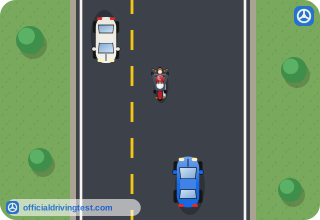
- Signaling that the rider wants to pass you
- Showing that the rider is about to leave the lane
- Selecting a safer lane position, usually with a better line of sight
- Showing that the rider can no longer control the motorcycle
Show answer
Correct answer: Selecting a safer lane position, usually with a better line of sight
The manual says the rider may be choosing a safer lane position that usually gives a better line of sight.
Source: Rhode Island Driver’s Manual (April 2024), page 48
-
Because motorcycles are less visible, how may they appear?
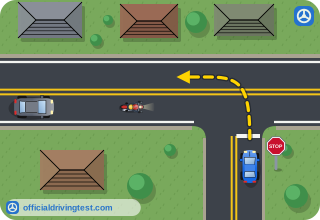
- To be moving slower than they really are
- To be larger than they really are
- To be stopped when they are moving
- To be moving faster than they really are
Show answer
Correct answer: To be moving faster than they really are
The manual says less visible motorcycles may seem to move faster than they truly do.
Source: Rhode Island Driver’s Manual (April 2024), page 48
-
When you check traffic to turn at an intersection, how should you judge the distance of a motorcycle?
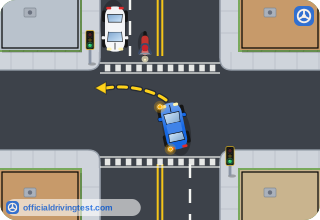
- Assume that it is farther away than it looks
- Predict that it is closer than it looks
- Assume that it is moving slower than it looks
- Judge it by the glare of its single headlight
Show answer
Correct answer: Predict that it is closer than it looks
Because of its small size a motorcycle may look farther away than it is, so predict it is closer.
Source: Rhode Island Driver’s Manual (April 2024), page 48
-
A motorcycle can be hidden by door posts, mirrors, passengers or bushes. What should you do when changing lanes or turning at intersections?
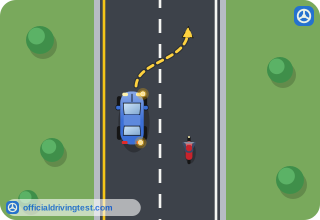
- Rely on your mirrors alone to see it
- Sound your horn before you make the move
- Take an extra moment to thoroughly check traffic
- Slow to a crawl before you change lanes
Show answer
Correct answer: Take an extra moment to thoroughly check traffic
The manual says to take an extra moment to check traffic thoroughly because a small motorcycle is easily hidden.
Source: Rhode Island Driver’s Manual (April 2024), page 48
-
How does the stopping distance of a motorcycle compare with that of a car?
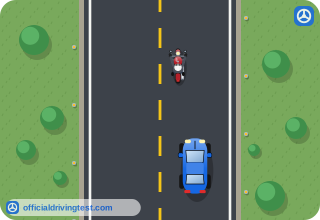
- Nearly the same, but slippery pavement makes quick stops difficult
- Much shorter, because motorcycles are lighter than cars
- Twice as long as a car on dry pavement
- Always shorter than a car on slippery pavement
Show answer
Correct answer: Nearly the same, but slippery pavement makes quick stops difficult
The manual says the stopping distances are nearly the same, but a rider has trouble stopping quickly on slippery pavement.
Source: Rhode Island Driver’s Manual (April 2024), page 48
-
Why may a motorcyclist think you are farther back than you actually are?
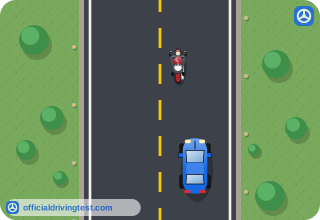
- Their mirrors are smaller and usually convex, giving a smaller image of you
- Their mirrors are flat and reflect too much glare back
- Their mirrors are mounted too high to show other vehicles behind
- Their helmets block the rider's view of the mirrors
Show answer
Correct answer: Their mirrors are smaller and usually convex, giving a smaller image of you
Small convex mirrors show a smaller image of your vehicle, so you appear farther back.
Source: Rhode Island Driver’s Manual (April 2024), page 48
-
Under what conditions is maneuverability one of a motorcycle's better characteristics?
- At every speed and on any road surface
- Only at highway speeds when the pavement is dry
- Only at slower speeds and with good road conditions
- Only on wet roads at slow speeds
Show answer
Correct answer: Only at slower speeds and with good road conditions
The manual says a motorcycle is maneuverable only at slower speeds and in good road conditions, so a rider may not be able to steer out of the way.
Source: Rhode Island Driver’s Manual (April 2024), page 48
-
How does carrying a passenger affect a motorcyclist?
- Balance is easier, stopping distance is shorter, and maneuverability is increased
- Balance is harder, stopping distance is longer, and maneuverability is reduced
- Balance is unchanged, and maneuverability is improved
- Only the top speed of the motorcycle is reduced
Show answer
Correct answer: Balance is harder, stopping distance is longer, and maneuverability is reduced
A passenger makes balance harder, lengthens the stopping distance and lowers maneuverability.
Source: Rhode Island Driver’s Manual (April 2024), page 48
-
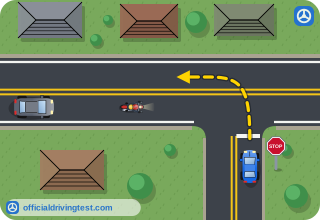
What does the manual say to do when checking traffic at an intersection, because some drivers may not 'see' a motorcycle?
- Look once, quickly, to save time
- Listen for engine noise instead of looking
- Wait for the rider to signal first
- Look twice for motorcycles
Show answer
Correct answer: Look twice for motorcycles
There are many more vehicles and larger trucks than motorcycles, so the manual tells you to look twice.
Source: Rhode Island Driver’s Manual (April 2024), page 48
-
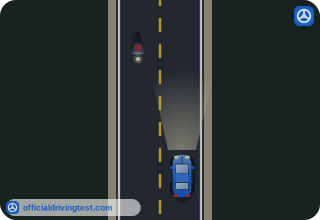
At night, why may a motorcycle be hard to recognize?
- Its lights are always much dimmer than those of a car
- Motorcycles are not required to have a taillight
- Its single headlight and taillight can blend into other traffic lights
- Its lights flash on and off all the time while it is in traffic
Show answer
Correct answer: Its single headlight and taillight can blend into other traffic lights
The manual says those 'odd' lights in traffic could be a motorcycle.
Source: Rhode Island Driver’s Manual (April 2024), page 48
-
According to the manual, what is the most protection a rider can wear?
- Leather
- Denim
- Nylon mesh
- Cotton
Show answer
Correct answer: Leather
The manual says leather is the most protection a rider can wear.
Source: Rhode Island Driver’s Manual (April 2024), page 48
-
Why is black leather clothing a problem for the visibility of a rider at night?
- Black leather reflects headlights and causes glare
- Black leather gives the least protection of any riding clothing
- Black leather is not allowed on motorcycles here
- Black is the least visible color and blends into the night background
Show answer
Correct answer: Black is the least visible color and blends into the night background
The manual says black, the color of most leather products, is the least visible and blends into the night background.
Source: Rhode Island Driver’s Manual (April 2024), page 48
-
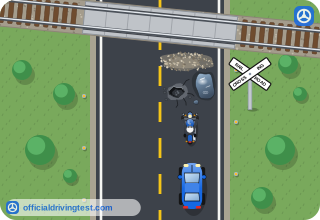
For what should you be prepared when you follow or approach a motorcyclist?
- The motorcyclist will drive over every pothole
- The motorcyclist may swerve around a pothole or low manhole cover
- The motorcyclist will stop beside every manhole cover
- The motorcyclist will never change position in the lane
Show answer
Correct answer: The motorcyclist may swerve around a pothole or low manhole cover
The manual says to be prepared for a motorcyclist to swerve around a pothole or a low set manhole cover.
Source: Rhode Island Driver’s Manual (April 2024), page 48
-
What does the manual say you can do at night while preparing to stop, to warn those behind you?
- Sound your horn twice
- Flash your brake lights a couple of times
- Turn on your high beams
- Switch off your headlights for a moment
Show answer
Correct answer: Flash your brake lights a couple of times
The manual says that, at night, flashing your brake lights a couple of times warns the drivers behind that you are about to stop.
Source: Rhode Island Driver’s Manual (April 2024), page 48
-
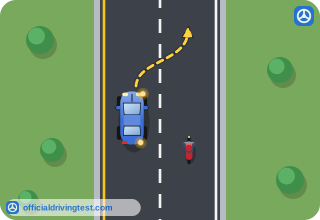
Before you attempt to pass or change lanes, what should you perform because every mirror has a blind spot?
- A mirror check only
- A short blast of the horn
- A quick signal and then a fast lane change
- A visual head check to the left and right
Show answer
Correct answer: A visual head check to the left and right
A head check covers the blind spots, and some motorcyclists may travel in small groups.
Source: Rhode Island Driver’s Manual (April 2024), page 48
-
What caution does the manual give about older model motorcycles?
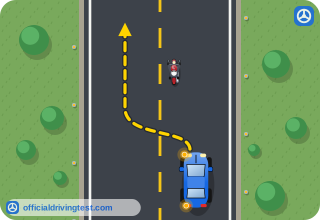
- They lack self-cancelling turn signals, so use caution when passing them
- They lack brake lights, so always keep well behind them at night
- They lack mirrors, so never pass them
- They cannot change lanes, so stay beside them
Show answer
Correct answer: They lack self-cancelling turn signals, so use caution when passing them
Older motorcycles lack self-cancelling turn signals, so the manual says to use caution when passing them and to take an extra couple of seconds to make sure the rider sees you.
Source: Rhode Island Driver’s Manual (April 2024), page 48
-
What does Rhode Island law require of passengers on motorcycles, according to the manual?
- To wear a reflective vest
- To wear full-length boots
- To wear helmets
- To hold on with both hands
Show answer
Correct answer: To wear helmets
The manual states that Rhode Island law requires passengers on motorcycles to wear helmets.
Source: Rhode Island Driver’s Manual (April 2024), page 48
-
Which motorcycle operators must always wear a certified helmet, according to the manual?
- Any operator under eighteen
- Any operator under sixteen
- Any operator under twenty-five
- Any operator under twenty-one
Show answer
Correct answer: Any operator under twenty-one
The manual says any operator under 21 shall always wear a certified helmet.
Source: Rhode Island Driver’s Manual (April 2024), page 48
-
For how long must a new motorcycle operator, regardless of age, wear an approved helmet?
- For the first 90 days of the license
- For the first year of the license
- For the first six months of the license
- For the first two years of the license
Show answer
Correct answer: For the first year of the license
The manual says new operators must wear an approved helmet for the first year of their license, whatever their age.
Source: Rhode Island Driver’s Manual (April 2024), page 48
-
Which protective item does the manual say Rhode Island law requires all motorcycle operators to wear properly?
- A reflective vest
- Hearing protection
- Eye protection
- A neck brace
Show answer
Correct answer: Eye protection
The manual says the law requires all operators to properly wear eye protection.
Source: Rhode Island Driver’s Manual (April 2024), page 49
-
What can heavy shoes or boots do for a motorcycle operator, according to the manual?
- Reduce or prevent injury to the operator's feet
- Reduce the engine noise that reaches the rider
- Improve the grip of the tires
- Keep the helmet from moving
Show answer
Correct answer: Reduce or prevent injury to the operator's feet
The manual lists heavy shoes or boots as protection for the operator's feet.
Source: Rhode Island Driver’s Manual (April 2024), page 49
-
What clothing does the manual say can reduce or prevent bodily injury for a motorcycle operator?
- Full-length pants, not shorts, and a durable jacket
- Shorts and a lightweight cotton shirt with sleeves
- Loose pants and a nylon windbreaker
- A sleeveless vest and thin leggings
Show answer
Correct answer: Full-length pants, not shorts, and a durable jacket
The manual recommends full-length pants, not shorts, and a durable jacket.
Source: Rhode Island Driver’s Manual (April 2024), page 49
-
What can full-fingered gloves do for a motorcycle operator, according to the manual?
- Reduce or prevent injury to the operator's eyes
- Reduce or prevent injury to the operator's feet
- Reduce or prevent injury to the operator's hands
- Reduce the wind noise around the helmet
Show answer
Correct answer: Reduce or prevent injury to the operator's hands
The manual lists full-fingered gloves as protection for the operator's hands.
Source: Rhode Island Driver’s Manual (April 2024), page 49
-
What are the blind spots around large trucks also known as?
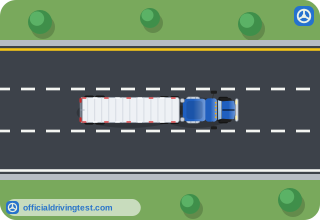
- No zones
- Danger lanes
- Slow zones
- Dead lanes
Show answer
Correct answer: No zones
The manual calls the truck driver's blind spots "no zones" and says it is up to you to avoid them.
Source: Rhode Island Driver’s Manual (April 2024), page 52
-
If a truck is pulling a trailer, how long is the blind spot behind it?
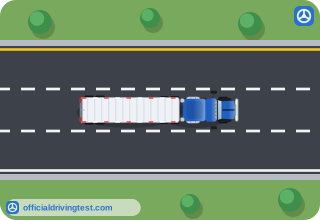
- About 10 feet
- About 20 feet
- Over 50 feet
- Over 100 feet
Show answer
Correct answer: Over 50 feet
The blind spot behind a truck pulling a trailer is more than 50 feet long.
Source: Rhode Island Driver’s Manual (April 2024), page 52
-
If you find yourself beside the right side of a truck in its blind spot, what should you do?
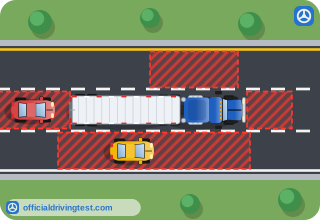
- Stay beside it and sound your horn
- Pull ahead or fall back quickly
- Slow down to match the truck's speed
- Move closer so the driver can see you
Show answer
Correct answer: Pull ahead or fall back quickly
The manual says to avoid cruising into the right side of a truck and to pull ahead or fall back quickly if you are there.
Source: Rhode Island Driver’s Manual (April 2024), page 52
-
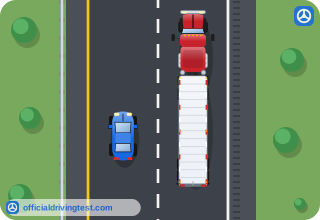
Why should you grip the steering wheel firmly when driving close beside a truck in a narrow lane?
- The air pressure between the vehicles may push them apart
- The truck may suddenly brake without warning
- The truck's exhaust may reduce your visibility
- The airflow between the two vehicles may tend to draw them together
Show answer
Correct answer: The airflow between the two vehicles may tend to draw them together
Airflow between you and the truck can pull the vehicles toward each other unless you are on guard.
Source: Rhode Island Driver’s Manual (April 2024), page 52
-
How far back should you stay behind a truck if you expect its driver to see you?
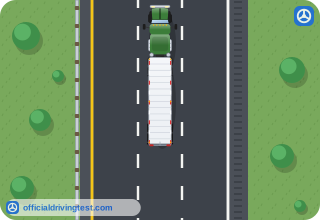
- At least 50 feet
- At least 20 feet
- At least 30 feet
- At least 100 feet
Show answer
Correct answer: At least 50 feet
The manual advises staying at least 50 feet back if you expect the truck driver to see you.
Source: Rhode Island Driver’s Manual (April 2024), page 52
-
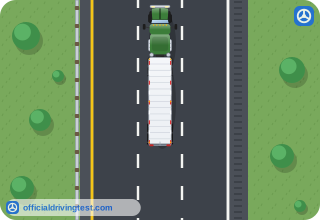
How can you tell that you have enough distance behind a truck or semi-tractor-trailer?
- You can read the truck's license plate
- You can see both of the truck's rear tires
- You can see the side-view mirrors of the truck
- The truck's brake lights are not visible
Show answer
Correct answer: You can see the side-view mirrors of the truck
Being able to see the truck's side-view mirrors shows you are far enough back.
Source: Rhode Island Driver’s Manual (April 2024), page 52
-
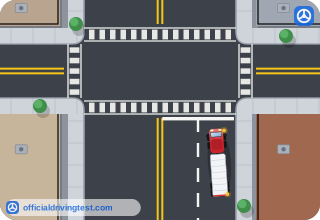
How should you show courtesy to a larger vehicle that needs more space to make a turn?
- Pull up close beside it so the operator sees you
- Give it more space, which helps its operator see you
- Sound your horn as it begins to turn
- Speed up to pass it before it turns
Show answer
Correct answer: Give it more space, which helps its operator see you
Giving the larger vehicle extra room shows courtesy and helps the operator see you.
Source: Rhode Island Driver’s Manual (April 2024), page 52
-
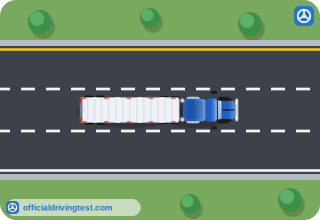
What does it mean if you cannot see the operator of a larger vehicle in its side-view mirror?
- The operator is about to turn
- The operator is driving too fast
- The operator can see you only at night
- The operator cannot see you
Show answer
Correct answer: The operator cannot see you
If you cannot see the operator in the side-view mirror, then that operator cannot see you.
Source: Rhode Island Driver’s Manual (April 2024), page 52
-
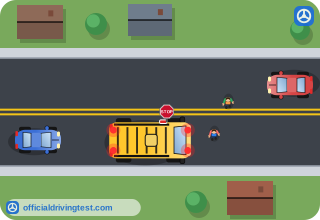
The red lights are flashing on a school bus. What does Rhode Island require of motorists approaching from either direction?
- Slow down and proceed with caution until past the bus
- Stop only if you are behind the bus, never when facing it
- Stop only if children can be seen getting on or off
- Stop fully and stay stopped until the red lights no longer flash
Show answer
Correct answer: Stop fully and stay stopped until the red lights no longer flash
Motorists from either direction must stop fully and remain stopped until the bus's red lights stop flashing.
Source: Rhode Island Driver’s Manual (April 2024), page 54
-
Where does the requirement to stop for a school bus with flashing red lights apply?
- On public highways, on private roads and in parking lots
- Only on public highways
- On public highways and private roads, but not in parking lots
- Only on roads with a school zone sign
Show answer
Correct answer: On public highways, on private roads and in parking lots
The requirement covers public highways, private roads and parking lots.
Source: Rhode Island Driver’s Manual (April 2024), page 54
-
What is the fine for a first violation of the law about stopping for a school bus with flashing red lights?
- Between $50 and $100
- Between $100 and $200
- Between $250 and $500
- Between $500 and $1,000
Show answer
Correct answer: Between $250 and $500
A first violation brings a fine of $250 to $500 and/or a license suspension.
Source: Rhode Island Driver’s Manual (April 2024), page 54
-
For a first violation of the school bus stopping law, for how long may your driver's license be suspended?
- For a period up to ten (10) days
- For a period up to thirty (30) days
- For a period up to sixty (60) days
- For a period up to ninety (90) days
Show answer
Correct answer: For a period up to thirty (30) days
The first-violation penalty may include a license suspension of up to thirty days.
Source: Rhode Island Driver’s Manual (April 2024), page 54
-
What happens to the penalties for subsequent violations of the school bus stopping law?
- They stay the same
- They are reduced
- They apply only if a child is injured
- They increase
Show answer
Correct answer: They increase
The manual says penalties increase for subsequent violations.
Source: Rhode Island Driver’s Manual (April 2024), page 54
-
When do motorists not have to stop for the flashing red lights of a school bus?
- When the bus is opposite your vehicle on a divided highway
- When the bus is more than 100 feet away from your vehicle
- When no children can be seen getting on or off the bus
- When the bus is stopped on a two-lane road with no traffic
Show answer
Correct answer: When the bus is opposite your vehicle on a divided highway
Motorists need not stop when the bus is opposite them on a divided highway.
Source: Rhode Island Driver’s Manual (April 2024), page 54
-
How does the manual define a divided highway?
- A roadway with a double yellow line between the directions of travel
- A roadway with four or more lanes in total, whatever lies between them
- A roadway with a barrier, guardrail, median, trees or water between opposite lanes
- A roadway with a center turn lane shared by both directions of travel
Show answer
Correct answer: A roadway with a barrier, guardrail, median, trees or water between opposite lanes
A divided highway has something physical between the opposite lanes, such as a Jersey barrier, guardrail, median, trees or water.
Source: Rhode Island Driver’s Manual (April 2024), page 54
-
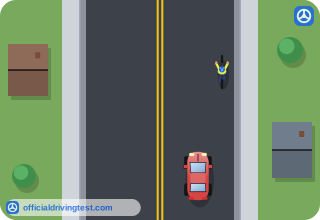
What rights and laws apply to bicycle riders, according to the manual?
- Fewer rights, because they are not in a motor vehicle
- The same rights and the same laws as drivers of motor vehicles
- Rights only on roads with a bicycle lane
- The same rights, but different laws
Show answer
Correct answer: The same rights and the same laws as drivers of motor vehicles
Bicycle riders are given the same rights and must follow the same laws as drivers of motor vehicles.
Source: Rhode Island Driver’s Manual (April 2024), page 54
-
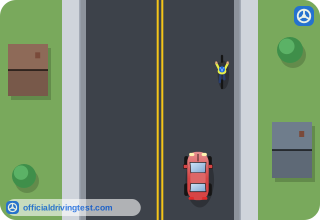
When should a bicycle rider cross the lane of vehicle travel, according to the manual?
- Whenever the road ahead is clear
- To pass vehicles on the right
- Only to avoid pedestrians
- Only to make a left turn
Show answer
Correct answer: Only to make a left turn
Riders should stay as close to the right as safe and cross the lane only to make a left turn.
Source: Rhode Island Driver’s Manual (April 2024), page 54
-
What is the largest number of bicycles that may be ridden side by side?
- Two
- One
- Three
- Four
Show answer
Correct answer: Two
The manual says no more than two bicycles may be ridden side by side.
Source: Rhode Island Driver’s Manual (April 2024), page 54
-
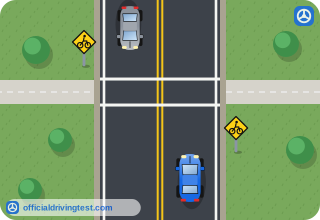
When there is a safe bicycle path near the roadway, what should riders do?
- Ride on the sidewalk
- Ride in the road but on the left side
- Use the path rather than the road
- Use either the path or the road, whichever is faster
Show answer
Correct answer: Use the path rather than the road
The manual says riders should use a safe bicycle path rather than the road.
Source: Rhode Island Driver’s Manual (April 2024), page 54
-
Who must wear a certified bicycle helmet on a public highway, bicycle path or other public right-of-way?
- Any rider or passenger twelve years of age or younger
- Any rider or passenger fifteen years of age or younger
- Any rider or passenger seventeen years of age or younger
- Only riders who are on public highways
Show answer
Correct answer: Any rider or passenger fifteen years of age or younger
The helmet rule covers any person fifteen or younger riding a bicycle or riding as a passenger on one.
Source: Rhode Island Driver’s Manual (April 2024), page 54
-
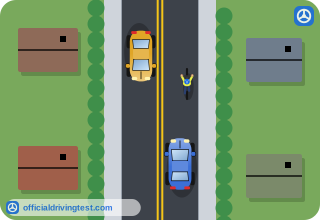
Why should you give bicyclists plenty of clearance on the street?
- They are required to ride in the middle of the lane at all times of day
- They cannot hear approaching vehicles because of their helmets
- They must stop at every intersection, even without a stop sign
- Hazards like potholes, glass and storm grates may make them move into your path
Show answer
Correct answer: Hazards like potholes, glass and storm grates may make them move into your path
Road hazards that drivers do not easily see can make a bicyclist swerve or slow, so extra room is needed.
Source: Rhode Island Driver’s Manual (April 2024), page 54
-
How must automobiles yield to bicyclists?
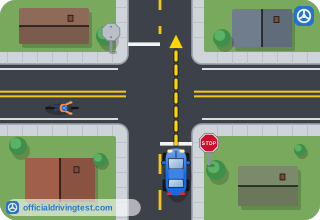
- In the same way as for other types of vehicles
- Only when the bicyclist is in a bicycle lane
- Only when the bicyclist signals
- Only when the bicyclist is wearing a helmet
Show answer
Correct answer: In the same way as for other types of vehicles
The manual says automobiles must yield to bicyclists in the same way as for other vehicles.
Source: Rhode Island Driver’s Manual (April 2024), page 55
-
Which of these is a sign that a bicyclist is inexperienced?
- Riding in a smooth and straight manner
- Wearing a helmet
- Weaving or wobbling
- Riding close to the right side of the road
Show answer
Correct answer: Weaving or wobbling
The manual lists weaving, wobbling and riding against traffic without a helmet as signs of inexperience, and says to give such riders plenty of room.
Source: Rhode Island Driver’s Manual (April 2024), page 55
-
What does the manual say about sounding your horn as you approach a cyclist?
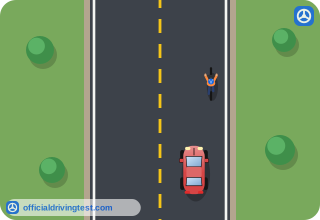
- Do not, because the loud noise can startle the cyclist
- Do it, so the cyclist knows that you are approaching
- Do it twice, to be sure that the cyclist hears you
- Do it only at night, when the cyclist is hard to see
Show answer
Correct answer: Do not, because the loud noise can startle the cyclist
A loud horn can startle a cyclist and cause the cyclist to swerve.
Source: Rhode Island Driver’s Manual (April 2024), page 55
-
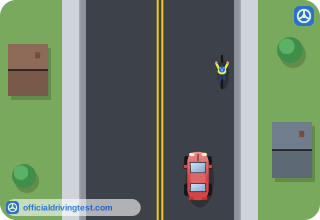
When approaching or passing a bicyclist, what does the manual say you should avoid?
- Slowing down to leave extra room for the bicyclist
- Leaving extra clearance on the side of the bicyclist
- Talking on a cell phone, text messaging or other distractions
- Checking your mirrors for traffic behind you
Show answer
Correct answer: Talking on a cell phone, text messaging or other distractions
The manual says to avoid cell phone use, texting and other distractions when approaching or passing a bicyclist.
Source: Rhode Island Driver’s Manual (April 2024), page 55
-
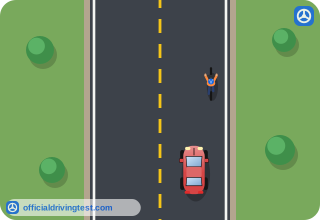
When passing a bicyclist, how much clearance does the manual say to allow, as much as possible?
- 1-2 feet
- 3-5 feet
- 7-9 feet
- 10-12 feet
Show answer
Correct answer: 3-5 feet
The manual suggests allowing as much clearance as possible, 3-5 feet, when passing a bicyclist.
Source: Rhode Island Driver’s Manual (April 2024), page 55
-
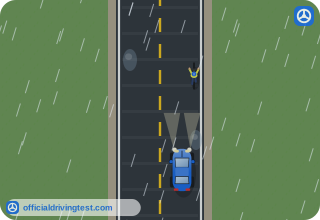
In inclement weather, what should you give bicyclists?
- The right-of-way at all times
- Less room, because they ride slowly
- Nothing different from usual
- Extra trailing and passing room
Show answer
Correct answer: Extra trailing and passing room
The manual says to give bicyclists extra trailing and passing room in inclement weather, as you would other motorists.
Source: Rhode Island Driver’s Manual (April 2024), page 55
-
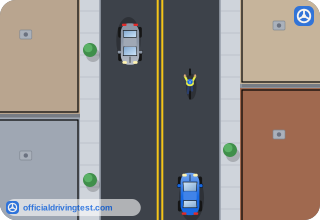
A road is too narrow for vehicles and bicycles to travel safely side by side, and a bicyclist ahead "takes the travel lane." What should you be prepared to do?
- Reduce speed or stop
- Pass on the right
- Sound your horn
- Drive onto the shoulder
Show answer
Correct answer: Reduce speed or stop
When bicyclists proceed in the center of a road too narrow to share, drivers should be ready to slow down or stop.
Source: Rhode Island Driver’s Manual (April 2024), page 55
-
When should you pass a bicyclist if oncoming traffic is near?
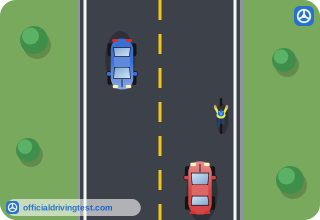
- Pass right away, before the oncoming vehicles arrive
- Pass in the bicycle lane
- Wait until there are no oncoming vehicles before you pass
- Pass on the right side
Show answer
Correct answer: Wait until there are no oncoming vehicles before you pass
The manual says not to pass bicyclists if oncoming traffic is near, but to wait until there are no oncoming vehicles.
Source: Rhode Island Driver’s Manual (April 2024), page 55
-
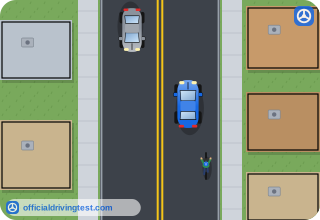
After you have passed a bicyclist, what should you not do?
- Return to your lane after passing the bicyclist
- Reduce speed or stop abruptly in front of the bicyclist
- Signal before you move back into your lane
- Check your mirrors before moving back
Show answer
Correct answer: Reduce speed or stop abruptly in front of the bicyclist
After passing, you should not slow down or stop abruptly in front of the bicyclist.
Source: Rhode Island Driver’s Manual (April 2024), page 55
-
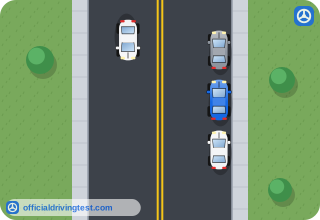
What should you do before opening your door into a traffic lane after parking?
- Sound your horn to warn the traffic behind you
- Turn on your hazard lights
- Look behind you for an approaching bicyclist
- Open the door slightly and wait
Show answer
Correct answer: Look behind you for an approaching bicyclist
The manual says to look behind you for a bicyclist approaching your parked vehicle before opening the door.
Source: Rhode Island Driver’s Manual (April 2024), page 55
-
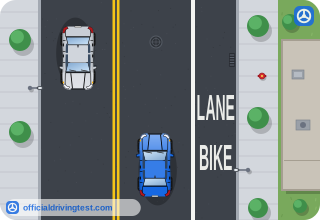
Should you drive in a bicycle lane?
- Yes, to pass a slow vehicle ahead when the lane is clear
- Yes, whenever there are no bicyclists in sight ahead of you
- No, and you may never cross it for any reason at all
- No, but you may cross it to turn a corner or enter or leave a driveway
Show answer
Correct answer: No, but you may cross it to turn a corner or enter or leave a driveway
You may not drive in a bicycle lane, but crossing is allowed when turning a corner or entering or leaving an alley, private road or driveway.
Source: Rhode Island Driver’s Manual (April 2024), page 55
-
Before you turn into a bicycle lane or sidewalk, what must you do?
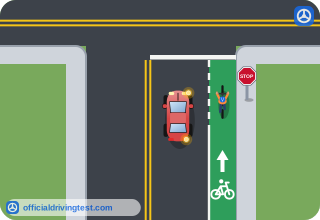
- Yield to bicyclists in the bike lane or on the sidewalk
- Sound your horn to warn them that you are turning
- Wait for a traffic officer to wave you across
- Turn on your hazard lights before crossing it
Show answer
Correct answer: Yield to bicyclists in the bike lane or on the sidewalk
The manual says to yield to bicyclists in a bicycle lane or on a sidewalk before you turn into the lane or sidewalk.
Source: Rhode Island Driver’s Manual (April 2024), page 56
-
Why can children on bicycles pose an increased safety risk for motorists?
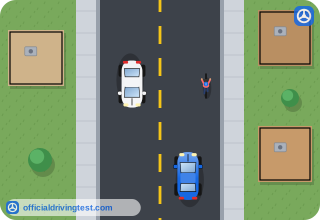
- They are not allowed to ride in the road with other kinds of traffic
- They always ride much faster than adult bicyclists do
- They may not be able to judge the speed and distance of oncoming vehicles
- They cannot hear vehicles approaching from behind them
Show answer
Correct answer: They may not be able to judge the speed and distance of oncoming vehicles
Children's visual skills and depth perception may be less developed than adults', so they may misjudge the speed and distance of oncoming vehicles.
Source: Rhode Island Driver’s Manual (April 2024), page 56
-
What is "dooring"?
- A cyclist riding between two parked vehicles and hitting a mirror
- A driver parking too close to a bicycle lane marking
- A cyclist opening a door to enter a building
- A driver or passenger carelessly opens a door and hits a passing cyclist
Show answer
Correct answer: A driver or passenger carelessly opens a door and hits a passing cyclist
Dooring is a collision between a passing cyclist and a carelessly opened vehicle door.
Source: Rhode Island Driver’s Manual (April 2024), page 56
-
What is the "Dutch Reach" that operators of motor vehicles should practice?
- Opening the driver's door with the right hand while turning to look
- Opening the driver's door with the left hand while sounding the horn
- Waiting five seconds before leaving the vehicle
- Turning on the hazard lights before opening the door
Show answer
Correct answer: Opening the driver's door with the right hand while turning to look
The Dutch Reach means opening the driver's door with the right hand while turning your head to look out the side and rear windows.
Source: Rhode Island Driver’s Manual (April 2024), page 56
-
Under Rhode Island law, how long may a person leave a vehicle door open on the side available to moving traffic?
- Up to one minute, as long as the vehicle is parked legally
- Any length of time during daylight
- Only as long as necessary to load or unload passengers
- Up to five minutes in a loading zone
Show answer
Correct answer: Only as long as necessary to load or unload passengers
The law bars leaving a door open on the traffic side longer than necessary to load or unload passengers.
Source: Rhode Island Driver’s Manual (April 2024), page 56
-
When may a person open the door of a motor vehicle on a roadway available to moving traffic?
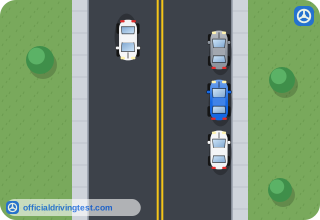
- Whenever the vehicle has come to a complete stop at the curb or edge
- Only when it is reasonably safe and does not interfere with other traffic
- Whenever no other vehicle is within 100 feet of the door
- Whenever the hazard lights have been turned on first
Show answer
Correct answer: Only when it is reasonably safe and does not interfere with other traffic
The statute allows opening the door only when reasonably safe and without interfering with other traffic, including pedestrians and bicycles.
Source: Rhode Island Driver’s Manual (April 2024), page 56
-
Which of these is on the list of aggressive behaviors that have resulted in violence in the past?
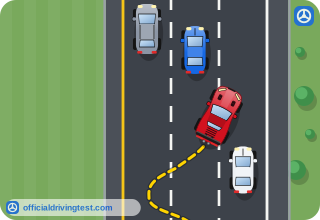
- Signaling before changing lanes
- Driving at the posted speed limit
- Letting another driver merge ahead of you
- Blocking the passing lane
Show answer
Correct answer: Blocking the passing lane
Blocking the passing lane, meaning not yielding to someone who wants to pass, is on the list of behaviors that have led to violence.
Source: Rhode Island Driver’s Manual (April 2024), page 56
-
Which of these driving habits is listed as having resulted in violence in the past?
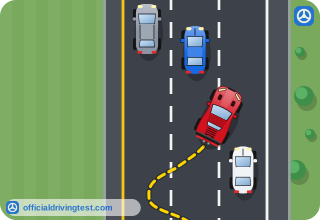
- Using high beam headlights in heavy traffic areas
- Using low beam headlights on a dark road at night
- Turning on hazard lights during a breakdown
- Using your turn signal well before turning
Show answer
Correct answer: Using high beam headlights in heavy traffic areas
Using high beams in heavy traffic is on the list of behaviors that have led to violence.
Source: Rhode Island Driver’s Manual (April 2024), page 56
-
Which of these mistakes is listed as having led to violence in the past?
- Assuming that another driver will yield the right-of-way
- Waiting patiently behind a slow-moving vehicle for a while
- Assuming that an apparently aggressive act was deliberate
- Giving a driver who wants to pass room to do so
Show answer
Correct answer: Assuming that an apparently aggressive act was deliberate
The manual warns that assuming an aggressive act was deliberate has led to violence.
Source: Rhode Island Driver’s Manual (April 2024), page 56
-
Which of these should you do to avoid becoming an aggressive driver?
- Drive faster to finish a long trip sooner
- Take breaks on long drives
- Make eye contact with hostile drivers
- Think about the problems of your day while driving
Show answer
Correct answer: Take breaks on long drives
Taking breaks on long drives is one of the manual's tips for not becoming an aggressive driver.
Source: Rhode Island Driver’s Manual (April 2024), page 56
-
To avoid becoming an aggressive driver, what should you do about eye contact with a hostile or angry driver?
- Make it, to show you are not afraid
- Make it, so the driver knows you are sorry
- Hold it until the driver looks away
- Avoid it
Show answer
Correct answer: Avoid it
The manual lists avoiding eye contact with a hostile or angry driver as a way not to become aggressive.
Source: Rhode Island Driver’s Manual (April 2024), page 56
-
When should you not drive, according to the manual's tips for avoiding aggressive driving?
- When you are angry, upset or overtired
- When it is raining
- When you have passengers
- When you are driving a familiar route
Show answer
Correct answer: When you are angry, upset or overtired
The manual says not to drive when you are angry, upset or overtired.
Source: Rhode Island Driver’s Manual (April 2024), page 56
-
To avoid becoming a victim of aggressive driving, how should you respond to any form of aggressive driving?
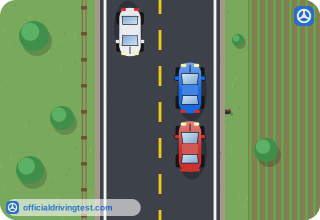
- Speed up to get away
- Brake suddenly to make the driver back off
- Do not react to it
- Make eye contact so the driver sees you are calm
Show answer
Correct answer: Do not react to it
The first tip is not to react to any form of aggressive driving.
Source: Rhode Island Driver’s Manual (April 2024), page 57
-
A driver continues to hassle or follow you. What does the manual say to do?
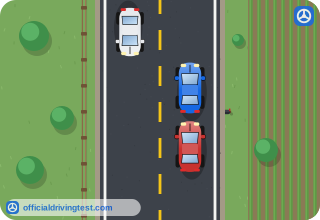
- Drive home so the driver can see where you live
- Drive to the nearest police station or busy place to get help
- Pull over and talk to the driver
- Stop on the shoulder and wait for the driver to leave
Show answer
Correct answer: Drive to the nearest police station or busy place to get help
The manual advises driving to the nearest police station or a busy place for help.
Source: Rhode Island Driver’s Manual (April 2024), page 57
-
To avoid becoming a victim of aggressive driving, when should you lock your vehicle's doors?
- Only when you park at night
- Only when you drive on a freeway
- Only when another driver threatens you
- Whenever you enter or leave your vehicle
Show answer
Correct answer: Whenever you enter or leave your vehicle
The manual says to lock your doors whenever you enter or leave your vehicle.
Source: Rhode Island Driver’s Manual (April 2024), page 57
-
When stopped in traffic, how much room should you leave in front of your vehicle to help avoid becoming a victim of aggressive driving?
- Enough room to pull out from behind the vehicle you are following
- Enough room for a motorcycle to pass between the vehicles
- Exactly one car length
- As little as possible, so no one cuts in
Show answer
Correct answer: Enough room to pull out from behind the vehicle you are following
Leaving room to pull out lets you drive away if you need to.
Source: Rhode Island Driver’s Manual (April 2024), page 57
-
If someone tries to get into your automobile, what does the manual say to do?
- Roll down the window and talk
- Step out and confront the person
- Sound your horn or auto alarm
- Turn off the engine and stay quiet
Show answer
Correct answer: Sound your horn or auto alarm
The manual says to sound the horn or auto alarm if someone tries to get into your automobile.
Source: Rhode Island Driver’s Manual (April 2024), page 57
-
What does the manual say about carrying a weapon, as a way to avoid becoming a victim of aggressive driving?
- Keep one within reach in the glove box
- Do not carry any sort of weapon
- Carry one only at night
- Carry one only on long trips
Show answer
Correct answer: Do not carry any sort of weapon
The manual says not to carry any sort of weapon and to avoid a fight at all costs.
Source: Rhode Island Driver’s Manual (April 2024), page 57
-
An aggressive driver challenges you. What does the manual say to do?
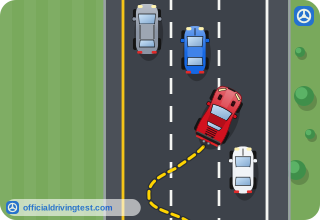
- Defend your position on the road to show you are right
- Speed up to stay ahead of the aggressive driver
- Block the driver from passing to teach a lesson
- Take a deep breath and get out of the aggressive driver's way
Show answer
Correct answer: Take a deep breath and get out of the aggressive driver's way
The manual advises getting out of the aggressive driver's way even if you believe you are right.
Source: Rhode Island Driver’s Manual (April 2024), page 57
-
What are you required to do when approaching a horse being driven or ridden on a public highway?
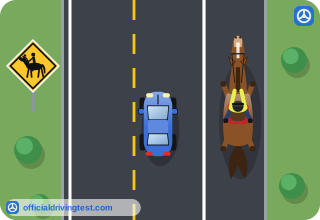
- Reduce your speed and refrain from sounding a horn or making other loud noises
- Stop completely and turn off your engine until the horse has passed
- Sound your horn once briefly to warn the rider of your approach
- Flash your high beams to signal the rider that you are coming
Show answer
Correct answer: Reduce your speed and refrain from sounding a horn or making other loud noises
Rhode Island law requires slowing down and avoiding the horn or other loud noises near a horse on a public highway.
Source: Rhode Island Driver’s Manual (April 2024), page 58