North Carolina: Emergency vehicles & work zones
Emergency vehicles, the Move Over law, traffic stops, school buses and work zones. Split into 3 shorter tests so you're not stuck in one long quiz.
Independent educational site · not affiliated with any government agency or DMV
Choose a part
Emergency vehicles & work zones — Part 1
Questions in this part include: “How close may you park to an emergency vehicle that has stopped to investigate an accident or give assistance?”
StartEmergency vehicles & work zones — Part 2
Questions in this part include: “Under state law, what are you required to do during a traffic stop?”
StartEmergency vehicles & work zones — Part 3
Questions in this part include: “What is unlawful to do while driving in a work zone?”
StartAll 53 Emergency vehicles & work zones questions with answers
Choose a part above to take a practice test, or study every question and answer here.
Show the questions and answersHide the questions
-
As an emergency vehicle approaches from ahead or behind, what should you do?
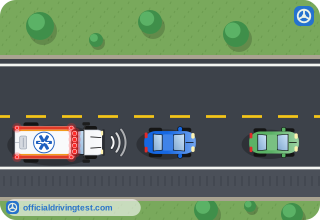
- Speed up so you can clear the way as fast as possible
- Stop in the middle of your lane and wait for it to pass
- Pull to the left edge of the road and slow down
- Drive to the right-hand curb or edge and stop completely
Show answer
Correct answer: Drive to the right-hand curb or edge and stop completely
The manual says to drive to the right-hand curb or edge of the road and stop completely as the emergency vehicle approaches from ahead or behind.
Source: North Carolina Driver Handbook (Revised May 2025), page 48 · Open this page in the manual (Manual page 48)
-
How long should you remain stopped after pulling over for an emergency vehicle?
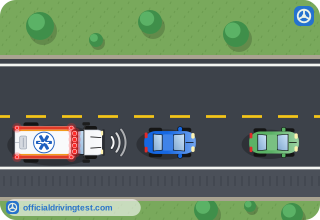
- Until it has passed or a traffic officer directs you to move
- Until you can no longer hear the siren of the vehicle
- For at least one full minute after it first passes
- Until the next traffic light in your direction turns green
Show answer
Correct answer: Until it has passed or a traffic officer directs you to move
The manual says to remain stopped until the emergency vehicle has passed, or until directed to move by a traffic officer.
Source: North Carolina Driver Handbook (Revised May 2025), page 48 · Open this page in the manual (Manual page 48)
-
How close may you park to an emergency vehicle that has stopped to investigate an accident or give assistance?
- Not within 25 feet
- Not within 50 feet
- Not within 100 feet
- Not within 500 feet
Show answer
Correct answer: Not within 100 feet
The manual says not to park within 100 feet of an emergency vehicle that has stopped to investigate an accident or to give assistance.
Source: North Carolina Driver Handbook (Revised May 2025), page 48 · Open this page in the manual (Manual page 48)
-
Vehicles traveling in the opposite direction of an emergency vehicle do NOT have to yield to it in which situation?
- On a two-lane road that has a double yellow center line
- On a four-lane limited-access highway with a center median
- On a residential street that has cars parked on both sides
- In a school zone during the hours that school is in session
Show answer
Correct answer: On a four-lane limited-access highway with a center median
The manual says all vehicles must yield to an approaching emergency vehicle, except vehicles traveling in the opposite direction on a four-lane limited-access highway with a center median.
Source: North Carolina Driver Handbook (Revised May 2025), page 48 · Open this page in the manual (Manual page 48)
-
According to the emergency-vehicle guidance, how close may you drive or park to fire trucks responding to a fire alarm?
- Not closer than 100 feet
- Not closer than two blocks
- Not closer than 25 feet
- Not closer than one block
Show answer
Correct answer: Not closer than one block
The manual says not to drive or park closer than one block from fire trucks responding to a fire alarm.
Source: North Carolina Driver Handbook (Revised May 2025), page 48 · Open this page in the manual (Manual page 48)
-
What should you never drive a motor vehicle over?
- A fire hose
- A painted crosswalk
- A speed bump
- A paved shoulder
Show answer
Correct answer: A fire hose
The manual says never to drive a motor vehicle over a fire hose.
Source: North Carolina Driver Handbook (Revised May 2025), page 48 · Open this page in the manual (Manual page 48)
-
The move-over rule applies to an authorized emergency vehicle parked or standing within how far of the roadway with its emergency or warning lights activated?
- 6 feet
- 25 feet
- 12 feet
- 50 feet
Show answer
Correct answer: 12 feet
The manual says the move-over requirements apply when an authorized emergency vehicle is parked or standing within 12 feet of the roadway with its lights activated.
Source: North Carolina Driver Handbook (Revised May 2025), page 49 · Open this page in the manual (Manual page 49)
-
Which of these is counted as an authorized emergency vehicle under the move-over rule?
- Any private vehicle that has its hazard lights on and is stopped on the roadside
- A public service vehicle assisting motorists or officers with wrecked or disabled vehicles
- A commercial delivery truck that has stopped beside the road to unload its cargo
- A school bus that is stopped on the shoulder of the road to let students off
Show answer
Correct answer: A public service vehicle assisting motorists or officers with wrecked or disabled vehicles
The manual lists police, fire department, ambulance, rescue squad, or a public service vehicle being used to assist motorists or law enforcement officers with wrecked or disabled vehicles.
Source: North Carolina Driver Handbook (Revised May 2025), page 49 · Open this page in the manual (Manual page 49)
-
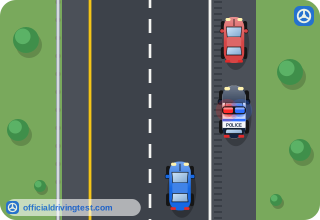
On a highway with at least two lanes in your direction, what must you do when approaching a parked or standing emergency vehicle with its lights activated?
- Stop in your current lane until the emergency vehicle has left the roadside
- Stay in your lane and sound your horn as you pass the emergency vehicle
- Move into the lane nearest the emergency vehicle so that you can slow down
- Move to a lane not nearest the emergency vehicle and stay there until safely clear
Show answer
Correct answer: Move to a lane not nearest the emergency vehicle and stay there until safely clear
The manual says to move into a lane that is not the lane nearest the parked or standing emergency vehicle and continue until safely clear of it.
Source: North Carolina Driver Handbook (Revised May 2025), page 49 · Open this page in the manual (Manual page 49)
-
On a highway with only one lane in your direction, what must you do when approaching a parked or standing emergency vehicle with its lights activated?
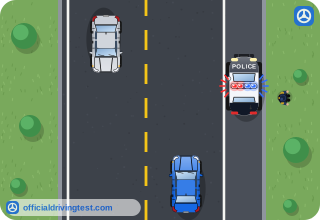
- Slow down and drive at a reduced, safe speed until completely past it
- Stop completely until the emergency vehicle has left the roadside
- Move onto the shoulder and stop until the emergency vehicle leaves
- Keep your current speed and sound your horn as you drive past
Show answer
Correct answer: Slow down and drive at a reduced, safe speed until completely past it
The manual says to slow your speed and drive at a reduced, safe speed until completely past the emergency vehicle.
Source: North Carolina Driver Handbook (Revised May 2025), page 49 · Open this page in the manual (Manual page 49)
-
When you see emergency lights or hear a siren behind you and are being stopped by law enforcement, what should you do?
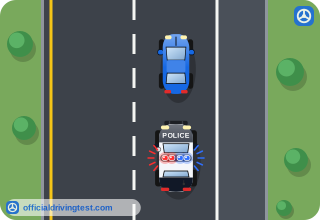
- Stop immediately in your lane of travel and wait for the officer to approach
- Speed up until you find a well-lit place where you can stop safely
- Stay calm, signal, and pull to the right, off the travel portion of the highway
- Pull to the left side of the road and turn your hazard lights on at once
Show answer
Correct answer: Stay calm, signal, and pull to the right, off the travel portion of the highway
The manual says to stay calm, activate your turn signal and pull to the right and off the travel portion of the highway at the nearest point where it is safe.
Source: North Carolina Driver Handbook (Revised May 2025), page 49 · Open this page in the manual (Manual page 49)
-
If there is not an obvious safe place to stop right away for a law enforcement officer, what does the manual say to do?
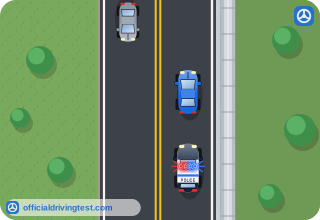
- Stop immediately in the travel lane and wait for the officer
- Turn on your 4 way flashers and reduce your speed by about 10 mph
- Keep driving at the same speed until the officer drives past you
- Turn off your lights and pull into the nearest private driveway
Show answer
Correct answer: Turn on your 4 way flashers and reduce your speed by about 10 mph
The manual says to turn on your 4 way flashers and reduce your speed (by about 10 mph) to signal that you are aware of the officer, then continue to the nearest safe area to stop.
Source: North Carolina Driver Handbook (Revised May 2025), page 49 · Open this page in the manual (Manual page 49)
-
If an unmarked car is stopping you and you are unsure it is a real law enforcement officer, what may you do?
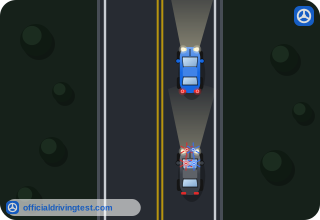
- Drive on until you reach your home, then call the police yourself
- Refuse to pull over under any circumstances, whoever is behind you
- Wait for the officer to show credentials through your car window
- Call 9-1-1 before pulling over to verify that it is an actual officer
Show answer
Correct answer: Call 9-1-1 before pulling over to verify that it is an actual officer
The manual says you may call 9-1-1 before pulling over and report your name and location to verify that an actual law enforcement officer is conducting the traffic stop.
Source: North Carolina Driver Handbook (Revised May 2025), page 49 · Open this page in the manual (Manual page 49)
-
After the vehicle stops for a law enforcement officer, what does the manual say the driver should do?
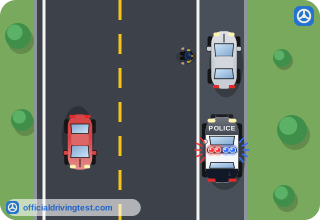
- Place the vehicle in Park, roll down the window, and turn off the engine
- Leave the engine running and keep the radio on so you stay calm
- Step out of the vehicle and walk back toward the officer's car
- Keep the window up until the officer knocks on the glass twice
Show answer
Correct answer: Place the vehicle in Park, roll down the window, and turn off the engine
The manual says to place the vehicle in Park, roll down the window, turn off the engine, and silence any electronic devices or radio so you can communicate with the officer.
Source: North Carolina Driver Handbook (Revised May 2025), page 49 · Open this page in the manual (Manual page 49)
-
During a traffic stop, when should you remove your seat belt?
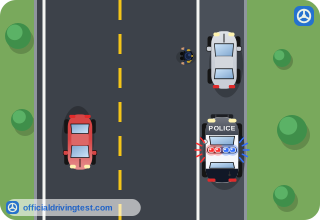
- As soon as the vehicle stops
- Before the officer reaches your window
- Only when asked to do so by the officer
- When you reach for your license
Show answer
Correct answer: Only when asked to do so by the officer
The manual says not to remove your seat belt unless asked to do so by the officer.
Source: North Carolina Driver Handbook (Revised May 2025), page 49 · Open this page in the manual (Manual page 49)
-
During a traffic stop, where should the driver place their hands?
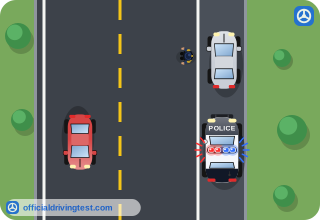
- Resting on the dashboard in front of the driver
- Both hands on the steering wheel, in plain view
- Resting in the driver's lap out of the officer's view
- Reaching toward the glove box to get the registration
Show answer
Correct answer: Both hands on the steering wheel, in plain view
The manual says to place both hands on the steering wheel and keep your hands in plain view.
Source: North Carolina Driver Handbook (Revised May 2025), page 50 · Open this page in the manual (Manual page 50)
-
During a traffic stop, where should passengers in the back seat place their hands?
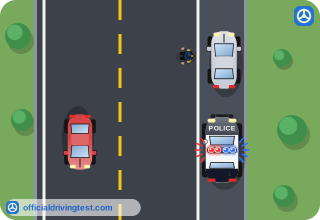
- Folded together in their laps
- Holding on to the door handles
- Clasped behind their heads
- On the back of the front seat
Show answer
Correct answer: On the back of the front seat
The manual says passengers in the back seat should place their hands on the back of the front seat.
Source: North Carolina Driver Handbook (Revised May 2025), page 50 · Open this page in the manual (Manual page 50)
-
If a traffic stop takes place at night, what should you do to help the officer see inside your vehicle?
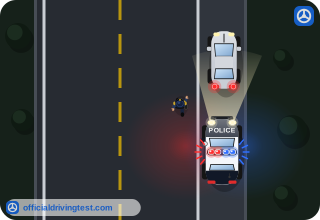
- Turn on your interior lights as soon as you stop
- Turn on your high beams and leave them on
- Turn off all of your lights including the headlights
- Keep only your parking lights on until the officer arrives
Show answer
Correct answer: Turn on your interior lights as soon as you stop
The manual says to turn on your interior lights as soon as you stop to help the officer see inside your vehicle.
Source: North Carolina Driver Handbook (Revised May 2025), page 50 · Open this page in the manual (Manual page 50)
-
Under state law, what are you required to do during a traffic stop?
- Answer every question that the officer asks you in detail
- Explain in detail why you committed the traffic violation
- Identify yourself and provide your drivers license and registration
- Allow the officer to search the inside and trunk of your vehicle
Show answer
Correct answer: Identify yourself and provide your drivers license and registration
The manual says you are required to identify yourself and provide your drivers license and registration; after that you may choose whether to respond verbally to additional questions.
Source: North Carolina Driver Handbook (Revised May 2025), page 50 · Open this page in the manual (Manual page 50)
-
After you have identified yourself to an officer during a traffic stop, what does the manual say about additional questions?
- You must answer all of them
- You may choose whether or not to verbally respond
- You must answer them in writing
- You must answer only if a passenger is present
Show answer
Correct answer: You may choose whether or not to verbally respond
The manual says that after establishing identification, you may choose whether or not to verbally respond to additional questions.
Source: North Carolina Driver Handbook (Revised May 2025), page 50 · Open this page in the manual (Manual page 50)
-
If the officer is not in uniform, what will happen or what may you do?
- You may refuse to stop until a uniformed officer arrives on scene
- You must exit the vehicle to inspect the officer's badge closely
- You must accept the officer's word without asking any questions
- They will show law enforcement credentials, or you may ask to see them
Show answer
Correct answer: They will show law enforcement credentials, or you may ask to see them
The manual says an officer not in uniform will show law enforcement credentials or you may ask to see them.
Source: North Carolina Driver Handbook (Revised May 2025), page 50 · Open this page in the manual (Manual page 50)
-
If there is a firearm or other weapon in the vehicle during a traffic stop, what should you do?
- Do not attempt to reach for it
- Move it to the glove box quietly
- Hand it to the officer through the window
- Place it in the back seat
Show answer
Correct answer: Do not attempt to reach for it
The manual says not to attempt to reach for the weapon; any weapon should be in plain view or securely locked away unless you have the proper permit.
Source: North Carolina Driver Handbook (Revised May 2025), page 50 · Open this page in the manual (Manual page 50)
-
If you or a passenger has a concealed weapon permit and a weapon is in the vehicle during a traffic stop, what must you do?
- Hide the weapon and permit
- Wait until the officer asks about weapons
- Inform the officer of that fact
- Remove the weapon and hand it to the officer
Show answer
Correct answer: Inform the officer of that fact
The manual says the person with a concealed weapon permit must inform the officer that a weapon is in the vehicle.
Source: North Carolina Driver Handbook (Revised May 2025), page 50 · Open this page in the manual (Manual page 50)
-
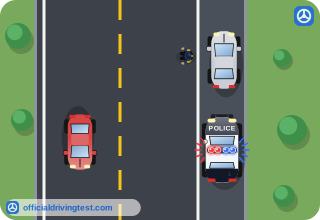
During a traffic stop, when may you or your passengers exit the vehicle?
- Whenever you wish to speak with the officer
- Only when instructed to do so by the officer
- Any time after showing your license
- After turning off the engine
Show answer
Correct answer: Only when instructed to do so by the officer
The manual says not to exit the vehicle or allow passengers to exit unless instructed to do so by the officer.
Source: North Carolina Driver Handbook (Revised May 2025), page 50 · Open this page in the manual (Manual page 50)
-
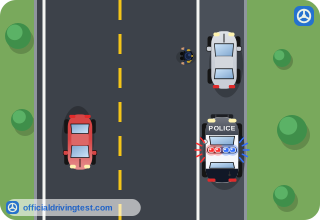
If your license or registration is not readily accessible during a traffic stop, what should you avoid doing?
- Staying calm and refraining from any sudden or unneeded movement
- Keeping both of your hands in plain view of the officer at all times
- Telling the officer where your documents are kept inside the vehicle
- Reaching under the seats or searching the glove box unless asked by the officer
Show answer
Correct answer: Reaching under the seats or searching the glove box unless asked by the officer
The manual says not to reach under the seats or open the glove box or other compartments to search unless asked to do so by the officer.
Source: North Carolina Driver Handbook (Revised May 2025), page 50 · Open this page in the manual (Manual page 50)
-
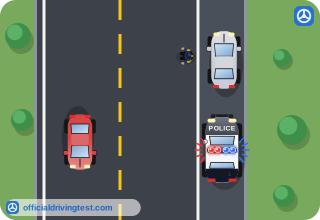
Should you talk on a cell phone while interacting with the officer during a traffic stop?
- No, the officer must be able to give you detailed instructions
- Yes, if you need to call someone to come and help you
- Yes, if the officer is not in uniform or in a marked car
- Yes, if a passenger holds the phone up to your ear for you
Show answer
Correct answer: No, the officer must be able to give you detailed instructions
The manual says not to talk on a cell phone while interacting with the officer, because the officer has to be able to give you and your passengers detailed instructions.
Source: North Carolina Driver Handbook (Revised May 2025), page 50 · Open this page in the manual (Manual page 50)
-
If you do not understand an officer's instruction during a traffic stop, what should you do?
- Follow your best guess about what the officer must have meant
- Get out of the vehicle so that you can ask the officer directly
- Calmly tell the officer you do not understand and ask them to repeat it
- Wait silently until the officer decides to repeat the instruction
Show answer
Correct answer: Calmly tell the officer you do not understand and ask them to repeat it
The manual says to calmly inform the officer that you do not understand the instruction and ask them to repeat or explain it.
Source: North Carolina Driver Handbook (Revised May 2025), page 50 · Open this page in the manual (Manual page 50)
-
Is your acceptance and signature on a traffic ticket an admission of guilt?
- Yes, it is a guilty plea
- No
- Yes, but only for a first offense
- Yes, unless you write a note
Show answer
Correct answer: No
The manual says your acceptance and signature on a traffic ticket is not an admission of guilt.
Source: North Carolina Driver Handbook (Revised May 2025), page 50 · Open this page in the manual (Manual page 50)
-
If you disagree with the officer's decision to issue a traffic ticket, what should you do?
- Argue at the roadside until the officer agrees you are right
- Refuse to accept the ticket and then drive away from the scene
- Ask the officer to cancel the ticket right there at the roadside
- Do not argue, and explain your point of view in court if you contest it
Show answer
Correct answer: Do not argue, and explain your point of view in court if you contest it
The manual says not to prolong the contact by arguing; if you wish to contest the ticket you will have the opportunity to explain your point of view in court.
Source: North Carolina Driver Handbook (Revised May 2025), page 50 · Open this page in the manual (Manual page 50)
-
Resisting, delaying or obstructing a law enforcement officer during a traffic stop is what class of offense?
- A class 2 misdemeanor
- A class 1 misdemeanor
- A class 3 misdemeanor
- An infraction with only a fine
Show answer
Correct answer: A class 2 misdemeanor
The manual says resisting, delaying or obstructing an officer during a traffic stop is a class 2 misdemeanor.
Source: North Carolina Driver Handbook (Revised May 2025), page 50 · Open this page in the manual (Manual page 50)
-
If you believe an officer acted inappropriately during a stop, what does the manual say to do?
- Argue with the officer at the roadside until the officer listens to you
- Refuse to sign the ticket and leave without taking your copy of it
- Document the officer's behavior and report it to the agency in a timely manner
- Wait at least a full year before you report the officer to the agency
Show answer
Correct answer: Document the officer's behavior and report it to the agency in a timely manner
The manual says to document the officer's behavior and report it to the officer's agency in a timely manner; the officer's name and agency will be on the ticket.
Source: North Carolina Driver Handbook (Revised May 2025), page 51 · Open this page in the manual (Manual page 51)
-
How does an officer initiate a traffic stop, according to the manual?
- By using a loudspeaker only
- By turning on the blue lights and/or siren
- By flashing the headlights only
- By turning on the red hazard lights only
Show answer
Correct answer: By turning on the blue lights and/or siren
The manual says the officer will initiate a traffic stop by turning on the blue lights and/or siren.
Source: North Carolina Driver Handbook (Revised May 2025), page 51 · Open this page in the manual (Manual page 51)
-
What should you never do when an emergency vehicle using flashing lights and sirens is passing through a roundabout?
- Enter the roundabout
- Use your turn signal
- Yield to pedestrians at the crosswalk
- Slow down
Show answer
Correct answer: Enter the roundabout
The manual says never to enter a roundabout while an emergency vehicle using flashing lights and sirens is passing through.
Source: North Carolina Driver Handbook (Revised May 2025), page 59 · Open this page in the manual (Manual page 59)
-
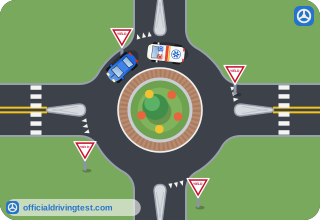
You are already in a roundabout when an emergency vehicle using flashing lights and sirens approaches. What should you do?
- Stop where you are inside the roundabout until the vehicle passes
- Speed up and stay ahead of the emergency vehicle in the circle
- Exit first, then pull over to let the emergency vehicle pass
- Pull over immediately onto the center island of the roundabout
Show answer
Correct answer: Exit first, then pull over to let the emergency vehicle pass
If drivers are already in the roundabout, they should exit first and then pull over to let the emergency vehicle pass.
Source: North Carolina Driver Handbook (Revised May 2025), page 59 · Open this page in the manual (Manual page 59)
-
What does a street or highway work zone warn of?
- Construction or maintenance activities on or next to the road
- Only an upcoming school zone with children crossing the road
- Only a lane that is closed because of a traffic crash
- Only a change in the posted speed limit on the road ahead
Show answer
Correct answer: Construction or maintenance activities on or next to the road
The manual says a work zone warns of construction or maintenance activities on or adjacent to the road used by vehicles.
Source: North Carolina Driver Handbook (Revised May 2025), page 70 · Open this page in the manual (Manual page 70)
-
What is it very important to do in work zones?
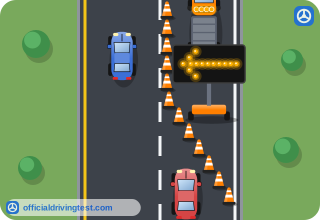
- Drive faster than usual so you leave the work zone quickly
- Stay in the same lane at all times while in the work zone
- Stay alert and be ready to react safely to unexpected conditions
- Stop until the workers wave you on through the work zone
Show answer
Correct answer: Stay alert and be ready to react safely to unexpected conditions
The manual says it is very important to STAY ALERT in work zones and be ready to react safely to unexpected conditions.
Source: North Carolina Driver Handbook (Revised May 2025), page 70 · Open this page in the manual (Manual page 70)
-
What is unlawful to do while driving in a work zone?
- Drive more than 5 mph below the speed limit set for the zone
- Drive above the speed limit that is set and posted
- Change lanes when the signs tell you that a lane is closed
- Use your headlights during the day while in the work zone
Show answer
Correct answer: Drive above the speed limit that is set and posted
The manual says it is unlawful to drive greater than the speed limit that is set and posted in a work zone.
Source: North Carolina Driver Handbook (Revised May 2025), page 70 · Open this page in the manual (Manual page 70)
-
What is a highway work zone?
- Only the area where workers are actually present at the time
- The area from the last sign back to the nearest intersection
- Any stretch of road within one mile of an orange sign
- The area between the first sign of the work zone and the last sign
Show answer
Correct answer: The area between the first sign of the work zone and the last sign
The manual defines a highway work zone as the area between the first sign indicating its beginning and the last sign indicating its end.
Source: North Carolina Driver Handbook (Revised May 2025), page 70 · Open this page in the manual (Manual page 70)
-
When is there a penalty for speeding in a work zone?
- If a sign at the beginning of the work zone lists the penalty
- Only when workers are actually present in the work zone
- Only if a flagger is standing at the work site
- Only when the speed limit in the work zone is below 45 mph
Show answer
Correct answer: If a sign at the beginning of the work zone lists the penalty
The manual says there is a penalty for speeding in a work zone if a sign at the beginning lists the penalty.
Source: North Carolina Driver Handbook (Revised May 2025), page 70 · Open this page in the manual (Manual page 70)
-
How does the work zone speeding penalty relate to other penalties for the speeding conviction?
- It replaces any other penalties
- It applies only if there are no other penalties
- It is in addition to any other penalties
- It is reduced if there are other penalties
Show answer
Correct answer: It is in addition to any other penalties
The manual says the work zone penalty is in addition to any other penalties for the speeding conviction.
Source: North Carolina Driver Handbook (Revised May 2025), page 70 · Open this page in the manual (Manual page 70)
-
How can a highway work zone be easily identified?
- By yellow and black striped barriers along the shoulder
- By unique orange warning signs just before the work zone
- By blue signs with white letters just before the work zone
- By green signs with white letters posted along the road
Show answer
Correct answer: By unique orange warning signs just before the work zone
The manual says a highway work zone can be easily identified by unique orange warning signs immediately preceding the work zone.
Source: North Carolina Driver Handbook (Revised May 2025), page 70 · Open this page in the manual (Manual page 70)
-
What are orange signs with messages in black letters reserved strictly for?
- Marking school zones
- Marking railroad crossings
- Marking detours around crashes
- Identifying work zones
Show answer
Correct answer: Identifying work zones
The manual says orange signs with black letters are reserved strictly to identify work zones.
Source: North Carolina Driver Handbook (Revised May 2025), page 70 · Open this page in the manual (Manual page 70)
-
How are black-on-orange signs used within a work zone?
- To give drivers specific information and directions inside the work zone
- To tell drivers to ignore the posted speed limit in the zone
- To mark the end of the work zone and nothing else
- To show drivers where the nearest rest area is located
Show answer
Correct answer: To give drivers specific information and directions inside the work zone
The manual says black-on-orange signs are used within the work zone to convey specific information and directions to drivers.
Source: North Carolina Driver Handbook (Revised May 2025), page 70 · Open this page in the manual (Manual page 70)
-
What does the "Flagger" sign warn of?
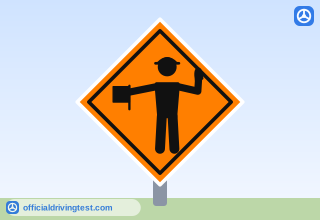
- A crossing guard who is helping students cross at a school ahead
- A police officer who is stopping vehicles for a checkpoint ahead
- Construction or maintenance ahead where a flagger controls traffic
- A railroad worker who is waving trains through a crossing ahead
Show answer
Correct answer: Construction or maintenance ahead where a flagger controls traffic
The manual says the Flagger sign warns of construction or maintenance ahead where a flagger in an orange vest controls traffic.
Source: North Carolina Driver Handbook (Revised May 2025), page 70 · Open this page in the manual (Manual page 70)
-
What does a flagger use to stop traffic or let it proceed?
- A red flashlight
- A "STOP/SLOW" paddle
- A white glove
- A whistle
Show answer
Correct answer: A "STOP/SLOW" paddle
The manual says the flagger uses a “STOP/SLOW” paddle to stop traffic or allow it to proceed.
Source: North Carolina Driver Handbook (Revised May 2025), page 70 · Open this page in the manual (Manual page 70)
-
What color of vest does a flagger wear?
- Yellow
- White
- Red
- Orange
Show answer
Correct answer: Orange
The manual says the flagger wears an orange vest.
Source: North Carolina Driver Handbook (Revised May 2025), page 70 · Open this page in the manual (Manual page 70)
-
What should you do when you see the "Flagger" sign?
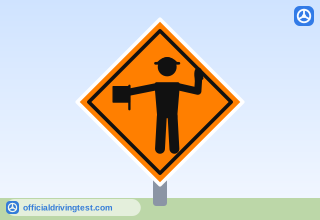
- Stay alert and be prepared to stop
- Speed up to pass the work site
- Move to the shoulder and wait
- Ignore it unless a flagger is visible
Show answer
Correct answer: Stay alert and be prepared to stop
The manual says when you see the Flagger sign, stay alert and be prepared to stop.
Source: North Carolina Driver Handbook (Revised May 2025), page 70 · Open this page in the manual (Manual page 70)
-
What does it mean when you see black-on-orange signs?
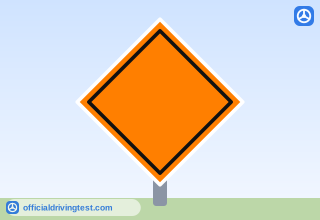
- You are leaving a work zone and may speed up again
- You must come to a complete stop at once and wait
- You are about to enter a work zone and should stay alert
- Speed limits are no longer in effect in this area
Show answer
Correct answer: You are about to enter a work zone and should stay alert
The manual says black-on-orange signs mean you are about to enter a work zone and should STAY ALERT.
Source: North Carolina Driver Handbook (Revised May 2025), page 71 · Open this page in the manual (Manual page 71)
-
What may advance work zone signs require you to do?
- Turn on your emergency flashers
- Take some action, such as shifting to another lane
- Stop and wait for a flagger
- Increase your speed to keep up with traffic
Show answer
Correct answer: Take some action, such as shifting to another lane
The manual says advance work zone signs may require you to take some action like shifting your vehicle to another lane.
Source: North Carolina Driver Handbook (Revised May 2025), page 71 · Open this page in the manual (Manual page 71)
-
When you are required to take action in a work zone, how does the manual say the signs will convey the message?
- Only at the last moment
- Only by a flagger's signal
- Only after you have entered the work zone
- Far in advance, so you have enough time to act
Show answer
Correct answer: Far in advance, so you have enough time to act
The manual says black-on-orange signs will convey the message far in advance, so you will have enough time to take the action.
Source: North Carolina Driver Handbook (Revised May 2025), page 71 · Open this page in the manual (Manual page 71)
-
When should you take action that a work zone sign requires?
- Do not wait until the last minute
- Only when other drivers ahead do
- After you pass the last sign
- At the last moment before the work area
Show answer
Correct answer: Do not wait until the last minute
The manual says not to wait until the last minute to take action because the signs provide sufficient time to react.
Source: North Carolina Driver Handbook (Revised May 2025), page 71 · Open this page in the manual (Manual page 71)
-
What is a major cause of rear-end crashes in work zones?
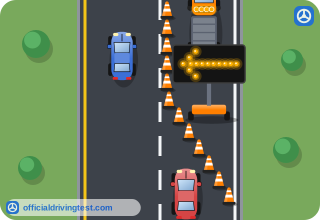
- Driving faster than the surrounding traffic
- Driving in the left lane
- Driving slower than the surrounding traffic
- Following the flow of traffic
Show answer
Correct answer: Driving slower than the surrounding traffic
The manual says driving slower than the surrounding traffic is a major cause of rear-end crashes in work zones.
Source: North Carolina Driver Handbook (Revised May 2025), page 71 · Open this page in the manual (Manual page 71)
-
Which devices are used in work zones to guide and direct drivers safely?
- Speed bumps and railroad gates
- Barricades, cones, drums and flaggers
- Stop signs and yield signs only
- Rumble strips and guardrails only
Show answer
Correct answer: Barricades, cones, drums and flaggers
The manual lists barricades, cones, drums, flaggers, etc. as traffic control devices used in work zones.
Source: North Carolina Driver Handbook (Revised May 2025), page 71 · Open this page in the manual (Manual page 71)