New Hampshire: Speed and following distance — Part 2 Practice Test
Questions in this part include: “Which tire condition helps prevent hydroplaning?” · “How does the manual suggest drivers practice judging following distance?”
Independent educational site · not affiliated with any government agency or DMV
Ready? Test yourself
- Instant feedback with an explanation
- Every answer cites its source in the manual
- Your best score is saved on this device
- Keyboard: press 1 to 4 to answer and Enter for the next question
Questions are original and based on the official manual "New Hampshire Driver’s Manual" (DSMV 360 (Rev. 11/25)), New Hampshire Division of Motor Vehicles (DMV).
All 23 questions in this practice test
Take the test above first, then use this list to study. Tap “Show answer” to see the correct answer and explanation.
Show the questions and answersHide the questions
-
What is the best way to avoid traction loss from hydroplaning?
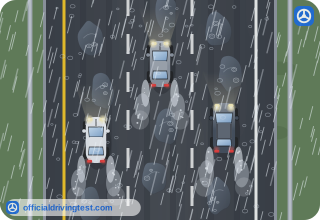
- Slow down in the rain or when the road has pooled water
- Brake hard as soon as the tires touch any water
- Drive faster so the tires cut through the water
- Steer sharply from side to side to clear the water
Show answer
Correct answer: Slow down in the rain or when the road has pooled water
The best way to avoid traction loss from hydroplaning is to slow down in the rain or when the road is wet with pooled water or water puddles.
Source: New Hampshire Driver’s Manual (DSMV 360 (Rev. 11/25)), page 17 · Open this page in the manual (Manual page 17)
-
Which tire condition helps prevent hydroplaning?
- Worn tires that have very little tread left
- Tires inflated slightly above the proper pressure
- Good tread depth and the proper tire pressure
- Tires with lower than normal air pressure
Show answer
Correct answer: Good tread depth and the proper tire pressure
To help prevent hydroplaning, drivers should reduce speed in the rain and make sure the tires have good tread depth and are inflated to the proper pressure.
Source: New Hampshire Driver’s Manual (DSMV 360 (Rev. 11/25)), page 18 · Open this page in the manual (Manual page 18)
-
On gravel or dirt roads, how should drivers adjust their following distance?
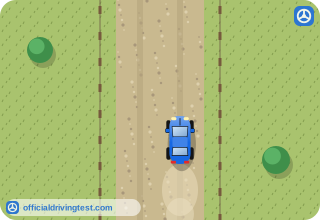
- Decrease it
- Keep it the same
- Follow closely to see the road
- Increase it
Show answer
Correct answer: Increase it
On gravel or dirt roads drivers should reduce speed, increase the following distance and be aware that the vehicle may skid when trying to stop.
Source: New Hampshire Driver’s Manual (DSMV 360 (Rev. 11/25)), page 18 · Open this page in the manual (Manual page 18)
-
On narrow rural roads, where should drivers position the vehicle?
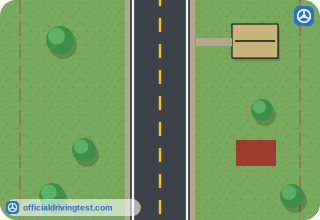
- Centered in the travel lane
- As close to the right edge as possible
- Close to the center of the road
- Partly on the shoulder
Show answer
Correct answer: Centered in the travel lane
On narrow rural roads drivers should reduce speed, center the vehicle in the travel lane and watch for oncoming traffic that may encroach on the lane.
Source: New Hampshire Driver’s Manual (DSMV 360 (Rev. 11/25)), page 18 · Open this page in the manual (Manual page 18)
-
How can open bridge gratings or steel bridges affect a vehicle?
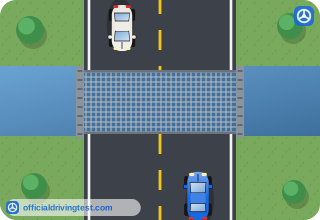
- They can increase the vehicle's traction
- They can reduce the vehicle's traction
- They can improve the vehicle's braking
- They can dim the vehicle's headlights
Show answer
Correct answer: They can reduce the vehicle's traction
Open bridge gratings and steel bridges can reduce traction of a vehicle, so drivers should reduce speed, increase the following distance and keep a firm grip on the steering wheel.
Source: New Hampshire Driver’s Manual (DSMV 360 (Rev. 11/25)), page 18 · Open this page in the manual (Manual page 18)
-
In rural areas with reduced vision, such as blind corners created by wooded areas, crops or steep hills, what should a driver always do?
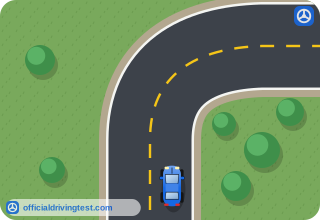
- Sound the horn and keep the same speed
- Move to the center of the road
- Keep speed and watch for oncoming traffic
- Reduce speed and be prepared to stop
Show answer
Correct answer: Reduce speed and be prepared to stop
In areas with reduced vision drivers should always reduce speed and be prepared to stop.
Source: New Hampshire Driver’s Manual (DSMV 360 (Rev. 11/25)), page 18 · Open this page in the manual (Manual page 18)
-
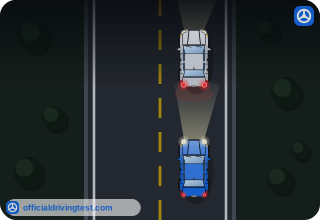
How much should a driver increase the following distance for night driving conditions?
- By adding half a second
- By adding at least three additional seconds
- No increase is needed
- By adding at least one additional second
Show answer
Correct answer: By adding at least one additional second
Drivers should increase the following distance by adding at least one additional second for night driving conditions.
Source: New Hampshire Driver’s Manual (DSMV 360 (Rev. 11/25)), page 18 · Open this page in the manual (Manual page 18)
-
How much should a driver increase the following distance when driving on unfamiliar roadways at night?
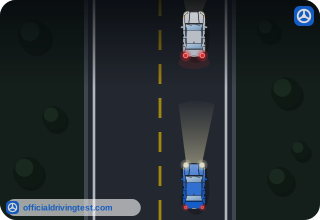
- By adding at least two additional seconds
- By adding only a quarter of a second
- By adding about half of one second
- No increase is needed
Show answer
Correct answer: By adding at least two additional seconds
Drivers should add at least two additional seconds to the following distance for driving on unfamiliar roadways at night.
Source: New Hampshire Driver’s Manual (DSMV 360 (Rev. 11/25)), page 18 · Open this page in the manual (Manual page 18)
-
Which reminder does the manual give drivers about looking and steering?
- Turn your head before you turn the wheel
- Check your mirrors before you check the road ahead
- Slow down before you look at the traffic ahead
- Watch the car in front before you watch the sides
Show answer
Correct answer: Turn your head before you turn the wheel
The manual tells drivers to turn their head before they turn the wheel so they are aware of what is happening around the vehicle.
Source: New Hampshire Driver’s Manual (DSMV 360 (Rev. 11/25)), page 30 · Open this page in the manual (Manual page 30)
-
How does searching help drivers?
- It lets them stop checking mirrors while driving at night
- It removes the need to keep a safe following distance
- It gives them time to change speed and/or roadway position
- It keeps their eyes fixed on one spot ahead of the vehicle
Show answer
Correct answer: It gives them time to change speed and/or roadway position
Searching helps drivers see situations that could cause a problem and gives them time to change speed and/or roadway position. Drivers should keep their eyes moving.
Source: New Hampshire Driver’s Manual (DSMV 360 (Rev. 11/25)), page 30 · Open this page in the manual (Manual page 30)
-
How does the manual say looking ahead helps drivers become aware of potential dangers?
- Keep eyes fixed only on the bumper of the vehicle ahead
- Look past the vehicles in front and continually check mirrors
- Look only at the road just in front of the hood
- Check the mirrors once at the start of each trip
Show answer
Correct answer: Look past the vehicles in front and continually check mirrors
Looking ahead down the road, looking past the vehicles in front of the driver and continually checking mirrors make drivers aware of potential dangers.
Source: New Hampshire Driver’s Manual (DSMV 360 (Rev. 11/25)), page 30 · Open this page in the manual (Manual page 30)
-
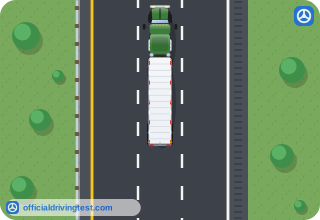
What should a driver behind a large vehicle do?
- Follow closely to stay out of the wind
- Stay directly behind it at the same speed
- Speed up so its driver sees them in the mirror
- Adjust their speed and road position
Show answer
Correct answer: Adjust their speed and road position
Following a larger vehicle too closely limits how far a driver can see, so a driver behind a large vehicle should adjust speed and road position.
Source: New Hampshire Driver’s Manual (DSMV 360 (Rev. 11/25)), page 30 · Open this page in the manual (Manual page 30)
-
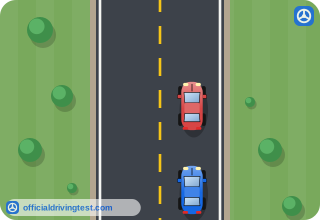
How can a driver determine their following distance?
- Measure the gap in feet between the two vehicles at a stop
- Count the vehicles between their car and the next intersection
- Estimate the distance in feet and divide it by the speed limit
- Count the seconds it takes to reach a point the vehicle ahead has passed
Show answer
Correct answer: Count the seconds it takes to reach a point the vehicle ahead has passed
The driver watches when the rear of the vehicle ahead passes a sign, pole or other stationary point, then counts the seconds it takes to reach the same point.
Source: New Hampshire Driver’s Manual (DSMV 360 (Rev. 11/25)), page 30 · Open this page in the manual (Manual page 30)
-
A driver counts and finds they are following the vehicle ahead closer than four seconds. What should the driver do?
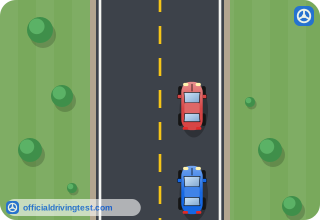
- Reduce speed and count again at another stationary point
- Keep the same speed and watch the vehicle ahead closely
- Move to the center of the lane to see farther ahead
- Flash the headlights to ask the vehicle ahead to speed up
Show answer
Correct answer: Reduce speed and count again at another stationary point
The driver should reduce speed and count again at another stationary point, repeating until following no closer than four seconds.
Source: New Hampshire Driver’s Manual (DSMV 360 (Rev. 11/25)), page 30 · Open this page in the manual (Manual page 30)
-
How does the manual suggest drivers practice judging following distance?
- Measure the gap in feet between vehicles and compare it with the posted speed limit
- Memorize how many car lengths fit between vehicles at each speed
- Guess the seconds to an object, then count the seconds it actually takes
- Follow a vehicle at one second and add a second every mile
Show answer
Correct answer: Guess the seconds to an object, then count the seconds it actually takes
Drivers can practice by guessing how many seconds away the vehicle is from an object and then counting the seconds it actually takes to reach the object.
Source: New Hampshire Driver’s Manual (DSMV 360 (Rev. 11/25)), page 30 · Open this page in the manual (Manual page 30)
-
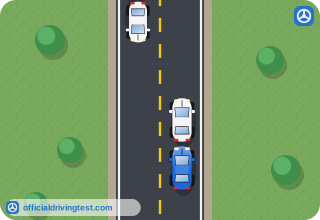
What happens when a driver closely follows the vehicle in front of them?
- It makes the driver more aware of the brake lights ahead
- It limits their vision of the road and does not allow enough time to react
- It lets the driver see farther by using the vehicle ahead as a guide
- It gives the driver extra time to react to hazards in the road
Show answer
Correct answer: It limits their vision of the road and does not allow enough time to react
A driver that closely follows the vehicle in front limits their vision of the road and does not allow enough time to react to avoid a collision.
Source: New Hampshire Driver’s Manual (DSMV 360 (Rev. 11/25)), page 30 · Open this page in the manual (Manual page 30)
-
Which of these affects the space needed between a vehicle and potential hazards?
- The color of the vehicle
- The brand of the vehicle
- The model year of the vehicle
- Weather and road conditions
Show answer
Correct answer: Weather and road conditions
Traffic, speed, light, weather and road conditions all affect the space needed between the vehicle being driven and potential hazards.
Source: New Hampshire Driver’s Manual (DSMV 360 (Rev. 11/25)), page 30 · Open this page in the manual (Manual page 30)
-
What is the result of allowing more space between a driver's vehicle and other roadway users?
- The driver has more time to react
- The driver meets more traffic ahead
- Other drivers have a harder time seeing the vehicle
- The driver has less time to watch the road ahead
Show answer
Correct answer: The driver has more time to react
The more space drivers allow between their vehicle and other roadway users, the more time the driver has to react.
Source: New Hampshire Driver’s Manual (DSMV 360 (Rev. 11/25)), page 30 · Open this page in the manual (Manual page 30)
-
On which kind of road should drivers increase their following distance?
- A dry, straight road in daylight
- A road with no other traffic nearby
- A slippery road
- A road with a newly painted center line
Show answer
Correct answer: A slippery road
Drivers should increase the following distance on slippery roads.
Source: New Hampshire Driver’s Manual (DSMV 360 (Rev. 11/25)), page 31 · Open this page in the manual (Manual page 31)
-
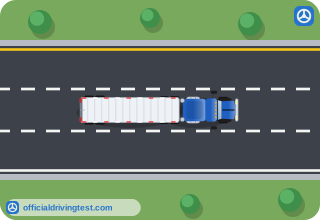
A driver is following a large truck or a vehicle pulling a trailer. What should the driver do about the following distance?
- Keep the same following distance as behind a car
- Increase the following distance
- Decrease it so the truck driver can see the car
- Follow as closely as possible to block the wind
Show answer
Correct answer: Increase the following distance
Drivers should increase the following distance when following large vehicles like trucks, buses, recreational vehicles and vehicles pulling a trailer.
Source: New Hampshire Driver’s Manual (DSMV 360 (Rev. 11/25)), page 31 · Open this page in the manual (Manual page 31)
-
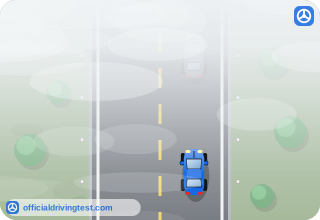
What should drivers do about their following distance at night, in fog or in bad weather?
- Shorten the following distance to keep the vehicle ahead in sight
- Keep the same following distance as in clear daylight
- Follow only as far back as the car ahead's tail lights
- Increase the following distance
Show answer
Correct answer: Increase the following distance
Drivers should increase the following distance at night, in fog or in bad weather.
Source: New Hampshire Driver’s Manual (DSMV 360 (Rev. 11/25)), page 31 · Open this page in the manual (Manual page 31)
-
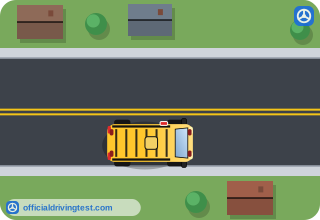
Why should drivers increase the following distance behind transit buses, school buses or vehicles carrying hazardous materials?
- They are required to stop at railroad crossings
- They always drive faster than other traffic
- They cannot use their turn signals
- They are not allowed to use the right lane
Show answer
Correct answer: They are required to stop at railroad crossings
Drivers should increase the following distance when following vehicles required to stop at railroad crossings, such as transit buses, school buses or vehicles carrying hazardous materials.
Source: New Hampshire Driver’s Manual (DSMV 360 (Rev. 11/25)), page 31 · Open this page in the manual (Manual page 31)
-
Which of these helps a driver maintain a safe distance from the vehicles following?
- Braking suddenly to discourage tailgaters
- Driving below the speed limit in the left lane
- Driving at a steady speed
- Changing lanes without signaling
Show answer
Correct answer: Driving at a steady speed
To keep a safe distance from vehicles behind, drivers should drive at a steady speed, signal in advance and increase the following distance in front.
Source: New Hampshire Driver’s Manual (DSMV 360 (Rev. 11/25)), page 31 · Open this page in the manual (Manual page 31)