New Hampshire: Seat belts and child safety Practice Test
Safety belts for everyone under 18, child passenger restraints, air bags and motorcycle helmets.
Independent educational site · not affiliated with any government agency or DMV
Ready? Test yourself
- Instant feedback with an explanation
- Every answer cites its source in the manual
- Your best score is saved on this device
- Keyboard: press 1 to 4 to answer and Enter for the next question
Questions are original and based on the official manual "New Hampshire Driver’s Manual" (DSMV 360 (Rev. 11/25)), New Hampshire Division of Motor Vehicles (DMV).
All 24 questions in this practice test
Take the test above first, then use this list to study. Tap “Show answer” to see the correct answer and explanation.
Show the questions and answersHide the questions
-
A Youth Operator license holder under 18 shall NOT operate a motor vehicle with more passengers than what?
- Seats in the front row and the back row
- Seat belts or safety restraints in the vehicle
- Passengers who are family members of the driver
- Hours of supervised driving completed
Show answer
Correct answer: Seat belts or safety restraints in the vehicle
Youth Operators under 18 may not drive with more passengers than seat belts or safety restraints in the vehicle.
Source: New Hampshire Driver’s Manual (DSMV 360 (Rev. 11/25)), page 4 · Open this page in the manual (Manual page 4)
-
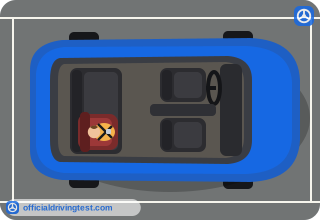
In warm weather, when does a vehicle begin to heat up?
- After about an hour
- Immediately after being turned off
- Only in direct sunlight
- Only when the windows are open
Show answer
Correct answer: Immediately after being turned off
The manual says in warm weather a vehicle begins to heat up immediately after being turned off, and it takes only minutes to reach dangerous temperatures.
Source: New Hampshire Driver’s Manual (DSMV 360 (Rev. 11/25)), page 10 · Open this page in the manual (Manual page 10)
-
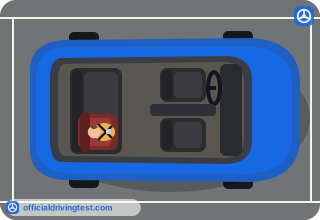
For how long does the manual say never to leave a child unattended in a vehicle?
- More than 5 minutes
- More than 30 minutes
- Any length of time
- Longer than one hour
Show answer
Correct answer: Any length of time
The manual’s tip is never to leave a child in a vehicle unattended for any length of time.
Source: New Hampshire Driver’s Manual (DSMV 360 (Rev. 11/25)), page 10 · Open this page in the manual (Manual page 10)
-
What personal item does the manual suggest placing in the back seat as a reminder to look before you lock?
- A purse or briefcase
- A winter coat
- A water bottle
- A spare key
Show answer
Correct answer: A purse or briefcase
The manual suggests placing a personal item like a purse or briefcase in the back seat as another reminder to look before you lock.
Source: New Hampshire Driver’s Manual (DSMV 360 (Rev. 11/25)), page 10 · Open this page in the manual (Manual page 10)
-
Where should car keys and fobs be stored to help prevent hot vehicle dangers?
- Out of a child’s reach
- In the glove compartment
- In the ignition
- On the front seat
Show answer
Correct answer: Out of a child’s reach
The manual says to store car keys and fobs out of a child’s reach and teach children that a vehicle is not a play area.
Source: New Hampshire Driver’s Manual (DSMV 360 (Rev. 11/25)), page 10 · Open this page in the manual (Manual page 10)
-
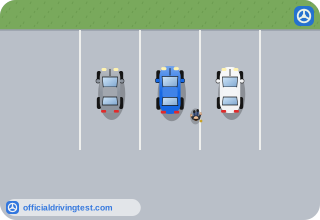
What habit does the manual recommend before locking the doors and walking away from a vehicle?
- Open all the windows fully for ventilation
- Leave the engine running for a few minutes
- Check the entire vehicle, especially the back seat
- Turn on the hazard lights and lock the doors
Show answer
Correct answer: Check the entire vehicle, especially the back seat
The manual says to make it a habit to check your entire vehicle, especially the back seat, before locking the doors and walking away.
Source: New Hampshire Driver’s Manual (DSMV 360 (Rev. 11/25)), page 10 · Open this page in the manual (Manual page 10)
-
In New Hampshire, safety restraints are required for anyone under what age?
- 12
- 18
- 16
- 21
Show answer
Correct answer: 18
The manual says safety restraints are required for anyone under the age of 18 in New Hampshire.
Source: New Hampshire Driver’s Manual (DSMV 360 (Rev. 11/25)), page 11 · Open this page in the manual (Manual page 11)
-
What does the manual say about drivers and passengers of all ages using safety restraints?
- It is prohibited
- It is required only on highways
- It is highly recommended
- It is required only at night
Show answer
Correct answer: It is highly recommended
The manual says it is highly recommended that drivers and passengers of all ages use safety restraints.
Source: New Hampshire Driver’s Manual (DSMV 360 (Rev. 11/25)), page 11 · Open this page in the manual (Manual page 11)
-
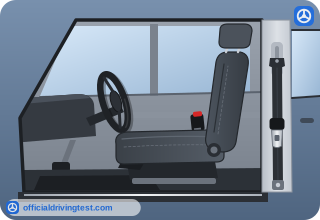
Besides keeping the driver and passengers from being thrown from the vehicle, what do safety belts help the driver do?
- Keep control
- Brake sooner
- See farther
- Steer less
Show answer
Correct answer: Keep control
The manual says safety belts keep the driver and passengers from being thrown from the vehicle and help the driver keep control.
Source: New Hampshire Driver’s Manual (DSMV 360 (Rev. 11/25)), page 11 · Open this page in the manual (Manual page 11)
-
How should the shoulder harness be worn?
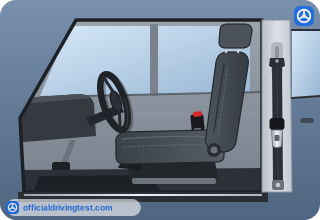
- Across the shoulder and chest with minimal slack
- Under the arm with a good amount of slack
- Behind the back to allow more free movement
- Loosely around the neck and one shoulder
Show answer
Correct answer: Across the shoulder and chest with minimal slack
The manual says the shoulder harness is worn across the shoulder and chest with minimal, if any slack.
Source: New Hampshire Driver’s Manual (DSMV 360 (Rev. 11/25)), page 11 · Open this page in the manual (Manual page 11)
-
What could wearing the shoulder harness under the arm or behind the back cause in a crash?
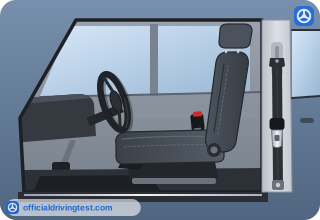
- Damage to the steering wheel
- A failed air bag
- Serious internal injuries
- A broken windshield
Show answer
Correct answer: Serious internal injuries
The manual says wearing the harness the wrong way could cause serious internal injuries in a crash.
Source: New Hampshire Driver’s Manual (DSMV 360 (Rev. 11/25)), page 12 · Open this page in the manual (Manual page 12)
-
How should the lap belt be adjusted after fastening?
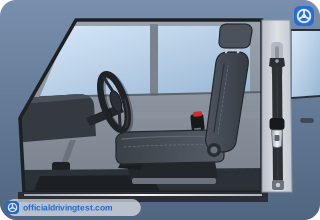
- Loose across the stomach
- Snug and low across the hips
- Snug across the ribs
- Low across the thighs
Show answer
Correct answer: Snug and low across the hips
The manual says the lap belt should be snug and lie low across the driver’s hips after fastening.
Source: New Hampshire Driver’s Manual (DSMV 360 (Rev. 11/25)), page 12 · Open this page in the manual (Manual page 12)
-
What could happen if the lap belt is not snug and low across the hips?
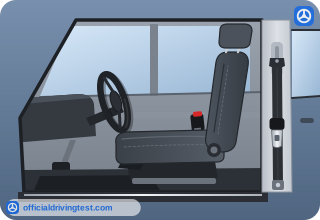
- The belt would lock and could not be released after a crash
- The belt would shorten and pull the occupant toward the dash
- The air bag would deploy too slowly to protect the occupant
- The occupant could slide out of the belt, risking injury or death
Show answer
Correct answer: The occupant could slide out of the belt, risking injury or death
The manual says that if the lap belt is not snug and low across the hips, in a collision an operator or passenger could slide out of the belt, resulting in injury or death.
Source: New Hampshire Driver’s Manual (DSMV 360 (Rev. 11/25)), page 12 · Open this page in the manual (Manual page 12)
-
Which of these is an exception to the requirement that anyone less than 18 years of age be restrained by a safety belt or child safety seat?
- A passenger car regularly driven on local public roads
- A pickup truck used for regular family trips in town
- A van carrying more than five passengers at a time
- An antique vehicle not manufactured with safety restraints
Show answer
Correct answer: An antique vehicle not manufactured with safety restraints
The manual lists an antique vehicle not manufactured with safety restraints among the exceptions.
Source: New Hampshire Driver’s Manual (DSMV 360 (Rev. 11/25)), page 12 · Open this page in the manual (Manual page 12)
-
Which school bus is an exception to the requirement that anyone less than 18 be restrained by a safety belt or child safety seat?
- One under 10,000 pounds that has safety belts
- One weighing in excess of 10,000 pounds
- One carrying fewer than 20 students
- One less than 5 years old
Show answer
Correct answer: One weighing in excess of 10,000 pounds
The manual exempts a school bus weighing in excess of 10,000 pounds, or one weighing less than 10,000 pounds not manufactured with safety belts.
Source: New Hampshire Driver’s Manual (DSMV 360 (Rev. 11/25)), page 12 · Open this page in the manual (Manual page 12)
-
A child under 18 may be exempt from the restraint law if what document says the use of restraints is not safe?
- A letter from the child’s school bus driver
- A note from the vehicle’s owner
- An individual education plan (IEP) statement
- A statement signed by a police officer
Show answer
Correct answer: An individual education plan (IEP) statement
The manual exempts a child with an individual education plan (IEP) statement indicating that the use of restraints is not safe.
Source: New Hampshire Driver’s Manual (DSMV 360 (Rev. 11/25)), page 12 · Open this page in the manual (Manual page 12)
-
A child must be secured in a child passenger restraint until reaching what age and height?
- 7 years old and 57 inches
- 10 years old and 70 inches
- 5 years old and 36 inches
- 12 years old and 48 inches
Show answer
Correct answer: 7 years old and 57 inches
The manual requires a child less than 7 years old and less than 57 inches in height to be in a child passenger restraint.
Source: New Hampshire Driver’s Manual (DSMV 360 (Rev. 11/25)), page 12 · Open this page in the manual (Manual page 12)
-
A child passenger restraint must comply with the safety standards of which organization?
- The United States Department of Transportation
- The New Hampshire State Police Department
- The New Hampshire Division of Motor Vehicles
- The American Academy of Pediatrics
Show answer
Correct answer: The United States Department of Transportation
The manual says the child passenger restraint must comply with the safety standards of the United States Department of Transportation.
Source: New Hampshire Driver’s Manual (DSMV 360 (Rev. 11/25)), page 12 · Open this page in the manual (Manual page 12)
-
What is the single most important thing a motorcycle rider or passenger can do to improve the chances of surviving a crash?
- Ride only on low-speed roads
- Install extra mirrors on the motorcycle
- Wear a securely fastened helmet
- Always ride with a passenger
Show answer
Correct answer: Wear a securely fastened helmet
The manual says wearing a securely fastened helmet is the single most important thing a rider or passenger can do to improve the chances of surviving a motorcycle crash.
Source: New Hampshire Driver’s Manual (DSMV 360 (Rev. 11/25)), page 12 · Open this page in the manual (Manual page 12)
-
New Hampshire law requires all motorcycle riders and passengers under what age to wear helmets approved by the United States Department of Transportation?
- 16
- 18
- 21
- 25
Show answer
Correct answer: 18
The manual says New Hampshire law requires all riders and passengers under the age of 18 to wear U.S. Department of Transportation approved helmets.
Source: New Hampshire Driver’s Manual (DSMV 360 (Rev. 11/25)), page 12 · Open this page in the manual (Manual page 12)
-
According to the manual, what are air bags?
- Full replacements for safety belts in newer vehicles
- Restraints that work best when safety belts are removed
- Devices that protect only passengers in the rear seat
- Supplemental restraints that work best with safety belts
Show answer
Correct answer: Supplemental restraints that work best with safety belts
The manual says air bags are supplemental restraints designed to work best in combination with safety belts.
Source: New Hampshire Driver’s Manual (DSMV 360 (Rev. 11/25)), page 12 · Open this page in the manual (Manual page 12)
-
What do safety belts help do to maximize the air bag’s benefits?
- Keep the air bag from inflating
- Delay the air bag until the second collision
- Hold the vehicle on the road
- Properly position a person’s body
Show answer
Correct answer: Properly position a person’s body
The manual says safety belts help to properly position a person’s body to maximize the air bag’s benefits.
Source: New Hampshire Driver’s Manual (DSMV 360 (Rev. 11/25)), page 12 · Open this page in the manual (Manual page 12)
-
In a vehicle equipped with air bags, what does the manual say about wearing safety belts?
- Safety belts are not needed because of the air bags
- It is extremely important that safety belts always be worn
- Safety belts are needed only by children
- Safety belts are needed only on highways
Show answer
Correct answer: It is extremely important that safety belts always be worn
The manual says it is extremely important that safety belts always be worn, even in air bag-equipped vehicles.
Source: New Hampshire Driver’s Manual (DSMV 360 (Rev. 11/25)), page 12 · Open this page in the manual (Manual page 12)
-
Where should operators look for specific information about the air bags in the vehicle they are operating?
- The vehicle’s registration certificate
- The vehicle’s inspection sticker
- The vehicle’s owner manual
- The vehicle’s license plate
Show answer
Correct answer: The vehicle’s owner manual
The manual says operators should read a vehicle’s owner manual for specific information about its air bags.
Source: New Hampshire Driver’s Manual (DSMV 360 (Rev. 11/25)), page 12 · Open this page in the manual (Manual page 12)