Iowa: Speed and following distance
Iowa speed limits, following and stopping distances, adaptive cruise control, night driving and driving in bad weather. Split into 5 shorter tests so you're not stuck in one long quiz.
Independent educational site · not affiliated with any government agency or DMV
Choose a part
Speed and following distance — Part 1
Questions in this part include: “What should you do about speed even if your vehicle has a curve speed warning?”
StartSpeed and following distance — Part 2
Questions in this part include: “Besides the vehicle itself, what does the manual call crucial in stopping?”
StartSpeed and following distance — Part 3
Questions in this part include: “When the speed limit is not posted, what general limit applies to any vehicle pulling another vehicle?”
StartSpeed and following distance — Part 4
Questions in this part include: “Who is responsible for making sure your speed matches the conditions?”
StartSpeed and following distance — Part 5
Iowa speed limits, following and stopping distances, adaptive cruise control, night driving and driving in bad weather. — Part 5
StartAll 81 Speed and following distance questions with answers
Choose a part above to take a practice test, or study every question and answer here.
Show the questions and answersHide the questions
-
When the roadway is slippery from rain or snow, or it is hard to see far down the road because of fog, what may you need to do?
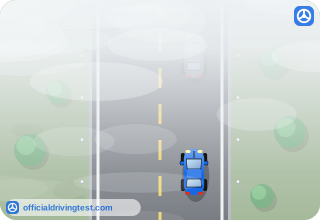
- Reduce your speed below the posted limit
- Keep to the posted maximum speed
- Drive at the posted minimum speed
- Follow the vehicle ahead more closely
Show answer
Correct answer: Reduce your speed below the posted limit
Sometimes you must reduce your speed when conditions require it, such as slippery roads or fog.
Source: Iowa Driver’s License Manual (July 2026), page 8
-
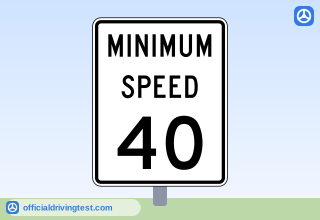
Which roads have minimum speed limits?
- All residential streets
- Some high-speed roads
- Only school zones
- Every road that has a speed limit sign
Show answer
Correct answer: Some high-speed roads
Some high-speed roads have minimum speed limits.
Source: Iowa Driver’s License Manual (July 2026), page 8
-
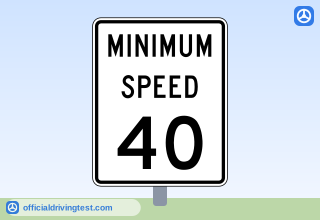
If the minimum speed limit on a high-speed road is too fast for you, what should you do?
- Use another route
- Drive in the left lane
- Drive slowly with your hazard lights on
- Follow a faster vehicle
Show answer
Correct answer: Use another route
If the minimum speed is too fast for you, you should use another route.
Source: Iowa Driver’s License Manual (July 2026), page 8
-
What should you do about speed even if your vehicle has a curve speed warning?
- Maintain a safe speed when approaching curves or exits
- Rely on the warning to tell you when to slow down
- Drive at the speed shown on the dashboard display
- Slow down only after the warning has sounded twice
Show answer
Correct answer: Maintain a safe speed when approaching curves or exits
You should not become dependent on curve speed warnings and should maintain a safe speed while driving and approaching curves or exits.
Source: Iowa Driver’s License Manual (July 2026), page 29
-
Even if your vehicle has a forward collision warning system, what should you always do?
- Rely on the warning to tell you when to slow down for traffic ahead
- Follow closely, because the system will notify you if you get too near
- Check traffic only after a warning has sounded
- Be cautious, check traffic regularly, and keep a safe following distance
Show answer
Correct answer: Be cautious, check traffic regularly, and keep a safe following distance
You should always be cautious, check traffic regularly, and keep a safe following distance; the system only notifies you if you unintentionally get too close.
Source: Iowa Driver’s License Manual (July 2026), page 30
-
What does a high speed alert do?
- It sounds an alert if you are speeding, to help you keep a safe speed
- It alerts you when you drift out of your lane using visual or sound warnings
- It warns you to slow down when you approach a curve or an exit too quickly
- It applies the brakes whenever you go over the posted speed limit
Show answer
Correct answer: It sounds an alert if you are speeding, to help you keep a safe speed
A high speed alert helps maintain a safe speed by sounding an alert if you are speeding.
Source: Iowa Driver’s License Manual (July 2026), page 30
-
For a high speed alert to know the posted speed, what must be up to date?
- The speedometer calibration settings
- The odometer and trip meter readings
- The GPS or the car's infotainment center
- The tire pressure monitor readings
Show answer
Correct answer: The GPS or the car's infotainment center
The GPS or the car's infotainment center must be up to date so that the posted speed is known and the high speed alert works.
Source: Iowa Driver’s License Manual (July 2026), page 30
-
A high speed alert sounds. How should you slow to the posted speed limit?
- Quickly, by braking hard until the alert stops
- By shifting into neutral and coasting down
- By waiting for the system to slow the car for you
- Carefully, by releasing the accelerator or lightly braking
Show answer
Correct answer: Carefully, by releasing the accelerator or lightly braking
When a high speed alert sounds, you should carefully slow the car by releasing the accelerator or lightly braking; do not slam the brakes.
Source: Iowa Driver’s License Manual (July 2026), page 30
-
Even with a high speed alert on your vehicle, what should you still do?
- Trust the alert to keep you at the posted speed limit
- Always monitor your speed and obey the speed limit
- Check your speed only when the alert sounds
- Drive at the speed that makes the alert stay silent
Show answer
Correct answer: Always monitor your speed and obey the speed limit
You should not rely on the high-speed alert; always monitor your speed, maintain a safe speed, and obey the speed limit on the roadway.
Source: Iowa Driver’s License Manual (July 2026), page 30
-
Which of these is one way a high speed alert may warn you?
- A steady horn blast
- Hazard lights turning on
- A flashing speed limit sign
- Gradual loss of engine power
Show answer
Correct answer: A flashing speed limit sign
A high speed alert may activate as beeps or visual warnings such as color changes on the display or a flashing speed limit sign.
Source: Iowa Driver’s License Manual (July 2026), page 30
-
What does adaptive cruise control do?
- It adjusts speed to keep a following distance set by the driver
- It holds one fixed speed no matter what traffic is ahead of you
- It steers the vehicle to keep it centered in its lane on the road
- It alerts you only when you go over the posted speed limit
Show answer
Correct answer: It adjusts speed to keep a following distance set by the driver
Adaptive cruise control can increase or decrease the vehicle's speed to maintain a following distance set by the driver.
Source: Iowa Driver’s License Manual (July 2026), page 33
-
What can advanced versions of adaptive cruise control do in traffic jams?
- Park the vehicle at the side of the road for you
- Steer around the stopped vehicles ahead of you
- Slow and stop the vehicle, then accelerate automatically
- Change lanes on its own to find faster traffic
Show answer
Correct answer: Slow and stop the vehicle, then accelerate automatically
Advanced versions of adaptive cruise control can even slow and stop the vehicle in traffic jams and then accelerate automatically.
Source: Iowa Driver’s License Manual (July 2026), page 33
-
To use adaptive cruise control, what do you do first?
- Turn on the system and let it choose a speed for you
- Accelerate to your set speed and then turn on the system
- Brake to a stop and then turn on the system
- Turn on the system while parked and then pull out
Show answer
Correct answer: Accelerate to your set speed and then turn on the system
With adaptive cruise control, you accelerate to your set speed and then turn on the system.
Source: Iowa Driver’s License Manual (July 2026), page 33
-
What choices does adaptive cruise control generally offer for the following distance gap?
- Short, medium, or long distances
- Two, three, or four seconds
- One fixed distance that cannot be changed
- Exact distances in feet typed in by the driver
Show answer
Correct answer: Short, medium, or long distances
With adaptive cruise control you can generally choose how close the following distance gap will be: short, medium, or long distances.
Source: Iowa Driver’s License Manual (July 2026), page 33
-
While adaptive cruise control maintains the distance to the vehicle ahead, what is the driver required to do?
- Watch the road only in heavy traffic
- Steer only when the system sends an alert
- Remain aware of their surroundings
- Keep the following gap set to long at all times
Show answer
Correct answer: Remain aware of their surroundings
Even though sensors read the road ahead and maintain distance, the driver is required to remain aware of their surroundings.
Source: Iowa Driver’s License Manual (July 2026), page 33
-
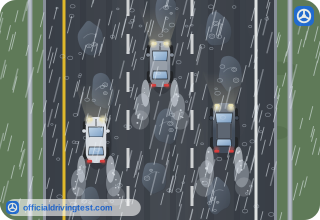
In bad weather and other unsafe driving conditions, what is advised about cruise control?
- Use adaptive cruise control but not regular cruise control
- Do not use any cruise control, including adaptive cruise control
- Use cruise control only at a low speed
- Use cruise control with the following gap set to long
Show answer
Correct answer: Do not use any cruise control, including adaptive cruise control
In bad weather and other unsafe driving conditions, it is advised not to use any cruise control, including adaptive cruise control.
Source: Iowa Driver’s License Manual (July 2026), page 33
-
Which of these affects the time it takes your wheels to stop?
- The vehicle’s weight, size, and load, and the condition of its tires
- Only the color of the vehicle and the year it was built in
- Only the width of the lane you are driving in at the time
- Only the number of passengers riding in the vehicle
Show answer
Correct answer: The vehicle’s weight, size, and load, and the condition of its tires
The time it takes your wheels to stop depends on the vehicle’s weight, size, and load, as well as the condition of its tires.
Source: Iowa Driver’s License Manual (July 2026), page 40
-
Besides the vehicle itself, what does the manual call crucial in stopping?
- The time it takes to turn on the hazard lights
- The time it takes to roll down the window
- The reaction time in getting your foot on the brake pedal
- The number of seconds the engine has been running
Show answer
Correct answer: The reaction time in getting your foot on the brake pedal
The reaction time in getting your foot on the brake pedal is also crucial to how quickly you stop.
Source: Iowa Driver’s License Manual (July 2026), page 40
-
Applying the brakes too hard may cause your vehicle to skid on which kinds of surface?
- Only on snow and ice, never on dry pavement
- Loose gravel, snow and ice, or even dry pavement
- Only on loose gravel, never on paved roads
- Only on wet pavement, never on dry pavement
Show answer
Correct answer: Loose gravel, snow and ice, or even dry pavement
Loose gravel roads, snow and ice, or even dry pavement may cause your vehicle to skid if the brakes are applied too hard.
Source: Iowa Driver’s License Manual (July 2026), page 40
-
How does speed affect the distance it takes to stop?
- Speed has no effect when the road is dry
- At higher speeds, it takes less time to stop
- Speed affects only the reaction distance
- At higher speeds, it takes longer to stop
Show answer
Correct answer: At higher speeds, it takes longer to stop
At higher speeds it takes longer to stop; the stopping distance is the reaction distance plus the braking distance.
Source: Iowa Driver’s License Manual (July 2026), page 40
-
What is the total stopping distance for a vehicle traveling 20 mph, according to the manual’s stopping-distance chart?
- 44 feet
- 84 feet
- 69 feet
- 99 feet
Show answer
Correct answer: 69 feet
At 20 mph the reaction distance is 44 ft and the braking distance is 25 ft, for a stopping distance of 69 ft.
Source: Iowa Driver’s License Manual (July 2026), page 40
-
What is the total stopping distance for a vehicle traveling 30 mph, according to the manual’s stopping-distance chart?
- 123 feet
- 93 feet
- 153 feet
- 189 feet
Show answer
Correct answer: 123 feet
At 30 mph the reaction distance is 66 ft and the braking distance is 57 ft, for a stopping distance of 123 ft.
Source: Iowa Driver’s License Manual (July 2026), page 40
-
What is the braking distance for a vehicle traveling 40 mph, according to the manual’s stopping-distance chart?
- 88 feet
- 158 feet
- 189 feet
- 101 feet
Show answer
Correct answer: 101 feet
At 40 mph the reaction distance is 88 ft and the braking distance is 101 ft, for a stopping distance of 189 ft.
Source: Iowa Driver’s License Manual (July 2026), page 40
-
What is the total stopping distance for a vehicle traveling 50 mph, according to the manual’s stopping-distance chart?
- 210 feet
- 268 feet
- 310 feet
- 359 feet
Show answer
Correct answer: 268 feet
At 50 mph the reaction distance is 110 ft and the braking distance is 158 ft, for a stopping distance of 268 ft.
Source: Iowa Driver’s License Manual (July 2026), page 40
-
What is the reaction distance for a vehicle traveling 60 mph, according to the manual’s stopping-distance chart?
- 110 feet
- 132 feet
- 154 feet
- 227 feet
Show answer
Correct answer: 132 feet
At 60 mph the reaction distance is 132 ft and the braking distance is 227 ft, for a stopping distance of 359 ft.
Source: Iowa Driver’s License Manual (July 2026), page 40
-
What is the total stopping distance for a vehicle traveling 70 mph, according to the manual’s stopping-distance chart?
- 359 feet
- 410 feet
- 520 feet
- 464 feet
Show answer
Correct answer: 464 feet
At 70 mph the reaction distance is 154 ft and the braking distance is 310 ft, for a stopping distance of 464 ft.
Source: Iowa Driver’s License Manual (July 2026), page 40
-
According to the manual, where is the greatest chance of a collision?
- In front of you
- Behind you
- Beside you in the next lane
- In your blind spot
Show answer
Correct answer: In front of you
Because the greatest chance of a collision is in front of you, the 3- to 4-second rule helps you keep a safe following distance.
Source: Iowa Driver’s License Manual (July 2026), page 41
-
What following distance is recommended when the vehicle in front of you blocks your view?
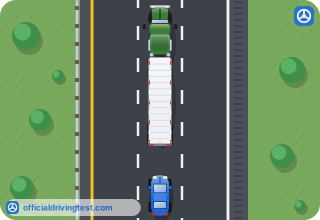
- Six or more seconds
- Two seconds
- Three seconds
- Four seconds
Show answer
Correct answer: Six or more seconds
When the vehicle in front of you blocks your view, a following distance of six or more seconds is recommended.
Source: Iowa Driver’s License Manual (July 2026), page 41
-
The posted speed limit is the maximum speed you can legally drive under what conditions?
- Any weather conditions
- Ideal driving conditions
- Daytime conditions only
- Heavy traffic conditions
Show answer
Correct answer: Ideal driving conditions
The posted speed limit is the maximum speed you can legally drive under ideal driving conditions, so your speed also depends on road conditions and weather.
Source: Iowa Driver’s License Manual (July 2026), page 42
-
According to the manual, a vehicle traveling 60 mph will travel how much further than a vehicle traveling 30 mph before coming to a stop?
- 1.5 times further
- 2 times further
- 6 times further
- 3 times further
Show answer
Correct answer: 3 times further
The manual’s example says a vehicle going 60 mph will travel 3 times further than one going 30 mph before stopping.
Source: Iowa Driver’s License Manual (July 2026), page 42
-
When the speed limit is not posted, what general limit applies in any business district?
- 15 mph
- 30 mph
- 20 mph
- 35 mph
Show answer
Correct answer: 20 mph
Where no limit is posted, the general limit is 20 mph in any business district.
Source: Iowa Driver’s License Manual (July 2026), page 42
-
When the speed limit is not posted, what general limit applies in a residential district or school district?
- 25 mph
- 15 mph
- 30 mph
- 35 mph
Show answer
Correct answer: 25 mph
Where no limit is posted, the general limit is 25 mph in a residential district or school district.
Source: Iowa Driver’s License Manual (July 2026), page 42
-
When the speed limit is not posted, what general limit applies in any suburban district?
- 30 mph
- 35 mph
- 55 mph
- 45 mph
Show answer
Correct answer: 45 mph
Where no limit is posted, the general limit is 45 mph in any suburban district.
Source: Iowa Driver’s License Manual (July 2026), page 42
-
When the speed limit is not posted, what general limit applies to any vehicle pulling another vehicle?
- 35 mph
- 45 mph
- 40 mph
- 55 mph
Show answer
Correct answer: 45 mph
Where no limit is posted, any vehicle pulling another vehicle has a general limit of 45 mph.
Source: Iowa Driver’s License Manual (July 2026), page 42
-
When the speed limit is not posted, what general limit applies on unsurfaced secondary roads from sunset until sunrise?
- 35 mph
- 50 mph
- 45 mph
- 60 mph
Show answer
Correct answer: 50 mph
Where no limit is posted, the limit on unsurfaced secondary roads from sunset until sunrise is 50 mph.
Source: Iowa Driver’s License Manual (July 2026), page 42
-
When the speed limit is not posted, what general limit applies to all trucks on secondary roads at any time of day?
- 35 mph
- 45 mph
- 60 mph
- 50 mph
Show answer
Correct answer: 50 mph
Where no limit is posted, the general limit for all trucks on secondary roads at any time of day is 50 mph.
Source: Iowa Driver’s License Manual (July 2026), page 42
-
When the speed limit is not posted, what general limit applies on all primary roads?
- 60 mph
- 45 mph
- 55 mph
- 70 mph
Show answer
Correct answer: 60 mph
Where no limit is posted, the general limit on all primary roads is 60 mph.
Source: Iowa Driver’s License Manual (July 2026), page 42
-
When the speed limit is not posted, what general limit applies on urban interstate highways?
- 45 mph
- 55 mph
- 60 mph
- 70 mph
Show answer
Correct answer: 60 mph
Where no limit is posted, the general limit on urban interstate highways is 60 mph.
Source: Iowa Driver’s License Manual (July 2026), page 42
-
When the speed limit is not posted, what general limit applies on secondary roads, including unpaved roads, from sunrise to sunset?
- 35 mph
- 45 mph
- 70 mph
- 60 mph
Show answer
Correct answer: 60 mph
Where no limit is posted, secondary roads, including unpaved roads, have a general limit of 60 mph from sunrise to sunset.
Source: Iowa Driver’s License Manual (July 2026), page 42
-
When the speed limit is not posted, what general limit applies on rural interstate highways?
- 55 mph
- 70 mph
- 60 mph
- 65 mph
Show answer
Correct answer: 70 mph
Where no limit is posted, the general limit on rural interstate highways is 70 mph.
Source: Iowa Driver’s License Manual (July 2026), page 42
-
What may happen to the general limits that apply when no speed limit is posted?
- They apply only at night and in bad weather
- They can never be changed
- A lower limit may be set for any of the conditions
- They apply only to commercial vehicles
Show answer
Correct answer: A lower limit may be set for any of the conditions
The manual says a lower limit may be set for any of the conditions listed.
Source: Iowa Driver’s License Manual (July 2026), page 42
-
Besides driving too fast, what else may cause a crash?
- Driving too slow
- Driving with the general traffic flow
- Using the proper speed for conditions
- Driving at the posted speed limit
Show answer
Correct answer: Driving too slow
The manual says that while driving too fast is a major cause of crashes, driving too slow may also cause a crash.
Source: Iowa Driver’s License Manual (July 2026), page 42
-
What does the manual say you should try to do on any road?
- Drive with the general traffic flow
- Drive 10 mph under the posted limit
- Stay in the left lane at all times
- Pass slower vehicles whenever possible
Show answer
Correct answer: Drive with the general traffic flow
The manual says to try to drive with the general traffic flow on any road.
Source: Iowa Driver’s License Manual (July 2026), page 42
-
What is the minimum speed on the interstate system?
- 25 mph
- 30 mph
- 40 mph
- 35 mph
Show answer
Correct answer: 40 mph
On the interstate system there is a minimum speed of 40 mph.
Source: Iowa Driver’s License Manual (July 2026), page 42
-
What is true of vehicles that cannot go at least the minimum speed under normal conditions?
- They must use the right shoulder
- They are not allowed on the interstate
- They may use the interstate with flashers on
- They must have a flag on the rear
Show answer
Correct answer: They are not allowed on the interstate
Vehicles that cannot go at least 40 mph under normal conditions are not allowed on the interstate.
Source: Iowa Driver’s License Manual (July 2026), page 42
-
What puts you in a stronger position to deal with other people's driving choices?
- Driving faster than the traffic around you
- Following the vehicle ahead closely so you can react sooner
- Assuming other drivers will drive safely
- Avoiding aggressive and inattentive driving tendencies yourself
Show answer
Correct answer: Avoiding aggressive and inattentive driving tendencies yourself
Avoiding aggressive and inattentive driving tendencies yourself puts you in a stronger position to deal with other drivers' choices.
Source: Iowa Driver’s License Manual (July 2026), page 47
-
As a defensive driving technique, how far ahead should you scan conditions?
- 5 to 10 seconds ahead
- 20 to 30 seconds ahead
- 10 to 15 seconds ahead
- 40 to 60 seconds ahead
Show answer
Correct answer: 20 to 30 seconds ahead
The manual says to check your mirrors frequently and scan conditions 20 to 30 seconds ahead of you.
Source: Iowa Driver’s License Manual (July 2026), page 47
-
In defensive driving, what does it mean to leave yourself an out?
- A gap behind you that is big enough to back into
- A lane change you plan ahead of time so you can leave the highway
- A place to go if your immediate path of travel is suddenly blocked
- An exit you decide to take if traffic slows down
Show answer
Correct answer: A place to go if your immediate path of travel is suddenly blocked
Leaving yourself an out means having a place to move your vehicle if your immediate path of travel is suddenly blocked.
Source: Iowa Driver’s License Manual (July 2026), page 47
-
What is the best way to avoid potential dangers in all driving situations?
- Stay in the left lane at all times so you can pass slower vehicles quickly
- Position your vehicle where you have the best chance of seeing and being seen
- Drive in the right lane at all times, whatever the traffic is doing
- Keep your speed slightly above the flow of traffic
Show answer
Correct answer: Position your vehicle where you have the best chance of seeing and being seen
The best way to avoid potential dangers is to position your vehicle where you have the best chance of seeing and being seen.
Source: Iowa Driver’s License Manual (July 2026), page 47
-
Who is responsible for making sure your speed matches the conditions?
- The agency that posted the speed limit
- Other drivers around you
- The police officer on patrol
- You, the driver
Show answer
Correct answer: You, the driver
The manual says it is your responsibility to ensure that your speed matches conditions.
Source: Iowa Driver’s License Manual (July 2026), page 47
-
Why does the manual tell you to keep your speed down?
- Higher speeds make your headlights less effective when you drive at night
- Higher speeds make it much harder to control your vehicle if things go wrong
- Higher speeds cause your tires to lose air more quickly on every road
- Higher speeds are not allowed on roads with a painted center line
Show answer
Correct answer: Higher speeds make it much harder to control your vehicle if things go wrong
Higher speeds make controlling your vehicle much more difficult if things go wrong.
Source: Iowa Driver’s License Manual (July 2026), page 47
-
What does the manual say vehicles moving faster or slower than the flow of traffic cause?
- More lane changes, passing, and following too closely
- Smoother traffic flow, because drivers adjust sooner
- Fewer lane changes, because lanes stay open longer
- Shorter trips, because slower drivers are passed quickly
Show answer
Correct answer: More lane changes, passing, and following too closely
Vehicles moving faster or slower than traffic increase lane changes, passing, and following too closely, which increases the chance of collisions.
Source: Iowa Driver’s License Manual (July 2026), page 48
-
When are roadways safest?
- When all vehicles travel the same speed but do not exceed the speed limit
- When most vehicles travel a little above the posted speed limit
- When faster vehicles pass slower ones as often as they possibly can
- When every driver chooses the speed that feels most comfortable
Show answer
Correct answer: When all vehicles travel the same speed but do not exceed the speed limit
The safest roadways are those where all vehicles travel the same speed but do not exceed the speed limit.
Source: Iowa Driver’s License Manual (July 2026), page 48
-
If you spot a slow vehicle early, what do you have time to do?
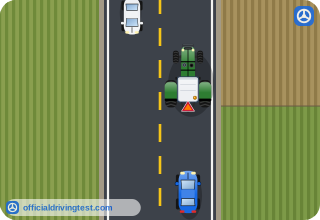
- Brake hard to match its speed at once
- Tap the horn to ask it to speed up
- Change lanes or slow down safely
- Follow closely until it turns off
Show answer
Correct answer: Change lanes or slow down safely
If you spot slow vehicles early, you have time to change lanes or slow down safely; slowing suddenly can cause a crash.
Source: Iowa Driver’s License Manual (July 2026), page 48
-
Which driving behavior does the manual say causes many collisions?
- Driving below the speed limit in the right lane
- Signaling too early before a turn
- Checking mirrors too often
- Following the vehicle ahead too closely
Show answer
Correct answer: Following the vehicle ahead too closely
Many collisions are caused by following the vehicle ahead too closely.
Source: Iowa Driver’s License Manual (July 2026), page 48
-
What do higher speeds require when you are following another vehicle?
- Shorter stopping distances
- The same stopping distance as slower speeds
- Less attention to the vehicle ahead
- Greater stopping distances
Show answer
Correct answer: Greater stopping distances
Higher speeds require greater stopping distances, so keep this in mind when following another vehicle.
Source: Iowa Driver’s License Manual (July 2026), page 48
-
If you are being tailgated, how can you give the tailgater a better view of what is ahead?
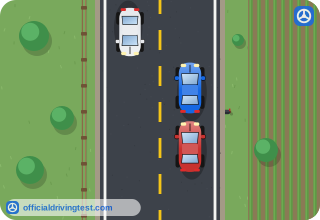
- Move slightly to the left
- Move onto the shoulder and slow down
- Move slightly to the right
- Move to the center of your lane and speed up
Show answer
Correct answer: Move slightly to the right
When tailgated, you should move slightly to the right to give the tailgater a better view of what is ahead.
Source: Iowa Driver’s License Manual (July 2026), page 48
-
If you are being tailgated, when should you signal for turns, stops, or lane changes?
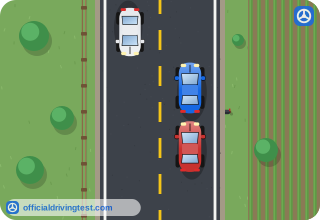
- Early
- At the last moment
- Only at intersections
- Only when other cars are close
Show answer
Correct answer: Early
The manual says to signal early for turns, stops, or lane changes when you are being tailgated.
Source: Iowa Driver’s License Manual (July 2026), page 48
-
Which action may encourage a tailgater to pass you?
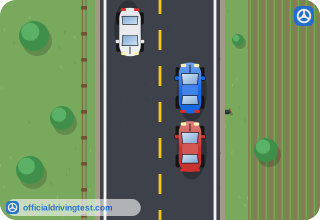
- Slowing down
- Speeding up
- Turning on your hazard lights
- Moving to the left side of your lane
Show answer
Correct answer: Slowing down
The manual says to try slowing down and encouraging the driver behind you to pass.
Source: Iowa Driver’s License Manual (July 2026), page 48
-
If you are being tailgated and everything else fails, what should you do?
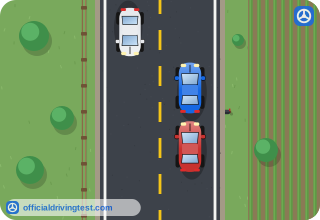
- Speed up to open a gap
- Brake hard to make the driver back off
- Pull out of the traffic flow
- Stop in the traffic lane
Show answer
Correct answer: Pull out of the traffic flow
If all else fails with a tailgater, you should pull out of the traffic flow.
Source: Iowa Driver’s License Manual (July 2026), page 48
-
Why is driving on loose gravel harder than driving on pavement?
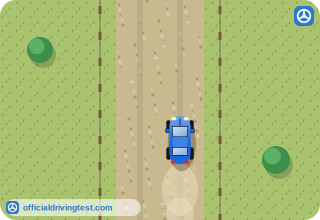
- Your tires don't have the traction needed to give you stable control
- Gravel roads are always much narrower than paved roads are
- Gravel roads are always posted with much lower speed limits
- Loose gravel makes your brake lights hard for others to see
Show answer
Correct answer: Your tires don't have the traction needed to give you stable control
On loose gravel the tires lack the traction needed for stable control.
Source: Iowa Driver’s License Manual (July 2026), page 55
-
How should you steer on loose gravel?
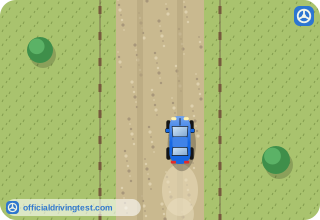
- Turn sharply to keep the tires gripping
- Steer back and forth to clear the gravel
- Avoid sudden turning
- Hold the wheel loosely so the tires can slide
Show answer
Correct answer: Avoid sudden turning
The manual advises slowing down and avoiding sudden turning on loose gravel.
Source: Iowa Driver’s License Manual (July 2026), page 55
-
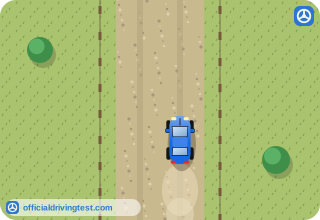
How should you accelerate and brake on loose gravel?
- Slowly
- Quickly, to regain traction
- Only by braking and never by accelerating
- With sudden, short taps
Show answer
Correct answer: Slowly
On loose gravel, accelerate and brake slowly.
Source: Iowa Driver’s License Manual (July 2026), page 55
-
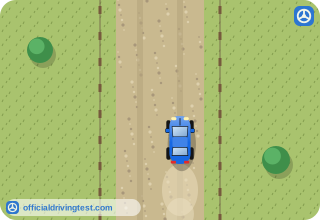
What should you do with your following distance on loose gravel?
- Shorten it to stay closer to the car ahead
- Keep it the same as on pavement
- Increase it
- Match it to the speed of dust clouds
Show answer
Correct answer: Increase it
On loose gravel you should slow down and increase your following distance.
Source: Iowa Driver’s License Manual (July 2026), page 55
-
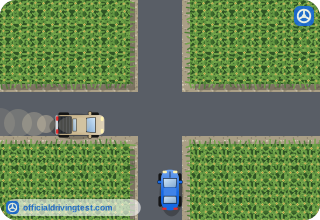
What does the manual advise about trees, cornfields, buildings, hills, and dust that block your view on rural roads?
- Speed up to pass through blind areas as quickly as possible
- Identify blind spots to better anticipate potential dangers
- Use your horn continuously while you drive through the blind area
- Drive in the center of the road so that you can see farther
Show answer
Correct answer: Identify blind spots to better anticipate potential dangers
The manual says to identify blind spots to better anticipate and be prepared for potential dangers.
Source: Iowa Driver’s License Manual (July 2026), page 55
-
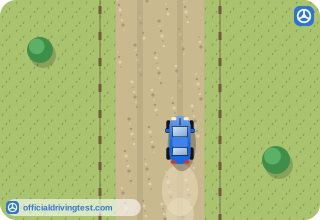
Why can you not always rely on dust clouds on a gravel road?
- They may not show whether crossing vehicles are approaching
- Dust clouds only form behind slow-moving vehicles
- Dust clouds are always too thick for a driver to see through
- Dust clouds only appear at night
Show answer
Correct answer: They may not show whether crossing vehicles are approaching
You can't always rely on dust clouds to tell you whether crossing vehicles are approaching.
Source: Iowa Driver’s License Manual (July 2026), page 55
-
How do shoulders on rural roads typically compare with the center of the roadway?
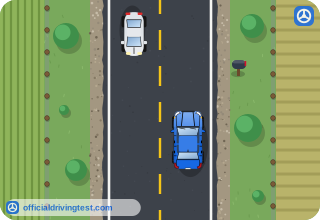
- They are firmer and better paved
- They are wider and flatter
- They are soft and less compact
- They are cleared of loose gravel
Show answer
Correct answer: They are soft and less compact
Shoulders on rural roads are typically soft and less compact than the center of the roadway.
Source: Iowa Driver’s License Manual (July 2026), page 55
-
Where will loose gravel or debris on a shoulder pull your vehicle?
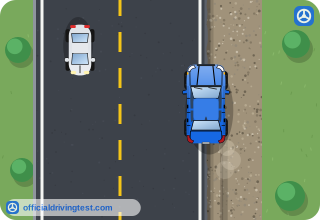
- Toward the ditch
- Toward the center of the road
- Back onto the pavement
- Into the oncoming lane
Show answer
Correct answer: Toward the ditch
Shoulders with loose gravel or debris make vehicles harder to control and pull your vehicle toward the ditch.
Source: Iowa Driver’s License Manual (July 2026), page 55
-
When should you always slow down on a gravel road, according to the manual?
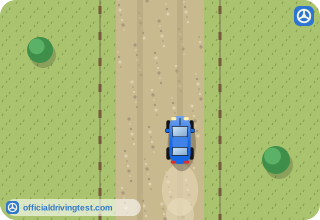
- Only when you are driving through heavy clouds of dust
- Only when you are approaching an uncontrolled intersection
- When you meet another vehicle or drive near or on the shoulder
- Only when you are driving at night on a gravel road
Show answer
Correct answer: When you meet another vehicle or drive near or on the shoulder
Always slow down when encountering another vehicle or anytime you're driving near or on the shoulder of a gravel road.
Source: Iowa Driver’s License Manual (July 2026), page 55
-
Before reaching the crest of a hill or entering a curve on a rural road, what should you do?
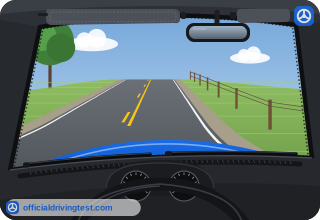
- Slow down, move to the right side of the road and watch for oncoming vehicles
- Keep your speed and move toward the center of the road for a better view ahead
- Speed up to get through it quickly and stay on the left side of the road
- Hold your speed and flash your headlights at oncoming vehicles
Show answer
Correct answer: Slow down, move to the right side of the road and watch for oncoming vehicles
Hills and curves on rural roads are often steeper and sharper than on highways, so slow down, move to the right side and watch for oncoming vehicles before the crest or curve.
Source: Iowa Driver’s License Manual (July 2026), page 56
-
To compensate for reduced visibility when driving in the dark, what should you do?
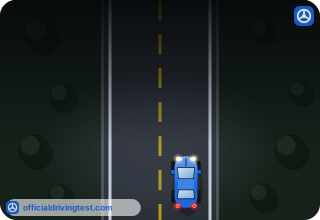
- Lower your speed and shorten your following distance
- Lower your speed and increase your following distance
- Keep your usual speed and follow other vehicles more closely
- Raise your speed to leave the dark stretch sooner
Show answer
Correct answer: Lower your speed and increase your following distance
To compensate for reduced visibility at night, lower your speed and increase your following distance.
Source: Iowa Driver’s License Manual (July 2026), page 56
-
If you must drive in inclement weather, what should you do?
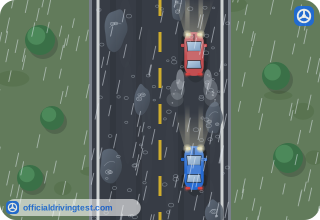
- Slow down and shorten your following distance
- Keep your speed and increase your following distance
- Slow down and increase your following distance
- Speed up to leave the weather behind you
Show answer
Correct answer: Slow down and increase your following distance
In inclement weather, slow down and increase your following distance, which gives you more time to stop.
Source: Iowa Driver’s License Manual (July 2026), page 59
-
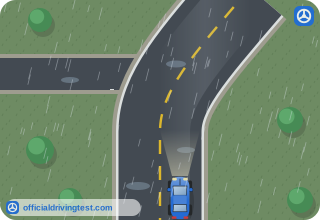
What should you do on curves and when approaching intersections on wet roads?
- Keep your normal speed and brake late
- Speed up to get through quickly
- Stay in the center of the roadway
- Be more cautious and slow down
Show answer
Correct answer: Be more cautious and slow down
The manual says to be more cautious and slow down on curves and when approaching intersections in wet conditions.
Source: Iowa Driver’s License Manual (July 2026), page 60
-
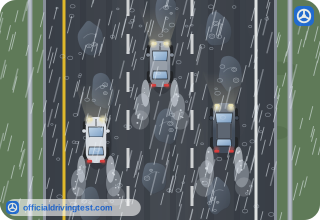
Hydroplaning occurs as a result of water on the road that is deeper than what?
- The height of the bumper
- The width of the tire
- The depth of the lane grooves
- The tire tread
Show answer
Correct answer: The tire tread
Hydroplaning occurs when water on the road is deeper than the tire tread; the layer of water reduces friction and can cause loss of control.
Source: Iowa Driver’s License Manual (July 2026), page 60
-
Which of these tells you your car could hydroplane?
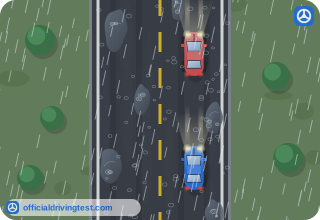
- The car ahead leaves no tracks on the water
- The road surface is covered with dry leaves
- The car ahead brakes lightly
- Your tires make a loud squeal
Show answer
Correct answer: The car ahead leaves no tracks on the water
The manual says that if the car ahead leaves no tracks on the water, your car could hydroplane, so you should slow down.
Source: Iowa Driver’s License Manual (July 2026), page 60
-
In fog, how far should you slow down?
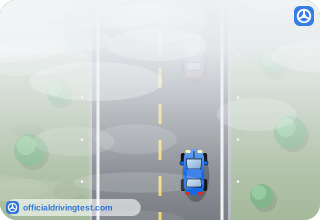
- Until your speed matches your ability to see
- To half of the posted speed limit
- To a crawl of 10 mph or less
- Only enough to keep the lights from glaring
Show answer
Correct answer: Until your speed matches your ability to see
The manual says to slow down until your speed matches your ability to see.
Source: Iowa Driver’s License Manual (July 2026), page 60
-
When starting to drive from a stopped position on ice or snow, what should you do?
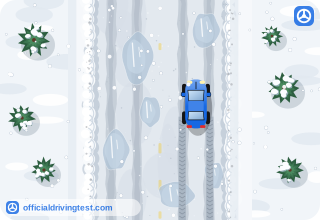
- Keep the wheels straight ahead and accelerate gently
- Turn the wheels and accelerate hard
- Keep the wheels straight and accelerate quickly
- Rock the vehicle with sharp turns of the wheel
Show answer
Correct answer: Keep the wheels straight ahead and accelerate gently
To avoid spinning the tires, keep the wheels straight ahead and accelerate gently.
Source: Iowa Driver’s License Manual (July 2026), page 61
-
How should you make up for a loss of traction on ice or snow?
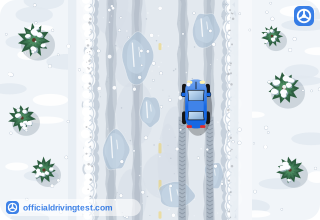
- Increase your speed
- Tailgate the car ahead
- Decrease your speed
- Use cruise control
Show answer
Correct answer: Decrease your speed
Decrease your speed to make up for a loss of traction.
Source: Iowa Driver’s License Manual (July 2026), page 61
-
When driving on ice or snow, when should you brake?
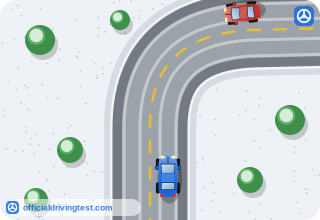
- Only while going around a curve
- Only while turning at an intersection
- Only after you start to skid
- Only when traveling in a straight line
Show answer
Correct answer: Only when traveling in a straight line
Begin slowing down long before a stop, and brake only when traveling in a straight line.
Source: Iowa Driver’s License Manual (July 2026), page 61
-
Stopping distances can be how much greater in ice and snow?
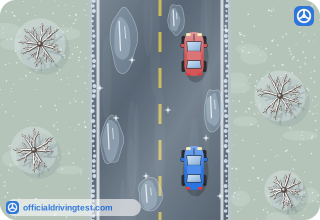
- 10 times greater
- 2 times greater
- 3 times greater
- 5 times greater
Show answer
Correct answer: 10 times greater
Stopping distances can be 10 times greater in ice and snow.
Source: Iowa Driver’s License Manual (July 2026), page 61
-
Why should you stay far behind the vehicle ahead on ice or snow?
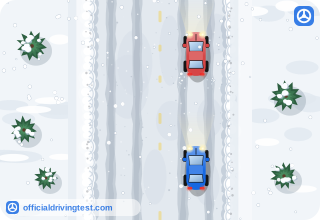
- So the car ahead can see your headlights
- So snow thrown by its tires misses you
- So you will not need a sudden stop that causes skidding
- So you can pass it more easily when the road clears
Show answer
Correct answer: So you will not need a sudden stop that causes skidding
Staying far behind means you will not need to come to a sudden stop, which can cause skidding.
Source: Iowa Driver’s License Manual (July 2026), page 61