Hawaii: Right-of-way and turning
Who yields at intersections, turns, U-turns, roundabouts, passing and lane use. Split into 5 shorter tests so you're not stuck in one long quiz.
Independent educational site · not affiliated with any government agency or DMV
Choose a part
Right-of-way and turning — Part 1
Questions in this part include: “When you are moving slower than other traffic, which lane should you drive in?”
StartRight-of-way and turning — Part 2
Questions in this part include: “Which of these is a condition under which you must not pass?”
StartRight-of-way and turning — Part 3
Questions in this part include: “When entering traffic from a driveway, where should you make your stop?”
StartRight-of-way and turning — Part 4
Questions in this part include: “Where should you never change lanes?”
StartRight-of-way and turning — Part 5
Questions in this part include: “Where should you not attempt to pass another vehicle?”
StartAll 98 Right-of-way and turning questions with answers
Choose a part above to take a practice test, or study every question and answer here.
Show the questions and answersHide the questions
-
Under the general rule, which part of the roadway must you drive on?
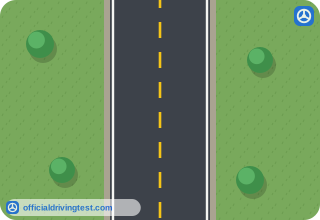
- The right half of the roadway
- The left half of the roadway
- The center of the roadway
- Whichever half has less traffic
Show answer
Correct answer: The right half of the roadway
The manual says you must drive on the right half of the roadway.
Source: Hawaii Driver's Manual (2023), page 26 · Open this page in the manual (Manual page 26)
-
Vehicles going in opposite directions must pass each other on which side?
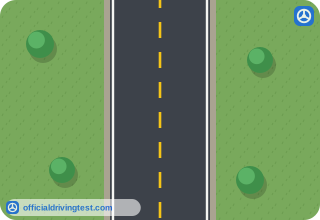
- On the left
- On the side with the wider shoulder
- On the right
- On the side chosen by the faster vehicle
Show answer
Correct answer: On the right
Vehicles going in opposite directions must pass each other on the right.
Source: Hawaii Driver's Manual (2023), page 26 · Open this page in the manual (Manual page 26)
-
On narrow roads, how much of the main traveled portion of the road must you allow vehicles going in the opposite direction?
- At least one-third
- At least one-half
- At least one-quarter
- At least two-thirds
Show answer
Correct answer: At least one-half
You must allow vehicles going in the opposite direction at least one-half of the main traveled portion of the road.
Source: Hawaii Driver's Manual (2023), page 26 · Open this page in the manual (Manual page 26)
-
When you are moving slower than other traffic, which lane should you drive in?
- The center lane
- The extreme left lane
- The lane with the least traffic
- The extreme right lane
Show answer
Correct answer: The extreme right lane
The manual says that when moving slower than other traffic you should drive in the extreme right lane.
Source: Hawaii Driver's Manual (2023), page 26 · Open this page in the manual (Manual page 26)
-
In which situation may you drive on the left half of the roadway?
- When approaching the top of a hill
- When approaching a curve
- When driving on a one-way street or road
- When you are within 100 feet of an intersection
Show answer
Correct answer: When driving on a one-way street or road
Driving on a one-way street or road is one of the situations in which you may drive on the left half of the roadway.
Source: Hawaii Driver's Manual (2023), page 26 · Open this page in the manual (Manual page 26)
-
In which situation must you NOT drive on the left half of the roadway?
- When approaching the top of a hill
- When driving on a one-way street or road
- When overtaking a vehicle on a two-lane road with no oncoming traffic
- When an obstruction blocks the roadway and oncoming vehicles are not using the left half
Show answer
Correct answer: When approaching the top of a hill
You must not drive on the left half of the roadway when approaching the top of a hill or on a curve.
Source: Hawaii Driver's Manual (2023), page 26 · Open this page in the manual (Manual page 26)
-
You must not drive on the left half of the roadway when approaching or passing through an intersection or railroad crossing. Within what distance does this apply?
- Within 50 feet (15m)
- Within 200 feet (61m)
- Within 300 feet (91m)
- Within 100 feet (30.5m)
Show answer
Correct answer: Within 100 feet (30.5m)
The manual prohibits driving on the left half when approaching within 100 feet (30.5m) of or passing through an intersection or railroad crossing.
Source: Hawaii Driver's Manual (2023), page 26 · Open this page in the manual (Manual page 26)
-
On a road with four or more lanes for moving traffic, when may you drive on the left half of the roadway?
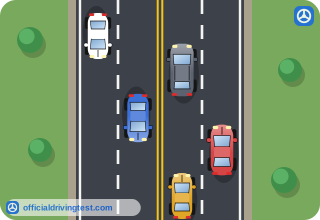
- Whenever you are overtaking a slower vehicle
- Only when signs direct otherwise
- Whenever the left lane is empty
- Whenever you have signaled first
Show answer
Correct answer: Only when signs direct otherwise
You must not drive on the left half of a road with four or more lanes for moving traffic unless otherwise directed by signs.
Source: Hawaii Driver's Manual (2023), page 26 · Open this page in the manual (Manual page 26)
-
Within 100 feet of a bridge or tunnel, you must NOT drive on the left half of the roadway when which condition is true?
- The bridge or tunnel is longer than 100 feet
- You cannot see vehicles coming toward you
- The road surface is wet
- The bridge or tunnel has a toll
Show answer
Correct answer: You cannot see vehicles coming toward you
The rule applies when you approach within 100 feet (30.5m) of a bridge or tunnel and cannot see vehicles coming from the opposite direction.
Source: Hawaii Driver's Manual (2023), page 26 · Open this page in the manual (Manual page 26)
-
In which situation may you pass to the right of another vehicle?
- When the vehicle ahead is slowing to make a right turn
- On a two-lane road with one lane marked for each direction
- When the shoulder of the road is wide enough to hold your whole vehicle
- When the vehicle you are passing is about to make a left turn
Show answer
Correct answer: When the vehicle you are passing is about to make a left turn
You may pass to the right when the vehicle you are passing is about to make a left turn.
Source: Hawaii Driver's Manual (2023), page 26 · Open this page in the manual (Manual page 26)
-
On a paved street or highway, how many lanes marked for traffic in each direction must there be before you may pass to the right of another vehicle?
- Two or more
- One
- Three or more
- Four or more
Show answer
Correct answer: Two or more
You may pass on the right on a paved street or highway with two or more lanes marked for traffic in each direction.
Source: Hawaii Driver's Manual (2023), page 26 · Open this page in the manual (Manual page 26)
-
On a one-way street, when may you pass to the right of another vehicle?
- On any one-way street
- Never, on a one-way street
- When the street has two or more lanes marked for traffic
- Only when the street has three or more lanes marked for traffic
Show answer
Correct answer: When the street has two or more lanes marked for traffic
You may pass on the right on a one-way street with two or more lanes marked for traffic.
Source: Hawaii Driver's Manual (2023), page 26 · Open this page in the manual (Manual page 26)
-
When you pass to the right of a vehicle that is about to make a left turn, what must you NOT do?
- Use your turn signal before you start to pass
- Slow down and stay in the same lane while you are passing
- Pass within a lane that is marked for traffic
- Drive off the main traveled portion of the roadway
Show answer
Correct answer: Drive off the main traveled portion of the roadway
You may pass on the right of a vehicle about to turn left, but you may not drive off the pavement or main traveled portion of the roadway to pass.
Source: Hawaii Driver's Manual (2023), page 26 · Open this page in the manual (Manual page 26)
-
On a one-way roadway, in which direction must you drive?
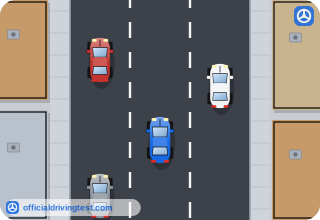
- In either direction whenever no other traffic is present nearby
- Only in the direction indicated by the posted traffic signs
- Toward the nearest oncoming vehicle
- In the direction of the heaviest traffic
Show answer
Correct answer: Only in the direction indicated by the posted traffic signs
You must drive only in the direction indicated by the posted traffic signs.
Source: Hawaii Driver's Manual (2023), page 26 · Open this page in the manual (Manual page 26)
-
On a street or road marked with traffic lanes, what must you do?
- Straddle two lanes for a while when traffic is light
- Change lanes whenever the next lane is moving faster
- Drive entirely within your marked lane and change only when safe
- Stay in one lane only on roads with four or more marked lanes of traffic
Show answer
Correct answer: Drive entirely within your marked lane and change only when safe
You must drive entirely within the marked lane and not change lanes until you have checked that the change can be made safely.
Source: Hawaii Driver's Manual (2023), page 26 · Open this page in the manual (Manual page 26)
-
What must you do about the orders and directions of a police officer?
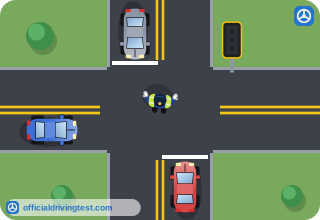
- Obey all lawful orders and directions
- Obey them only when no traffic signal is present
- Obey them only when signs agree with them
- Treat them as advice
Show answer
Correct answer: Obey all lawful orders and directions
You must obey all lawful orders and directions of a police officer.
Source: Hawaii Driver's Manual (2023), page 26 · Open this page in the manual (Manual page 26)
-
When a highway is divided by a barrier or an unpaved space, when may you drive across or through it?
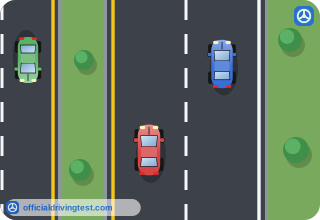
- Whenever there is no oncoming traffic on either side
- Whenever the unpaved space is dry and the ground is level enough to cross
- Only at an opening or paved surface that signs do not prohibit
- Whenever you signal first and check for traffic
Show answer
Correct answer: Only at an opening or paved surface that signs do not prohibit
You must not cross the barrier or space except where an opening or paved surface is provided and signs do not prohibit it.
Source: Hawaii Driver's Manual (2023), page 27 · Open this page in the manual (Manual page 27)
-
What right do funeral processions and convoys have at intersections?
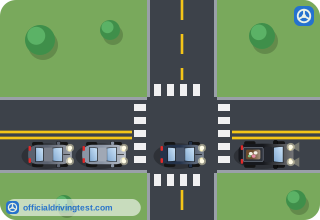
- They must yield at every intersection
- They must stop and wait for a green light
- The right of way
- They have no special right of way
Show answer
Correct answer: The right of way
Funeral processions and convoys have the right of way at intersections.
Source: Hawaii Driver's Manual (2023), page 29 · Open this page in the manual (Manual page 29)
-
How do vehicles in a convoy or funeral procession usually identify themselves?
- By using headlamps
- By flashing their hazard lights
- By sounding their horns at intersections
- By driving with parking lights only
Show answer
Correct answer: By using headlamps
Vehicles in a convoy or procession will usually use headlamps for identification.
Source: Hawaii Driver's Manual (2023), page 29 · Open this page in the manual (Manual page 29)
-
Which vehicles in a funeral procession will usually have a distinctive marking?
- Every vehicle in the procession
- Only the first vehicle
- Only the last vehicle
- The first and last vehicles
Show answer
Correct answer: The first and last vehicles
The first and last vehicles of a procession will usually have a distinctive marking.
Source: Hawaii Driver's Manual (2023), page 29 · Open this page in the manual (Manual page 29)
-
What should you NOT do when you meet a funeral procession?
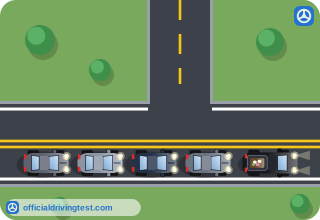
- Drive in the right lane while the whole procession passes you
- Drive your vehicle between the vehicles in the procession
- Stop at an intersection while the procession passes
- Reduce your speed as the procession approaches you
Show answer
Correct answer: Drive your vehicle between the vehicles in the procession
You should not drive your vehicle between the vehicles in a funeral procession.
Source: Hawaii Driver's Manual (2023), page 29 · Open this page in the manual (Manual page 29)
-
Which of these is a condition under which you must not pass?
- On a one-way street with two or more lanes marked for traffic
- On a paved street with two or more lanes marked for traffic in each direction
- On the right shoulder of the highway
- When the vehicle you are passing is about to make a left turn
Show answer
Correct answer: On the right shoulder of the highway
The manual lists passing on the right shoulder of the highway among the no-passing conditions.
Source: Hawaii Driver's Manual (2023), page 30 · Open this page in the manual (Manual page 30)
-
When approaching a hill or curve, you must not pass if there is not what clear distance ahead?
- 200 to 400 feet (61m to 122m)
- 300 to 500 feet (91m to 152m)
- 400 to 600 feet (122m to 183m)
- 700 to 1000 feet (213m to 305m)
Show answer
Correct answer: 700 to 1000 feet (213m to 305m)
Do not pass on approaching a hill or curve where there is not 700 to 1000 feet (213m to 305m) of clear distance ahead.
Source: Hawaii Driver's Manual (2023), page 30 · Open this page in the manual (Manual page 30)
-
In which situation must you not pass?
- When the vehicle ahead is traveling much slower than the posted speed limit
- When the pass cannot be finished without endangering the oncoming vehicle
- When it is daytime and the road is dry
- When you have signaled and checked your mirrors
Show answer
Correct answer: When the pass cannot be finished without endangering the oncoming vehicle
Do not pass when the pass cannot be completed without interfering with the safety of the oncoming vehicle and before the yellow line appears in your traffic lane.
Source: Hawaii Driver's Manual (2023), page 30 · Open this page in the manual (Manual page 30)
-
When you are being passed, what is unlawful?
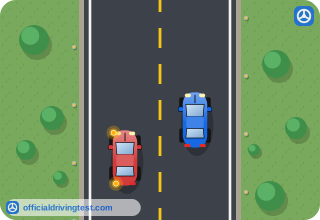
- Slowing down to let the vehicle by
- Staying in your lane
- Increasing your speed
- Moving to the right side of your lane
Show answer
Correct answer: Increasing your speed
When you are being passed, it is unlawful to increase your speed.
Source: Hawaii Driver's Manual (2023), page 30 · Open this page in the manual (Manual page 30)
-
When must you not pass a school bus on the same roadway?
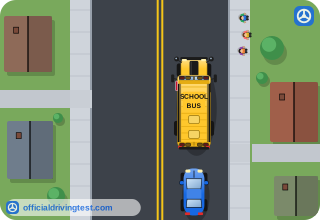
- When it is moving along the road
- When it is parked near a school
- When its flashing lights are operating
- During the morning and afternoon school hours
Show answer
Correct answer: When its flashing lights are operating
Do not pass when there is a school bus on the same roadway when the flashing lights are operating.
Source: Hawaii Driver's Manual (2023), page 31 · Open this page in the manual (Manual page 31)
-
You must not pass when approaching within what distance of any intersection or railroad crossing?
- 50 feet (15m)
- 100 feet (30m)
- 200 feet (60m)
- 500 feet (150m)
Show answer
Correct answer: 100 feet (30m)
Do not pass when approaching within 100 feet (30m) of or when traversing any intersection or railroad crossing.
Source: Hawaii Driver's Manual (2023), page 31 · Open this page in the manual (Manual page 31)
-
You must not pass within 100 feet (30m) of which of these?
- A parking lot entrance on a side street ahead of you
- A gas station next to the road
- A rest area beside the highway
- Any posted narrow bridge, viaduct or tunnel
Show answer
Correct answer: Any posted narrow bridge, viaduct or tunnel
Do not pass when approaching within 100 feet (30m) of any posted narrow bridge, viaduct or tunnel.
Source: Hawaii Driver's Manual (2023), page 31 · Open this page in the manual (Manual page 31)
-
What does the end of a "no passing zone" mean?
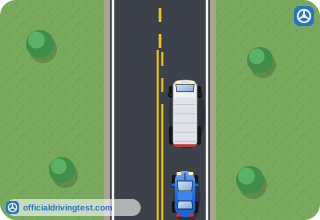
- That it is safe to pass at once
- That passing is now required of you
- Only that there is increased visibility ahead
- That the posted speed limit has been raised ahead
Show answer
Correct answer: Only that there is increased visibility ahead
The end of a no passing zone does not mean it is safe to pass; it means there is increased visibility ahead.
Source: Hawaii Driver's Manual (2023), page 31 · Open this page in the manual (Manual page 31)
-
Your vehicle and another vehicle approach an intersection at the same time. Which vehicle must yield?
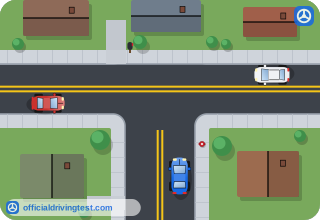
- Yield to the car on your right
- Yield to the car on your left
- The faster vehicle yields
- The vehicle on the right must yield
Show answer
Correct answer: Yield to the car on your right
The manual says to yield to the car on the right when vehicles approach at the same time.
Source: Hawaii Driver's Manual (2023), page 32 · Open this page in the manual (Manual page 32)
-
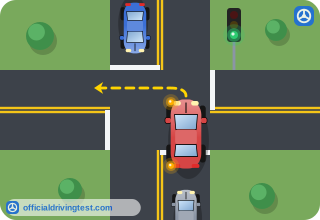
When you turn left at an intersection, whom must you yield to?
- Only oncoming vehicles that have their headlamps turned on
- Only oncoming vehicles that are turning right
- No one, if you signaled first
- All oncoming traffic that is so close as to be a hazard
Show answer
Correct answer: All oncoming traffic that is so close as to be a hazard
When turning left, you must yield to all oncoming traffic that is so close as to be a hazard.
Source: Hawaii Driver's Manual (2023), page 32 · Open this page in the manual (Manual page 32)
-
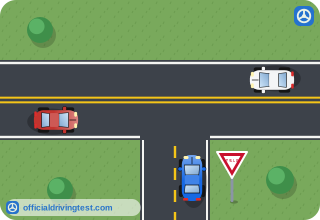
You face a yield sign and cross traffic is on the protected route. What must you do?
- Speed up to clear the intersection first
- Yield to all traffic on the protected route
- Go first if you arrived first
- Yield only to traffic coming from your right
Show answer
Correct answer: Yield to all traffic on the protected route
The right-of-way diagram says to yield to all traffic on the protected route.
Source: Hawaii Driver's Manual (2023), page 32 · Open this page in the manual (Manual page 32)
-
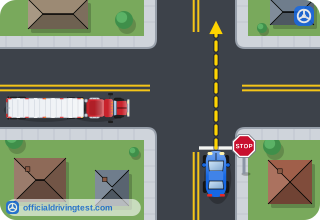
You face a stop sign and cross traffic is on the protected route. What must you do?
- Slow down and yield only to traffic from your right side
- Stop and yield to all traffic on the protected route
- Stop, then go first if you arrived first
- Stop only if other vehicles are in sight
Show answer
Correct answer: Stop and yield to all traffic on the protected route
The right-of-way diagram says to stop and yield to all traffic on the protected route.
Source: Hawaii Driver's Manual (2023), page 32 · Open this page in the manual (Manual page 32)
-
When the traffic light turns green and you are about to start through the intersection, whom must you yield to?
- Only pedestrians who are in a marked crosswalk nearby
- Only vehicles coming from your right side
- No one, since you have a green light to go
- Pedestrians and cars caught in the intersection
Show answer
Correct answer: Pedestrians and cars caught in the intersection
The manual says to yield to pedestrians and cars caught in the intersection when the light turns green.
Source: Hawaii Driver's Manual (2023), page 32 · Open this page in the manual (Manual page 32)
-
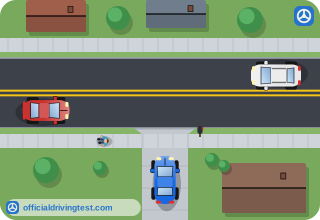
What must you do when entering a public street or road from an alley, driveway or farmyard?
- Stop and yield
- Slow down and yield only to traffic from your left
- Enter first if you are turning right
- Sound your horn and proceed
Show answer
Correct answer: Stop and yield
The manual says to stop and yield when entering any public street or road from an alley, driveway or farmyard.
Source: Hawaii Driver's Manual (2023), page 32 · Open this page in the manual (Manual page 32)
-
Where must the stop be made at a STOP sign?
- Past the crosswalk, at the edge of the intersection
- Wherever you can first see the cross traffic
- In the middle of the crosswalk
- At the “stop line”
Show answer
Correct answer: At the “stop line”
The stop must be made at the “stop line”.
Source: Hawaii Driver's Manual (2023), page 44 · Open this page in the manual (Manual page 44)
-
There is no “stop line” at a STOP sign. Where must you stop?
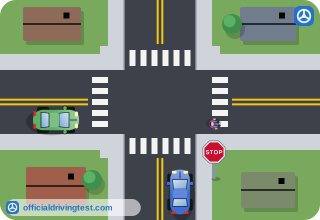
- Just past the crosswalk, where you can see traffic
- Before crossing any marked or unmarked crosswalk
- In the middle of the intersection
- Only after entering the crosswalk if pedestrians are there
Show answer
Correct answer: Before crossing any marked or unmarked crosswalk
If there is no “stop line”, you must stop before crossing any marked or unmarked crosswalk.
Source: Hawaii Driver's Manual (2023), page 44 · Open this page in the manual (Manual page 44)
-
You cannot see other traffic from your first stop at a STOP sign. What should you do?
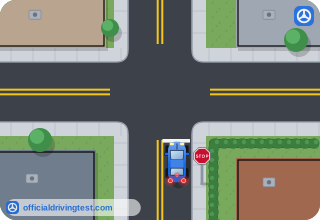
- Wait at the stop line until all traffic has cleared the intersection
- Honk your horn and wait for other drivers to wave you ahead
- Move ahead slowly and stop again where you can see approaching traffic
- Proceed through the intersection at normal speed after you signal
Show answer
Correct answer: Move ahead slowly and stop again where you can see approaching traffic
When you cannot see other traffic from the first stop, you move ahead slowly and stop again where you can see approaching traffic.
Source: Hawaii Driver's Manual (2023), page 44 · Open this page in the manual (Manual page 44)
-
What must you do when a lane use control sign is posted for your traffic lane?
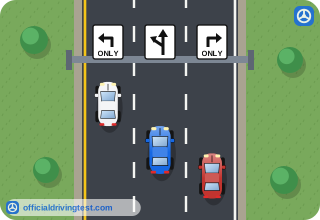
- Treat the arrows as a suggestion unless police are present
- Move your vehicle only in the direction indicated for your lane
- Turn left from any lane if the way is clear
- Use any lane as long as you signal early
Show answer
Correct answer: Move your vehicle only in the direction indicated for your lane
You must move your vehicle only in the direction indicated for your traffic lane.
Source: Hawaii Driver's Manual (2023), page 45 · Open this page in the manual (Manual page 45)
-
Before changing lanes or driving away from the curb, what did the proper procedure always require?
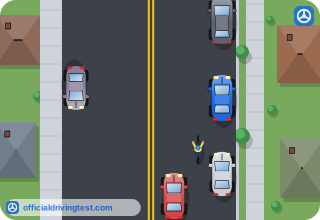
- Check the rear view mirror once before moving over
- Sound the horn to warn nearby drivers
- Turn your head and look behind you for oncoming traffic
- Wait for every following vehicle to pass first
Show answer
Correct answer: Turn your head and look behind you for oncoming traffic
The proper procedure required you to turn your head and look behind you before taking any action; reducing it to the mirror is a “bad” habit.
Source: Hawaii Driver's Manual (2023), page 57 · Open this page in the manual (Manual page 57)
-
According to the manual’s picture caption about driving from the curb, what do you do before pulling out?
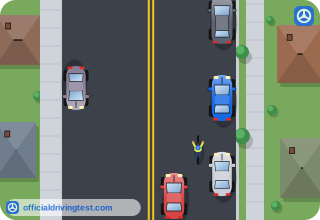
- Look back, signal and yield
- Honk, accelerate and merge
- Look ahead, brake and turn
- Stop, signal and honk
Show answer
Correct answer: Look back, signal and yield
The caption reads: look back before driving from curb; look, signal, yield.
Source: Hawaii Driver's Manual (2023), page 64 · Open this page in the manual (Manual page 64)
-
When entering traffic from a driveway, where should you make your stop?
- Before crossing the sidewalk area
- After crossing the sidewalk area
- In the middle of the sidewalk
- At the edge of the traffic lane
Show answer
Correct answer: Before crossing the sidewalk area
The stop should be made before crossing the sidewalk area, and failure to stop is unlawful.
Source: Hawaii Driver's Manual (2023), page 64 · Open this page in the manual (Manual page 64)
-
What does the manual say about failing to stop before entering the roadway from a driveway?
- It is allowed if no traffic is visible
- It is allowed on residential streets
- It is unlawful
- It is only a suggested practice
Show answer
Correct answer: It is unlawful
The manual says that failure to stop before entering the roadway from a driveway is unlawful.
Source: Hawaii Driver's Manual (2023), page 64 · Open this page in the manual (Manual page 64)
-
When entering traffic from a driveway, which lane does the manual say to enter whenever possible?
- The farthest lane in a left turn
- The nearest lane in a right turn
- The center lane
- Any lane that is open
Show answer
Correct answer: The nearest lane in a right turn
The manual says to enter the nearest lane in a right turn whenever possible.
Source: Hawaii Driver's Manual (2023), page 64 · Open this page in the manual (Manual page 64)
-
After you are in the traffic lane when entering from a driveway, what does the manual say to do?
- Stay at walking speed
- Stop and check again
- Accelerate to the highest legal speed
- Accelerate to traffic speed
Show answer
Correct answer: Accelerate to traffic speed
The manual says that after you are in the traffic lane, you should accelerate to traffic speed.
Source: Hawaii Driver's Manual (2023), page 64 · Open this page in the manual (Manual page 64)
-
When entering the roadway from a driveway, how should you move forward?
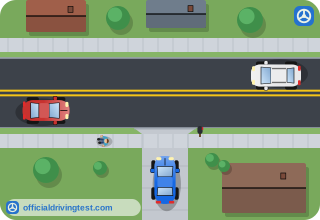
- Quickly to clear the sidewalk
- As fast as possible to merge
- Slowly, watching for pedestrians
- Without stopping if the street looks clear
Show answer
Correct answer: Slowly, watching for pedestrians
The manual says to move forward slowly and watch for pedestrians and oncoming vehicles.
Source: Hawaii Driver's Manual (2023), page 64 · Open this page in the manual (Manual page 64)
-
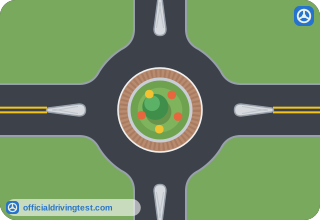
At a roundabout, who must yield the right-of-way?
- Circulating traffic must yield to entering traffic
- Entering traffic must yield to circulating traffic
- The vehicle that arrived first must yield
- The vehicle on the left must yield to the vehicle on the right
Show answer
Correct answer: Entering traffic must yield to circulating traffic
A roundabout is a one-way circular intersection in which entering traffic must yield the right-of-way to circulating traffic.
Source: Hawaii Driver's Manual (2023), page 65 · Open this page in the manual (Manual page 65)
-
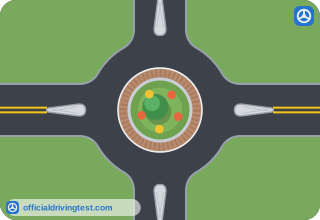
What marks each road that approaches a roundabout?
- A stop sign
- A do not enter sign
- A signal light
- A yield sign
Show answer
Correct answer: A yield sign
Each road approaching the roundabout is marked with a yield sign and may also have yield line markings on the pavement.
Source: Hawaii Driver's Manual (2023), page 65 · Open this page in the manual (Manual page 65)
-
How should you drive around the central island of a roundabout?
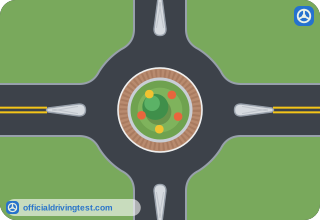
- To the left of the island, counterclockwise
- To the right of the island, clockwise
- To the right of the island, counterclockwise
- To the left of the island, clockwise
Show answer
Correct answer: To the right of the island, counterclockwise
You drive to the right of the central island and proceed in a counterclockwise direction.
Source: Hawaii Driver's Manual (2023), page 65 · Open this page in the manual (Manual page 65)
-
As you enter a roundabout, which way should you look for traffic that is already in it?
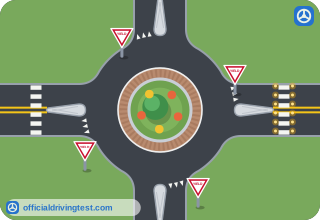
- To the left
- To the right
- Straight ahead only
- Behind you
Show answer
Correct answer: To the left
You look to the left for traffic and yield to traffic, including bicyclists, already in the roundabout.
Source: Hawaii Driver's Manual (2023), page 65 · Open this page in the manual (Manual page 65)
-
In a roundabout, which turn signal do you use to exit?
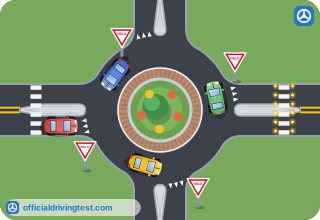
- The left turn signal
- The hazard lights
- No signal is needed in a roundabout
- The right turn signal
Show answer
Correct answer: The right turn signal
The tips for roundabouts say to use your right turn signal to exit the roundabout.
Source: Hawaii Driver's Manual (2023), page 65 · Open this page in the manual (Manual page 65)
-
What should you do if you miss your exit from a roundabout?
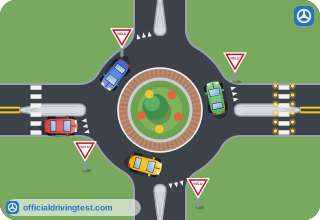
- Stop and back up carefully to the exit you missed
- Drive through the roundabout again until you reach your exit
- Turn around inside the roundabout and drive against traffic
- Pull onto the central island and wait for a gap in traffic
Show answer
Correct answer: Drive through the roundabout again until you reach your exit
If you miss your exit, you drive through the roundabout again until you reach your exit.
Source: Hawaii Driver's Manual (2023), page 65 · Open this page in the manual (Manual page 65)
-
Whom must you yield to as you enter and exit a roundabout?
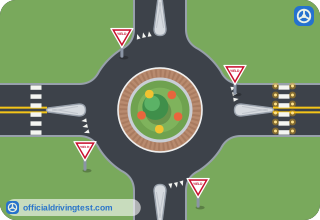
- Pedestrians and bicyclists
- Only larger vehicles such as trucks and buses
- Only vehicles waiting behind you
- Nobody, because you have the right-of-way when leaving
Show answer
Correct answer: Pedestrians and bicyclists
The roundabout tips say to yield to pedestrians and bicyclists as you enter and exit the roundabout.
Source: Hawaii Driver's Manual (2023), page 65 · Open this page in the manual (Manual page 65)
-
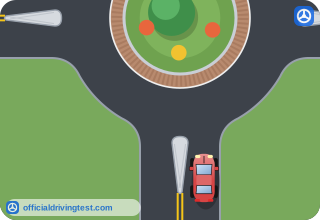
What should you do as you approach a roundabout?
- Speed up so you can merge
- Move to the left lane
- Slow down
- Sound your horn
Show answer
Correct answer: Slow down
The first tip for driving through a roundabout is to slow down as you approach it.
Source: Hawaii Driver's Manual (2023), page 65 · Open this page in the manual (Manual page 65)
-
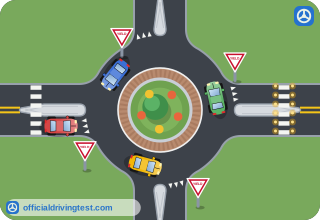
How fast should you go while you are in a roundabout?
- Keep up with the fastest traffic
- Keep your speed low
- Speed up to leave quickly
- Stop at each exit and check
Show answer
Correct answer: Keep your speed low
The tips say to keep your speed low while in the roundabout.
Source: Hawaii Driver's Manual (2023), page 65 · Open this page in the manual (Manual page 65)
-
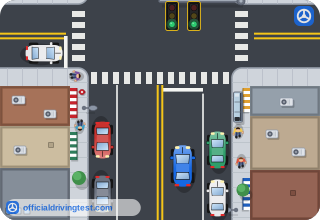
What should you do on a road with one lane in your direction of travel when you are in a congested area?
- Change into the oncoming lane when you need to keep moving
- Stop and wait in place until the congestion has fully cleared
- Use the shoulder to get around slower vehicles ahead of you
- Use great care to avoid conflicts with other vehicles and pedestrians
Show answer
Correct answer: Use great care to avoid conflicts with other vehicles and pedestrians
With only one lane you must use it, and in congested areas you must use great care to avoid conflicts with other vehicles and pedestrians.
Source: Hawaii Driver's Manual (2023), page 65 · Open this page in the manual (Manual page 65)
-
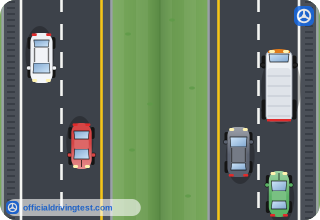
On a road with two lanes in your direction, which lane should you use in an open area when traffic is free-flowing?
- The left lane
- Whichever lane has more vehicles
- The right lane
- The lane closest to the center line
Show answer
Correct answer: The right lane
In an open area when traffic is free-flowing you use the right lane.
Source: Hawaii Driver's Manual (2023), page 65 · Open this page in the manual (Manual page 65)
-
On a road with two lanes in your direction in an open area, when is the left lane for you to use?
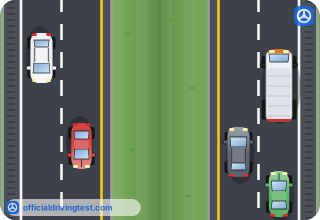
- For passing or when vehicles are entering from the right
- For all of your driving when traffic is free-flowing
- Only when the right lane is blocked by another vehicle
- Only when you are planning to turn right soon
Show answer
Correct answer: For passing or when vehicles are entering from the right
The left lane is used for passing or when vehicles are entering from the right.
Source: Hawaii Driver's Manual (2023), page 65 · Open this page in the manual (Manual page 65)
-
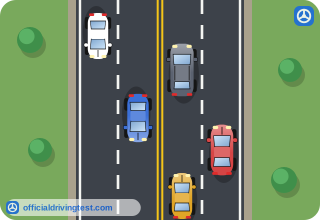
On a road with two lanes in your direction, which lane may you use in heavy traffic or congested areas?
- Only the right lane
- Only the left lane
- The lane that has fewer vehicles, even if you must stop
- Either lane, but keep up with traffic
Show answer
Correct answer: Either lane, but keep up with traffic
In heavy traffic or in congested areas you may use either lane but you must keep up with traffic.
Source: Hawaii Driver's Manual (2023), page 65 · Open this page in the manual (Manual page 65)
-
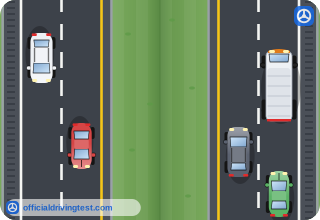
What should you avoid on a road with two lanes in your direction of travel?
- Moving at a steady speed
- Continual lane changing (lane hopping)
- Keeping up with traffic
- Using the right lane in an open area
Show answer
Correct answer: Continual lane changing (lane hopping)
The manual says to move at a steady speed and avoid continual lane changing, also called lane hopping.
Source: Hawaii Driver's Manual (2023), page 65 · Open this page in the manual (Manual page 65)
-
On a road with three or more lanes in your direction, which lanes should you choose?
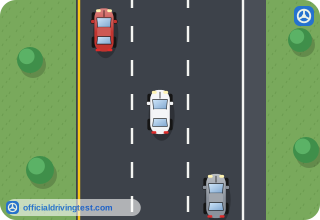
- The center lanes, because there are fewer traffic conflicts
- The right lane, because it is the safest to drive in
- The left lane, because it is the fastest to drive in
- Any lane, changing often to find the clearest path
Show answer
Correct answer: The center lanes, because there are fewer traffic conflicts
You choose the center lanes as there will be fewer traffic conflicts, leaving the right and left lanes for vehicles entering and leaving the roadway.
Source: Hawaii Driver's Manual (2023), page 65 · Open this page in the manual (Manual page 65)
-
On a road with three or more lanes in your direction, when should you use the right lane?
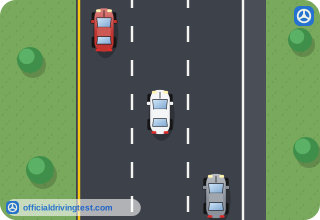
- When you want to pass other vehicles
- When traffic is moving faster than the limit
- When you are moving slower than other traffic
- When you plan to turn left soon
Show answer
Correct answer: When you are moving slower than other traffic
Use the right lane if you are moving slower than other traffic.
Source: Hawaii Driver's Manual (2023), page 65 · Open this page in the manual (Manual page 65)
-
How should you check your blind spots before a lane change?
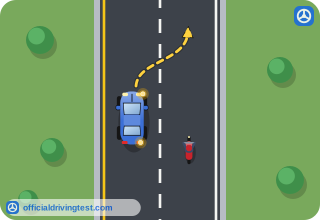
- Look only in your inside rear-view mirror before moving
- Look only in your side mirrors before you move over
- Sound your horn and watch for any reaction ahead
- Physically check them by turning your head and looking
Show answer
Correct answer: Physically check them by turning your head and looking
You use your rear-view mirrors and also physically check the blind spots by turning your head and looking.
Source: Hawaii Driver's Manual (2023), page 65 · Open this page in the manual (Manual page 65)
-
How should you move into the other lane once there is ample clearance?
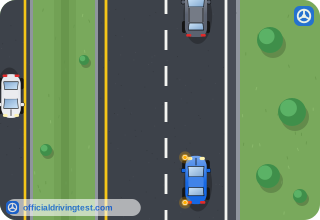
- With a quick sharp turn of the wheel
- By speeding up as you cross
- With a gradual, steady movement
- By stopping first, then moving over
Show answer
Correct answer: With a gradual, steady movement
You make a gradual, steady movement into the other lane because abrupt movements may cause you to overcontrol or lose control of your vehicle.
Source: Hawaii Driver's Manual (2023), page 65 · Open this page in the manual (Manual page 65)
-
When changing lanes, which is better?
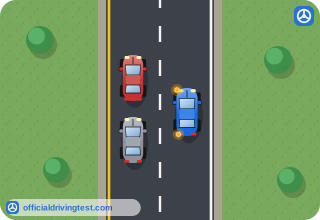
- Slow slightly and move in behind a vehicle
- Speed up and cut in ahead of a vehicle
- Stay beside the vehicle until it moves away
- Brake hard to leave a large gap behind you
Show answer
Correct answer: Slow slightly and move in behind a vehicle
It is best to slow slightly and move in behind a vehicle, because you always keep that vehicle in sight and annoy its driver less.
Source: Hawaii Driver's Manual (2023), page 66 · Open this page in the manual (Manual page 66)
-
What should you not do when vehicles are spaced at the minimum safe following distance or less?
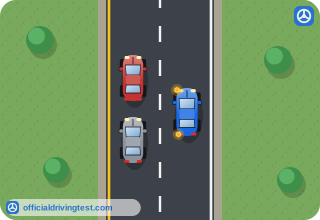
- Signal your intention to change lanes
- Wait for a larger gap in the lane
- Slow down and move in behind a vehicle
- Force your way into the space between them
Show answer
Correct answer: Force your way into the space between them
Forcing your way into such a space is discourteous and dangerous and causes other drivers to close the gap to deny you space.
Source: Hawaii Driver's Manual (2023), page 66 · Open this page in the manual (Manual page 66)
-
When changing lanes, who must yield?
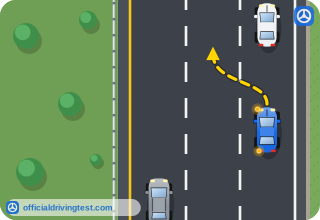
- Vehicles in the other lane must yield to you
- You must yield to vehicles in the other lane
- The faster vehicle must yield
- The vehicle with its signal on must yield
Show answer
Correct answer: You must yield to vehicles in the other lane
The manual states that you must always yield to vehicles in the other lane when changing lanes.
Source: Hawaii Driver's Manual (2023), page 66 · Open this page in the manual (Manual page 66)
-
If the lane you want to enter is congested, what should you do?
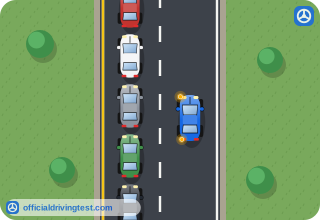
- Enter at the end of the line
- Run up ahead and crowd in
- Stay on the shoulder until it clears
- Enter beside the first vehicle that slows
Show answer
Correct answer: Enter at the end of the line
If the desired lane is congested, you enter at the end of the line and do not run up ahead and crowd in.
Source: Hawaii Driver's Manual (2023), page 66 · Open this page in the manual (Manual page 66)
-
You cannot make a lane change at the place you wanted. What should you do?
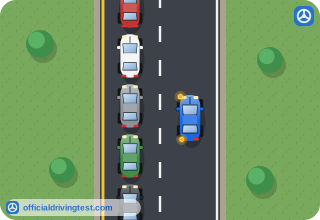
- Make the change anyway, with your signal on
- Slow down and make the change from the shoulder
- Remain in your lane until you can safely make the change
- Sound your horn and move over
Show answer
Correct answer: Remain in your lane until you can safely make the change
You remain in your lane until you can safely make the change, even if you are inconvenienced.
Source: Hawaii Driver's Manual (2023), page 66 · Open this page in the manual (Manual page 66)
-
Where should you never change lanes?
- On roads that have three or more lanes in one direction
- When approaching or moving through intersections and crosswalks
- On any road where traffic is heavy or moving slowly
- On roads where the speed limit is above 45 mph
Show answer
Correct answer: When approaching or moving through intersections and crosswalks
The manual says never to change lanes when approaching or moving through intersections and crosswalks.
Source: Hawaii Driver's Manual (2023), page 66 · Open this page in the manual (Manual page 66)
-
From which lane should you make a turn?
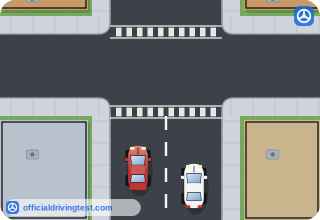
- The center lane, then swing over into the correct lane after the turn
- The lane with the least traffic, into the lane farthest from the turn
- The lane nearest the direction of the turn, into the nearest lane available
- Any lane, as long as you signal early, into whichever lane is open
Show answer
Correct answer: The lane nearest the direction of the turn, into the nearest lane available
You turn from the traffic lane nearest the direction of the turn and into the nearest traffic lane available.
Source: Hawaii Driver's Manual (2023), page 67 · Open this page in the manual (Manual page 67)
-
You are not in the proper lane for a turn you want to make. What should you do?
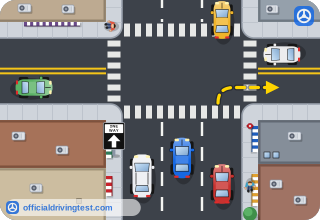
- Continue on and make the turn elsewhere
- Force your way into the proper lane
- Make an abrupt last minute lane change
- Stop and wait for traffic to let you over
Show answer
Correct answer: Continue on and make the turn elsewhere
If you are not in the proper lane, you continue on and make the turn elsewhere instead of forcing your way into the lane or making an abrupt last minute change.
Source: Hawaii Driver's Manual (2023), page 67 · Open this page in the manual (Manual page 67)
-
How should you make turns?
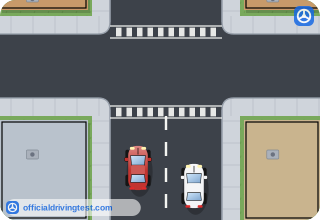
- Swing wide to the left before a right turn
- Cut short to save time when no one is near
- Enter the turn slowly, then speed up before the middle
- Make precise turns, without swinging wide or cutting short
Show answer
Correct answer: Make precise turns, without swinging wide or cutting short
The manual says to make precise turns and not to swing wide or cut short.
Source: Hawaii Driver's Manual (2023), page 67 · Open this page in the manual (Manual page 67)
-
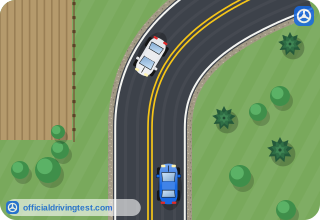
When should you slow to a proper speed for a curve or turn?
- After you are halfway through the curve
- Before you enter the curve or begin the turn
- Only when the road is wet
- Only when there are other vehicles nearby
Show answer
Correct answer: Before you enter the curve or begin the turn
You slow to a proper speed before you enter a curve or begin a turn and keep a steady speed while in it.
Source: Hawaii Driver's Manual (2023), page 67 · Open this page in the manual (Manual page 67)
-
What can braking or an abrupt change of speed in a turn or curve cause?
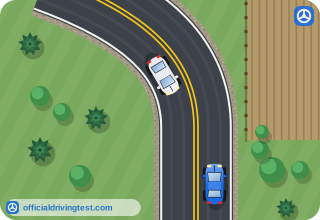
- You may lose control of your vehicle
- Your turn signal to stop working
- Your tires to wear evenly
- Following drivers to give you more room
Show answer
Correct answer: You may lose control of your vehicle
Braking or an abrupt change of speed in a turn or curve can cause you to lose control of your vehicle.
Source: Hawaii Driver's Manual (2023), page 67 · Open this page in the manual (Manual page 67)
-
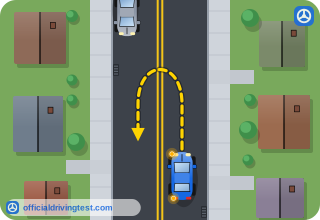
Why should you avoid left turns and U-turns whenever possible?
- They are prohibited by law at most intersections
- They need a longer turn signal than right turns do
- They conflict more with other traffic than right turns do
- They always take more time at a green light than right turns
Show answer
Correct answer: They conflict more with other traffic than right turns do
Left and U-turns conflict more with other traffic, are much more hazardous than right turns and also impede other traffic.
Source: Hawaii Driver's Manual (2023), page 67 · Open this page in the manual (Manual page 67)
-
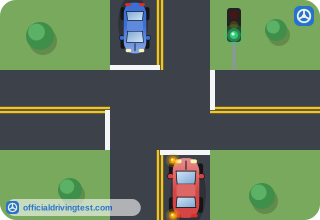
You are waiting to turn left at an intersection with a red light, and the light turns green. What should you do?
- Turn the wheels left while you wait, then go at once when green
- Move slowly into the intersection, wheels straight, and turn when clear
- Speed through before oncoming traffic arrives at the intersection
- Wait for the oncoming drivers to wave you through the intersection
Show answer
Correct answer: Move slowly into the intersection, wheels straight, and turn when clear
You move slowly into the intersection, keep the wheels pointing straight ahead and turn when the intersection is clear and it is safe to do so.
Source: Hawaii Driver's Manual (2023), page 67 · Open this page in the manual (Manual page 67)
-
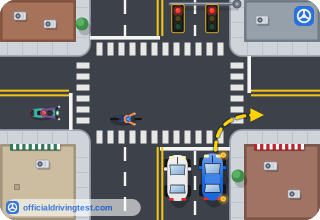
Why must you use great care watching for pedestrians, bicyclists and motorcyclists when making turns?
- They usually travel much faster than passenger cars do
- They are always visible to other drivers from far away
- They do not have to obey traffic signals and signs
- They may be hidden by other vehicles, darkness or poor weather
Show answer
Correct answer: They may be hidden by other vehicles, darkness or poor weather
Pedestrians, bicyclists and motorcyclists may be hidden by other vehicles, darkness or poor weather when you turn.
Source: Hawaii Driver's Manual (2023), page 67 · Open this page in the manual (Manual page 67)
-
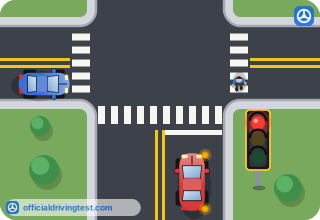
What must you always do before making a right turn when facing a red traffic signal?
- Slow down and turn if nothing is coming
- Honk to warn pedestrians
- Bring your vehicle to a complete stop
- Wait for the signal to turn green
Show answer
Correct answer: Bring your vehicle to a complete stop
You must always bring your vehicle to a complete stop before making a right turn when facing a red traffic signal.
Source: Hawaii Driver's Manual (2023), page 67 · Open this page in the manual (Manual page 67)
-
When should you use extra caution on curves and turns?
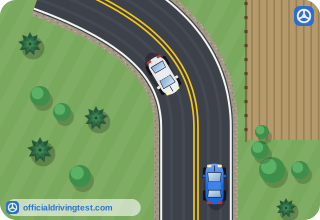
- In poor weather, or with gravel, sand or mud on the road
- Only at night, when your headlights are the only light
- Only on roads with a posted speed limit above 45 mph
- Only when you are towing a trailer or another vehicle
Show answer
Correct answer: In poor weather, or with gravel, sand or mud on the road
Use extra caution on curves and turns in poor weather conditions or when there is gravel, sand, or mud on the road.
Source: Hawaii Driver's Manual (2023), page 67 · Open this page in the manual (Manual page 67)
-
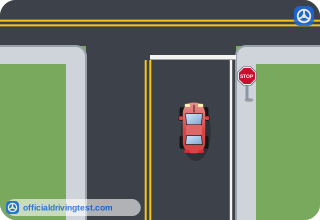
When making a right turn at an intersection, what must you not do?
- Signal before you turn
- Slow down before you turn
- Look for pedestrians
- Drive in a bike lane
Show answer
Correct answer: Drive in a bike lane
The manual says that when making a right turn at an intersection, you do not drive in a bike lane.
Source: Hawaii Driver's Manual (2023), page 67 · Open this page in the manual (Manual page 67)
-
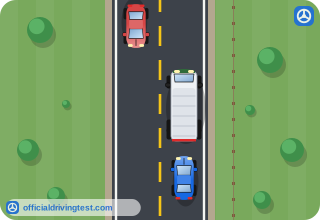
Why is passing hazardous on two or three lane roads?
- It requires driving on the road shoulder to complete the pass
- It uses the opposing lane, and mistakes can cause a head-on collision
- Faster vehicles always follow closely right behind you
- The vehicle you pass can speed up without any warning
Show answer
Correct answer: It uses the opposing lane, and mistakes can cause a head-on collision
Passing on two or three lane roads uses a lane for opposing traffic, so improper procedures can cause a head-on collision.
Source: Hawaii Driver's Manual (2023), page 68 · Open this page in the manual (Manual page 68)
-
When should you pass the vehicle ahead?
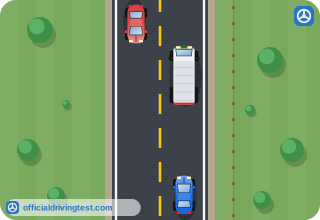
- Only if it is moving below the safe speed
- Whenever it is in front of you
- Whenever you can gain a few car lengths
- Whenever the lane to your left is empty
Show answer
Correct answer: Only if it is moving below the safe speed
You pass only if the vehicle ahead is moving below the safe speed, and not simply because it is there.
Source: Hawaii Driver's Manual (2023), page 68 · Open this page in the manual (Manual page 68)
-
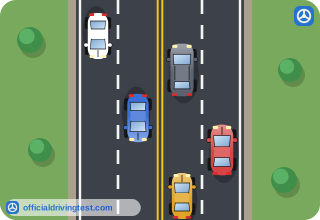
In moderate or heavy traffic, what does the manual say about passing vehicles merely to gain a few car lengths?
- It is allowed if you signal first
- It is allowed on the right only
- Don't attempt it
- It is required of slow drivers
Show answer
Correct answer: Don't attempt it
The manual says not to attempt to pass vehicles merely to gain a few car lengths in moderate or heavy traffic.
Source: Hawaii Driver's Manual (2023), page 68 · Open this page in the manual (Manual page 68)
-
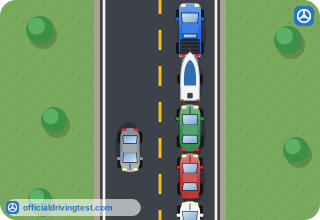
You are in a line of vehicles and want to pass. What should you do first?
- Pass the entire line of vehicles at the same time in one move
- Let the vehicles ahead pass the lead vehicle before you try to pass
- Move onto the road shoulder and pass the whole line on the right
- Sound your horn and pull out into the passing lane right away
Show answer
Correct answer: Let the vehicles ahead pass the lead vehicle before you try to pass
In a line of vehicles, you allow the vehicles ahead to pass the lead vehicle before you attempt to pass.
Source: Hawaii Driver's Manual (2023), page 68 · Open this page in the manual (Manual page 68)
-
On which side should you normally pass, and what is the exception?
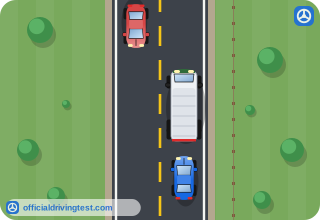
- On the right, except when the vehicle ahead is slowing or stopping
- On the left, except on roads that have only two lanes for traffic
- On the right, except when the road surface is wet from rain
- On the left, except if the vehicle ahead is about to turn left
Show answer
Correct answer: On the left, except if the vehicle ahead is about to turn left
You pass on the left except when the vehicle you are overtaking is making or about to make a left turn, which you pass carefully on the right.
Source: Hawaii Driver's Manual (2023), page 68 · Open this page in the manual (Manual page 68)
-
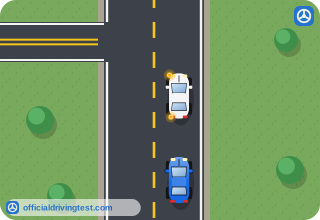
You are passing a vehicle that is making a left turn. What must you never do?
- Check for opposing or conflicting traffic first
- Signal your intention before you pass it
- Drive onto the road shoulder to pass it
- Allow ample following distance behind it
Show answer
Correct answer: Drive onto the road shoulder to pass it
The manual says never to drive onto the road shoulder to pass a vehicle making a left turn.
Source: Hawaii Driver's Manual (2023), page 68 · Open this page in the manual (Manual page 68)
-
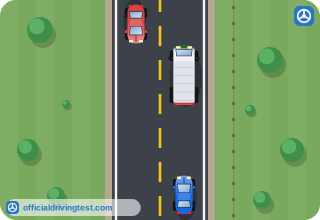
Before you pass, how much following distance should you allow behind the vehicle you are overtaking?
- Ample distance, so you can observe any opposing or conflicting traffic
- Only a few feet, so that you can pass as quickly as possible
- Exactly one car length, no matter how fast you are going
- Enough to stay in the other driver's blind spot the whole time
Show answer
Correct answer: Ample distance, so you can observe any opposing or conflicting traffic
You allow ample following distance so that you can observe any opposing or conflicting traffic.
Source: Hawaii Driver's Manual (2023), page 68 · Open this page in the manual (Manual page 68)
-
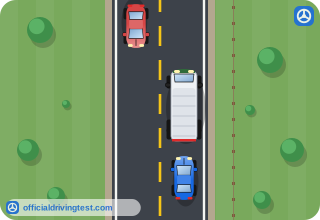
What should you physically check before moving left to pass?
- That your fuel tank has enough gas to finish the pass
- That the lane to your right is empty of other vehicles
- That the vehicle ahead has sounded its horn at you first
- That no vehicles behind you are attempting to pass your vehicle
Show answer
Correct answer: That no vehicles behind you are attempting to pass your vehicle
You physically check behind to see that there are no vehicles attempting to pass your vehicle.
Source: Hawaii Driver's Manual (2023), page 68 · Open this page in the manual (Manual page 68)
-
In the passing procedure, what do you do to let the driver ahead know you are going to pass?
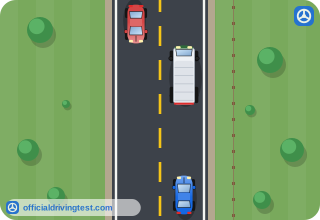
- Flash your high beams twice
- Sound your horn
- Turn on your hazard lights
- Wave from the window
Show answer
Correct answer: Sound your horn
The passing steps include sounding your horn so that the driver ahead knows you are going to pass.
Source: Hawaii Driver's Manual (2023), page 68 · Open this page in the manual (Manual page 68)
-
Where should you accelerate to passing speed?
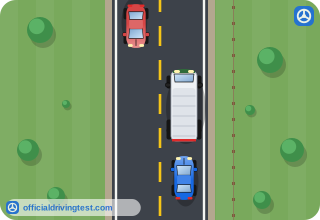
- In your lane of travel, before you move left
- After you move into the opposing lane
- On the road shoulder
- While you are beside the other vehicle
Show answer
Correct answer: In your lane of travel, before you move left
You accelerate to passing speed in your lane of travel, then move left and begin to pass.
Source: Hawaii Driver's Manual (2023), page 68 · Open this page in the manual (Manual page 68)
-
A conflict appears before you have finished passing. What should you do?
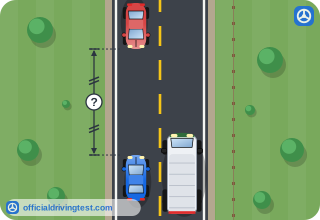
- Speed up as much as needed to finish passing the vehicle
- Move onto the shoulder on the right to get out of the way
- Brake sharply and return to the lane behind the overtaken vehicle
- Hold your position beside the vehicle and sound your horn
Show answer
Correct answer: Brake sharply and return to the lane behind the overtaken vehicle
You brake sharply and return to the lane behind the overtaken vehicle, because speed can be reduced more quickly by braking than increased by more power.
Source: Hawaii Driver's Manual (2023), page 68 · Open this page in the manual (Manual page 68)
-
When may you move back into the proper traffic lane after passing?
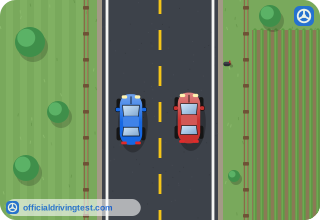
- As soon as the front of your car passes the overtaken vehicle's rear bumper
- When you see the overtaken vehicle in your interior rear-view mirror
- When the overtaken vehicle sounds its horn to let you in
- When you are about one car length ahead of that vehicle
Show answer
Correct answer: When you see the overtaken vehicle in your interior rear-view mirror
You move back into the proper traffic lane when you can see the overtaken vehicle in your interior rear-view mirror.
Source: Hawaii Driver's Manual (2023), page 68 · Open this page in the manual (Manual page 68)
-
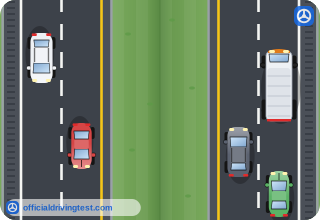
On a road with two or more lanes for traffic moving in the same direction, how may you pass another vehicle?
- Only on the left, by using the lane for opposing traffic
- Only on the right, by driving along the road shoulder
- Only when the other vehicle slows down to let you pass
- On either side, using the proper lane change procedures
Show answer
Correct answer: On either side, using the proper lane change procedures
You do not move into a lane for opposing traffic, and you may pass on either side by using the proper lane change procedures.
Source: Hawaii Driver's Manual (2023), page 68 · Open this page in the manual (Manual page 68)
-
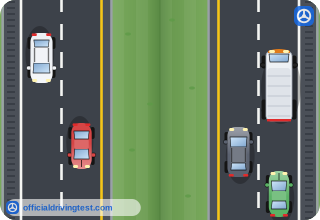
Why must you be extra careful when passing on the right?
- The road shoulder is usually narrower than the lane
- Drivers ahead of you do not signal when moving right
- You approach the overtaken vehicle in the driver's blind spot
- Passing on the right is allowed only during the night
Show answer
Correct answer: You approach the overtaken vehicle in the driver's blind spot
Passing on the right is dangerous because you will approach the overtaken vehicle in the driver's blind spot.
Source: Hawaii Driver's Manual (2023), page 68 · Open this page in the manual (Manual page 68)
-
Where should you not attempt to pass another vehicle?
- When approaching or moving through an intersection or crosswalk
- On any road that has three or more lanes in your direction
- When the vehicle ahead of you is moving very slowly in your lane
- When you are driving in the left lane of a multilane road
Show answer
Correct answer: When approaching or moving through an intersection or crosswalk
The manual says that in all passing situations you should not attempt to pass when approaching or moving through an intersection or crosswalk.
Source: Hawaii Driver's Manual (2023), page 68 · Open this page in the manual (Manual page 68)
-
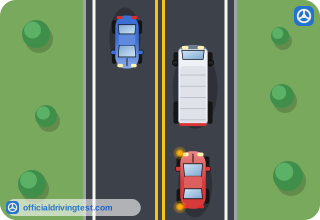
What must you obey when passing?
- Only the posted speed limit and nothing else on the road
- Only the signs that are posted on your side of the road
- Only the markings that are painted in yellow on the road
- All signs and lane markings that restrict or prohibit passing
Show answer
Correct answer: All signs and lane markings that restrict or prohibit passing
You obey all signs and traffic lane markings which restrict or prohibit passing.
Source: Hawaii Driver's Manual (2023), page 68 · Open this page in the manual (Manual page 68)
-
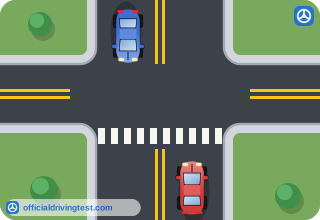
You must never drive into an intersection or a crosswalk unless what is true?
- Unless your turn signal is on before you enter it
- Unless you are the first vehicle in line at the light
- Unless the traffic light was green when you first saw it
- Unless there is space for your entire vehicle on the opposite side
Show answer
Correct answer: Unless there is space for your entire vehicle on the opposite side
You never drive into an intersection or crosswalk unless there is space for your entire vehicle on the opposite side.
Source: Hawaii Driver's Manual (2023), page 69 · Open this page in the manual (Manual page 69)