Washington, D.C.: Distracted and drowsy driving — Part 2 Practice Test
Questions in this part include: “What causes highway hypnosis?” · “What does the manual say you should constantly be aware of while driving?”
Independent educational site · not affiliated with any government agency or DMV
Ready? Test yourself
Answer to start, or tap Start below:
What causes highway hypnosis?
- Instant feedback with an explanation
- Every answer cites its source in the manual
- Your best score is saved on this device
- Keyboard: press 1 to 4 to answer and Enter for the next question
Questions are original and based on the official manual "District of Columbia Driver Manual" (Updated January 2024), District of Columbia Department of Motor Vehicles (DC DMV).
All 17 questions in this practice test
Take the test above first, then use this list to study. Tap “Show answer” to see the correct answer and explanation.
Show the questions and answersHide the questions
-
What causes highway hypnosis?
- Monotony
- Heavy traffic
- Bright sunlight
- Loud music
Show answer
Correct answer: Monotony
The manual says it is caused by monotony: the sound of the wind, the tires and the steady hum of the engine.
Source: District of Columbia Driver Manual (Updated January 2024), page 25
-
At the first signs of drowsiness, what does the manual say you should do?
- Sit still and try to fight it
- Keep driving until the next exit
- Do something positive
- Drive faster to get there sooner
Show answer
Correct answer: Do something positive
The manual says not to just sit there and try to fight drowsiness, but to do something positive.
Source: District of Columbia Driver Manual (Updated January 2024), page 25
-
What should you do at the first rest or service area when you feel drowsy?
- Pull off the highway and nap, stretch, or take a break
- Drive past it and stop only at the next town you see
- Keep driving until you reach your destination
- Slow down and drive on the shoulder of the highway
Show answer
Correct answer: Pull off the highway and nap, stretch, or take a break
The manual advises leaving the highway to nap, stretch, take a break or, if possible, change drivers.
Source: District of Columbia Driver Manual (Updated January 2024), page 25
-
What does the manual say about "stay-awake" drugs?
- They are safe if you take them before a long trip
- They are safe if you take only a small amount
- They are apt to make your driving even more hazardous
- They are a good way to avoid highway hypnosis
Show answer
Correct answer: They are apt to make your driving even more hazardous
You should not depend on stay-awake drugs because they are apt to make driving more hazardous.
Source: District of Columbia Driver Manual (Updated January 2024), page 26
-
To overcome highway hypnosis, what should you avoid?
- Shifting your position in the seat
- Stopping at a rest area for a break
- Varying your speed slightly
- Staring straight ahead
Show answer
Correct answer: Staring straight ahead
The manual says to keep shifting your eyes from one area of the roadway to another and to avoid staring straight ahead.
Source: District of Columbia Driver Manual (Updated January 2024), page 26
-
Which of these can help you overcome highway hypnosis?
- Holding exactly the same speed for hours
- Fixing your eyes on a single spot far ahead
- Driving on for hours without any stop
- Varying your speed slightly from time to time
Show answer
Correct answer: Varying your speed slightly from time to time
The manual lists varying your vehicle's speed slightly from time to time as one way to stay alert.
Source: District of Columbia Driver Manual (Updated January 2024), page 26
-
Which of these is a danger sign of a drowsy driver?
- You keep checking your mirrors often
- You can't stop yawning
- You remember every mile you drove
- You keep a steady speed
Show answer
Correct answer: You can't stop yawning
The manual lists being unable to stop yawning among the danger signs of drowsy drivers.
Source: District of Columbia Driver Manual (Updated January 2024), page 26
-
Which of these is another danger sign of a drowsy driver?
- You notice every road sign you pass along the way
- You stay well centered in your lane
- You don't remember driving the last few miles
- You are able to hold your head up easily
Show answer
Correct answer: You don't remember driving the last few miles
The manual lists not remembering driving the last few miles among the danger signs of drowsy drivers.
Source: District of Columbia Driver Manual (Updated January 2024), page 26
-
What does the manual say you should constantly be aware of while driving?
- Only the vehicles directly ahead of you
- The road and the other vehicles around you
- The road surface and nothing else
- Passengers and other things inside the car
Show answer
Correct answer: The road and the other vehicles around you
Driving is a full-time job, so you should constantly be aware of the road and the other vehicles around you.
Source: District of Columbia Driver Manual (Updated January 2024), page 26
-
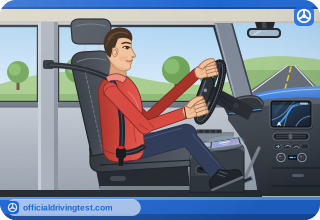
In the District of Columbia, how must you use a cellular phone while driving?
- Held to your ear
- Only while stopped at a red light
- Only below 25 miles per hour
- Hands-free
Show answer
Correct answer: Hands-free
The manual states you must be hands-free while driving with a cellular phone in the District of Columbia.
Source: District of Columbia Driver Manual (Updated January 2024), page 26
-
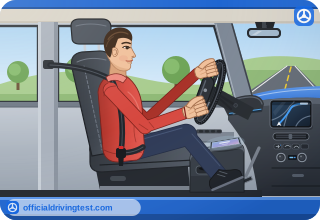
What does the manual say about texting while driving?
- It is never allowed
- It is allowed when you are hands-free
- It is allowed at red lights
- It is allowed below 25 miles per hour
Show answer
Correct answer: It is never allowed
The manual says texting while driving is never allowed.
Source: District of Columbia Driver Manual (Updated January 2024), page 26
-
If you are upset or angry, what should you do before driving?
- Drive around for a while until you feel better
- Turn up the radio and drive carefully
- Calm down first or let someone else drive
- Drive faster to work off your anger
Show answer
Correct answer: Calm down first or let someone else drive
The manual says to take time to calm down before driving, or let someone else drive.
Source: District of Columbia Driver Manual (Updated January 2024), page 26
-
If a passenger is distracting you, what should you do?
- Pull over where it is safe and legal to do so
- Ask the passenger to be quiet while you drive on
- Turn up the radio to drown out the passenger
- Slow down to a crawl until the passenger stops
Show answer
Correct answer: Pull over where it is safe and legal to do so
The manual says to pull over where it is safe and legal, and not to start driving until the situation is under control.
Source: District of Columbia Driver Manual (Updated January 2024), page 26
-
What should you do before putting the vehicle into motion to manage distractions?
- Plan your route as you drive
- Start the engine and then adjust the controls
- Secure everyone and everything
- Check your messages one last time
Show answer
Correct answer: Secure everyone and everything
The manual suggests securing everyone and everything before the vehicle is in motion.
Source: District of Columbia Driver Manual (Updated January 2024), page 26
-
When should you plan your route?
- While you are driving
- Before you go
- At the first red light
- When you reach the highway
Show answer
Correct answer: Before you go
The manual says not to wait until you are driving to plan your route; plan before you go.
Source: District of Columbia Driver Manual (Updated January 2024), page 26
-
What does the manual suggest you do when you are hungry or thirsty while driving?
- Eat or drink while you keep driving
- Wait until you feel dizzy
- Open the window and drive on
- Take a break
Show answer
Correct answer: Take a break
The manual lists taking a break when you are hungry or thirsty as a way to manage distractions.
Source: District of Columbia Driver Manual (Updated January 2024), page 26
-
Which of these is acceptable to wear while driving a motor vehicle?
- Earphones attached to a radio
- A hearing aid device
- A headset attached to a CD player
- Earplugs attached to a tape player
Show answer
Correct answer: A hearing aid device
Hearing aid devices are acceptable while driving, unlike earphones attached to audio devices.
Source: District of Columbia Driver Manual (Updated January 2024), page 47