Washington, D.C.: Distracted and drowsy driving — Part 1 Practice Test
Questions in this part include: “How does the manual describe distracted driving?” · “What do coffee and other caffeine supplements provide, according to the manual?”
Independent educational site · not affiliated with any government agency or DMV
Ready? Test yourself
Answer to start, or tap Start below:
How does the manual describe distracted driving?
- Instant feedback with an explanation
- Every answer cites its source in the manual
- Your best score is saved on this device
- Keyboard: press 1 to 4 to answer and Enter for the next question
Questions are original and based on the official manual "District of Columbia Driver Manual" (Updated January 2024), District of Columbia Department of Motor Vehicles (DC DMV).
All 17 questions in this practice test
Take the test above first, then use this list to study. Tap “Show answer” to see the correct answer and explanation.
Show the questions and answersHide the questions
-
How does the manual describe distracted driving?
- Any act that causes a driver to exceed the posted speed limit
- Only the use of a handheld phone while the vehicle is moving
- Any driving done while a passenger is in the vehicle
- Any activity that could divert attention from driving
Show answer
Correct answer: Any activity that could divert attention from driving
Distracted driving can be described as any activity that could divert a person’s attention away from the primary task of driving.
Source: District of Columbia Driver Manual (Updated January 2024), page 4
-
Which of these is listed as a common distraction?
- Using the navigation system
- Checking the rear-view mirror
- Signaling before a turn
- Fastening a seat belt
Show answer
Correct answer: Using the navigation system
Using the navigation system is on the manual’s list of common distractions, along with eating, texting, grooming, and talking to passengers.
Source: District of Columbia Driver Manual (Updated January 2024), page 5
-
What is drowsy driving, according to the manual?
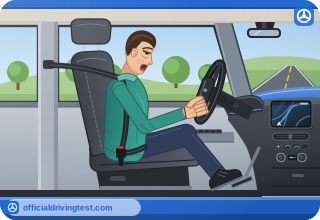
- Operating a motor vehicle while impaired due to lack of sleep
- Driving for more than two hours without making a stop
- Operating a motor vehicle while distracted by a passenger
- Driving on a road without any traffic or street lights
Show answer
Correct answer: Operating a motor vehicle while impaired due to lack of sleep
Drowsy driving means operating a motor vehicle while being impaired due to lack of sleep.
Source: District of Columbia Driver Manual (Updated January 2024), page 5
-
How does sleep deprivation affect driving compared with alcohol?
- Far less than alcohol does
- Not at all if the driver feels alert
- Just as much, and sometimes more
- Only when combined with alcohol
Show answer
Correct answer: Just as much, and sometimes more
The manual says sleep deprivation affects driving just as much as alcohol, and sometimes more.
Source: District of Columbia Driver Manual (Updated January 2024), page 5
-
What does the manual call a major cause of motor vehicle crashes?
- Bright headlights
- Sleep deprivation
- Narrow lanes
- Slow-moving buses
Show answer
Correct answer: Sleep deprivation
Sleep deprivation is described as a major cause of motor vehicle crashes.
Source: District of Columbia Driver Manual (Updated January 2024), page 5
-
What do coffee and other caffeine supplements provide, according to the manual?
- A lasting cure for sleepiness
- Enough alertness for a long trip
- No effect on a tired driver at all
- Only a short-term energy boost
Show answer
Correct answer: Only a short-term energy boost
The manual says caffeine only gives a short-term energy boost, so it does not fix drowsiness.
Source: District of Columbia Driver Manual (Updated January 2024), page 5
-
What does the manual call the best way to prevent drowsy driving?
- Getting adequate sleep
- Drinking several cups of coffee
- Taking stay-awake drugs
- Driving only on familiar roads
Show answer
Correct answer: Getting adequate sleep
Getting adequate sleep is named as the best way to prevent drowsy driving.
Source: District of Columbia Driver Manual (Updated January 2024), page 5
-
What should a driver do on becoming sleepy while driving, according to the Introduction?
- Speed up to reach the destination sooner
- Drink coffee and keep driving
- Pull off the road to a safe location
- Keep driving until the next town
Show answer
Correct answer: Pull off the road to a safe location
Drivers should pull off the road to a safe location when sleepy.
Source: District of Columbia Driver Manual (Updated January 2024), page 5
-
What should drivers do about driving when they are sleep deprived?
- Drive only at night
- Refuse to drive
- Drive only on highways
- Drive only short trips
Show answer
Correct answer: Refuse to drive
The manual says drivers should refuse to drive when sleep deprived.
Source: District of Columbia Driver Manual (Updated January 2024), page 5
-
Having something attached to or hanging from the rear view mirror while driving is:
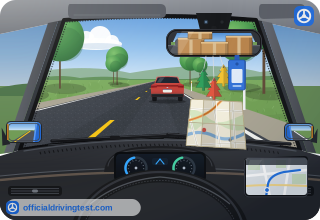
- Allowed if it is small enough not to block your view
- Against the regulations in the District of Columbia
- Allowed if it is lightweight and does not swing
- Allowed with a permit from the DMV
Show answer
Correct answer: Against the regulations in the District of Columbia
The manual states that anything attached to or hanging from the rear view mirror is against DC regulations.
Source: District of Columbia Driver Manual (Updated January 2024), page 23
-
Never let anything in the vehicle obstruct your vision in:
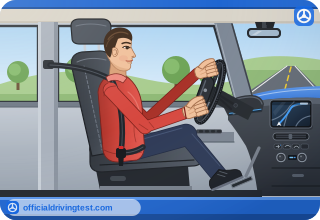
- The front only
- The front and rear only
- The front and left only
- All directions
Show answer
Correct answer: All directions
The manual says never to let anything in the vehicle obstruct your vision in all directions.
Source: District of Columbia Driver Manual (Updated January 2024), page 23
-
Which of these should you not let a pet do while you are driving?
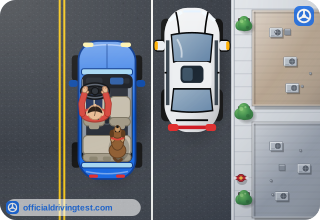
- Wear a harness
- Ride in a carrier
- Sleep during the trip
- Sit on your lap
Show answer
Correct answer: Sit on your lap
The manual says pets should be kept away from you and not allowed to sit on your lap or get fresh air from the driver's side window.
Source: District of Columbia Driver Manual (Updated January 2024), page 23
-
Why should loose objects on the dashboard and rear window shelf be put away?
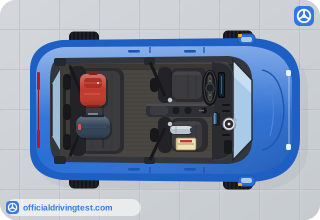
- They can block the airbag sensors
- They can become projectiles in a crash
- They can reflect sunlight into your eyes
- They can upset the balance of the vehicle
Show answer
Correct answer: They can become projectiles in a crash
Loose objects can fly forward and strike you or a passenger in a crash.
Source: District of Columbia Driver Manual (Updated January 2024), page 23
-
If you take your eyes off the road for three to four seconds while going 55 miles per hour, how far does your vehicle travel?
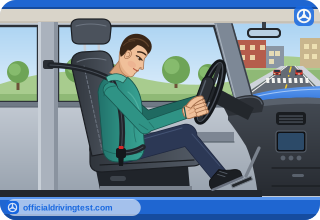
- The length of a city block
- The length of a tennis court
- The length of a football field
- The length of a school bus
Show answer
Correct answer: The length of a football field
The manual says your vehicle travels the length of a football field in that time at 55 miles per hour.
Source: District of Columbia Driver Manual (Updated January 2024), page 25
-
Which of these is listed as a driver distraction?
- Retrieving unsecured cargo or objects
- Checking your mirrors before a turn
- Signaling well before a lane change
- Reading a posted road sign ahead
Show answer
Correct answer: Retrieving unsecured cargo or objects
The manual lists retrieving unsecured cargo or objects among the things that take attention away from driving.
Source: District of Columbia Driver Manual (Updated January 2024), page 25
-
The manual says being drowsy is the first stage of what?
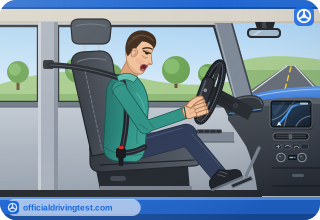
- Highway hypnosis
- Falling asleep
- Road rage
- Driver distraction
Show answer
Correct answer: Falling asleep
Being drowsy is the first stage of falling asleep.
Source: District of Columbia Driver Manual (Updated January 2024), page 25
-
Being unaware of what is happening while driving a long distance is known as:
- Driver blackout
- Lane daze
- Road fatigue
- Highway hypnosis
Show answer
Correct answer: Highway hypnosis
The manual calls being unaware of what is happening while driving long distances "highway hypnosis".
Source: District of Columbia Driver Manual (Updated January 2024), page 25