Delaware: Right-of-way and turning
Who yields at intersections and roundabouts, turning lanes, passing, and the diverging diamond interchange. Split into 5 shorter tests so you're not stuck in one long quiz.
Independent educational site · not affiliated with any government agency or DMV
Choose a part
Right-of-way and turning — Part 1
Questions in this part include: “What is a three-point turn?”
StartRight-of-way and turning — Part 2
Questions in this part include: “What is a Diverging Diamond Intersection (DDI) based on?”
StartRight-of-way and turning — Part 3
Questions in this part include: “When may you back a vehicle in a travel lane?”
StartRight-of-way and turning — Part 4
Questions in this part include: “According to the manual, what must you do regardless of the circumstances?”
StartRight-of-way and turning — Part 5
Questions in this part include: “Before you begin a right turn, what must you check for?”
StartAll 92 Right-of-way and turning questions with answers
Choose a part above to take a practice test, or study every question and answer here.
Show the questions and answersHide the questions
-
What is a three-point turn?
- A maneuver to turn right at an intersection with a signal
- A maneuver to back a vehicle into a parking space
- A maneuver to merge from a ramp to a highway
- A maneuver to turn a vehicle 180 degrees on a narrow street
Show answer
Correct answer: A maneuver to turn a vehicle 180 degrees on a narrow street
The manual defines a three-point turn as a maneuver to turn a vehicle 180 degrees on a narrow street (sometimes called a turnabout).
Source: Delaware Driver Manual (July 2026), page 13 · Open this page in the manual (Manual page 13)
-
How does the manual describe the first step of a three-point turn?
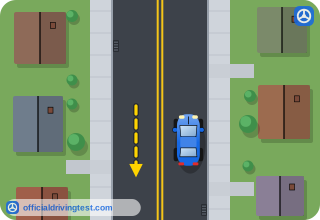
- Turning sharply to the left almost to the curb
- Backing sharply to the right almost to the curb
- Turning sharply to the right to the center of the street
- Stopping in the center of the street and backing straight
Show answer
Correct answer: Turning sharply to the left almost to the curb
The manual says the turn is accomplished by turning sharply to the left almost to the curb, backing to the right almost to the other curb, and then turning to the right side of the roadway in the opposite direction.
Source: Delaware Driver Manual (July 2026), page 13 · Open this page in the manual (Manual page 13)
-
According to the Delaware Driver Manual, what do motor vehicle laws describe regarding the right-of-way?
- Who is to yield the right-of-way
- Which vehicles may ignore traffic signals
- Which driver always has the right-of-way
- Which roads have the right-of-way
Show answer
Correct answer: Who is to yield the right-of-way
The manual says the laws do not give anyone the right-of-way; they describe who must yield it.
Source: Delaware Driver Manual (July 2026), page 69 · Open this page in the manual (Manual page 69)
-
You can prevent a crash by yielding the right-of-way, even though another driver was supposed to yield to you. What does the manual say about yielding?
- It is only required if the other driver is a pedestrian
- It is not advised, because you have the right of way
- It is of course the right thing to do
- It is allowed only on roads without signals
Show answer
Correct answer: It is of course the right thing to do
The manual states that yielding to prevent a crash is the right thing to do, regardless of who was supposed to yield.
Source: Delaware Driver Manual (July 2026), page 69 · Open this page in the manual (Manual page 69)
-
When may you turn right at a steady red light?
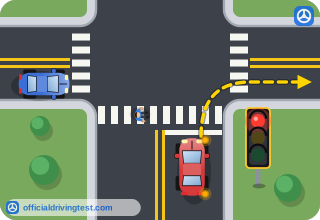
- Only if no other vehicle is in sight, without stopping
- Only when a police officer waves you through the intersection
- Never, because a red light always means no turns are allowed
- After a full stop, unless a sign or a steady red arrow prohibits it
Show answer
Correct answer: After a full stop, unless a sign or a steady red arrow prohibits it
Right turns on red are permissible after a full stop, except when a posted sign or a steady red arrow prohibits them.
Source: Delaware Driver Manual (July 2026), page 69 · Open this page in the manual (Manual page 69)
-
Under what condition is a left turn on red permissible after a full stop?
- From a one-way street to another one-way street
- From a two-way street to another two-way street
- From any street onto a one-way street
- From a one-way street onto any two-way street
Show answer
Correct answer: From a one-way street to another one-way street
The manual allows left turns on red after a full stop only from a one-way street to another one-way street, unless prohibited.
Source: Delaware Driver Manual (July 2026), page 69 · Open this page in the manual (Manual page 69)
-
At a steady green light, when may you go straight ahead or turn?
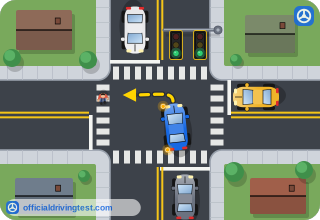
- When safe, unless a sign or signal prohibits it
- Only straight ahead, and never turn in any case
- Only after waiting a few seconds
- Only when no pedestrians are in the area
Show answer
Correct answer: When safe, unless a sign or signal prohibits it
The manual allows you to enter and go straight or turn when safe unless a sign or additional signal prohibits the turn.
Source: Delaware Driver Manual (July 2026), page 70 · Open this page in the manual (Manual page 70)
-
Where must you make a complete stop at a stop sign?
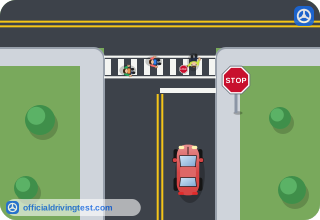
- Just past the crosswalk, at the very edge of the intersection so you can see
- At the stop line; if none, at the crosswalk; if none, before entering the intersection
- At the stop line only; if there is none, slow down and roll through the intersection
- Anywhere before the sign, at the spot from which you can see cross traffic best
Show answer
Correct answer: At the stop line; if none, at the crosswalk; if none, before entering the intersection
You stop at the stop line, or if there is none at the crosswalk, or if none before entering the intersection.
Source: Delaware Driver Manual (July 2026), page 74 · Open this page in the manual (Manual page 74)
-
After stopping at a stop sign, what must you do before starting?
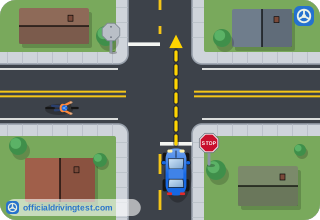
- Sound your horn to warn other vehicles and pedestrians that you are starting
- Wait for every other vehicle to finish crossing and leave the intersection
- Proceed at once, since you have already made your complete stop at the line
- Yield the right-of-way to any vehicle or pedestrian in or approaching the intersection
Show answer
Correct answer: Yield the right-of-way to any vehicle or pedestrian in or approaching the intersection
Before starting you must yield to any vehicle or pedestrian in or approaching the intersection.
Source: Delaware Driver Manual (July 2026), page 74 · Open this page in the manual (Manual page 74)
-
When you start up from a stop sign, which vehicles does the manual say to look carefully for because they are less visible?
- Bicycles, mopeds, and motorcycles
- Delivery vans and box trucks
- School buses and transit buses
- Farm tractors and horse-drawn vehicles
Show answer
Correct answer: Bicycles, mopeds, and motorcycles
The manual tells you to look for less visible vehicles such as bicycles, mopeds and motorcycles before starting from a stop sign.
Source: Delaware Driver Manual (July 2026), page 74 · Open this page in the manual (Manual page 74)
-
A red and white sign shaped like a point-down triangle has no other sign of its shape on the highway. What must you do when you come to it?
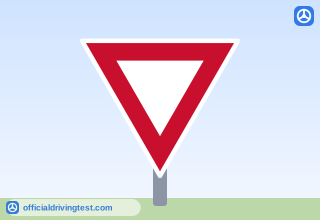
- Make a complete stop every time, whether or not anyone is approaching
- Speed up so you can clear the intersection before traffic arrives
- Yield the right-of-way to any vehicle or pedestrian, stopping if necessary
- Stop only if a pedestrian is already in the crosswalk ahead of you
Show answer
Correct answer: Yield the right-of-way to any vehicle or pedestrian, stopping if necessary
You yield to any vehicle or pedestrian in or approaching the intersection, stopping if necessary.
Source: Delaware Driver Manual (July 2026), page 74 · Open this page in the manual (Manual page 74)
-
After you have yielded at a yield sign to a vehicle or pedestrian, when may you proceed?
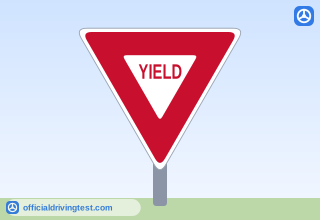
- As soon as the other vehicle or pedestrian has passed you
- Only when the movement can be made in safety
- As soon as you have slowed down and looked left and right
- Whenever the vehicle behind you signals for you to go
Show answer
Correct answer: Only when the movement can be made in safety
Having yielded, you shall not proceed until the movement can be made in safety.
Source: Delaware Driver Manual (July 2026), page 74 · Open this page in the manual (Manual page 74)
-
What should you do as you approach a yield sign?
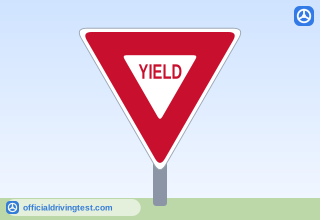
- Maintain your speed and let the cross traffic and pedestrians yield to you
- Come to a complete stop at the stop line every time, even if the way is clear
- Stay in your lane and sound your horn as you enter the intersection
- Slow down, look left and right, and yield to crossing traffic and pedestrians
Show answer
Correct answer: Slow down, look left and right, and yield to crossing traffic and pedestrians
The manual says to slow down, look left and right, and yield to pedestrians and vehicles performing lawful maneuvers or crossing.
Source: Delaware Driver Manual (July 2026), page 74 · Open this page in the manual (Manual page 74)
-
According to the overtaking law quoted in the manual, on which side shall vehicles overtake other vehicles?
- On the left, when at a safe distance
- On either side, whenever the lane is clear
- Only in a marked passing lane
- On the shoulder, when traffic is slow
Show answer
Correct answer: On the left, when at a safe distance
Delaware law states vehicles shall overtake others on the left only when at a safe distance.
Source: Delaware Driver Manual (July 2026), page 81 · Open this page in the manual (Manual page 81)
-
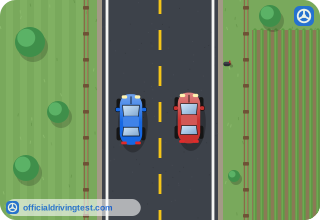
When may you return to the right after overtaking another vehicle?
- As soon as your front bumper passes
- When the other driver signals
- When you are safely clear
- After you have counted to three
Show answer
Correct answer: When you are safely clear
Delaware law says a vehicle shall return to the right only when safely clear.
Source: Delaware Driver Manual (July 2026), page 81 · Open this page in the manual (Manual page 81)
-
What must the driver of a vehicle being overtaken do?
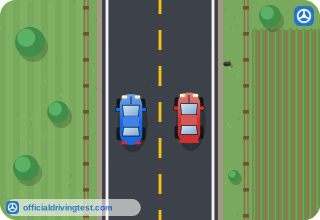
- Give way to the right and not increase speed until fully overtaken
- Give way to the left and speed up until fully overtaken
- Hold the lane and maintain speed while being passed
- Slow down to a stop so the other driver can pass
Show answer
Correct answer: Give way to the right and not increase speed until fully overtaken
Vehicles being overtaken shall give way to the right and not increase their speed until fully overtaken.
Source: Delaware Driver Manual (July 2026), page 81 · Open this page in the manual (Manual page 81)
-
In which direction does traffic move around a roundabout’s central island?
- Clockwise
- Counterclockwise
- Toward the left side of the road
- In whichever direction is shortest
Show answer
Correct answer: Counterclockwise
The manual says a roundabout moves traffic counterclockwise around a central island.
Source: Delaware Driver Manual (July 2026), page 85 · Open this page in the manual (Manual page 85)
-
When you turn left at a roundabout, how far around it do you go before you exit?
- Halfway around
- One quarter of the way around
- All the way around, back to its entry
- Three-quarters of the way around
Show answer
Correct answer: Three-quarters of the way around
The manual’s roundabout diagram says a left-turning vehicle yields to traffic in the roundabout, goes 3/4 around and completes its turn.
Source: Delaware Driver Manual (July 2026), page 85 · Open this page in the manual (Manual page 85)
-
How do you make a U-turn at a roundabout?
- Stay to the right and go around to exit on the road you entered from
- Turn left in front of the central island and exit right away
- Go straight through and turn around outside the roundabout
- Stop in the roundabout and wait for traffic to clear first
Show answer
Correct answer: Stay to the right and go around to exit on the road you entered from
The manual’s roundabout diagram says a U-turning vehicle yields, stays to the right, continues around and exits on the same road it entered from.
Source: Delaware Driver Manual (July 2026), page 85 · Open this page in the manual (Manual page 85)
-
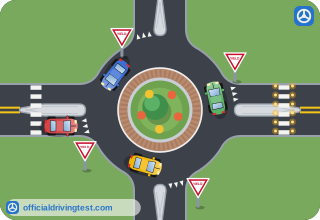
What does the design of a roundabout reduce the need for?
- Traffic signals at every entry to the intersection
- Pedestrian crosswalks at the exits of the roundabout
- Direct left turns, a major reason for intersection crashes
- Right turns, which are a major reason for crashes
Show answer
Correct answer: Direct left turns, a major reason for intersection crashes
The manual says the design reduces the need for direct left turns, a major reason for intersection crashes.
Source: Delaware Driver Manual (July 2026), page 86 · Open this page in the manual (Manual page 86)
-
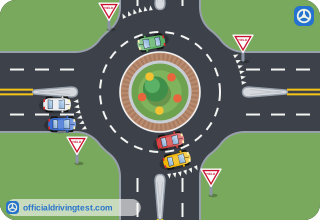
Which approach lane should you be in if you intend to turn right at a roundabout?
- The left approach lane
- The right approach lane
- Any approach lane
- The center approach lane
Show answer
Correct answer: The right approach lane
The manual says to be in the right approach lane if you intend to turn right.
Source: Delaware Driver Manual (July 2026), page 86 · Open this page in the manual (Manual page 86)
-
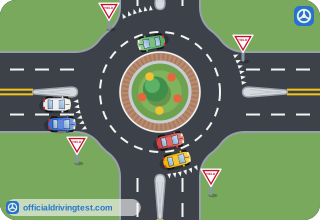
Which approach lane should you be in if you intend to make a left turn or a U-turn at a roundabout?
- The right approach lane
- Any approach lane
- Whichever approach lane has less traffic
- The left approach lane
Show answer
Correct answer: The left approach lane
The manual says to be in the left approach lane if you intend on making a left or U-turn.
Source: Delaware Driver Manual (July 2026), page 86 · Open this page in the manual (Manual page 86)
-
Which approach lane may you use at a roundabout if you are proceeding straight?
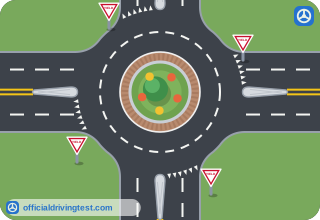
- Any approach lane
- Only the right approach lane
- Only the left approach lane
- Only the lane closest to the central island
Show answer
Correct answer: Any approach lane
The manual says any approach lane is okay if you are proceeding straight.
Source: Delaware Driver Manual (July 2026), page 86 · Open this page in the manual (Manual page 86)
-
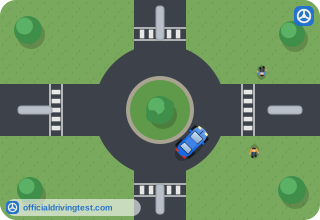
When approaching a roundabout, which side of the splitter island should you stay on?
- The left
- Either side, whichever is clearer
- The right
- The side closest to the crosswalk
Show answer
Correct answer: The right
The manual says to stay to the right of the splitter island when approaching the roundabout.
Source: Delaware Driver Manual (July 2026), page 86 · Open this page in the manual (Manual page 86)
-
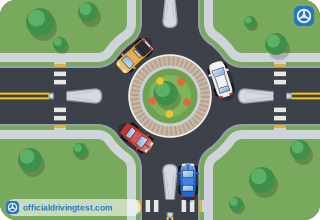
To what speed should you slow down when approaching a roundabout?
- 20-25 mph
- 10-15 mph
- 30-35 mph
- 5-10 mph
Show answer
Correct answer: 10-15 mph
The manual says to slow down to 10-15 mph upon approaching the roundabout.
Source: Delaware Driver Manual (July 2026), page 86 · Open this page in the manual (Manual page 86)
-
What should you do about bicyclists when approaching a roundabout?
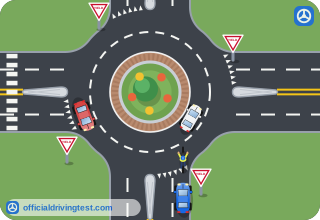
- Pass them quickly before you reach the roundabout entry
- Honk to warn them to stay on the sidewalk
- Stop and wait for them to clear the roundabout
- Watch for them and let them merge into the entry lane
Show answer
Correct answer: Watch for them and let them merge into the entry lane
The manual says to watch for bicyclists and allow them to merge into the entry lane.
Source: Delaware Driver Manual (July 2026), page 86 · Open this page in the manual (Manual page 86)
-
What should you do about pedestrians when entering a roundabout?
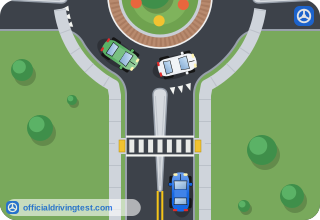
- Watch for and yield to pedestrians in the crosswalk
- Sound your horn so pedestrians clear the crosswalk
- Pass pedestrians quickly before the crosswalk
- Expect pedestrians to wait until you have passed
Show answer
Correct answer: Watch for and yield to pedestrians in the crosswalk
The manual says to watch for and yield to pedestrians in the crosswalk.
Source: Delaware Driver Manual (July 2026), page 86 · Open this page in the manual (Manual page 86)
-
Which vehicles must you yield to when entering a roundabout?
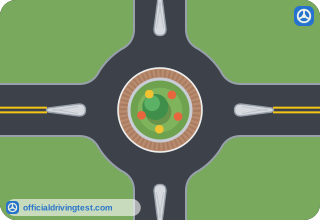
- Traffic waiting behind you to enter
- Traffic stopped at the next entry
- Traffic already in the roundabout
- No one, since entering traffic has the right-of-way
Show answer
Correct answer: Traffic already in the roundabout
The manual says to yield to traffic already in the roundabout.
Source: Delaware Driver Manual (July 2026), page 86 · Open this page in the manual (Manual page 86)
-
Once you are in a roundabout, when should you stop?
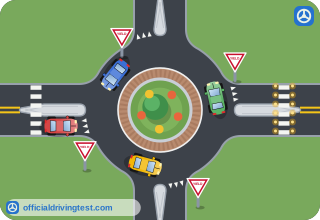
- At every exit to check for pedestrians
- Only to avoid a collision
- Whenever entering traffic is waiting
- Before passing each crosswalk
Show answer
Correct answer: Only to avoid a collision
The manual says that once in the roundabout you do not stop except to avoid a collision, and you have the right-of-way over entering traffic.
Source: Delaware Driver Manual (July 2026), page 86 · Open this page in the manual (Manual page 86)
-
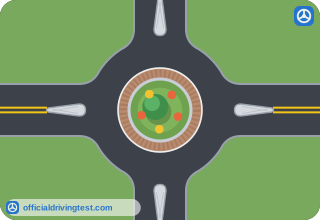
In a roundabout, who has the right-of-way, a vehicle already in the roundabout or a vehicle entering it?
- The vehicle entering the roundabout
- Whichever vehicle is traveling faster
- The vehicle that arrived at its entry first
- The vehicle already in the roundabout
Show answer
Correct answer: The vehicle already in the roundabout
The manual says that once you are in the roundabout you have the right-of-way over entering traffic.
Source: Delaware Driver Manual (July 2026), page 86 · Open this page in the manual (Manual page 86)
-
What does the manual say about passing other vehicles inside a roundabout?
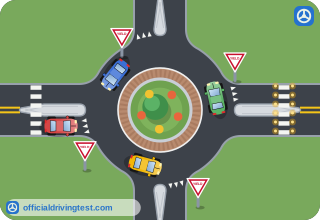
- Do not pass other vehicles
- Pass only on the left side
- Pass only slow bicyclists
- Pass only after sounding the horn
Show answer
Correct answer: Do not pass other vehicles
The manual says to maintain a slow speed and not pass other vehicles in the roundabout.
Source: Delaware Driver Manual (July 2026), page 86 · Open this page in the manual (Manual page 86)
-
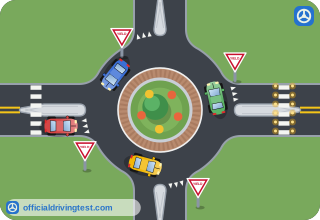
As you exit a roundabout, what should you watch for and yield to?
- Vehicles entering at the next entry
- Vehicles stopped on the central island
- Pedestrians and bicyclists
- Trucks backing out of the exit lane
Show answer
Correct answer: Pedestrians and bicyclists
The manual says to watch for and yield to pedestrians and bicyclists as you exit.
Source: Delaware Driver Manual (July 2026), page 86 · Open this page in the manual (Manual page 86)
-
What is a Diverging Diamond Intersection (DDI) based on?
- A traditional traffic circle with a central island
- A standard diamond interchange with a shift in traffic
- A cloverleaf interchange with four loop ramps
- A four-way stop intersection with an added center lane
Show answer
Correct answer: A standard diamond interchange with a shift in traffic
The manual says a DDI is based on a standard diamond interchange with a shift in traffic within the interchange.
Source: Delaware Driver Manual (July 2026), page 86 · Open this page in the manual (Manual page 86)
-
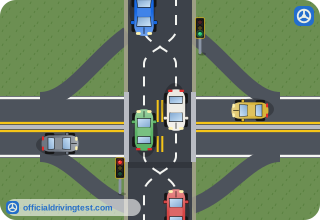
What is the Diverging Diamond Intersection (DDI) designed to accommodate safely and efficiently?
- High volume right turn movements
- Slow-moving farm vehicles
- Large numbers of pedestrians crossing at once
- High volume left turn movements
Show answer
Correct answer: High volume left turn movements
The manual says the DDI shifts traffic to safely and efficiently accommodate high volume left turn movements.
Source: Delaware Driver Manual (July 2026), page 86 · Open this page in the manual (Manual page 86)
-
What happens within a Diverging Diamond Intersection (DDI) interchange that allows left turns without crossing oncoming traffic or stopping?
- Traffic briefly drives on the left side of the road
- Traffic is stopped by a stop sign at every ramp
- Left turns are made from the right-hand lane
- Traffic drives in a circle around a central island
Show answer
Correct answer: Traffic briefly drives on the left side of the road
The manual says traffic briefly drives on the left side of the road within the interchange so left turns occur without crossing oncoming traffic.
Source: Delaware Driver Manual (July 2026), page 86 · Open this page in the manual (Manual page 86)
-
What are the advantages of a Diverging Diamond Intersection (DDI)?
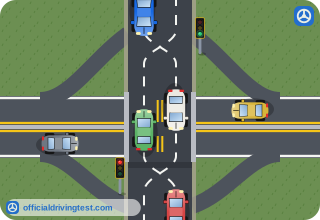
- Fewer exits, reducing speeds, and lower noise from traffic
- More traffic signals, reducing delays, and smaller crossing distances
- Fewer conflict points and greater capacity for vehicles
- Wider lanes, reducing lane changes, and shorter ramps
Show answer
Correct answer: Fewer conflict points and greater capacity for vehicles
The manual says a DDI has fewer conflict points and greater capacity for vehicles at the interchange.
Source: Delaware Driver Manual (July 2026), page 86 · Open this page in the manual (Manual page 86)
-
For what are shared center lanes reserved?
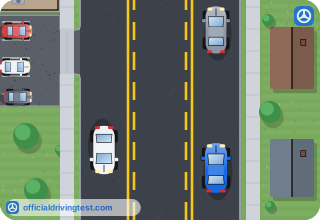
- Left turns, used by vehicles in both directions
- Passing slower vehicles in both directions
- Emergency vehicles traveling in either direction
- Left turns for one direction of traffic only
Show answer
Correct answer: Left turns, used by vehicles in both directions
The manual says shared center lanes are reserved for left turns (or permitted U-turns) and can be used by vehicles traveling in both directions.
Source: Delaware Driver Manual (July 2026), page 87 · Open this page in the manual (Manual page 87)
-
What can happen to a shared center lane in some areas during rush hours?
- It is closed to all traffic
- It becomes a reversible lane
- It becomes a passing lane
- It is reserved for buses only
Show answer
Correct answer: It becomes a reversible lane
The manual states that in some areas the shared center lane becomes a reversible lane during rush hours.
Source: Delaware Driver Manual (July 2026), page 87 · Open this page in the manual (Manual page 87)
-
When may you back a vehicle in a travel lane?
- Whenever you miss your exit and no one is behind you
- Whenever you miss your turn
- Only when letting out a passenger
- Only to parallel park or, if necessary, to exit a driveway
Show answer
Correct answer: Only to parallel park or, if necessary, to exit a driveway
The manual says never to back in a travel lane except to parallel park or to exit a driveway if necessary.
Source: Delaware Driver Manual (July 2026), page 87 · Open this page in the manual (Manual page 87)
-
What should you do if you miss your turn or exit?
- Do not back up; go on to where you can safely turn around
- Stop and back up carefully to the turn when no one is behind you
- Stop in the lane and wait for a safe gap in traffic
- Back up on the shoulder to reach the missed exit
Show answer
Correct answer: Do not back up; go on to where you can safely turn around
The manual says not to back up after missing a turn or exit, but to go on to a place where you can turn around safely.
Source: Delaware Driver Manual (July 2026), page 87 · Open this page in the manual (Manual page 87)
-
What does the manual say about stopping in travel lanes?
- Stop only if you are confused about where to turn and signal first
- Stop to let out a passenger as long as you use your turn signal
- Do not stop for any reason; keep moving until you can safely pull off
- Stop briefly if there is a breakdown and no shoulder is available
Show answer
Correct answer: Do not stop for any reason; keep moving until you can safely pull off
Confusion, a breakdown or letting out a passenger are not reasons to stop in a travel lane; keep moving until you can pull off safely.
Source: Delaware Driver Manual (July 2026), page 87 · Open this page in the manual (Manual page 87)
-
On a road with two or more lanes traveling in the same direction, which lane should you stay in except to pass?
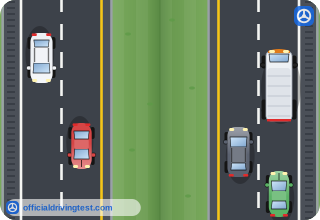
- The left lane
- The right lane
- The center lane
- Whichever lane is empty
Show answer
Correct answer: The right lane
The manual says to stay in the right lane except to pass on a road with two or more lanes in your direction.
Source: Delaware Driver Manual (July 2026), page 87 · Open this page in the manual (Manual page 87)
-
On a road with three or more lanes in your direction and a lot of entering or exiting traffic, which lane should you use?
- The right-most lane
- The left-most lane
- The paved shoulder
- The center travel lane
Show answer
Correct answer: The center travel lane
The manual says to use the center travel lane when there are three or more lanes and lots of entering or exiting traffic.
Source: Delaware Driver Manual (July 2026), page 87 · Open this page in the manual (Manual page 87)
-
On multi-lane roads, which lane is intended for passing slower vehicles?
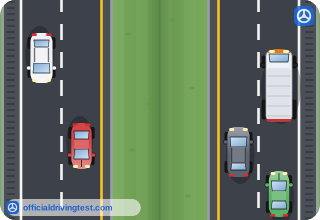
- The left-most lane
- The right-most lane
- The center lane
- The shoulder
Show answer
Correct answer: The left-most lane
The manual says the left-most lane on multi-lane roads is intended for passing slower vehicles.
Source: Delaware Driver Manual (July 2026), page 87 · Open this page in the manual (Manual page 87)
-
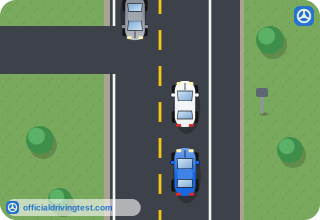
Why is it unsafe to pass another vehicle on the right?
- Passing on the right is illegal in every situation in Delaware and always carries a fine
- Slower drivers always speed up when they are passed on the right side
- The other driver may not see you and might suddenly change lanes in front of you
- The right lane is always reserved for turning traffic at intersections
Show answer
Correct answer: The other driver may not see you and might suddenly change lanes in front of you
The manual warns that a driver you pass on the right may not see you and might change lanes in front of you.
Source: Delaware Driver Manual (July 2026), page 87 · Open this page in the manual (Manual page 87)
-
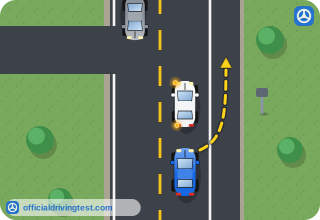
In Delaware, is it legal to pass left-turning vehicles on the right?
- No, passing left-turning vehicles on the right is never allowed
- Yes, but it is very crash-prone and must be done with great caution
- Yes, and it is no riskier than any other pass on a multi-lane road
- Only if a police officer directs you to pass on the right
Show answer
Correct answer: Yes, but it is very crash-prone and must be done with great caution
The manual says passing left-turning vehicles on the right is legal in Delaware but a very crash-prone situation.
Source: Delaware Driver Manual (July 2026), page 87 · Open this page in the manual (Manual page 87)
-
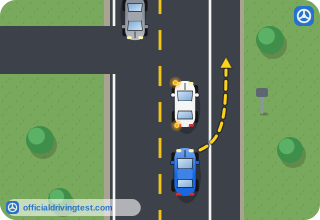
What does the manual say about using the shoulder to pass left-turning vehicles on the right in Delaware?
- It is never permitted in Delaware, because the shoulder is for emergencies only
- It is permitted, and drivers on the road will be watching for you
- It is permitted only on freeways and only during daylight hours
- Allowed, but other drivers will not expect you there, so extreme care is required
Show answer
Correct answer: Allowed, but other drivers will not expect you there, so extreme care is required
The manual allows using the shoulder for this pass in Delaware but warns that extreme care is required.
Source: Delaware Driver Manual (July 2026), page 87 · Open this page in the manual (Manual page 87)
-
Where there are no signs or lane markings to control turning, from which lane should you turn?
- The lane closest to the direction you want to go
- The lane with the most traffic
- The lane farthest from the direction you want to go
- Any lane with the least traffic
Show answer
Correct answer: The lane closest to the direction you want to go
The manual says to turn from the lane closest to your intended direction and into the lane closest to the one you came from, so you cross the fewest lanes.
Source: Delaware Driver Manual (July 2026), page 87 · Open this page in the manual (Manual page 87)
-
When making a turn, how should you go from one lane to the other?
- By swinging wide first to leave extra room for other drivers
- By crossing the lane lines as soon as it is clear of traffic
- As directly as possible without crossing lane lines or interfering with traffic
- By moving into the farthest lane first and then correcting your position
Show answer
Correct answer: As directly as possible without crossing lane lines or interfering with traffic
The manual says to go from one lane to the other as directly as possible without crossing lane lines or interfering with traffic.
Source: Delaware Driver Manual (July 2026), page 87 · Open this page in the manual (Manual page 87)
-
When may you change to another lane after completing a turn?
- Only after driving one full block
- Once the turn is completed, if you need to
- Never, you must stay in the lane you turned into
- Only after you cross the next intersection
Show answer
Correct answer: Once the turn is completed, if you need to
The manual says that once you have completed your turn, you can change to another lane if you need to.
Source: Delaware Driver Manual (July 2026), page 87 · Open this page in the manual (Manual page 87)
-
On a right turn, what should you avoid doing?
- Using the lane closest to the curb
- Turning into the lane closest to the one you came from
- Turning as directly as possible
- Swinging wide to the left before making the turn
Show answer
Correct answer: Swinging wide to the left before making the turn
The manual tells drivers to avoid swinging wide to the left before a right turn.
Source: Delaware Driver Manual (July 2026), page 87 · Open this page in the manual (Manual page 87)
-
When making a left turn, what should you avoid?
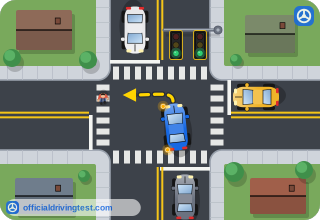
- Cutting the corner so sharply that you hit someone approaching
- Turning from the lane closest to the center of the road
- Staying in your lane when two or more turning lanes are marked
- Leaving room for oncoming vehicles to turn left in front of you
Show answer
Correct answer: Cutting the corner so sharply that you hit someone approaching
The manual says to avoid cutting the corner so sharply that you hit someone approaching from the left.
Source: Delaware Driver Manual (July 2026), page 88 · Open this page in the manual (Manual page 88)
-
When making a left turn, what should you be sure to leave room for?
- Vehicles behind you to pass on the right side
- Pedestrians to cross the road behind you
- Oncoming vehicles to turn left in front of you
- Vehicles in the next lane to back up behind you
Show answer
Correct answer: Oncoming vehicles to turn left in front of you
The manual says to leave room for oncoming vehicles to turn left in front of you.
Source: Delaware Driver Manual (July 2026), page 88 · Open this page in the manual (Manual page 88)
-
If signs or lane markings allow two or more turning lanes, what should you do during the turn?
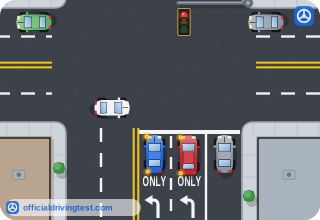
- Move to the outside lane
- Stay in your lane
- Move to the inside lane
- Change lanes halfway through
Show answer
Correct answer: Stay in your lane
The manual says to stay in your lane during the turn when two or more turning lanes are allowed.
Source: Delaware Driver Manual (July 2026), page 88 · Open this page in the manual (Manual page 88)
-
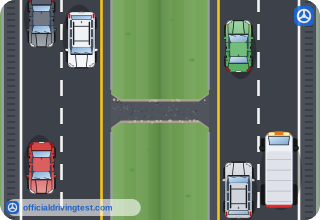
What is illegal when a median crossing is marked for emergency vehicles only?
- For emergency vehicles to cross there
- For drivers to drive in the median
- For drivers to turn right at the crossing
- For other drivers to cross there
Show answer
Correct answer: For other drivers to cross there
The manual says it is illegal for you to cross at a median crossing marked for emergency vehicles only.
Source: Delaware Driver Manual (July 2026), page 88 · Open this page in the manual (Manual page 88)
-
What rule applies in a legal median crossing that is not marked otherwise?
- The rule “keep to the right”
- The rule “first come, first served”
- The rule “yield to the left”
- The rule “keep to the left”
Show answer
Correct answer: The rule “keep to the right”
The manual states that “keep to the right” applies in median crossings when crossing is legal and not marked otherwise.
Source: Delaware Driver Manual (July 2026), page 88 · Open this page in the manual (Manual page 88)
-
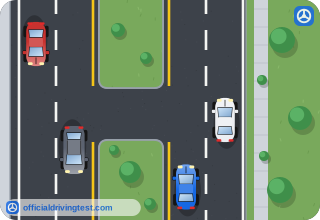
How should drivers treat a median crossing?
- As a parking area, stopping before you cross it every time
- As a shoulder, driving across at whatever angle you choose
- Like a roadway, staying to the right of the opening at all times
- As a sidewalk, yielding to everyone who is crossing it
Show answer
Correct answer: Like a roadway, staying to the right of the opening at all times
The manual says to treat the median like a roadway and stay to the right of the opening.
Source: Delaware Driver Manual (July 2026), page 88 · Open this page in the manual (Manual page 88)
-
According to the manual, what must you do regardless of the circumstances?
- Maintain your speed whenever you have the right-of-way at an intersection
- Do everything you can to prevent striking a pedestrian or another vehicle
- Insist on taking the right-of-way at every intersection you reach
- Sound your horn whenever other drivers or pedestrians approach you
Show answer
Correct answer: Do everything you can to prevent striking a pedestrian or another vehicle
The manual says you must do everything you can to prevent striking a pedestrian or another vehicle, regardless of the circumstances.
Source: Delaware Driver Manual (July 2026), page 88 · Open this page in the manual (Manual page 88)
-
At an intersection, who must drivers turning left yield to?
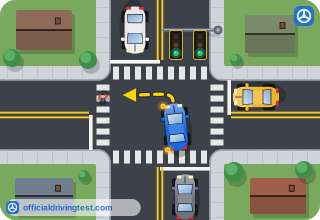
- Vehicles behind them
- Vehicles turning right from the same direction
- No one, if they signaled first
- Oncoming vehicles going straight ahead
Show answer
Correct answer: Oncoming vehicles going straight ahead
The manual says drivers turning left must yield to oncoming vehicles going straight ahead.
Source: Delaware Driver Manual (July 2026), page 88 · Open this page in the manual (Manual page 88)
-
Who must yield when a driver enters a traffic circle or rotary?
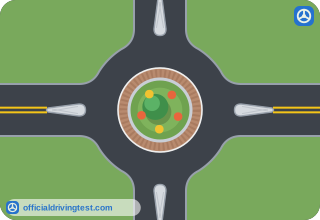
- The driver entering must yield to drivers already in the circle
- Drivers already in the circle must yield to the driver entering
- The larger vehicle always goes first
- The driver on the left always goes first
Show answer
Correct answer: The driver entering must yield to drivers already in the circle
The manual says drivers entering a traffic circle or rotary must yield to drivers already in the circle.
Source: Delaware Driver Manual (July 2026), page 88 · Open this page in the manual (Manual page 88)
-
At an intersection with no stop sign, yield sign, or traffic signal, to whom should drivers yield?
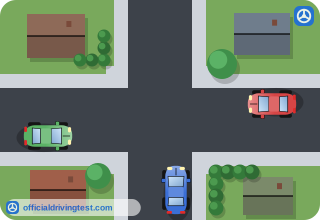
- Vehicles coming from the left
- Vehicles going straight only
- Vehicles coming from the right
- The vehicle that is moving faster
Show answer
Correct answer: Vehicles coming from the right
The manual says drivers should yield to vehicles coming from the right, though yielding to all vehicles is safest.
Source: Delaware Driver Manual (July 2026), page 88 · Open this page in the manual (Manual page 88)
-
At a 4-way stop, who goes first?
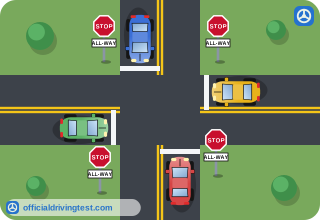
- The driver on the left, after a complete stop
- The driver who arrives first, after a complete stop
- The driver going straight ahead before the others
- The driver in the largest vehicle on the road
Show answer
Correct answer: The driver who arrives first, after a complete stop
The manual says that at a 4-way stop the driver reaching the intersection first goes first, after coming to a complete stop.
Source: Delaware Driver Manual (July 2026), page 88 · Open this page in the manual (Manual page 88)
-
At a 4-way stop, which vehicle goes first if more than one vehicle arrives at the same time?
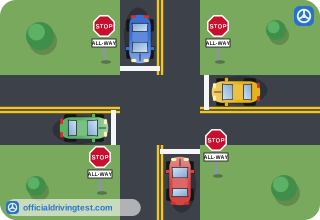
- The vehicle on the left
- The vehicle going straight
- The vehicle that is turning
- The vehicle on the right
Show answer
Correct answer: The vehicle on the right
The manual says that if more than one vehicle arrives at the same time, the vehicle on the right goes first.
Source: Delaware Driver Manual (July 2026), page 88 · Open this page in the manual (Manual page 88)
-
What must drivers entering a road from a driveway, alley, or roadside do?
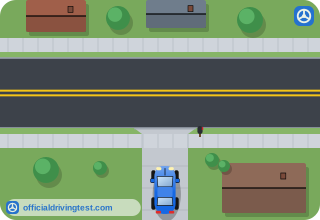
- Yield to vehicles already on the main road
- Enter first because they are signaling
- Sound the horn and then enter
- Yield only to vehicles coming from the left
Show answer
Correct answer: Yield to vehicles already on the main road
The manual says drivers entering from a driveway, alley, or roadside must yield to vehicles already on the main road.
Source: Delaware Driver Manual (July 2026), page 88 · Open this page in the manual (Manual page 88)
-
What must drivers entering a road from a turn only lane do, if necessary?
- Proceed without slowing
- Sound the horn and merge
- Yield, including stopping
- Merge ahead of the main road traffic
Show answer
Correct answer: Yield, including stopping
The manual says drivers entering from turn only lanes must yield, including stopping if necessary.
Source: Delaware Driver Manual (July 2026), page 88 · Open this page in the manual (Manual page 88)
-
When may drivers enter an intersection?
- Whenever the light turns green, even if traffic is backed up
- Only if they can get through it without having to stop
- Whenever there is room to stop in the middle
- Whenever they are the first in line
Show answer
Correct answer: Only if they can get through it without having to stop
The manual says drivers may not enter an intersection unless they can get through without stopping, so they do not block it.
Source: Delaware Driver Manual (July 2026), page 89 · Open this page in the manual (Manual page 89)
-
What must drivers overtaking a vehicle traveling in the same direction do?
- Pass without yielding as long as they are traveling faster
- Sound the horn and move ahead of the other vehicle quickly
- Yield only if the other vehicle is using its turn signal
- Yield to that vehicle, even if it slows down or comes to a stop
Show answer
Correct answer: Yield to that vehicle, even if it slows down or comes to a stop
The manual says drivers overtaking a vehicle in the same direction must yield to it, even if it slows or stops.
Source: Delaware Driver Manual (July 2026), page 89 · Open this page in the manual (Manual page 89)
-
At which places is it especially important to look to the sides for vehicles or pedestrians that may cross or enter your path?
- Intersections and railroad crossings
- Long straight highways and tunnels
- Freeway on-ramps and rest areas
- Hills and curves with no side roads
Show answer
Correct answer: Intersections and railroad crossings
The manual says looking to the sides is especially important at intersections and railroad crossings.
Source: Delaware Driver Manual (July 2026), page 117 · Open this page in the manual (Manual page 117)
-
How does the manual define intersections?
- Only places where two named streets meet
- Only places controlled by traffic signals or signs
- Any place where traffic merges or crosses
- Only places where a road crosses railroad tracks
Show answer
Correct answer: Any place where traffic merges or crosses
Intersections are any place where traffic merges or crosses.
Source: Delaware Driver Manual (July 2026), page 117 · Open this page in the manual (Manual page 117)
-
Which of these is an intersection, according to the manual?
- A shopping center or parking lot entrance
- A stretch of road with no side streets
- A bridge with no ramps
- A tunnel with a single lane
Show answer
Correct answer: A shopping center or parking lot entrance
The manual lists cross streets, side streets, driveways, and shopping center or parking lot entrances as intersections.
Source: Delaware Driver Manual (July 2026), page 117 · Open this page in the manual (Manual page 117)
-
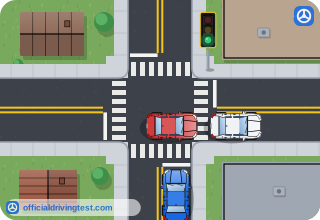
If you are stopped at an intersection, when should you look to both the left and right?
- Only once, right after you stop
- Only if you cannot see the signal
- Only after you have started moving into the intersection
- Just before you start moving
Show answer
Correct answer: Just before you start moving
If stopped, you look to both the left and right just before you start moving.
Source: Delaware Driver Manual (July 2026), page 117 · Open this page in the manual (Manual page 117)
-
Why should you look across an intersection before you start to move through it?
- So you can speed up before the light changes
- So you will not block it if you have to stop
- So you know which lane other drivers will use
- So you can drive through without signaling
Show answer
Correct answer: So you will not block it if you have to stop
You look to make sure the path is clear all the way through so you will not block the intersection if you have to stop.
Source: Delaware Driver Manual (July 2026), page 117 · Open this page in the manual (Manual page 117)
-
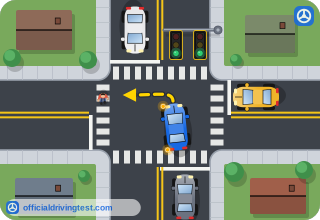
What should you look for before you turn left across oncoming traffic?
- A safe gap in the traffic
- A vehicle that will wave you through
- A red light for the oncoming lanes
- A stopped vehicle to follow across
Show answer
Correct answer: A safe gap in the traffic
Before turning left across oncoming traffic you look for a safe gap in the traffic.
Source: Delaware Driver Manual (July 2026), page 117 · Open this page in the manual (Manual page 117)
-
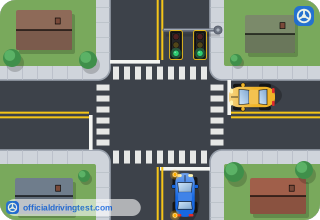
Why should you look at the street you are turning left onto?
- To read the street name before you commit to the turn
- To see whether a parking space is open
- To avoid being stranded in the path of oncoming traffic
- To confirm that the street has more than one lane
Show answer
Correct answer: To avoid being stranded in the path of oncoming traffic
You check that no vehicles or pedestrians are in your path so you are not left stranded in the path of oncoming traffic.
Source: Delaware Driver Manual (July 2026), page 117 · Open this page in the manual (Manual page 117)
-
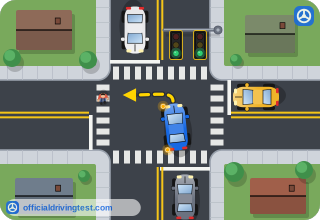
What is the last thing you should do before you turn left across oncoming traffic?
- Flash your headlights at the oncoming drivers
- Look one more time in the direction of oncoming traffic
- Check only the street you are turning onto
- Speed up to cross before oncoming traffic arrives
Show answer
Correct answer: Look one more time in the direction of oncoming traffic
The manual says to look one more time in the direction of oncoming traffic before you turn.
Source: Delaware Driver Manual (July 2026), page 117 · Open this page in the manual (Manual page 117)
-
Before you begin a right turn, what must you check for?
- Parked vehicles along the street you will enter
- Traffic lights facing the street you will enter
- The speed limit of the street you will enter
- Pedestrians crossing where you will be turning
Show answer
Correct answer: Pedestrians crossing where you will be turning
You must not begin your turn without checking for pedestrians crossing where you will be turning.
Source: Delaware Driver Manual (July 2026), page 117 · Open this page in the manual (Manual page 117)
-
Before turning right, you must make sure there is no traffic approaching from your left and no oncoming traffic doing what?
- Stopped at the red light
- Passing a parked vehicle
- Slowing to look for parking
- Turning left into your path
Show answer
Correct answer: Turning left into your path
Before turning right, make sure there is no traffic approaching from your left and no oncoming traffic turning left into your path.
Source: Delaware Driver Manual (July 2026), page 117 · Open this page in the manual (Manual page 117)
-
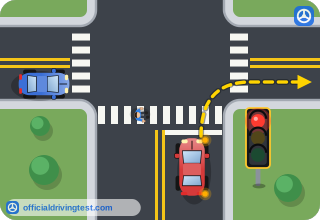
When may you turn right on a red light?
- Only when a green arrow is also lit
- Unless it is prohibited
- Only when a police officer waves you on
- Never, a red light always means wait
Show answer
Correct answer: Unless it is prohibited
The manual says you may turn right on red unless prohibited.
Source: Delaware Driver Manual (July 2026), page 117 · Open this page in the manual (Manual page 117)
-
Which left turn may you make unless it is prohibited?
- From a two-way street across a double yellow line
- From a bike lane directly across a crosswalk
- From a one-way street onto another one-way street
- From a one-way street into oncoming lanes
Show answer
Correct answer: From a one-way street onto another one-way street
The manual says you may turn left from a one-way street onto another one-way street unless prohibited.
Source: Delaware Driver Manual (July 2026), page 117 · Open this page in the manual (Manual page 117)
-
At an intersection, why should you look left and right even if other traffic has a red light or a stop sign?
- Some drivers do not obey traffic signals or signs
- Traffic signals often change without warning
- Stop signs only apply to the first vehicle
- Red lights only apply to vehicles going straight
Show answer
Correct answer: Some drivers do not obey traffic signals or signs
The manual warns that some drivers do not obey traffic signals or signs, so you cannot rely on them alone.
Source: Delaware Driver Manual (July 2026), page 117 · Open this page in the manual (Manual page 117)
-
When is it especially important to look left and right at a signal-controlled intersection?
- Only after the light has been green for a long time
- Only when the light is red
- Just after the light has turned green
- Only when the light is flashing
Show answer
Correct answer: Just after the light has turned green
Just after the light turns green is when cross-street drivers are most likely to hurry through before the light changes to red.
Source: Delaware Driver Manual (July 2026), page 117 · Open this page in the manual (Manual page 117)
-
If you were stopped and your view of a cross street is blocked, what should you do?
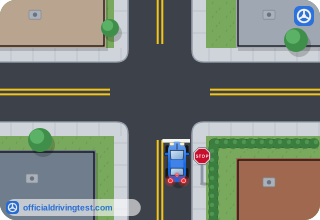
- Edge forward slowly until you can see
- Honk your horn and drive through quickly
- Back up to get a better view
- Wait for the vehicle behind you to pass
Show answer
Correct answer: Edge forward slowly until you can see
The manual says to edge forward slowly until you can see.
Source: Delaware Driver Manual (July 2026), page 117 · Open this page in the manual (Manual page 117)
-
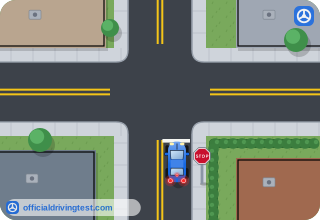
Why does edging forward slowly help when your view of a cross street is blocked?
- It gives you a longer view of the traffic signal ahead of you
- It lets crossing drivers know that you plan to turn right
- It warns drivers behind you that you are about to back up
- Crossing drivers can see the front of your vehicle first
Show answer
Correct answer: Crossing drivers can see the front of your vehicle first
Crossing drivers can see the front of your vehicle before you can see them, which gives them a chance to slow down and warn you.
Source: Delaware Driver Manual (July 2026), page 117 · Open this page in the manual (Manual page 117)
-
Where is it very important to look to the sides because of activity along the road?
- Near playgrounds and school yards
- On a long, empty rural highway
- On a freeway with no entrances
- Inside a tunnel with a single lane
Show answer
Correct answer: Near playgrounds and school yards
The manual says to look to the sides near shopping centers and parking lots, construction areas, busy sidewalks, and playgrounds and school yards.
Source: Delaware Driver Manual (July 2026), page 117 · Open this page in the manual (Manual page 117)
-
How should you cross several lanes of traffic?
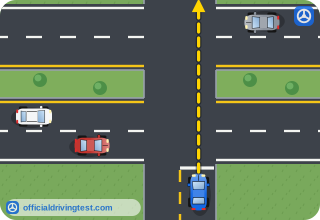
- Take them one lane at a time
- Wait until every lane is clear, then cross all at once
- Cross as fast as possible in one move
- Stop on the line between lanes and check again
Show answer
Correct answer: Take them one lane at a time
Like taking stairs one step at a time, it is safest and easiest to cross one lane at a time.
Source: Delaware Driver Manual (July 2026), page 130 · Open this page in the manual (Manual page 130)
-
When you enter traffic, what do you need enough space to do?
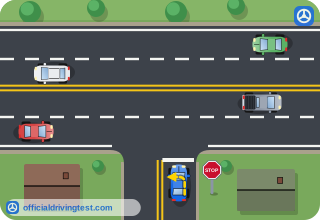
- Stop and check mirrors
- Honk and wait
- Turn and get up to speed
- Signal and coast
Show answer
Correct answer: Turn and get up to speed
When you enter traffic, you need enough space to turn and get up to speed.
Source: Delaware Driver Manual (July 2026), page 130 · Open this page in the manual (Manual page 130)
-
When is stopping halfway across a road safe while you cross traffic?
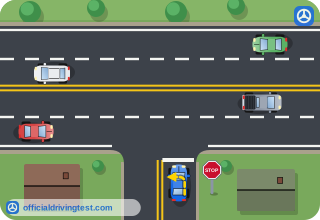
- When your turn signal has been on for a while
- Only if a median is large enough for your vehicle
- When no vehicles are visible in either direction
- When traffic in the other lanes is moving slowly
Show answer
Correct answer: Only if a median is large enough for your vehicle
Stopping halfway across is only safe when there is a median divider large enough for your vehicle.
Source: Delaware Driver Manual (July 2026), page 130 · Open this page in the manual (Manual page 130)
-
Before turning left, what should you make sure of?
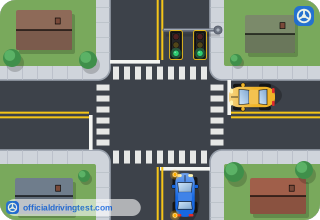
- Oncoming drivers have their headlights on
- Your vehicle is already halfway into the oncoming lane
- The traffic light has been green for a long time
- No vehicles or pedestrians block your path
Show answer
Correct answer: No vehicles or pedestrians block your path
You do not want to be stuck across a lane with oncoming vehicles while waiting for your path to clear.
Source: Delaware Driver Manual (July 2026), page 131 · Open this page in the manual (Manual page 131)
-
You have a green light but vehicles are blocking your way through the intersection. What should you do?
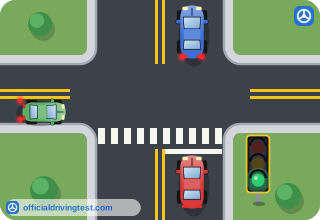
- Wait; do not start across the intersection
- Enter and wait in the middle for the path to clear
- Enter the intersection and sound your horn
- Go around the vehicles using the opposite lane
Show answer
Correct answer: Wait; do not start across the intersection
Even with a green light, do not start across the intersection if vehicles block your way.
Source: Delaware Driver Manual (July 2026), page 131 · Open this page in the manual (Manual page 131)
-
What can happen if you are caught in the intersection when the light changes to red?
- Your license is automatically suspended
- You must pay to repair the traffic signal
- You can get a ticket
- You must report the incident to the DMV
Show answer
Correct answer: You can get a ticket
You will block other traffic and can get a ticket for blocking an intersection.
Source: Delaware Driver Manual (July 2026), page 131 · Open this page in the manual (Manual page 131)
-
An approaching vehicle has its turn signal on. When should you go?
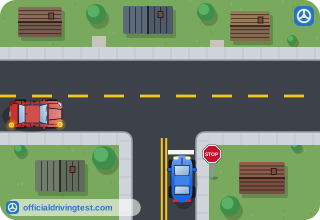
- As soon as you see the signal start flashing
- When the driver actually starts to turn and it is safe
- Once the approaching vehicle begins to slow down
- After the driver gives you a hand wave to go
Show answer
Correct answer: When the driver actually starts to turn and it is safe
The driver may turn later or may have forgotten to cancel the signal, so wait until the other driver actually starts to turn.
Source: Delaware Driver Manual (July 2026), page 131 · Open this page in the manual (Manual page 131)
-
Which vehicles' turn signals often do not cancel by themselves?
- Large trucks
- School buses
- Delivery vans
- Motorcycles
Show answer
Correct answer: Motorcycles
The manual notes that motorcycle signals often do not cancel by themselves.
Source: Delaware Driver Manual (July 2026), page 131 · Open this page in the manual (Manual page 131)