Connecticut: Signals and vehicle controls
Your vehicle inside and out, starting, steering and scanning, headlights, the horn, turn signals and hand signals. Split into 5 shorter tests so you're not stuck in one long quiz.
Independent educational site · not affiliated with any government agency or DMV
Choose a part
Signals and vehicle controls — Part 1
Questions in this part include: “Besides using turn signals every time it is appropriate, what else should you be able to do during the road test?”
StartSignals and vehicle controls — Part 2
Questions in this part include: “In the “penny test”, what shows that you are driving with a safe amount of tread?”
StartSignals and vehicle controls — Part 3
Questions in this part include: “In some vehicles with a manual transmission, what must you do to start them?”
StartSignals and vehicle controls — Part 4
Questions in this part include: “If your vehicle has an anti-theft alarm, what should you learn to do?”
StartSignals and vehicle controls — Part 5
Questions in this part include: “In which situation does the manual tell you to sound a sharp blast on your horn?”
StartAll 97 Signals and vehicle controls questions with answers
Choose a part above to take a practice test, or study every question and answer here.
Show the questions and answersHide the questions
-
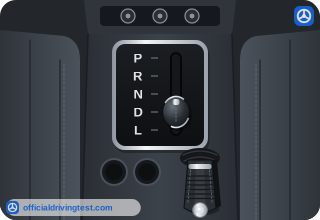
During the road test, what should you do before you shift the car into gear from the "park" position?
- Turn on the signal
- Check the oil
- Tap the horn
- Apply the brake
Show answer
Correct answer: Apply the brake
The manual says to apply the brake before shifting the car into gear from the "park" position.
Source: Connecticut Driver's Manual (Revised March 2023), page 7 · Open this page in the manual (Manual page 7)
-
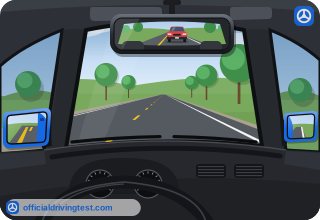
For the road test, how should the windows and mirrors be?
- Cleaned and defogged
- Tinted and covered
- Partly fogged
- Left as they are
Show answer
Correct answer: Cleaned and defogged
You must be able to see clearly through the windows and mirrors, which should be cleaned and defogged.
Source: Connecticut Driver's Manual (Revised March 2023), page 7 · Open this page in the manual (Manual page 7)
-
Besides using turn signals every time it is appropriate, what else should you be able to do during the road test?
- Drive without using mirrors
- Demonstrate hand signals
- Name every road sign by number
- Change a flat tire
Show answer
Correct answer: Demonstrate hand signals
The manual says to use turn signals when appropriate and be able to demonstrate hand signals.
Source: Connecticut Driver's Manual (Revised March 2023), page 7 · Open this page in the manual (Manual page 7)
-
Before entering the test vehicle, you should observe nearby parked cars, people or objects that could affect what?
- Your ability to safely put the car in motion
- The examiner's ability to enter the vehicle
- Your ability to find the DMV office quickly
- The vehicle's registration status
Show answer
Correct answer: Your ability to safely put the car in motion
The manual tells you to observe nearby parked cars, people or objects that could affect your ability to safely put the car in motion.
Source: Connecticut Driver's Manual (Revised March 2023), page 7 · Open this page in the manual (Manual page 7)
-
A vehicle fails its emissions inspection at an authorized inspection station. How long are you given to have the problem fixed and the emissions rechecked?
- 60 days
- 30 days
- 90 days
- 10 days
Show answer
Correct answer: 60 days
The manual says that if the vehicle does not pass, you will be given 60 days to fix the problem and have the emissions rechecked.
Source: Connecticut Driver's Manual (Revised March 2023), page 11 · Open this page in the manual (Manual page 11)
-
According to the manual, whose duty is it to make certain that the vehicles being driven are safe to operate?
- The Connecticut DMV inspectors
- The vehicle manufacturers
- The drivers of the vehicles
- The insurance companies
Show answer
Correct answer: The drivers of the vehicles
The manual states it is the duty of drivers to make certain the vehicles they drive are safe to operate.
Source: Connecticut Driver's Manual (Revised March 2023), page 11 · Open this page in the manual (Manual page 11)
-
Which part of a vehicle does the manual say is the only thing that can stop it?
- The tires
- The brakes
- The transmission
- The engine
Show answer
Correct answer: The brakes
The manual says that only your brakes can stop your vehicle, so it is very dangerous if they are not working properly.
Source: Connecticut Driver's Manual (Revised March 2023), page 11 · Open this page in the manual (Manual page 11)
-
You notice that your vehicle pulls to one side when you apply the brake. What does this indicate?
- That the tires are overinflated and should be rotated
- That the headlights are out of line
- A normal reaction on a road with a slight slope
- A problem in the braking system that should be serviced
Show answer
Correct answer: A problem in the braking system that should be serviced
The manual says that pulling to one side when the brake is applied indicates a problem in the braking system and that it should be serviced.
Source: Connecticut Driver's Manual (Revised March 2023), page 11 · Open this page in the manual (Manual page 11)
-
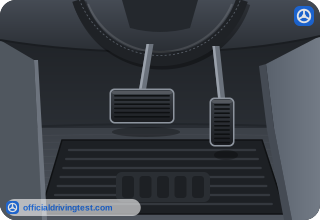
Which of these signs of brake trouble does the manual say should be checked by a mechanic?
- The brake pedal feels warm after a long drive
- The brake lights come on when the pedal is pressed
- The pedal moves a short distance and stops firmly
- The brake pedal goes to the floor
Show answer
Correct answer: The brake pedal goes to the floor
The manual lists noise, an unusual odor or a brake pedal that goes to the floor as reasons to have a mechanic check the brakes.
Source: Connecticut Driver's Manual (Revised March 2023), page 11 · Open this page in the manual (Manual page 11)
-
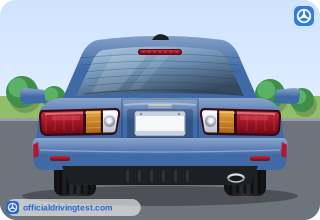
What do your brake lights tell other road users?
- That you are turning
- That you are stopping
- That you are backing up
- That you have your parking lights on
Show answer
Correct answer: That you are stopping
The manual says brake lights tell other road users that you are stopping, just as turn signals tell them that you are turning.
Source: Connecticut Driver's Manual (Revised March 2023), page 11 · Open this page in the manual (Manual page 11)
-
From where should you check that your turn signals, brake lights, taillights and headlights are working?
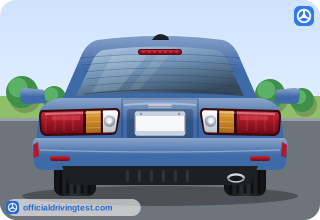
- From the driver’s seat while driving
- From the passenger seat while parked
- From the outside of the vehicle
- From the rear window while the vehicle is moving
Show answer
Correct answer: From the outside of the vehicle
The manual says the lights should be checked from the outside of the vehicle.
Source: Connecticut Driver's Manual (Revised March 2023), page 11 · Open this page in the manual (Manual page 11)
-
What problem can an out-of-line headlight cause?
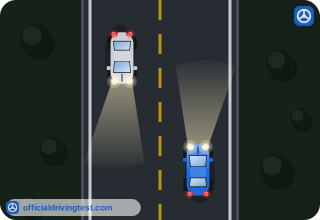
- It can shine where it does not help you and blind other drivers
- It can drain the battery faster than normal while driving
- It can make the brake lights stay on after you stop
- It can cause the turn signals to flash faster than usual
Show answer
Correct answer: It can shine where it does not help you and blind other drivers
The manual says an out-of-line headlight can shine where it does not help you and may blind other drivers.
Source: Connecticut Driver's Manual (Revised March 2023), page 11 · Open this page in the manual (Manual page 11)
-
You have trouble seeing at night, or other drivers often flash their headlights at you. What does the manual say to do?
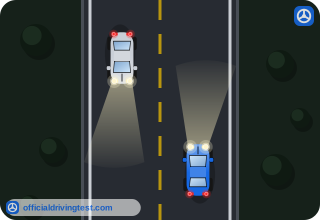
- Have a mechanic check the headlights
- Drive only on well-lit roads after dark
- Switch to your parking lights
- Replace the windshield wipers
Show answer
Correct answer: Have a mechanic check the headlights
The manual says that in these cases you should have a mechanic check the headlights.
Source: Connecticut Driver's Manual (Revised March 2023), page 11 · Open this page in the manual (Manual page 11)
-
What should you clear from your windows before you drive?
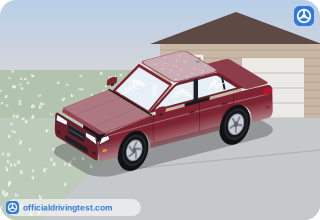
- Snow, ice or frost from the windshield only
- Only the frost on the driver’s side window
- Snow, ice or frost from all windows
- Snow from the roof only
Show answer
Correct answer: Snow, ice or frost from all windows
The manual says to clear snow, ice or frost from all windows before driving.
Source: Connecticut Driver's Manual (Revised March 2023), page 11 · Open this page in the manual (Manual page 11)
-
The windshield wiper blades are not clearing water well. What does the manual say to do?
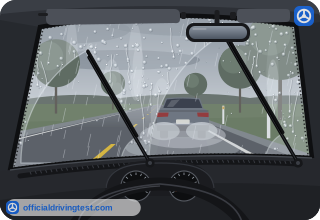
- Turn the wipers to a slower speed
- Replace them
- Wash them with window washer fluid only
- Keep driving until the rain stops
Show answer
Correct answer: Replace them
The manual says that if the blades are not clearing water well, you should replace them.
Source: Connecticut Driver's Manual (Revised March 2023), page 11 · Open this page in the manual (Manual page 11)
-
Why does the manual say you should have a damaged windshield replaced?
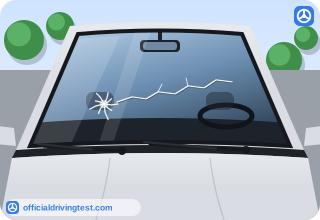
- Damaged glass always makes the vehicle fail its emissions inspection
- Damaged glass makes the headlights shine upward at other drivers
- Damaged glass causes the wiper blades to wear out much faster
- Damaged glass can break very easily in a minor collision or when hit
Show answer
Correct answer: Damaged glass can break very easily in a minor collision or when hit
The manual says damaged glass can break very easily in a minor collision or when something hits the windshield.
Source: Connecticut Driver's Manual (Revised March 2023), page 11 · Open this page in the manual (Manual page 11)
-
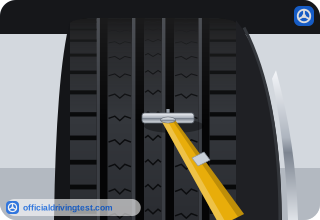
How can worn or bald tires affect your driving when the road is wet?
- Shorter stopping distance and easier turning
- Better grip when the road is wet
- A lower chance of having a flat tire
- Longer stopping distance and harder turning
Show answer
Correct answer: Longer stopping distance and harder turning
The manual says worn or bald tires can increase stopping distance and make turning more difficult on a wet road.
Source: Connecticut Driver's Manual (Revised March 2023), page 11 · Open this page in the manual (Manual page 11)
-
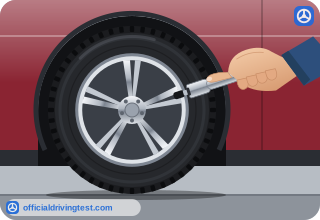
What does the manual say unbalanced tires and low tire pressure cause?
- Slower tire wear, better fuel economy and easier steering
- Faster tire wear, lower fuel economy and harder steering
- Faster tire wear but easier steering and shorter stopping
- Better grip on wet roads and shorter stopping distances
Show answer
Correct answer: Faster tire wear, lower fuel economy and harder steering
The manual says unbalanced tires and low pressure cause faster wear, reduce fuel economy and make the vehicle harder to steer and stop.
Source: Connecticut Driver's Manual (Revised March 2023), page 11 · Open this page in the manual (Manual page 11)
-
The vehicle bounces, the steering wheel shakes or the vehicle pulls to one side, and the manual lists these as tire concerns. What should you do?
- Increase the tire pressure by 10 psi
- Drive more slowly until it stops
- Have a mechanic check it
- Replace the windshield wipers
Show answer
Correct answer: Have a mechanic check it
The manual says that if the vehicle bounces, the steering wheel shakes or the vehicle pulls to one side, you should have a mechanic check it.
Source: Connecticut Driver's Manual (Revised March 2023), page 11 · Open this page in the manual (Manual page 11)
-
Worn tires increase the effect of what?
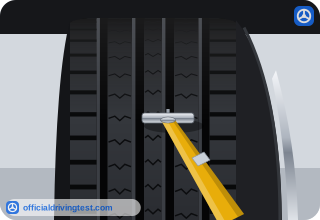
- Hydroplaning
- Brake fade
- Engine overheating
- Windshield glare
Show answer
Correct answer: Hydroplaning
The manual says worn tires increase the effect of hydroplaning and the chance of having a flat tire.
Source: Connecticut Driver's Manual (Revised March 2023), page 11 · Open this page in the manual (Manual page 11)
-
Where can you find the recommended tire pressure (psi) for your vehicle?
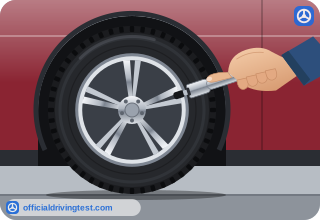
- In the vehicle owner’s manual or on the driver’s side door jamb
- On the sidewall of the spare tire or inside the trunk lid
- On a sticker inside the glove compartment or on the dashboard
- On the registration card or on the license plate
Show answer
Correct answer: In the vehicle owner’s manual or on the driver’s side door jamb
The manual says the recommended psi is located in the owner’s manual or the driver’s side door jamb.
Source: Connecticut Driver's Manual (Revised March 2023), page 11 · Open this page in the manual (Manual page 11)
-
How often does the manual say you should check your tires for wear and damage?
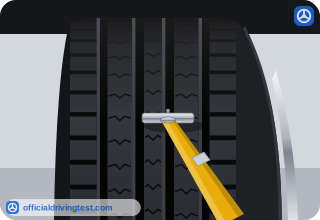
- Once every year at the emissions inspection
- Only when the tires look flat
- Once every month, or before a long road trip
- Every time you buy fuel
Show answer
Correct answer: Once every month, or before a long road trip
The manual says to check the tires once every month, or before a long road trip.
Source: Connecticut Driver's Manual (Revised March 2023), page 11 · Open this page in the manual (Manual page 11)
-
In the “penny test”, what shows that you are driving with a safe amount of tread?
- All of Lincoln’s head is visible above the tread
- Part of Lincoln’s head is covered by the tread
- Lincoln’s head sits loosely in the groove
- The edge of the penny is visible above the tread
Show answer
Correct answer: Part of Lincoln’s head is covered by the tread
The manual says that if any part of Lincoln’s head is covered by the tread, you have a safe amount of tread.
Source: Connecticut Driver's Manual (Revised March 2023), page 11 · Open this page in the manual (Manual page 11)
-
In the penny test, where on the tire should you place Lincoln’s head into a groove?
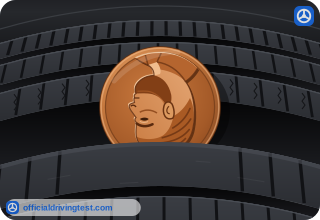
- At a point where the tread appears to be highest
- On the sidewall of the tire
- On the spare tire only
- At a point where the tread appears to be lowest
Show answer
Correct answer: At a point where the tread appears to be lowest
The manual says to select a point on the tire where the tread appears lowest and place Lincoln’s head into one of the grooves.
Source: Connecticut Driver's Manual (Revised March 2023), page 11 · Open this page in the manual (Manual page 11)
-
If your vehicle bounces a lot after a bump or a stop, or is hard to control, what might it need?
- New brake lights and taillights
- A new horn and a new battery
- A replacement steering wheel column
- New shocks or other suspension parts
Show answer
Correct answer: New shocks or other suspension parts
The manual says a vehicle that bounces a lot or is hard to control may need new shocks or other suspension parts.
Source: Connecticut Driver's Manual (Revised March 2023), page 12 · Open this page in the manual (Manual page 12)
-
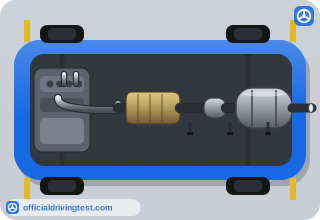
What can gases from a leaky exhaust system do?
- Cause the engine to start more easily in cold weather
- Cause death inside a vehicle in a very short time
- Make the tires wear out much faster than normal
- Cause the brakes to fail without any warning
Show answer
Correct answer: Cause death inside a vehicle in a very short time
The manual warns that gases from a leaky exhaust can cause death inside a vehicle in a very short time.
Source: Connecticut Driver's Manual (Revised March 2023), page 12 · Open this page in the manual (Manual page 12)
-
What does the manual say you should never do because of exhaust gases?
- Drive with the windows open
- Idle the engine for under a minute
- Run the motor in a closed garage
- Park outdoors with the engine off
Show answer
Correct answer: Run the motor in a closed garage
The manual says never to run the motor in a closed garage.
Source: Connecticut Driver's Manual (Revised March 2023), page 12 · Open this page in the manual (Manual page 12)
-
You sit in a vehicle with the motor running for a long time. What does the manual say to do?
- Open a window
- Keep all the windows closed
- Turn the heater to its highest setting
- Sit in the back seat
Show answer
Correct answer: Open a window
The manual says that if you sit in a vehicle with the motor running for a long time, you should open a window.
Source: Connecticut Driver's Manual (Revised March 2023), page 12 · Open this page in the manual (Manual page 12)
-
Which problem does the manual say a poorly running engine may cause?
- It may lose power needed for normal driving and emergencies
- It may make the brakes grab too quickly at low speeds
- It may make the headlights too bright at night
- It may reduce the noise from the exhaust system
Show answer
Correct answer: It may lose power needed for normal driving and emergencies
The manual says a poorly running engine may lose power needed for normal driving and emergencies, may not start, gets poor fuel economy and pollutes the air.
Source: Connecticut Driver's Manual (Revised March 2023), page 12 · Open this page in the manual (Manual page 12)
-
According to the manual, how can the carbon dioxide (CO2) emissions from burning fuel be reduced?
- By driving faster on the highway
- By idling the engine longer before driving
- By improving your car’s fuel efficiency
- By using the horn less often
Show answer
Correct answer: By improving your car’s fuel efficiency
The manual says these emissions can be reduced by improving your car’s fuel efficiency.
Source: Connecticut Driver's Manual (Revised March 2023), page 12 · Open this page in the manual (Manual page 12)
-
Under “Green Driving,” what does the manual say to do before you purchase a vehicle?
- Compare only the purchase prices of different vehicles
- Research the emissions and fuel economy of different vehicles
- Ask the DMV to approve the vehicle
- Have the vehicle painted a light color
Show answer
Correct answer: Research the emissions and fuel economy of different vehicles
The manual’s “Buy smart” advice is to research the emissions and fuel economy of different vehicles before buying.
Source: Connecticut Driver's Manual (Revised March 2023), page 12 · Open this page in the manual (Manual page 12)
-
The vehicle is hard to turn, or does not turn when the steering wheel is first turned. What does the manual say to do?
- Add more air to the tires
- Replace the brake fluid
- Use the horn to warn other drivers
- Have the steering checked by a mechanic
Show answer
Correct answer: Have the steering checked by a mechanic
The manual says to have the steering checked by a mechanic in this case.
Source: Connecticut Driver's Manual (Revised March 2023), page 12 · Open this page in the manual (Manual page 12)
-
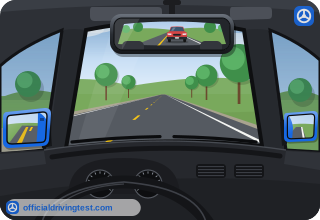
When should you check and adjust your seat and mirrors?
- At the first red light
- After you reach highway speed
- Before you start to drive
- Only when another driver is following closely
Show answer
Correct answer: Before you start to drive
The manual says to check your seat and mirrors before you start to drive and make adjustments before driving off.
Source: Connecticut Driver's Manual (Revised March 2023), page 12 · Open this page in the manual (Manual page 12)
-
What should you be able to see through the rear view mirror once it is adjusted?
- Out the back window
- The side of your vehicle
- The vehicles in the lane beside you
- The road directly in front of the hood
Show answer
Correct answer: Out the back window
The manual says you should be able to see out the back window with the rear view mirror and to the sides with the side mirrors.
Source: Connecticut Driver's Manual (Revised March 2023), page 12 · Open this page in the manual (Manual page 12)
-
What does the manual give as a good adjustment for the side mirrors?
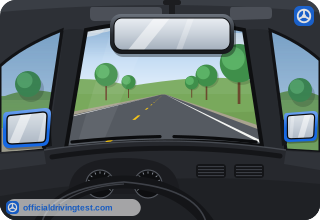
- Set them so you can see the side of your vehicle when you lean forward slightly
- Set them so that you cannot see any part of your own vehicle in them
- Set them so that they point straight at the road behind your vehicle
- Set them so that you must turn your head to see the next lane over
Show answer
Correct answer: Set them so you can see the side of your vehicle when you lean forward slightly
The manual describes a good side mirror setting as one where, when you lean forward slightly, you can see the side of your vehicle.
Source: Connecticut Driver's Manual (Revised March 2023), page 12 · Open this page in the manual (Manual page 12)
-
Why does the manual say there should be no loose objects on the floor of the vehicle?
- They could block the heater vents and fog the windshield
- They could cover the horn and keep it from sounding
- They could roll under the brake pedal and prevent stopping
- They could make the seat belt harder to reach and buckle
Show answer
Correct answer: They could roll under the brake pedal and prevent stopping
The manual says objects on the floor could roll under the brake pedal and prevent you from stopping the vehicle.
Source: Connecticut Driver's Manual (Revised March 2023), page 12 · Open this page in the manual (Manual page 12)
-
What does the manual say about aftermarket changes to equipment such as tinted windows and lighting?
- They are always allowed if the vehicle passes emissions
- They may violate legal standards
- They must be approved by an insurance company
- They are allowed on rear windows only
Show answer
Correct answer: They may violate legal standards
The manual notes that aftermarket changes such as tinted windows and lighting may violate legal standards.
Source: Connecticut Driver's Manual (Revised March 2023), page 12 · Open this page in the manual (Manual page 12)
-
Where should you check for how best to start your vehicle?
- The dashboard warning lights
- The registration card
- The insurance card
- The vehicle owner’s manual
Show answer
Correct answer: The vehicle owner’s manual
The manual says to check the vehicle owner’s manual for how to best start the vehicle.
Source: Connecticut Driver's Manual (Revised March 2023), page 14 · Open this page in the manual (Manual page 14)
-
What must be on before you start the vehicle?
- The parking brake
- The hazard lights
- The headlights
- The windshield wipers
Show answer
Correct answer: The parking brake
The manual says to make sure the parking brake is on before you start the vehicle.
Source: Connecticut Driver's Manual (Revised March 2023), page 14 · Open this page in the manual (Manual page 14)
-
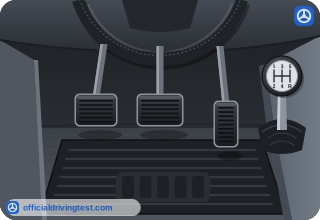
If the vehicle has a manual transmission, how must it be before you start it?
- In first gear
- In reverse
- Not in gear
- In second gear
Show answer
Correct answer: Not in gear
A manual transmission must not be in gear when starting.
Source: Connecticut Driver's Manual (Revised March 2023), page 14 · Open this page in the manual (Manual page 14)
-
In some vehicles with a manual transmission, what must you do to start them?
- Press the accelerator fully
- Depress the clutch
- Release the parking brake
- Turn on the headlights
Show answer
Correct answer: Depress the clutch
The manual says that in some vehicles the clutch must be depressed to start.
Source: Connecticut Driver's Manual (Revised March 2023), page 14 · Open this page in the manual (Manual page 14)
-
For a vehicle with an automatic transmission, where must the shift selector be to start it?
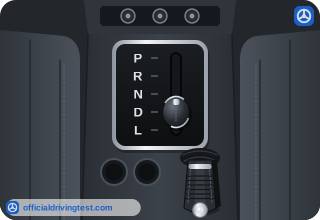
- Neutral
- Drive
- Low
- Park
Show answer
Correct answer: Park
The manual says you must put the shift selector in “park”.
Source: Connecticut Driver's Manual (Revised March 2023), page 14 · Open this page in the manual (Manual page 14)
-
How should you accelerate?
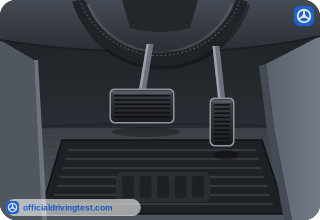
- Gradually and smoothly
- Quickly at first, then gradually
- As fast as the engine allows
- In short, hard bursts
Show answer
Correct answer: Gradually and smoothly
The manual says to accelerate gradually and smoothly.
Source: Connecticut Driver's Manual (Revised March 2023), page 14 · Open this page in the manual (Manual page 14)
-
On slippery surfaces, what can trying to start too fast cause?
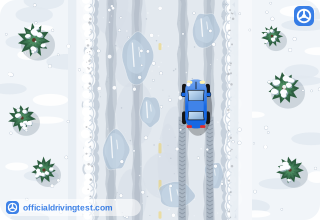
- The tires to gain extra grip on the surface
- The brakes to lock automatically
- The drive wheels to spin and the vehicle to slide
- The steering wheel to lock
Show answer
Correct answer: The drive wheels to spin and the vehicle to slide
Starting too fast can make the drive wheels spin and the vehicle slide, especially on slippery surfaces.
Source: Connecticut Driver's Manual (Revised March 2023), page 14 · Open this page in the manual (Manual page 14)
-
In a manual-shift vehicle, why should you practice using the clutch and accelerator together?
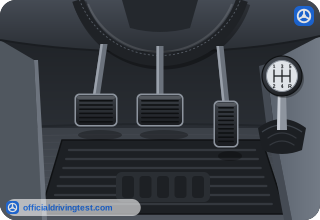
- So the parking brake can be used less often
- So the engine does not over accelerate or stall
- So the vehicle can be started while in gear
- So the brakes are not needed on hills
Show answer
Correct answer: So the engine does not over accelerate or stall
The manual says to practice so the engine does not over accelerate or stall when shifting between gears.
Source: Connecticut Driver's Manual (Revised March 2023), page 14 · Open this page in the manual (Manual page 14)
-
Where should your hands be placed on the steering wheel?
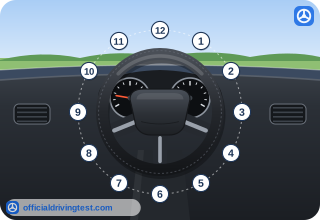
- Both hands at the top of the wheel between 11 and 1 o’clock
- Left hand between 6 and 8 o’clock, right hand between 4 and 6 o’clock
- Left hand between 10 and 12 o’clock, right hand between 12 and 2 o’clock
- Left hand between 8 and 10 o’clock, right hand between 2 and 4 o’clock
Show answer
Correct answer: Left hand between 8 and 10 o’clock, right hand between 2 and 4 o’clock
The manual gives left hand between 8 and 10 o’clock and right hand between 2 and 4 o’clock, on opposite sides of the wheel.
Source: Connecticut Driver's Manual (Revised March 2023), page 14 · Open this page in the manual (Manual page 14)
-
On high-speed roads, what does the recommended hand position on the steering wheel allow you to do?
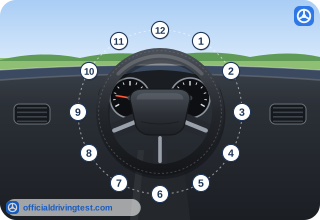
- Make turns without taking your hands from the wheel
- Steer with one hand while resting the other
- Turn the wheel without looking at the road
- Brake without using your foot
Show answer
Correct answer: Make turns without taking your hands from the wheel
The manual says this position allows turns on high-speed roads without taking your hands from the wheel.
Source: Connecticut Driver's Manual (Revised March 2023), page 14 · Open this page in the manual (Manual page 14)
-
Which technique should you use to turn the steering wheel when turning sharp corners?
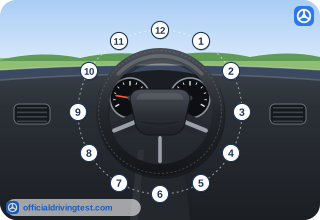
- Palm-to-palm turning
- One-handed turning
- Hand-over-hand
- Letting the wheel slide through your fingers
Show answer
Correct answer: Hand-over-hand
The manual says to use the "hand-over-hand" technique for sharp corners.
Source: Connecticut Driver's Manual (Revised March 2023), page 14 · Open this page in the manual (Manual page 14)
-
What does the manual say about letting the steering wheel slip through your fingers to straighten it after a turn?
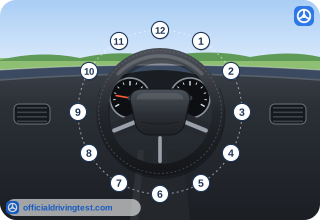
- It is the best way to straighten the wheel
- It could be dangerous
- It is allowed only on highways
- It saves effort on slow turns
Show answer
Correct answer: It could be dangerous
You should straighten the wheel by hand; letting it slip through your fingers could be dangerous.
Source: Connecticut Driver's Manual (Revised March 2023), page 14 · Open this page in the manual (Manual page 14)
-
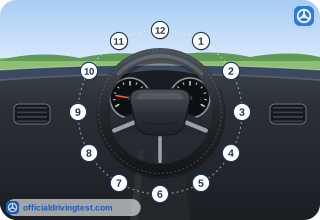
In the Push/Pull steering method, which way should the driver’s knuckles face?
- Inward
- Upward
- Downward
- Outward
Show answer
Correct answer: Outward
The manual says knuckles should be facing outward in the Push/Pull method.
Source: Connecticut Driver's Manual (Revised March 2023), page 14 · Open this page in the manual (Manual page 14)
-
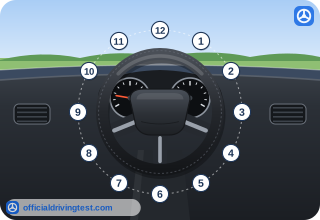
In the Push/Pull method, to which position do you first push one hand, letting the wheel slide through the other hand?
- 12 o’clock
- 3 o’clock
- 6 o’clock
- 9 o’clock
Show answer
Correct answer: 12 o’clock
The manual says to push one hand to the 12 o’clock position.
Source: Connecticut Driver's Manual (Revised March 2023), page 14 · Open this page in the manual (Manual page 14)
-
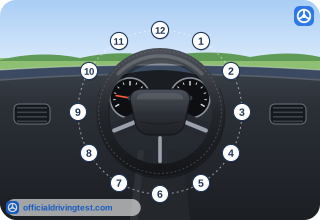
In the Push/Pull method, after pushing a hand to 12 o’clock, where do you bring that hand before pulling down?
- To the 3 or 9 o’clock position
- To the 4 or 8 o’clock position
- To the 1 or 11 o’clock position
- To the 6 o’clock position
Show answer
Correct answer: To the 1 or 11 o’clock position
The manual says to bring that hand to the 1 or 11 o’clock position and then pull down.
Source: Connecticut Driver's Manual (Revised March 2023), page 14 · Open this page in the manual (Manual page 14)
-
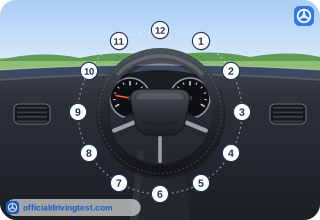
When the Push/Pull method is done correctly, what do the two hands do?
- Cross at the top of the wheel each time
- Never cross and stay on the wheel at all times
- Leave the wheel briefly between pushes
- Stay at 8 and 4 o’clock without moving
Show answer
Correct answer: Never cross and stay on the wheel at all times
Done correctly, the two hands will never cross and will remain on the wheel at all times.
Source: Connecticut Driver's Manual (Revised March 2023), page 14 · Open this page in the manual (Manual page 14)
-
When must you use your headlights?
- Only when it is raining outside
- At night and when it is hard to see
- Only after midnight until dawn
- Only on roads without street lights
Show answer
Correct answer: At night and when it is hard to see
The manual says you must use your headlights at night and at other times when it’s hard to see.
Source: Connecticut Driver's Manual (Revised March 2023), page 24 · Open this page in the manual (Manual page 24)
-
Before you switch lanes, what does the manual say you must not fail to do?
- Sound your horn
- Signal your intention first
- Flash your headlights
- Turn on your hazard lights
Show answer
Correct answer: Signal your intention first
The manual says not to switch lanes without first signaling your intention, and not to cut someone off.
Source: Connecticut Driver's Manual (Revised March 2023), page 26 · Open this page in the manual (Manual page 26)
-
After you have finished a lane change, what should you do with your signal?
- Leave it on for several seconds
- Flash it once more
- Leave it on until the next turn
- Turn it off
Show answer
Correct answer: Turn it off
The manual says to turn your signal off after you have made the maneuver.
Source: Connecticut Driver's Manual (Revised March 2023), page 26 · Open this page in the manual (Manual page 26)
-
To get someone’s attention in a non-emergency situation, how should you use your horn?
- Sound it in two long blasts
- Hold it down until they respond
- Tap it lightly
- Sound it three times in a row
Show answer
Correct answer: Tap it lightly
The manual says to use the horn sparingly and, in a non-emergency, to tap it lightly.
Source: Connecticut Driver's Manual (Revised March 2023), page 26 · Open this page in the manual (Manual page 26)
-
What does the manual say about your horn when the light turns green?
- Tap it once to let the driver ahead know it has turned green
- Do not blow it at the driver ahead as soon as it turns green
- Sound it twice if the driver ahead has not moved
- Hold it briefly so that the driver ahead moves
Show answer
Correct answer: Do not blow it at the driver ahead as soon as it turns green
The manual says not to blow your horn at the driver in front of you the second the light turns green, because a stressed-out motorist may be set off.
Source: Connecticut Driver's Manual (Revised March 2023), page 26 · Open this page in the manual (Manual page 26)
-
Why does the manual say to think twice before using your horn to say “hello” to a pedestrian?
- Pedestrians may mistake the sound for an emergency
- Using the horn near pedestrians is against state law
- The horn may startle drivers in the next lane
- The driver ahead may think you are honking at them
Show answer
Correct answer: The driver ahead may think you are honking at them
The manual says the driver in front of you may think you are honking at him or her.
Source: Connecticut Driver's Manual (Revised March 2023), page 26 · Open this page in the manual (Manual page 26)
-
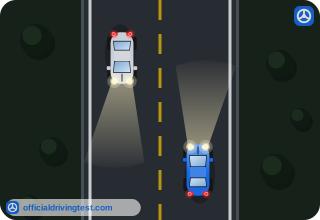
What should you do with your headlights for oncoming traffic?
- Switch to high beam
- Flash them
- Turn them off
- Dim them
Show answer
Correct answer: Dim them
The manual says to dim your lights for oncoming traffic.
Source: Connecticut Driver's Manual (Revised March 2023), page 26 · Open this page in the manual (Manual page 26)
-
An oncoming driver uses high beams. What does the manual say about your response?
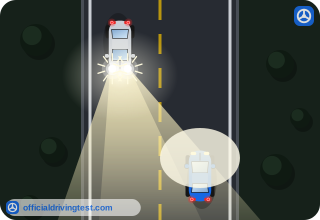
- Do not retaliate with your own high beams
- Keep your high beams on until the other driver dims
- Switch to high beam so you can see past the glare
- Turn your headlights off until the vehicle passes
Show answer
Correct answer: Do not retaliate with your own high beams
The manual says not to retaliate to oncoming high beams with your own to “teach them a lesson.”
Source: Connecticut Driver's Manual (Revised March 2023), page 26 · Open this page in the manual (Manual page 26)
-
If your vehicle has an anti-theft alarm, what should you learn to do?
- Set it to sound louder
- Arm it from a distance
- Turn it off quickly
- Switch it to silent mode
Show answer
Correct answer: Turn it off quickly
The manual says to learn how to turn an anti-theft alarm off quickly.
Source: Connecticut Driver's Manual (Revised March 2023), page 26 · Open this page in the manual (Manual page 26)
-
When buying an anti-theft alarm, which kind should you select?
- One that keeps sounding until it is reset
- One that turns off after a short period
- One with the loudest siren available
- One that sounds only when the horn is pressed
Show answer
Correct answer: One that turns off after a short period
The manual says to select an alarm that turns off after a short period of time.
Source: Connecticut Driver's Manual (Revised March 2023), page 26 · Open this page in the manual (Manual page 26)
-
When should you use your right turn signal in a roundabout?
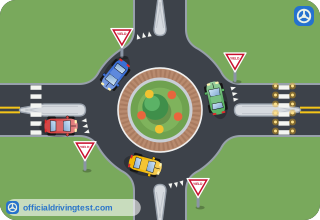
- When you are about to reach your intended exit point
- As you first enter the roundabout
- Never, because you are only driving in a circle
- Only when you pass the first exit
Show answer
Correct answer: When you are about to reach your intended exit point
Signal right as you are about to reach your exit point.
Source: Connecticut Driver's Manual (Revised March 2023), page 37 · Open this page in the manual (Manual page 37)
-
Under Connecticut law, what must you do when you turn on your windshield wipers?
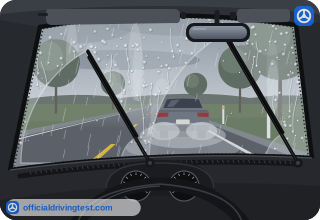
- Turn on your headlights too
- Turn on your high beams
- Turn on your hazard flashers
- Slow down to 25 mph
Show answer
Correct answer: Turn on your headlights too
The manual says that if you turn on your wipers, you must turn on your headlights, and it adds “It’s the law.”
Source: Connecticut Driver's Manual (Revised March 2023), page 38 · Open this page in the manual (Manual page 38)
-
When are parking lights meant to be used?
- When it begins to get dark
- When driving in light fog
- Only on parked vehicles
- When following another vehicle
Show answer
Correct answer: Only on parked vehicles
The manual says parking lights are for parked vehicles only, and you should never drive with only your parking lights on.
Source: Connecticut Driver's Manual (Revised March 2023), page 38 · Open this page in the manual (Manual page 38)
-
Why does the manual tell you to turn on your headlights when driving away from a rising or setting sun?
- The sun may make your own dashboard lights hard to read
- Drivers coming toward you may have trouble seeing your vehicle
- Your low beams are needed to see the road ahead of you
- Oncoming drivers must be warned to dim their high beams
Show answer
Correct answer: Drivers coming toward you may have trouble seeing your vehicle
Headlights help oncoming drivers see your vehicle when the sun is low behind you.
Source: Connecticut Driver's Manual (Revised March 2023), page 38 · Open this page in the manual (Manual page 38)
-
If you turn your headlights on a little early when it begins to get dark, what does it do?
- It saves energy for the battery
- It lets you use your high beams earlier
- It makes your parking lights unnecessary
- It helps other drivers see you
Show answer
Correct answer: It helps other drivers see you
The manual says that even if you turn them on a little early, you will help other drivers see you.
Source: Connecticut Driver's Manual (Revised March 2023), page 38 · Open this page in the manual (Manual page 38)
-
While driving, what does the manual say you can do with your headlights, if necessary, to tell other road users you are there?
- Flash your high beams
- Turn on your parking lights only
- Turn on your interior dome light
- Tap your brake pedal four times
Show answer
Correct answer: Flash your high beams
The manual says that if necessary you should flash your high beams to tell other road users you are there.
Source: Connecticut Driver's Manual (Revised March 2023), page 38 · Open this page in the manual (Manual page 38)
-
How much farther do high beams let you see than low beams?
- One and a half times as far
- Three times as far
- Twice as far
- The same distance, but brighter
Show answer
Correct answer: Twice as far
The manual states that high beams let you see twice as far as low beams.
Source: Connecticut Driver's Manual (Revised March 2023), page 38 · Open this page in the manual (Manual page 38)
-
About how close to an oncoming vehicle should you dim your high beams?
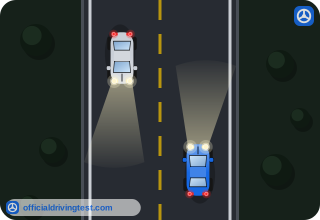
- About two blocks
- About half a block
- About one mile
- About one block
Show answer
Correct answer: About one block
The manual tells you to dim high beams whenever you come within about a one-block distance of an oncoming vehicle.
Source: Connecticut Driver's Manual (Revised March 2023), page 38 · Open this page in the manual (Manual page 38)
-
Which headlight setting should you use when following another vehicle or when in heavy traffic?
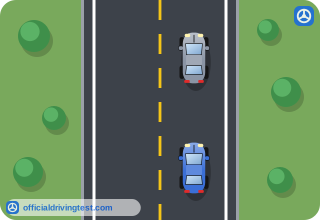
- Low beams
- High beams
- Parking lights only
- Fog lights only
Show answer
Correct answer: Low beams
The manual says to use your low beams when following another vehicle or when in heavy traffic.
Source: Connecticut Driver's Manual (Revised March 2023), page 38 · Open this page in the manual (Manual page 38)
-
Why should you use low beams instead of high beams in fog or when it is snowing or raining hard?
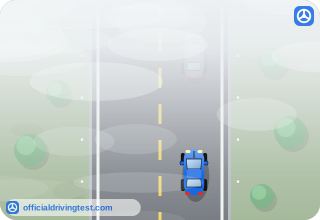
- Low beams light the road twice as far
- High beams drain the battery in wet weather
- High beam light reflects back and causes glare
- Low beams are required whenever wipers are off
Show answer
Correct answer: High beam light reflects back and causes glare
Light from high beams reflects back, causing glare and making it harder to see ahead.
Source: Connecticut Driver's Manual (Revised March 2023), page 38 · Open this page in the manual (Manual page 38)
-
A vehicle comes toward you with its high beams on. What should you do first?
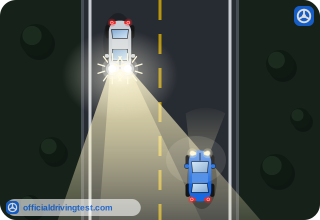
- Keep your high beams on until it dims
- Flash your headlights a couple of times
- Sound a sharp blast on your horn
- Slow down and stop on the shoulder
Show answer
Correct answer: Flash your headlights a couple of times
The manual says to flash your headlights quickly a couple of times to signal the other driver to dim.
Source: Connecticut Driver's Manual (Revised March 2023), page 38 · Open this page in the manual (Manual page 38)
-
An oncoming driver fails to dim high beams after you flash your headlights. Where should you look?
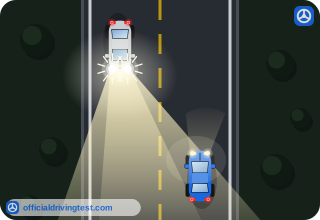
- Toward the center line
- Directly at the oncoming headlights
- Down at your dashboard
- Toward the right side of the road
Show answer
Correct answer: Toward the right side of the road
Looking toward the right side of the road keeps you from being blinded and lets you see the edge of the road to stay on course.
Source: Connecticut Driver's Manual (Revised March 2023), page 38 · Open this page in the manual (Manual page 38)
-
Why should you not try to “get back” at another driver by keeping your bright lights on?
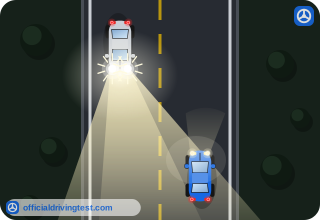
- Both of you may be blinded
- It is illegal to use high beams at night
- It will make the other driver turn off their lights
- It will damage your headlights
Show answer
Correct answer: Both of you may be blinded
The manual warns that if you keep your bright lights on to get back at another driver, both of you may be blinded.
Source: Connecticut Driver's Manual (Revised March 2023), page 38 · Open this page in the manual (Manual page 38)
-
If there is no immediate danger, how should you use your horn?
- Sound a sharp blast
- Give it a light tap
- Hold it down for several seconds
- Not use it at all
Show answer
Correct answer: Give it a light tap
The manual says that if there is no immediate danger, a light tap on the horn should be all you need.
Source: Connecticut Driver's Manual (Revised March 2023), page 38 · Open this page in the manual (Manual page 38)
-
When should you give your horn a light tap?
- A child is about to run into the street
- You have lost control and are moving toward someone
- Another vehicle is in danger of hitting you
- A person on foot or on a bike moves into your lane
Show answer
Correct answer: A person on foot or on a bike moves into your lane
A light tap is for a person on foot or on a bike who appears to be moving into your lane of travel.
Source: Connecticut Driver's Manual (Revised March 2023), page 38 · Open this page in the manual (Manual page 38)
-
In which situation does the manual tell you to sound a sharp blast on your horn?
- A child or older person is about to walk into the street
- A driver is not paying attention to your vehicle
- A driver ahead is moving slower than the speed limit
- A pedestrian is walking on the far sidewalk
Show answer
Correct answer: A child or older person is about to walk into the street
A sharp blast is for danger, such as a child or older person about to walk, run, or ride into the street.
Source: Connecticut Driver's Manual (Revised March 2023), page 38 · Open this page in the manual (Manual page 38)
-
Which is an occasion when you should not use your horn?
- To warn a driver who may have trouble seeing you
- To avoid being hit by another vehicle
- To greet a friend
- To get a pedestrian's attention before they step into your lane
Show answer
Correct answer: To greet a friend
The manual lists greeting a friend among the occasions when you should not use your horn.
Source: Connecticut Driver's Manual (Revised March 2023), page 38 · Open this page in the manual (Manual page 38)
-
What does the manual say about using your horn around blind pedestrians?
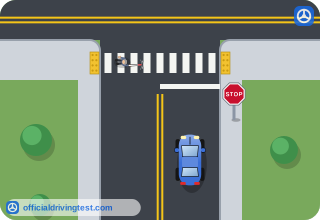
- You should use a sharp blast
- You should not use it
- You should give a light tap
- You should use it only at night
Show answer
Correct answer: You should not use it
Around blind pedestrians is listed under “When Not to Use Your Horn.”
Source: Connecticut Driver's Manual (Revised March 2023), page 38 · Open this page in the manual (Manual page 38)
-
What should you do with your horn when approaching horses?
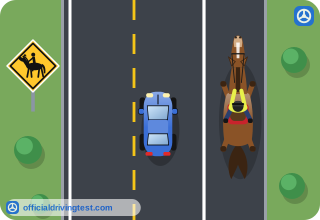
- Give it a light tap
- Sound a sharp blast
- Sound it twice
- Not use it
Show answer
Correct answer: Not use it
Approaching horses is one of the occasions listed when you should not use your horn.
Source: Connecticut Driver's Manual (Revised March 2023), page 38 · Open this page in the manual (Manual page 38)
-
What does the manual say about using your horn to encourage someone to drive faster or get out of the way?
- You should not do it
- It is allowed with a light tap
- It is allowed with a sharp blast
- It is required when traffic is slow
Show answer
Correct answer: You should not do it
The manual lists encouraging someone to drive faster or get out of the way as a time not to use the horn.
Source: Connecticut Driver's Manual (Revised March 2023), page 38 · Open this page in the manual (Manual page 38)
-
Before which actions should you use your turn signals or a hand signal?
- Turning left or right and changing lanes on the freeway only
- Turning at intersections and changing lanes only
- Changing lanes, turning, merging into traffic, or parking
- Turning and parking when other cars are visible
Show answer
Correct answer: Changing lanes, turning, merging into traffic, or parking
The manual says to signal before you change lanes, turn, merge into traffic, or park.
Source: Connecticut Driver's Manual (Revised March 2023), page 38 · Open this page in the manual (Manual page 38)
-
Besides when you change direction, when must you warn other drivers with a signal?
- When you are going faster than traffic
- When you are going to slow down
- When you pass a parked vehicle
- When you turn on your wipers
Show answer
Correct answer: When you are going to slow down
The manual says you must warn other drivers when you are going to change direction or slow down.
Source: Connecticut Driver's Manual (Revised March 2023), page 38 · Open this page in the manual (Manual page 38)
-
When should you signal that you are changing direction?
- Only when other vehicles are nearby
- Only at intersections
- Only when pedestrians are present
- Every time, even if no one is around
Show answer
Correct answer: Every time, even if no one is around
The manual says to signal every time you change direction, because it is easy to miss someone who needs to know what you are doing.
Source: Connecticut Driver's Manual (Revised March 2023), page 39 · Open this page in the manual (Manual page 39)
-
How far ahead of your move should you try to signal?
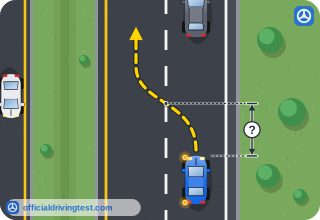
- At least three seconds before
- At least one second before
- At least ten seconds before
- Only as you begin to turn
Show answer
Correct answer: At least three seconds before
The manual says to try to signal at least three seconds before you make your move.
Source: Connecticut Driver's Manual (Revised March 2023), page 39 · Open this page in the manual (Manual page 39)
-
You want to turn into a driveway just after an intersection. When should you signal?
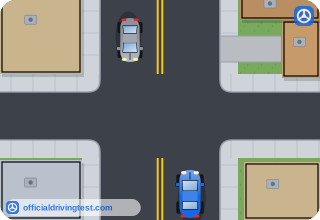
- As soon as you see the driveway
- After you pass the intersection
- When you reach the intersection
- Only after you have started to turn
Show answer
Correct answer: When you reach the intersection
If streets, driveways, intersections or entrances lie between you and your turn, wait until you reach that point before signaling.
Source: Connecticut Driver's Manual (Revised March 2023), page 39 · Open this page in the manual (Manual page 39)
-
Another vehicle is about to enter the street between you and where you plan to turn. When should you signal your turn?
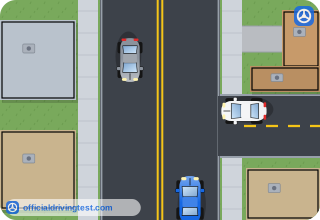
- Right away, so it knows your plan
- After you have passed it
- Only after you have turned
- Never, in that situation
Show answer
Correct answer: After you have passed it
If you signal earlier, the other driver may think you plan to turn where they are and might pull into your path.
Source: Connecticut Driver's Manual (Revised March 2023), page 39 · Open this page in the manual (Manual page 39)
-
After a small turn or lane change, what should you check?
- That your high beams are on
- That your hazard flashers are on
- That your parking brake is set
- That your turn signal is off
Show answer
Correct answer: That your turn signal is off
After small turns the signals may not turn off by themselves, and others might think you plan to turn again.
Source: Connecticut Driver's Manual (Revised March 2023), page 39 · Open this page in the manual (Manual page 39)
-
What do your brake lights let other people know?
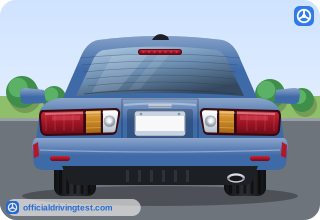
- That you are slowing down
- That you are about to turn
- That your vehicle has broken down
- That you are about to pass
Show answer
Correct answer: That you are slowing down
The manual says brake lights let people know that you are slowing down.
Source: Connecticut Driver's Manual (Revised March 2023), page 39 · Open this page in the manual (Manual page 39)
-
When you slow down, how early should you do so?
- Only at the last moment
- Only when the car behind you is far away
- As early as it is safe to do so
- Only after you signal for three seconds
Show answer
Correct answer: As early as it is safe to do so
The manual says to always slow down as early as it is safe to do so.
Source: Connecticut Driver's Manual (Revised March 2023), page 39 · Open this page in the manual (Manual page 39)
-
If you will stop or slow down where another driver does not expect it, what should you do?
- Press the brake pedal once and hold it down firmly
- Tap your brake pedal quickly three or four times
- Flash your high beams a couple of times
- Turn on your hazard lights and slow down
Show answer
Correct answer: Tap your brake pedal quickly three or four times
Tapping the brake pedal three or four times warns those behind you that you are about to slow down.
Source: Connecticut Driver's Manual (Revised March 2023), page 39 · Open this page in the manual (Manual page 39)
-
When should you tap your brake pedal to warn drivers behind you?
- When driving at a steady speed on a straight roadway
- When another driver is following too closely behind you
- When a pedestrian waves at you from the sidewalk
- When turning off a roadway that has no separate turn or exit lanes
Show answer
Correct answer: When turning off a roadway that has no separate turn or exit lanes
The manual lists turning off a roadway without separate turn or exit lanes among the places drivers behind may not expect you to slow.
Source: Connecticut Driver's Manual (Revised March 2023), page 39 · Open this page in the manual (Manual page 39)
-
In the hand signal pictured as “Left Turn,” how does the driver hold their arm?
- Straight out to the left
- Bent upward
- Pointing downward
- Pointing straight forward over the hood
Show answer
Correct answer: Straight out to the left
In the manual's hand-signal picture, the left-turn signal shows the driver's left arm extended straight out the window.
Source: Connecticut Driver's Manual (Revised March 2023), page 39 · Open this page in the manual (Manual page 39)
-
In the hand signal pictured as “Right Turn,” how does the driver hold their arm?
- Straight out to the left
- Pointing downward
- Bent upward
- Folded across the chest
Show answer
Correct answer: Bent upward
In the manual's hand-signal picture, the right-turn signal shows the driver's arm bent upward out the window.
Source: Connecticut Driver's Manual (Revised March 2023), page 39 · Open this page in the manual (Manual page 39)
-
In the hand signal pictured as “Slow or Stop,” how does the driver hold their arm?
- Bent upward
- Pointing downward
- Straight out to the left
- Waving back and forth
Show answer
Correct answer: Pointing downward
In the manual's hand-signal picture, the slow-or-stop signal shows the driver's arm pointing downward out the window.
Source: Connecticut Driver's Manual (Revised March 2023), page 39 · Open this page in the manual (Manual page 39)