Connecticut: Signals and vehicle controls — Part 2 Practice Test
Questions in this part include: “In the “penny test”, what shows that you are driving with a safe amount of tread?” · “Under “Green Driving,” what does the manual say to do before you purchase a vehicle?”
Independent educational site · not affiliated with any government agency or DMV
Ready? Test yourself
- Instant feedback with an explanation
- Every answer cites its source in the manual
- Your best score is saved on this device
Questions are original and based on the official manual "Connecticut Driver's Manual" (Revised March 2023), Connecticut Department of Motor Vehicles (DMV).
All 20 questions in this practice test
Take the test above first, then use this list to study. Tap “Show answer” to see the correct answer and explanation.
Show the questions and answersHide the questions
-
Where can you find the recommended tire pressure (psi) for your vehicle?
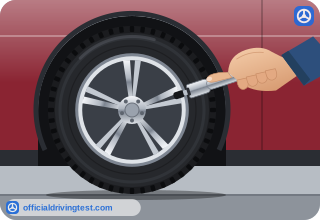
- In the vehicle owner’s manual or on the driver’s side door jamb
- On the sidewall of the spare tire or inside the trunk lid
- On a sticker inside the glove compartment or on the dashboard
- On the registration card or on the license plate
Show answer
Correct answer: In the vehicle owner’s manual or on the driver’s side door jamb
The manual says the recommended psi is located in the owner’s manual or the driver’s side door jamb.
Source: Connecticut Driver's Manual (Revised March 2023), page 11 · Open this page in the manual (Manual page 11)
-
How often does the manual say you should check your tires for wear and damage?
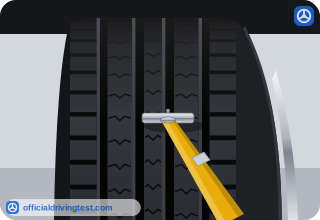
- Once every year at the emissions inspection
- Only when the tires look flat
- Once every month, or before a long road trip
- Every time you buy fuel
Show answer
Correct answer: Once every month, or before a long road trip
The manual says to check the tires once every month, or before a long road trip.
Source: Connecticut Driver's Manual (Revised March 2023), page 11 · Open this page in the manual (Manual page 11)
-
In the “penny test”, what shows that you are driving with a safe amount of tread?
- All of Lincoln’s head is visible above the tread
- Part of Lincoln’s head is covered by the tread
- Lincoln’s head sits loosely in the groove
- The edge of the penny is visible above the tread
Show answer
Correct answer: Part of Lincoln’s head is covered by the tread
The manual says that if any part of Lincoln’s head is covered by the tread, you have a safe amount of tread.
Source: Connecticut Driver's Manual (Revised March 2023), page 11 · Open this page in the manual (Manual page 11)
-
In the penny test, where on the tire should you place Lincoln’s head into a groove?
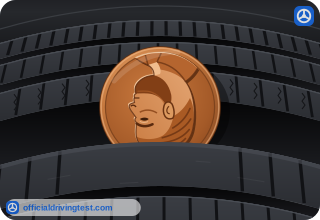
- At a point where the tread appears to be highest
- On the sidewall of the tire
- On the spare tire only
- At a point where the tread appears to be lowest
Show answer
Correct answer: At a point where the tread appears to be lowest
The manual says to select a point on the tire where the tread appears lowest and place Lincoln’s head into one of the grooves.
Source: Connecticut Driver's Manual (Revised March 2023), page 11 · Open this page in the manual (Manual page 11)
-
If your vehicle bounces a lot after a bump or a stop, or is hard to control, what might it need?
- New brake lights and taillights
- A new horn and a new battery
- A replacement steering wheel column
- New shocks or other suspension parts
Show answer
Correct answer: New shocks or other suspension parts
The manual says a vehicle that bounces a lot or is hard to control may need new shocks or other suspension parts.
Source: Connecticut Driver's Manual (Revised March 2023), page 12 · Open this page in the manual (Manual page 12)
-
What can gases from a leaky exhaust system do?
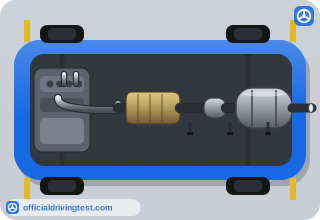
- Cause the engine to start more easily in cold weather
- Cause death inside a vehicle in a very short time
- Make the tires wear out much faster than normal
- Cause the brakes to fail without any warning
Show answer
Correct answer: Cause death inside a vehicle in a very short time
The manual warns that gases from a leaky exhaust can cause death inside a vehicle in a very short time.
Source: Connecticut Driver's Manual (Revised March 2023), page 12 · Open this page in the manual (Manual page 12)
-
What does the manual say you should never do because of exhaust gases?
- Drive with the windows open
- Idle the engine for under a minute
- Run the motor in a closed garage
- Park outdoors with the engine off
Show answer
Correct answer: Run the motor in a closed garage
The manual says never to run the motor in a closed garage.
Source: Connecticut Driver's Manual (Revised March 2023), page 12 · Open this page in the manual (Manual page 12)
-
You sit in a vehicle with the motor running for a long time. What does the manual say to do?
- Open a window
- Keep all the windows closed
- Turn the heater to its highest setting
- Sit in the back seat
Show answer
Correct answer: Open a window
The manual says that if you sit in a vehicle with the motor running for a long time, you should open a window.
Source: Connecticut Driver's Manual (Revised March 2023), page 12 · Open this page in the manual (Manual page 12)
-
Which problem does the manual say a poorly running engine may cause?
- It may lose power needed for normal driving and emergencies
- It may make the brakes grab too quickly at low speeds
- It may make the headlights too bright at night
- It may reduce the noise from the exhaust system
Show answer
Correct answer: It may lose power needed for normal driving and emergencies
The manual says a poorly running engine may lose power needed for normal driving and emergencies, may not start, gets poor fuel economy and pollutes the air.
Source: Connecticut Driver's Manual (Revised March 2023), page 12 · Open this page in the manual (Manual page 12)
-
According to the manual, how can the carbon dioxide (CO2) emissions from burning fuel be reduced?
- By driving faster on the highway
- By idling the engine longer before driving
- By improving your car’s fuel efficiency
- By using the horn less often
Show answer
Correct answer: By improving your car’s fuel efficiency
The manual says these emissions can be reduced by improving your car’s fuel efficiency.
Source: Connecticut Driver's Manual (Revised March 2023), page 12 · Open this page in the manual (Manual page 12)
-
Under “Green Driving,” what does the manual say to do before you purchase a vehicle?
- Compare only the purchase prices of different vehicles
- Research the emissions and fuel economy of different vehicles
- Ask the DMV to approve the vehicle
- Have the vehicle painted a light color
Show answer
Correct answer: Research the emissions and fuel economy of different vehicles
The manual’s “Buy smart” advice is to research the emissions and fuel economy of different vehicles before buying.
Source: Connecticut Driver's Manual (Revised March 2023), page 12 · Open this page in the manual (Manual page 12)
-
The vehicle is hard to turn, or does not turn when the steering wheel is first turned. What does the manual say to do?
- Add more air to the tires
- Replace the brake fluid
- Use the horn to warn other drivers
- Have the steering checked by a mechanic
Show answer
Correct answer: Have the steering checked by a mechanic
The manual says to have the steering checked by a mechanic in this case.
Source: Connecticut Driver's Manual (Revised March 2023), page 12 · Open this page in the manual (Manual page 12)
-
When should you check and adjust your seat and mirrors?
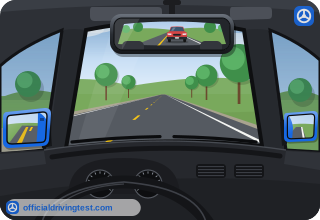
- At the first red light
- After you reach highway speed
- Before you start to drive
- Only when another driver is following closely
Show answer
Correct answer: Before you start to drive
The manual says to check your seat and mirrors before you start to drive and make adjustments before driving off.
Source: Connecticut Driver's Manual (Revised March 2023), page 12 · Open this page in the manual (Manual page 12)
-
What should you be able to see through the rear view mirror once it is adjusted?
- Out the back window
- The side of your vehicle
- The vehicles in the lane beside you
- The road directly in front of the hood
Show answer
Correct answer: Out the back window
The manual says you should be able to see out the back window with the rear view mirror and to the sides with the side mirrors.
Source: Connecticut Driver's Manual (Revised March 2023), page 12 · Open this page in the manual (Manual page 12)
-
What does the manual give as a good adjustment for the side mirrors?
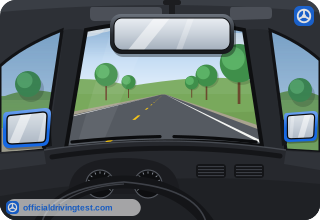
- Set them so you can see the side of your vehicle when you lean forward slightly
- Set them so that you cannot see any part of your own vehicle in them
- Set them so that they point straight at the road behind your vehicle
- Set them so that you must turn your head to see the next lane over
Show answer
Correct answer: Set them so you can see the side of your vehicle when you lean forward slightly
The manual describes a good side mirror setting as one where, when you lean forward slightly, you can see the side of your vehicle.
Source: Connecticut Driver's Manual (Revised March 2023), page 12 · Open this page in the manual (Manual page 12)
-
Why does the manual say there should be no loose objects on the floor of the vehicle?
- They could block the heater vents and fog the windshield
- They could cover the horn and keep it from sounding
- They could roll under the brake pedal and prevent stopping
- They could make the seat belt harder to reach and buckle
Show answer
Correct answer: They could roll under the brake pedal and prevent stopping
The manual says objects on the floor could roll under the brake pedal and prevent you from stopping the vehicle.
Source: Connecticut Driver's Manual (Revised March 2023), page 12 · Open this page in the manual (Manual page 12)
-
What does the manual say about aftermarket changes to equipment such as tinted windows and lighting?
- They are always allowed if the vehicle passes emissions
- They may violate legal standards
- They must be approved by an insurance company
- They are allowed on rear windows only
Show answer
Correct answer: They may violate legal standards
The manual notes that aftermarket changes such as tinted windows and lighting may violate legal standards.
Source: Connecticut Driver's Manual (Revised March 2023), page 12 · Open this page in the manual (Manual page 12)
-
Where should you check for how best to start your vehicle?
- The dashboard warning lights
- The registration card
- The insurance card
- The vehicle owner’s manual
Show answer
Correct answer: The vehicle owner’s manual
The manual says to check the vehicle owner’s manual for how to best start the vehicle.
Source: Connecticut Driver's Manual (Revised March 2023), page 14 · Open this page in the manual (Manual page 14)
-
What must be on before you start the vehicle?
- The parking brake
- The hazard lights
- The headlights
- The windshield wipers
Show answer
Correct answer: The parking brake
The manual says to make sure the parking brake is on before you start the vehicle.
Source: Connecticut Driver's Manual (Revised March 2023), page 14 · Open this page in the manual (Manual page 14)
-
If the vehicle has a manual transmission, how must it be before you start it?
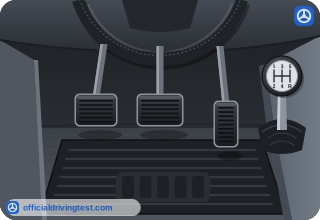
- In first gear
- In reverse
- Not in gear
- In second gear
Show answer
Correct answer: Not in gear
A manual transmission must not be in gear when starting.
Source: Connecticut Driver's Manual (Revised March 2023), page 14 · Open this page in the manual (Manual page 14)