Connecticut: Signals and vehicle controls — Part 1 Practice Test
Questions in this part include: “Besides using turn signals every time it is appropriate, what else should you be able to do during the road test?” · “According to the manual, whose duty is it to make certain that the vehicles being driven are safe to operate?”
Independent educational site · not affiliated with any government agency or DMV
Ready? Test yourself
- Instant feedback with an explanation
- Every answer cites its source in the manual
- Your best score is saved on this device
Questions are original and based on the official manual "Connecticut Driver's Manual" (Revised March 2023), Connecticut Department of Motor Vehicles (DMV).
All 20 questions in this practice test
Take the test above first, then use this list to study. Tap “Show answer” to see the correct answer and explanation.
Show the questions and answersHide the questions
-
During the road test, what should you do before you shift the car into gear from the "park" position?
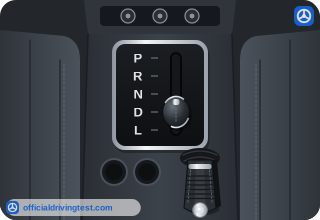
- Turn on the signal
- Check the oil
- Tap the horn
- Apply the brake
Show answer
Correct answer: Apply the brake
The manual says to apply the brake before shifting the car into gear from the "park" position.
Source: Connecticut Driver's Manual (Revised March 2023), page 7 · Open this page in the manual (Manual page 7)
-
For the road test, how should the windows and mirrors be?
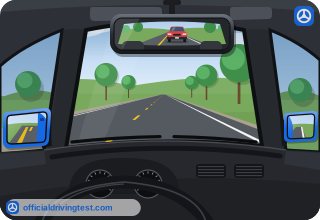
- Cleaned and defogged
- Tinted and covered
- Partly fogged
- Left as they are
Show answer
Correct answer: Cleaned and defogged
You must be able to see clearly through the windows and mirrors, which should be cleaned and defogged.
Source: Connecticut Driver's Manual (Revised March 2023), page 7 · Open this page in the manual (Manual page 7)
-
Besides using turn signals every time it is appropriate, what else should you be able to do during the road test?
- Drive without using mirrors
- Demonstrate hand signals
- Name every road sign by number
- Change a flat tire
Show answer
Correct answer: Demonstrate hand signals
The manual says to use turn signals when appropriate and be able to demonstrate hand signals.
Source: Connecticut Driver's Manual (Revised March 2023), page 7 · Open this page in the manual (Manual page 7)
-
Before entering the test vehicle, you should observe nearby parked cars, people or objects that could affect what?
- Your ability to safely put the car in motion
- The examiner's ability to enter the vehicle
- Your ability to find the DMV office quickly
- The vehicle's registration status
Show answer
Correct answer: Your ability to safely put the car in motion
The manual tells you to observe nearby parked cars, people or objects that could affect your ability to safely put the car in motion.
Source: Connecticut Driver's Manual (Revised March 2023), page 7 · Open this page in the manual (Manual page 7)
-
A vehicle fails its emissions inspection at an authorized inspection station. How long are you given to have the problem fixed and the emissions rechecked?
- 60 days
- 30 days
- 90 days
- 10 days
Show answer
Correct answer: 60 days
The manual says that if the vehicle does not pass, you will be given 60 days to fix the problem and have the emissions rechecked.
Source: Connecticut Driver's Manual (Revised March 2023), page 11 · Open this page in the manual (Manual page 11)
-
According to the manual, whose duty is it to make certain that the vehicles being driven are safe to operate?
- The Connecticut DMV inspectors
- The vehicle manufacturers
- The drivers of the vehicles
- The insurance companies
Show answer
Correct answer: The drivers of the vehicles
The manual states it is the duty of drivers to make certain the vehicles they drive are safe to operate.
Source: Connecticut Driver's Manual (Revised March 2023), page 11 · Open this page in the manual (Manual page 11)
-
Which part of a vehicle does the manual say is the only thing that can stop it?
- The tires
- The brakes
- The transmission
- The engine
Show answer
Correct answer: The brakes
The manual says that only your brakes can stop your vehicle, so it is very dangerous if they are not working properly.
Source: Connecticut Driver's Manual (Revised March 2023), page 11 · Open this page in the manual (Manual page 11)
-
You notice that your vehicle pulls to one side when you apply the brake. What does this indicate?
- That the tires are overinflated and should be rotated
- That the headlights are out of line
- A normal reaction on a road with a slight slope
- A problem in the braking system that should be serviced
Show answer
Correct answer: A problem in the braking system that should be serviced
The manual says that pulling to one side when the brake is applied indicates a problem in the braking system and that it should be serviced.
Source: Connecticut Driver's Manual (Revised March 2023), page 11 · Open this page in the manual (Manual page 11)
-
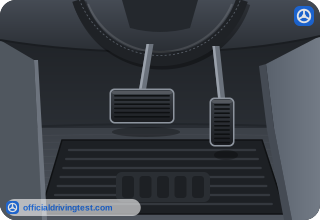
Which of these signs of brake trouble does the manual say should be checked by a mechanic?
- The brake pedal feels warm after a long drive
- The brake lights come on when the pedal is pressed
- The pedal moves a short distance and stops firmly
- The brake pedal goes to the floor
Show answer
Correct answer: The brake pedal goes to the floor
The manual lists noise, an unusual odor or a brake pedal that goes to the floor as reasons to have a mechanic check the brakes.
Source: Connecticut Driver's Manual (Revised March 2023), page 11 · Open this page in the manual (Manual page 11)
-
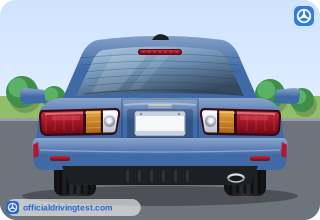
What do your brake lights tell other road users?
- That you are turning
- That you are stopping
- That you are backing up
- That you have your parking lights on
Show answer
Correct answer: That you are stopping
The manual says brake lights tell other road users that you are stopping, just as turn signals tell them that you are turning.
Source: Connecticut Driver's Manual (Revised March 2023), page 11 · Open this page in the manual (Manual page 11)
-
From where should you check that your turn signals, brake lights, taillights and headlights are working?
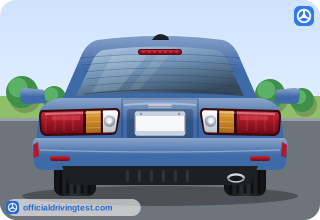
- From the driver’s seat while driving
- From the passenger seat while parked
- From the outside of the vehicle
- From the rear window while the vehicle is moving
Show answer
Correct answer: From the outside of the vehicle
The manual says the lights should be checked from the outside of the vehicle.
Source: Connecticut Driver's Manual (Revised March 2023), page 11 · Open this page in the manual (Manual page 11)
-
What problem can an out-of-line headlight cause?
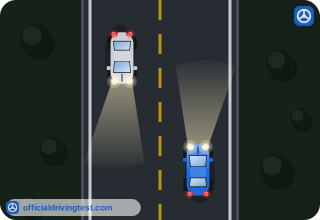
- It can shine where it does not help you and blind other drivers
- It can drain the battery faster than normal while driving
- It can make the brake lights stay on after you stop
- It can cause the turn signals to flash faster than usual
Show answer
Correct answer: It can shine where it does not help you and blind other drivers
The manual says an out-of-line headlight can shine where it does not help you and may blind other drivers.
Source: Connecticut Driver's Manual (Revised March 2023), page 11 · Open this page in the manual (Manual page 11)
-
You have trouble seeing at night, or other drivers often flash their headlights at you. What does the manual say to do?
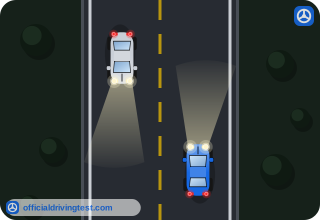
- Have a mechanic check the headlights
- Drive only on well-lit roads after dark
- Switch to your parking lights
- Replace the windshield wipers
Show answer
Correct answer: Have a mechanic check the headlights
The manual says that in these cases you should have a mechanic check the headlights.
Source: Connecticut Driver's Manual (Revised March 2023), page 11 · Open this page in the manual (Manual page 11)
-
What should you clear from your windows before you drive?
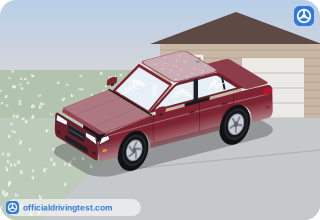
- Snow, ice or frost from the windshield only
- Only the frost on the driver’s side window
- Snow, ice or frost from all windows
- Snow from the roof only
Show answer
Correct answer: Snow, ice or frost from all windows
The manual says to clear snow, ice or frost from all windows before driving.
Source: Connecticut Driver's Manual (Revised March 2023), page 11 · Open this page in the manual (Manual page 11)
-
The windshield wiper blades are not clearing water well. What does the manual say to do?
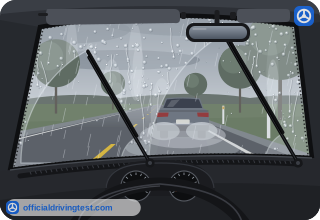
- Turn the wipers to a slower speed
- Replace them
- Wash them with window washer fluid only
- Keep driving until the rain stops
Show answer
Correct answer: Replace them
The manual says that if the blades are not clearing water well, you should replace them.
Source: Connecticut Driver's Manual (Revised March 2023), page 11 · Open this page in the manual (Manual page 11)
-
Why does the manual say you should have a damaged windshield replaced?
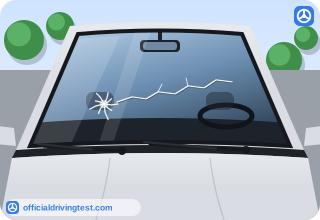
- Damaged glass always makes the vehicle fail its emissions inspection
- Damaged glass makes the headlights shine upward at other drivers
- Damaged glass causes the wiper blades to wear out much faster
- Damaged glass can break very easily in a minor collision or when hit
Show answer
Correct answer: Damaged glass can break very easily in a minor collision or when hit
The manual says damaged glass can break very easily in a minor collision or when something hits the windshield.
Source: Connecticut Driver's Manual (Revised March 2023), page 11 · Open this page in the manual (Manual page 11)
-
How can worn or bald tires affect your driving when the road is wet?
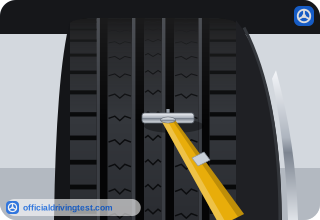
- Shorter stopping distance and easier turning
- Better grip when the road is wet
- A lower chance of having a flat tire
- Longer stopping distance and harder turning
Show answer
Correct answer: Longer stopping distance and harder turning
The manual says worn or bald tires can increase stopping distance and make turning more difficult on a wet road.
Source: Connecticut Driver's Manual (Revised March 2023), page 11 · Open this page in the manual (Manual page 11)
-
What does the manual say unbalanced tires and low tire pressure cause?
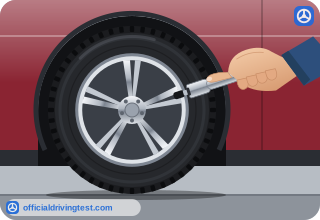
- Slower tire wear, better fuel economy and easier steering
- Faster tire wear, lower fuel economy and harder steering
- Faster tire wear but easier steering and shorter stopping
- Better grip on wet roads and shorter stopping distances
Show answer
Correct answer: Faster tire wear, lower fuel economy and harder steering
The manual says unbalanced tires and low pressure cause faster wear, reduce fuel economy and make the vehicle harder to steer and stop.
Source: Connecticut Driver's Manual (Revised March 2023), page 11 · Open this page in the manual (Manual page 11)
-
The vehicle bounces, the steering wheel shakes or the vehicle pulls to one side, and the manual lists these as tire concerns. What should you do?
- Increase the tire pressure by 10 psi
- Drive more slowly until it stops
- Have a mechanic check it
- Replace the windshield wipers
Show answer
Correct answer: Have a mechanic check it
The manual says that if the vehicle bounces, the steering wheel shakes or the vehicle pulls to one side, you should have a mechanic check it.
Source: Connecticut Driver's Manual (Revised March 2023), page 11 · Open this page in the manual (Manual page 11)
-
Worn tires increase the effect of what?
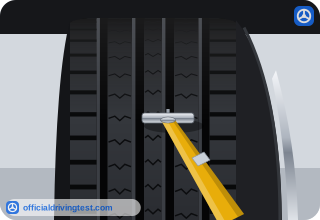
- Hydroplaning
- Brake fade
- Engine overheating
- Windshield glare
Show answer
Correct answer: Hydroplaning
The manual says worn tires increase the effect of hydroplaning and the chance of having a flat tire.
Source: Connecticut Driver's Manual (Revised March 2023), page 11 · Open this page in the manual (Manual page 11)